
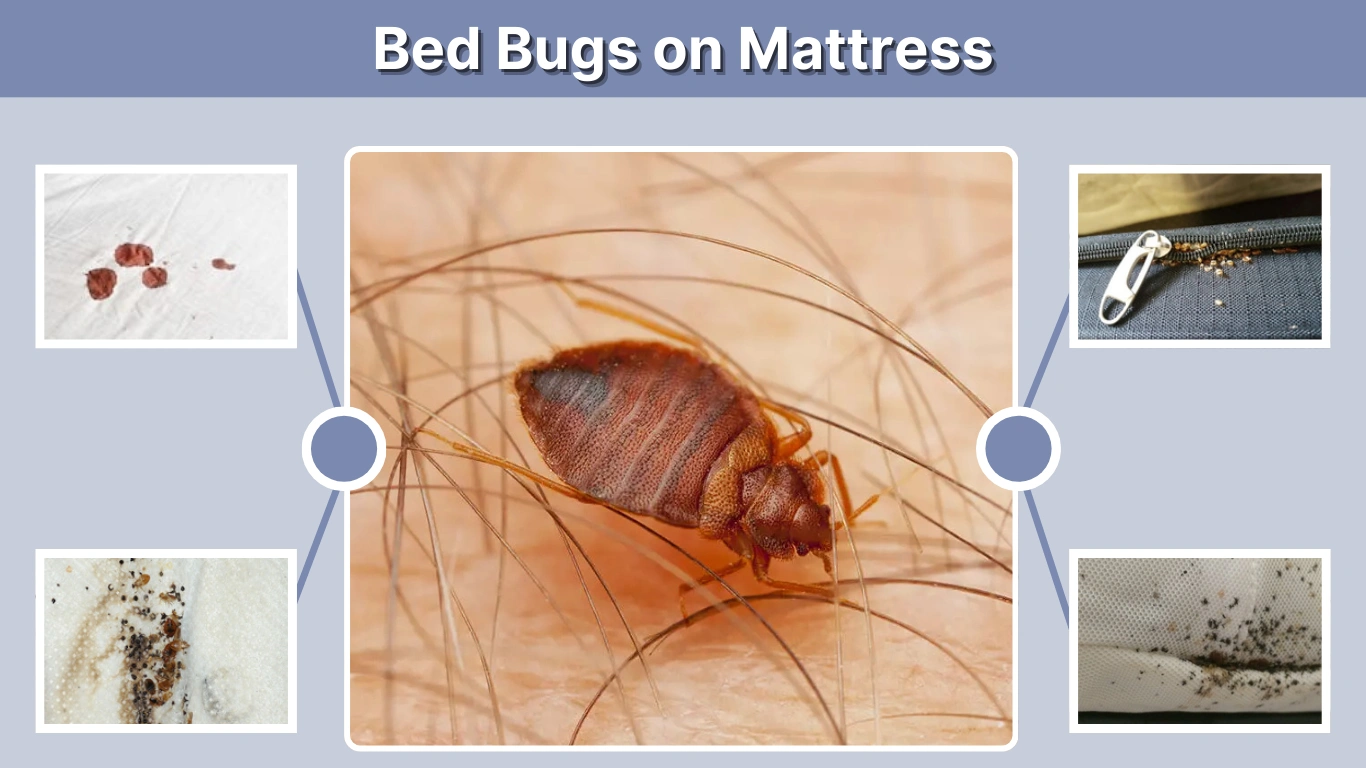
Bed bugs are tiny, elusive pests that often hide in mattresses, causing discomfort, stains, and itchy bites. Spotting early signs—such as blood stains, droppings, or eggs—can prevent a small problem from becoming a major infestation. This guide explains what bed bugs look like on a mattress, shows how to detect them with clear evidence, and outlines proven ways to remove them. By understanding their habits, you’ll be better prepared to protect your home.
What Are Bed Bugs on a Mattress?
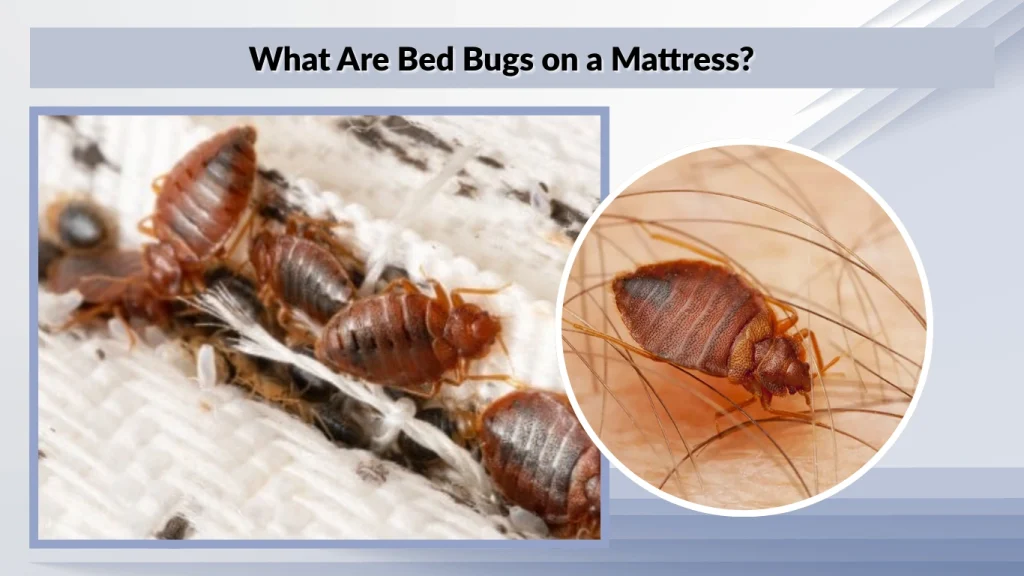
Bed bugs are small, reddish-brown insects that feed on human blood and often hide inside or around mattresses. They are nocturnal pests, coming out at night to bite while people sleep. A mattress provides warmth, shelter, and easy access to food, making it a common hiding place for infestations. Recognizing their presence early helps in quick treatment and prevention.
General Presence of Bed Bugs
Bed bugs are visible to the naked eye, usually about the size of an apple seed. On a mattress, they may appear along seams, tufts, and folds, where they remain hidden during the day. Clusters of multiple bugs are often found in one area, signaling a well-established infestation.
Why Mattresses Are Common Hiding Spots
Mattresses are ideal breeding grounds for bed bugs because they provide body warmth, carbon dioxide from breathing, and a secure environment. Unlike other pests, bed bugs do not live inside the mattress filling but rather on the outer layers, close to human contact points.
Pictures of Bed Bugs on Mattress

Visual evidence is one of the strongest ways to confirm a bed bug infestation. Bed bugs leave behind distinct signs that can be photographed for reference—such as live insects, eggs, shells, and droppings. By looking at clear pictures of bed bugs on a mattress, homeowners can compare what they see in their own beds and identify infestations more confidently.
Real Photos and Images of Infestations
Actual photos usually show clusters of tiny, reddish-brown bugs gathered near mattress seams, headboards, or fabric folds. Images often reveal multiple life stages, including adults, eggs, and nymphs, which appear lighter in color. Such visuals help distinguish bed bugs from other small insects.
What Bed Bugs Look Like on Mattress Surfaces
On a mattress, bed bugs resemble small oval-shaped insects about 4–6 mm long. Their flat bodies allow them to squeeze into tiny crevices. When fed, they appear swollen and darker. Pictures often highlight their presence near corners, piping, or stitched areas of the mattress.
Bugs That Look Like Bed Bugs
Certain insects—like carpet beetles, bat bugs, or booklice—may resemble bed bugs in photos. Unlike bed bugs, however, these pests do not cluster around sleeping areas or cause blood stains. Comparing images carefully helps prevent misidentification, which is critical before starting any treatment.
Early Signs of Bed Bugs on Mattress
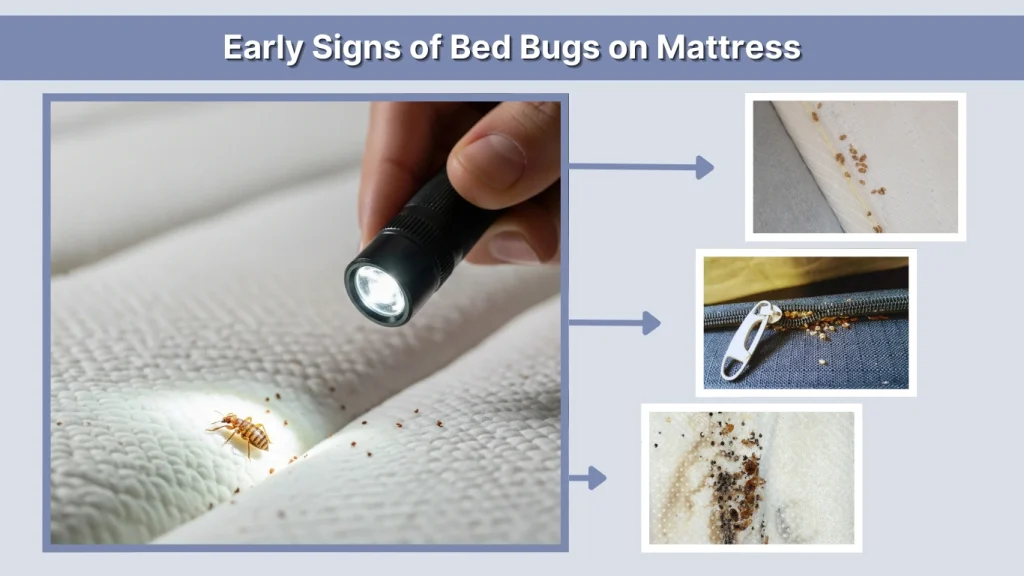
Catching bed bugs early can stop an infestation before it spreads throughout your home. The first signs are often subtle—tiny stains, shed skins, or small eggs—but they quickly escalate if ignored. Knowing what to look for ensures faster detection and treatment.
How to Identify Early Infestations
Early infestations show faint blood spots, dark fecal dots, and occasional sightings of single bugs. These usually appear around mattress seams and under bed sheets. One live bug is often an indicator of more hidden nearby.
Bed Bug Shells, Eggs, and Larvae
Shed skins (exoskeletons) are a common early clue, usually pale and flaky. Eggs are tiny, white, and about the size of a pinhead, often glued in clusters to fabric. Larvae, or nymphs, appear as lighter-colored mini versions of adults.
Differences Between Early and Severe Infestations
In early stages, you may notice scattered spots and very few bugs. In advanced infestations, clusters of bugs, multiple eggs, heavy stains, and strong odors develop. Identifying the stage helps determine whether DIY control or professional extermination is needed.
Stains, Spots, and Marks from Bed Bugs

One of the most visible signs of bed bugs is staining on mattresses. These marks appear when bugs are crushed, when they defecate, or after feeding. Stains often look like small rusty or dark-colored dots that increase over time.
Rust-Colored Stains and Spots
Bed bugs leave reddish-brown marks that resemble rust. These are usually found along seams, corners, or areas where the mattress touches the bed frame. They can be mistaken for dirt unless examined closely.
Bed Bug Blood Stains on Mattress
Small blood spots often appear on sheets or mattress covers when a bug is squashed after feeding. They may look like tiny smears or dots, indicating recent activity during the night.
Yellow and Moldy Stains
Prolonged infestations may leave yellowish stains caused by secretions or old droppings. Sometimes, these spots create a moldy odor, which is another warning sign that the mattress has hosted bed bugs for some time.
Bed Bug Droppings and Feces on Mattress

Bed bug droppings are among the most reliable signs of an infestation. These tiny black or dark brown dots resemble ink spots and are often clustered together. Fecal matter soaks into fabric, leaving permanent marks even after cleaning.
Recognizing Bed Bug Excrement
Droppings look like small dots made with a marker. They are usually found in groups near mattress seams, zippers, or under tags. Unlike dust or dirt, they smear when rubbed with a damp cloth.
Pictures of Bed Bug Droppings
Close-up images show droppings as tiny clusters of dark spots on white or light-colored fabric. Photos often highlight how concentrated these marks can be in heavily infested areas.
Difference Between Droppings and Stains
Stains from crushed bugs appear more smeared and reddish, while droppings remain dark and concentrated. Knowing the difference helps confirm whether marks are caused by active bed bugs or other sources.
Bed Bug Eggs and Shells
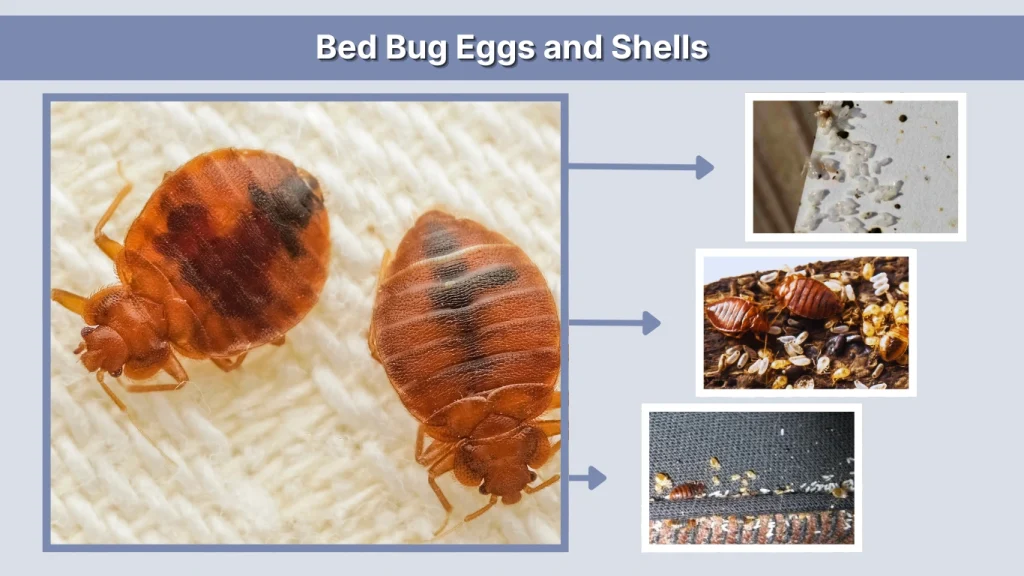
Eggs and shells are strong evidence of an active infestation. Bed bugs reproduce quickly, and their eggs can hatch in just over a week. Recognizing eggs, hatched shells, and larvae on a mattress is essential for early detection.
What Do Bed Bug Eggs Look Like on a Mattress?
Bed bug eggs are tiny, pearly white, and about 1 mm long—similar to a grain of rice but much smaller. They are often glued in clusters along seams, tags, and folds of a mattress.
Signs of Hatched Eggs and Shell Casings
When eggs hatch, they leave behind thin, papery shells known as exoskeletons. These shells are translucent and often pile up as the bugs grow. Seeing many shells usually means multiple generations have infested the mattress.
Pictures of Bed Bug Eggs on Mattress
Photos usually highlight eggs as tiny white dots, sometimes mistaken for lint or dust. Close-up pictures show their oval shape and slight shine, which helps distinguish them from ordinary debris.
Nests and Hiding Places
Bed bugs do not build nests like ants or bees but instead cluster together in hidden spots. Mattresses are one of their preferred hiding places because of easy access to humans.
Common Bed Bug Nesting Areas on a Mattress
Bed bugs often hide in mattress seams, tufts, and under tags. They also squeeze into cracks in the bed frame or headboard. Infested spots typically contain bugs, eggs, shells, and droppings together.
How to Spot a Bed Bug Nest
A “nest” appears as a cluster of insects with surrounding stains and debris. The area may have a foul odor caused by pheromones released by the bugs. Finding even one cluster usually confirms an infestation.
Where Bed Bugs Come From on Mattresses
Bed bugs spread by hitchhiking on clothing, luggage, or furniture. Once inside a home, they settle into mattresses and nearby cracks, where they can breed rapidly and go unnoticed for weeks.
Bed Bug Evidence on Different Mattress Types
Bed bugs are not limited to one mattress type—they can survive on nearly any surface that provides shelter. However, the way they appear may vary depending on the mattress material.
Bed Bugs on Memory Foam Mattresses
Though memory foam lacks traditional coils and gaps, bed bugs can still hide along stitching, zippers, and mattress covers. They do not burrow into the foam itself but remain on the outer layers.
Bed Bugs on Tempurpedic Mattresses
Tempurpedic mattresses are dense and less penetrable, but bed bugs can infest the seams, corners, and covers. Protective encasements help reduce risks but do not eliminate infestations.
Bed Bugs on Air Mattresses
Air mattresses are less attractive to bed bugs since they lack fabric seams, but bugs can still hide in folds, seams, or fabric coverings. They are less common here, but infestations remain possible if the mattress is used regularly.
Can Bed Bugs Live on Air or Plastic Mattresses?
Many people assume air or plastic mattresses are safe from bed bugs, but these pests can still survive on such surfaces. While they cannot live inside plastic or air chambers, they often hide in seams, folds, or bedding attached to the mattress.
Bed Bugs and Air Mattresses – Myths vs Facts
Bed bugs cannot burrow into air mattresses, but they can hide in stitching, creases, or bedding placed on top. Myths suggest air mattresses repel them, but in reality, they will settle anywhere close to a human host.
Can Bed Bugs Survive on Plastic Mattresses?
Plastic surfaces reduce hiding spots, but bed bugs can still rest along edges, corners, or coverings. They may also hide in surrounding furniture or bed frames, making plastic mattresses only partially resistant.
Foam vs Traditional Mattress Infestations
Traditional spring mattresses offer more hiding spaces compared to foam or plastic ones. However, regardless of the type, bed bugs typically remain on outer surfaces where they have quick access to humans at night.
How to Check for Bed Bugs on a Mattress
Inspecting a mattress properly is the best way to confirm an infestation. Regular checks can catch early signs before they spread throughout the bedroom.
Step-by-Step Inspection Guide
- Remove all bedding, sheets, and covers.
- Check seams, tags, and corners for live bugs or eggs.
- Look for dark spots (droppings) or reddish stains (blood).
- Inspect the bed frame and headboard as well.
Tools to Use for Detection
A flashlight and magnifying glass help spot small eggs and shells. Sticky tape can collect suspicious bugs or droppings for closer examination. Professionals may also use detection kits or bed bug sniffing dogs.
How to Spot Hidden Bed Bug Signs
Focus on less obvious areas such as under mattress tags, inside zipper covers, or along box springs. Even a few tiny dots or shells may indicate the start of a larger infestation.
How to Kill Bed Bugs on a Mattress
Once confirmed, infestations must be treated quickly. Bed bugs are resilient, but with proper methods, they can be eliminated from a mattress.
Natural and Home Remedies
Washing bedding in hot water and drying on high heat kills bed bugs instantly. Vacuuming the mattress surface also helps reduce numbers. Diatomaceous earth powder can be applied to cracks for long-term prevention.
Sprays and Chemical Treatments
Specialized bed bug sprays penetrate seams and fabrics, killing bugs on contact. It is important to use EPA-approved products and follow instructions carefully to avoid health risks.
Professional Pest Control Options
In severe cases, exterminators use heat treatments, steam cleaning, or insecticides. Professional intervention is often the most effective solution, especially when infestations have spread beyond the mattress.
Prevention and Long-Term Protection
Preventing bed bugs is easier than dealing with a full infestation. With consistent cleaning and protective measures, you can reduce the risk of bed bugs returning to your mattress.
Using Mattress Covers and Protectors
Encasing a mattress with a high-quality, bed bug–proof cover prevents pests from hiding in seams and folds. These encasements trap existing bugs inside and block new ones from entering.
Keeping Your Bedroom Bed Bug Free
Regularly washing sheets, vacuuming carpets, and cleaning bedroom furniture reduces hiding spots. Avoid bringing secondhand furniture inside without a careful inspection, as it is a common way bed bugs spread.
How to Detect Future Infestations Early
Set a routine to inspect your mattress and surrounding areas every few weeks. Small signs—like single bugs or faint stains—should not be ignored. Early detection ensures quicker and cheaper treatment.
FAQs
What do bed bugs look like on a mattress?
Bed bugs appear as small, oval-shaped insects about the size of an apple seed. They are reddish-brown, flat, and often cluster near seams, corners, and folds of a mattress. After feeding, they appear swollen and darker in color.
How can I tell if my mattress has bed bugs?
Look for small blood stains, dark droppings, shed shells, or clusters of eggs along mattress seams. You may also notice live bugs when lifting sheets or inspecting corners. Even one confirmed bug usually means more are hiding nearby.
Can bed bugs live on air or plastic mattresses?
Bed bugs cannot burrow into air or plastic mattresses, but they can hide in seams, folds, or bedding on top. While these surfaces reduce hiding spaces, the bugs often stay close to where humans sleep, making infestations possible.
What kills bed bugs instantly on a mattress?
High heat is the most effective solution. Washing sheets in hot water and using a dryer on high heat kills bugs at all life stages. Steam cleaning and professional heat treatments are also highly effective for mattresses.
How can I prevent bed bugs from coming back?
Use a bed bug–proof mattress cover, wash bedding regularly in hot water, and vacuum sleeping areas often. Avoid bringing in secondhand furniture without checking it. Regular inspections help catch signs of re-infestation early.
