
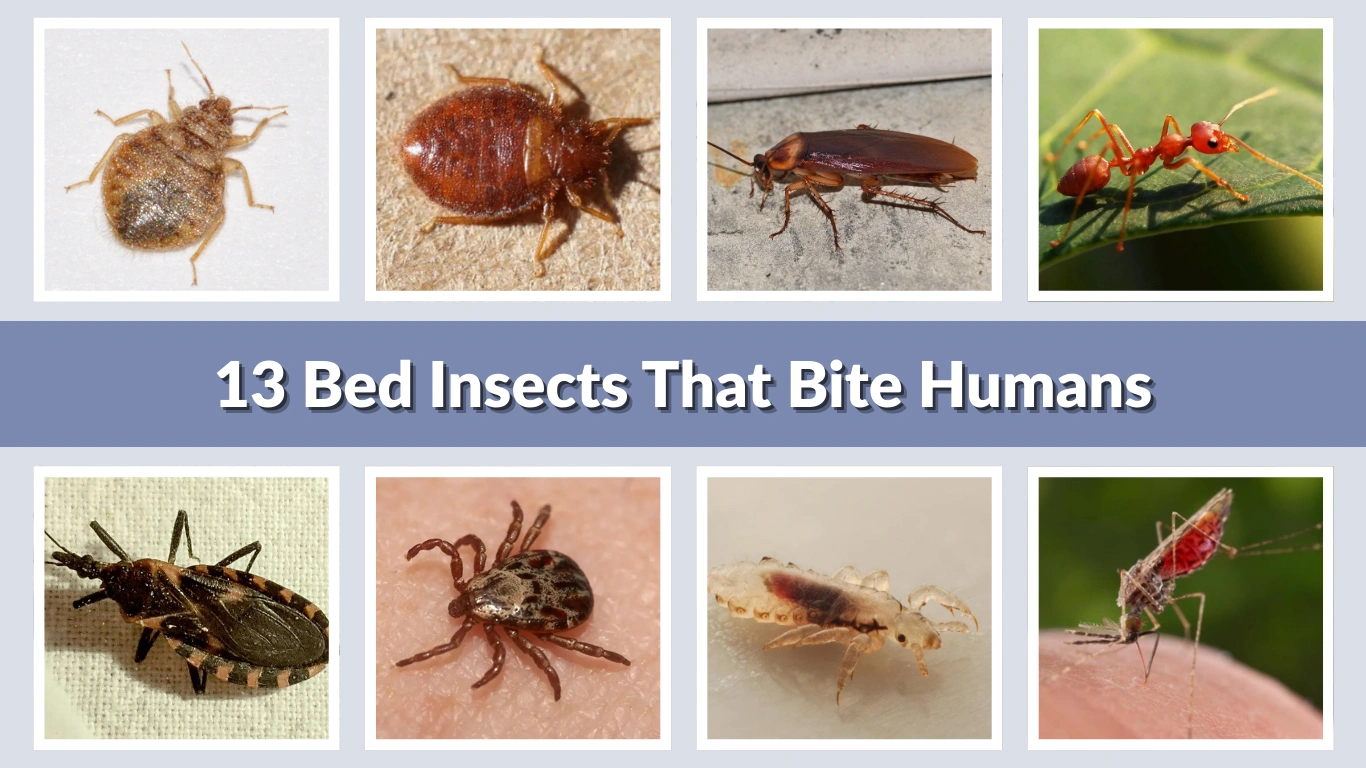
Sleeping should bring rest, but for many, hidden pests can turn bedtime into a nightmare. Several insects and bugs bite humans in bed, leaving behind itchy welts, skin irritation, and in some cases, serious health risks. From common culprits like bed bugs and fleas to lesser-known pests like bat bugs and swallow bugs, understanding these nighttime biters helps in early identification, prevention, and effective control.
1. Bed Bugs

Bed bugs are small, reddish-brown insects that feed on human blood, mostly at night. They are notorious for infesting beds, furniture, and hidden corners, causing itchy bites and discomfort. Although they don’t spread diseases directly, their bites can lead to allergic reactions, infections, and psychological stress.
How to Identify Bed Bugs
- Flat, oval-shaped body about the size of an apple seed.
- Reddish-brown color that becomes darker after feeding.
- Wingless but fast crawlers.
- Eggs are white and tiny, resembling a grain of rice.
- Shed skins and small dark fecal spots near hiding areas.
Common Hiding Spots
Bed bugs usually hide in mattress seams, bed frames, upholstered furniture, wall cracks, behind wallpaper, and even electrical outlets. They prefer tight, dark spaces close to their food source—humans.
Bites and Potential Risks
Their bites appear as small red welts, often in clusters or lines on exposed skin. While not known to transmit diseases, bites can cause itching, allergic reactions, skin infections from scratching, and significant stress or sleep loss.
Life Cycle and Reproduction
Bed bugs undergo gradual metamorphosis: egg, five nymph stages, and adult. Eggs hatch in about 6–10 days, and nymphs need a blood meal to molt at each stage. Adults can live for several months and reproduce rapidly, with females laying hundreds of eggs in their lifetime.
2. Fleas

Fleas are tiny, wingless parasites that survive by feeding on the blood of humans and animals. Known for their powerful jumping ability, they can quickly spread from pets to bedding, carpets, and furniture. Their bites are itchy and often found in groups on the lower body.
How to Identify Fleas
- Very small, about 1.5–3 mm in size.
- Dark brown, flat, and wingless body.
- Strong back legs adapted for jumping.
- Hard-bodied, making them difficult to crush.
- Eggs are white, oval, and laid in hidden areas.
Usual Hiding Locations
Fleas thrive in pet bedding, carpets, upholstered furniture, cracks in flooring, and outdoor shady areas where pets rest. They prefer warm and humid environments.
Bite Symptoms and Health Concerns
Flea bites appear as small, red bumps, often grouped on the ankles, legs, or waistline. They can cause intense itching, allergic reactions, and in severe infestations, anemia in pets. Fleas may also transmit tapeworms and rare diseases like typhus and plague.
Growth and Reproduction Cycle
Fleas progress through egg, larva, pupa, and adult stages. Eggs hatch in 2–12 days, and larvae feed on organic debris. Adults emerge from cocoons when they sense vibrations or warmth, ready to feed immediately. A female flea can lay up to 50 eggs per day.
3. Mosquitoes
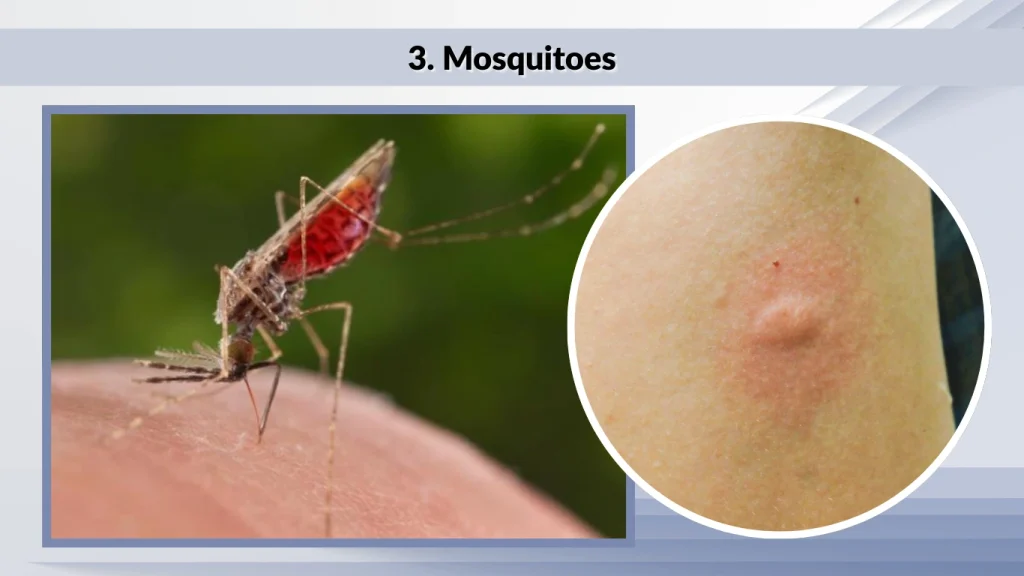
Mosquitoes are slender, flying insects infamous for their itchy bites and ability to transmit serious diseases. Only female mosquitoes feed on blood, while males survive on plant nectar. They are most active at dusk and dawn.
How to Identify Mosquitoes
- Long, slender body with narrow wings.
- Distinctive long proboscis (mouthpart for piercing skin).
- Noisy buzzing sound while flying.
- Typically gray, brown, or black with white markings.
- Larvae and pupae live in standing water.
Preferred Resting and Breeding Areas
Mosquitoes rest in dark, humid areas such as under furniture, in closets, and near water sources. They breed in stagnant water like puddles, flowerpots, clogged drains, and ponds.
Bite Reactions and Possible Dangers
Bites appear as red, itchy welts and may swell due to allergic reactions. More importantly, mosquitoes are vectors for diseases including malaria, dengue, Zika virus, chikungunya, and West Nile virus, making them one of the deadliest insects worldwide.
Life Stages and Survival Pattern
Mosquitoes undergo a complete metamorphosis: egg, larva, pupa, and adult. Eggs are laid on water surfaces and hatch within 24–48 hours. Larvae develop into pupae, which transform into adults in less than two weeks, depending on temperature and environment.
4. Lice

Lice are tiny, wingless parasites that live on the human body and feed on blood. They spread easily through close contact or shared belongings. Infestations cause intense itching and discomfort, particularly on the scalp, body, or pubic area depending on the type.
How to Identify Lice
- Small, flat, wingless insects about 2–4 mm long.
- Grayish-white or tan in color.
- Move quickly across hair and skin.
- Eggs (nits) are oval, white, and glued to hair shafts or clothing fibers.
- Visible with the naked eye, especially around the scalp or seams of clothing.
Common Areas of Infestation
Head lice cling to scalp hair, body lice hide in clothing seams, and pubic lice attach to coarse body hair. They are most often found near the scalp, neck, behind ears, waistbands, or armpits.
Bite Effects and Health Risks
Lice bites cause persistent itching, small red bumps, and skin irritation. Heavy infestations may lead to bacterial infections from scratching. While head and pubic lice do not transmit diseases, body lice can spread illnesses like trench fever and typhus.
Development and Reproduction Process
The life cycle includes egg, nymph, and adult stages. Eggs hatch in about 7–10 days, and nymphs mature in another week. Adults live up to 30 days, laying several eggs daily, leading to rapid spread if untreated.
5. Mites (Chiggers and Scabies)

Mites are microscopic arachnids that infest human skin, causing irritation and rashes. Chiggers usually bite outdoors, while scabies mites burrow into the skin, leading to intense itching and skin lesions.
How to Identify Mites
- Extremely small, often invisible to the naked eye.
- Chiggers are red larvae about 0.2 mm in size.
- Scabies mites are white or translucent, about 0.3 mm.
- Skin may show burrow lines, rashes, or clusters of red bumps.
- Diagnosis often requires medical examination.
Frequent Infestation Zones
Chiggers are found in grassy fields, forests, and gardens, latching onto clothing before biting. Scabies mites spread through prolonged skin contact and thrive in crowded living conditions, burrowing into folds of skin like wrists, elbows, and between fingers.
Bite Consequences and Medical Concerns
Chigger bites cause clusters of red, itchy welts, while scabies leads to severe itching, rashes, and sores from scratching. Scabies infestations can become widespread without treatment and often spread quickly within families or communities.
Reproduction and Infestation Cycle
Chigger larvae feed on skin before dropping off to mature into harmless adults. Scabies mites lay eggs inside skin tunnels, which hatch into larvae in 3–4 days. Adults live for about 1–2 months on the host, continuously reproducing if untreated.
6. Ticks
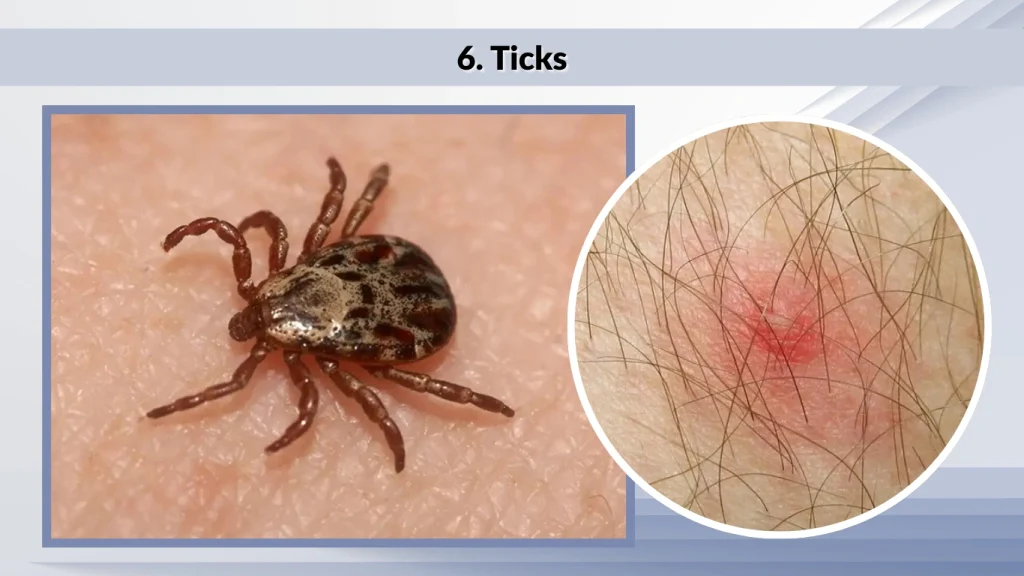
Ticks are parasitic arachnids that attach firmly to the skin of humans and animals to feed on blood. They are slow feeders but dangerous because they can transmit serious diseases. They are commonly found in grassy, wooded, or bushy areas.
How to Identify Ticks
- Small, oval, and flat body before feeding.
- Range from 1 mm (larvae) to 5 mm (adults).
- Brown, black, or reddish in color.
- Swell significantly after feeding, becoming engorged.
- Eight legs (as adults), distinguishing them from insects.
Habitats and Hiding Spots
Ticks usually cling to tall grass, shrubs, or leaves, waiting to latch onto passing hosts. Indoors, they may hide in pet bedding, carpets, or furniture after being carried in by animals or people.
Bite Effects and Health Dangers
Tick bites are often painless initially but may cause redness or irritation. More importantly, ticks transmit diseases such as Lyme disease, Rocky Mountain spotted fever, babesiosis, and anaplasmosis. Severe infestations may cause anemia in pets.
Life Cycle and Feeding Pattern
Ticks undergo four stages: egg, larva, nymph, and adult. They require a blood meal at every stage after hatching. Depending on species, the life cycle may take months to years. Females lay thousands of eggs before dying.
7. Kissing Bugs (Triatomine Bugs)

Kissing bugs are blood-sucking insects known for biting humans around the mouth and eyes while they sleep. They are most concerning for their role in transmitting Chagas disease in some regions.
How to Identify Kissing Bugs
- Elongated, flat body about 2–3 cm long.
- Dark brown or black with orange or red markings on edges.
- Cone-shaped head with long, slender antennae.
- Winged and capable of flying.
- Nocturnal and often attracted to lights.
Hiding and Resting Places
They hide in cracks of walls, under mattresses, behind furniture, and in thatched roofs. Outdoors, they may live in animal nests, rodent burrows, or piles of wood near houses.
Bite Symptoms and Health Concerns
Bites are usually painless at first but can cause swelling, redness, or allergic reactions. The greater danger is the potential transmission of the parasite Trypanosoma cruzi, which causes Chagas disease—a serious illness that can affect the heart and digestive system.
Reproductive and Growth Cycle
Kissing bugs go through incomplete metamorphosis: egg, five nymphal stages, and adult. Nymphs must take a blood meal at each stage. Depending on conditions, development from egg to adult can take several months to over a year.
8. Spiders

Spiders are arachnids that occasionally bite humans when threatened or trapped in bedding. While most spider bites are harmless, a few species can cause significant medical problems.
How to Identify Spiders
- Eight legs and two distinct body parts (cephalothorax and abdomen).
- Size varies greatly, from a few millimeters to several centimeters.
- Colors range from brown and black to patterned species.
- Presence of silk webs or strands nearby.
- Two fangs capable of injecting venom.
Where They Hide Indoors
Spiders hide in corners of rooms, under furniture, in bedding folds, closets, shoes, and wall crevices. They prefer undisturbed areas and are often nocturnal hunters.
Bite Effects and Possible Risks
Most spider bites cause mild swelling, redness, and itching. However, venomous species like black widows or brown recluses can cause severe pain, muscle cramps, ulcers, or systemic reactions. Medical attention is advised for suspected dangerous bites.
Development and Breeding Pattern
Spiders lay eggs in silken sacs, which hatch into spiderlings. Depending on species, they may undergo several molts before reaching adulthood. Some spiders live only one season, while others survive for several years.
9. Ants (Especially Fire Ants)

Ants are social insects that can invade homes in search of food or shelter. While most species do not bite, fire ants and some others can deliver painful stings and bites that pose health risks.
How to Identify Ants
- Small insects with three distinct body segments.
- Size ranges from 2–7 mm depending on species.
- Vary in color: black, brown, red, or yellow.
- Elbowed antennae and strong mandibles.
- Fire ants are reddish-brown and aggressive.
Usual Nesting and Infestation Spots
Ants may nest in soil, wall voids, floor cracks, or near water sources. Fire ants build noticeable soil mounds outdoors but can also invade homes, hiding in bedding, furniture, or clothing piles.
Bite and Sting Reactions
Ant bites can cause sharp pain, itching, and swelling. Fire ants inject venom that produces painful, pus-filled blisters. In sensitive individuals, multiple stings may lead to allergic reactions or even anaphylaxis.
Reproduction and Colony Growth
Ants have a caste system with queens, workers, and soldiers. Queens lay thousands of eggs, while workers maintain the colony. Fire ant colonies can grow rapidly, spreading through budding and producing winged swarmers for reproduction.
10. Cockroaches

Cockroaches are nocturnal insects that infest homes, especially kitchens and bedrooms. Though they rarely bite, in cases of heavy infestations and food scarcity, they may nibble on human skin while sleeping.
How to Identify Cockroaches
- Flattened, oval-shaped body with long antennae.
- Sizes range from 1.5 cm to over 5 cm depending on species.
- Brown, reddish, or black in color.
- Quick runners with spiny legs.
- Presence of droppings, egg cases, and a musty odor.
Likely Hiding and Resting Spots
Cockroaches hide in dark, warm, and moist places such as behind appliances, inside cabinets, wall cracks, under sinks, and even in mattresses or bedding folds during severe infestations.
Biting Incidents and Related Risks
Bites are rare but may cause small, red, itchy marks. More commonly, cockroaches spread allergens and pathogens, triggering asthma, food poisoning, and skin reactions through contamination rather than direct biting.
Life Cycle and Infestation Pattern
Cockroaches develop through egg, nymph, and adult stages. Females carry or deposit egg cases (oothecae), each containing multiple offspring. Nymphs molt several times before adulthood, with life cycles ranging from months to over a year depending on species.
11. Carpet Beetles (Larvae)

Carpet beetle larvae, not the adult beetles, are responsible for irritating bites or rashes. They do not feed on blood but cause skin reactions through contact with their bristly hairs.
How to Identify Carpet Beetle Larvae
- Small, worm-like bodies, 4–5 mm long.
- Covered in tiny bristles or hairs.
- Brown to dark in color with banded patterns.
- Shed skins and tiny droppings near infested areas.
- Adults are small, rounded beetles often mistaken for ladybugs.
Favorite Infestation Areas
Larvae thrive in dark, undisturbed places such as carpets, upholstered furniture, clothing storage, and bedding. They feed on natural fibers like wool, silk, leather, and feathers.
Skin Reactions and Hazards
Though not true bites, contact with larval hairs may cause red, itchy welts, often mistaken for bed bug bites. Infestations can damage household fabrics and belongings.
Growth and Reproductive Cycle
Carpet beetles undergo complete metamorphosis: egg, larva, pupa, and adult. The larval stage can last several months, during which they feed actively. Adults live outdoors feeding on pollen but often return indoors to lay eggs.
12. Bat Bugs

Bat bugs are close relatives of bed bugs and look almost identical. The main difference is that they prefer feeding on bats, but when bats are absent, they may bite humans in bedrooms or attics.
How to Identify Bat Bugs
- Small, oval, and flat body about 5–7 mm long.
- Brownish color, similar to bed bugs.
- Slightly longer fringe hairs around the thorax compared to bed bugs.
- Wingless, with well-developed legs for crawling.
- Eggs and shed skins often found near bat roosts.
Preferred Habitats Indoors
Bat bugs usually live near bat colonies in attics, chimneys, or wall voids. Once bats are removed, they may wander into bedrooms, hiding in mattresses, bed frames, or cracks in walls.
Bite Effects and Health Concerns
Bat bug bites resemble bed bug bites—red, itchy welts often in clusters. They are not known to transmit diseases but cause discomfort, irritation, and stress in households.
Development and Reproduction Pattern
They develop through egg, five nymph stages, and adult. Nymphs need a blood meal at each stage. Reproduction is slower than bed bugs, but infestations can persist for months without intervention.
13. Swallow Bugs

Swallow bugs are another close relative of bed bugs, typically associated with bird nests. When swallows migrate, these bugs may invade nearby homes in search of alternative hosts, including humans.
How to Identify Swallow Bugs
- Resemble bed bugs but slightly smaller (3–5 mm).
- Grayish-brown in color, turning reddish after feeding.
- Covered with fine hairs, giving a dusty appearance.
- Flat and oval-shaped body.
- Eggs are small, white, and laid near bird nesting sites.
Hiding and Breeding Places
They hide in or near swallow nests attached to buildings. Once the birds leave, swallow bugs may move indoors, taking refuge in cracks, crevices, and bedding areas.
Bite Reactions and Risks
Bites cause red, itchy welts, similar to those from bed bugs. Although they are not known to spread diseases, repeated bites can cause allergic reactions and sleeplessness.
Life Cycle and Infestation Survival
Swallow bugs progress from egg to nymph to adult, requiring blood meals at each stage. Remarkably, they can survive for months to years without feeding, making them resilient and difficult to eradicate once established.
