
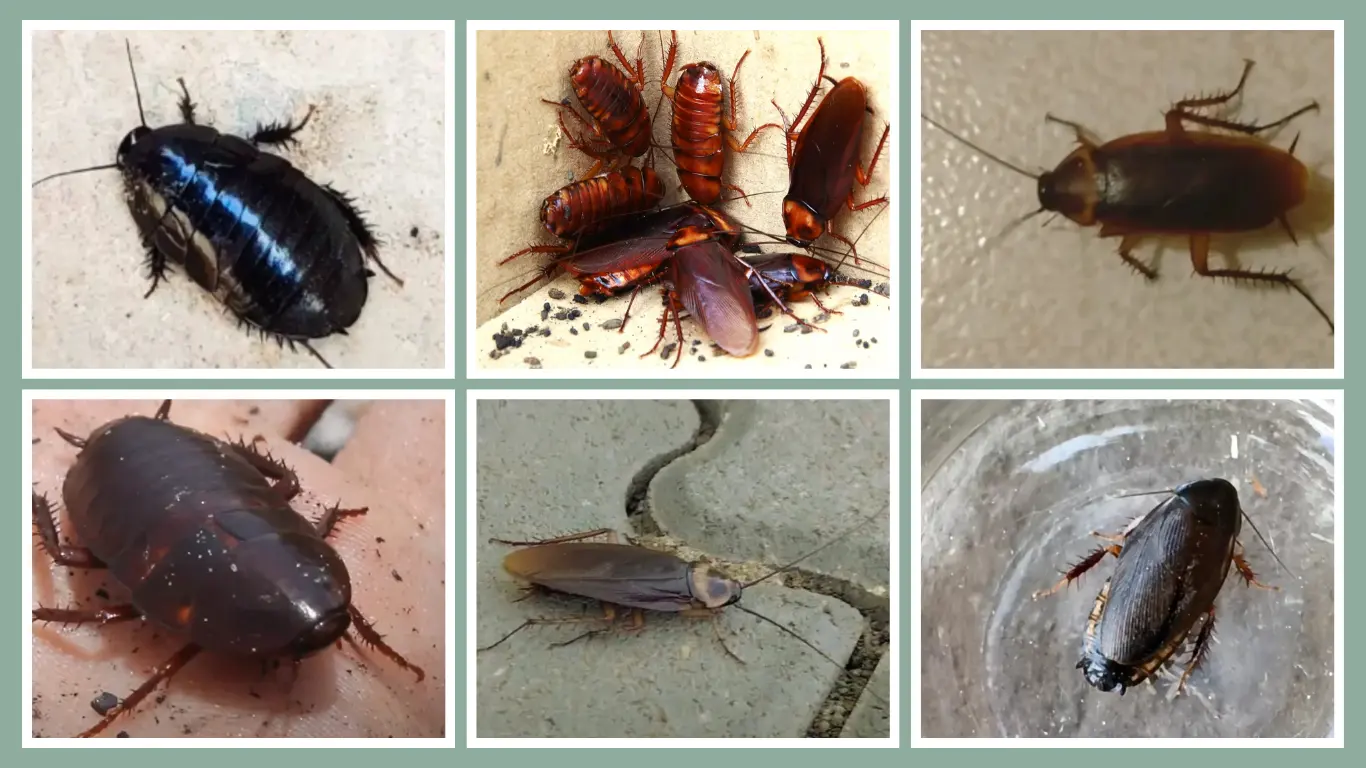
Many people panic when they spot a big, dark-colored bug crawling in their home or yard—often mistaking it for a cockroach. While several large insects do resemble cockroaches, not all of them are harmful or common household pests.
In this article, I’ll introduce you to 8 big black cockroach-looking bugs. You’ll learn how to identify each one, where they live, and what makes them unique. This guide will help you tell them apart and understand which ones to watch out for.
1. Oriental Cockroach

The Oriental cockroach (Blatta orientalis) is a large, dark, and glossy cockroach species often found in damp environments like basements and drains. It is sometimes called a “water bug” due to its love for moisture. Unlike faster-moving species, the Oriental cockroach is relatively sluggish but persistent, especially in homes with high humidity.
Identification
- Adult size ranges from 1 to 1.25 inches (25–32 mm)
- Males have long wings that cover most of their body; females have small wing stubs
- Color is dark reddish-brown to shiny black
- Smooth, glossy exoskeleton
- Cannot climb smooth vertical surfaces
Habitat
Oriental cockroaches are commonly found in cool, damp, and poorly ventilated areas. Outdoors, they may live under leaves, mulch, or stones. Indoors, they prefer basements, floor drains, and under sinks or appliances. They are especially attracted to leaky pipes or standing water sources.
Behavior
These cockroaches are nocturnal and usually avoid light. They are slow movers and prefer to stay at ground level. Oriental cockroaches feed on decaying organic material, garbage, and anything starchy. Their presence is often accompanied by a strong, musty odor that worsens in large infestations.
Reproduction and Lifecycle
Female Oriental cockroaches produce dark brown egg cases (oothecae), each containing up to 16 eggs. These cases are often dropped in hidden, moist areas. Once hatched, the nymphs take anywhere from six months to a year to develop into adults, depending on temperature and humidity. Reproduction slows in hot, dry conditions but increases in cooler, humid environments.
2. American Cockroach

The American cockroach (Periplaneta americana) is one of the largest and most widespread cockroach species found in homes and commercial buildings. Often nicknamed the “palmetto bug” in southern states, this reddish-brown insect is known for its fast movements, strong survival skills, and preference for warm, moist areas. Despite its name, it likely originated in Africa and was introduced to the Americas centuries ago.
Identification
- Grows up to 1.5 to 2 inches (38–50 mm) in length
- Reddish-brown body with a yellowish figure-8 marking behind the head
- Both males and females have fully developed wings and can glide short distances
- Long antennae, often longer than their body
- Slender legs with spines for fast movement
Habitat
American cockroaches prefer warm, damp, and dark areas. Outdoors, they live in flower beds, mulch, sewer systems, and under logs. Indoors, they thrive in basements, utility rooms, boiler rooms, and around floor drains. They often enter buildings through vents, cracks, or plumbing systems.
Behavior
These cockroaches are extremely fast and active, especially at night. They can move quickly when disturbed and are excellent at finding hidden food sources. They are scavengers and feed on a wide variety of materials, including crumbs, pet food, grease, soap, and decaying matter. They can also survive long periods without food but not without water.
Reproduction and Lifecycle
Females lay dark, oval egg capsules (oothecae), each containing around 14 to 16 eggs. They may produce one egg case per week and drop them in hidden crevices or glue them to surfaces. The development from egg to adult takes 6 months to over a year, depending on temperature and environment. American cockroaches can live up to 2 years under ideal conditions.
3. Smokybrown Cockroach

The Smokybrown cockroach (Periplaneta fuliginosa) is a large, dark-colored species commonly found in the southern United States and other warm, humid regions. It’s often confused with the American cockroach due to its size but can be easily identified by its uniform dark brown or mahogany coloration. This species is highly dependent on moisture and is a frequent outdoor dweller that can invade homes in search of food and water.
Identification
- Adult size ranges from 1.25 to 1.5 inches (32–38 mm)
- Entire body is a shiny, dark mahogany or black-brown color
- Both males and females have long wings that extend beyond the abdomen
- No distinct markings behind the head
- Antennae are long and slender
Habitat
Smokybrown cockroaches thrive in warm, moist environments. Outdoors, they are commonly found in tree holes, leaf piles, woodpiles, gutters, and under roof shingles. Indoors, they can enter through attic vents, crawl spaces, or poorly sealed doors and windows. Once inside, they seek out humid areas like bathrooms, laundry rooms, and kitchens.
Behavior
These cockroaches are strong fliers and are often seen near lights at night. Unlike some other roaches, they are not as comfortable living indoors full-time but will enter buildings when outdoor conditions are too dry or cold. They are nocturnal, and their activity spikes after dark when they search for food and water. Smokybrowns are known for their high moisture needs and die quickly in dry environments.
Reproduction and Lifecycle
Females produce egg cases (oothecae) that hold around 20 eggs. These are typically dropped in protected, moist locations. The eggs hatch in about 40 to 50 days, and it can take up to a year for nymphs to reach adulthood depending on conditions. Adults live for about 6 to 12 months.
4. Florida Woods Cockroach

The Florida woods cockroach (Eurycotis floridana) is a large, slow-moving cockroach native to the southeastern United States, especially Florida. Also known as the “stinking cockroach,” it produces a strong, unpleasant odor as a defense mechanism. Unlike most cockroaches, this species has no functional wings and is less likely to infest homes, preferring natural outdoor environments.
Identification
- Grows up to 1.5 to 2 inches (38–50 mm) in length
- Dark reddish-brown to nearly black body with a broad, oval shape
- Lacks fully developed wings; has short, leathery wing pads
- Body appears smooth and shiny
- Emits a foul-smelling chemical when disturbed
Habitat
Florida woods cockroaches are primarily outdoor insects. They live in moist, shaded areas such as under logs, in piles of leaves, around tree bark, and inside palm fronds. They are not strong climbers and rarely enter buildings unless conditions outside are extreme. However, they may be found in garages or sheds if moisture is present.
Behavior
These cockroaches are slow-moving and non-aggressive. They are most active at night and prefer to remain hidden during the day. When threatened, they release a defensive chemical with a strong odor to deter predators. Unlike other species, Florida woods cockroaches are not attracted to light and do not fly.
Reproduction and Lifecycle
Females produce large, dark egg cases that contain about 20 to 24 eggs. These are hidden in decaying organic matter or other sheltered areas. The nymphs resemble small versions of the adults and go through several molts before reaching maturity. Development from egg to adult can take several months, and adult cockroaches can live up to a year.
5. Australian Cockroach

The Australian cockroach (Periplaneta australasiae) is a large, dark roach that closely resembles the American cockroach but with a few unique features. Though not truly black, its deep reddish-brown body and size make it easy to mistake for a black cockroach at a glance, especially in dimly lit areas. It’s often found in warm climates and shares many traits with other large cockroach species.
Identification
- Reaches up to 1.2 to 1.5 inches (30–38 mm) in length
- Dark reddish-brown body with yellow markings on the thorax and wing edges
- Fully developed wings cover the entire body and extend slightly beyond the abdomen
- Long antennae and strong legs with spines
- Often mistaken for the American cockroach due to similar size and color
Habitat
The Australian cockroach prefers warm, humid environments and is commonly found both indoors and outdoors. Outdoors, it hides under tree bark, leaf piles, and mulch. Indoors, it often appears in greenhouses, bathrooms, kitchens, or near leaking pipes. It is particularly sensitive to cold and tends to migrate indoors in cooler seasons.
Behavior
This cockroach is an excellent flier and can glide short distances. It is nocturnal and prefers to stay hidden during the day. Like other large black-looking cockroaches, it feeds on decaying organic matter, plant materials, crumbs, and pet food. It can live comfortably in homes with high humidity and often enters through vents, windows, or door gaps.
Reproduction and Lifecycle
Females lay oothecae (egg cases) containing around 24 eggs. These cases are hidden in moist, protected areas. Nymphs emerge in about 40 days and take several months to mature. The entire lifecycle can last up to a year depending on temperature and moisture levels. Adults live for 4 to 8 months.
6. Giant Burrowing Cockroach
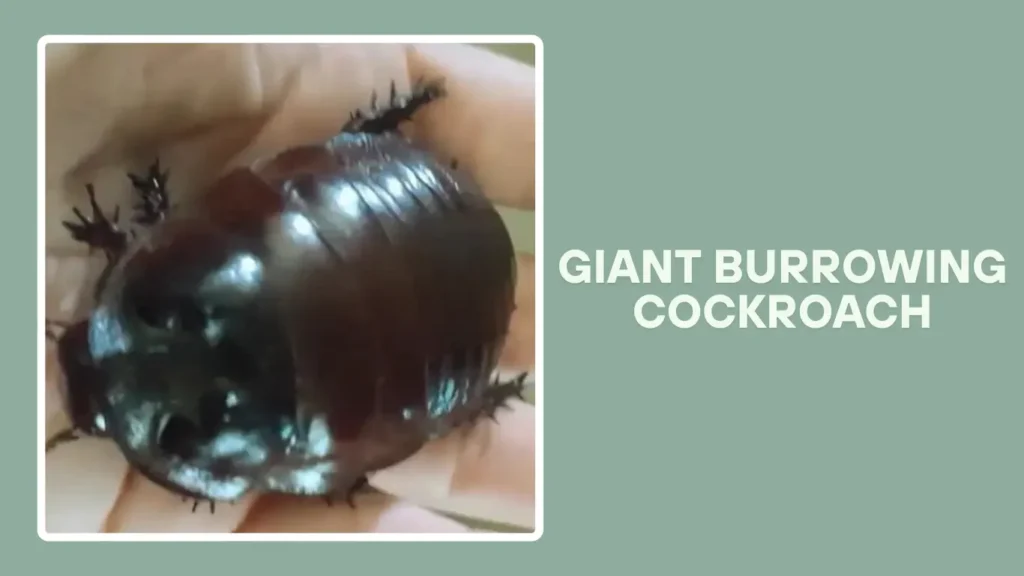
The Giant burrowing cockroach (Macropanesthia rhinoceros) is one of the largest and heaviest cockroach species in the world. Native to Australia, it is often called the rhinoceros cockroach or Queensland giant cockroach. Unlike typical cockroaches, this species does not have wings and does not infest homes. Still, its size, shape, and dark color give it the unmistakable appearance of a massive black cockroach-like bug.
Identification
- Can grow up to 3.3 inches (85 mm) in length
- Weighs up to 1 ounce (30 grams)
- Hard, dark brown to black exoskeleton
- Wingless, with a wide, flattened body and strong front legs
- Short antennae and armored appearance make it look beetle-like
Habitat
This species lives underground in burrows up to 3 feet deep in the forests of Queensland, Australia. It prefers sandy, well-drained soil and is rarely found above ground during the day. Its natural environment is rich in decaying leaf litter, which provides food and shelter. It is not a pest species and does not invade homes or buildings.
Behavior
The Giant burrowing cockroach is a slow-moving, solitary insect. It uses its strong, shovel-like legs to dig and maintain its burrow, which it rarely leaves. At night, it may emerge to collect dead leaves to bring back underground. Unlike other cockroach species, it is clean, does not carry disease, and plays an important ecological role in soil aeration and leaf decomposition.
Reproduction and Lifecycle
Unlike most cockroaches, this species gives live birth. The female carries the eggs inside her body until they hatch, giving birth to up to 30 live young. Nymphs remain with the mother for several months. The development is slow, taking up to 7 years for some individuals to reach full maturity. They are long-lived cockroaches, with lifespans reaching 10 years or more.
7. Madagascar Hissing Cockroach

The Madagascar hissing cockroach (Gromphadorhina portentosa) is a large, wingless cockroach native to the island of Madagascar. Known for the distinctive hissing sound it produces, this species has a shiny black or dark brown body that gives it the unmistakable look of a giant black cockroach. It’s often kept as a pet or used in science education due to its calm nature and unique traits.
Identification
- Grows up to 2 to 3 inches (50–76 mm) in length
- Thick, dark brown to nearly black exoskeleton
- Lacks wings, with a smooth, segmented body
- Males have horn-like bumps on the pronotum (behind the head)
- Produces a loud hissing sound through spiracles (breathing holes)
Habitat
In the wild, they live in forest floors among leaf litter, bark, and logs. They prefer warm, humid environments and spend most of their time hiding or burrowing. In captivity, they are raised in terrariums with moist substrates. They are not household pests and do not survive well in domestic settings outside controlled environments.
Behavior
This cockroach is famous for its loud hissing sound, which it uses to scare off predators, attract mates, or communicate. It is nocturnal, slow-moving, and very clean compared to pest cockroach species. It feeds on decaying plant matter and is an important recycler in its native ecosystem. These cockroaches do not fly and rarely bite or act defensively.
Reproduction and Lifecycle
Madagascar hissing cockroaches give live birth. Females carry fertilized eggs inside their body until the young hatch, delivering around 30 to 60 live nymphs. The young stay close to the mother for protection and gradually molt into adults. Full maturity takes 6 months to a year, and adults can live for up to 5 years.
8. Surinam Cockroach

The Surinam cockroach (Pycnoscelus surinamensis) is a burrowing species known for its glossy dark brown to nearly black body and secretive lifestyle. Although it’s smaller than some of the other cockroaches listed here, it still has the stout, rounded body shape that gives it the appearance of a small black cockroach-like bug. It is primarily found in warm, humid climates.
Identification
- Adult size is around 0.75 to 1 inch (19–25 mm)
- Dark brown to black body with lighter-colored wings
- Females are winged but do not fly; males are rare or absent in many populations
- Rounded, shiny body with short legs
- Most individuals in the wild are female and reproduce without males
Habitat
Surinam cockroaches are soil dwellers and are usually found in tropical and subtropical environments. Outdoors, they live in mulch, compost piles, flowerpots, and under rocks or boards. Indoors, they may be found in greenhouses or potted plants. Their habitat always involves high moisture and access to decaying plant matter.
Behavior
These cockroaches are not fast movers and rarely come out during the day. They are burrowers that stay close to the ground and dig through loose soil or organic debris. Surinam cockroaches are less of a household pest than some other species, but can become a nuisance in greenhouses or plant-rich indoor settings.
Reproduction and Lifecycle
Surinam cockroaches reproduce through parthenogenesis, meaning females can produce young without mating. They carry fertilized egg cases inside their bodies and give birth to live nymphs. Each female can produce dozens of offspring, and the young grow into adults over a few months. Most populations are entirely female.
