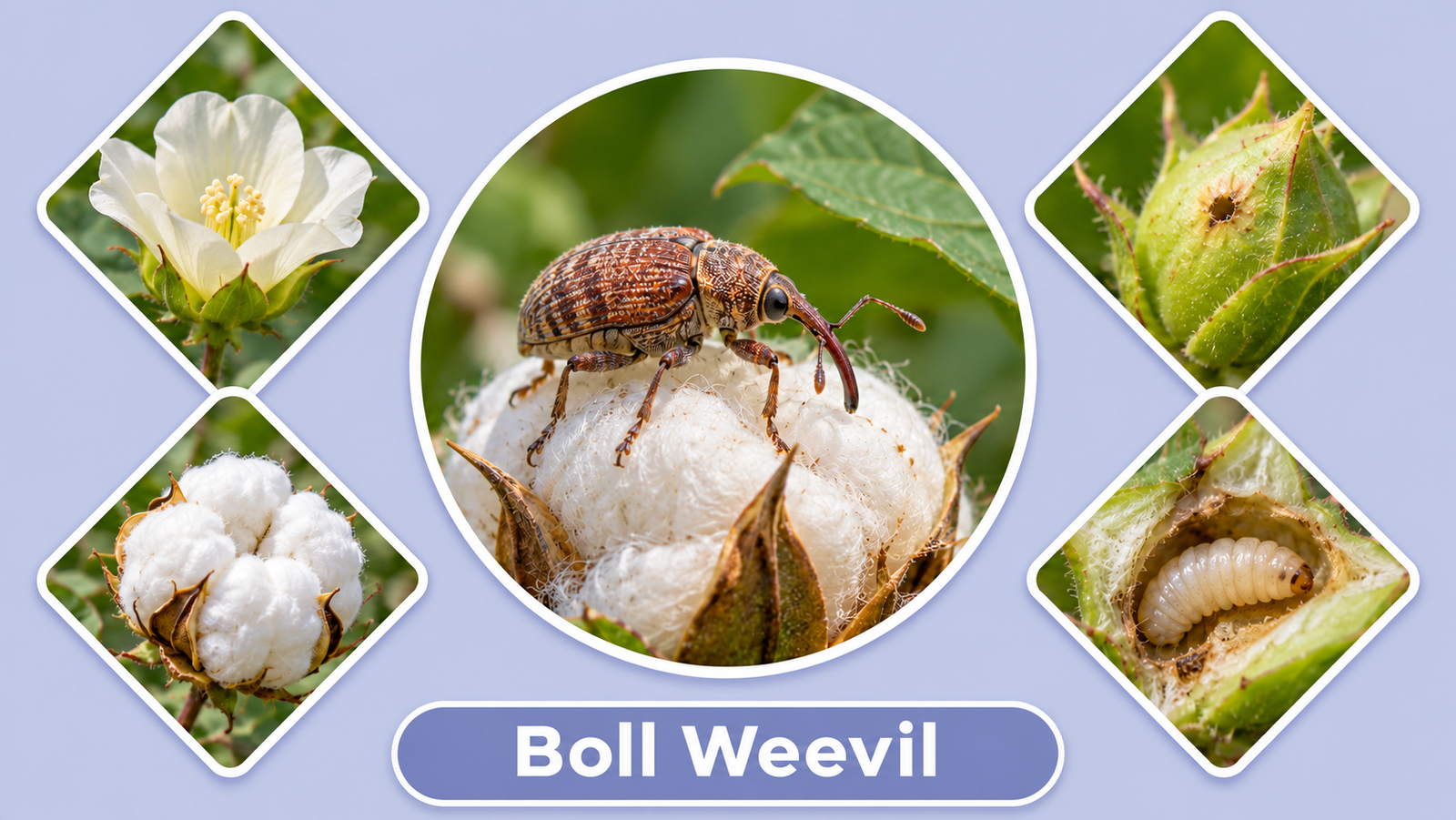
The boll weevil is a small snout beetle that feeds and reproduces in cotton’s flower buds and bolls. Its larvae develop inside these plant structures, where they can damage the cotton crop before growers notice the insect. The species, Anthonomus grandis, was once among the most damaging cotton pests in the United States. Eradication programs have removed it from most U.S. cotton acreage, but surveillance and control remain important in areas where it is still present.
What Is a Boll Weevil?
The boll weevil is a beetle in the family Curculionidae, the snout beetles. Its scientific name is Anthonomus grandis. The insect is closely associated with cotton: adults feed on cotton buds and bolls, and females lay eggs inside these developing structures. The immature stages feed out of sight within the cotton square or boll.
The boll weevil became a major agricultural pest after spreading from Mexico into the United States in the late 19th century. It caused severe crop losses and affected cotton production across the Cotton Belt. A long-running federal and state eradication program has since removed the pest from more than 99 percent of U.S. cotton acreage. Surveillance and eradication work continue in the Lower Rio Grande Valley of Texas, so a suspected boll weevil in a cotton-growing area should be reported to agricultural authorities rather than handled as an ordinary garden insect.
How to Identify a Boll Weevil
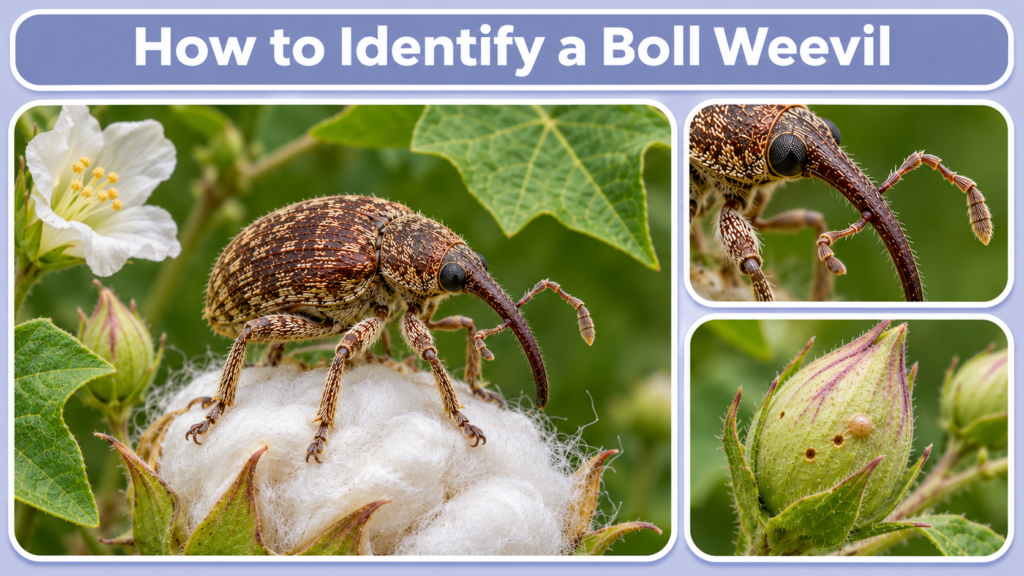
An adult boll weevil is a small, oval or pear-shaped beetle, usually less than a quarter inch long. Its color can range from reddish brown to gray or nearly black as it ages. A long snout, or rostrum, projects from the head, and the elbowed antennae attach near the snout’s tip. Close inspection may reveal two small spurs on each front femur, a feature used to help distinguish the species.
Boll weevils can be difficult to identify by color alone. Related Anthonomus weevils may look similar, and coloration changes with age and wear. Cotton damage can also be caused by other insects. For suspected specimens in a regulated cotton region, follow local reporting guidance and seek expert identification.
Signs of Boll Weevil Activity
- Small holes in squares or bolls: Adults feed on cotton reproductive structures, leaving punctures.
- Raised, brown egg-laying marks: A female cuts an opening, lays one egg, then seals the puncture with frass and secretions.
- Yellowing or flared square bracts: Infested flower buds may turn yellow and drop.
- Dropped squares and young bolls: Feeding and larval development can cause cotton fruit to fall from the plant.
- Damaged bolls: Bolls that remain may be weakened and more vulnerable to rot or other infections.
The signs can be subtle, especially when adult beetles are hidden inside the canopy. Scouts examine squares and young bolls for feeding and egg-laying punctures, and use traps as part of surveillance programs. A raised mark can suggest an egg-laying puncture, but field diagnosis should be confirmed by trained personnel when reporting or quarantine rules apply.
Boll Weevil Life Cycle
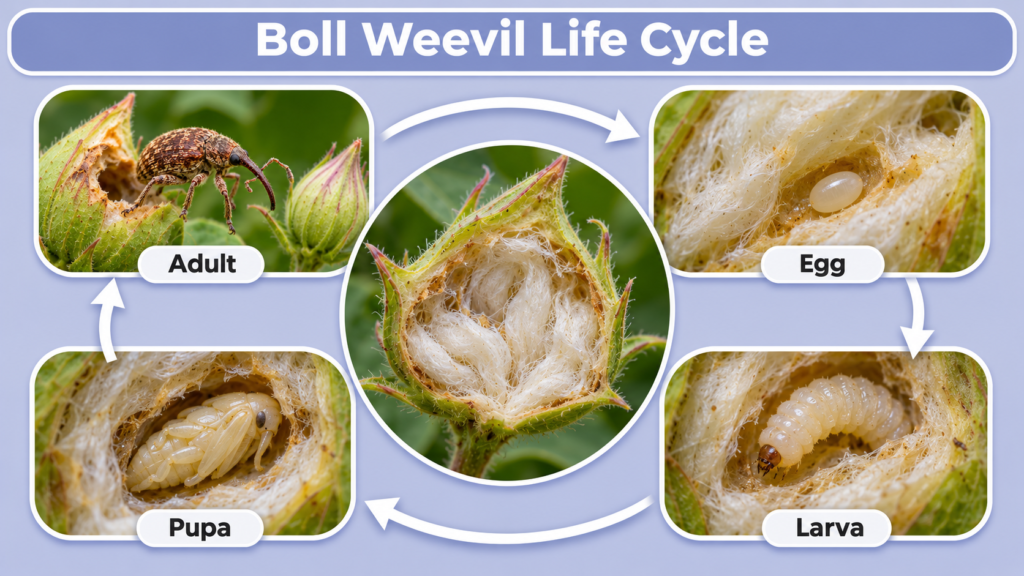
The boll weevil has four life stages: egg, larva, pupa, and adult. A female lays eggs one at a time inside cotton squares or small bolls, then covers each opening. A single female may lay up to 200 eggs during her lifetime. The eggs hatch inside the cotton structure, keeping the larvae protected as they feed.
The legless, pale larva develops inside the square or boll, then pupates in the same structure. Under favorable conditions, egg-to-adult development may take about two to three weeks, though temperature and other conditions can lengthen the cycle. Several generations may develop in a growing season in warm cotton-growing regions, allowing populations to build quickly.
New adults chew their way out of the damaged square or boll and feed on cotton before reproducing. As cotton matures and conditions change, some adults enter a resting state called diapause and spend winter in protected plant debris or leaf litter near fields. They can emerge when conditions and cotton growth are suitable. This seasonal cycle explains why monitoring is needed at multiple points during the crop year.
What Damage Do Boll Weevils Cause?
Boll weevil damage occurs mainly in cotton squares—the flower buds that form before blooms—and in young bolls. Adults feed on these structures, while females insert eggs and larvae consume internal tissue. Infested squares often yellow, their bracts flare, and they eventually drop. Young bolls may also fall, reducing the number of cotton fibers the plant can produce.
Some damaged bolls remain attached, but internal injury can lower their quality and make them more susceptible to boll rot and other infections. When weevil populations are high, repeated generations can attack new fruit as the plant continues to form squares. The impact depends on population levels, crop stage, weather, and the effectiveness of monitoring and management.
Where Are Boll Weevils Found Today?
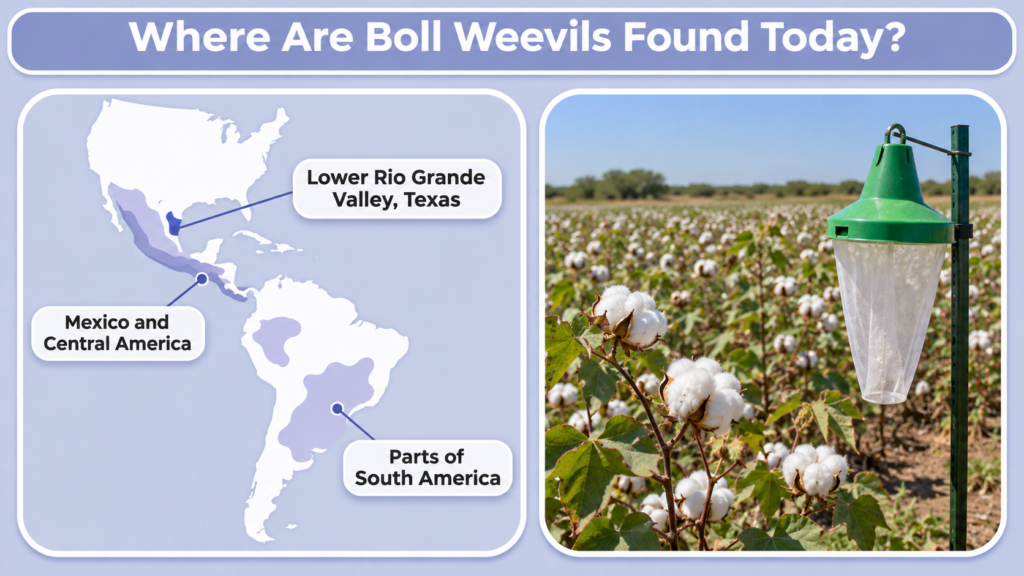
The boll weevil originated in Mexico and Central America and spread into the southern United States in the 1890s. It moved through cotton-producing states over subsequent decades, becoming a major pest throughout much of the Cotton Belt. In the United States, eradication efforts have greatly reduced its range, but APHIS continues surveillance and eradication activity in the Lower Rio Grande Valley quarantine area of Texas.
Outside the United States, boll weevils are associated with cotton-growing regions in parts of Central America, Mexico, and South America. Their distribution can change with eradication measures, crop movement, and detection, so local agricultural authorities provide the most current status. The pest is not a typical household insect and does not establish in homes.
How to Control Boll Weevils
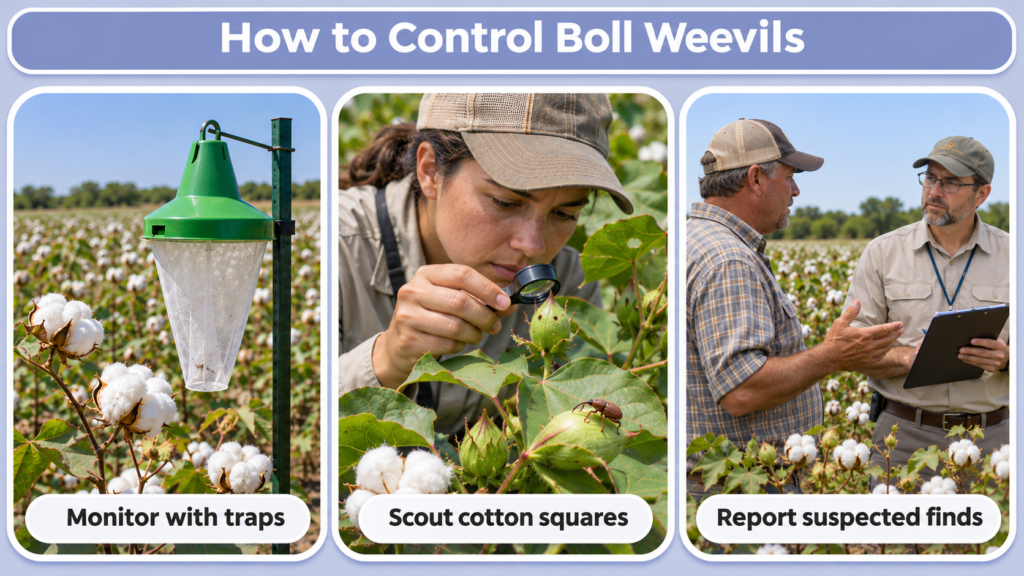
Boll weevil management in commercial cotton depends on surveillance, coordinated action, and region-specific eradication or control programs. Pheromone traps help detect adults and measure activity. Crop scouts also inspect cotton squares and bolls for signs of feeding and egg laying. Because immature weevils develop inside plant tissue, management is planned around the adult stage and the crop’s growth cycle.
In regulated areas, growers follow the official program’s instructions, which may include trapping, reporting, movement restrictions, and targeted insecticide applications. Do not transport suspected insects, cotton plants, squares, or bolls from an affected area unless authorities instruct you to do so. If you find a suspected boll weevil in a cotton field, contact your state plant regulatory official or plant health director promptly.
For general cotton production where boll weevil is present, agricultural extension specialists can advise on current monitoring thresholds, treatment timing, and label-approved options. Historical management guides describe pheromone-based surveillance, timely crop practices, and insecticide use, but recommendations must be updated for current regulations and local conditions. A broad-spectrum spray chosen without confirming the pest can harm beneficial insects and may not address the source of damage.
How the Boll Weevil Eradication Program Works
The U.S. Boll Weevil Eradication Program combines surveillance and area-wide suppression to keep the pest from rebuilding populations. APHIS reports that the effort has eradicated boll weevil from more than 99 percent of U.S. cotton acreage. In the remaining quarantine area, program personnel use traps and coordinated treatments to detect and eliminate populations while protecting cotton production beyond the affected zone.
Eradication programs rely on cooperation among growers, state and federal agencies, and cotton organizations. Reporting a suspected beetle quickly matters because a detection can trigger an official response. The exact procedures vary by location, so follow guidance from local plant health officials rather than attempting an independent treatment.
Is a Boll Weevil Harmful to People?
Boll weevils are agricultural pests, not a direct threat to people or pets. They do not bite or sting people. Their importance comes from the damage they can cause to cotton squares and bolls, which may lead to crop losses and affect agricultural businesses and communities.
If you encounter a small beetle outside cotton-growing areas, it may be another weevil species. Many beetles have a snout-like head, and some related species are difficult to identify without close examination. If you are near a cotton field in a regulated area and suspect a boll weevil, do not release or move it; report the sighting to the appropriate agricultural authority.
FAQs
What does a boll weevil look like?
A boll weevil is a small reddish-brown, gray, or dark beetle with an oval body and a long curved snout. It is usually under a quarter inch long. Its elbowed antennae sit near the snout’s tip, and small spurs on the front legs can help confirm identification.
What does a boll weevil eat?
Boll weevils feed and reproduce mainly on cotton. Adults feed on squares and bolls, while larvae develop inside these structures. Some adults may feed on pollen from other plants, but cotton is central to the insect’s breeding cycle and its impact as a crop pest.
How long does the boll weevil life cycle take?
In warm, favorable conditions, boll weevils can complete the egg-to-adult cycle in roughly two to three weeks. Cooler temperatures and other environmental conditions can extend development. Multiple generations may occur in a cotton season, particularly in warm regions.
Does the boll weevil still exist in the United States?
Yes, though eradication programs have removed it from more than 99 percent of U.S. cotton acreage. Surveillance and eradication activities continue in the Lower Rio Grande Valley of Texas. Check current APHIS and state plant health information for the latest local status.
How do farmers control boll weevils?
Farmers and eradication programs use pheromone traps, crop scouting, reporting, and coordinated treatments based on local rules and pest activity. Because larvae develop inside cotton squares and bolls, timing and area-wide coordination are important. Growers should follow current extension and regulatory guidance rather than relying on outdated spray schedules.