
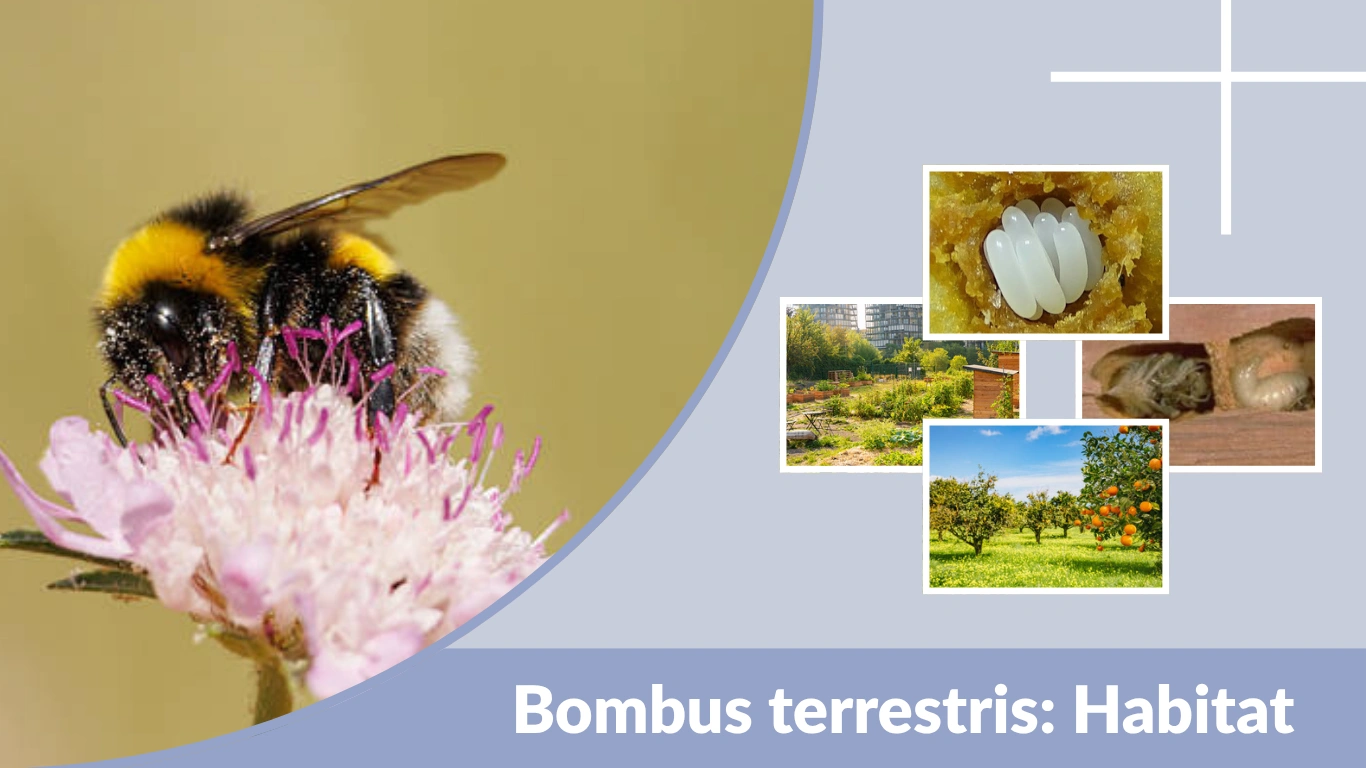
Bombus terrestris, commonly known as the buff-tailed bumblebee, is one of the most widespread and economically important bumblebee species in the world. Native to Europe, it has been introduced to many other regions due to its exceptional efficiency as a pollinator. This species plays a vital role in both natural ecosystems and modern agriculture, particularly in greenhouse crop production. Its adaptability, social behavior, and unique pollination technique make it a key subject of scientific and ecological study.
Taxonomy and Classification
Bombus terrestris belongs to the family Apidae, which includes honeybees, stingless bees, and other bumblebees. It is classified within the genus Bombus, a group characterized by large, hairy bodies and social colony structures.
Scientific Classification
- Kingdom: Animalia
- Phylum: Arthropoda
- Class: Insecta
- Order: Hymenoptera
- Family: Apidae
- Genus: Bombus
- Species: Bombus terrestris
Subspecies and Variants
Several subspecies of Bombus terrestris exist, often adapted to different climatic regions. These variations can differ slightly in coloration, size, and behavior. For example, some subspecies are better suited to colder climates, while others thrive in warmer environments.
Bombus terrestris Physical Characteristics
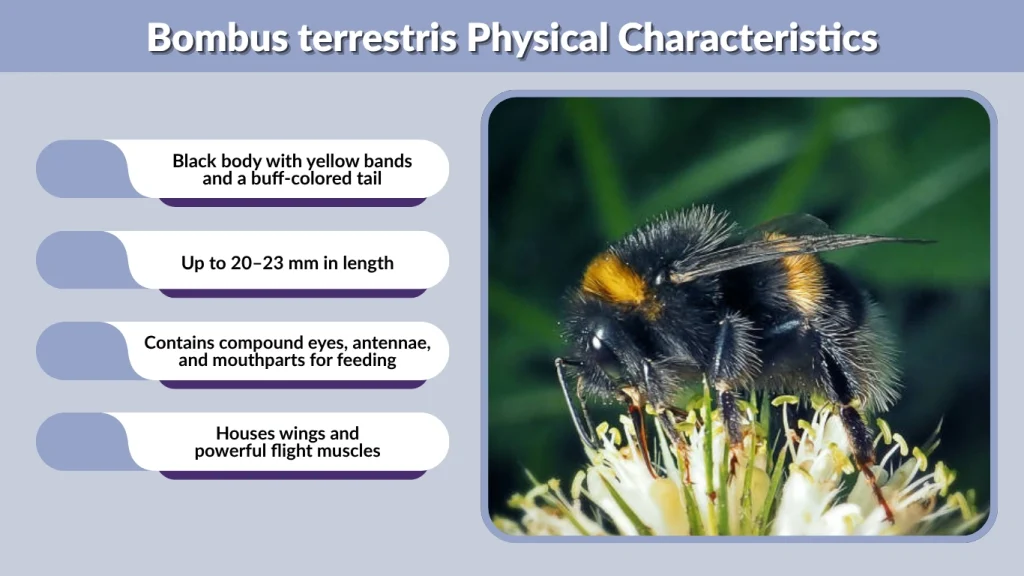
Bombus terrestris is easily recognizable due to its distinctive coloration and robust body. Like other bumblebees, it has a dense covering of hair (setae), which aids in pollen collection.
Size and Coloration
The species displays a characteristic black body with yellow bands and a buff-colored tail, which gives it its common name. Queens are significantly larger than workers, often reaching up to 20–23 mm in length, while workers are smaller and males fall somewhere in between.
Body Structure
The body is divided into three main parts:
- Head: Contains compound eyes, antennae, and mouthparts for feeding
- Thorax: Houses wings and powerful flight muscles
- Abdomen: Contains reproductive organs and, in females, a stinger
Their wings beat rapidly, allowing them to hover and perform specialized pollination techniques.
Differences Between Castes
- Queen: Largest, responsible for reproduction and colony founding
- Workers: Smaller females that forage and maintain the nest
- Males (Drones): Primarily involved in mating and do not participate in colony work
Bombus terrestris Habitat and Distribution
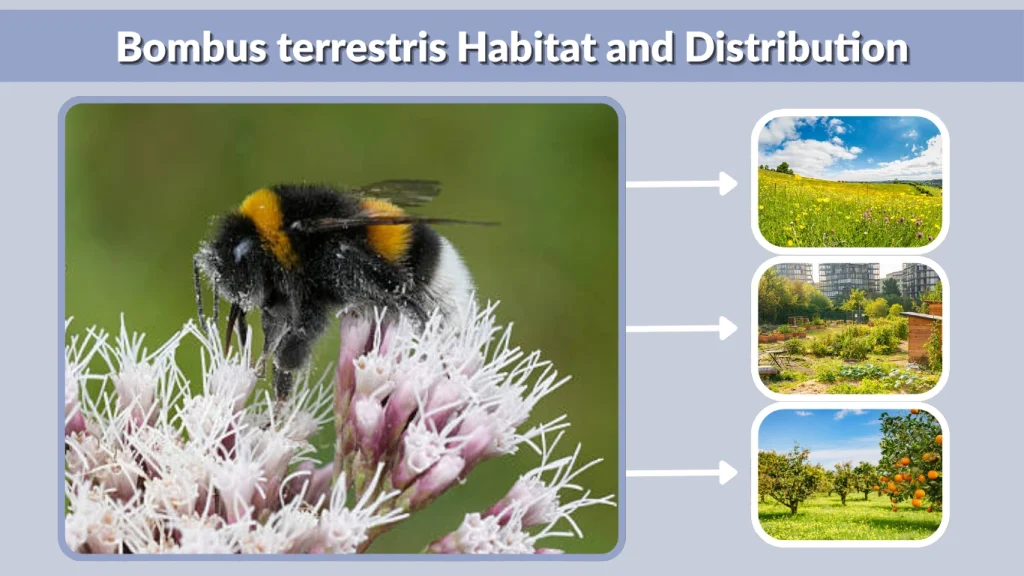
Bombus terrestris is highly adaptable and can survive in a wide range of environments, which contributes to its broad geographic distribution.
Geographic Distribution
Originally native to Europe, this species has been introduced to parts of Asia, South America, New Zealand, and the Middle East. Its global spread is largely due to its use in commercial pollination.
Preferred Habitats
This bumblebee thrives in:
- Grasslands and meadows
- Gardens and urban green spaces
- Agricultural fields and orchards
It often nests underground, using abandoned rodent burrows or sheltered cavities.
Bombus terrestris Life Cycle and Development
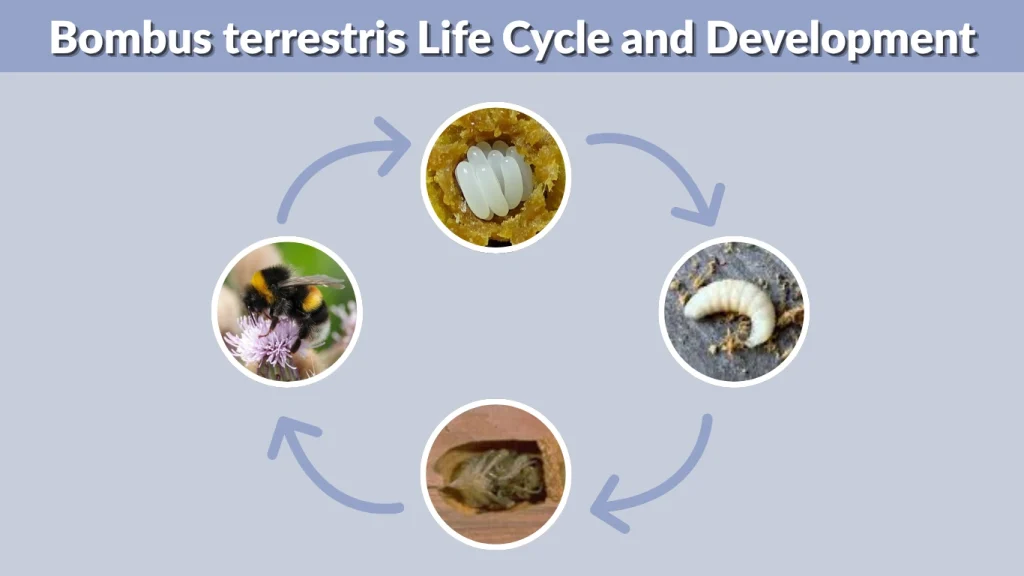
The life cycle of Bombus terrestris follows a typical bumblebee pattern, consisting of four developmental stages and a seasonal colony cycle.
Colony Cycle
The cycle begins when a fertilized queen emerges from hibernation in early spring. She searches for a suitable nesting site and begins laying eggs. As the first generation of workers emerges, they take over foraging duties, allowing the queen to focus on reproduction.
Development Stages
- Egg: Laid by the queen in wax cells
- Larva: Fed by workers with nectar and pollen
- Pupa: Undergoes metamorphosis
- Adult: Emerges ready to perform colony roles
Seasonal Behavior
Colonies are annual, meaning they last for one season. By late summer, new queens and males are produced. After mating, the new queens hibernate through winter, while the rest of the colony dies off.
Behavior and Social Structure
Bombus terrestris is a eusocial insect, meaning it lives in organized colonies with division of labor.
Social Organization
Each colony is centered around a single queen. Workers perform tasks such as:
- Foraging for food
- Feeding larvae
- Defending the nest
This structured system ensures efficient colony functioning.
Foraging Behavior
Workers collect nectar for energy and pollen for protein. They are known for their ability to forage in cooler temperatures and low light conditions, making them more versatile than many other pollinators.
Communication Methods
Communication within the colony occurs through:
- Chemical signals (pheromones)
- Physical interactions and vibrations
These methods help coordinate activities like foraging and defense.
Bombus terrestris Pollination and Ecological Importance
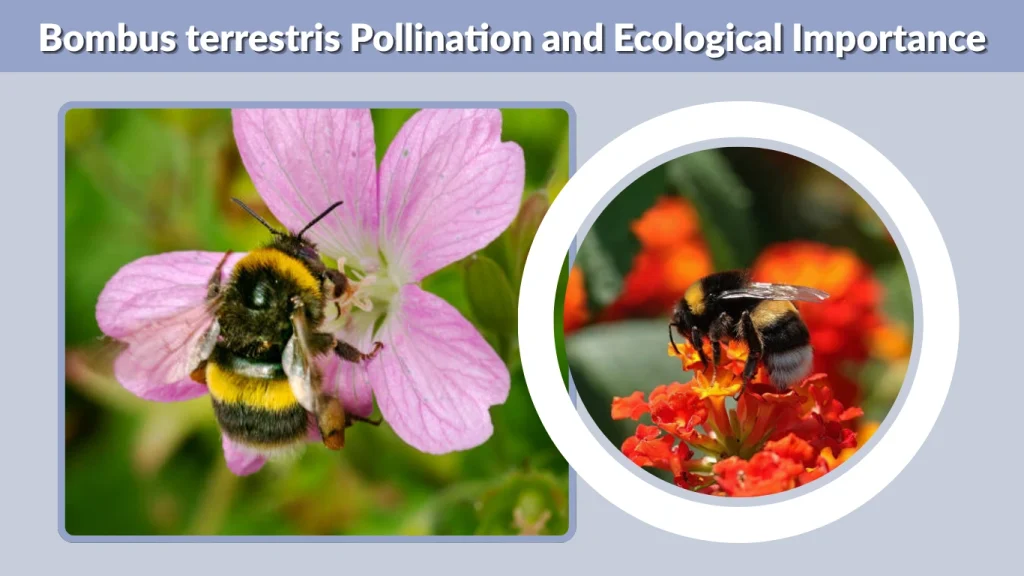
Bombus terrestris is one of the most effective natural pollinators, playing a crucial role in maintaining both agricultural productivity and ecosystem stability.
Pollination Mechanism
One of its most remarkable abilities is buzz pollination (sonication). The bee vibrates its flight muscles while holding onto a flower, releasing tightly packed pollen that would otherwise remain inaccessible. This method is especially important for certain crops that cannot be pollinated efficiently by other insects.
Crops Pollinated
Bombus terrestris is widely used to pollinate a variety of crops, including:
- Tomatoes
- Peppers
- Eggplants
- Strawberries and other berries
Its efficiency in greenhouse environments has made it indispensable in modern agriculture.
Role in Biodiversity
Beyond agriculture, this species supports natural ecosystems by:
- Facilitating plant reproduction
- Maintaining genetic diversity in flowering plants
- Supporting food chains that depend on plants
Its presence is often an indicator of a healthy ecosystem.
Economic Importance
The economic value of Bombus terrestris is significant, particularly in commercial farming and greenhouse industries.
Agricultural Use
Farmers rely on this species for controlled pollination, especially in enclosed environments where natural pollinators may be absent. Its ability to work in low light and cooler conditions makes it ideal for greenhouses.
Commercial Breeding
Colonies of Bombus terrestris are mass-produced and sold worldwide. These managed colonies are carefully transported and introduced into agricultural systems to improve crop yields.
Benefits to Farmers
- Increased fruit yield and size
- Improved crop quality
- Reduced need for manual pollination
- Cost-effective pollination solution
As a result, the species has become a cornerstone of modern horticulture.
Threats and Conservation
Despite its success, Bombus terrestris faces several environmental challenges that could impact its populations and effectiveness.
Major Threats
- Habitat Loss: Urbanization and intensive agriculture reduce nesting and foraging areas
- Pesticides: Exposure to chemicals can impair navigation, reproduction, and survival
- Climate Change: Alters flowering times and disrupts synchronization with food sources
- Competition and Invasive Impact: In introduced regions, it may compete with native pollinators
Conservation Strategies
Efforts to protect this species and other pollinators include:
- Promoting pollinator-friendly habitats with diverse flowering plants
- Reducing pesticide use and adopting sustainable farming practices
- Supporting ecological research and monitoring programs
- Regulating commercial introduction to prevent ecological imbalance
Interesting Facts
- Bombus terrestris can generate heat by vibrating its muscles, allowing it to fly in cold weather
- It is one of the first bees active in early spring
- Colonies can contain hundreds of individuals
- It has been widely studied for its learning and memory abilities
FAQs
What does Bombus terrestris eat?
Bombus terrestris primarily feeds on nectar and pollen collected from flowers. Nectar provides energy for flight, while pollen supplies essential proteins for larval development. Workers actively forage and bring these resources back to the colony to sustain both the queen and developing brood.
How long does a Bombus terrestris colony last?
A colony typically lasts for one season, usually from early spring to late summer or early autumn. After producing new queens and males, the colony declines. Only the newly fertilized queens survive by hibernating through winter to start new colonies the following year.
Can Bombus terrestris sting humans?
Yes, female Bombus terrestris (queens and workers) can sting, but they are generally non-aggressive and only sting when threatened. Unlike honeybees, they can sting multiple times because their stinger does not detach. Males, however, do not have stingers and cannot sting.
Why is Bombus terrestris used in greenhouses?
This species is widely used in greenhouses because it performs efficient buzz pollination and can work in low light and cooler temperatures. These traits make it ideal for crops like tomatoes, where traditional pollinators may be less effective or unable to function properly.
Is Bombus terrestris an invasive species?
In some regions where it has been introduced, Bombus terrestris is considered invasive. It can compete with native pollinators for resources and may disrupt local ecosystems. Careful management and regulation are necessary to balance its agricultural benefits with environmental protection.
