
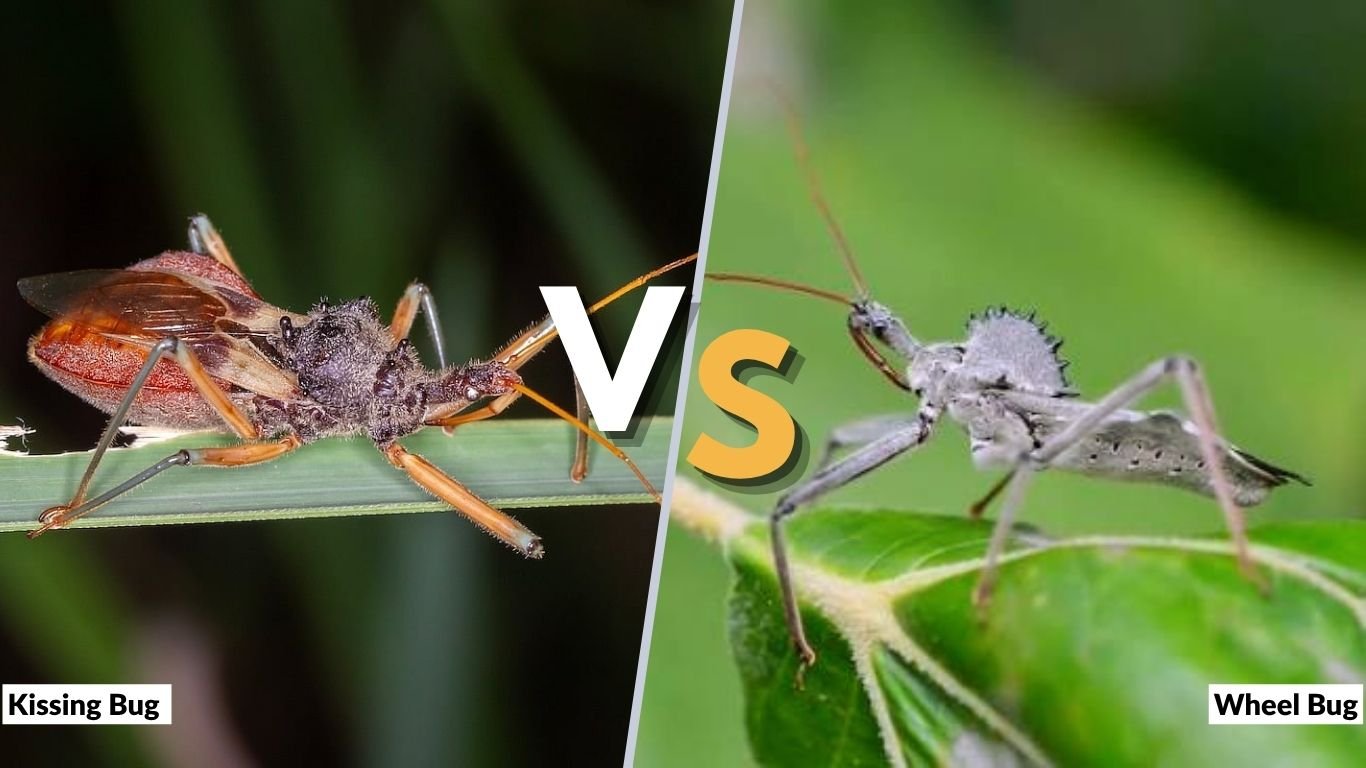
Kissing bugs and wheel bugs may look similar because both belong to the assassin bug family. However, they have very different diets, behaviors, and health risks. Kissing bugs feed on the blood of humans and animals, while wheel bugs hunt caterpillars and other insects. Adult wheel bugs are usually easy to recognize by the cogwheel-shaped crest on their backs. Correct identification is important because some kissing bugs can transmit the parasite associated with Chagas disease, whereas wheel bugs do not.
Are Wheel Bugs and Kissing Bugs the Same?
No, wheel bugs and kissing bugs are not the same insect. They are related because both belong to the assassin bug family, Reduviidae, but they belong to different groups within that family.
The wheel bug, Arilus cristatus, is a predatory insect that feeds on other arthropods. “Kissing bug” is a common name applied to blood-feeding insects in the subfamily Triatominae.
A useful way to remember the relationship is:
- All wheel bugs and kissing bugs are assassin bugs.
- Wheel bugs are not kissing bugs.
- Most assassin bugs are neither wheel bugs nor kissing bugs.
| Feature | Wheel Bug | Kissing Bug |
| Main diet | Insects and other arthropods | Blood from animals and people |
| Adult identification | Cogwheel-shaped crest | Flat back without a wheel |
| Typical color | Gray, brown, or dark gray | Dark brown or black with colored markings |
| Usual habitat | Trees, shrubs, and gardens | Animal nests, cracks, and sheltered structures |
| Human interaction | Bites defensively | May bite while taking a blood meal |
| Chagas disease risk | Does not transmit Chagas disease | Some may carry Trypanosoma cruzi |
| Garden role | Generally beneficial predator | Not considered a garden pest predator |
How to Identify a Wheel Bug
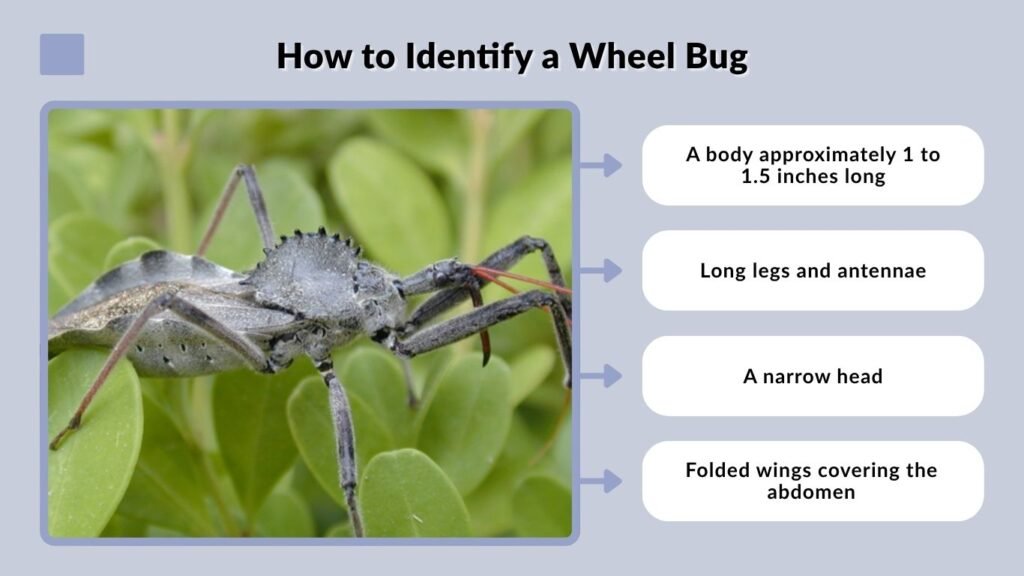
An adult wheel bug is one of the most distinctive North American assassin bugs. Its name comes from the raised, toothed structure located directly behind its head.
Wheel-Like Crest
The most reliable identification feature is the semicircular crest on the insect’s thorax. It resembles part of a gear or cogwheel and has several noticeable teeth.
Kissing bugs never develop this wheel-shaped structure. Therefore, an adult insect with a large cogwheel on its back is a wheel bug rather than a kissing bug.
Color and Body Shape
Adult wheel bugs are usually dusty gray, brownish gray, or nearly black. Their rough coloration helps them blend into bark, branches, and dry vegetation.
Other common characteristics include:
- A body approximately 1 to 1.5 inches long
- Long legs and antennae
- A narrow head
- Folded wings covering the abdomen
- A thick piercing beak held beneath the body
- A prominent toothed crest on the thorax
The abdomen may appear somewhat raised or curved, but it normally lacks the bright alternating edge markings commonly associated with many kissing bugs.
Wheel Bug Nymphs
Young wheel bugs are more difficult to identify because they do not yet have wings or a wheel-shaped crest. Early nymphs often have red or orange abdomens with black heads and legs.
The wheel develops only when the insect reaches adulthood. As a result, a wheel bug nymph may be mistaken for a kissing bug or another colorful assassin bug.
How to Identify a Kissing Bug
Kissing bugs generally have elongated, somewhat flattened bodies. Their exact appearance varies by species, but several features can help separate them from adult wheel bugs.
Long, Cone-Shaped Head
A kissing bug’s head is usually long and narrow, sometimes described as cone-shaped. It appears noticeably extended between the eyes and the mouthpart.
The insect’s piercing beak is positioned beneath its head. Kissing bugs use this mouthpart to feed on the blood of mammals, birds, reptiles, and other vertebrate hosts.
Colored Abdominal Edges
Many kissing bugs are dark brown or black with red, orange, yellow, or tan markings along the outer edges of the abdomen. These markings may appear as spots, short bars, or alternating bands.
However, color alone is not enough for a positive identification. Some species have less obvious markings, and several harmless insects have similar color patterns.
No Cogwheel Crest
The absence of a wheel does not automatically prove that an insect is a kissing bug. Many other assassin bugs, seed bugs, leaf-footed bugs, and plant bugs also lack a crest.
Still, the presence of a large cogwheel immediately identifies an adult wheel bug and rules out a kissing bug.
Wheel Bug vs Kissing Bug Diet
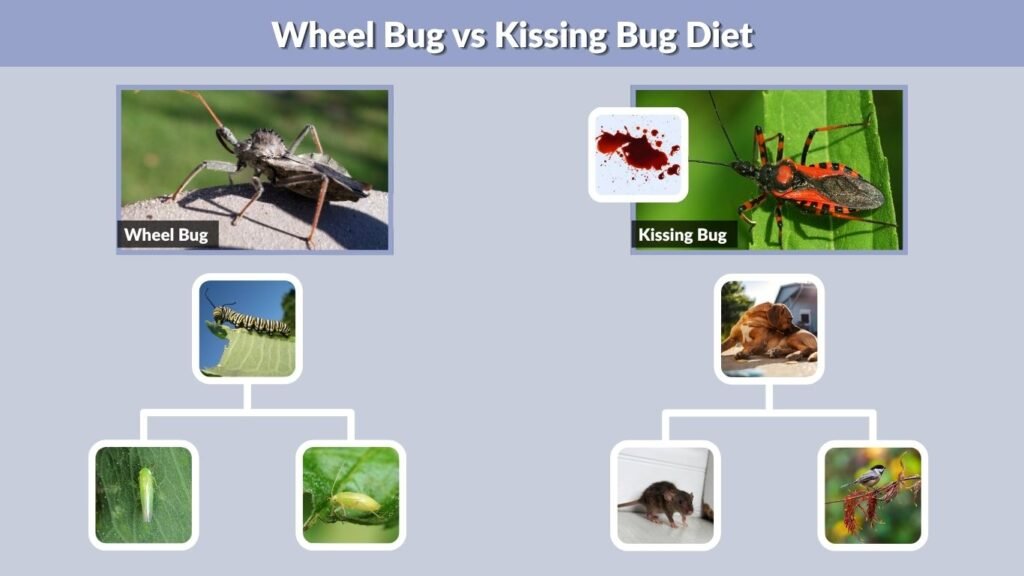
Their feeding habits represent one of the biggest differences between these insects.
What Wheel Bugs Eat
Wheel bugs are insect predators. They hunt from foliage, tree trunks, flowers, and shrubs, capturing prey with their front legs.
Common prey includes:
- Caterpillars
- Beetles
- Aphids
- Leafhoppers
- Sawfly larvae
- Stink bugs
- Moths
- Flies
- Other assassin bugs
After capturing an insect, the wheel bug inserts its beak and injects saliva that immobilizes the prey and breaks down its internal tissues. It then consumes the liquefied material.
Because wheel bugs eat many plant-damaging insects, they are generally considered beneficial garden predators. However, they may occasionally capture pollinators or other helpful insects.
What Kissing Bugs Eat
Kissing bugs feed on vertebrate blood rather than other insects. Depending on the species and habitat, they may feed on:
- Wild mammals
- Domestic dogs
- Rodents
- Birds
- Reptiles
- Humans
They are called kissing bugs because some species may bite exposed skin around the face while a person sleeps. However, bites can occur on other exposed parts of the body as well.
Kissing Bug Bite vs Wheel Bug Bite
Both insects can bite people, but the reasons and potential consequences are different.
Wheel Bug Bite
A wheel bug does not view humans as food. It usually bites only when it is picked up, squeezed, trapped against the skin, or otherwise threatened.
The bite can be immediately and intensely painful. It may cause:
- Burning pain
- Redness
- Localized swelling
- Itching
- Tenderness
- Temporary numbness
Wheel bugs are not known to transmit Chagas disease. Their bite is primarily a defensive injury rather than a blood-feeding event.
Wash the area with soap and water and apply a wrapped cold pack. Seek medical assistance for breathing problems, facial swelling, widespread hives, severe pain, or rapidly increasing swelling.
Kissing Bug Bite
A kissing bug intentionally bites to obtain a blood meal. The bite itself may be mild or go unnoticed because the insect usually feeds while its host is resting.
Chagas disease is not normally transmitted directly through the bite. An infected kissing bug may defecate during or after feeding. Infection can occur when feces containing the parasite Trypanosoma cruzi are rubbed into the bite, eyes, mouth, or damaged skin. Not every kissing bug carries the parasite, and finding one does not mean that transmission has occurred.
Where Are These Bugs Usually Found?
Wheel Bug Habitat
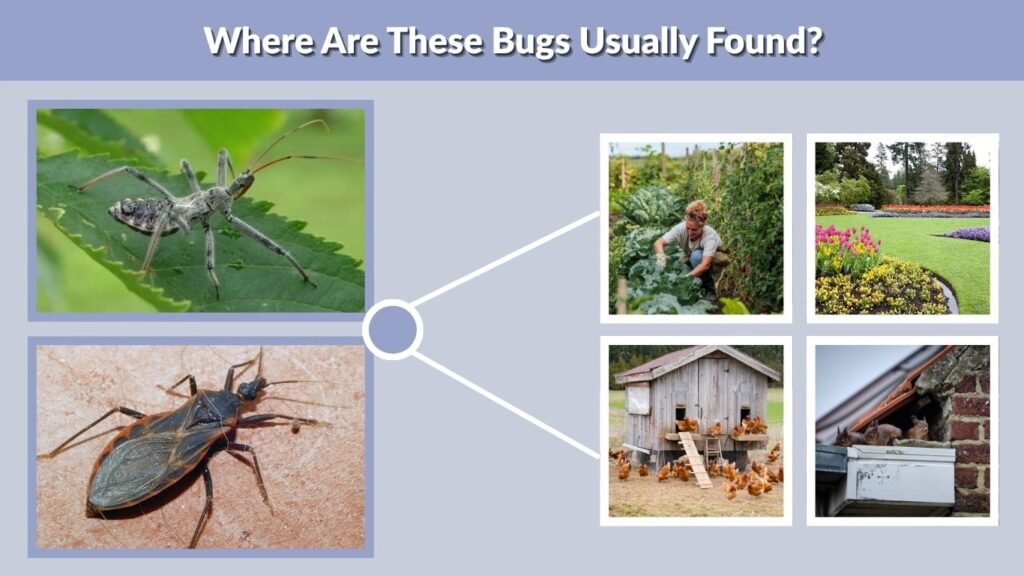
Wheel bugs are usually found outdoors in areas with abundant insect prey. Common locations include:
- Vegetable gardens
- Flower beds
- Forest edges
- Trees and shrubs
- Orchards
- Parks
- Areas near outdoor lights
Seeing one on a plant does not mean it is eating the plant. It is probably searching for prey or waiting for another insect to approach.
Kissing Bug Habitat
Kissing bugs often hide in protected areas near animals that can provide blood meals. Depending on the region, they may occur in:
- Rodent nests
- Woodpiles
- Dog kennels
- Chicken coops
- Cracks in walls
- Spaces beneath porches
- Roof or attic gaps
- Outdoor animal shelters
An occasional insect inside a home does not necessarily indicate an infestation. Repeated findings, particularly near sleeping areas, deserve professional investigation.
What Should You Do After Finding One?
Do not handle either insect with bare hands. Wheel bugs can deliver painful defensive bites, while suspected kissing bugs should be collected without crushing them.
Place a container over the insect and carefully slide a stiff piece of paper underneath. Seal it inside the container without touching it directly. Photograph the insect from above and from the side, particularly the back, abdominal edges, and head.
A suspected kissing bug can be submitted to a local health department, university extension office, or qualified insect-identification service. Texas A&M also notes that photographs can often help specialists distinguish kissing bugs from wheel bugs and other look-alikes.
FAQs
Is a Wheel Bug a Kissing Bug?
No. Both belong to the assassin bug family, but they have different diets and behaviors. Wheel bugs hunt insects, while kissing bugs feed on vertebrate blood.
What Is the Easiest Way to Tell Them Apart?
Check the insect’s back. An adult wheel bug has a large, toothed crest resembling a cogwheel. Kissing bugs have relatively flat backs and never develop this structure.
Can Wheel Bugs Transmit Chagas Disease?
No. Wheel bugs are not Chagas disease vectors. The parasite associated with Chagas disease is transmitted by infected triatomine bugs, commonly called kissing bugs.
Are Wheel Bugs Dangerous?
Wheel bugs are not aggressive, but they can produce a very painful defensive bite. Observe them without touching them and use a container if one must be moved.
Should I Kill a Wheel Bug in My Garden?
Usually not. Wheel bugs consume numerous plant-damaging insects and can contribute to natural garden pest control. Leave them undisturbed unless they are inside a building or somewhere they could be accidentally handled.
