
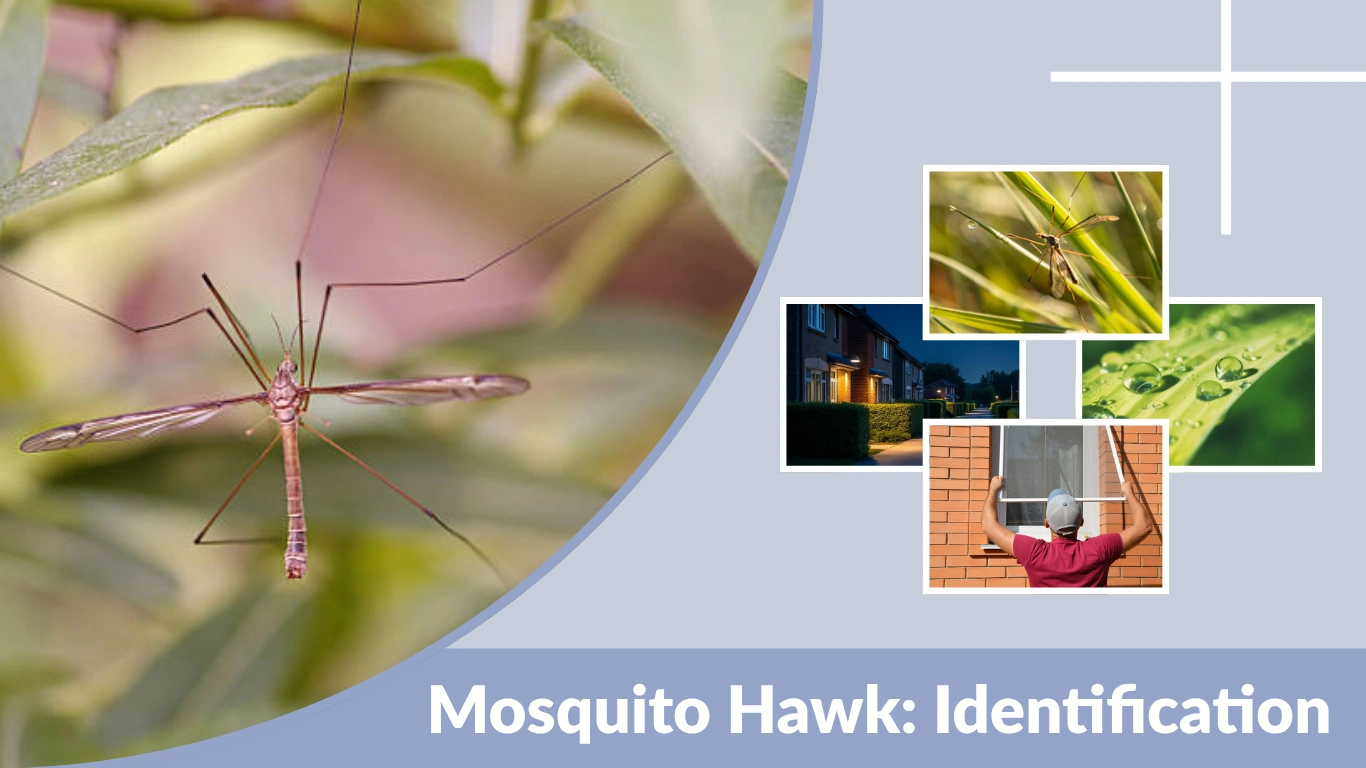
The term “mosquito hawk” often causes confusion and even fear among people. Many assume that these insects are large, aggressive mosquitoes or predators that hunt mosquitoes. In reality, mosquito hawks are harmless insects that are commonly misunderstood.
Mosquito hawks are actually crane flies, and despite their mosquito-like appearance, they do not bite, sting, or spread diseases. Their long legs and large wings make them look intimidating, but they pose no threat to humans. Understanding what mosquito hawks are, how to identify them, and what they actually do can help clear up common myths and reduce unnecessary concern.
This article explores the true nature of mosquito hawks, including their identification, behavior, and whether they are dangerous or beneficial.
What Is a Mosquito Hawk?
A mosquito hawk is a common name used to describe crane flies, a group of insects belonging to the family Tipulidae. Although they resemble oversized mosquitoes, they are entirely different insects with very different behaviors.
The name “mosquito hawk” comes from the mistaken belief that these insects hunt or eat mosquitoes. However, this is a myth. Mosquito hawks do not prey on mosquitoes and are not blood-feeding insects.
Crane flies are commonly found in gardens, grassy areas, and near water sources. They are especially noticeable during certain seasons when they appear in large numbers. Despite their appearance, they are harmless and play a minor role in the ecosystem.
Mosquito Hawk Identification
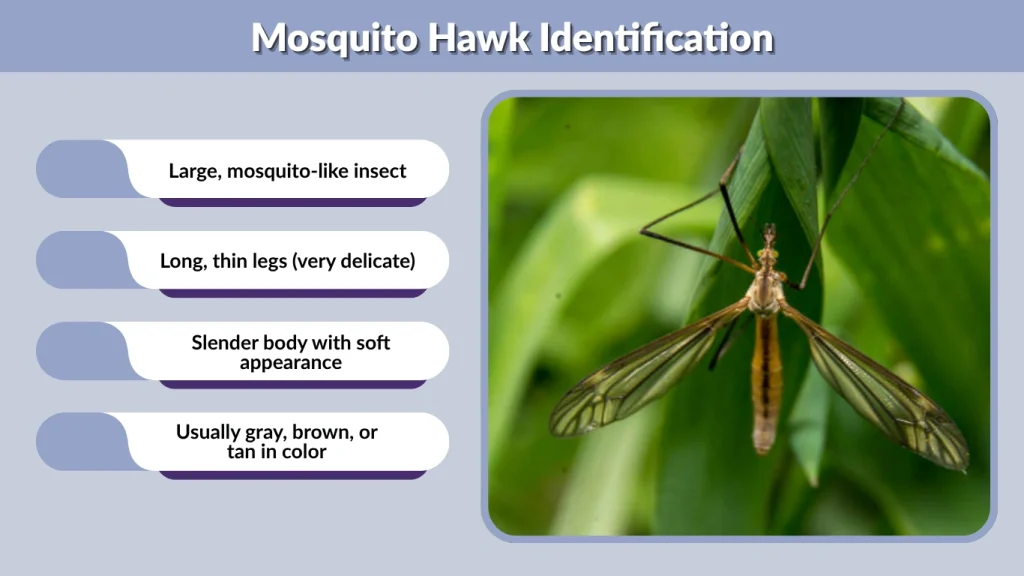
Mosquito hawk identification involves recognizing crane flies based on their size, shape, and behavior. Although they resemble large mosquitoes, they are harmless and have distinct features that make them easy to identify once you know what to look for.
Key Identification Points:
- Large, mosquito-like insect
- Long, thin legs (very delicate)
- Slender body with soft appearance
- One pair of wide wings
- Usually gray, brown, or tan in color
Quick Recognition Features:
- Much larger than regular mosquitoes
- Slow, clumsy flying pattern
- Often seen around lights or grassy areas
- Does not bite or sting
Easy Identification Clues:
- Legs may detach easily when handled
- Short lifespan as adults
- Commonly mistaken for “giant mosquitoes”
Mosquito Hawk vs Mosquito
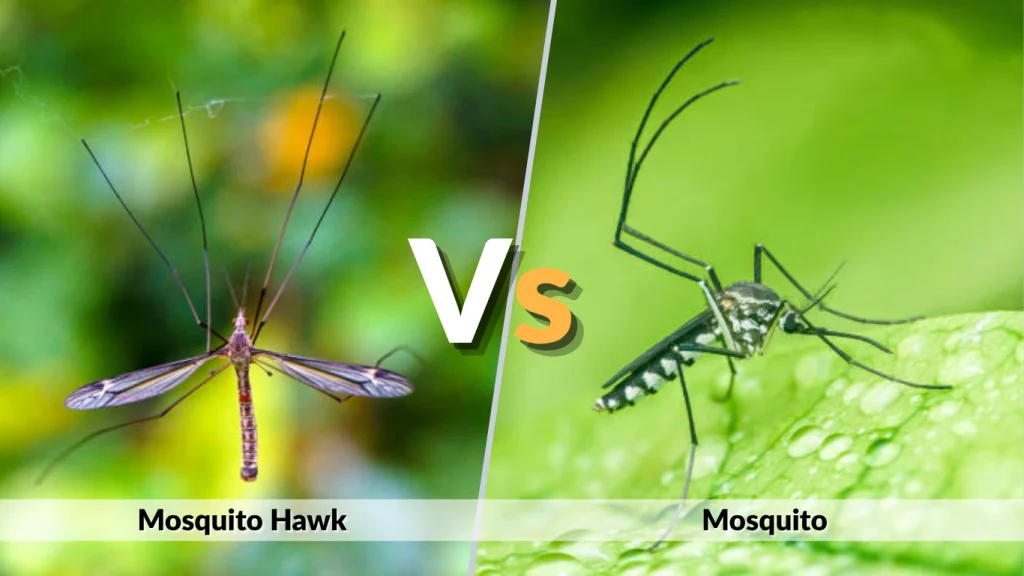
Many people confuse mosquito hawks with actual mosquitoes, but they are very different insects. Understanding these differences helps eliminate fear and confusion.
Key Differences
- Size
Mosquito hawks are much larger, with long legs and wider wings, while mosquitoes are small and compact. - Behavior
Mosquitoes are active feeders that seek blood, whereas mosquito hawks do not bite or feed on humans. - Diet
Mosquitoes feed on blood (females) and nectar, while mosquito hawks either feed on nectar or do not eat at all during adulthood. - Movement
Mosquitoes are fast and precise flyers, while mosquito hawks are slow and clumsy.
These differences make it clear that mosquito hawks are harmless insects that are often mistaken for something dangerous.
Do Mosquito Hawks Bite or Sting?
One of the most common questions people ask is whether mosquito hawks can bite or sting. The simple answer is no.
Mosquito hawks do not have the ability to bite humans or animals. Unlike mosquitoes, they lack a proboscis designed for piercing skin. They also do not have a stinger or any venomous features.
Even if a mosquito hawk lands on your skin, it will not attempt to bite. These insects are completely harmless and pose no threat to human health. Their appearance may be intimidating, but they are among the most harmless flying insects you may encounter.
What Do Mosquito Hawks Eat?
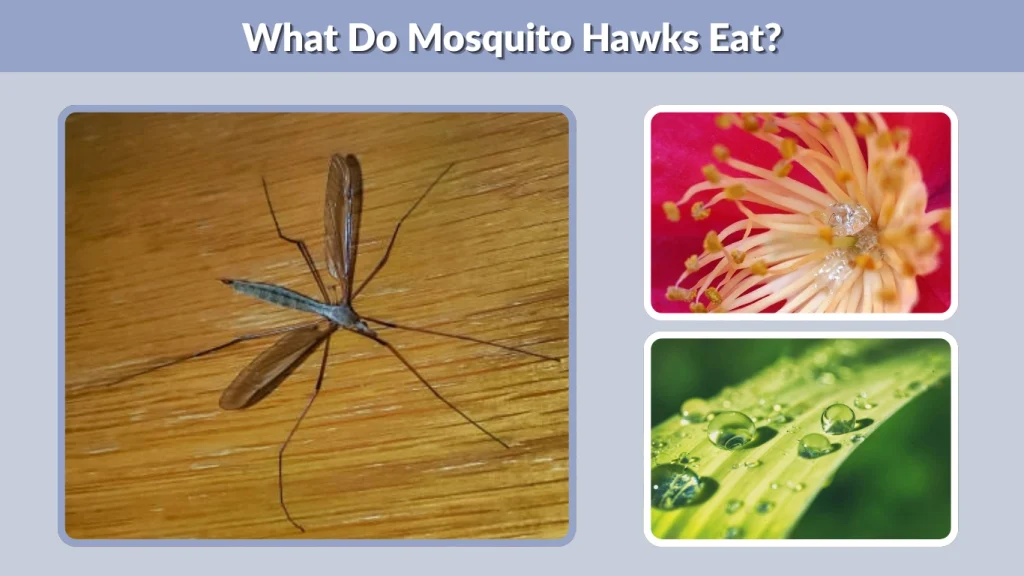
Another widespread myth is that mosquito hawks eat mosquitoes. Despite their name, this is not true.
Adult mosquito hawks (crane flies) typically do not feed much at all. Some species may consume small amounts of nectar or plant juices, while others may not eat during their short adult lifespan. Their primary purpose as adults is reproduction.
The larvae of mosquito hawks, often called “leatherjackets,” live in soil or water and feed on organic matter such as decaying plants and roots. In some cases, they may feed on grass roots, which can make them minor pests in lawns.
Overall, mosquito hawks do not play any role in controlling mosquito populations, but they are also not harmful to humans.
Are Mosquito Hawks Dangerous?
Mosquito hawks may look intimidating due to their large size and long legs, but they are completely harmless to humans. They do not bite, sting, or transmit diseases. Unlike mosquitoes, they have no interest in feeding on blood.
Key Points
- Do not bite or sting
- Do not spread diseases
- Harmless to humans and pets
- May only be a nuisance due to their presence
In rare cases, their larvae can affect lawns by feeding on grass roots, but this is generally not a serious problem. Overall, mosquito hawks are more of a harmless inconvenience than a threat.
Role in Ecosystem
Although they may seem useless, mosquito hawks play a small but important role in the ecosystem.
Roles
- Decomposition: Their larvae help break down organic matter in soil
- Food Source: They serve as food for birds, fish, and other insects
- Soil Health: Larval activity can contribute to soil processes
Even though they are not major contributors, they are part of the natural food chain and ecosystem balance.
Why Do Mosquito Hawks Come Inside?
Mosquito hawks often enter homes accidentally, which can alarm people. However, their presence indoors is usually harmless.
Common Reasons
- Attracted to Light: Like many insects, they are drawn to indoor lighting
- Seeking Shelter: They may enter homes to escape weather conditions
- Accidental Entry: Open doors and windows make it easy for them to fly inside
Once indoors, they usually do not survive long and can be easily removed without harm.
How to Get Rid of Mosquito Hawks
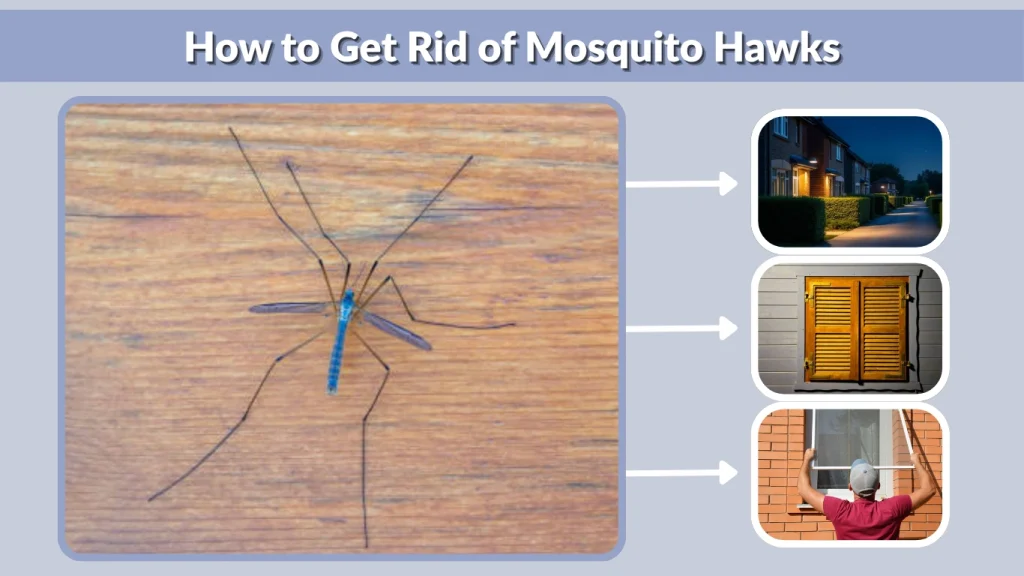
If mosquito hawks become a nuisance, simple control methods can help reduce their presence.
Effective Methods
- Turn off outdoor lights or use dim lighting to reduce attraction
- Keep windows and doors closed, especially at night
- Install screens on windows and vents
- Reduce moisture and maintain lawns to limit breeding areas
Since they are harmless, there is usually no need for chemical control. Gentle removal or prevention is sufficient.
Quick Facts About Mosquito Hawks
- Not actually mosquitoes
- Do not bite or sting
- Often mistaken for giant mosquitoes
- Have short adult lifespans
- Completely harmless to humans
FAQs
What is a mosquito hawk actually?
A mosquito hawk is a crane fly, not a mosquito. Despite its name, it does not hunt or eat mosquitoes and is completely harmless to humans.
Do mosquito hawks eat mosquitoes?
No, mosquito hawks do not eat mosquitoes. This is a common myth. Most adult crane flies either feed on nectar or do not eat at all.
Are mosquito hawks dangerous?
Mosquito hawks are not dangerous. They do not bite, sting, or spread diseases and pose no threat to humans or pets.
Why do mosquito hawks look like giant mosquitoes?
They resemble mosquitoes because of their slender bodies and long legs, but they are much larger and belong to a different insect group.
How can I keep mosquito hawks out of my house?
You can reduce their presence by keeping doors and windows closed, using screens, and minimizing bright lights that attract them.
Conclusion
Mosquito hawks are often misunderstood insects that cause unnecessary fear due to their appearance. In reality, they are harmless crane flies that do not bite, sting, or spread diseases.
By understanding their identification, behavior, and role in the ecosystem, it becomes clear that mosquito hawks are not a threat. Simple preventive measures can keep them out of homes if needed, but there is no reason to panic when encountering them.
Awareness is the key to reducing confusion and appreciating these insects for what they truly are—harmless members of the natural world.
