

Crane flies, often mistaken for giant mosquitoes, are harmless insects belonging to the family Tipulidae. With their long legs, slender bodies, and delicate wings, they are a familiar sight in gardens, meadows, wetlands, and woodlands worldwide. Their larvae, commonly called leatherjackets, play important roles in soil ecosystems, feeding on roots and decaying matter. Below, we explore 23 unique types of crane flies, each with distinct features and habitats.
1. Common Crane Fly (Tipula paludosa)
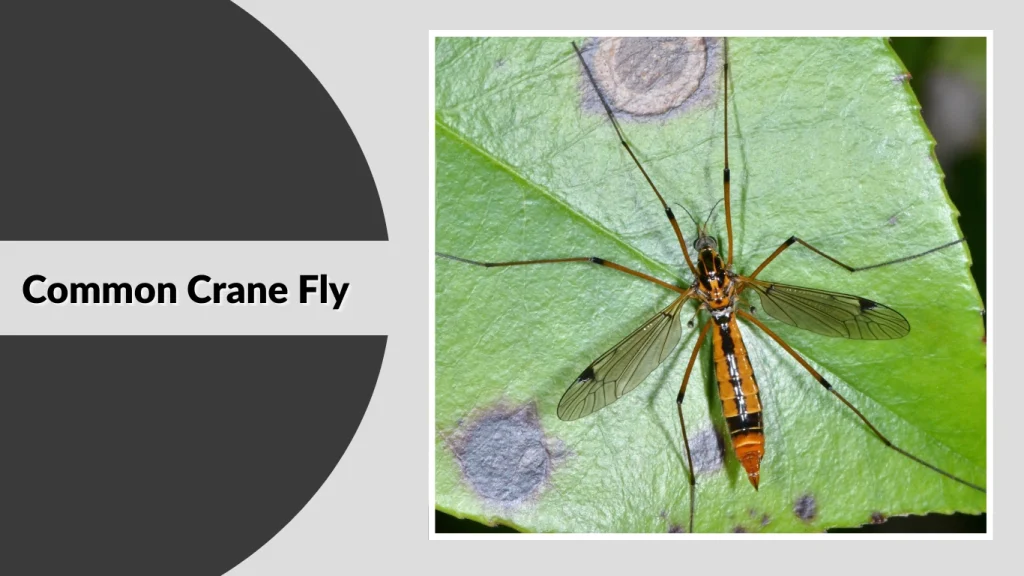
The Common Crane Fly is one of the most widespread and familiar crane flies in Europe and North America. Often mistaken for a giant mosquito, this harmless insect is best known for its long, spindly legs and fragile body. Adults are most active in late summer and early autumn, while their larvae, called leatherjackets, are pests of grass and crops.
Identification
- Slender body with a length of about 1–2.5 cm
- Long, delicate legs that break off easily
- Brown to grayish body color
- Narrow wings held outstretched when at rest
Habitat
Commonly found in gardens, meadows, lawns, and fields. The larvae thrive in moist soil, especially in grassy areas where they feed on roots.
Life Cycle
The female lays eggs in soil, which hatch into leatherjackets. These larvae feed underground on plant roots and can cause significant damage to turf and crops. Adults live only a few days, focusing mainly on reproduction.
Behavior
Adults do not bite or sting. They are weak fliers and often seen resting on walls, windows, or vegetation. Larvae are the primary damaging stage due to their root-feeding habits.
2. European Crane Fly (Tipula oleracea)
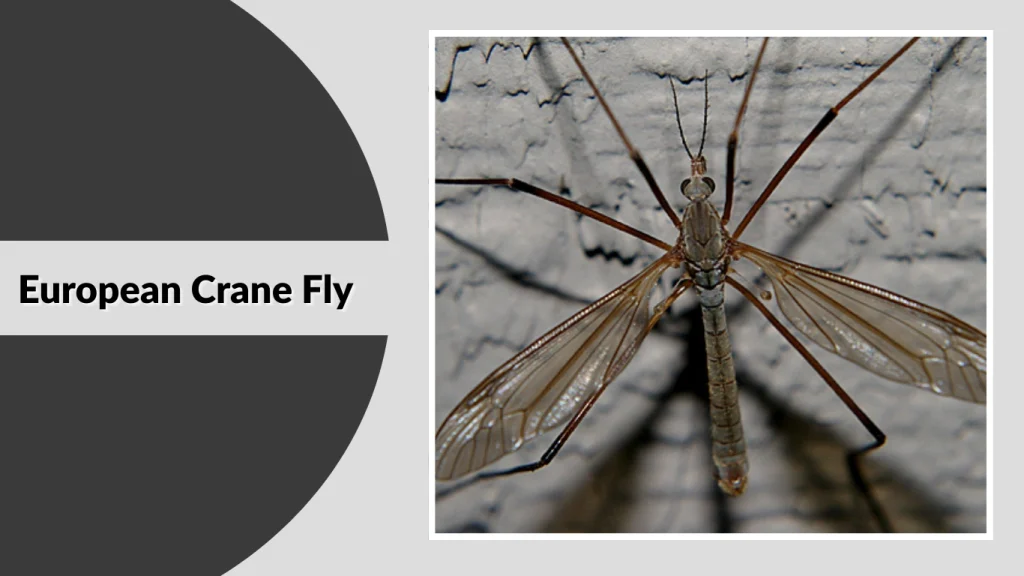
The European Crane Fly is another common species found throughout Europe and introduced to parts of North America. It closely resembles the Common Crane Fly but has distinct features and a longer flight season. Its larvae, also called leatherjackets, are serious pests in agricultural fields and lawns, feeding heavily on plant roots.
Identification
- Body length ranges from 2–2.5 cm
- Grayish-brown body with slightly darker wings
- Very long, thin legs prone to breaking off
- Wings with faint dark veins visible when spread
Habitat
This species is widespread in grasslands, gardens, farmland, and moist soils where its larvae can feed on the roots of cereal crops, vegetables, and turf grasses.
Life Cycle
Females lay hundreds of eggs in moist soil. The larvae hatch and develop into leatherjackets that overwinter in the soil, feeding on roots. Adults are typically active from spring to early autumn.
Behavior
Adults are clumsy fliers and are often seen near lights at night. The larvae cause considerable damage to crops, making this species a major agricultural pest.
3. Giant Crane Fly (Tipula maxima)

The Giant Crane Fly is one of the largest crane fly species in Europe, known for its impressive wingspan and long legs. Despite its intimidating appearance, it is completely harmless to humans. Its large size and slow, weak flight make it easy to spot during late spring and summer.
Identification
- Body length up to 3–4 cm, much larger than most crane flies
- Long, slender legs, easily detached when handled
- Brownish body with darker wing veins
- Wingspan reaching up to 6–7 cm
Habitat
Prefers wetlands, damp meadows, riverbanks, and woodland edges. The larvae develop in moist soils rich in organic matter, often near streams and marshy ground.
Life Cycle
Eggs are laid in moist soil or decaying vegetation. The larvae feed on decaying organic matter rather than plant roots, making them less damaging compared to other species. Adults appear mainly in spring and early summer.
Behavior
Adults are weak fliers and often rest on vegetation during the day. They are most active at dusk and can be attracted to artificial lights at night.
4. Marsh Crane Fly (Tipula vittata)

The Marsh Crane Fly is a medium-sized species commonly found in wet habitats such as marshes, bogs, and damp meadows. It is easily recognized by its patterned wings and association with moist environments where its larvae develop in rich, organic soils.
Identification
- Body length about 2–3 cm
- Slender brown body with narrow wings
- Wings marked with faint dark patterns
- Long, fragile legs typical of crane flies
Habitat
Thrives in marshes, wetlands, and damp grassy fields. The larvae feed on decaying plant material in soft, moist soil, helping recycle nutrients.
Life Cycle
Eggs are laid in damp soil or marshy ground. The larvae grow by feeding on decaying organic matter and overwinter in the soil before pupating. Adults emerge mainly in late spring and summer.
Behavior
Adults are weak fliers and usually stay close to vegetation in wet habitats. They do not feed much during their short lifespan, focusing on reproduction.
5. Winter Crane Fly (Trichocera regelationis)
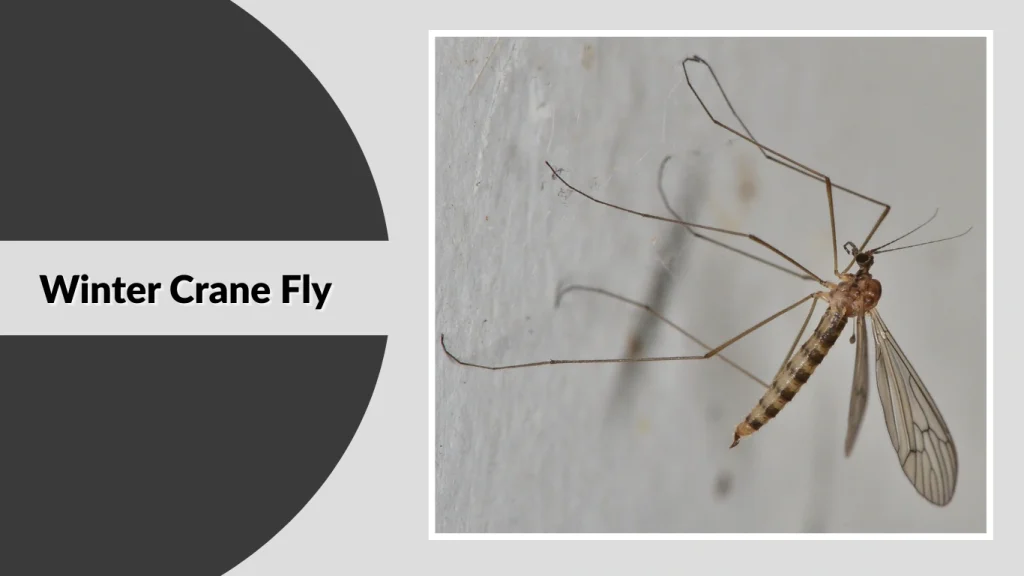
The Winter Crane Fly is a unique species that remains active during the cold months when most insects are dormant. It is often seen walking on snow during mild winter days, earning it the nickname “snow fly.” Despite resembling mosquitoes, it is harmless to humans.
Identification
- Small to medium size, body length about 1–1.5 cm
- Slender brownish-gray body
- Long, thin legs adapted for cold conditions
- Clear wings with fine venation
Habitat
Found in temperate regions, often in woodlands, fields, and near snow-covered areas. The larvae live in soil rich with organic matter, feeding on decaying vegetation.
Life Cycle
Eggs are laid in moist soil or decaying organic material. Larvae develop slowly in cool conditions, allowing adults to emerge even in late autumn and throughout winter.
Behavior
Adults can be seen walking on snow surfaces or flying weakly on warmer winter days. They are not pests and play an important role in decomposing organic material in the soil.
6. Spotted Crane Fly (Nephrotoma appendiculata)

The Spotted Crane Fly is one of the most recognizable crane fly species in Europe, distinguished by the dark spots and patterns on its wings. It is commonly seen in gardens, grasslands, and hedgerows during spring and summer, where it is harmless to humans.
Identification
- Body length around 1.5–2 cm
- Yellowish-brown body with dark markings
- Transparent wings with distinct black spots
- Long, thin legs typical of crane flies
Habitat
Frequently found in grassy areas, gardens, and woodland edges. The larvae develop in soil, often feeding on roots and decaying organic material.
Life Cycle
Eggs are deposited in soil or turf. Larvae feed on both living plant roots and decaying matter, potentially causing minor damage to lawns. Adults usually emerge from late spring to summer.
Behavior
Adults are active during warm months and are weak fliers, often seen resting on vegetation. Their spotted wings make them easy to distinguish from other crane fly species.
7. Tiger Crane Fly (Nephrotoma quadrifaria)

The Tiger Crane Fly is a striking species named for its bold yellow and black markings, giving it a tiger-like appearance. It is often found in grassy habitats and hedgerows during the warmer months, and while it looks intimidating, it is completely harmless.
Identification
- Body length about 1.5–2 cm
- Distinct yellow and black striped body
- Transparent wings with darker venation
- Long, fragile legs typical of crane flies
Habitat
Commonly found in grasslands, hedgerows, gardens, and open woodlands. The larvae develop in soil, feeding on roots and decaying organic matter.
Life Cycle
Eggs are laid in soil during spring and summer. The larvae (leatherjackets) feed underground and can damage grass roots, although they also recycle organic nutrients in the soil.
Behavior
Adults are seen flying slowly in meadows and fields from late spring to autumn. Their bold body markings act as a form of mimicry, making them appear more threatening to potential predators.
8. Yellow-Spotted Crane Fly (Nephrotoma flavescens)

The Yellow-Spotted Crane Fly is a colorful species of crane fly that stands out due to its bright yellow markings against a dark body. It is commonly found across meadows, grasslands, and open woodlands. While its larvae may feed on plant roots, adults are harmless and live only briefly to reproduce.
Identification
- Medium-sized body, around 1.5–2.5 cm long
- Dark brown to black body with vivid yellow spots on the thorax and abdomen
- Transparent wings with subtle dark venation
- Extremely long legs, often breaking off when handled
Habitat
Prefers open grassy areas such as fields, meadows, and pastures. Also found in gardens where turf and ornamental grasses grow. The larvae thrive in moist soils, particularly where plant roots and organic matter are abundant.
Life Cycle
Females lay their eggs in damp soil or grassy turf. The larvae, known as leatherjackets, feed on a mix of grass roots and decaying organic debris, sometimes causing damage to lawns or pastureland. Pupation occurs in soil, and adults emerge in late spring and summer.
Behavior
Adults are weak fliers, often seen resting on tall grasses and low shrubs. Their flight is clumsy, and they are easily preyed upon by birds and other insectivores. Despite their fragile nature, their yellow markings may act as a deterrent by mimicking the warning colors of wasps.
9. Striped Crane Fly (Nephrotoma crocata)
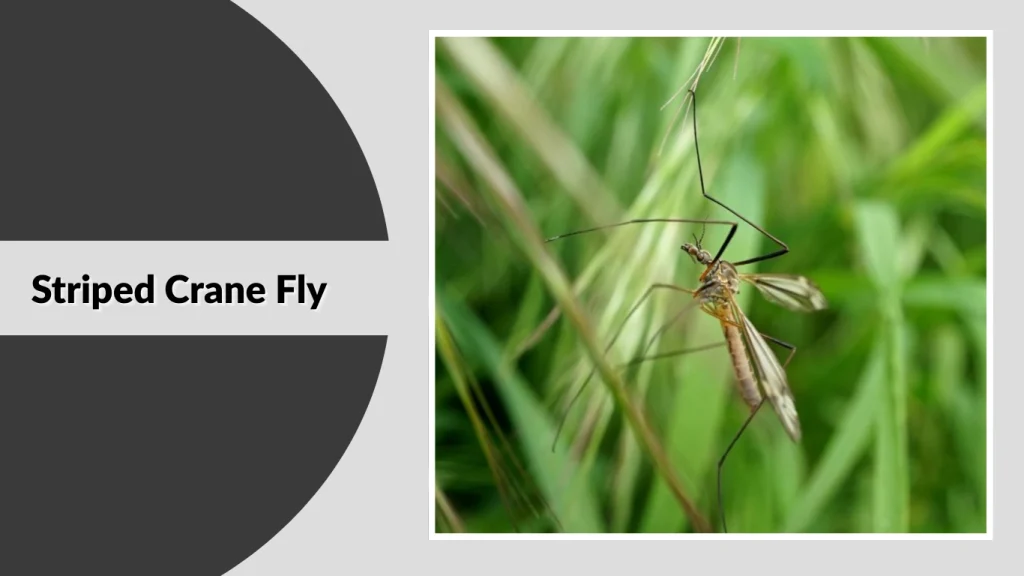
The Striped Crane Fly is a distinctive species recognized by the bold longitudinal stripes on its thorax. Found across Europe and parts of Asia, it favors grassy and open habitats where its larvae live in soil. Though often confused with mosquitoes due to its appearance, it is completely harmless.
Identification
- Body length about 2–2.5 cm
- Yellowish body with striking black stripes on the thorax
- Transparent wings with fine dark venation
- Very long, delicate legs prone to breaking easily
Habitat
Inhabits meadows, fields, gardens, and woodland edges. The larvae thrive in damp soil, feeding on both decaying vegetation and grass roots.
Life Cycle
Eggs are laid in grassy or moist soil. The larvae (leatherjackets) feed underground for several months before pupating. Adults typically emerge from late spring to early summer and live only for a short period to reproduce.
Behavior
Adults are weak fliers and are often seen resting on vegetation in open sunny areas. Their striped pattern provides camouflage among grass stems and helps distinguish them from other crane fly species.
10. Large Crane Fly (Tipula luna)

The Large Crane Fly is a notable species due to its relatively big size and graceful appearance. It is frequently seen in gardens, grassy fields, and woodland clearings. Despite its mosquito-like look, it does not bite and plays an important role in ecosystems by recycling organic matter through its larvae.
Identification
- Body length around 2.5–3.5 cm
- Slender, pale brown body with slightly darker markings
- Long transparent wings with distinct venation
- Very long legs that break off easily when handled
Habitat
Common in meadows, pastures, woodland edges, and gardens with moist soil. The larvae develop underground, feeding on plant roots and decomposing organic material.
Life Cycle
Eggs are laid in moist or grassy soil. The larvae, called leatherjackets, feed on roots and decaying matter before pupating in the soil. Adults emerge in late summer and early autumn.
Behavior
Adults are weak fliers, often resting on tall grasses and leaves. They are most active during dusk and can be attracted to artificial lights at night. Their large size makes them one of the more noticeable crane flies in their range.
11. Woodland Crane Fly (Tipula lateralis)

The Woodland Crane Fly is a medium to large species most commonly found in shaded, damp environments such as forests and woodland edges. Its subtle body markings and preference for wooded habitats distinguish it from other common crane fly species.
Identification
- Body length about 2–3 cm
- Brownish body with faint darker lines on the thorax
- Long, narrow wings with clear venation
- Extremely long legs, fragile and prone to breaking
Habitat
Thrives in damp woodlands, shaded gardens, and forest clearings. The larvae develop in leaf litter and soil rich in decaying organic material.
Life Cycle
Eggs are laid in moist soil or leaf litter. The larvae feed primarily on decomposing vegetation and organic matter, contributing to nutrient cycling in forest ecosystems. Adults emerge in late spring and are active through summer.
Behavior
Adults are slow and weak fliers, often seen resting on low vegetation or tree trunks in shaded areas. They do not feed much in their short adult stage and focus mainly on reproduction.
12. Meadow Crane Fly (Tipula hortorum)

The Meadow Crane Fly is a widespread species often seen fluttering above grassy fields and open countryside. It is especially abundant in late summer and early autumn, where adults are commonly mistaken for giant mosquitoes but are entirely harmless.
Identification
- Body length around 2–3 cm
- Light brown to grayish body with subtle darker markings
- Long, narrow transparent wings with fine venation
- Very long, spindly legs typical of crane flies
Habitat
Prefers open grasslands, meadows, pastures, and rural gardens. The larvae develop in soil, feeding on the roots of grasses and other low vegetation.
Life Cycle
Females lay eggs in grassy soil, and larvae (leatherjackets) feed underground, sometimes damaging turf and pasture crops. Pupation occurs in the soil, and adults emerge in large numbers from late summer to early autumn.
Behavior
Adults are clumsy fliers, often seen hovering low over grasslands. They rest on tall vegetation and are strongly attracted to lights during the evening and night.
13. Orange Crane Fly (Nephrotoma cornicina)

The Orange Crane Fly is a colorful species easily recognized by its bright orange body and striking black markings. Found widely across Europe and parts of Asia, it is common in grassy and open areas during summer.
Identification
- Body length about 1.5–2.5 cm
- Bright orange body with black markings on the thorax and abdomen
- Transparent wings with fine venation
- Long, thin legs, delicate and breakable
Habitat
Prefers open meadows, grasslands, hedgerows, and gardens. The larvae live in soil, feeding on both roots and decaying organic matter.
Life Cycle
Eggs are deposited in soil during warm months. The larvae develop underground, sometimes causing damage to turf, before pupating. Adults emerge in mid to late summer.
Behavior
Adults are most active on warm sunny days, often resting on grass stems or low vegetation. Their orange coloration makes them one of the easiest crane fly species to recognize in the field.
14. Black-Tipped Crane Fly (Nephrotoma scalaris)

The Black-Tipped Crane Fly is a distinctive species named for the noticeable dark tip on its abdomen. It is fairly common across Europe and Asia, often found in grassy fields, hedgerows, and open countryside during the warmer months.
Identification
- Body length about 1.5–2.5 cm
- Yellowish-brown body with a distinct black tip on the abdomen
- Clear wings with fine dark venation
- Very long and slender legs typical of crane flies
Habitat
Lives in meadows, gardens, pastures, and woodland edges where soil remains moist. The larvae develop underground, feeding on roots and decaying organic material.
Life Cycle
Eggs are laid in soil or turf. The larvae (leatherjackets) feed on roots for several months before pupating in the soil. Adults emerge mainly in late spring and throughout summer.
Behavior
Adults are weak fliers and often rest on grasses and low shrubs. The black abdominal tip makes them easily identifiable compared to other similar crane fly species.
15. Hairy-Eyed Crane Fly (Erioptera spp.)

The Hairy-Eyed Crane Fly is a small to medium-sized species known for the fine hairs covering its compound eyes, a feature that sets it apart from many other crane flies. These species are often found in damp and shaded habitats where organic matter is abundant.
Identification
- Body length about 1–1.5 cm
- Slender dark brown to gray body
- Transparent wings, often with faint markings
- Compound eyes covered with fine hairs (a unique trait)
- Long, delicate legs, easily detached
Habitat
Commonly inhabits damp forests, marshy areas, and wetlands. The larvae are typically found in decaying organic matter, leaf litter, and moist soil.
Life Cycle
Eggs are laid in damp soil or rotting vegetation. The larvae feed on decaying plant material, contributing to decomposition and soil enrichment. Adults appear mostly in spring and summer.
Behavior
Adults are weak fliers, usually staying close to vegetation in shaded and damp areas. They rarely travel far from their breeding grounds and have a short adult lifespan focused on reproduction.
16. Dwarf Crane Fly (Molophilus ater)

The Dwarf Crane Fly is a small species compared to the larger and more familiar crane flies. Despite its reduced size, it maintains the same long-legged, delicate appearance. It is often overlooked due to its tiny body but plays an important role in decomposition within damp soils.
Identification
- Body length only about 0.5–1 cm
- Slender, dark brown to black body
- Narrow, clear wings with fine venation
- Very long legs relative to its small body size
Habitat
Found in damp meadows, marshes, forest floors, and moist grasslands. The larvae develop in wet soil and decomposing organic matter.
Life Cycle
Eggs are laid in damp or marshy soil. The larvae feed on decaying vegetation and roots before pupating in the soil. Adults appear in spring and summer but are less noticeable due to their small size.
Behavior
Adults are weak fliers, often seen resting on low vegetation or hidden among grasses. They are short-lived, with their primary role being reproduction, while larvae aid in nutrient recycling.
17. Long-Legged Crane Fly (Tipula fulvipennis)

The Long-Legged Crane Fly is a slender species easily recognized by its extremely elongated legs and delicate wings. It is widespread across Europe and North America, often seen in grassy fields, woodland edges, and near wetlands during summer.
Identification
- Body length about 2–3 cm
- Slender brown body with lighter markings
- Transparent wings with a faint yellowish tint (fulvipennis = “tawny-winged”)
- Very long, fragile legs extending well beyond body length
Habitat
Prefers meadows, grasslands, hedgerows, and moist woodland edges. The larvae live underground in soil, feeding on roots and decaying plant material.
Life Cycle
Eggs are deposited in moist soil, and larvae (leatherjackets) develop by feeding on both organic debris and grass roots. Pupation takes place in the soil before adults emerge in late spring and summer.
Behavior
Adults are weak, clumsy fliers often seen dangling in flight close to vegetation. They are short-lived and mainly active during warm evenings, sometimes attracted to artificial lights.
18. Pale Crane Fly (Tipula scripta)
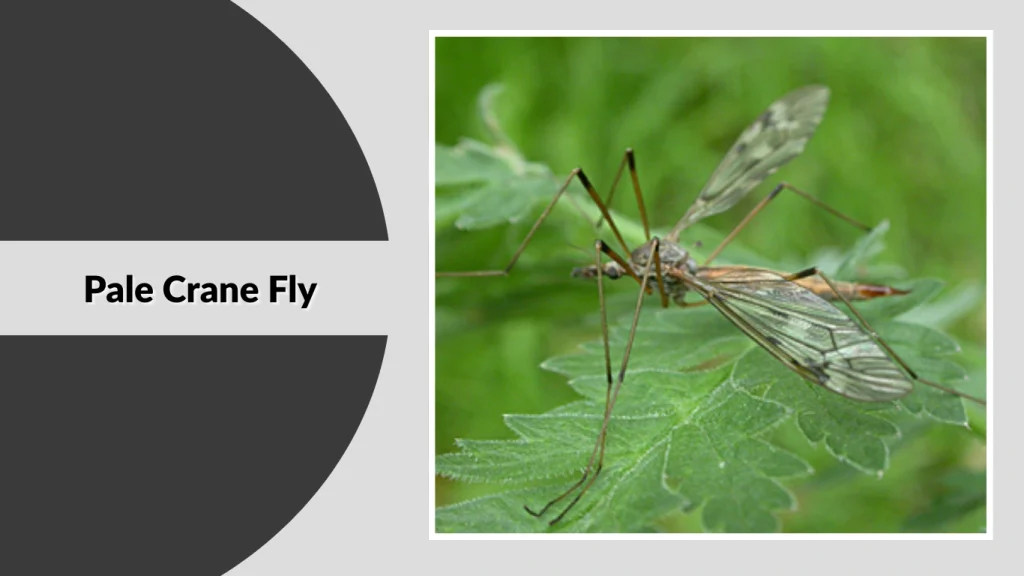
The Pale Crane Fly is a delicate species named for its lighter body and wing coloration compared to many other crane flies. It is commonly found in open grassy areas and near wetlands, where its larvae develop in moist soil.
Identification
- Body length about 2–2.5 cm
- Pale brown or yellowish body with faint dark lines
- Transparent wings with light venation
- Long, thin legs that break easily when handled
Habitat
Inhabits meadows, pastures, and damp grasslands. It is also found in marshy areas and along streams where soils remain moist.
Life Cycle
Eggs are laid in soft, damp soil. The larvae feed on roots of grasses and decaying organic matter, remaining underground until pupation. Adults typically emerge from late spring to mid-summer.
Behavior
Adults are weak fliers and can often be seen resting on tall grass stems and low plants. Their pale coloration provides camouflage among dry grasses and sunlit vegetation.
19. Green-Backed Crane Fly (Nephrotoma viridis)
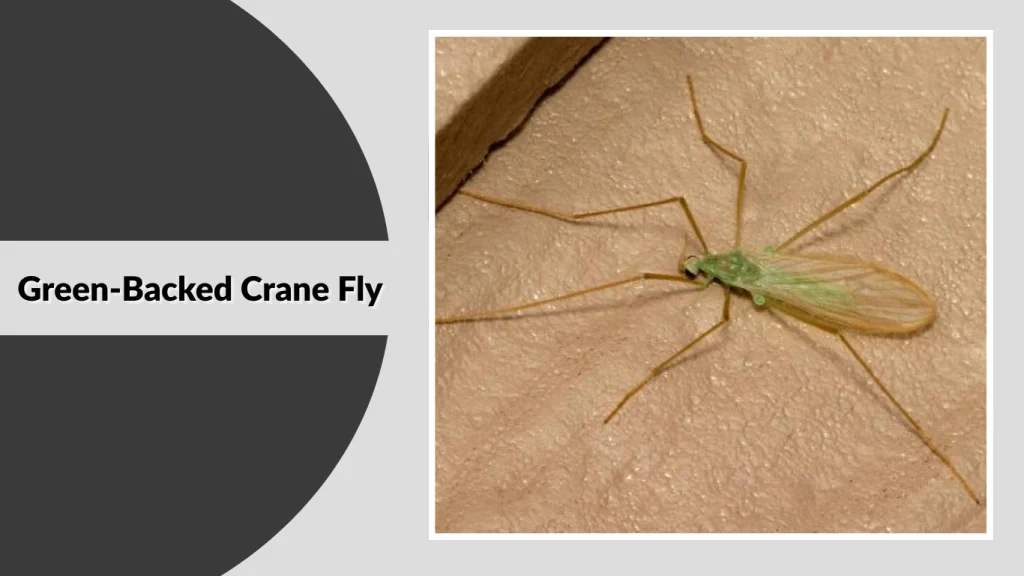
The Green-Backed Crane Fly is a striking species recognized by the greenish tint on its thorax and back. This coloration makes it stand out among other crane flies, which are usually brown or gray. It is commonly found in grassy areas during summer.
Identification
- Body length about 2–2.5 cm
- Thorax with a distinct greenish sheen
- Yellowish-brown abdomen with darker markings
- Transparent wings with fine venation
- Long, slender legs typical of crane flies
Habitat
Prefers open meadows, hedgerows, and grassy countryside. The larvae develop in soil, feeding on roots and decaying vegetation.
Life Cycle
Eggs are laid in damp soil, where larvae (leatherjackets) feed underground before pupating. Adults emerge in late spring and are active throughout summer.
Behavior
Adults are weak fliers, often seen resting on grass or shrubs. The green coloration helps them blend with vegetation, offering camouflage from predators.
20. Brown Crane Fly (Tipula rufina)

The Brown Crane Fly is a widespread species characterized by its uniformly brown body and subtle markings. It is often seen in fields, gardens, and grassy habitats during late summer and autumn.
Identification
- Body length about 2–3 cm
- Uniformly brown body with minimal markings
- Clear wings with fine venation
- Long, spindly legs easily detached when disturbed
Habitat
Commonly found in meadows, pastures, gardens, and woodland edges. Larvae develop in moist soils, feeding on plant roots and decomposing vegetation.
Life Cycle
Eggs are laid in soil where larvae (leatherjackets) grow underground, feeding on organic matter and roots. Pupation takes place in the soil, with adults emerging from late summer to early autumn.
Behavior
Adults are weak, clumsy fliers, often hovering low over grasses. They are mostly active at dusk and can be seen resting on vegetation during the day.
21. Golden Crane Fly (Tipula aurantia)

The Golden Crane Fly is a visually striking species, named for its warm golden-yellow coloration. It is less common than some other crane flies but can be found in sunny, grassy habitats during summer months.
Identification
- Body length about 2–3 cm
- Golden-yellow to orange body with faint darker stripes
- Transparent wings with a slight amber tint
- Long, delicate legs typical of crane flies
Habitat
Favors sunny meadows, pastures, and hedgerows. Larvae live in moist soils, often in areas rich in organic material, feeding on roots and decaying vegetation.
Life Cycle
Eggs are deposited in grassy or damp soil. The larvae feed underground before pupating, and adults emerge during mid to late summer.
Behavior
Adults are short-lived and weak fliers, often active in the evening. Their golden body coloration makes them more noticeable than other common crane fly species.
22. Coastal Crane Fly (Tipula maritima)

The Coastal Crane Fly is a specialized species that thrives in saltmarshes, coastal grasslands, and sandy shorelines. Adapted to brackish and saline environments, it is an important part of the coastal ecosystem, with larvae contributing to nutrient recycling in marshy soils.
Identification
- Body length about 2–3 cm
- Slender, grayish-brown body with faint stripes on the thorax
- Transparent wings with darker venation along the edges
- Very long, fragile legs suited for perching on grasses and reeds
Habitat
Primarily found in coastal regions, especially saltmarshes, dunes, estuaries, and coastal meadows. The larvae thrive in moist, saline-rich soils and decomposing organic matter along shorelines.
Life Cycle
Eggs are laid in soft, damp coastal soils or marsh vegetation. The larvae, or leatherjackets, develop underground by feeding on decaying plants, algae, and sometimes grass roots. Pupation occurs in the soil, and adults usually emerge in late spring through summer, peaking during warm coastal months.
Behavior
Adults are weak fliers, often carried by breezes along coastlines. They typically remain close to marsh grasses or low vegetation and are most active during warm evenings. Unlike some other crane flies, they are well adapted to saline conditions, allowing them to survive in habitats unsuitable for many related species.
23. Narrow-Winged Crane Fly (Tipula angustipennis)

The Narrow-Winged Crane Fly is a distinctive species recognized for its slender, elongated wings compared to other crane flies. It inhabits a variety of moist environments, including meadows, wetlands, and woodland edges, where its larvae play a key role in soil health by decomposing organic matter.
Identification
- Body length about 2–3 cm
- Slender grayish-brown body with subtle markings
- Narrow, elongated wings compared to typical crane flies
- Very long, spindly legs that detach easily
Habitat
Commonly found in damp grasslands, wet meadows, marshes, and forest edges. The larvae live underground in moist soil or organic-rich leaf litter, feeding on decaying vegetation and sometimes on tender roots.
Life Cycle
Eggs are laid in moist soil or plant debris. Larvae (leatherjackets) grow underground, feeding for several months before pupating in the soil. Adults usually appear from late spring through early autumn, depending on climate.
Behavior
Adults are weak, fluttery fliers and are often seen clinging to tall grasses and low plants. They are most active during evenings and are frequently drawn to artificial lights. Their slender wings give them a more delicate appearance than many other crane fly species.
