
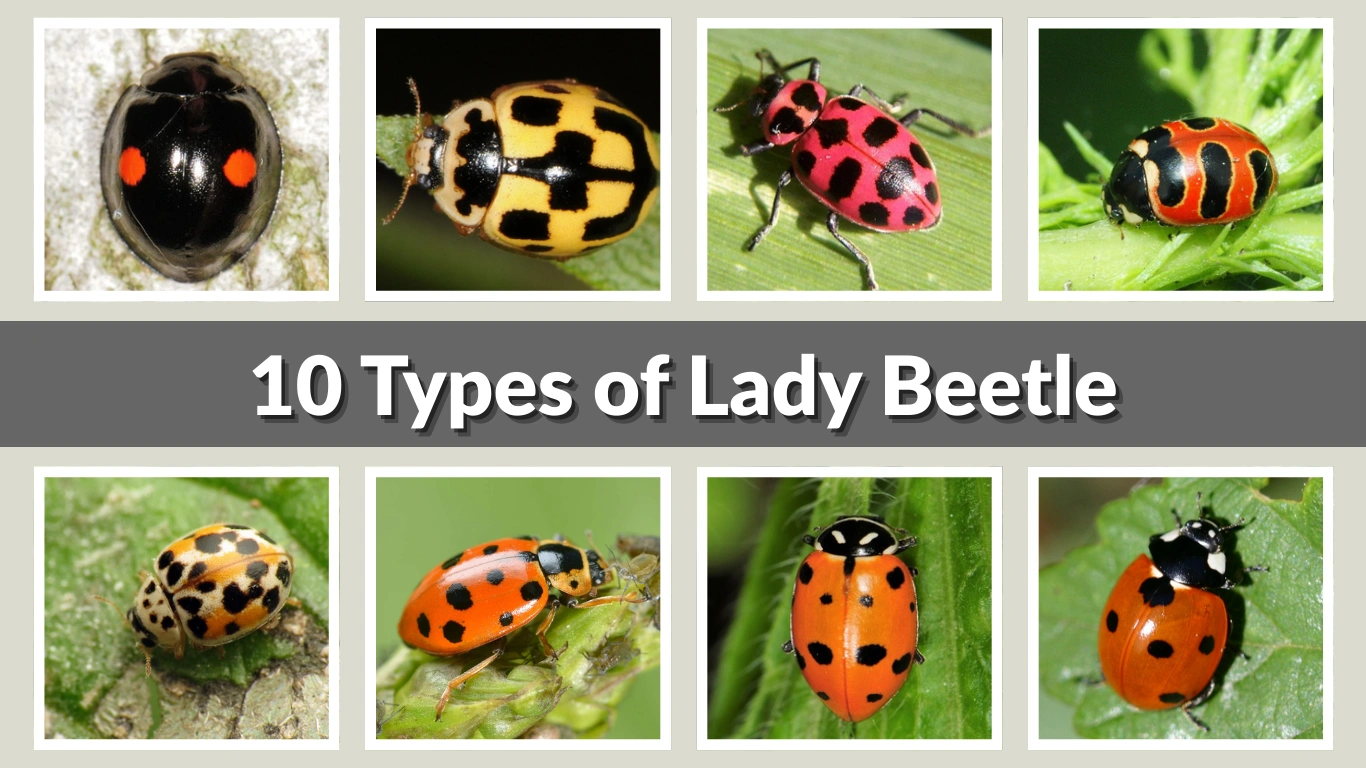
Lady beetles, often called ladybugs, are small but highly beneficial insects in gardens, farms, and forests. Known for their bright colors and spotted patterns, they are natural pest controllers, feeding on aphids, mites, and scale insects. With hundreds of species worldwide, each type has unique traits that make it ecologically valuable. In this guide, we’ll explore 10 notable types of lady beetles, focusing on their identification, habitats, and behaviors.
1. Seven-Spotted Lady Beetle (Coccinella septempunctata)

The Seven-Spotted Lady Beetle is one of the most recognizable and widespread species of ladybugs. Native to Europe and Asia, it has been introduced to North America as a natural form of pest control. This beetle is highly valued in agriculture and gardens for its appetite for aphids and other soft-bodied insects. Its bright red color and seven distinct black spots make it easy to identify.
Identification
- Scientific Name: Coccinella septempunctata
- Size: 7–10 mm long
- Color: Bright red or orange wing covers with 7 black spots
- Head and Thorax: Black with white markings near the eyes
- Shape: Oval and dome-shaped body
Habitat and Distribution
This species is found across Europe, Asia, and North America. It thrives in gardens, grasslands, forests, and agricultural fields, especially where aphid populations are high.
Behavior and Diet
Seven-Spotted Lady Beetles are voracious predators, primarily feeding on aphids, scale insects, and mites. Both larvae and adults are effective biological control agents. They are most active in spring and summer, often seen on crops and ornamental plants. In colder climates, they overwinter in leaf litter or under bark in large groups.
2. Two-Spotted Lady Beetle (Adalia bipunctata)

The Two-Spotted Lady Beetle is a well-known species across Europe and North America, easily recognized by its distinctive two black spots—one on each wing cover. It is considered one of the most important natural predators of aphids and is frequently used in biological pest control programs. Interestingly, this species shows color variation, with some individuals being red with two spots, while others appear black with red spots.
Identification
- Scientific Name: Adalia bipunctata
- Size: 4–6 mm long
- Color: Typically red or orange with 2 distinct black spots; some morphs are black with 2–4 red spots
- Head and Thorax: Black with white patches near the eyes
- Shape: Rounded, dome-shaped body, smaller than many other lady beetles
Habitat and Distribution
This species is widely distributed across Europe, North America, and parts of Asia. It is commonly found in gardens, orchards, agricultural fields, and wooded areas where aphids are plentiful.
Behavior and Diet
The Two-Spotted Lady Beetle is a voracious predator, feeding primarily on aphids but also consuming scale insects, mites, and small insect eggs. Both larvae and adults are effective at reducing pest populations. They are active from spring to autumn and often overwinter under bark, leaf litter, or inside crevices. Their adaptability makes them one of the most beneficial insects in both natural and agricultural ecosystems.
3. Asian Lady Beetle (Harmonia axyridis)

The Asian Lady Beetle is a widely recognized species, originally native to East Asia but now spread across North America and Europe due to its introduction for pest control. Unlike many native lady beetles, this species varies greatly in color, ranging from red, orange, or yellow with multiple spots—or sometimes none at all. It is beneficial in agriculture but is also considered invasive in some regions.
Identification
- Scientific Name: Harmonia axyridis
- Size: 6–9 mm long
- Color: Highly variable—red, orange, or yellow with 0–19 black spots
- Head and Thorax: Black with distinctive white “M”- or “W”-shaped marking behind the head
- Shape: Dome-shaped, slightly larger than many native lady beetles
Habitat and Distribution
Asian Lady Beetles are found across North America, Europe, and their native Asia. They thrive in agricultural fields, orchards, gardens, and even inside homes during winter when they seek shelter.
Behavior and Diet
Both larvae and adults are voracious predators, feeding mainly on aphids, scale insects, and mites. While helpful for pest control, they can outcompete native lady beetles and become household nuisances by clustering indoors in autumn.
4. Convergent Lady Beetle (Hippodamia convergens)

The Convergent Lady Beetle is one of the most common and beneficial lady beetles in North America. Its name comes from the two converging white lines on the thorax, which help distinguish it from other species. It is frequently used in commercial biological control programs, particularly in agriculture, due to its strong appetite for aphids.
Identification
- Scientific Name: Hippodamia convergens
- Size: 4–7 mm long
- Color: Bright orange to red with 12–13 black spots on the wing covers
- Head and Thorax: Black with two white converging lines on the pronotum
- Shape: Oval, smaller than the Seven-Spotted Lady Beetle
Habitat and Distribution
This species is widespread across North America, especially in fields, gardens, and meadows. They are also released in greenhouses and agricultural crops to control pests naturally.
Behavior and Diet
Convergent Lady Beetles are highly effective aphid predators, with both larvae and adults feeding on large numbers of them daily. They also consume other soft-bodied pests, including whiteflies and mites. In colder climates, they aggregate in large groups during winter for hibernation, often in leaf litter or under rocks.
5. Thirteen-Spotted Lady Beetle (Hippodamia tredecimpunctata)

The Thirteen-Spotted Lady Beetle is a medium-sized species named for the thirteen black spots scattered across its reddish-orange wing covers. It is a native North American species and is less common than some of the other lady beetles, but it plays an important role in natural pest control. Its preference for wetlands and meadows makes it especially valuable in diverse habitats.
Identification
- Scientific Name: Hippodamia tredecimpunctata
- Size: 5–7 mm long
- Color: Red to orange with exactly 13 black spots
- Head and Thorax: Black with pale or white markings on the pronotum
- Shape: Oval, slightly elongated compared to rounder species
Habitat and Distribution
Found across North America and parts of Europe, it favors wet meadows, marshes, and grasslands. It is less abundant than common garden species but is well adapted to natural habitats.
Behavior and Diet
Like most lady beetles, it preys heavily on aphids, mites, and other small insects. Both larvae and adults are efficient hunters, helping to regulate pest populations in wild ecosystems.
6. Twenty-Spotted Lady Beetle (Psyllobora vigintimaculata)

The Twenty-Spotted Lady Beetle is a tiny but distinctive species, unusual among lady beetles for its diet. Instead of primarily feeding on aphids, this species specializes in consuming mildew fungi, making it unique and ecologically valuable for plant health. Its cream-colored body and 20 black spots give it an unmistakable appearance.
Identification
- Scientific Name: Psyllobora vigintimaculata
- Size: 2–3 mm long, one of the smallest lady beetles
- Color: Pale cream to yellow body with 20 distinct black spots
- Head and Thorax: Light with small dark markings
- Shape: Small, rounded dome-shaped body
Habitat and Distribution
Widely distributed across North America, the Twenty-Spotted Lady Beetle is often found in gardens, forests, and meadows where mildew fungi grow on plants.
Behavior and Diet
Unlike most lady beetles, this species feeds on powdery mildew fungi, helping to reduce plant disease. Both larvae and adults are fungus feeders. Their role is more specialized, making them ecologically significant for keeping mildew under control in natural and cultivated areas.
7. Three-Banded Lady Beetle (Coccinella trifasciata)

The Three-Banded Lady Beetle is a striking species known for the three black transverse bands across its red or orange wing covers. It is less common than many other lady beetles but plays a valuable role in natural pest control. Its bold markings make it easy to distinguish from other spotted lady beetles.
Identification
- Scientific Name: Coccinella trifasciata
- Size: 5–7 mm long
- Color: Red to orange with three distinct black bands instead of round spots
- Head and Thorax: Black with light patches near the eyes
- Shape: Oval and dome-shaped body
Habitat and Distribution
This beetle is found in North America and parts of Europe, often inhabiting meadows, grasslands, and gardens. It thrives in areas where aphids and other pests are abundant.
Behavior and Diet
Both larvae and adults feed on aphids, scale insects, and small insect eggs. Although less numerous than some other species, it is highly effective in regulating pest populations where it occurs.
8. Pink-Spotted Lady Beetle (Coleomegilla maculata)

The Pink-Spotted Lady Beetle is a distinctive species often recognized by its pinkish to red wing covers with many black spots. Unlike most lady beetles, it also supplements its diet with pollen, making it doubly beneficial for both pest control and pollination. This dual feeding behavior makes it particularly important in agricultural ecosystems.
Identification
- Scientific Name: Coleomegilla maculata
- Size: 6–8 mm long
- Color: Pinkish-red to deep red with 12–16 black spots
- Head and Thorax: Black with pale markings on the pronotum
- Shape: Elongated oval body, more slender than most lady beetles
Habitat and Distribution
Widely distributed in North and Central America, the Pink-Spotted Lady Beetle is common in fields, gardens, and meadows. It is particularly abundant in corn and alfalfa fields.
Behavior and Diet
This species feeds heavily on aphids, mites, and insect eggs but also consumes large amounts of pollen. Because of this, it contributes both to natural pest control and to plant pollination, making it one of the most ecologically valuable lady beetles.
9. Fourteen-Spotted Lady Beetle (Propylea quatuordecimpunctata)

The Fourteen-Spotted Lady Beetle is a small but distinctive species with a highly variable pattern of black and yellow markings. Unlike the bright red of many other lady beetles, this one is yellow with black spots, sometimes appearing as merged patches. It is a widespread species in both Europe and North America, playing a significant role in aphid control.
Identification
- Scientific Name: Propylea quatuordecimpunctata
- Size: 3.5–5 mm long
- Color: Yellow or pale orange with 14 black spots, which may merge into irregular blotches
- Head and Thorax: Black with pale side markings
- Shape: Small, rounded dome-shaped body
Habitat and Distribution
Common in Europe, Asia, and introduced into North America, it inhabits gardens, agricultural fields, and forest edges where aphids are abundant.
Behavior and Diet
This beetle preys primarily on aphids but also consumes scale insects and mites. Both adults and larvae are active predators, and their adaptability to diverse habitats makes them valuable for natural pest control in crops and gardens.
10. Twice-Stabbed Lady Beetle (Chilocorus stigma)

The Twice-Stabbed Lady Beetle is easily recognized by its shiny black body with two distinct red spots, giving rise to its common name. Unlike many lady beetles that specialize in aphids, this species is more associated with scale insects, making it particularly useful in controlling pests on trees and shrubs.
Identification
- Scientific Name: Chilocorus stigma
- Size: 4–6 mm long
- Color: Glossy black with two bright red spots on the wing covers
- Head and Thorax: Black with no distinct markings
- Shape: Rounded, compact dome-shaped body
Habitat and Distribution
Widely distributed in North America, the Twice-Stabbed Lady Beetle is common in orchards, forests, and gardens, particularly where scale insects infest trees.
Behavior and Diet
This species primarily preys on scale insects and mealybugs rather than aphids. Both larvae and adults are highly effective in reducing pest infestations on fruit trees, ornamental plants, and woody shrubs. Their specialized feeding makes them important allies in tree health and orchard management.
