
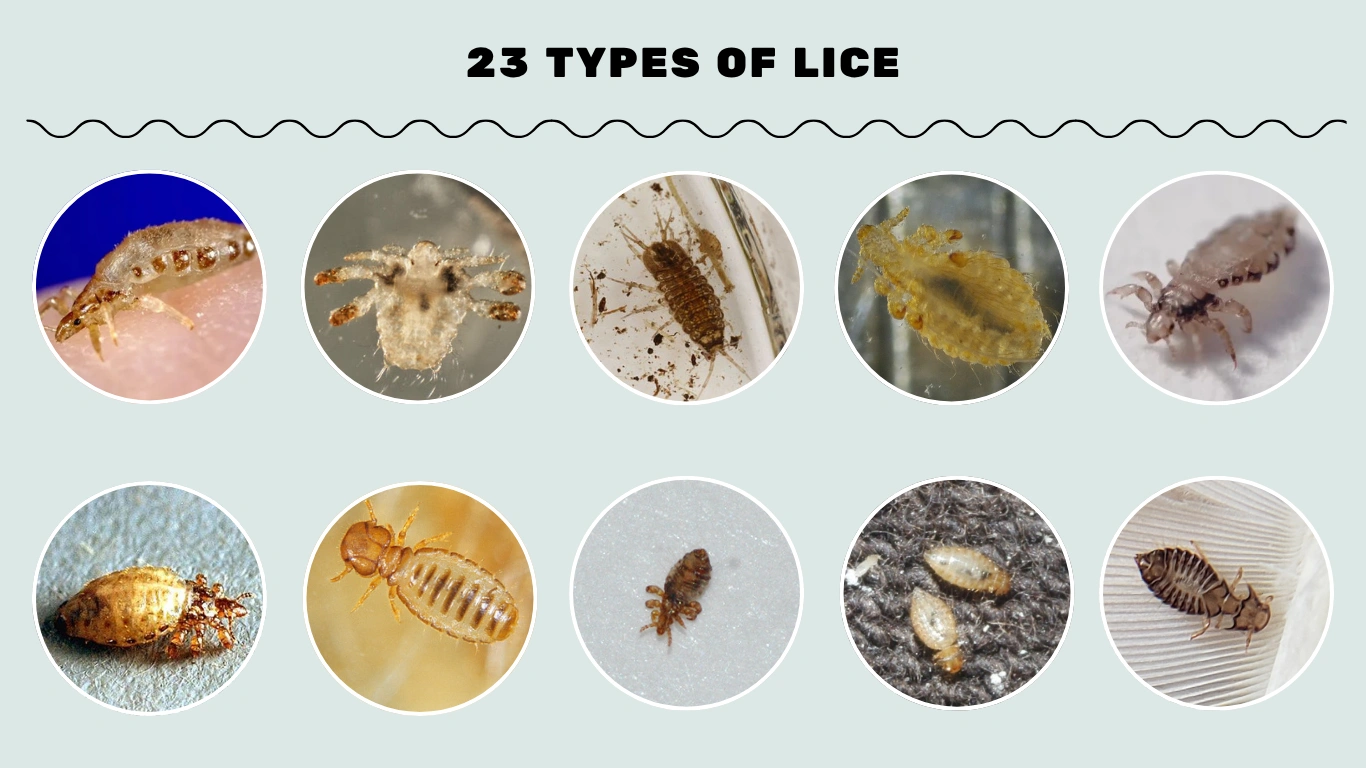
Lice are small, wingless parasitic insects that live on the skin, hair, or feathers of various hosts. While most people are familiar with head lice, there are actually thousands of louse species, many of which target specific animals and birds. These parasites fall into two main groups: sucking lice, which feed on blood, and chewing lice, which feed on skin debris, feathers, or secretions.
In this article, we’ll explore 23 common types of lice, ranging from the well-known human varieties to those that infest livestock, pets, wild animals, and birds. For each type, we provide key identification features, preferred habitats, and unique behavioral traits. Whether you’re a pet owner, poultry farmer, or just curious, this guide will help you understand the wide diversity of lice found across the animal kingdom.
1. Head Louse (Pediculus humanus capitis)

The head louse is one of the most well-known types of lice that infest humans. It lives and feeds on the human scalp, particularly in areas behind the ears and near the neckline. This parasite is most common among children and spreads easily through close contact or shared personal items.
Identification
- Color: Grayish-white to reddish-brown (after feeding)
- Size: About 2–3 mm long
- Body: Wingless, flattened, and segmented
- Legs: Six legs with claws adapted for clinging to hair
- Eggs (nits): Oval-shaped, yellowish-white, firmly attached to hair shafts
Habitat and Distribution
Head lice are found worldwide and live exclusively on human heads. They thrive in all climates and are most commonly spread in environments like schools, daycare centers, and households with close physical interaction.
Behavior and Diet
Head lice feed on small amounts of human blood several times a day. They cannot jump or fly but crawl quickly between hair strands. Eggs (nits) hatch in 7–10 days, and adult lice live for about 30 days. Without a human host, they typically die within 1–2 days.
2. Body Louse (Pediculus humanus corporis)
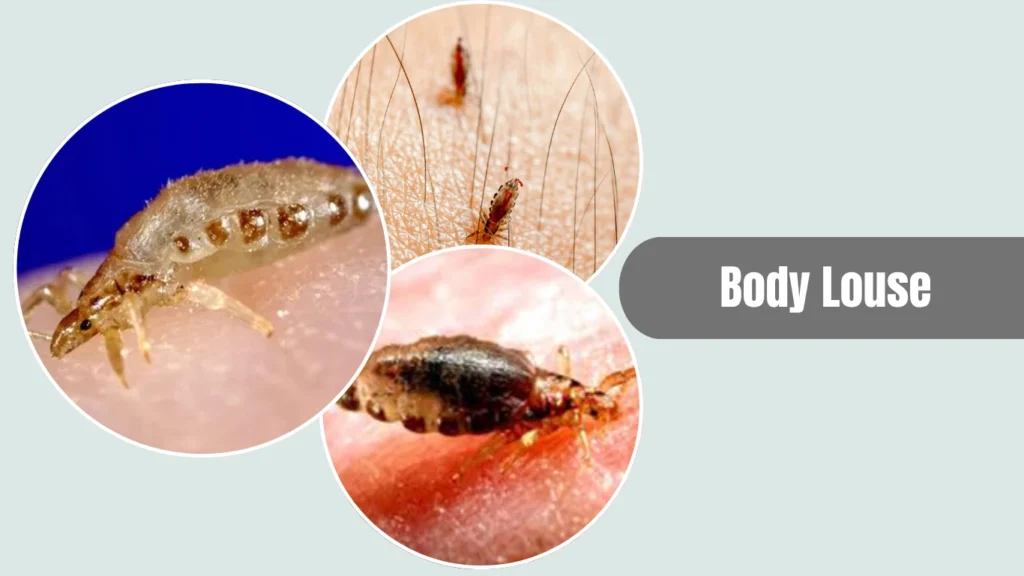
Body lice are closely related to head lice but differ in habitat and behavior. Unlike head lice, body lice live in the seams of clothing and move to the skin to feed. They are associated with poor hygiene and crowded living conditions.
Identification
- Color: Grayish-white or tan
- Size: Slightly larger than head lice (2.5–3.5 mm)
- Body: Elongated and flat, wingless
- Legs: Six legs, adapted for clinging to fabric
- Eggs: Laid in clothing seams rather than on the body
Habitat and Distribution
Body lice are found worldwide, especially in areas with poor sanitation and infrequent changing or washing of clothes. They are common in refugee camps, homeless populations, and war zones.
Behavior and Diet
They feed on human blood several times a day and return to clothing between meals. Body lice can transmit serious diseases such as trench fever, epidemic typhus, and relapsing fever, unlike head lice.
3. Pubic Louse (Pthirus pubis)

Also known as crab lice, pubic lice infest coarse body hair, most commonly in the pubic area but also in armpits, beards, eyebrows, and eyelashes. They are primarily spread through sexual contact.
Identification
- Color: Yellow-gray to reddish-brown
- Size: Very small, 1–2 mm long
- Shape: Broad, crab-like body
- Legs: Six legs; front pair large and claw-like for gripping hair
- Eggs: Laid on coarse hairs, close to the skin
Habitat and Distribution
Pubic lice are found globally and are most common in sexually active adults. They are not related to poor hygiene but rather to direct contact or sharing of items like towels or bedding.
Behavior and Diet
They feed on blood several times a day and cause intense itching. Pubic lice do not spread disease but can cause skin irritation and secondary infections due to scratching. They cannot infest the scalp or clothing.
4. Hog Louse (Haematopinus suis)
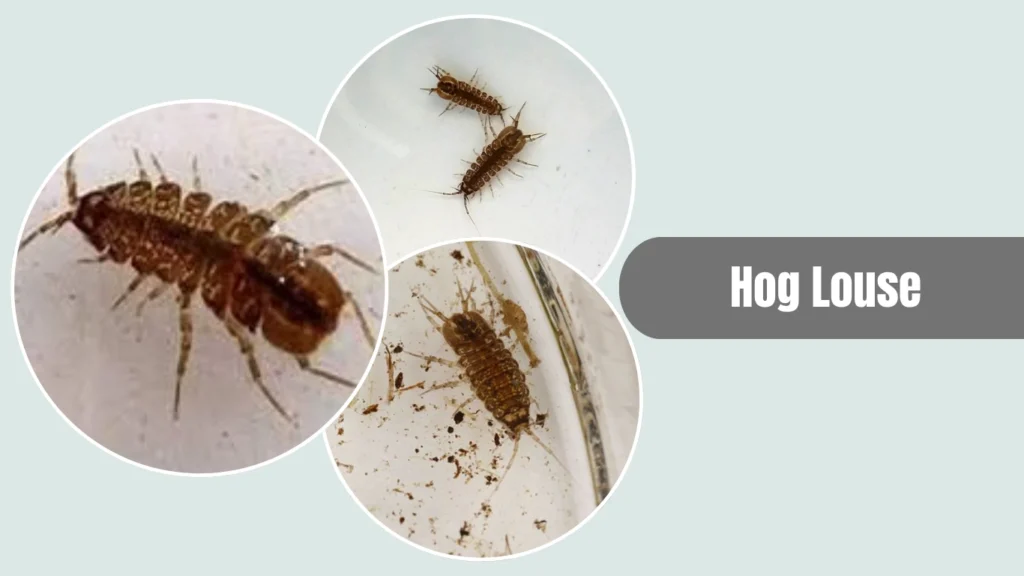
The hog louse is the largest species of louse that affects domestic animals. It parasitizes pigs, particularly in confined or unsanitary living conditions, and is a concern in commercial swine farming.
Identification
- Color: Dark gray to bluish
- Size: Up to 6 mm long
- Body: Large, oval, and flattened
- Legs: Six sturdy legs with strong claws
- Mouthparts: Piercing-sucking type for feeding on blood
Habitat and Distribution
Hog lice are found on domestic pigs worldwide, especially in industrial pig farms or backyard piggery settings. They concentrate around the neck, flanks, and behind the ears.
Behavior and Diet
These lice feed on blood, causing skin irritation, restlessness, and poor growth in pigs. Heavy infestations may lead to anemia or secondary infections. They spread through direct contact or shared enclosures and equipment.
5. Dog Louse (Trichodectes canis)

The dog louse is a chewing louse that infests domestic dogs. It feeds on skin debris, sebaceous secretions, and occasionally blood if the skin is broken.
Identification
- Color: Yellowish-white to tan
- Size: 1.5–2 mm long
- Body: Flat and broad-headed
- Legs: Six legs adapted for clinging to fur
- Eggs: Firmly attached to dog hair near the skin
Habitat and Distribution
Dog lice are found worldwide and are more common in stray or neglected dogs, particularly in colder months when dogs develop thicker coats.
Behavior and Diet
This louse causes itching, hair loss, and skin irritation. It can be a vector for Dipylidium caninum, a tapeworm transmitted through licking or grooming. Spread occurs through direct contact or contaminated bedding and grooming tools.
6. Cat Louse (Felicola subrostratus)

The cat louse is the only species of louse known to infest domestic cats. It is a chewing louse that feeds on skin flakes and hair, and is more common in older, sick, or neglected cats.
Identification
- Color: Pale yellow or white
- Size: About 1–1.5 mm long
- Body: Narrow with a wedge-shaped head
- Legs: Six short legs adapted for clinging to fur
- Eggs: Firmly glued to cat hairs
Habitat and Distribution
This louse is found on cats around the world, especially in environments where hygiene and grooming are neglected. Long-haired and outdoor cats are more prone to infestation.
Behavior and Diet
Cat lice feed on skin debris and hair. They cause itching, scratching, hair loss, and sometimes secondary skin infections. Spread occurs through direct contact or sharing bedding, grooming brushes, or close living spaces.
7. Cattle Biting Louse (Bovicola bovis)
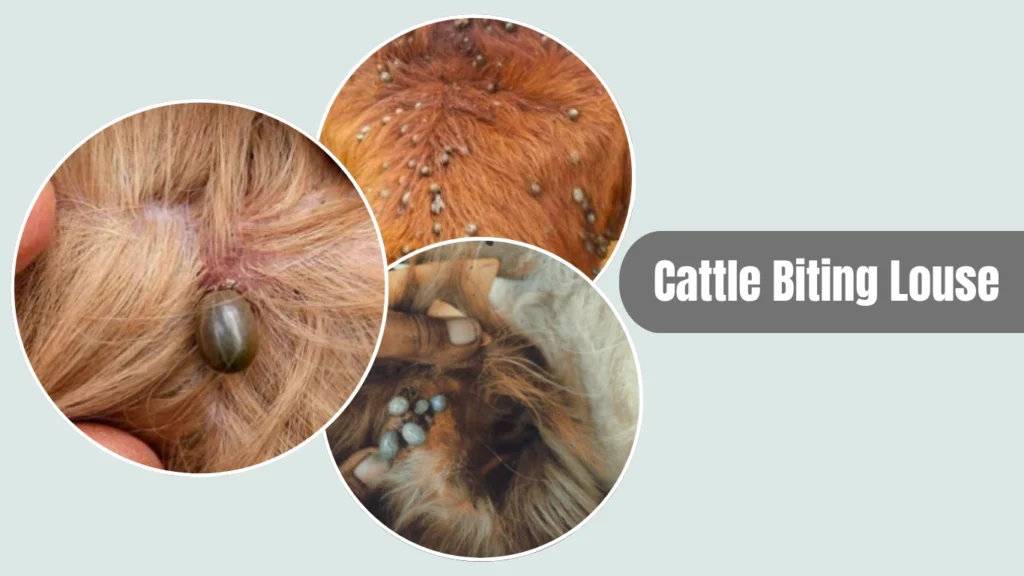
The cattle biting louse infests cattle, especially in colder seasons when animals are housed closely together. It feeds on skin flakes and hair rather than blood.
Identification
- Color: Reddish-brown
- Size: About 1.5–2 mm long
- Body: Flat and broad with a blunt head
- Legs: Six legs designed for clinging to thick cattle hair
- Eggs: Laid on hair shafts near the skin
Habitat and Distribution
This species is common on cattle in temperate and subtropical regions. It tends to infest the neck, shoulders, back, and tail area, especially in crowded or poorly managed herds.
Behavior and Diet
Bovicola bovis causes irritation, rubbing, and hair loss. Though it doesn’t suck blood, heavy infestations can lead to weight loss and reduced productivity. It spreads through direct contact among animals or shared grooming tools and facilities.
8. Cattle Sucking Louse (Haematopinus eurysternus)

The cattle sucking louse is one of the largest lice affecting cattle and is a blood-feeding parasite. It can cause serious irritation and health problems in heavily infested animals.
Identification
- Color: Bluish-gray to dark brown
- Size: About 3.5–5 mm long
- Body: Elongated with a narrow head and strong mouthparts
- Legs: Six legs with claws for grasping coarse cattle hair
- Eggs: Cemented to the base of hair shafts
Habitat and Distribution
Common in colder climates or during winter months when cattle are housed close together. It typically infests the dewlap, neck, and base of the tail.
Behavior and Diet
Feeds exclusively on blood, leading to irritation, anemia, and potential secondary infections. It can also affect weight gain and milk production. Spread occurs through direct contact and shared facilities.
9. Goat Biting Louse (Bovicola caprae)

The goat biting louse is a chewing louse that targets domestic goats, particularly in unsanitary or overcrowded environments. It feeds on hair and skin flakes.
Identification
- Color: Yellowish-brown
- Size: About 1.5–2 mm
- Body: Flattened with a broad head
- Legs: Six legs adapted to cling to goat hair
- Eggs: Attached to hair near the skin surface
Habitat and Distribution
Found on domestic goats worldwide, especially in areas with poor grooming practices. It is more common in the colder seasons or in goats with dense coats.
Behavior and Diet
It causes itching, hair loss, restlessness, and possible skin infections. Heavy infestations can reduce milk production or weight gain. Spread occurs through direct contact or shared grooming equipment.
10. Sheep Biting Louse (Bovicola ovis)
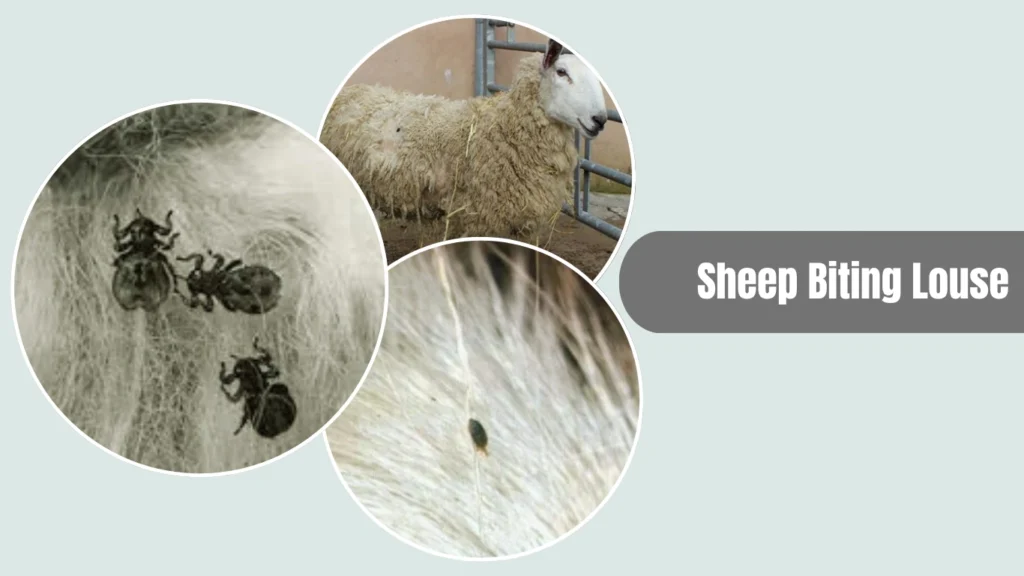
The sheep biting louse is a common chewing louse that affects domestic sheep. It feeds on skin debris and wool, causing irritation and significant economic losses in wool production.
Identification
- Color: Light brown with dark stripes on the abdomen
- Size: Around 1.5–2 mm
- Body: Flattened with a broad head
- Legs: Six legs adapted for moving through wool
- Eggs: Firmly glued to wool fibers near the skin
Habitat and Distribution
Widespread in sheep-farming regions around the world, especially in cooler climates. The lice are most common in sheep with thick or dirty fleece and are typically found on the shoulders, back, and rump.
Behavior and Diet
Feeds on wool grease and skin flakes. Infestations cause irritation, wool biting, fleece damage, and reduced wool quality. Transmission occurs through close contact and contaminated shearing equipment or handling areas.
11. Horse Biting Louse (Bovicola equi)

The horse biting louse is a species of chewing louse that infests horses, especially those in poor condition or during winter when coats are thick.
Identification
- Color: Light reddish-brown
- Size: Approximately 1.5–2 mm
- Body: Broad, flat body with a rounded head
- Legs: Six legs suited for clinging to coarse hair
- Eggs: Cemented to hairs, usually in clusters
Habitat and Distribution
Common in horses worldwide, particularly where grooming is infrequent. Found along the neck, shoulders, flanks, and back, where it hides under thick coats.
Behavior and Diet
Feeds on skin debris, hair, and sebaceous secretions. Causes itching, rubbing, and patchy hair loss. Severe infestations can lead to poor coat condition and stress. Spread through direct contact or shared grooming tools, saddles, and blankets.
12. Horse Sucking Louse (Haematopinus asini)
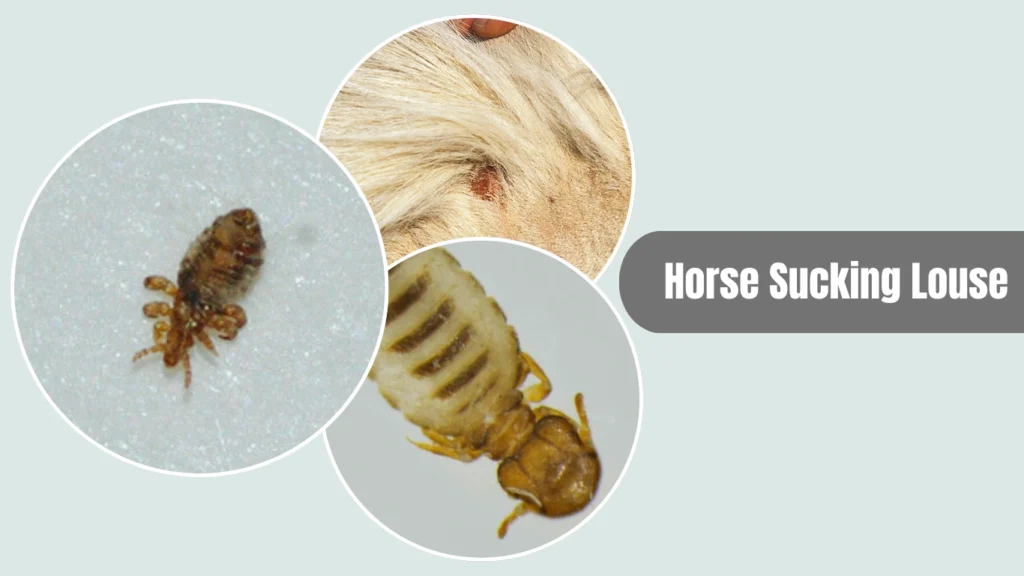
The horse sucking louse is a blood-feeding parasite that infests horses and donkeys. It is larger and more harmful than the biting louse, especially in undernourished or poorly groomed animals.
Identification
- Color: Grayish to bluish-brown
- Size: Around 3–5 mm long
- Body: Elongated with narrow head and prominent claws
- Legs: Six legs adapted for gripping thick horse hair
- Eggs: Laid at the base of coarse hairs, especially in long-haired areas
Habitat and Distribution
Found on horses, donkeys, and mules across the globe, especially in cold climates or overcrowded stables. Prefers areas like the mane, tail base, and inner thighs.
Behavior and Diet
Feeds exclusively on blood, causing irritation, hair loss, anemia, and discomfort. Heavy infestations can reduce performance and lead to weight loss. Spread occurs through close contact, brushes, and tack.
13. Chicken Body Louse (Menacanthus stramineus)
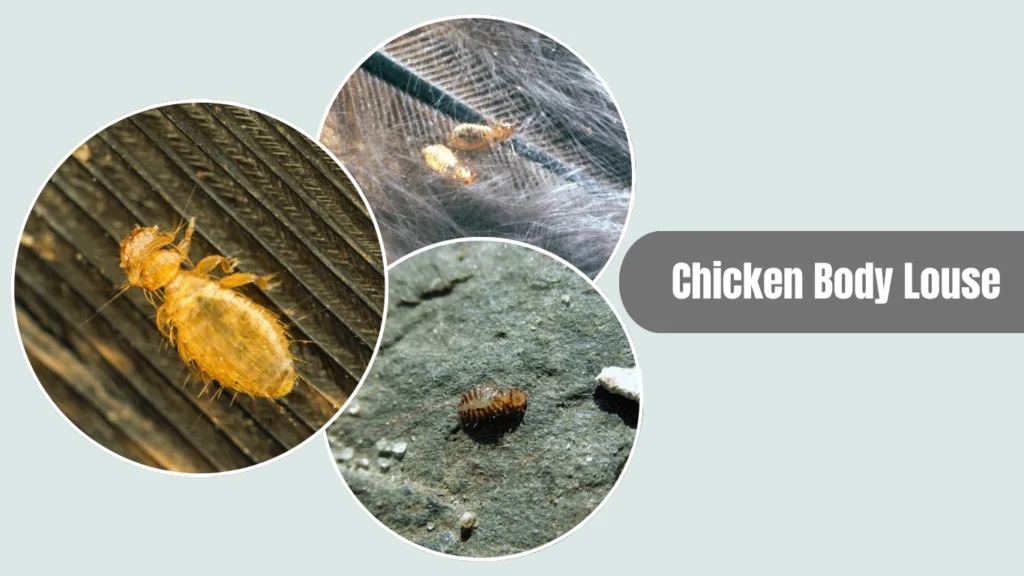
The chicken body louse is one of the most common lice found on poultry. It lives on the bird’s body and feeds on skin scales, feathers, and blood from irritated skin.
Identification
- Color: Yellowish to straw-colored
- Size: Around 2–3 mm long
- Body: Flat and fast-moving with a tapered abdomen
- Legs: Six legs for fast crawling among feathers
- Eggs: Attached to the base of feathers, especially around the vent and breast
Habitat and Distribution
Common in backyard and commercial poultry operations worldwide. Found mostly on the skin beneath the feathers, especially near the vent, breast, and thighs.
Behavior and Diet
Feeds on dead skin and feathers, and can cause bleeding by damaging skin. Infestations lead to restlessness, feather loss, reduced egg production, and secondary infections. Spread occurs through close contact and contaminated cages, litter, or equipment.
14. Shaft Louse (Menopon gallinae)

The shaft louse, also known as the poultry shaft louse, is a chewing louse that primarily infests chickens but can also be found on other domesticated birds like ducks and turkeys.
Identification
- Color: Pale yellow
- Size: Around 2 mm long
- Body: Elongated with a pointed head
- Legs: Six legs for rapid movement on feathers
- Eggs: Laid along the shafts of feathers, especially on the breast and thighs
Habitat and Distribution
Common in warm climates and found in poultry flocks worldwide. Prefers to live along feather shafts, where it feeds and lays its eggs.
Behavior and Diet
Feeds on skin scales, feather debris, and occasionally blood from irritated skin. Infestation can cause restlessness, feather damage, poor weight gain, and decreased egg production. It spreads through direct contact and contaminated bedding or cages.
15. Wing Louse (Lipeurus caponis)

The wing louse is a chewing louse that lives on the wings and tail feathers of domestic chickens and other poultry. It is known for causing damage to feathers rather than skin.
Identification
- Color: Grayish or pale brown
- Size: Around 2–2.5 mm
- Body: Slender and narrow
- Legs: Six legs adapted for moving along feather barbs
- Eggs: Attached to the base of wing and tail feathers
Habitat and Distribution
Common in both backyard and commercial poultry settings. It mainly inhabits the wings, tail, and secondary feather regions.
Behavior and Diet
Feeds on feather parts and skin flakes, which can lead to fraying and damage to flight feathers. It does not suck blood but contributes to discomfort and performance loss. Spread occurs through direct bird contact and shared roosts or equipment.
16. Pigeon Wing Louse (Columbicola columbae)

The pigeon wing louse is a common chewing louse that infests pigeons and doves. It resides mainly on the wings and is well-adapted to clinging to feather shafts.
Identification
- Color: Pale brown
- Size: About 2–2.5 mm
- Body: Long and slender with a narrow head
- Legs: Six legs designed for gripping feathers
- Eggs: Laid along the shafts of wing feathers
Habitat and Distribution
Widespread in domestic and wild pigeon populations around the world. It is found primarily on the wing feathers, where it feeds and lays eggs.
Behavior and Diet
Feeds on feather fragments and skin debris. It can weaken feathers, impair flight, and cause irritation. Spread occurs through close contact between birds, especially during roosting and nesting.
17. Pigeon Body Louse (Campanulotes bidentatus)

The pigeon body louse is another louse species that targets pigeons, living deeper in the body feathers rather than on the wings.
Identification
- Color: Light yellowish-brown
- Size: About 2–2.2 mm long
- Body: Oval, with a relatively broad head
- Legs: Six legs adapted for crawling among dense feathers
- Eggs: Firmly attached to feathers near the skin
Habitat and Distribution
Found on domestic and feral pigeons worldwide. Prefers the body feathers, especially the breast and back areas.
Behavior and Diet
Feeds on feathers, dander, and skin flakes. Can cause discomfort, feather loss, and stress, especially in captive pigeons. Spread through direct contact and shared nesting areas or perches.
18. Turkey Louse (Chelopistes meleagridis)
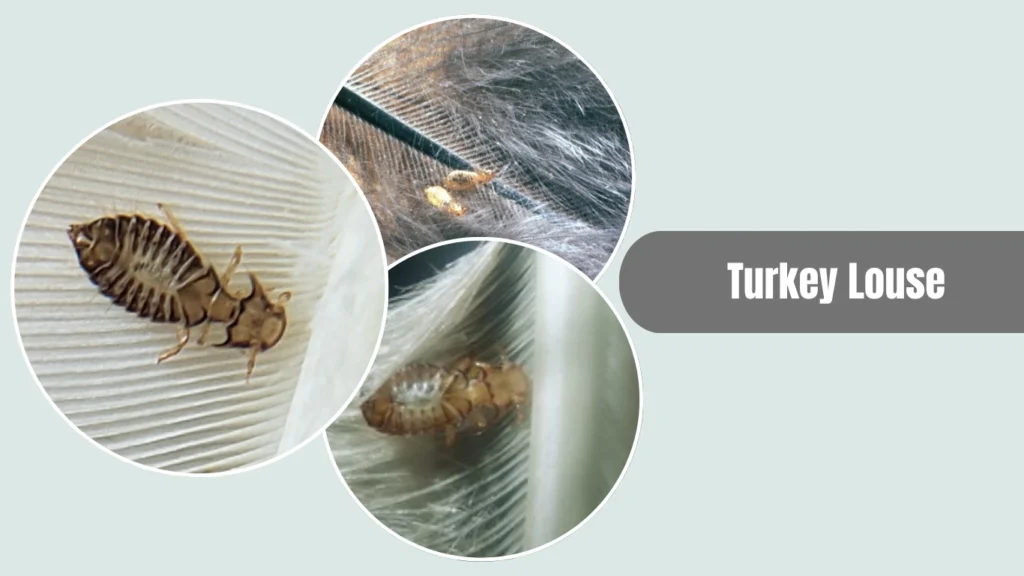
The turkey louse is a chewing louse that primarily infests domestic and wild turkeys. It is one of the largest avian lice and can cause visible irritation in heavy infestations.
Identification
- Color: Yellowish to reddish-brown
- Size: Around 3–4 mm long
- Body: Elongated with a broad head
- Legs: Six strong legs for clinging to coarse feathers
- Eggs: Laid in clusters on feather shafts, especially near the tail and vent
Habitat and Distribution
Common in North America and found in both commercial turkey farms and wild turkey populations. Concentrates around the vent, tail, and underwing areas.
Behavior and Diet
Feeds on skin debris and feather material. Can cause restlessness, feather damage, weight loss, and reduced production in domestic turkeys. Spreads through direct contact and shared roosting areas or bedding.
19. Duck Louse (Anaticola crassicornis)

The duck louse is a chewing louse species found on various domestic and wild ducks. It lives among the feathers and feeds on skin scales and feather debris.
Identification
- Color: Pale yellow to brown
- Size: Around 2–3 mm
- Body: Slender, with a slightly pointed head
- Legs: Six legs designed for movement through feathers
- Eggs: Attached to downy feathers near the skin
Habitat and Distribution
Found globally in ducks, especially in wetlands, ponds, and backyard waterfowl enclosures. Common in both wild and domestic duck species.
Behavior and Diet
Feeds on feather fragments and skin flakes. While not blood-feeders, they can cause irritation, feather wear, and increased grooming behavior. Spread occurs through bird-to-bird contact and contaminated nesting materials.
20. Mallard Louse (Trinoton querquedulae)

The mallard louse is a species of chewing louse that primarily infests mallards and other waterfowl. It is well adapted to living in the dense plumage of aquatic birds.
Identification
- Color: Yellowish-brown
- Size: Around 2.5–3 mm
- Body: Flattened, elongated body with a broad head
- Legs: Six legs suited for clinging to feathers
- Eggs: Firmly attached to feather shafts, especially around the breast and abdomen
Habitat and Distribution
Common on wild mallards and other ducks across Europe, Asia, and parts of North America. Prefers moist, feather-dense areas of the body.
Behavior and Diet
Feeds on feather debris and skin scales. It does not suck blood but can cause discomfort and grooming-related feather damage. Transmission occurs via close contact during mating, nesting, or group roosting.
21. Parrot Louse (Forficuloecus spp.)

Parrot lice are chewing lice that infest parrots and other psittacine birds. Different species in the Forficuloecus genus are host-specific to various types of parrots.
Identification
- Color: Light yellow to reddish-brown
- Size: Usually 1.5–2.5 mm
- Body: Flattened with a rounded or triangular head
- Legs: Six legs adapted for moving within thick feathers
- Eggs: Laid on feather shafts, especially under the wings and tail
Habitat and Distribution
Found in captive and wild parrots across tropical and subtropical regions, particularly in South America, Australia, and parts of Asia and Africa.
Behavior and Diet
Feeds on skin flakes, feather debris, and occasionally damaged feathers. It can cause stress, feather plucking, and irritation. Spread occurs through direct contact, especially in shared cages or aviaries.
22. Mouse Louse (Polyplax serrata)

The mouse louse is a species of sucking louse that parasitizes house mice and wild mice. It feeds on blood and is of interest in scientific research and pest control contexts.
Identification
- Color: Grayish to dark brown
- Size: About 1.5–2 mm long
- Body: Elongated and flattened with a narrow head
- Legs: Six legs, adapted for gripping fine mouse fur
- Eggs: Cemented to hair shafts close to the skin
Habitat and Distribution
Commonly found on house mice (Mus musculus) and field mice across North America, Europe, and Asia. Often present in rodent nests, burrows, or infested buildings.
Behavior and Diet
Feeds exclusively on blood, which may cause irritation and anemia in heavily infested rodents. It can also transmit bacterial pathogens such as Rickettsia species. Spread occurs through direct contact between mice.
23. Rat Louse (Polyplax spinulosa)

The rat louse is a blood-sucking parasite of rats, especially the brown rat (Rattus norvegicus) and black rat (Rattus rattus). It’s a medically significant species due to its potential to transmit diseases.
Identification
- Color: Brown to gray
- Size: Around 2–2.5 mm long
- Body: Elongated, narrow head with strong claws
- Legs: Six legs with claws suited for dense fur
- Eggs: Laid on the base of rat hairs, near the skin
Habitat and Distribution
Widespread in urban and rural rat populations globally. Frequently found in nests, sewers, or any location where rats dwell in groups.
Behavior and Diet
Feeds on the host’s blood, causing skin irritation and restlessness. It’s known to transmit Rickettsia typhi (murine typhus) and other pathogens. Spread occurs through close rat-to-rat contact in crowded living conditions.
