
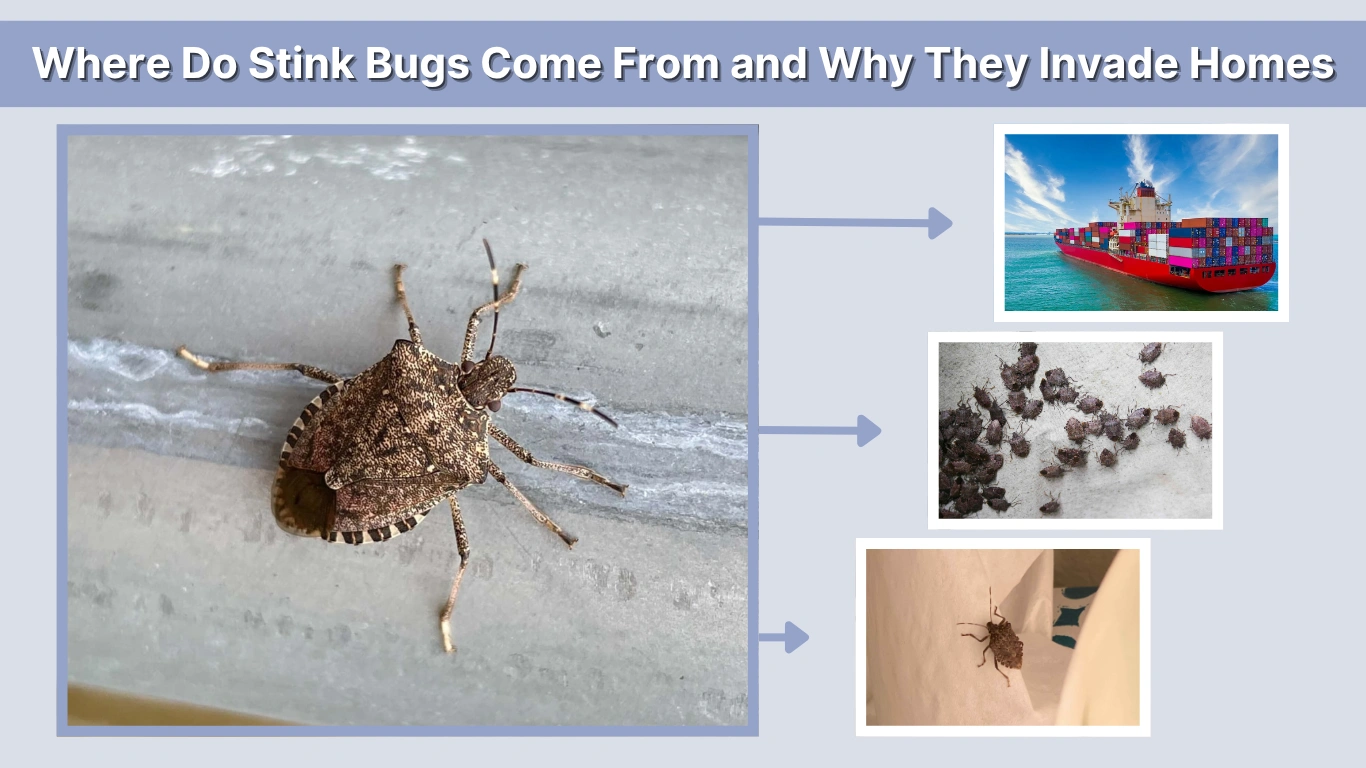
Stink bugs are one of the most recognizable insects due to their shield-shaped bodies and pungent smell. Every fall, homeowners across the United States find these bugs gathering around windows, lights, and walls. But where do stink bugs actually come from, and why do they end up in our homes? Understanding their origins and seasonal behavior helps explain their sudden appearance indoors each year.
What Are Stink Bugs?
Stink bugs belong to the family Pentatomidae, a group of insects known for their defensive odor and wide, flat bodies. The most common species in North America is the brown marmorated stink bug (Halyomorpha halys), while the green stink bug (Chinavia hilaris) is more common in southern regions.
These insects use specialized glands to release a strong-smelling chemical when threatened or crushed. The odor helps repel predators like birds and lizards. While the smell is unpleasant to humans, it’s completely harmless.
Where Did Stink Bugs Originally Come From?

The brown marmorated stink bug, now common across the U.S., is not native to North America. It originated in East Asia — specifically China, Japan, Korea, and Taiwan. It was accidentally introduced to the United States in the mid-1990s, likely through shipping containers or imported produce.
The first confirmed U.S. sighting was in Allentown, Pennsylvania, in 1998. Since then, it has spread rapidly due to its adaptability and lack of natural predators. Today, it’s found in more than 40 U.S. states, as well as parts of Europe and South America.
The green stink bug, on the other hand, is native to North and South America. It shares similar behavior but tends to stay outdoors, feeding on plants and crops rather than invading homes in large numbers.
Where Do Stink Bugs Come From in the House?
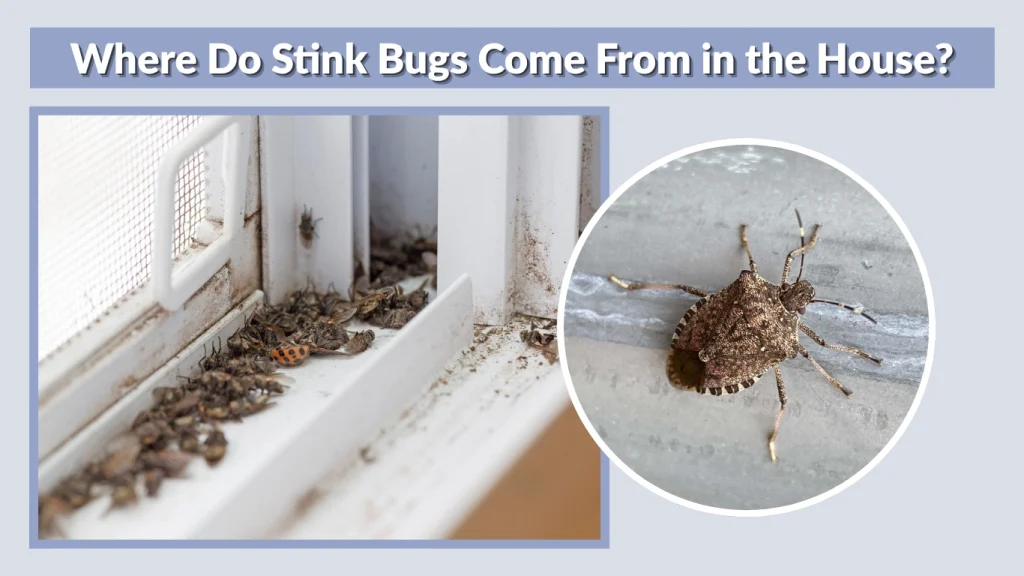
Many people wonder how stink bugs end up inside their homes seemingly out of nowhere. The truth is that they come from outdoor environments — gardens, trees, and fields — and migrate indoors when the temperature drops.
During late summer and early fall, stink bugs search for warm, sheltered places to survive the winter. They crawl through tiny gaps around doors, windows, chimneys, and attic vents. Once inside, they hide in wall voids, attics, or basements until spring.
They don’t enter because of food or dirt — it’s purely a seasonal survival instinct. When a few find a suitable spot, they release pheromones that attract others, which explains why you might suddenly see dozens at once.
Where Do Stink Bugs Come From in Winter?
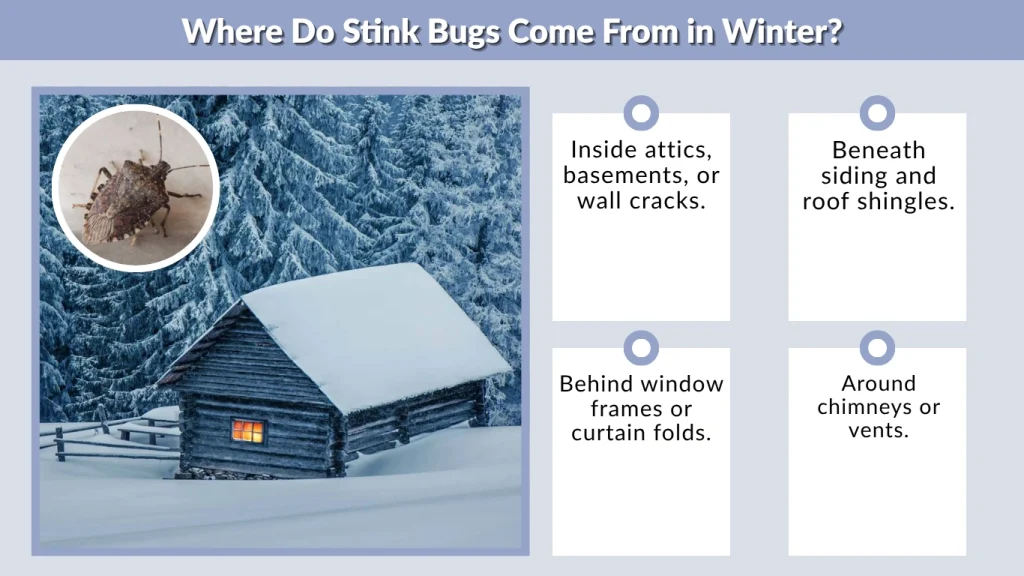
Stink bugs are cold-blooded and cannot survive freezing outdoor temperatures. To endure the winter, they enter a state of dormancy called diapause. In nature, they shelter under bark, logs, or piles of leaves. Around human structures, they find similar protection inside buildings.
Common winter hiding spots include:
- Inside attics, basements, or wall cracks
- Beneath siding and roof shingles
- Behind window frames or curtain folds
- Around chimneys or vents
When indoor heating or mild weather warms them, they wake up and wander out into living spaces. That’s why people often notice stink bugs crawling on walls or windows even in the middle of winter.
Where Do Brown Stink Bugs Come From?

The brown marmorated stink bug is the most widespread and invasive type. Native to East Asia, it likely arrived in North America through global trade. Since its introduction, it has become a major agricultural pest, feeding on fruits, vegetables, and ornamental plants.
This species thrives in urban and rural environments alike. It’s attracted to light and warmth, which explains why they’re often seen near lamps or sunny walls. Their adaptability allows them to survive cold winters, dry climates, and even life inside homes.
Where Do Green Stink Bugs Come From?

Unlike their brown counterparts, green stink bugs are native species that have lived in North America for centuries. They are especially common in southern states like Florida, Georgia, and Texas.
Green stink bugs spend most of their lives outdoors in gardens, fields, and forests, feeding on crops like soybeans, corn, and tomatoes. While they occasionally enter homes, they are not as aggressive or numerous indoors as brown marmorated stink bugs.
Their bright green color helps them camouflage among leaves, and they share the same shield-like body and odor-producing glands as other stink bugs.
Why Do Stink Bugs Come Indoors?

Stink bugs don’t move indoors to feed or reproduce — they enter for warmth and protection. Their instincts drive them to seek out safe environments as soon as outdoor temperatures start to fall.
Main reasons include:
- Cold avoidance: They can’t survive freezing temperatures.
- Warmth and shelter: Homes mimic natural shelters like tree bark.
- Light attraction: Indoor lighting, especially at night, draws them closer.
- Pheromones: Once one stink bug enters, it emits scent trails that guide others.
- Human structures: Cracks and crevices offer perfect overwintering sites.
This behavior typically begins in late September through November, depending on climate, and peaks just before winter sets in.
Where Do Stink Bugs Come From Outdoors?
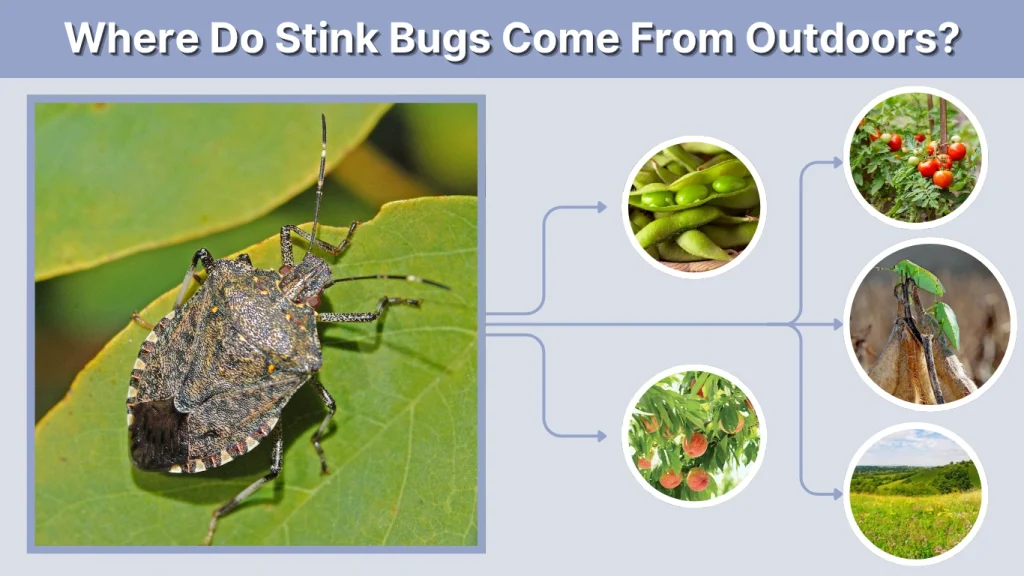
Before finding their way indoors, stink bugs live and breed outdoors in gardens, farms, and wooded areas. They are most active during warm months when food sources are abundant.
Common outdoor habitats include:
- Fruit trees and vegetable gardens: They feed on peaches, apples, tomatoes, and beans.
- Crop fields: Soybean and corn fields are ideal breeding grounds.
- Wooded areas and shrubs: Provide natural shelter and shade.
- Leaf litter and mulch piles: Perfect hiding spots before migrating indoors.
Homeowners living near farmland or forested areas often experience the heaviest infestations. Once these outdoor populations grow, many naturally migrate toward buildings as the weather cools.
Where Do Stink Bugs Come From in the Ground or Garden?
Many people believe stink bugs come from the ground, but they actually come from the vegetation above it. They lay eggs on plant leaves during spring and early summer. When the nymphs hatch, they feed on plant juices until adulthood.
As fall approaches, adult stink bugs leave these gardens and crops to find places to overwinter. If your house is near a garden or field, it becomes the next best shelter. This explains why rural homes or those surrounded by vegetation often have more stink bugs during autumn.
Where Do Stink Bugs Go During the Day and Night?

Stink bugs are most active during the day, basking on sunlit surfaces like walls, fences, or tree trunks to stay warm. At night, they’re attracted to lights from windows and lamps.
Indoors, they behave similarly — gathering near windows or lamps when active. When they sense danger, they retreat into hidden spots like behind furniture or picture frames. Their daily routine revolves around warmth and light rather than feeding, since they eat only outdoors.
Why Are There So Many Stink Bugs Now?
The increase in stink bug populations over the last few decades is mainly due to three factors:
- Invasive spread: The brown marmorated stink bug has no natural predators in many new regions.
- Climate adaptation: Milder winters allow more bugs to survive the cold.
- Agricultural abundance: Modern crops provide consistent food sources.
Because they can reproduce rapidly, even small infestations in rural or suburban areas can lead to large numbers the following year. Once established in a region, they tend to return annually to the same overwintering spots — including your home.
How Do Stink Bugs Enter Homes?

Stink bugs can squeeze through the smallest openings. Their flat bodies allow them to slip through cracks and gaps that other insects can’t.
Common entry points:
- Gaps around doors, windows, and siding
- Attic vents, chimneys, or roof edges
- Openings near pipes or utility cables
- Basement windows without proper seals
They begin entering in late summer to early fall, often gathering on sunlit sides of houses before slipping inside. Once indoors, they release aggregation pheromones that attract others to the same shelter.
Where Do Stink Bugs Come From in the Winter?
During winter, stink bugs hide inside warm spaces such as wall voids, attics, and basements. They remain in diapause, a resting phase similar to hibernation.
They don’t feed, mate, or lay eggs during this time. However, if indoor heating or warm sunlight wakes them prematurely, they may emerge into living areas. Seeing them in January or February doesn’t mean they bred indoors — it simply means they were disturbed.
How to Stop Stink Bugs from Coming Indoors
You can’t completely prevent stink bugs outdoors, but you can block their entry into your home.
Prevention checklist:
- Seal cracks with caulk around windows, doors, and siding.
- Repair window screens and install door sweeps.
- Add mesh covers to vents and chimneys.
- Use weather stripping around doors and attic hatches.
- Turn off or minimize porch lights during fall evenings.
- Keep vegetation trimmed away from exterior walls.
Early preparation — ideally in late August or September — is the best way to prevent them from getting inside before winter.
FAQs
Where do stink bugs originally come from?
They come from East Asia, mainly China and Japan. The brown marmorated stink bug was accidentally introduced to North America through cargo shipments.
Where do stink bugs in my house come from?
They come from outdoor gardens or fields nearby. When temperatures drop, they slip inside through small cracks to find warmth.
Do stink bugs come from the ground?
No. They live on plants, not in the soil. They may hide under leaves or mulch but don’t emerge directly from the ground.
Where do stink bugs go in winter?
They hibernate inside walls, attics, and basements or under outdoor bark and debris until spring.
Why do stink bugs keep coming back every year?
They leave scent trails (pheromones) that mark your home as a safe overwintering site, attracting future generations.
