

Camel spiders have fascinated and terrified people for years, especially due to myths about their venom and supposed danger to humans. Many believe these desert-dwelling creatures inject deadly toxins or have numbing venom that allows them to feed unnoticed. In reality, camel spiders are not venomous at all. Their intimidating size, speed, and appearance are often mistaken for venomous traits. This article explores the truth behind camel spider venom, the effects of their bite, and why so many myths surround them.
Understanding Camel Spiders
Camel spiders, also known as wind scorpions or sun spiders, belong to the order Solifugae. They are not true spiders or scorpions but share features of both. Found in hot, arid regions of Africa, the Middle East, and parts of North America, camel spiders are adapted for desert life. Their large chelicerae (jaws) help them crush prey such as insects and small lizards. Despite their frightening appearance and speed, they are harmless to humans.
One reason people fear them is their size — they can grow up to six inches long including the legs. Their quick movement and aggressive hunting style add to the fear factor, but these traits are purely defensive and functional, not venomous.
Do Camel Spiders Have Venom?

A widespread myth claims camel spiders have venom capable of paralyzing or killing their victims. Scientifically, this is untrue. Camel spiders lack venom glands entirely. They subdue prey using powerful jaws and digestive enzymes, not poison.
Unlike true spiders, which inject venom through fangs, camel spiders crush and tear their prey apart before consuming it. Their hunting method is mechanical, relying on speed and strength. The misconception likely comes from their resemblance to spiders and scorpions — both known for venomous bites or stings.
In essence, camel spiders do not possess venom, and their bite cannot deliver toxins to humans or animals.
Camel Spider Bite and Its Effects
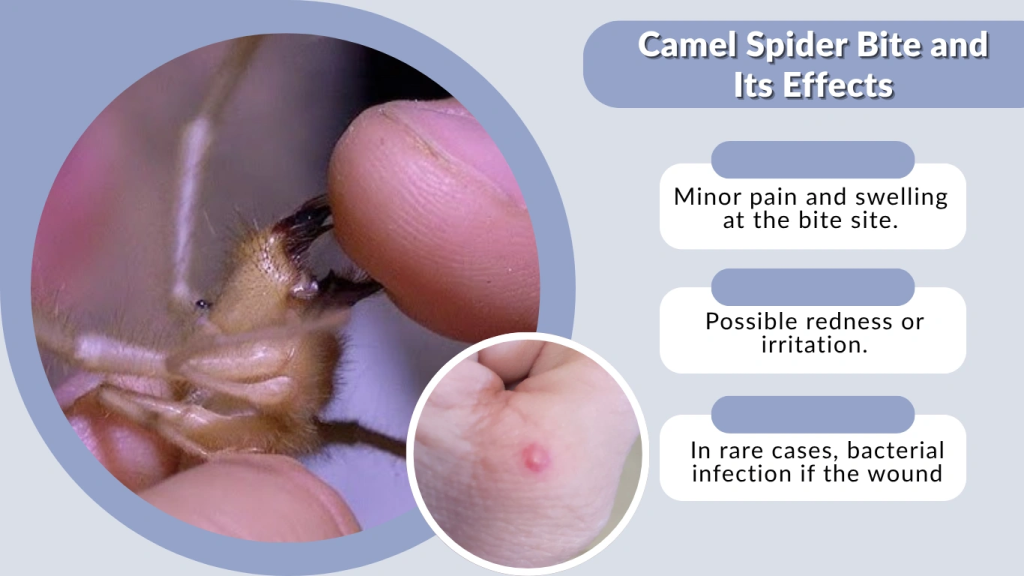
Although camel spiders are not venomous, they can bite when provoked or handled. Their jaws are strong enough to pierce human skin, causing localized pain similar to a pinprick or bee sting. The wound might swell or become red, mainly due to mechanical damage or secondary infection rather than venom.
Typical symptoms of a camel spider bite include:
- Minor pain and swelling at the bite site.
- Possible redness or irritation.
- In rare cases, bacterial infection if the wound isn’t cleaned properly.
There is no venom reaction such as dizziness, paralysis, or necrosis. Most bites heal quickly with simple first aid.
Camel Spider Venom Myths
The belief that camel spiders are venomous originated from desert war stories. Soldiers in the Middle East often shared tales of giant spiders capable of numbing flesh or eating human skin while victims slept. These exaggerated accounts spread rapidly online, fueling public fear.
In truth, the so-called “numbing venom” is a myth. Camel spiders neither inject venom nor possess anesthetic properties. Their bite causes immediate pain because of jaw strength, not chemical compounds. Scientists have repeatedly confirmed that they have no venom-producing organs.
Videos and photos circulating online showing “giant camel spiders” are also misleading — camera angles and forced perspective often make them appear larger than they are.
Are Camel Spiders Venomous to Humans?

Camel spiders pose no toxic threat to humans. Their bite can be startling but is not medically dangerous. People often mistake the swelling or redness from a bite as a venom reaction, but these are typical responses to a puncture wound.
When frightened, camel spiders may charge toward a person — not to attack, but to seek shade. They often run into shadows, including those cast by humans, which can make them seem aggressive.
Medical experts agree that treatment for a camel spider bite should focus on wound care rather than antivenom. Washing the bite with soap and water, applying antiseptic, and monitoring for infection are sufficient.
Camel Spider “Numbing Venom” Explained
A popular rumor claims that camel spiders inject a numbing venom so their victims don’t feel the bite. This idea is scientifically baseless. No member of the Solifugae order has ever been found to produce anesthetic toxins.
The myth probably stems from confusion with other desert creatures such as scorpions or certain ants that possess mild toxins. In camel spiders, the only numbing sensation might come from shock or fear rather than biology.
Their bite feels sharp and immediate, not painless, which further disproves the idea of numbing venom. Researchers studying desert arachnids have consistently confirmed that camel spiders rely on brute force, not venom chemistry, to capture prey.
Venom Toxicity in Other Animals
Camel spiders do not produce venom that affects animals or humans. Their feeding process is entirely mechanical — they rely on crushing their prey with strong jaws and then secreting digestive fluids to dissolve the tissue. These fluids are not toxic; they simply help break down food for easier consumption.
In some cases, small animals or insects may appear to “die quickly” after a camel spider bite, leading to confusion about venom. In truth, the prey’s death results from trauma and tissue damage, not toxins. Researchers studying the Solifugae order have confirmed that these arachnids lack venom glands, making them unique among desert predators.
Black Camel Spider Venom Facts
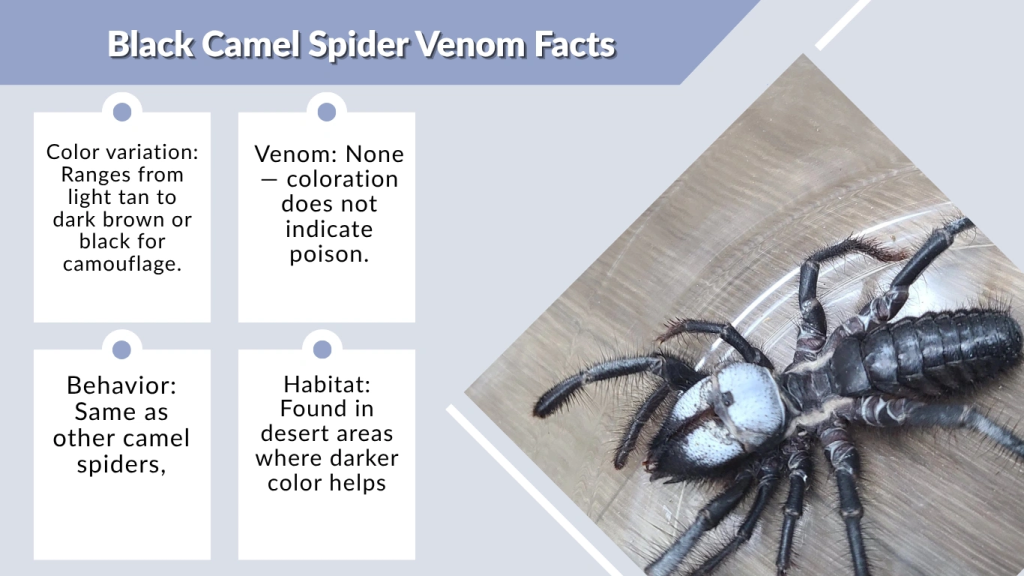
The term “black camel spider” often circulates online with alarming photos and claims of venomous danger. However, color variations in camel spiders have nothing to do with toxicity. Some species are darker because of their habitat or pigmentation, not venom content.
Here are some facts about black camel spiders:
- Color variation: Ranges from light tan to dark brown or black for camouflage.
- Venom: None — coloration does not indicate poison.
- Behavior: Same as other camel spiders, using speed and jaw strength for hunting.
- Habitat: Found in desert areas where darker color helps them absorb less heat.
All species, regardless of shade, share the same non-venomous biology. Myths about black camel spider venom are purely internet exaggerations.
Camel Spider Bite Treatment
If bitten by a camel spider, the injury is rarely serious and heals quickly with proper care. Since there’s no venom involved, medical treatment focuses on preventing infection and easing discomfort.
Basic First Aid Steps:
- Clean the wound: Wash thoroughly with soap and warm water.
- Disinfect: Apply an antiseptic or antibiotic ointment.
- Reduce swelling: Use a cold compress for 10–15 minutes.
- Avoid scratching: It can introduce bacteria and delay healing.
- Monitor for infection: Seek medical help if redness, pus, or fever develops.
For most people, recovery occurs within a few days. Severe reactions, though extremely rare, are linked to bacterial infections — not venom toxicity.
Interesting Facts About Camel Spiders
Camel spiders are remarkable desert hunters with fascinating behaviors. Despite the myths, they are essential to the ecosystem and quite harmless to humans.
Key facts about camel spiders:
- Speed: They can run up to 10 miles per hour, one of the fastest arachnids.
- Diet: Feed on insects, small rodents, and lizards.
- Habitat: Prefer dry, sandy regions with minimal vegetation.
- Activity: Mostly nocturnal, hiding from the sun during the day.
- Importance: Help control insect populations in desert environments.
Their appearance and behavior may seem aggressive, but camel spiders are more afraid of humans than the other way around. When encountered, they usually flee or seek shade, not confrontation.
FAQs
1. Do camel spiders have venom?
No, camel spiders do not have venom. They lack venom glands and rely on their powerful jaws to crush and digest prey. The myth of venomous camel spiders is a result of exaggerated stories and misidentification with true spiders or scorpions.
2. Are camel spiders dangerous to humans?
Camel spiders are not dangerous. Their bite may cause mild pain or swelling but no toxic reaction. They rarely attack unless provoked and pose no medical threat. Basic first aid is enough for recovery from a bite.
3. Why do people think camel spiders are venomous?
The misconception originated from war stories and internet myths claiming they inject numbing venom. These tales exaggerated their behavior and size. Scientific studies have since confirmed camel spiders are entirely non-venomous.
4. What should I do if a camel spider bites me?
Clean the bite with soap and water, apply antiseptic, and monitor for infection. Use a cold compress to reduce swelling. If symptoms worsen or infection develops, consult a doctor — though serious issues are very rare.
5. Are black camel spiders venomous?
No. The “black camel spider” is just a color variation, not a different species. Its dark appearance helps it adapt to certain environments, but it doesn’t indicate venom or toxicity. All camel spiders are harmless to humans.