

The Mexican Redknee Tarantula is one of the most popular and recognizable tarantula species in the world. Scientifically known as Brachypelma hamorii (often confused with Brachypelma smithi), this spider is famous for its calm temperament and striking red-orange leg markings. Native to Mexico, it is widely considered one of the best beginner tarantulas due to its docile nature and relatively simple care requirements. Despite its intimidating appearance, it is generally harmless when treated with respect.
Mexican Redknee Tarantula Facts
Quick Facts Overview
The Mexican Redknee Tarantula is a medium-to-large terrestrial species with a leg span of about 5 to 6 inches. It is native to the Pacific coast of Mexico and thrives in warm, dry environments. Known for its slow movement and calm behavior, this tarantula is often recommended for beginners.
Why It’s So Popular
One of the main reasons for its popularity is its gentle temperament. Unlike many fast or defensive tarantulas, the Mexican Redknee is usually calm and easy to observe. Its vibrant red-orange knee joints contrast beautifully with its dark body, making it one of the most visually appealing tarantulas. Combined with its long lifespan, especially in females, it has become a favorite among hobbyists.
Mexican Redknee Tarantula Physical Characteristics
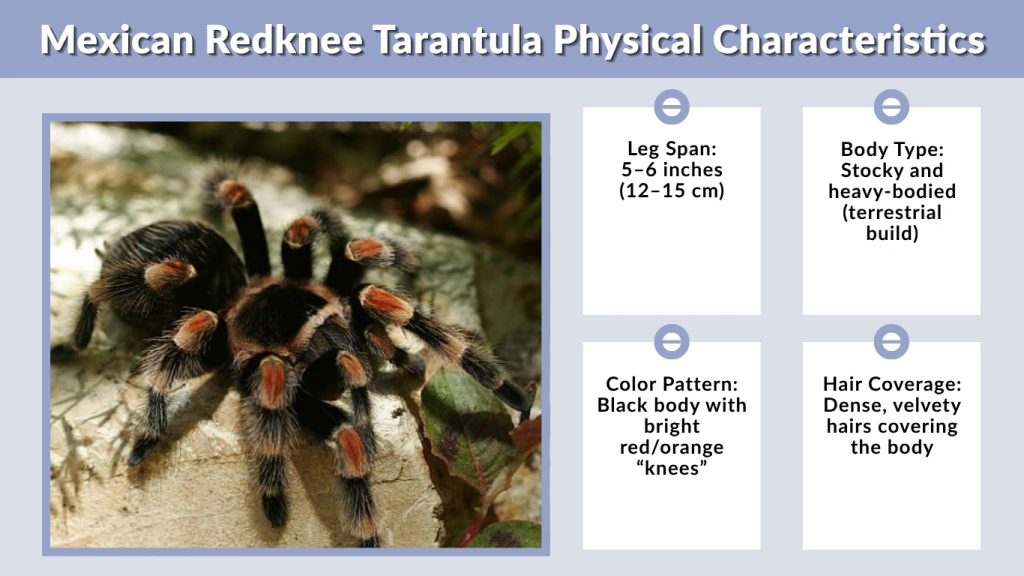
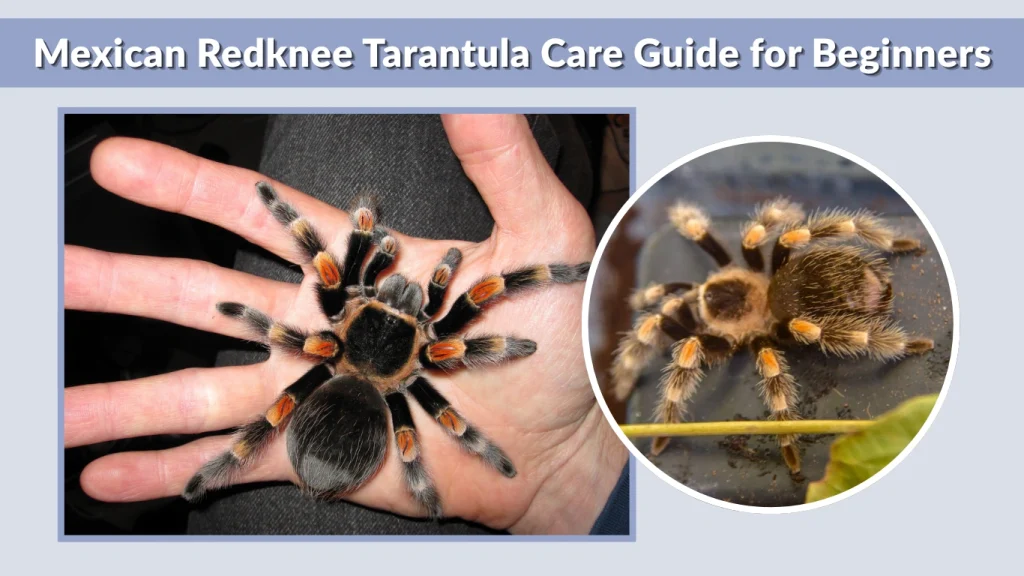
The Mexican Redknee Tarantula is easily recognized for its bold colors and sturdy build. As a terrestrial species, it has a thick, robust body designed for life on the ground rather than climbing. Its striking red-orange joints contrasted with a dark body make it one of the most visually iconic tarantulas in the world. These features not only enhance its beauty but also serve as a warning to potential predators.
Key Physical Features
- Leg Span: 5–6 inches (12–15 cm)
- Body Type: Stocky and heavy-bodied (terrestrial build)
- Color Pattern: Black body with bright red/orange “knees”
- Hair Coverage: Dense, velvety hairs covering the body
- Urticating Hairs: Present on abdomen for defense
- Fangs: Strong but used mainly for prey, not aggression
- Eyes: Small, clustered eyes with limited vision
- Growth Rate: Slow-growing compared to many tarantulas
These characteristics make the Mexican Redknee Tarantula both attractive and well-adapted to its ground-dwelling lifestyle.
Natural Habitat and Distribution
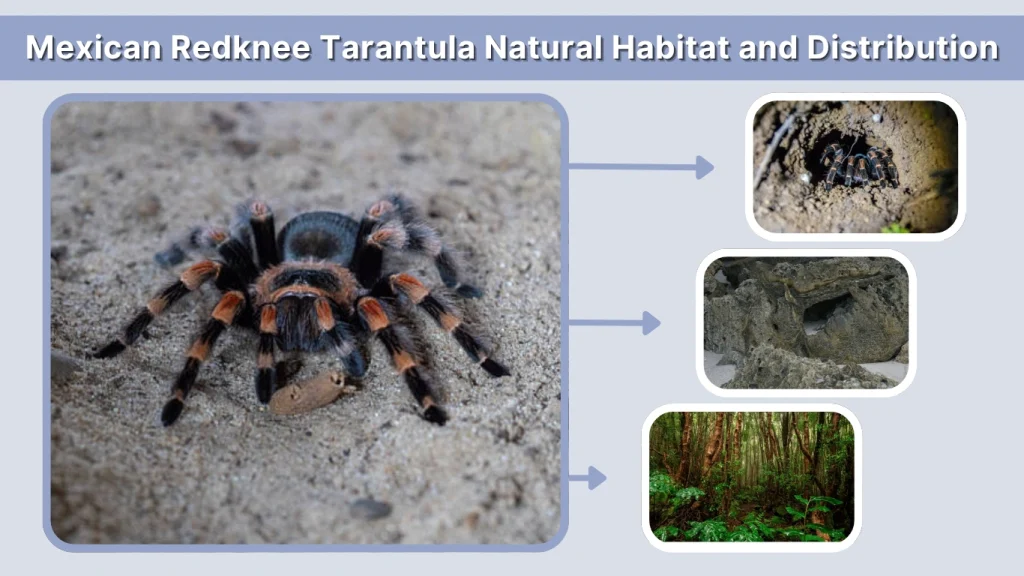
Geographic Range
The Mexican Redknee Tarantula is native to the Pacific coastal regions of Mexico, particularly in areas with dry climates. It is commonly found in states such as Guerrero and surrounding regions.
Habitat Type
This species is terrestrial, meaning it lives primarily on the ground. It often creates burrows or takes shelter under rocks, logs, or vegetation. These hiding spots help protect it from predators and extreme temperatures.
Environmental Conditions
The natural habitat of this tarantula consists of dry forests and scrublands with warm temperatures. Unlike many tropical species, it prefers relatively low humidity. These environmental conditions play a crucial role in maintaining its health, both in the wild and in captivity.
Behavior and Temperament
Docile Nature
The Mexican Redknee Tarantula is known for its calm and docile temperament. It rarely shows aggression and is more likely to remain still or slowly move away when disturbed. This makes it one of the safest tarantula species for beginners.
Defense Mechanisms
Instead of biting, this tarantula primarily relies on its urticating hairs for defense. When threatened, it may kick these hairs toward a perceived threat. In most cases, it will choose to retreat into its burrow rather than confront danger.
Activity Patterns
This species is mostly nocturnal, becoming more active at night when it hunts for food. During the day, it often stays hidden in its burrow or resting area. Compared to arboreal tarantulas, it is relatively slow-moving and less active, making it easier to manage in captivity.
Mexican Redknee Tarantula Diet
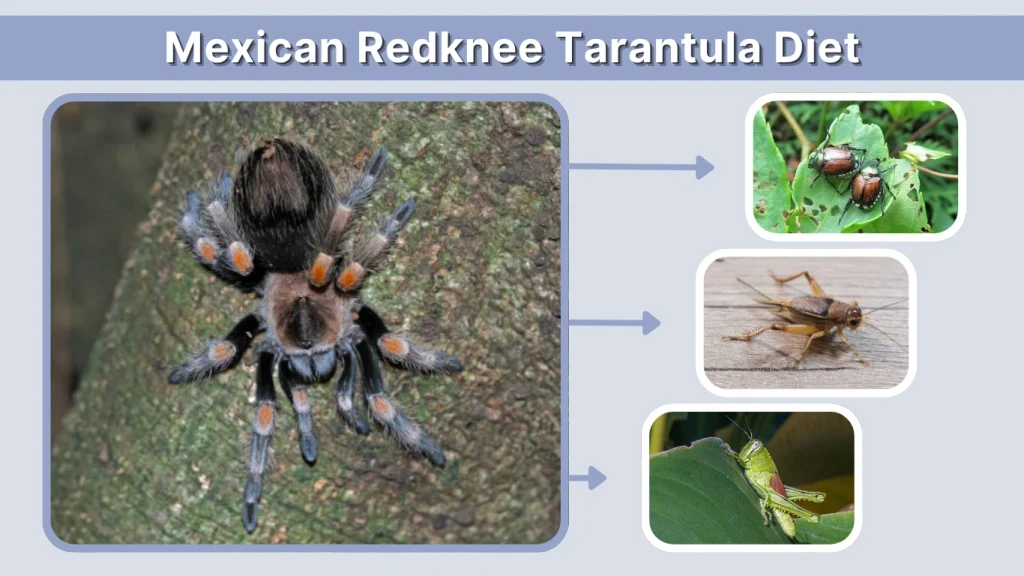
The Mexican Redknee Tarantula is a carnivorous predator that feeds primarily on insects. In the wild, its diet includes crickets, beetles, grasshoppers, and other small invertebrates. Occasionally, it may capture small vertebrates, although this is less common.
In captivity, it is typically fed live feeder insects such as crickets and cockroaches. Adult tarantulas usually require feeding once a week, while younger individuals may need more frequent meals. This species uses an ambush hunting strategy, waiting patiently before striking its prey with precision. Its slow and deliberate feeding behavior reflects its calm nature.
Mexican Redknee Tarantula Bite
Bite Severity
The bite of a Mexican Redknee Tarantula is considered mild compared to many other tarantula species. Its venom is not medically significant for humans and is often compared to a bee sting in terms of pain.
Symptoms of a Bite
If a bite does occur, it may cause localized pain, slight swelling, and mild discomfort. Serious reactions are rare, but individuals with allergies should exercise caution.
Mexican Redknee Tarantula Bite (Continued)
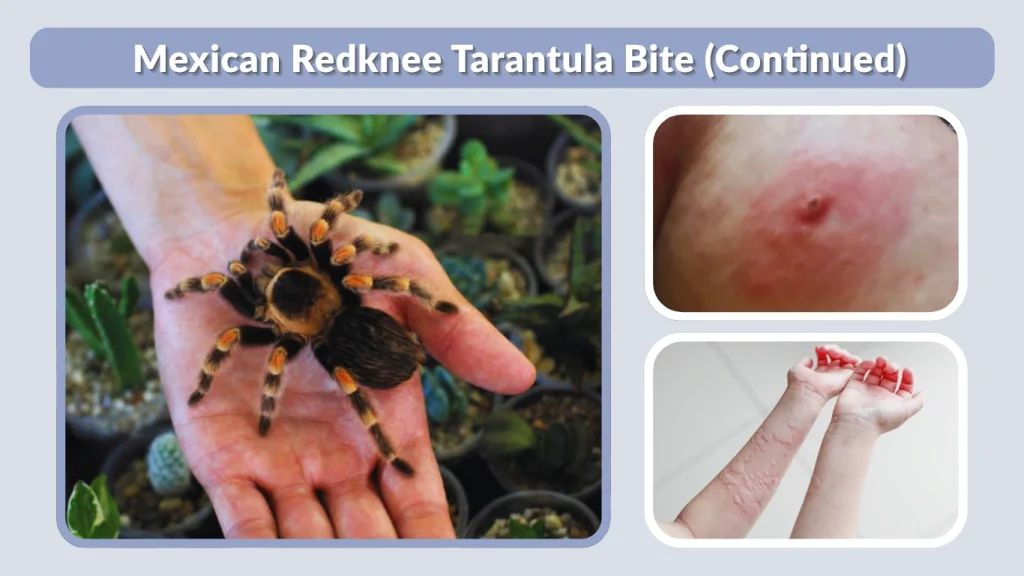
Urticating Hair Irritation
While bites are uncommon, irritation from urticating hairs is much more frequent. These tiny barbed hairs can cause itching, redness, and discomfort when they come into contact with skin. If they reach the eyes or are inhaled, they may cause more serious irritation. Washing the affected area and avoiding rubbing usually helps reduce symptoms.
Is It Dangerous?
Overall, the Mexican Redknee Tarantula is not considered dangerous to humans. Its calm nature and preference for retreating make it a low-risk species. With proper handling and care, the chances of a bite or irritation can be minimized significantly.
Lifespan and Growth
Lifespan Differences
One of the most notable features of this species is its long lifespan. Female Mexican Redknee Tarantulas can live between 20 to 30 years, making them a long-term commitment for owners. Males, on the other hand, have a shorter lifespan of around 5 to 10 years.
Growth and Molting
This species grows relatively slowly compared to other tarantulas. As it develops, it goes through multiple molting stages, shedding its exoskeleton to grow larger. Each molt is a delicate process that requires proper environmental conditions.
Molting Care
During molting, the tarantula becomes vulnerable and should not be disturbed. It may refuse food and remain inactive. Maintaining proper temperature and providing access to water are essential during this period. Feeding should be avoided until the new exoskeleton hardens.
Mexican Redknee Tarantula Habitat (Captivity Care)
Enclosure Setup
A proper enclosure for this terrestrial species should be wider rather than tall. A tank with sufficient floor space allows the tarantula to move comfortably. Since it is not a climber, excessive height should be avoided to reduce the risk of injury from falls.
Substrate
Providing a deep substrate is important, as this tarantula enjoys burrowing. Materials such as coconut fiber or soil work well. A depth of several inches allows it to dig and create a natural hiding place.
Temperature and Humidity
The ideal temperature range for this species is between 22–26°C. Humidity should be kept low to moderate, as excessive moisture can lead to health issues. A dry environment with a slightly humid corner is often ideal.
Care Guide for Beginners
Feeding Routine
Feeding once a week is usually sufficient for adult tarantulas. Juveniles may require more frequent feeding. It is important to remove uneaten prey to prevent stress or harm to the spider.
Water Needs
A shallow water dish should always be available. Even though this species comes from relatively dry habitats, access to fresh water is essential for hydration.
Maintenance Tips
Regular cleaning of the enclosure helps maintain a healthy environment. Avoid frequent disturbances, as stress can negatively affect the tarantula’s health and behavior.
Handling and Safety
The Mexican Redknee Tarantula is one of the few species that can be handled with caution, but it is still not necessary. Frequent handling can stress the spider and increase the likelihood of defensive behavior such as hair flicking.
If handling is attempted, it should be done gently and close to the ground to prevent injury in case the tarantula falls. Always wash hands after contact to avoid irritation from urticating hairs.
Common Health Issues
This species is generally hardy but can still face certain health problems. Dehydration is a common issue if water is not provided regularly. Molting complications may occur if environmental conditions are not ideal.
Another common issue is bald spots on the abdomen, often caused by frequent hair flicking. While this is not always dangerous, it can indicate stress. Monitoring behavior and maintaining proper care conditions can help prevent most health concerns.
Pros and Cons of Keeping This Species
Pros
The Mexican Redknee Tarantula is highly valued for its calm temperament and beginner-friendly nature. Its striking appearance and long lifespan make it a rewarding pet for enthusiasts.
Cons
Despite its many advantages, it has some drawbacks. It grows slowly, which may not appeal to everyone. Its urticating hairs can cause irritation, and it is not as active as some other tarantula species.
Comparison with Other Tarantulas
Compared to Old World tarantulas, which rely on potent venom and defensive behavior, the Mexican Redknee is much more manageable. As a New World species, it uses urticating hairs instead of aggression.
It is also a terrestrial species, unlike arboreal tarantulas that live in trees. This makes it easier to house and care for, especially for beginners. Its calm demeanor sets it apart as one of the best starter tarantulas.
FAQs
Are Mexican Redknee tarantulas good for beginners?
Yes, they are one of the best tarantulas for beginners due to their calm temperament, slow movement, and relatively easy care requirements.
Do Mexican Redknee tarantulas bite often?
No, they rarely bite. Instead, they prefer to flick urticating hairs or retreat when they feel threatened.
How long do Mexican Redknee tarantulas live?
Females can live up to 20–30 years, while males usually live around 5–10 years.
What does a Mexican Redknee tarantula eat?
They primarily eat insects such as crickets, roaches, and grasshoppers. In captivity, feeder insects are the main diet.
Are Mexican Redknee tarantulas dangerous to humans?
No, they are not considered dangerous. Their bite is mild, and their main defense is irritating hairs rather than venom.
Conclusion
The Mexican Redknee Tarantula is a beautiful, calm, and beginner-friendly species that has earned its popularity among tarantula enthusiasts worldwide. With its striking coloration, long lifespan, and manageable care requirements, it is an excellent choice for those new to keeping tarantulas. By providing proper habitat conditions and handling it with care, owners can enjoy observing this fascinating spider for many years.