
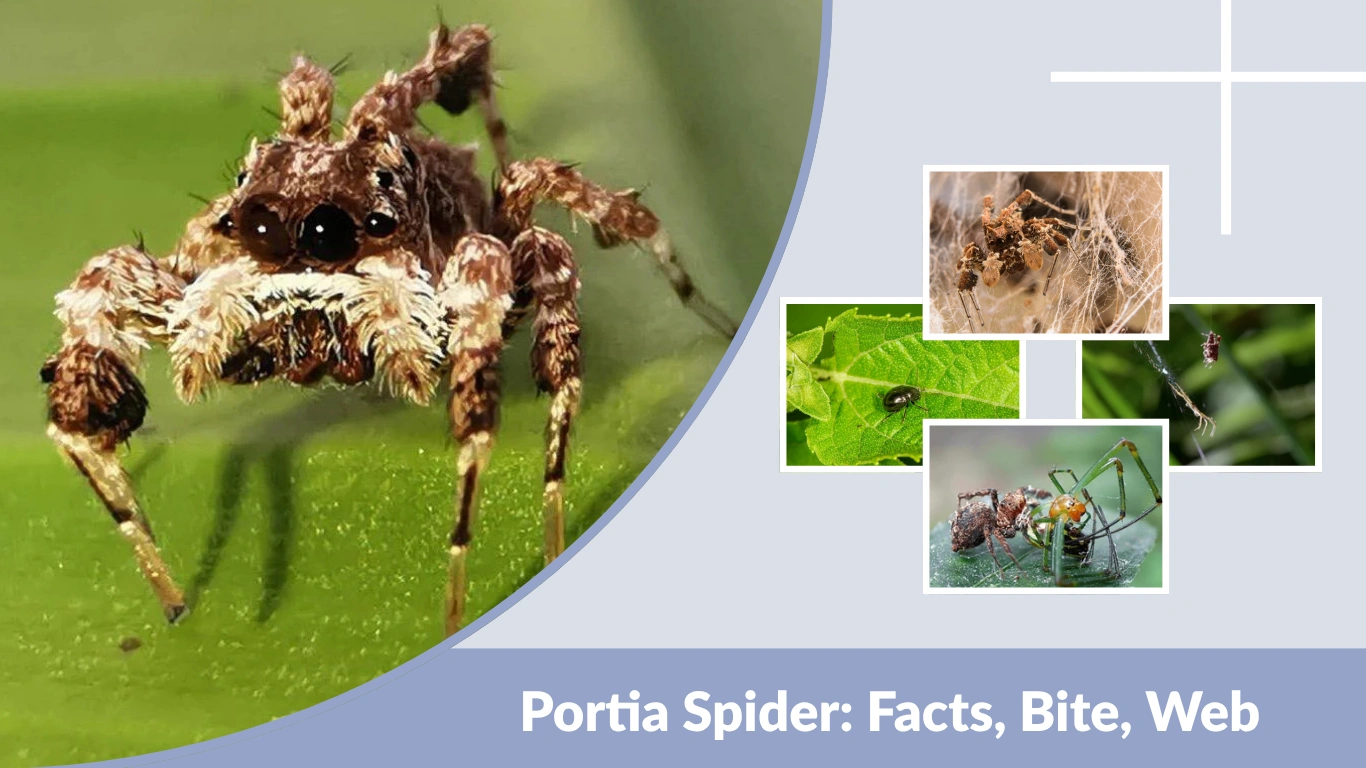
The Portia spider is widely considered one of the most intelligent spiders in the world. Unlike typical spiders that rely mainly on instinct, Portia spiders are known for their advanced hunting strategies, problem-solving abilities, and remarkable patience. These small but highly skilled predators belong to the jumping spider family and are famous for hunting other spiders using clever tactics.
Despite their fascinating behavior, many people are unfamiliar with Portia spiders or misunderstand their nature. They are not dangerous to humans and rarely interact with people. In this article, we’ll explore everything you need to know about the Portia spider, including its web use, habitat, bite, and unique intelligence.
What is a Portia Spider?
The Portia spider is a genus of jumping spiders belonging to the family Salticidae. These spiders are known for their exceptional vision and cognitive abilities, which allow them to plan and execute complex hunting strategies.
Unlike many spiders that depend on webs to catch prey, Portia spiders are active hunters. They rely on stealth, patience, and strategy rather than speed or strength.
Key Characteristics
Portia spiders have several features that make them stand out:
- Small to medium body size
- Hairy appearance with irregular shapes
- Camouflage that helps them blend into their surroundings
- Large forward-facing eyes for excellent vision
Their unusual body shape and slow, deliberate movements often make them look like debris or leaves, helping them avoid detection by prey and predators.
Portia Spider Web
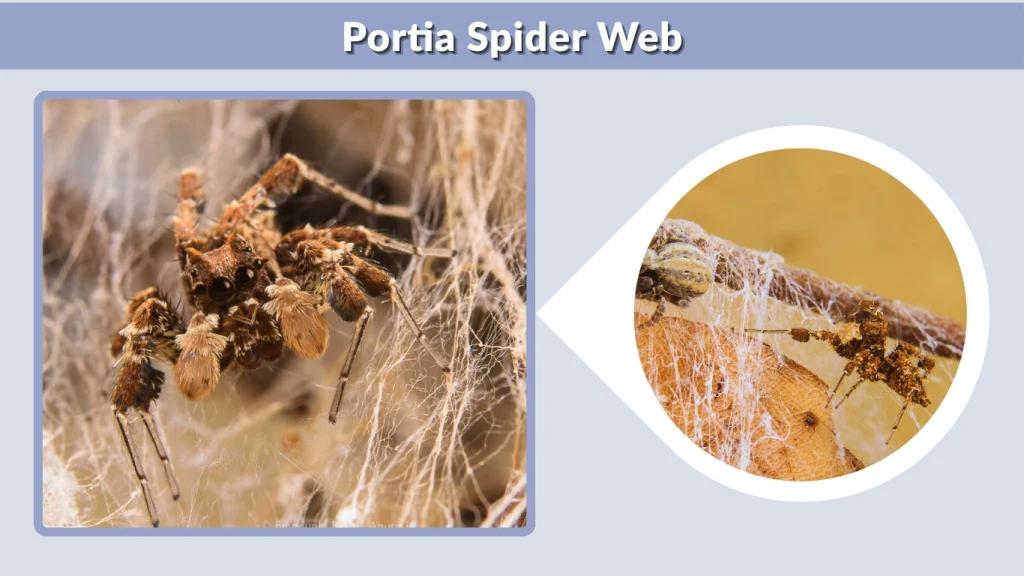
Unlike many spiders, Portia spiders do not rely heavily on building their own webs for hunting.
Do Portia Spiders Build Webs?
Portia spiders produce silk, but they use it mainly for safety purposes such as creating draglines or temporary shelters. They do not build large, structured webs like orb-weaving spiders.
Web Use in Hunting
One of the most fascinating aspects of Portia spiders is how they interact with the webs of other spiders. Instead of building their own traps, they invade the webs of other spiders and use deception to capture prey.
They can create specific vibrations on a web that mimic the movements of trapped insects. This tricks the web owner into approaching, thinking it has caught prey. When the spider comes close, Portia attacks.
This ability to mimic signals and deceive other spiders highlights their advanced hunting intelligence.
Portia Spider Habitat
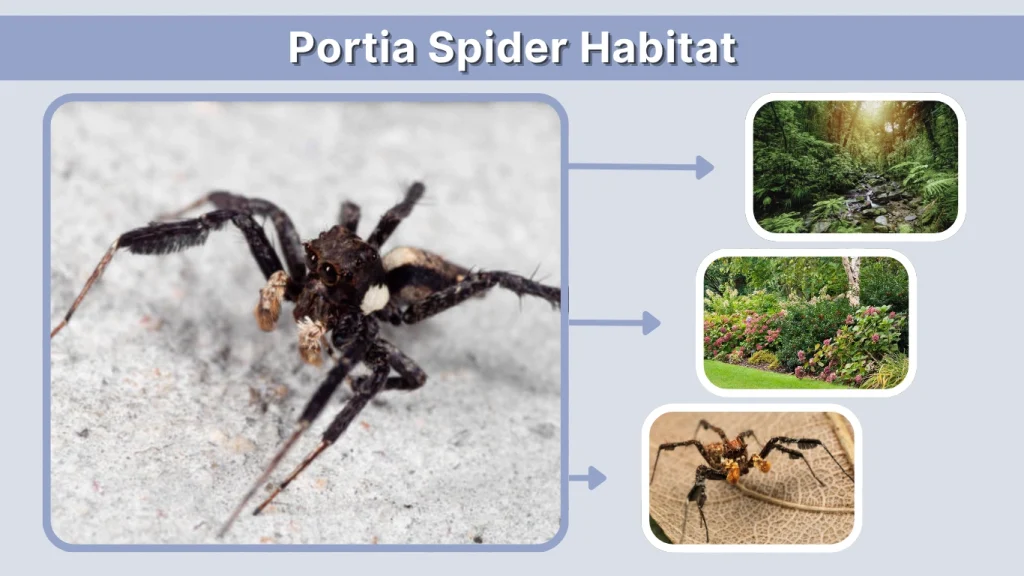
Portia spiders are primarily found in warm regions of the world where conditions support their active hunting lifestyle.
Geographic Distribution
These spiders are commonly found in:
- Africa
- Asia
- Australia
They thrive in tropical and subtropical regions where biodiversity is high and prey is abundant.
Preferred Environments
Portia spiders prefer habitats that offer both cover and access to prey. Common environments include:
- Forests and dense vegetation
- Bushes and shrubs
- Tree trunks and leaf surfaces
They are often found in areas where other spiders are present, as these serve as both competitors and prey.
Portia Spider Diet
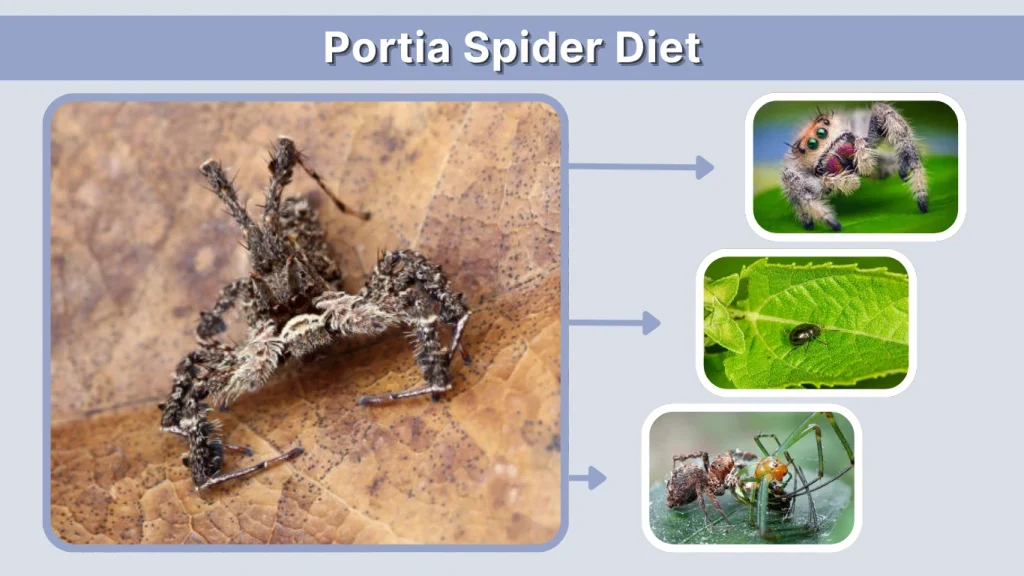
Portia spiders have a unique and specialized diet compared to most other spiders.
Hunting Behavior
Portia spiders are active hunters that rely on strategy rather than webs. They move slowly and carefully, often pausing to assess their surroundings before making a move.
Their hunting style involves patience and precision, sometimes taking several minutes to approach prey.
Typical Prey
Their diet mainly consists of:
- Other spiders (their primary target)
- Small insects
- Occasionally prey larger than themselves
They are known as spider specialists because they frequently hunt and eat other spiders, even those that are dangerous.
Portia Spider Bite
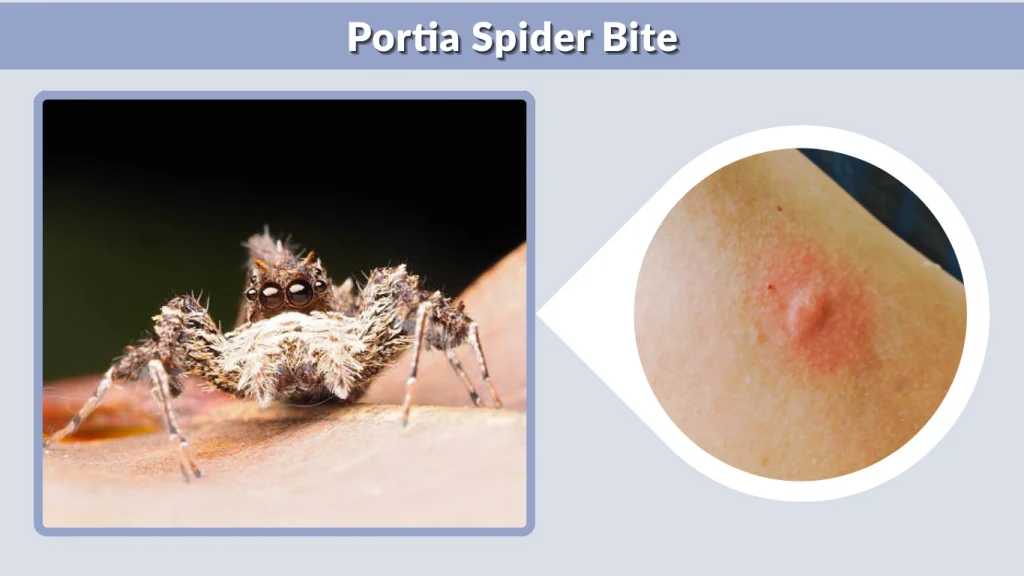
The Portia spider may be a skilled predator, but it poses little threat to humans.
Do Portia Spiders Bite Humans?
Portia spiders are not aggressive toward humans and will usually avoid contact. Bites are extremely rare and typically only occur if the spider is handled or feels threatened.
Bite Effects
If a bite does happen, the effects are generally mild and may include:
- Slight pain or discomfort
- Minor redness or irritation
- Temporary swelling
These symptoms usually disappear quickly without the need for medical treatment.
Is It Dangerous?
Portia spiders do have venom, which they use to subdue prey. However, this venom is not harmful to humans in any significant way. Their bite is not considered medically important.
Behavior and Hunting Intelligence
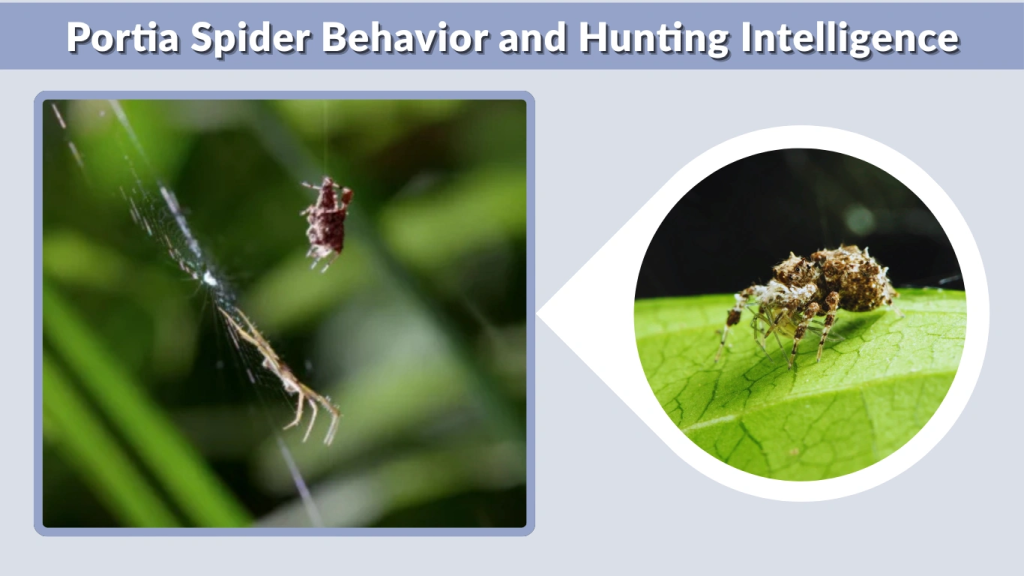
Portia spiders are best known for their extraordinary intelligence and complex hunting techniques.
Problem-Solving Skills
Unlike most spiders, Portia spiders can plan ahead. They are capable of analyzing their surroundings and choosing the best route to reach their prey. In some cases, they even take detours to approach prey from a better angle.
This ability to plan actions before executing them is rare among invertebrates and highlights their advanced cognitive abilities.
Deceptive Hunting Techniques
One of the most fascinating behaviors of Portia spiders is their use of deception. When entering another spider’s web, they create vibrations that mimic trapped insects or other disturbances.
If the prey does not respond, they may change the pattern of vibrations until they find one that works. This trial-and-error approach shows flexibility and learning ability.
Once the target spider comes close, Portia strikes quickly and efficiently.
Importance in the Ecosystem
Portia spiders play a valuable role in maintaining ecological balance.
They help regulate populations of other spiders and insects, preventing any one species from becoming too dominant. By preying on other spiders, they also contribute to controlling potentially harmful species.
Their presence supports biodiversity and helps maintain a balanced food web in their natural habitats.
Portia Spider Facts
Portia spiders are among the most studied spiders due to their unique intelligence and behavior.
Unique Facts
- They are considered one of the smartest spiders in the animal kingdom
- They can plan hunting routes before attacking
- They use trial-and-error learning to improve their strategies
- Their eyesight is highly developed compared to most spiders
These abilities allow them to solve problems that many other spiders cannot.
Intelligence and Behavior
Portia spiders demonstrate behaviors that are rare among invertebrates. For example, they can take indirect routes to reach prey, even when the prey is temporarily out of sight. This suggests a level of planning and memory.
They also adapt their hunting techniques depending on the type of prey they are targeting. If one method doesn’t work, they may try a different approach, showing flexibility in their behavior.
Common Misconceptions
There are several misconceptions about Portia spiders that can lead to unnecessary fear.
- Myth: They are dangerous to humans
Fact: They are harmless and rarely bite - Myth: All spiders rely on webs
Fact: Portia spiders are active hunters and use strategy instead - Myth: Intelligence makes them aggressive
Fact: Their intelligence is used for hunting, not for attacking humans
Understanding these facts helps reduce fear and promotes appreciation for their unique abilities.
FAQs
Are Portia spiders poisonous to humans?
Portia spiders have venom to subdue their prey, but it is not harmful to humans. Their bite is mild and not medically significant.
How do Portia spiders hunt other spiders?
They use clever strategies like mimicking vibrations in webs to trick other spiders into coming closer, then attack them quickly.
Can Portia spiders jump like other jumping spiders?
Yes, Portia spiders can jump, but they rely more on slow, careful movements and planning rather than quick jumps.
Do Portia spiders live alone or in groups?
Portia spiders are solitary hunters and usually live alone, except during mating.
Why are Portia spiders considered intelligent?
They can plan hunting routes, solve problems, and adjust their strategies based on experience, which is rare among spiders.
Conclusion
The Portia spider is a remarkable example of intelligence in the animal world. With its ability to plan, adapt, and use deception, it stands out among spiders as a highly skilled predator.
Despite its advanced hunting abilities, the Portia spider is harmless to humans and plays an important role in controlling insect and spider populations. By understanding more about this unique species, we can replace fear with curiosity and appreciation for one of nature’s most fascinating creatures.