

The golden orb weaver spider is one of the most fascinating and visually striking spiders in the world. Known for its large size and shimmering golden webs, this spider often captures attention in gardens, forests, and outdoor spaces. While its appearance may seem intimidating, the golden orb weaver is generally harmless to humans and plays an important role in controlling insect populations.
These spiders belong to the genus Nephila (now often classified under Trichonephila) and are famous for producing strong, golden-colored silk. In this article, we’ll explore everything you need to know about the golden orb weaver spider, including identification, diet, behavior, and whether their bite is dangerous.
What is a Golden Orb Weaver Spider?
The golden orb weaver spider is a type of orb-weaving spider known for spinning large, circular webs with a golden sheen. These spiders are commonly found in warm regions around the world and are especially noticeable due to their size and web structure.
They are part of the orb-weaver family, meaning they create intricate wheel-shaped webs to catch flying insects. Their golden silk is not only beautiful but also incredibly strong compared to other natural fibers.
Key Characteristics
Golden orb weavers have several defining features that make them easy to recognize:
- Large body size, particularly in females
- Long, slender legs with dark and yellow markings
- Distinctive golden-colored silk webs
- Strong sexual dimorphism (males are much smaller than females)
Female golden orb weavers can grow significantly larger than males, sometimes appearing several times their size.
Golden Orb Weaver Spider Identification
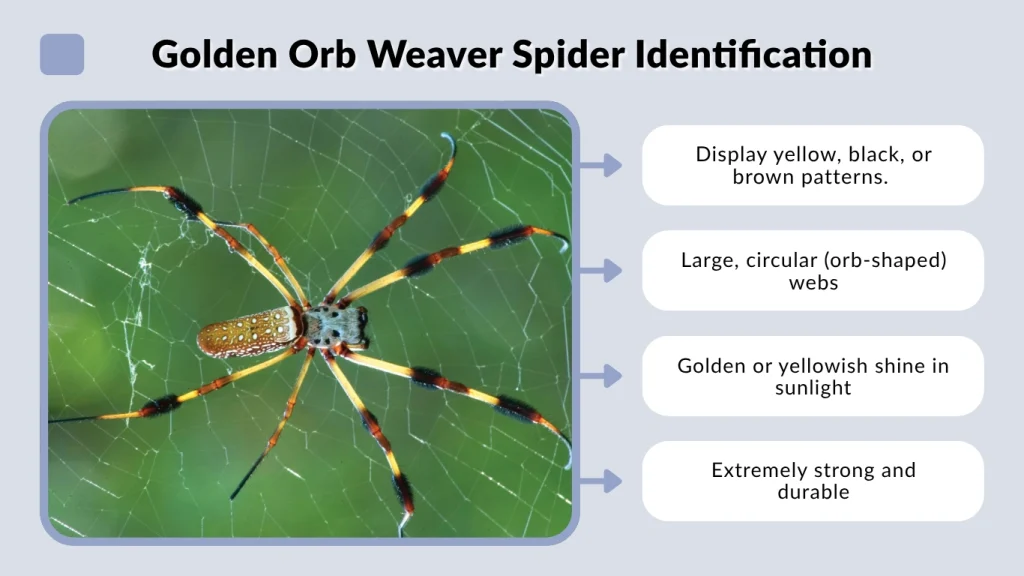
Identifying a golden orb weaver spider is relatively easy once you know what to look for.
Physical Appearance
The most noticeable feature is the size difference between males and females. Females are large, with elongated abdomens that may display yellow, black, or brown patterns. Males, on the other hand, are much smaller and less noticeable.
Their legs are long and often banded with dark and light colors, giving them a striking appearance.
Web Identification
Golden orb weaver webs are one of their most distinctive traits:
- Large, circular (orb-shaped) webs
- Golden or yellowish shine in sunlight
- Extremely strong and durable
These webs can span several meters and are often built in open areas where flying insects are abundant.
Where You’ll Commonly See Them
You can typically find golden orb weaver spiders in:
- Forests and wooded areas
- Gardens and parks
- Between trees, poles, or buildings
They often position their webs across pathways or open spaces to maximize their chances of catching prey.
Golden Orb Weaver Spider Habitat
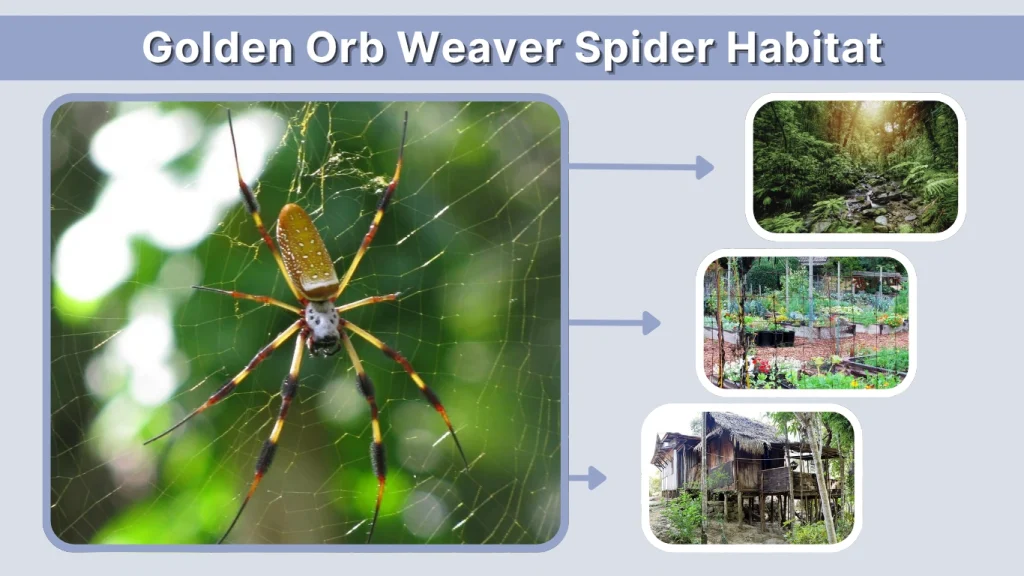
Golden orb weaver spiders prefer warm climates and are commonly found in tropical and subtropical regions.
Common Locations
These spiders thrive in environments such as:
- Forests and jungles
- Gardens and farmland
- Areas near human dwellings with vegetation
They choose locations where there is plenty of space to build large webs and an abundance of flying insects.
Golden Orb Weaver Spider Facts
Golden orb weavers are not just visually impressive—they also have many fascinating characteristics.
Interesting Facts
- Female spiders are much larger than males, sometimes by a factor of 5 or more
- Their silk is one of the strongest natural fibers known
- Webs can stretch across large distances and remain intact for long periods
Their silk has even been studied by scientists for potential use in materials and textiles.
Unique Behaviors
Golden orb weavers typically sit at the center of their webs, waiting patiently for prey. When an insect becomes trapped, they quickly move to immobilize it.
They are not aggressive toward humans and will usually avoid contact unless directly threatened. If disturbed, they may retreat rather than attack.
Golden Orb Weaver Spider Diet
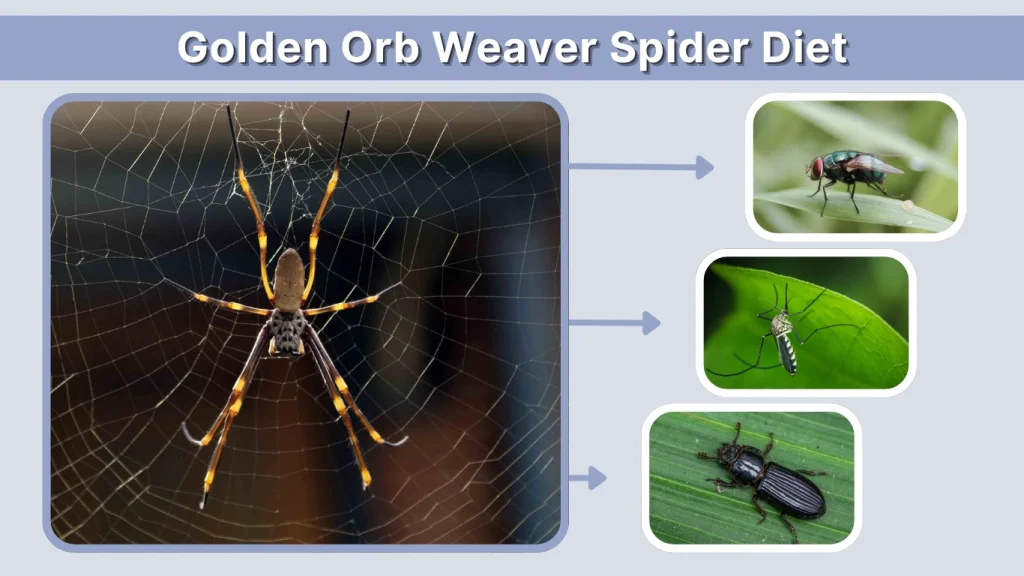
Golden orb weavers are skilled hunters that rely on their webs to capture food.
Feeding Behavior
Unlike hunting spiders, golden orb weavers are passive predators. They spin large webs and wait for prey to fly into them. Once an insect is caught, the spider senses vibrations and moves quickly to secure it.
They wrap their prey in silk and inject digestive enzymes to break it down.
Typical Prey
Their diet mainly consists of:
- Flies
- Mosquitoes
- Beetles
- Other flying insects
In rare cases, larger individuals may catch small animals like birds or bats, though this is uncommon.
Golden Orb Weaver Spider Bite
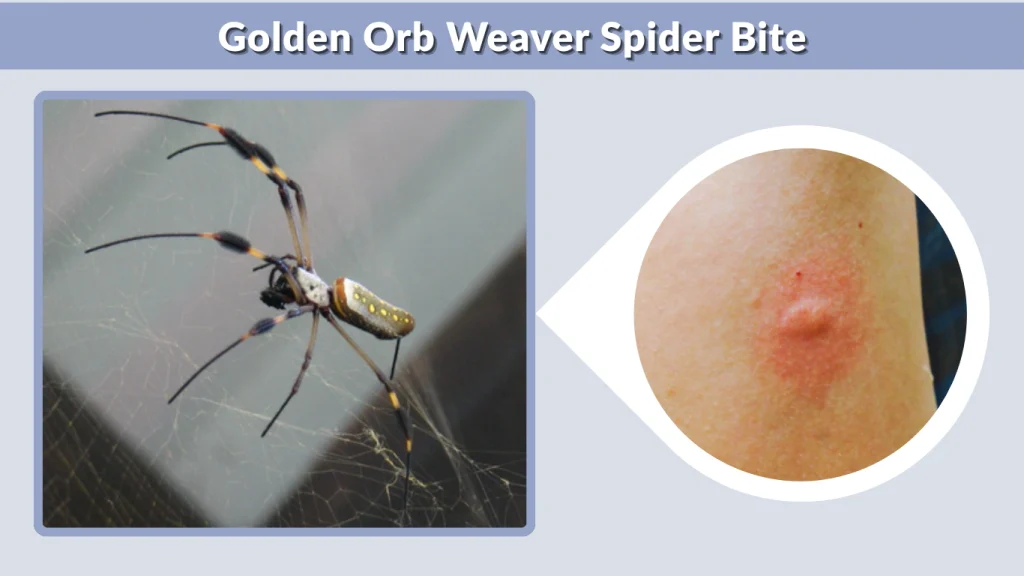
The golden orb weaver spider often looks intimidating due to its size, but its bite is rarely a cause for concern.
Do They Bite Humans?
Golden orb weavers are not aggressive and will only bite if they feel threatened or are handled. Most encounters with humans do not result in bites because these spiders prefer to stay in their webs and avoid contact.
Bite Symptoms
If a bite does occur, the symptoms are usually mild and may include:
- Slight pain similar to a bee sting
- Redness around the bite area
- Minor swelling
These symptoms typically fade within a short period and do not require medical treatment.
Is It Dangerous?
The bite of a golden orb weaver spider is not considered medically significant. While they do have venom to subdue prey, it is not harmful to humans in any serious way.
Golden Orb Weaver Spider Baby (Spiderlings)
Golden orb weaver spider babies, also known as spiderlings, are very different in appearance from adults.
Appearance of Spiderlings
Spiderlings are:
- Tiny and delicate
- Pale or light-colored compared to adults
- Less noticeable due to their small size
They gradually develop their characteristic colors and patterns as they grow.
Early Development
After hatching, spiderlings often stay close to their egg sac for a short period. Soon after, they disperse using a method called ballooning, where they release silk threads that catch the wind and carry them to new locations.
This allows them to spread over large areas and find suitable habitats.
Golden Orb Weaver Spider Life Cycle
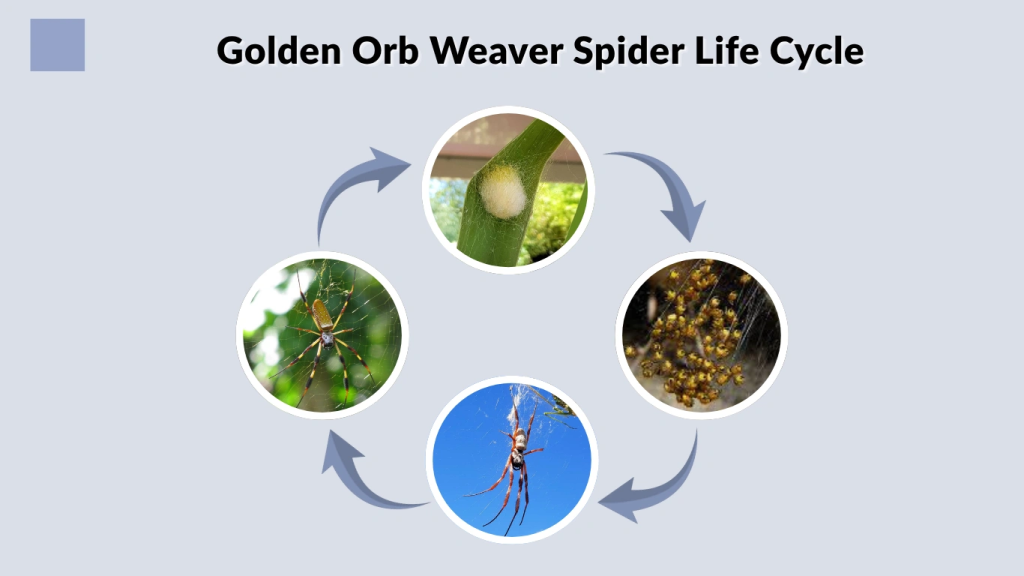
The life cycle of a golden orb weaver spider follows a typical pattern seen in many arachnids.
Life Cycle Stages
The main stages include:
- Egg
- Spiderling
- Juvenile (growing stages with molts)
- Adult
As they grow, they shed their outer skeleton multiple times in a process known as molting.
Growth Process
Golden orb weavers grow rapidly in warm conditions where food is abundant. Females, in particular, can become quite large by the time they reach adulthood.
Their growth depends heavily on environmental factors such as temperature and food availability.
Golden Orb Weaver Spider Lifespan
Golden orb weaver spiders generally have a relatively short lifespan.
Average Lifespan
Most golden orb weavers live for about one year. Their life cycle is closely tied to seasonal changes, especially in regions with distinct warm and cool periods.
Seasonal Behavior
They are most visible during warmer months when they are actively building webs and feeding. After reproduction, many adults die, and the next generation continues the cycle.
Behavior and Web-Building
Golden orb weavers are best known for their impressive web-building skills.
Web Structure
Their webs are:
- Large and circular (orb-shaped)
- Strong and durable
- Slightly golden in color
The golden hue may help attract prey or make the web less visible in sunlight.
Web Maintenance
These spiders regularly repair or rebuild their webs to keep them effective. Damage caused by wind, rain, or trapped prey is quickly fixed to maintain hunting efficiency.
Are Golden Orb Weaver Spiders Dangerous?
Despite their large size, golden orb weavers are not dangerous to humans.
Interaction with Humans
They are generally shy and avoid human interaction. Most bites occur only when the spider is accidentally touched or provoked.
Benefits to Humans
Golden orb weavers are beneficial because they help control insect populations. By feeding on pests like mosquitoes and flies, they contribute to a healthier environment.
Importance in the Ecosystem
Golden orb weaver spiders play a vital role in maintaining ecological balance.
They act as natural pest controllers, reducing the number of flying insects in their environment. This helps limit the spread of pests and contributes to healthier ecosystems.
Additionally, their presence supports biodiversity, as they are part of the food chain and interact with other species in their habitat.
FAQs
Are golden orb weaver spiders poisonous?
They are not dangerous to humans. While they have mild venom for capturing prey, it does not pose a serious risk to people.
How big do golden orb weaver spiders get?
Female golden orb weavers can grow quite large, with leg spans reaching several inches, while males remain much smaller.
Where are golden orb weaver spiders found?
They are commonly found in tropical and subtropical regions around the world, especially in forests, gardens, and wooded areas.
What do golden orb weaver spiders eat?
They mainly eat flying insects such as flies, mosquitoes, and beetles, which they catch in their large orb-shaped webs.
Should I remove golden orb weavers from my garden?
In most cases, it’s best to leave them alone. They are harmless and help control pests naturally.
Conclusion
The golden orb weaver spider is a remarkable species known for its stunning golden webs and impressive size. Despite their intimidating appearance, these spiders are harmless to humans and play an important role in controlling insect populations.
From their unique life cycle to their powerful silk, golden orb weavers are an essential part of the ecosystem. Understanding their behavior and benefits can help reduce fear and promote appreciation for these fascinating creatures.