
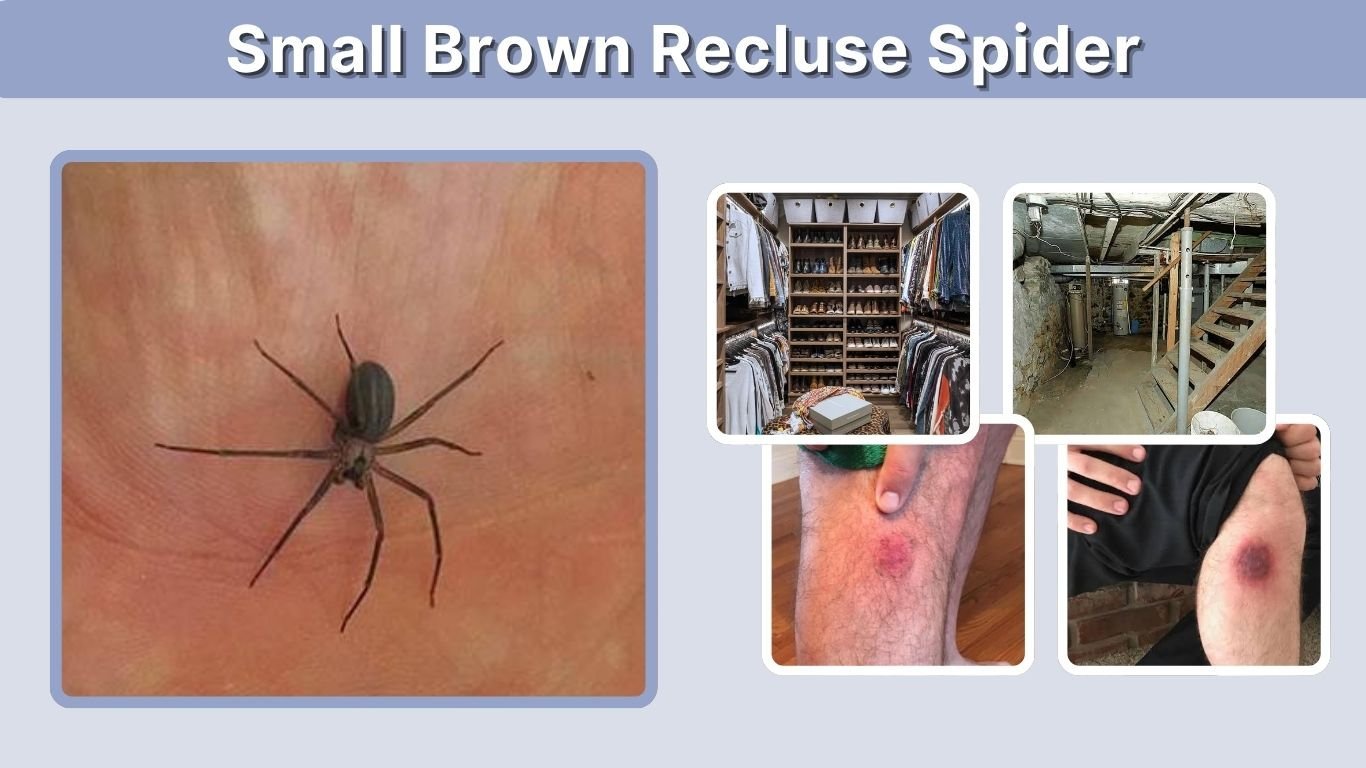
A small brown recluse spider can be difficult to identify because many harmless house spiders are also small and brown. True brown recluse spiders are usually tan to dark brown, have long thin legs, and are best identified by their six eyes arranged in three pairs, not by color alone. Their bites are medically important, but confirmed bites are less common than people think. This guide explains size, identification, lookalikes, bite symptoms, and when to get help.
What Is a Small Brown Recluse Spider?
A small brown recluse spider may be a young brown recluse, a small adult male, or a different brown spider mistaken for a recluse. The brown recluse, Loxosceles reclusa, is also called the fiddleback or violin spider because adults often have a dark violin-shaped marking on the front body section. Oklahoma State University describes brown recluse spiders as tan to dark brown, with body size nearly 1/4 inch to 1/2 inch.
| Feature | Brown Recluse Spider |
| Scientific name | Loxosceles reclusa |
| Body size | About 1/4 to 1/2 inch |
| Color | Tan to dark brown |
| Eyes | Six eyes in three pairs |
| Legs | Long, thin, plain-colored |
| Web | Loose, hidden retreat web |
| Main concern | Medically important bite |
The word “small” matters because baby brown recluse spiders are lighter and harder to recognize. Oklahoma State University notes that immature spiderlings resemble adults in structure but are somewhat lighter in color.
How Small Is a Brown Recluse Spider?
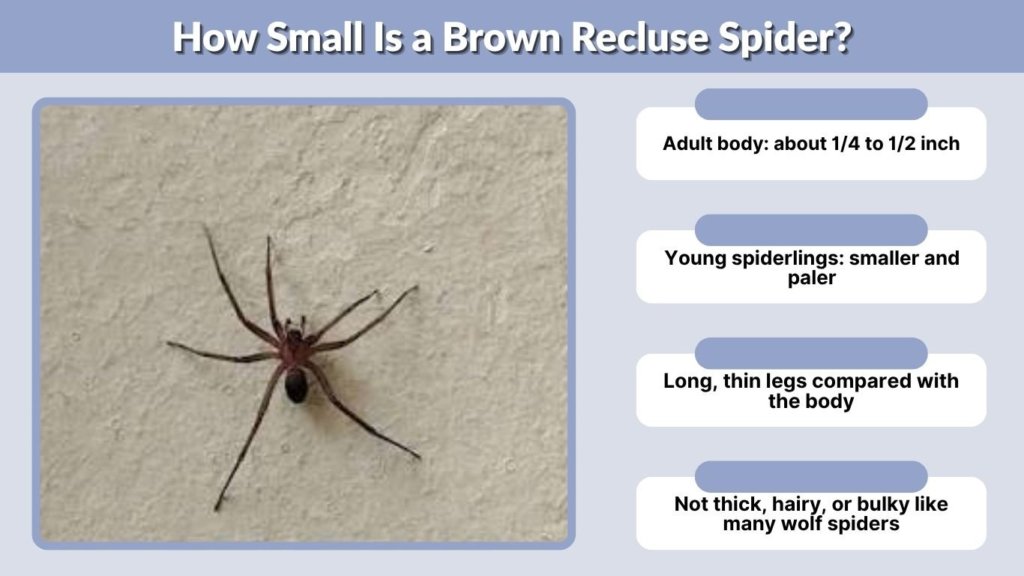
A brown recluse is not a huge spider. Its body is usually about the size of a dime to a small coin, while the leg span makes it look larger. Body size is more useful than total leg spread because spiders often stretch or fold their legs.
Size Clues
Use these clues when checking a small brown spider:
- Adult body: about 1/4 to 1/2 inch
- Young spiderlings: smaller and paler
- Long, thin legs compared with the body
- Not thick, hairy, or bulky like many wolf spiders
- Usually not as tiny as common baby house spiders
A small spider can still be a brown recluse, but size alone is not enough for identification. You need to check eye pattern, leg pattern, body markings, region, and where it was found.
Small Brown Recluse Spider Identification
Brown recluse identification should not depend only on the violin mark. Some true recluses have faint markings, and other spiders can have dark marks that look similar. The more reliable feature is the eye arrangement. Colorado State University says the quickest positive identification characteristic is three pairs of eyes arranged in a semicircle.
Key Identification Features
A small brown recluse spider may have:
- Six eyes arranged in three pairs
- Dark violin-shaped mark on the cephalothorax
- Plain tan, brown, or grayish-brown body
- Plain legs without stripes or bands
- Fine hairs, not thick spines
- Plain abdomen without bold patterns
- Secretive behavior in dark, dry places
Most spiders have eight eyes, so the six-eye pattern is an important clue. However, the eyes are hard to see without magnification, so many homeowners cannot confirm this feature safely.
Small Brown Recluse Spider vs Wolf Spider
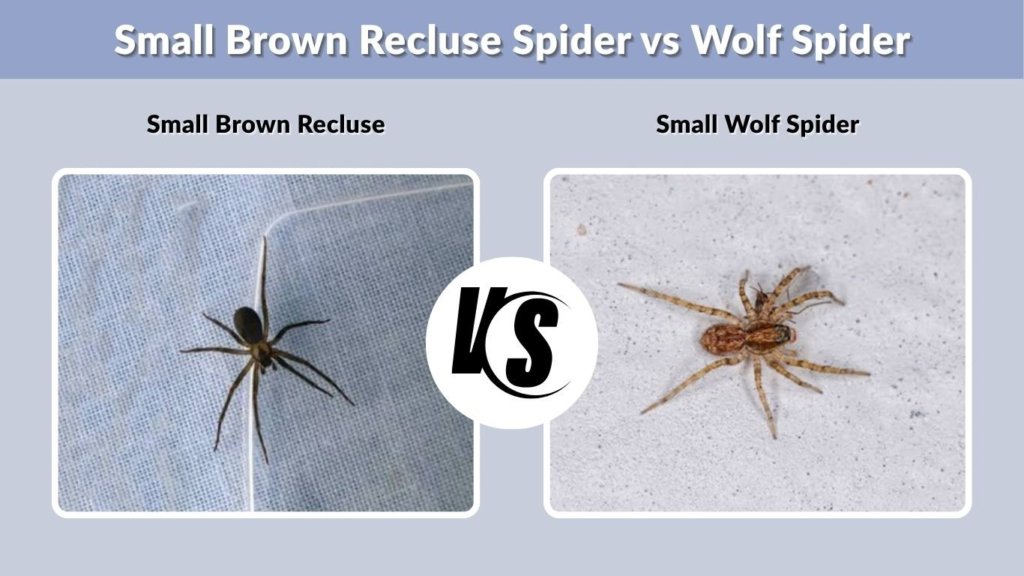
Many people search for “brown recluse wolf spider small” because wolf spiders and recluses are often confused. Wolf spiders are usually hairier, faster, and more patterned than brown recluse spiders. Oklahoma State University says wolf spiders range from about 1/2 inch to 2 inches, are hairy, brown to gray, and often have markings or lines. It also notes that wolf spiders are often confused with brown recluses but lack the unmistakable violin-shaped marking behind the head.
| Feature | Small Brown Recluse | Small Wolf Spider |
| Body texture | Smooth-looking, fine hairs | Hairier body |
| Eye count | Six eyes in three pairs | Eight eyes |
| Legs | Plain, thin | Often hairy and stronger |
| Abdomen | Usually plain | Often patterned |
| Behavior | Hides in dark quiet areas | Roams actively at night |
| Bite concern | Medically important | Usually not medically serious |
If the spider is very hairy, strongly striped, or has bold markings on the abdomen, it is less likely to be a brown recluse.
Where Small Brown Recluse Spiders Hide
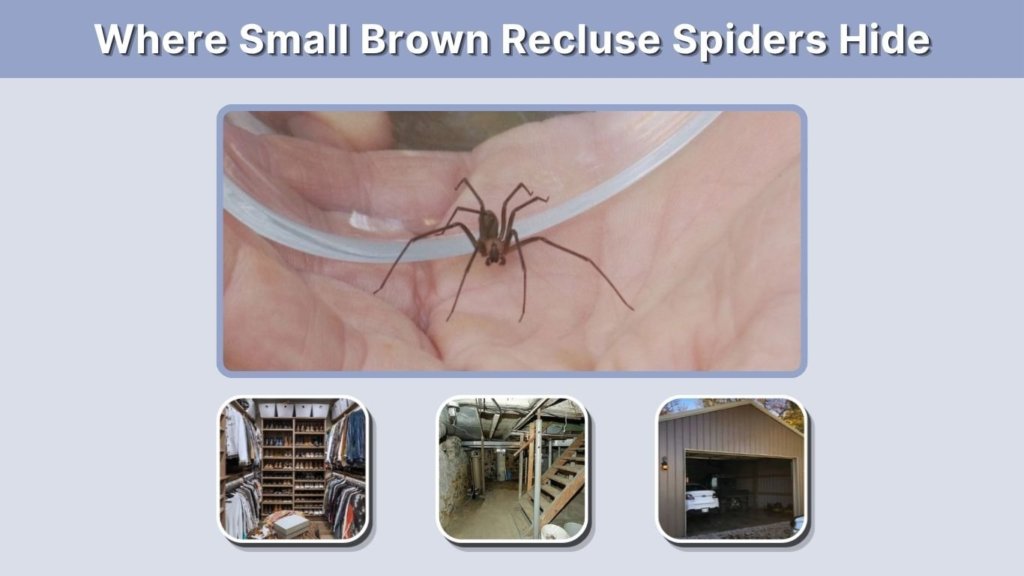
Small brown recluse spiders prefer dark, quiet, dry, undisturbed spaces. They often hide during the day and move at night. Oklahoma State University lists hiding places such as closets, old clothes, shoes, behind pictures, under furniture, basements, attics, boxes, and household goods.
Common Hiding Places
Check carefully in:
- Closets
- Basements
- Attics
- Garages
- Cardboard boxes
- Shoes and boots
- Stored clothing
- Under furniture
- Behind pictures
- Behind baseboards
- Crawl spaces
- Wood piles and debris
Never reach blindly into dark storage areas. Wear gloves and use a flashlight when moving boxes, old clothes, stored furniture, or firewood.
Small Brown Recluse Spider Bite
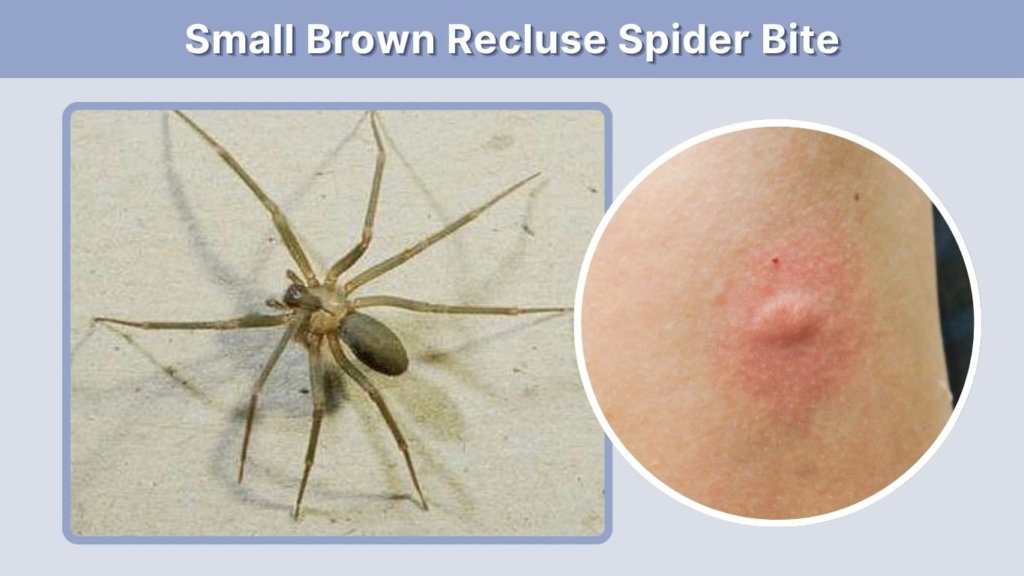
A small brown recluse spider can bite if it is trapped against the skin. Brown recluses are not aggressive, and many bites happen when a spider is pressed inside clothing, bedding, shoes, or gloves. StatPearls notes that brown recluse bites usually occur indoors as a defense mechanism when the spider is crushed or rolled over in bed.
The bite may be painless at first. Oklahoma State University says a localized burning sensation may develop within the first hour, and during the next 6 to 12 hours, a small pimple or blister may form.
Possible Bite Symptoms
A small brown recluse spider bite may cause:
- Mild redness
- Itching
- Burning pain
- Tender swelling
- Small blister
- Blue, purple, or dark center
- Open sore in severe cases
- Fever, nausea, headache, or body aches in systemic cases
Not every bite becomes severe. Penn State Extension states that about 90% of brown recluse bites result in no reaction or a small red papule that heals on its own.
Small Brown Recluse Spider Bite Stages
People often search for “small brown recluse spider bite stages,” but bite reactions vary. Some remain mild, while others worsen over hours or days. A true brown recluse bite may change gradually, not instantly.
General Bite Timeline
A possible timeline may look like this:
- At first: bites may be painless or feel like a small sting.
- 2 to 8 hours: burning, itching, redness, or pain may develop. StatPearls notes pain often increases over the next two to eight hours.
- 6 to 12 hours: a small blister or pimple may form in some cases.
- 1 to 3 days: the area may become more painful, swollen, or discolored.
- 7 to 14 days: severe cases may form a necrotic open sore. Oklahoma State University describes tissue darkening and possible ulceration over 10 to 14 days in more serious bites.
- Weeks: healing can be slow if tissue damage occurs.
Do not wait for a bite to “turn black” before getting help. If pain, swelling, discoloration, fever, or a wound worsens, contact a medical professional.
Brown Recluse Spider Bite: Small Mark or Serious Wound?
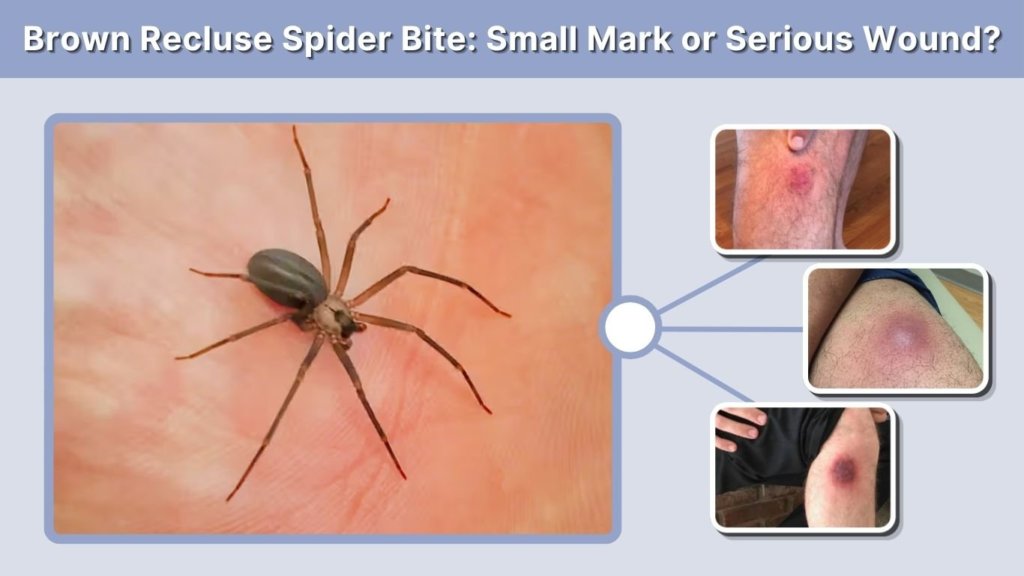
A small bite mark does not always mean a small problem, and a large red skin lesion does not always mean brown recluse. Many skin infections, boils, allergic reactions, and insect bites are mistaken for spider bites.
Poison Control says brown recluse spiders are rarely seen or identified, and serious illness and death from their bites are rare; treatment focuses on wound care and preventing infection because there is no antidote.
Warning Signs to Watch
Seek medical advice if you notice:
- Increasing pain
- Expanding redness
- Blue, purple, or black center
- Blistering
- Open sore
- Fever or chills
- Nausea
- Weakness
- Red streaks from the wound
- Pus or signs of infection
The CDC recommends washing a spider bite with soap and water, applying a cold cloth or ice to reduce swelling, elevating the bite area if possible, and seeking professional medical attention.
Small Brown Recluse Spider Bite on Dogs
Brown recluse bites can affect dogs, especially small dogs. PetMD lists possible signs of brown recluse spider bite poisoning in dogs, including fever, lethargy, vomiting, weakness, bruising, and abnormal clotting or bleeding problems. It also notes that treatment is supportive because there is no antivenom for brown recluse bites.
A keyword asks whether a brown recluse bite can cause seizures in small dogs. Seizures are not the most common sign, but some veterinary sources list seizures among severe spider-bite symptoms. Any seizure in a dog is an emergency, whether the suspected cause is a spider bite or something else.
Are Small Brown Recluse Spiders Dangerous?
Small brown recluse spiders can be medically important, but they are not aggressive hunters of humans. The main risk comes from accidental contact. A tiny juvenile or small adult can still have venom, so do not handle one with bare hands.
At the same time, do not panic over every small brown spider. Many small brown spiders are harmless lookalikes. Correct identification matters, especially outside the normal brown recluse range. If you catch one, place it in a sealed container or keep the glue trap and ask a local extension office or pest control professional for identification.
How to Prevent Small Brown Recluse Spiders Indoors
The best prevention is reducing hiding places and accidental contact. Brown recluse spiders like undisturbed clutter, cardboard, stored clothing, and quiet gaps.
Prevention Tips
- Store items in sealed plastic bins instead of cardboard.
- Shake out shoes, gloves, towels, and clothing.
- Keep clothing off the floor.
- Move beds away from walls in infested rooms.
- Vacuum under furniture and along baseboards.
- Seal cracks around doors, windows, and utility lines.
- Use sticky traps along walls and in closets.
- Wear gloves when moving stored items.
- Reduce insects that spiders feed on.
- Call pest control for repeated sightings or many trap captures.
Oklahoma State University says brown recluse spiders can be difficult to control and notes that severe infestations may require professional pest control, especially in attics, garages, crawl spaces, closets, and storage areas.
FAQs
How small is a brown recluse spider?
An adult brown recluse has a body size of about 1/4 to 1/2 inch. Young spiderlings are smaller and lighter but resemble adults in body structure.
Can a small brown recluse spider bite?
Yes. A small brown recluse can bite if trapped against skin, such as inside clothing, shoes, bedding, or gloves. Bites are defensive, not aggressive.
What does a small brown recluse spider bite look like?
It may start as a small red mark, pimple, or blister with burning or itching. In more serious cases, the area may darken, swell, blister, or become an open sore over days.
Is a small brown recluse spider more dangerous than a large one?
Not necessarily. Size alone does not predict bite severity. The amount of venom, bite location, person’s health, and reaction all matter. Many bites remain mild, but worsening symptoms need medical attention.
Can a brown recluse bite cause seizures in small dogs?
Seizures are not a common first sign, but severe spider-bite reactions in dogs can include serious symptoms, and any seizure should be treated as an emergency. Contact a veterinarian immediately if your dog may have been bitten and shows weakness, vomiting, bleeding, collapse, or seizures.