
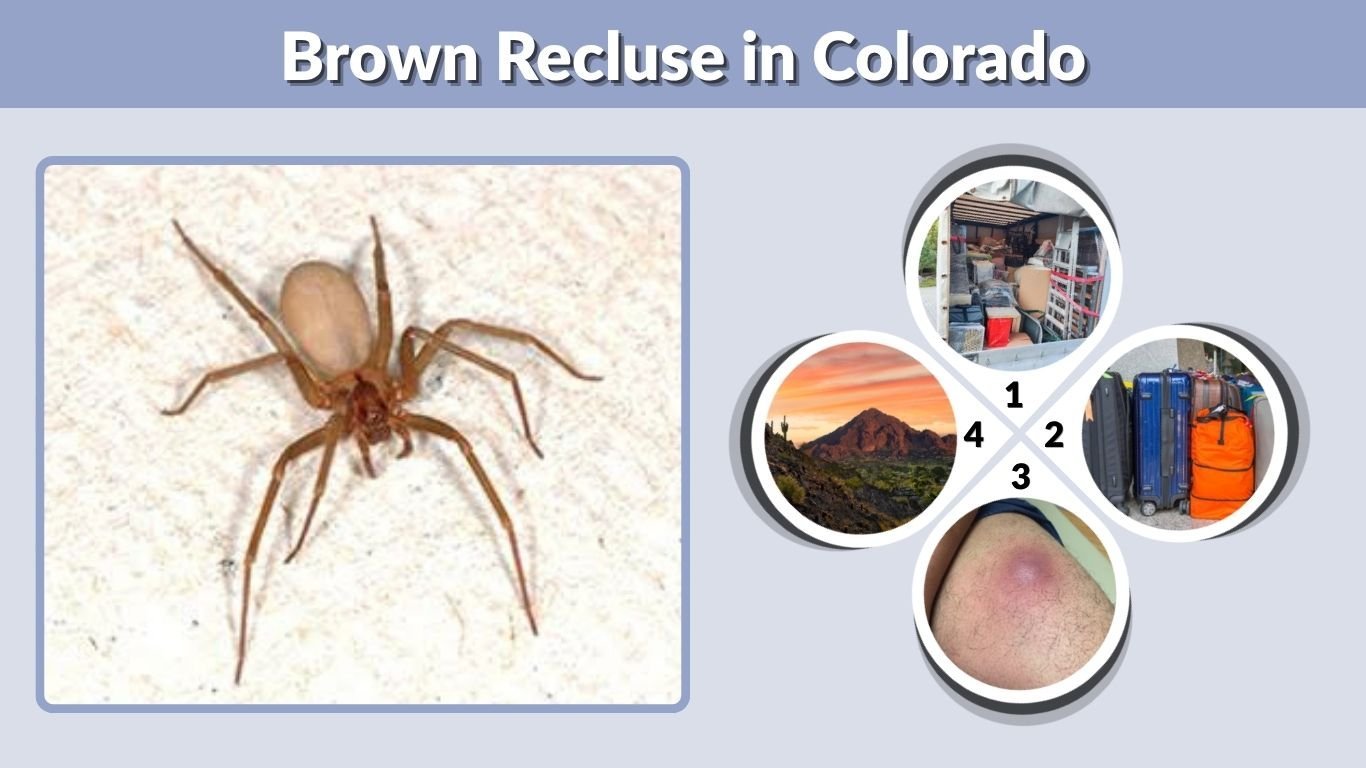
Many people search for brown recluse spiders in Colorado after finding a brown spider in a basement, garage, storage unit, or bedroom. The good news is that brown recluse spiders are extremely rare in Colorado. A few may be accidentally carried in from other states, but they are not common household spiders in most of Colorado. Many suspected brown recluses are actually wolf spiders, funnel weavers, hobo spiders, or other harmless brown spiders.
Are There Brown Recluse Spiders in Colorado?
Brown recluse spiders can occasionally be found in Colorado, but they are not common. Colorado State University Extension says brown recluse spiders are extremely rare in Colorado, and the few sightings often involve spiders accidentally brought in from neighboring states.
This means the answer is not as simple as “never.” A transported brown recluse may show up in a moving box, shipment, furniture, storage container, or luggage. However, that is different from saying brown recluse spiders are widely established across Colorado.
Quick Answer
- Brown recluse spiders are not common in Colorado.
- Most Colorado “brown recluse” sightings are misidentified spiders.
- Occasional transported individuals may appear.
- Colorado’s cold winters and dry climate make establishment difficult.
- Brown recluse bites are often overdiagnosed where the spider is rare.
Do Brown Recluse Spiders Live in Colorado?
In most cases, brown recluse spiders do not live as normal, established house spiders in Colorado. CSU Extension notes that the brown recluse is rare in Colorado because of the state’s cold winters and dry climate. The spider is common in areas along the southern Mississippi Valley and may occasionally be brought into Colorado, but it rarely, if ever, becomes established.
A single spider found in Colorado does not always mean there is a local population. Brown recluse spiders can survive inside buildings, but they are not naturally common across Colorado like they are in parts of Missouri, Arkansas, Kansas, Oklahoma, and nearby states.
Brown Recluse Colorado Map: Where Would They Be Most Likely?
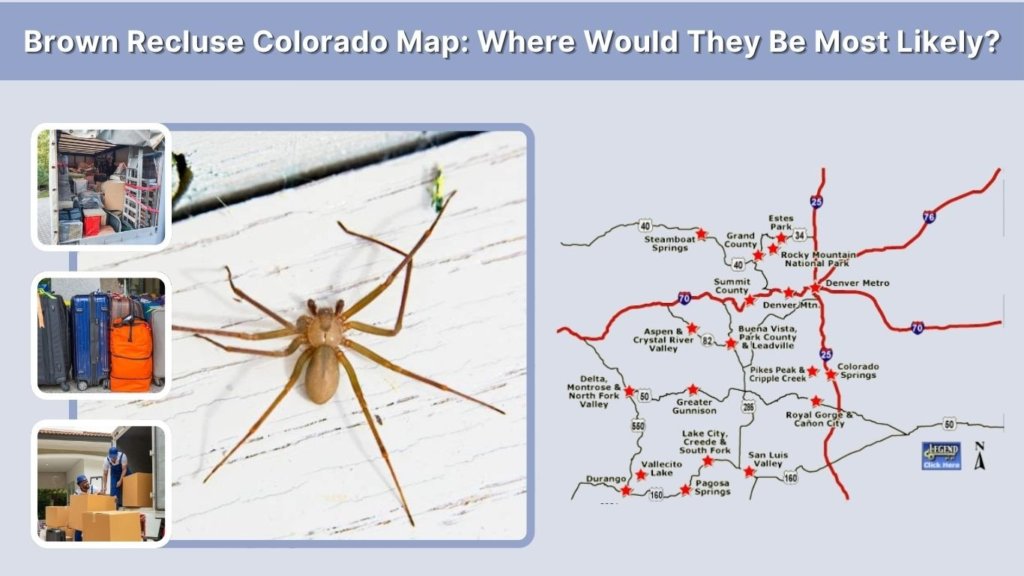
A brown recluse Colorado map can be misleading because Colorado is outside the main brown recluse range. The true brown recluse range is centered more toward the south-central and Midwestern United States.
If a brown recluse is found in Colorado, it is more likely to be:
- Accidentally transported in boxes or furniture
- Found in a storage unit or warehouse
- Brought in with items from another state
- Found near travel, shipping, or moving activity
- Misidentified from a look-alike spider
Some historical Colorado records have been associated with southeastern areas, but that does not mean brown recluses are common statewide. An older CSU fact sheet states that the brown recluse is not known to be common in Colorado, though specimens have been positively identified in the southeastern part of the state.
Are Brown Recluse Spiders Common in Colorado Springs?
Brown recluse spiders are not considered common in Colorado Springs. Many people in Colorado Springs find brown spiders in basements, garages, sheds, and bedrooms and worry they are brown recluses. In most cases, they are more likely to be local brown spiders such as funnel weavers, wolf spiders, or other house spiders.
Colorado Springs has many spiders, but most are not medically important. If you find a spider that looks suspicious, the best step is to photograph it clearly or capture it safely for identification rather than assuming it is a brown recluse.
Are Brown Recluse Spiders in Boulder, Denver, or the Mountains?
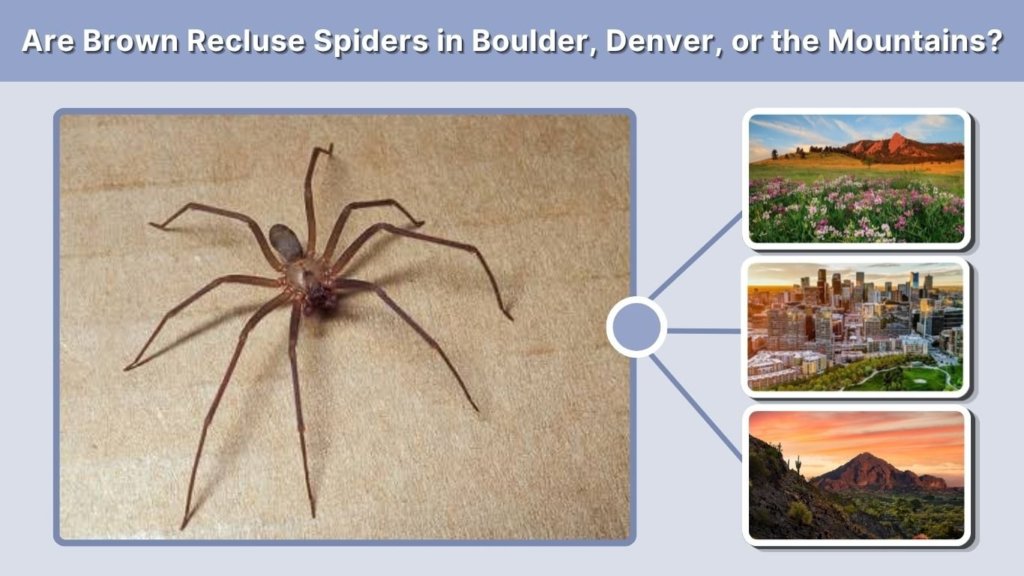
Brown recluse spiders are not common in Boulder, Denver, or Colorado mountain areas. These areas are outside the normal brown recluse range, and the climate is not ideal for widespread brown recluse populations.
A brown spider in Boulder, Denver, Fort Collins, or mountain towns is more likely to be a different species. Common Colorado spiders may be brown, fast-moving, or have markings that confuse people, but most are not brown recluses.
Why Brown Recluse Reports Happen in Colorado
Brown recluse reports happen in Colorado for three main reasons: misidentification, transported spiders, and bite misdiagnosis.
Misidentified Brown Spiders
Colorado has many brown or tan spiders. Some have body markings that look similar to a violin shape, especially when viewed quickly or in poor light. CSU Extension explains that Colorado has many spiders with brown coloring or patterns that resemble brown recluse spiders, which leads to frequent misidentification.
Transported Spiders
A true brown recluse can be carried into Colorado inside boxes, furniture, storage items, or shipments from states where the spider is common. This can create isolated sightings, especially in storage units, warehouses, or homes after a move.
Bite Misdiagnosis
Many skin wounds are blamed on brown recluse bites even when no spider was seen. A scientific paper on loxoscelism diagnoses found many bite diagnoses from western states, including Colorado, despite very limited historical evidence of recluse specimens from those areas. The authors noted inconsistency between known recluse populations and bite diagnoses.
Brown Recluse Look-Alikes in Colorado
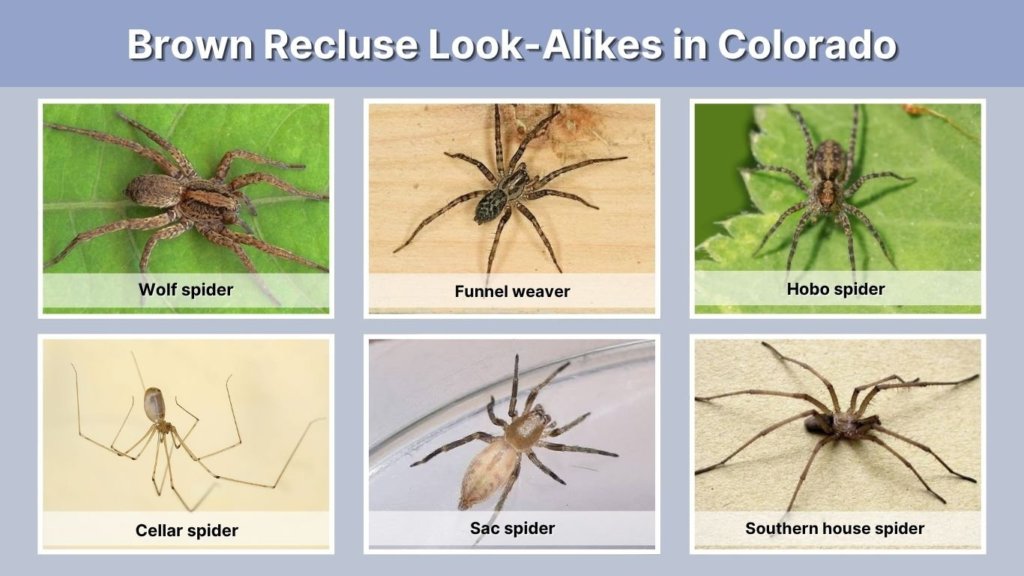
Many Colorado spiders are mistaken for brown recluse spiders. Some are harmless, while others may bite if handled, but they are not the same as a brown recluse.
| Look-Alike Spider | Why It Is Confused |
|---|---|
| Wolf spider | Brown color, fast movement, common indoors |
| Funnel weaver | Brown body, basement or window sightings |
| Hobo spider | Brown color, funnel webs, common confusion |
| Cellar spider | Found indoors in corners and basements |
| Sac spider | Pale brown body, seen indoors |
| Southern house spider | Recluse-like body shape in some areas |
| Ground spider | Dark or brown color, fast movement |
Brown Recluse vs Wolf Spider in Colorado
Wolf spiders are one of the most common brown recluse look-alikes in Colorado. They are usually larger, hairier, and more robust than brown recluses. Wolf spiders actively hunt and may run quickly across floors, garages, or basements.
Main Differences
- Wolf spiders usually have hairier bodies and legs.
- Wolf spiders often have bold stripes or patterns.
- Brown recluses usually have plain legs without strong banding.
- Wolf spiders have eight eyes, while brown recluses have six eyes in three pairs.
- Wolf spiders are common in Colorado; brown recluses are extremely rare.
Brown Recluse vs Hobo Spider in Colorado
Hobo spiders are another common source of confusion. They are brown, fast, and often found near funnel-like webs. For years, hobo spiders had a scary reputation, but they are often misrepresented.
A hobo spider does not have the classic six-eye arrangement of a brown recluse. It also tends to have more visible body patterning. If the spider is in a funnel web near a basement window or corner, it is more likely a funnel weaver or hobo-type spider than a brown recluse.
What Color Is a Brown Recluse Spider?
Brown recluse spiders are usually light brown, tan, or medium brown. Some may appear darker or lighter depending on age, lighting, and condition. However, color alone is not enough for identification.
Brown Recluse Color Clues
- Light tan to medium brown body
- Darker violin-shaped mark on the front body section
- Plain, smooth-looking legs
- No strong leg bands
- No bold body patterns
- Abdomen usually plain, not heavily marked
Searches like “light colored brown recluse” or “dark colored brown recluse” can be confusing because many brown spiders vary in color. The eye pattern and body structure are more reliable than color.
How to Identify a Brown Recluse Spider
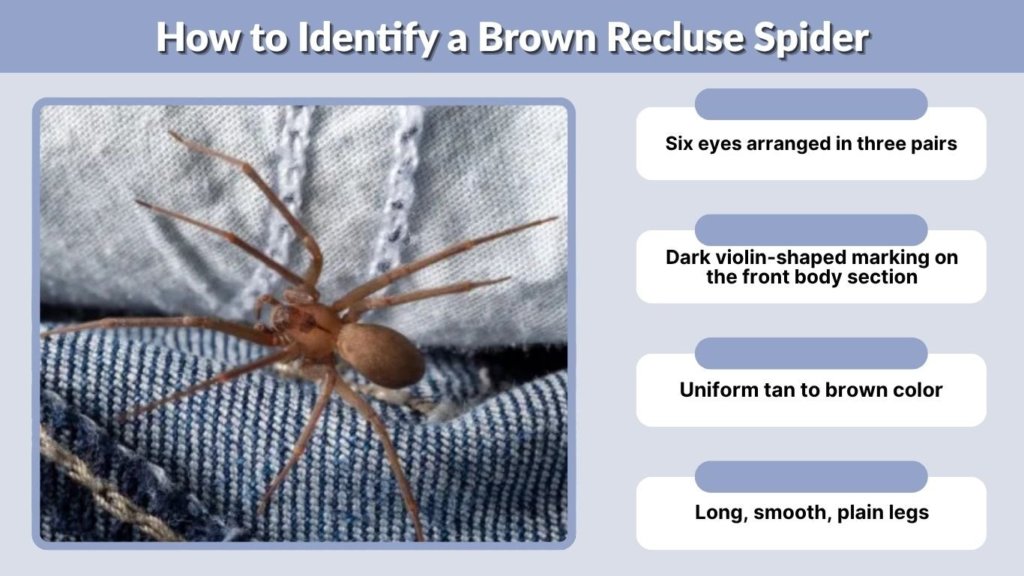
The most reliable brown recluse identification feature is the eye arrangement. CSU Extension says the quickest way to positively identify a recluse spider is by examining the eyes: there should be three pairs.
Identification Checklist
- Six eyes arranged in three pairs
- Dark violin-shaped marking on the front body section
- Uniform tan to brown color
- Long, smooth, plain legs
- No obvious leg bands or spines
- Body not hairy like a wolf spider
- Usually found in dark, undisturbed places
The violin mark can help, but it is not enough by itself. Some non-recluse spiders have marks that look like a violin, and some people see a violin shape where there is only normal spider patterning.
Brown Recluse Habitat in Colorado Homes
Even though brown recluse spiders are rare in Colorado, people often search for “brown recluse habitat Colorado” because they find spiders in dark storage areas. If a brown recluse were present, it would prefer dry, quiet, undisturbed spaces.
Possible Hiding Places
- Cardboard boxes
- Closets
- Basements
- Garages
- Storage units
- Attics
- Crawl spaces
- Behind furniture
- Under stored papers
- Inside shoes or clothing left on the floor
These same spaces also attract many harmless spiders, so habitat alone does not prove brown recluse presence.
Brown Recluse Bite in Colorado
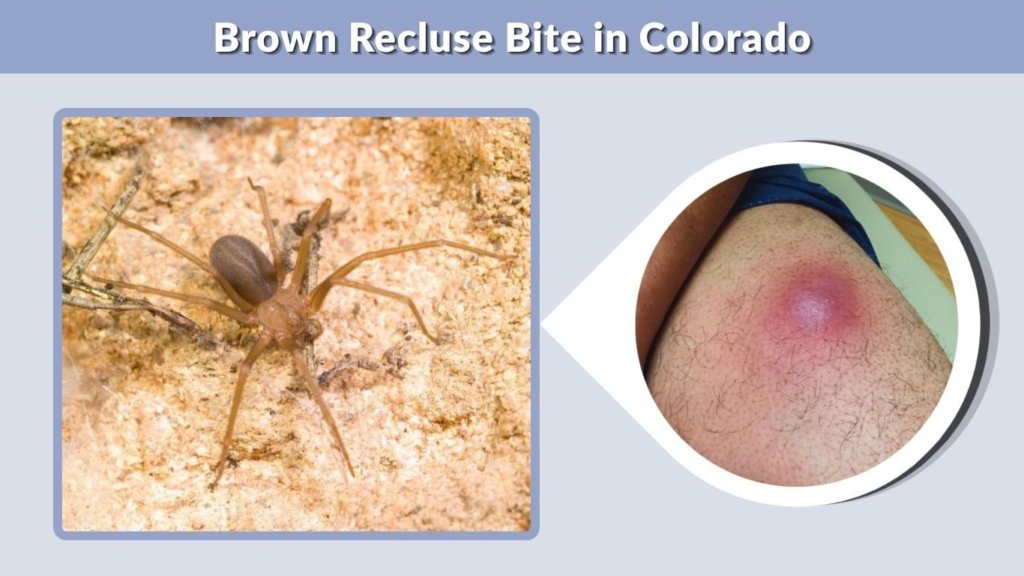
A suspected brown recluse bite in Colorado should be treated carefully, but not automatically blamed on a recluse. Because the spider is rare in Colorado, many “brown recluse bite” cases may have another cause.
Skin wounds can come from bacterial infections, allergic reactions, other insect bites, irritation, ingrown hairs, abscesses, or medical conditions. Without seeing and identifying the spider, it is difficult to confirm a brown recluse bite.
When to Seek Medical Help
Get medical attention if you have:
- Severe or worsening pain
- Spreading redness
- Fever or chills
- Pus or signs of infection
- Open sore or ulcer
- Swelling that keeps increasing
- A bite on a child, older adult, or vulnerable person
Do not cut the wound, apply harsh chemicals, or rely only on online bite photos.
What to Do If You Find a Suspected Brown Recluse in Colorado
If you find a spider you think is a brown recluse, do not panic. Most suspected Colorado brown recluses are not recluses.
Step-by-Step Action
- Take a clear photo from above if safe.
- Capture the spider in a jar or container if possible.
- Do not crush it if you want identification.
- Compare it with local look-alike spiders.
- Contact a local extension office, pest professional, or spider identification group.
- Use sticky traps if you keep seeing similar spiders indoors.
If the spider was found in a storage unit, moving box, or shipment from another state, mention that detail when asking for identification.
How to Prevent Spiders Indoors in Colorado
Even if brown recluse spiders are rare, general spider prevention can help reduce unwanted spiders indoors.
Prevention Tips
- Seal cracks around doors, windows, and utility lines.
- Repair torn screens.
- Vacuum corners, baseboards, closets, and storage areas.
- Reduce clutter in basements and garages.
- Store items in plastic bins instead of cardboard.
- Shake out shoes, gloves, and clothing stored on the floor.
- Move firewood and debris away from the house.
- Use sticky traps to monitor spider activity.
- Reduce insects indoors, since spiders follow prey.
CSU’s pest management guidance notes that reducing clutter limits hiding places, and further brown recluse management is usually not required in Colorado because the spider is extremely rare.
Should You Worry About Brown Recluse Spiders in Colorado?
Most Colorado residents do not need to worry much about brown recluse spiders. It is smart to be cautious around spiders, especially in storage areas, but the real risk is much lower than many online searches suggest.
If you live in Colorado and find a brown spider, the most likely answer is a common local spider, not a brown recluse. Good identification, clutter reduction, and basic spider prevention are usually enough.
FAQs
Are there brown recluse spiders in Colorado?
Brown recluse spiders are extremely rare in Colorado. A few may be accidentally transported into the state, but they are not common in most Colorado homes.
Do brown recluse spiders live in Colorado Springs?
They are not considered common in Colorado Springs. Most brown spiders found there are more likely to be wolf spiders, funnel weavers, hobo spiders, or other local species.
Are brown recluse spiders common in Colorado?
No. Brown recluse spiders are not common in Colorado. Colorado State University Extension describes them as extremely rare in the state.
What spider looks like a brown recluse in Colorado?
Wolf spiders, funnel weavers, hobo spiders, sac spiders, and other brown house spiders can look like brown recluses in Colorado.
What color is a brown recluse spider?
A brown recluse is usually tan, light brown, or medium brown, with plain legs and a darker violin-shaped mark on the front body section. Color alone is not enough for identification.