
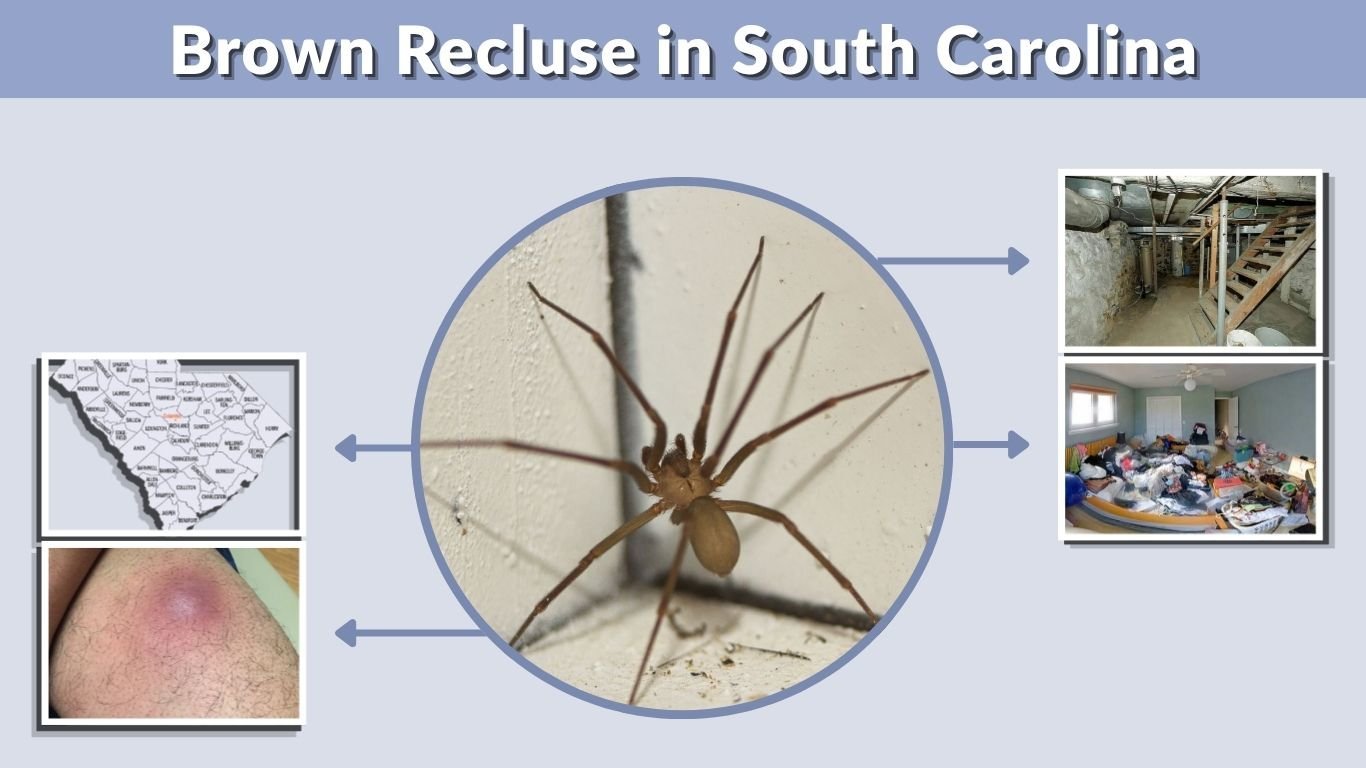
Many people search for brown recluse spiders in South Carolina after finding a brown spider indoors or noticing a painful skin sore. Brown recluse spiders can occur in South Carolina, but they are not as common as many people think. Most suspected sightings and bite reports are caused by misidentified spiders or unrelated skin problems. This guide explains whether brown recluse spiders live in South Carolina, how they compare with South Dakota and other “south” searches, what look-alikes to watch for, and what to do if you think you found one.
Are Brown Recluse Spiders in South Carolina?
Brown recluse spiders have been found in South Carolina, but confirmed records are limited compared with the number of bite reports. South Carolina Public Radio, citing Clemson Extension, reported that doctors recorded hundreds of suspected brown recluse bites in the state, while only a small number of true brown recluse specimens had been found in the state’s record history.
That means brown recluse spiders are possible in South Carolina, but they should not be blamed for every brown spider or every unexplained wound.
Quick Answer
- Brown recluse spiders can be found in South Carolina, but they are not common everywhere.
- South Carolina is near the eastern edge of the brown recluse range.
- Many “brown recluse bites” are reported without a confirmed spider.
- Southern house spiders, wolf spiders, and other brown spiders are often mistaken for brown recluses.
- If you suspect a bite, focus on wound care and medical evaluation instead of guessing from photos.
Brown Recluse Range and South Carolina
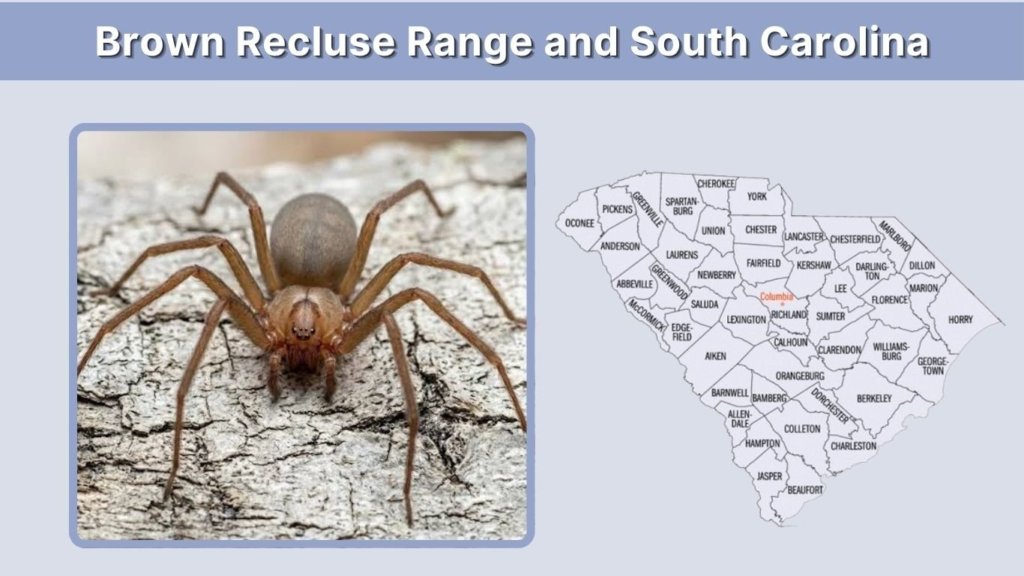
The brown recluse spider’s main U.S. range is centered in the south-central and Midwestern states. A commonly cited range runs from southeastern Nebraska to southwestern Ohio and south into Texas and northwestern Georgia.
South Carolina sits outside the strongest core range. This is why reports from the state should be handled carefully. A true brown recluse can appear, especially if transported or locally established in a small area, but the spider is not as widespread as many online maps suggest.
| Area | Brown Recluse Status | Simple Meaning |
|---|---|---|
| Missouri, Arkansas, Kansas, Oklahoma | Common in many areas | Core range |
| Tennessee, Kentucky, Alabama, Georgia | Present in parts | Regional risk varies |
| South Carolina | Possible but not common statewide | Confirm carefully |
| South Dakota | Rare or not normally collected | Usually look-alikes |
| South Florida | Not typical brown recluse range | Many reports are other spiders |
| South Africa | American brown recluse does not occur there | Related violin spiders may exist |
How Common Are Brown Recluse Spiders in South Carolina?
Brown recluse spiders are not considered common throughout South Carolina. One reason the topic is confusing is that bite diagnoses greatly outnumber confirmed spiders. A University of Georgia article reported the same South Carolina pattern: hundreds of diagnosed bites but only a small number of verified brown recluse specimens in state records.
This matters for SEO and user intent because many searchers are worried after seeing a spider or a wound. The article should answer the fear directly: yes, brown recluses are possible, but the odds of a random brown spider being a recluse are lower than many people assume.
Brown Recluse Spiders in Columbia, Greenville, and Myrtle Beach
People often search for “brown recluse spiders in Columbia South Carolina,” “Greenville South Carolina,” or “Myrtle Beach South Carolina.” The safest answer is that confirmed brown recluse presence can vary locally, but the spider should not be assumed from location alone.
Columbia, South Carolina
Columbia is in the central part of the state, so people may worry about brown recluse spiders in homes, garages, apartments, and storage spaces. If a brown recluse is present, it would likely hide in dark, dry, undisturbed areas. However, many brown spiders in Columbia are not recluses.
Greenville, South Carolina
Greenville and the Upstate region may have occasional concerns because South Carolina is near the edge of the broader range. Still, a spider should be identified by features, not fear. Southern house spiders and wolf spiders are common look-alikes.
Myrtle Beach, South Carolina
Myrtle Beach searches often come from tourists or homeowners who find spiders in rentals, garages, sheds, or outdoor furniture. A brown spider near the coast is more likely to be another local species unless a specimen is clearly identified.
Brown Recluse Look-Alikes in South Carolina
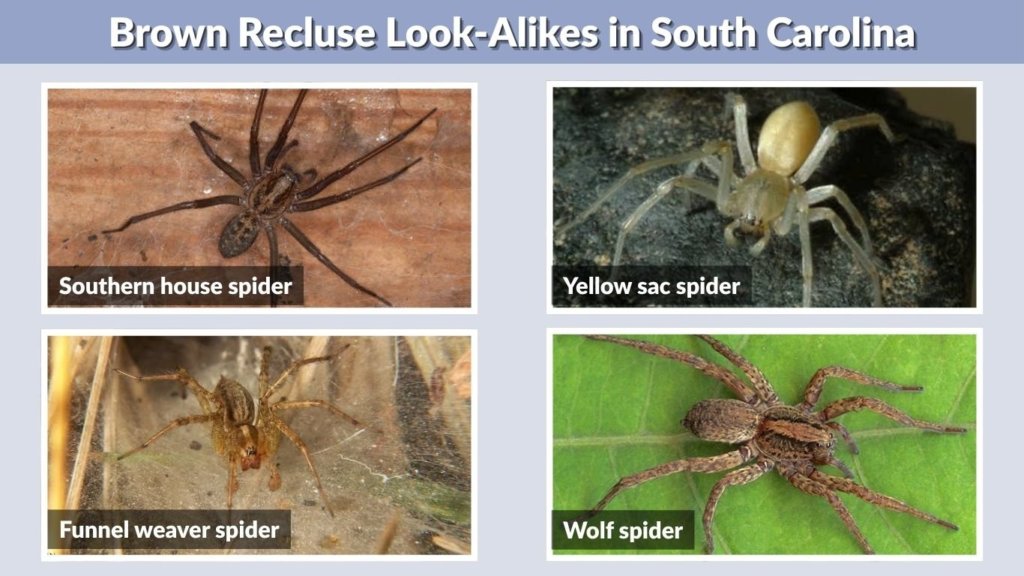
South Carolina has many brown or tan spiders that can be mistaken for brown recluses. Some have long legs, plain bodies, or markings that people interpret as a violin shape.
| Look-Alike Spider | Why It Gets Confused |
|---|---|
| Southern house spider | Male has similar color and shape |
| Wolf spider | Brown, fast-moving, common indoors and outdoors |
| Funnel weaver spider | Brown body and funnel-like webs |
| Nursery web spider | Brown patterns and long legs |
| Yellow sac spider | Pale tan color, indoor wandering |
| Cellar spider | Found in basements and corners |
| Huntsman-type spiders | Large brown appearance in some southern areas |
Clemson Extension notes that the male southern house spider is often mistaken for a brown recluse because of similar coloring and general body shape.
Brown Recluse vs Southern House Spider
The southern house spider is one of the most important brown recluse look-alikes in South Carolina. Male southern house spiders can be tan or brown with long legs and a body shape that scares homeowners.
Key Differences
- Brown recluses have six eyes arranged in three pairs.
- Southern house spiders have a different eye arrangement.
- Male southern house spiders often look leggier.
- Brown recluses usually have plain legs without obvious banding.
- Southern house spiders may be found around crevices, windows, and dark corners.
If you are not sure, take a clear photo from above and from the front if safe. Avoid handling the spider.
Brown Recluse vs Wolf Spider in South Carolina
Wolf spiders are common in many parts of the South. They are often larger and hairier than brown recluses. They may run across floors, garages, patios, lawns, and basements.
Wolf Spider Clues
- Hairy body and legs
- Larger, stronger-looking body
- Patterned back
- Fast ground movement
- Eight eyes, not six
- Often seen hunting rather than hiding in a silk retreat
Wolf spiders can bite if handled, but they are not the same as brown recluse spiders.
How to Identify a Brown Recluse Spider
Color alone is not enough. Many spiders are brown. The violin-shaped mark is helpful, but it is not perfect because other spiders can have similar markings.
Main Identification Features
- Six eyes arranged in three pairs
- Light brown to medium brown body
- Dark violin-shaped mark on the front body section
- Plain legs without strong bands or spines
- Abdomen usually plain, not heavily patterned
- Body not thick and hairy like a wolf spider
- Usually found in quiet, dark, undisturbed areas
The six-eye pattern is one of the most reliable features, but it is difficult to see without close inspection or magnification.
Brown Recluse Habitat in South Carolina Homes
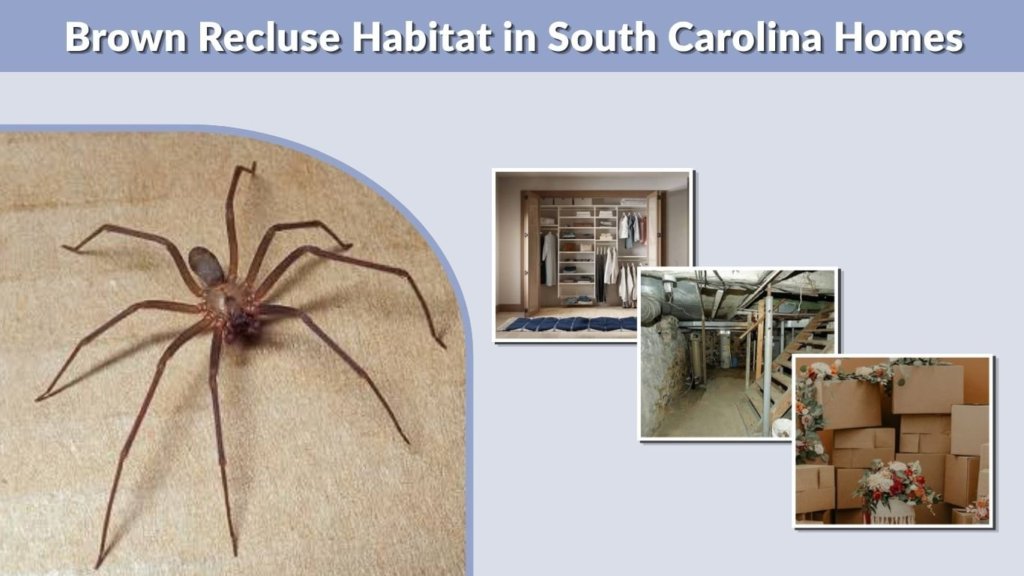
If brown recluse spiders are present, they prefer quiet spaces where people rarely disturb them. They do not usually sit out in the open during the day.
Common Indoor Hiding Places
- Closets
- Attics
- Basements
- Garages
- Storage rooms
- Cardboard boxes
- Behind furniture
- Under beds
- Inside shoes or clothing left on the floor
- Around stored papers, fabrics, and clutter
These same areas also attract many other spiders, so habitat alone does not prove the spider is a brown recluse.
Brown Recluse Bite in South Carolina
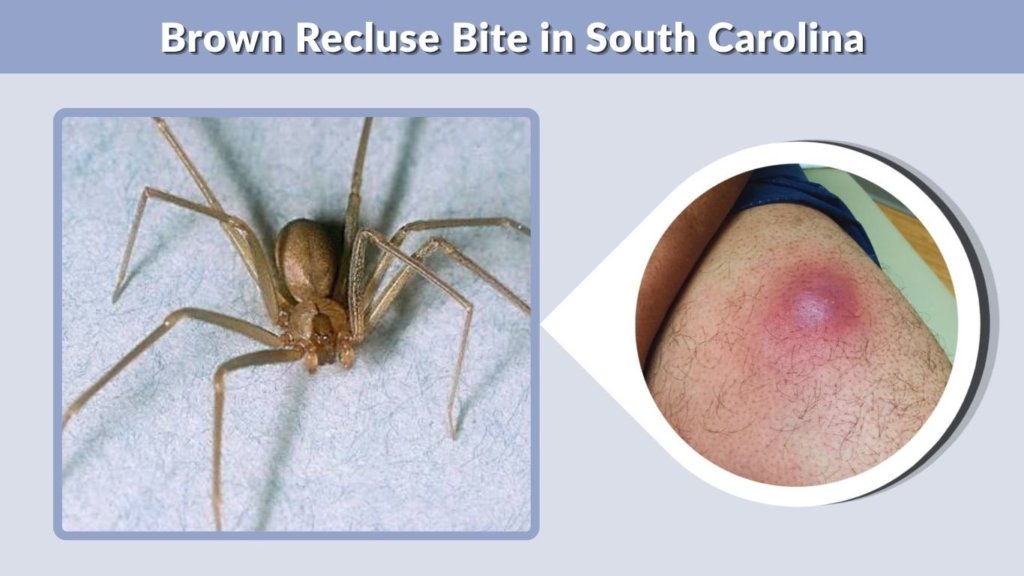
Brown recluse bites are possible in areas where the spider occurs, but many suspected bites are never confirmed. A skin sore should not automatically be called a brown recluse bite unless the spider was seen and identified.
Many conditions can look like a spider bite, including:
- Bacterial infection
- MRSA
- Tick bite
- Flea or bed bug bites
- Allergic reaction
- Skin irritation
- Ingrown hair
- Abscess
- Other medical conditions
If a wound is worsening, the most important step is medical care, not spider guessing.
When to Get Medical Help
Seek medical care if you notice:
- Severe or increasing pain
- Spreading redness
- Fever or chills
- Pus or signs of infection
- A blister or dark center
- Open sore or ulcer
- Nausea or weakness
- A bite on a child, older adult, or medically vulnerable person
If you safely capture or photograph the spider, bring that information to the medical provider.
Are Brown Recluse Spiders in South Dakota?
The keyword list also includes South Dakota, so it is useful to answer this clearly. Brown recluse spiders are not normally considered common in South Dakota. A South Dakota State University Extension fact sheet says the brown recluse spider had not been collected in South Dakota, while black widow spiders were more familiar in the state.
A newer SDSU spider guide also describes brown recluses as rarely found in South Dakota and notes that their native range extends into Iowa and Nebraska.
South Dakota Quick Answer
- Brown recluses are not common in South Dakota.
- They may be rare or transported.
- Most suspected spiders are likely other brown spiders.
- Black widows are a more realistic venomous spider concern in some areas.
Brown Recluse in South Florida
South Florida is not a typical brown recluse stronghold. Florida has many brown spider reports, but many are misidentifications. The University of Georgia article noted that Florida had many claimed brown recluse bites, while confirmed recluse records were very limited over a long period.
In South Florida, people may confuse brown recluses with huntsman spiders, southern house spiders, wolf spiders, orb-weaver relatives, or other brown house spiders.
Brown Recluse in South Africa
The American brown recluse, Loxosceles reclusa, does not occur in South Africa. However, South Africa has related violin spiders and other medically important spiders, which can cause confusion in searches. Africa Check explains that the American brown recluse is related to violin spiders found in South Africa, but the American species does not occur there.
This distinction matters because “brown recluse South Africa” may be a wrong-name search. The user may actually mean violin spiders, button spiders, or sac spiders.
What to Do If You Find a Suspected Brown Recluse
Do not crush the spider if you want it identified. A damaged spider is harder to confirm.
Step-by-Step Action
- Take a clear photo from above.
- Capture the spider in a jar if safe.
- Do not handle it with bare hands.
- Check whether you live in or near the known range.
- Compare it with southern house spiders and wolf spiders.
- Contact a local extension office, pest professional, or spider identification expert.
- Use sticky traps if you keep seeing similar spiders indoors.
How to Reduce Brown Recluse Risk Indoors
Whether the spider is a recluse or a look-alike, prevention is similar. Reduce hiding spaces and avoid accidental contact.
Prevention Tips
- Reduce clutter in closets, garages, attics, and storage rooms.
- Store items in sealed plastic bins instead of cardboard boxes.
- Shake out shoes, gloves, towels, and clothing before use.
- Keep beds away from walls.
- Avoid leaving clothes on the floor.
- Vacuum corners, baseboards, and storage areas.
- Seal cracks around doors, windows, and utility lines.
- Move firewood and debris away from the house.
- Use sticky traps along walls and behind furniture.
FAQs
Are brown recluse spiders in South Carolina?
Yes, brown recluse spiders have been found in South Carolina, but they are not as common as many people think. Many suspected sightings are misidentified spiders.
How common are brown recluse spiders in South Carolina?
They are not common statewide. Confirmed specimens are much fewer than suspected bite reports, so identification is important.
Are brown recluse spiders in South Dakota?
Brown recluse spiders are rarely found or not normally collected in South Dakota. Most suspected sightings are likely other brown spiders.
Are brown recluse spiders in South Africa?
The American brown recluse does not occur in South Africa. South Africa has related violin spiders and other medically important spiders that may cause confusion.
What spider looks like a brown recluse in South Carolina?
The male southern house spider, wolf spider, funnel weaver, nursery web spider, and yellow sac spider can all be mistaken for a brown recluse in South Carolina.