
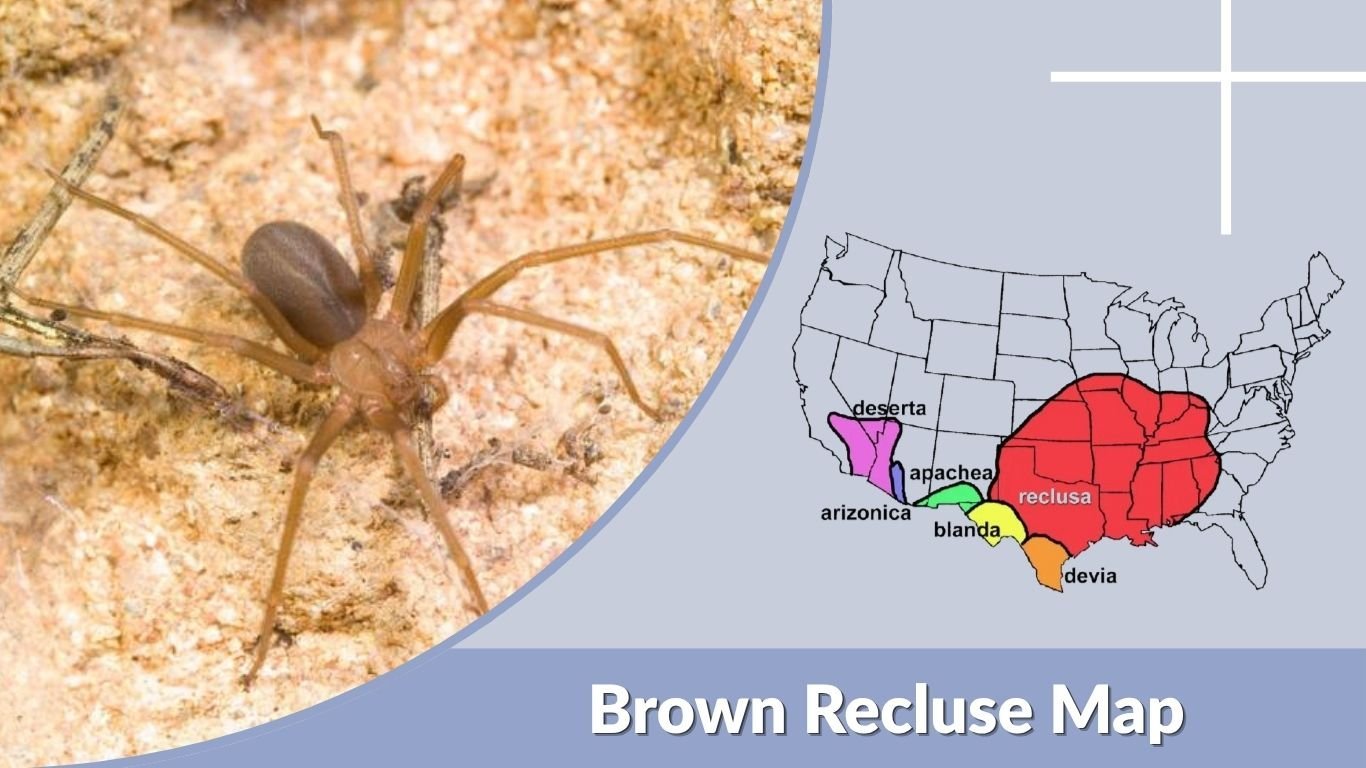
A brown recluse map helps show where brown recluse spiders are truly established in the United States. These spiders are often blamed for bites in many states, but their real range is much smaller than many people think. Brown recluse spiders are mainly found in the south-central and Midwestern United States, with the strongest range from parts of Nebraska and Ohio south toward Texas and Georgia. This guide explains the brown recluse range map, habitat, state-by-state confusion, and how to identify possible sightings.
What Does a Brown Recluse Map Show?
A brown recluse map shows the natural and established range of the brown recluse spider, also called Loxosceles reclusa. It does not show every place where one spider has ever been found. A single spider can be moved in boxes, furniture, luggage, or shipments, but that does not always mean there is a local breeding population.
The most reliable brown recluse range maps show the spider’s main established area in the central and south-central U.S. University and extension sources describe the brown recluse as a spider of the Midwest and south-central states, not a spider found everywhere in North America.
Quick Range Overview
- Brown recluse spiders are most established in the south-central U.S.
- Their range reaches parts of the Midwest.
- They are uncommon or rare outside their natural range.
- Many “brown recluse” reports are actually other brown spiders.
- Related recluse species live in parts of the Southwest and southern California.
Brown Recluse Range Map in the United States
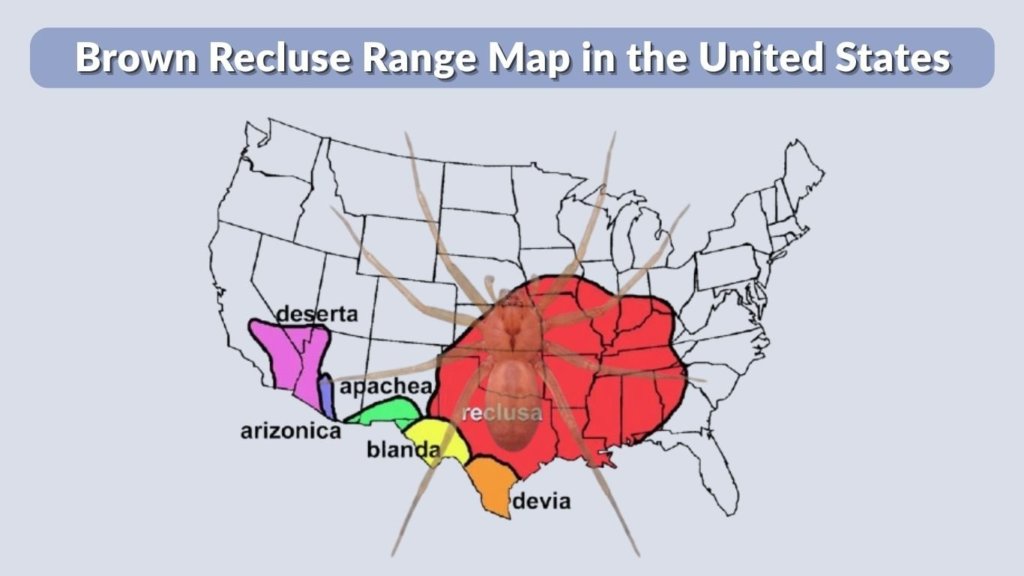
The brown recluse is best known from a range that stretches from southeastern Nebraska to southwestern Ohio, then south toward Texas and northwestern Georgia. Occurrences outside that main range are considered rare by brown recluse researchers and extension sources.
| Region | Brown Recluse Status | Notes |
|---|---|---|
| South-central U.S. | Common in many areas | Core range |
| Midwest | Present in parts | More common in southern Midwest |
| Southeast | Present in parts | Stronger in some states than others |
| Northeast | Rare | Most reports are misidentifications |
| West Coast | Not native as brown recluse | Other recluse species may occur in some areas |
| Canada | Not established | Reports are usually doubtful or transported spiders |
States Where Brown Recluse Spiders Are Most Common
Brown recluse spiders are most often associated with states in the central, south-central, and lower Midwestern U.S. Their density can vary within each state. Even in a state where they occur, they may be common in one region and uncommon in another.
Common brown recluse states include:
- Missouri
- Arkansas
- Kansas
- Oklahoma
- Texas
- Louisiana
- Mississippi
- Alabama
- Tennessee
- Kentucky
- Illinois
- Indiana
- Iowa
- Nebraska
- Ohio
- Georgia
Penn State Extension lists established brown recluse populations in sixteen states, including Alabama, Arkansas, Georgia, Illinois, Indiana, Iowa, Kansas, Kentucky, Louisiana, Mississippi, Missouri, Nebraska, Ohio, Oklahoma, Tennessee, and Texas.
Brown Recluse Map by Region
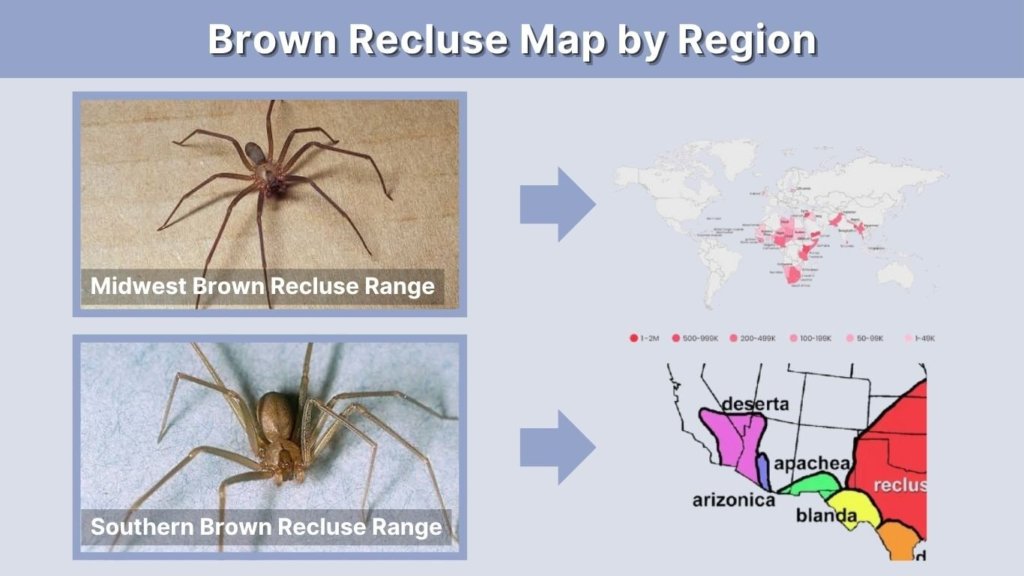
The brown recluse range is not evenly spread across the United States. A map is useful because it helps separate likely locations from areas where people commonly misidentify other spiders.
Midwest Brown Recluse Range
The Midwest is an important part of the brown recluse range, but the spider is not equally common across the whole region. Southern portions of states such as Illinois, Indiana, Iowa, Missouri, Kansas, Nebraska, and Ohio are more likely to have brown recluse activity than far northern areas.
In Kentucky, brown recluse infestations become more common toward the western part of the state. This shows why a state-level map can be too broad; county or regional patterns often matter more.
Southern Brown Recluse Range
The southern range includes states such as Arkansas, Oklahoma, Texas, Louisiana, Mississippi, Alabama, Tennessee, and Georgia. These areas have suitable warmth, indoor shelter, and established populations.
In Alabama, extension information notes that brown recluse spiders have been collected throughout the state but are more common in the northern half.
Western Brown Recluse Range
The true brown recluse is not a regular West Coast spider. However, related Loxosceles species occur in the southwestern U.S. and southern California. This is one reason brown recluse map searches can be confusing: a recluse spider in the West may not be the brown recluse species.
UC sources show maps of several recluse species in the United States, with the brown recluse being the most widespread but centered in the south-central Midwest rather than the far West.
Brown Recluse Map in Popular States
Many people search for brown recluse maps by state because they want to know whether the spider lives near them. Here is a simple breakdown for commonly searched states.
| State | Likely Status | Simple Explanation |
|---|---|---|
| Texas | Present | Part of the broader range |
| Missouri | Common | One of the strongest areas |
| Arkansas | Common | Core brown recluse region |
| Kansas | Present | Strong in many areas |
| Oklahoma | Present | Core range state |
| Illinois | Present | More common in southern areas |
| Indiana | Present | More likely in southern regions |
| Ohio | Limited | Mostly southwestern edge |
| Kentucky | Present | More common westward |
| Tennessee | Present | Especially central and western areas |
| Georgia | Limited/present | Northwestern edge of range |
| Florida | Not typical | Many reports are other spiders |
| California | Not brown recluse range | Related recluse species may occur |
| Michigan | Rare/local reports | Not generally established statewide |
| Wisconsin | Unlikely | Most suspected sightings are not recluse |
| Canada | Not established | Brown recluse is not a normal Canadian spider |
Brown Recluse in Ohio Map
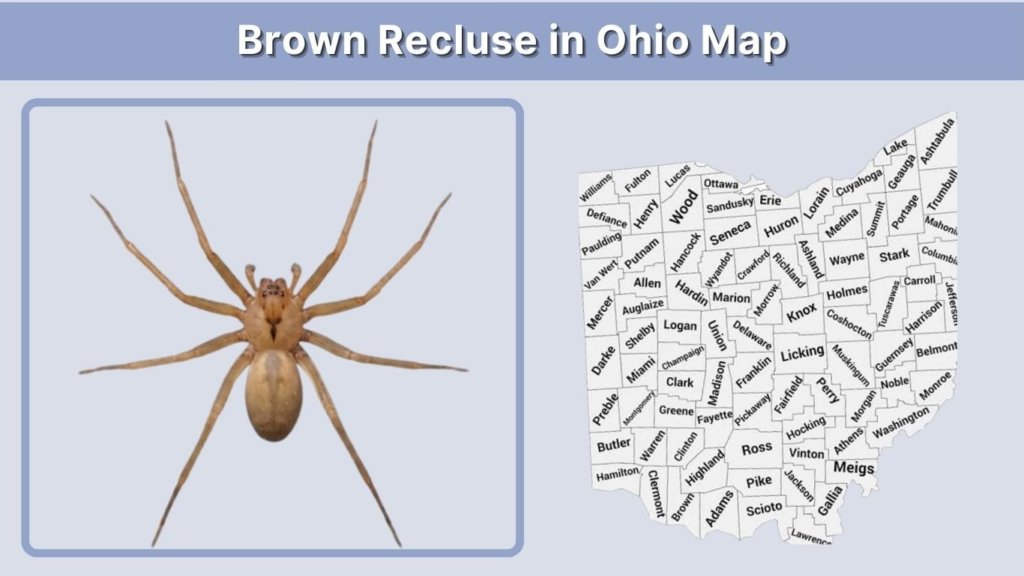
Ohio is near the edge of the brown recluse range. Searches like “brown recluse Ohio map” are common because people often worry after seeing a brown spider indoors. The spider is most plausible in southwestern parts of Ohio, but it is not evenly common across the state.
If you live in Ohio and suspect a brown recluse, location matters. A confirmed spider in the southwestern region is more believable than one in a far northern area. Still, identification should be based on the spider’s features, not just a map.
Brown Recluse in Michigan Map
Michigan is outside the main brown recluse range, but occasional confirmed finds have been reported. Michigan State University has discussed confirmed county records while warning people not to panic because brown recluse spiders are not common statewide.
A single confirmed record does not mean every brown spider in Michigan is a brown recluse. Many common house spiders, wolf spiders, nursery web spiders, and funnel weavers are mistaken for recluses.
Brown Recluse in Wisconsin Map
Wisconsin is not part of the main established brown recluse range. Searches for “brown recluse Wisconsin map” often come from people who found a brown spider or developed a skin lesion. In most cases, a spider in Wisconsin is more likely to be another species.
Because brown recluse bites are often overdiagnosed outside the spider’s range, people should be careful before assuming a wound came from a recluse.
Brown Recluse in California Map
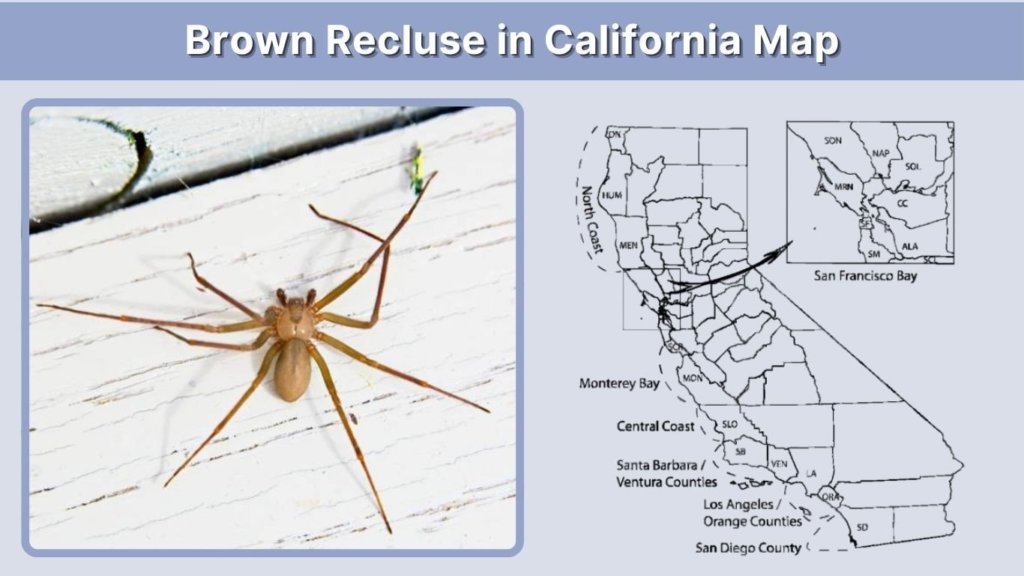
The brown recluse itself is not native to California in the same way it is in the central U.S. However, California has other recluse spiders in some areas, especially in southern desert regions. These related species are sometimes confused with the brown recluse.
So, a “brown recluse California map” may show recluse spiders, but not necessarily Loxosceles reclusa, the true brown recluse. UC Agriculture and Natural Resources notes that the brown recluse is the most widespread recluse species in the U.S., but it is centered from Nebraska to Ohio and south from Texas to Georgia.
Brown Recluse in Florida Map
Florida is not considered a core brown recluse state. While isolated spiders may be transported, established brown recluse populations are not typical across Florida. Many brown spider reports in Florida involve other spiders.
People in Florida may confuse brown recluses with southern house spiders, wolf spiders, huntsman spiders, or other brown household spiders.
Brown Recluse Habitat Map: Where They Live Indoors
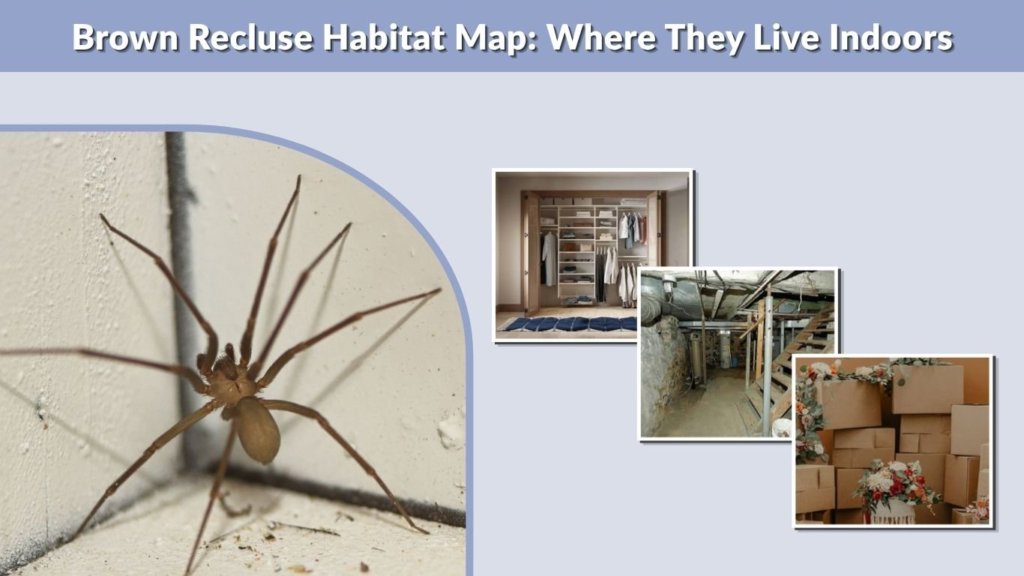
A brown recluse habitat map is not only about states. Inside their range, these spiders prefer quiet, dry, hidden spaces. Their name “recluse” fits their behavior because they avoid open activity and human contact.
Common Indoor Hiding Places
- Basements
- Attics
- Closets
- Garages
- Storage rooms
- Crawl spaces
- Cardboard boxes
- Behind furniture
- Under beds
- In shoes or clothing left on the floor
- Around stored papers and clutter
Brown recluse spiders can do well indoors because homes provide stable temperatures, shelter, and hiding spots. They are not web-building spiders that sit in large obvious webs. Instead, they make small, irregular silk retreats in hidden places.
Brown Recluse Habitat Outdoors
Outdoors, brown recluse spiders may live in sheltered, dry areas where they can hide during the day and hunt at night.
Outdoor Habitat
- Woodpiles
- Sheds
- Barns
- Under rocks
- Under logs
- Stored lumber
- Debris piles
- Utility boxes
- Old equipment
- Loose bark
In areas where brown recluses are common, outdoor clutter near the home can increase the chance they move indoors.
How to Identify a Brown Recluse
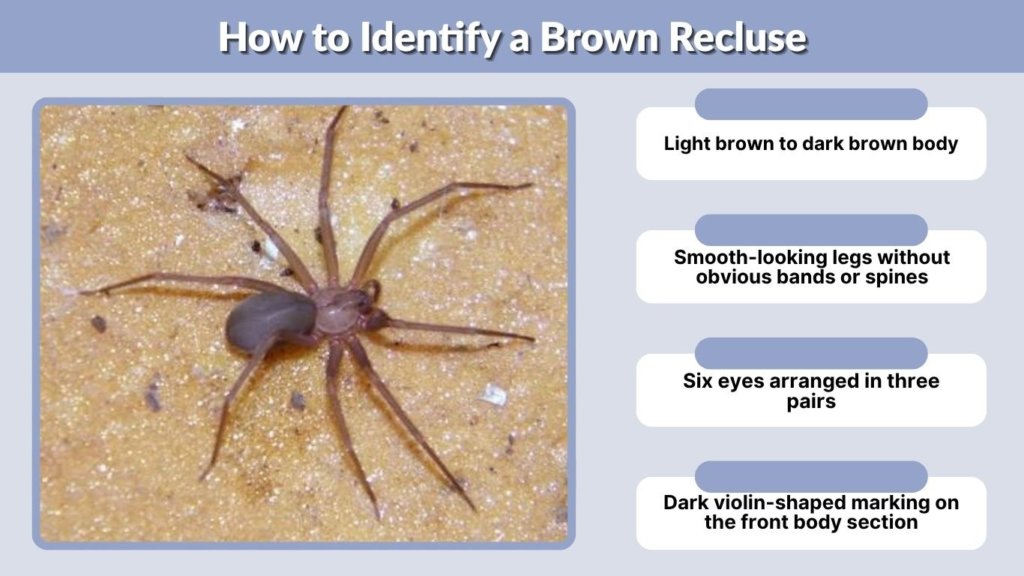
A range map can help, but identification is still important. Many harmless brown spiders are wrongly called brown recluses.
Key Identification Features
- Light brown to dark brown body
- Smooth-looking legs without obvious bands or spines
- Six eyes arranged in three pairs
- Dark violin-shaped marking on the front body section
- Body usually not large or hairy
- Uniform coloring compared with many patterned spiders
The six-eye pattern is one of the most important features because most spiders have eight eyes. However, eye arrangement is hard to see without a close look or magnification.
Spiders Often Mistaken for Brown Recluse
Many spiders look brown, hide indoors, or have markings that seem similar to a violin shape. That creates false reports on brown recluse maps.
| Mistaken Spider | Why It Gets Confused |
|---|---|
| Wolf spider | Brown color, fast movement |
| Southern house spider | Brown body, indoor hiding habits |
| Funnel weaver | Brown color, common in homes |
| Cellar spider | Found indoors, long legs |
| Nursery web spider | Brown patterning |
| Huntsman spider | Large brown indoor spider in some areas |
| Sac spider | Pale brown color, found indoors |
Researchers have long noted that brown recluse spiders are over-reported outside their native range. One study found that suspected brown recluse submissions often came from areas where the spider was not historically established.
Why Brown Recluse Maps Can Be Misleading
A brown recluse location map can become misleading if it includes every suspected report. Many maps online may mix confirmed records, public sightings, bite reports, pest control calls, and mistaken identifications.
Problems With Some Maps
- They may include unconfirmed sightings.
- They may confuse brown recluse with other recluse species.
- They may show transported spiders as established populations.
- They may use bite reports instead of spider specimens.
- They may not separate county-level range from state-level range.
A reliable map should be based on confirmed spider specimens, not just skin wounds or public guesses.
Brown Recluse Bite Reports vs Real Range
Brown recluse bite reports appear in many places where the spider is rare or absent. This happens because skin wounds can have many causes, including infections, allergic reactions, other insect bites, irritation, or medical conditions.
A suspected bite should not be used as proof that brown recluse spiders live in an area. If a spider was not seen or captured, the cause may be uncertain.
When to Get Medical Help
Seek medical care if a bite or wound has:
- Severe pain
- Spreading redness
- Fever
- Open ulcer
- Pus or infection signs
- Worsening swelling
- Symptoms in a child, older adult, or vulnerable person
Do not rely on online photos to diagnose a brown recluse bite.
How to Use a Brown Recluse Map Correctly
A brown recluse map is best used as a first clue, not a final answer. If you are inside the known range and the spider matches the physical features, a brown recluse is possible. If you are far outside the range, another spider is much more likely.
Simple Identification Process
- Check your state and region on a reliable range map.
- Look at the spider’s body shape and color.
- Check for six eyes if possible.
- Compare with common mistaken spiders.
- Save the spider or take a clear photo for expert identification.
- Contact a local extension office if you are unsure.
How to Reduce Brown Recluse Spiders at Home
If you live in the brown recluse range, prevention focuses on reducing hiding places and limiting contact.
Prevention Tips
- Reduce clutter in closets, garages, basements, and attics.
- Store items in sealed plastic bins instead of cardboard boxes.
- Shake out shoes, gloves, towels, and clothing before use.
- Move beds away from walls and avoid bed skirts touching the floor.
- Seal cracks around doors, windows, and utility lines.
- Vacuum corners, baseboards, and storage areas.
- Keep firewood outside and away from the house.
- Use sticky traps to monitor spider activity.
Sticky traps are especially useful because they help confirm whether brown recluse spiders are actually present.
FAQs
Where do brown recluse spiders live on the map?
Brown recluse spiders mainly live in the south-central and Midwestern United States. Their established range stretches roughly from southeastern Nebraska to southwestern Ohio and south toward Texas and Georgia.
Are brown recluse spiders in every U.S. state?
No. Brown recluse spiders are not established in every U.S. state. Many reports outside the main range are misidentified spiders or transported individuals.
What states have the most brown recluse spiders?
Missouri, Arkansas, Kansas, Oklahoma, and nearby south-central states are among the strongest areas for brown recluse populations. They are also found in parts of Texas, Tennessee, Kentucky, Illinois, Indiana, and surrounding states.
Is there a brown recluse map for California?
California is not part of the main brown recluse range, but other recluse spider species occur in parts of the southwestern U.S. and southern California. A California recluse map may not mean the true brown recluse is present.
Is a brown spider in my house a brown recluse?
Not always. Many brown spiders are mistaken for brown recluses. Location, eye pattern, body shape, leg markings, and expert identification are needed before calling a spider a brown recluse.