




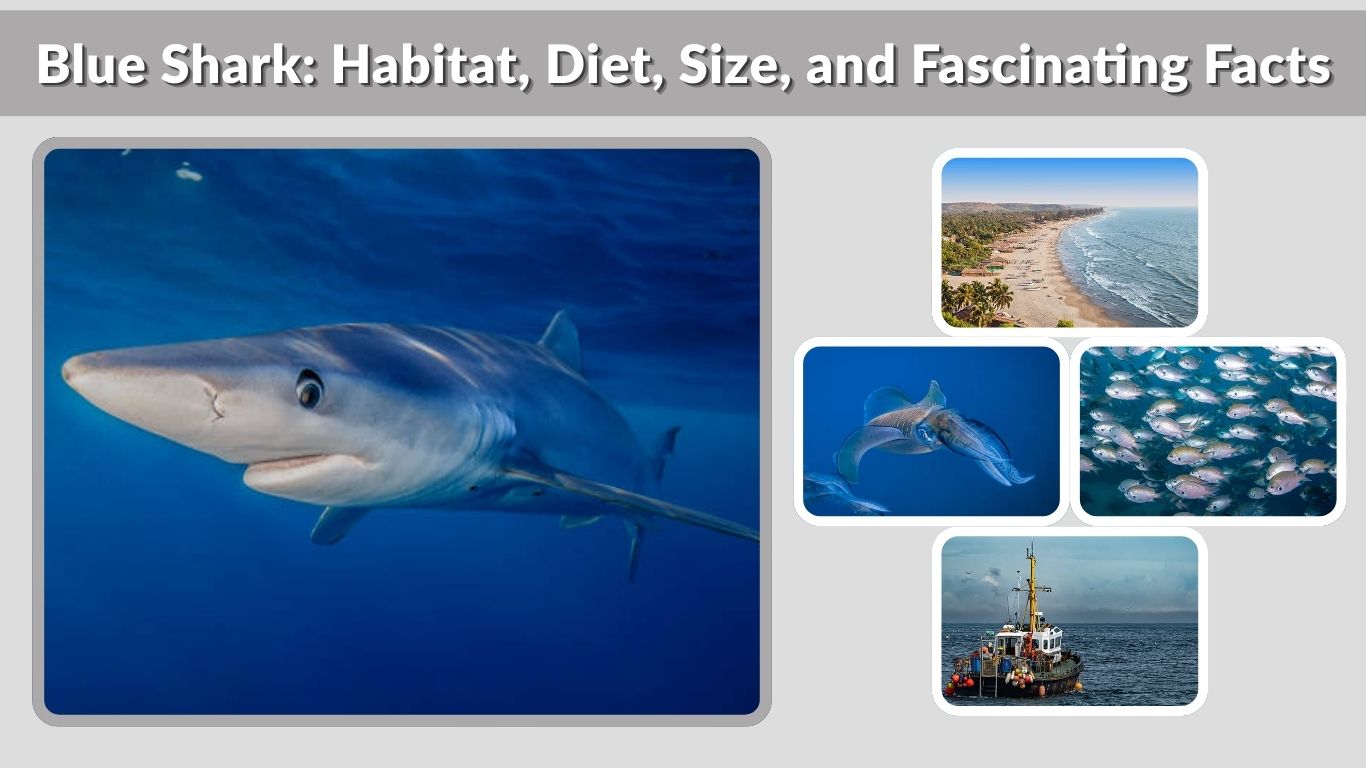
The blue shark (Prionace glauca) is one of the most recognizable and widely distributed shark species in the world. Known for its striking deep-blue color and long, slender body, this ocean predator thrives in temperate and tropical waters across the globe. Unlike coastal sharks, blue sharks are primarily pelagic, meaning they live in the open ocean far from shore. They play an essential role in maintaining marine ecosystem balance by controlling populations of squid and small fish. Despite their beauty and ecological importance, blue sharks face significant threats from commercial fishing and bycatch.
What Is a Blue Shark?
The blue shark belongs to the family Carcharhinidae, commonly known as requiem sharks. Its scientific name, Prionace glauca, refers to its saw-like teeth and bluish coloration. It is considered one of the most abundant large shark species in the open ocean.
Blue sharks are built for long-distance travel. Their streamlined bodies and long pectoral fins allow them to glide efficiently through vast stretches of water. Unlike bulkier shark species, they appear sleek and almost elegant as they swim. Although they are capable predators, they are generally not considered highly aggressive toward humans.
As apex or near-apex predators, blue sharks help regulate marine food chains. By feeding on mid-level species like squid and small fish, they contribute to the overall stability of ocean ecosystems.
Physical Characteristics of the Blue Shark
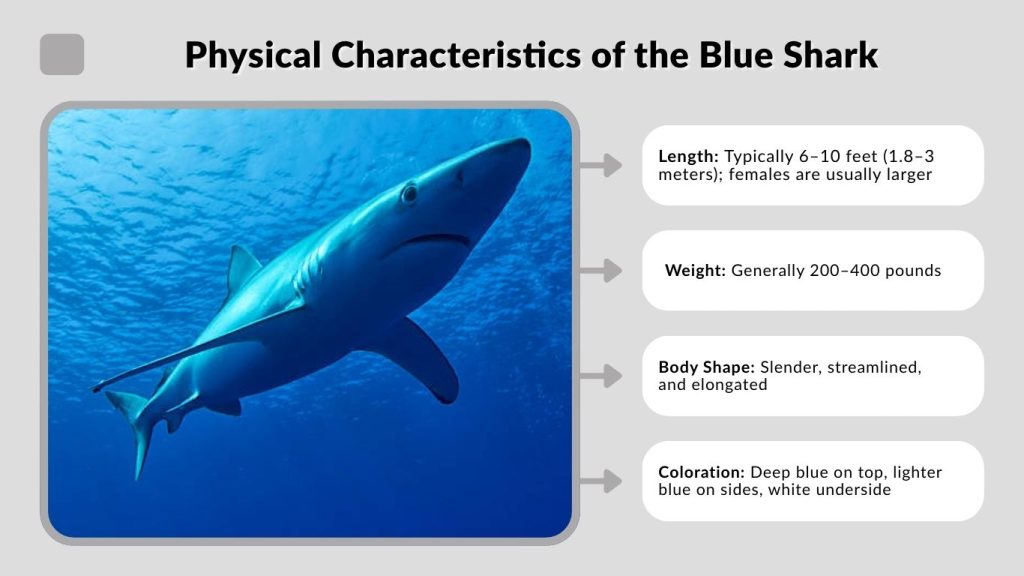
The blue shark is instantly recognizable due to its slim, elongated body and striking coloration. Built for speed and endurance rather than brute strength, this species is perfectly adapted to life in the open ocean. Its streamlined shape reduces water resistance, allowing it to travel long distances with minimal energy use. Compared to bulkier sharks, the blue shark appears lighter and more agile, making it one of the most graceful swimmers among pelagic species.
Key Physical Features:
- Length: Typically 6–10 feet (1.8–3 meters); females are usually larger
- Weight: Generally 200–400 pounds
- Body Shape: Slender, streamlined, and elongated
- Coloration: Deep blue on top, lighter blue on sides, white underside
- Pectoral Fins: Exceptionally long and narrow
- Snout: Pointed and slightly conical
- Teeth: Serrated, triangular, designed for gripping slippery prey
- Eyes: Large and well-adapted for low-light ocean conditions
- Lifespan: Around 15–20 years
These characteristics make the blue shark highly efficient in open-water environments, where speed, agility, and camouflage are essential for survival.
Where Do Blue Sharks Live?
Global Distribution
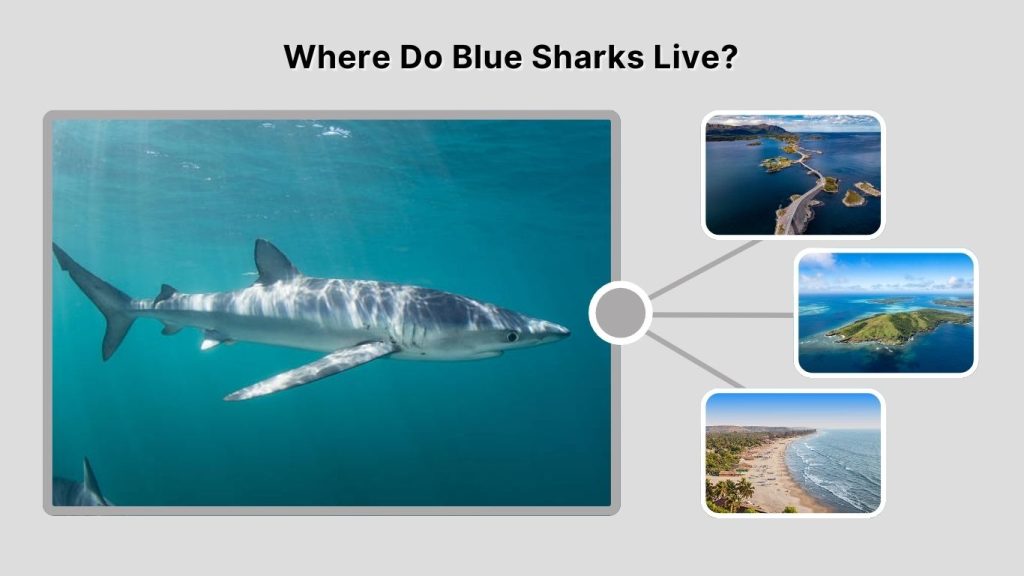
Blue sharks are among the most widely distributed sharks on Earth. They are found in the Atlantic, Pacific, and Indian Oceans. From the coasts of North and South America to Europe, Africa, Asia, and Australia, their range covers vast oceanic territories.
They prefer waters that range from about 50°F to 68°F (10°C to 20°C), though they can tolerate a broader range of temperatures during migration. Their ability to adapt to various ocean conditions contributes to their widespread presence.
Preferred Habitat
Unlike reef sharks or coastal species, blue sharks are pelagic. This means they inhabit the open ocean, often far from land. They are typically found near the surface but can dive to significant depths when hunting or migrating.
Because they live offshore, blue sharks are less frequently encountered by beachgoers. However, they are often seen by offshore fishermen and deep-sea divers.
Migration Patterns
Blue sharks are known for their extraordinary long-distance migrations. Some individuals travel thousands of miles across entire ocean basins. These movements are often linked to seasonal changes, water temperature shifts, and prey availability.
For example, populations in the North Atlantic may move northward during warmer months and return south as waters cool. This migratory behavior helps them follow food sources and maintain optimal living conditions throughout the year.
What Do Blue Sharks Eat?
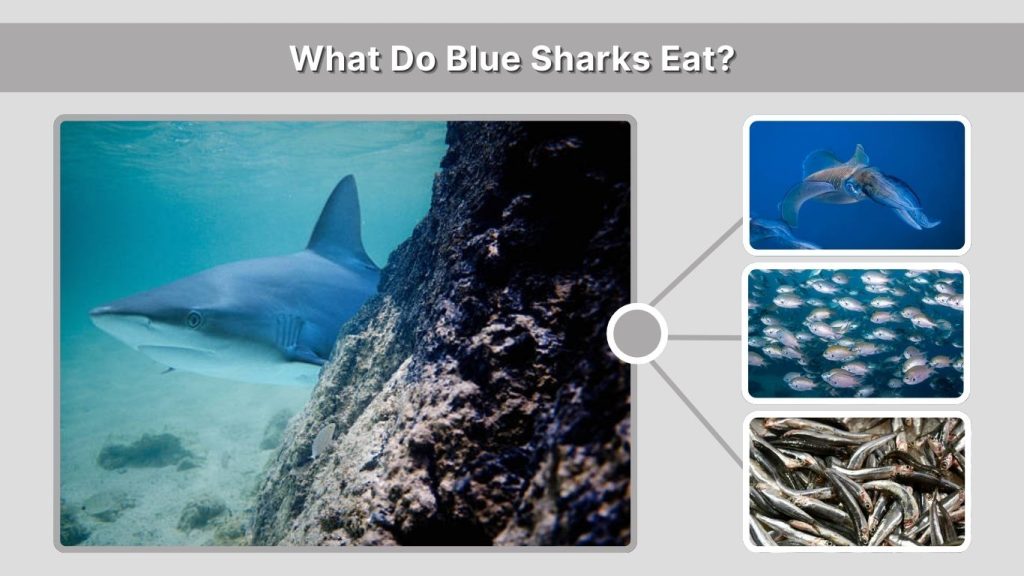
Blue sharks primarily feed on squid, which make up a significant portion of their diet. They also consume small schooling fish such as mackerel, sardines, and herring. Occasionally, they may eat crustaceans or even seabirds if the opportunity arises.
Their hunting style relies on speed and agility. With their streamlined bodies, they can quickly chase down prey in open water. Their sharp, serrated teeth allow them to grasp and tear soft-bodied animals effectively.
As opportunistic feeders, blue sharks adapt their diet based on availability. This flexibility helps them survive in different regions and ocean conditions. By preying on fast-reproducing species like squid, they help maintain balance within marine ecosystems.
Behavior and Temperament
Are Blue Sharks Aggressive?
Blue sharks are generally considered curious rather than aggressive. Like many shark species, they may approach unfamiliar objects—including boats or divers—to investigate. However, documented attacks on humans are rare, especially compared to coastal species such as bull sharks or great whites.
Most encounters occur far offshore, where blue sharks naturally live. In diving situations, they are often described as inquisitive but cautious. As with any wild predator, unpredictable behavior is always possible, but blue sharks are not typically viewed as a major threat to humans.
Social Behavior
Blue sharks are usually solitary animals, roaming the open ocean alone. However, they may gather in groups when food is abundant. Large feeding opportunities—such as schools of squid—can attract multiple individuals to the same area.
Research also suggests that blue sharks sometimes segregate by age and sex. For example, certain regions may host primarily juvenile sharks, while others are dominated by adults. This pattern likely reduces competition and increases survival rates among younger sharks.
Reproduction and Life Cycle
Blue sharks reproduce through a method known as ovoviviparity. This means that embryos develop inside eggs that remain within the mother’s body until they hatch, resulting in live birth.
The gestation period typically lasts between 9 and 12 months. One of the most remarkable features of blue shark reproduction is their large litter size. A single female can give birth to anywhere from 25 to more than 100 pups, with some reports exceeding 130. This is one of the largest litter sizes among shark species.
Newborn pups measure about 14 to 20 inches long at birth. They are independent immediately and receive no parental care. Despite the large number of offspring, survival rates are low due to predation and environmental challenges. Only a fraction of pups reach adulthood.
Are Blue Sharks Endangered?
Conservation Status
Blue sharks are currently classified as Near Threatened on the IUCN Red List in many regions. Although they remain relatively abundant compared to some other shark species, their populations are declining in certain parts of the world.
Because they inhabit international waters, managing and monitoring their populations can be difficult. Their migratory nature means they often cross multiple national boundaries, complicating conservation efforts.
Major Threats
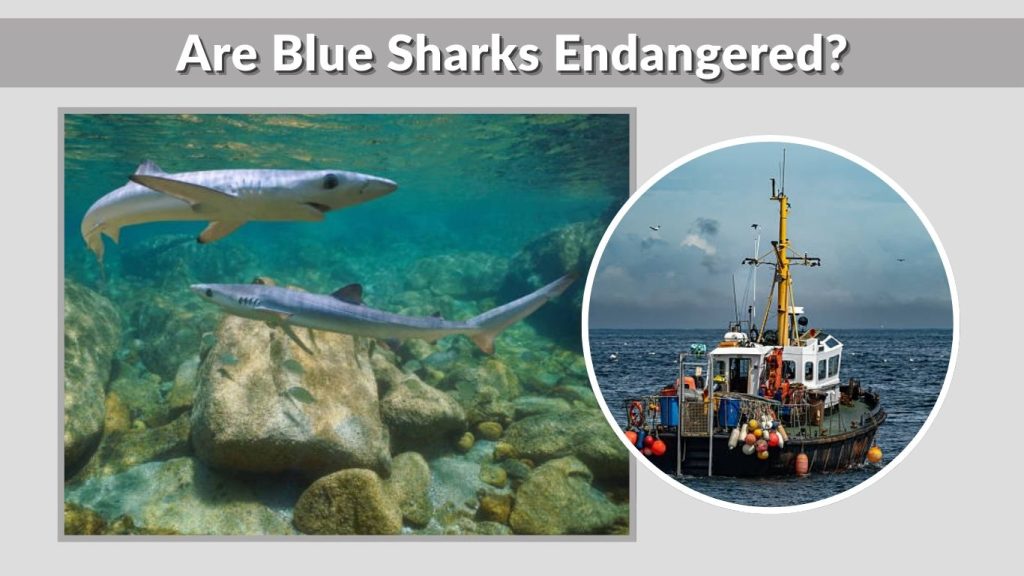
The primary threat to blue sharks is commercial fishing. They are heavily targeted for their fins, which are used in shark fin soup, as well as for their meat. In addition to targeted fishing, blue sharks are frequently caught as bycatch in longline fisheries aimed at tuna and swordfish.
Bycatch refers to the unintentional capture of non-target species. Due to their wide distribution and open-ocean habitat, blue sharks are particularly vulnerable to this practice. Millions are estimated to be caught globally each year.
Conservation Efforts
Several international agreements aim to regulate shark fishing and improve sustainability. Regional fisheries management organizations have introduced measures such as catch limits, finning bans, and monitoring programs.
Marine conservation groups also advocate for improved data collection and stricter enforcement of existing regulations. Public awareness and responsible seafood consumption play important roles in supporting blue shark conservation.
Blue Shark vs Other Sharks
Blue Shark vs Great White Shark
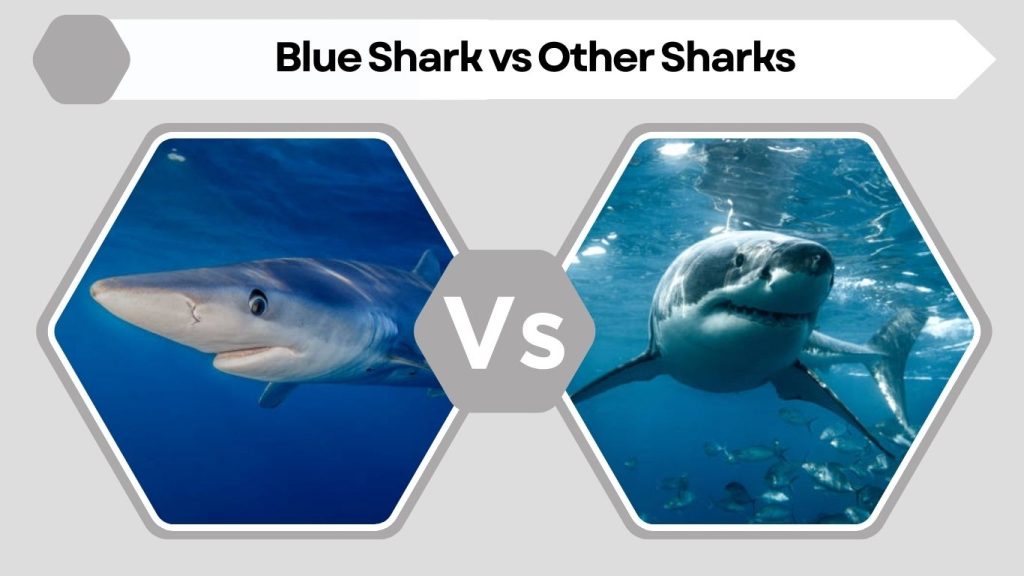
The blue shark differs significantly from the great white shark in both size and behavior. Great whites are larger and more robust, often exceeding 15 feet in length. They are powerful coastal predators known for hunting marine mammals.
In contrast, blue sharks are slimmer and typically inhabit open ocean waters. Their diet mainly consists of squid and small fish rather than large prey. While great whites have a reputation for aggression, blue sharks are generally less confrontational.
Blue Shark vs Mako Shark
When compared to mako sharks, blue sharks are less muscular and slightly slower. Shortfin makos are among the fastest sharks in the ocean, built for high-speed pursuits.
Blue sharks rely more on endurance and efficient swimming over long distances. Both species are pelagic and share similar habitats, but makos tend to be more powerful predators, often targeting larger fish.
Blue Sharks and Humans
Blue sharks occasionally interact with humans through offshore fishing and shark diving tourism. In certain regions, such as parts of the Atlantic, divers specifically seek out blue shark encounters in open-water expeditions.
These dives are typically conducted under controlled conditions with experienced guides. Participants are instructed to remain calm and avoid sudden movements. While the experience can be thrilling, it also provides valuable opportunities for education and conservation awareness.
Scientific research on blue sharks has increased in recent years. Tagging programs have revealed detailed information about migration routes, diving depths, and habitat preferences. This research is essential for developing effective management strategies.
Interesting Blue Shark Facts
Blue sharks are among the most widely traveled sharks in the world, capable of crossing entire ocean basins. Some tagged individuals have migrated thousands of miles over the course of a single year.
They possess an excellent sense of smell, allowing them to detect prey from great distances. Their sleek bodies are perfectly adapted for energy-efficient swimming in open water.
Despite their abundance, blue sharks are highly sensitive to overfishing due to the sheer number caught annually. Their presence in healthy numbers often indicates a balanced marine ecosystem.
Conclusion
The blue shark is a remarkable ocean predator known for its beauty, agility, and global reach. With its striking blue coloration, long migrations, and important ecological role, it stands out among pelagic shark species. Although generally not dangerous to humans, blue sharks face serious threats from commercial fishing and bycatch. Continued research, responsible fishing practices, and conservation awareness are vital to ensuring their survival. Protecting blue sharks ultimately supports the health and balance of the world’s oceans.