




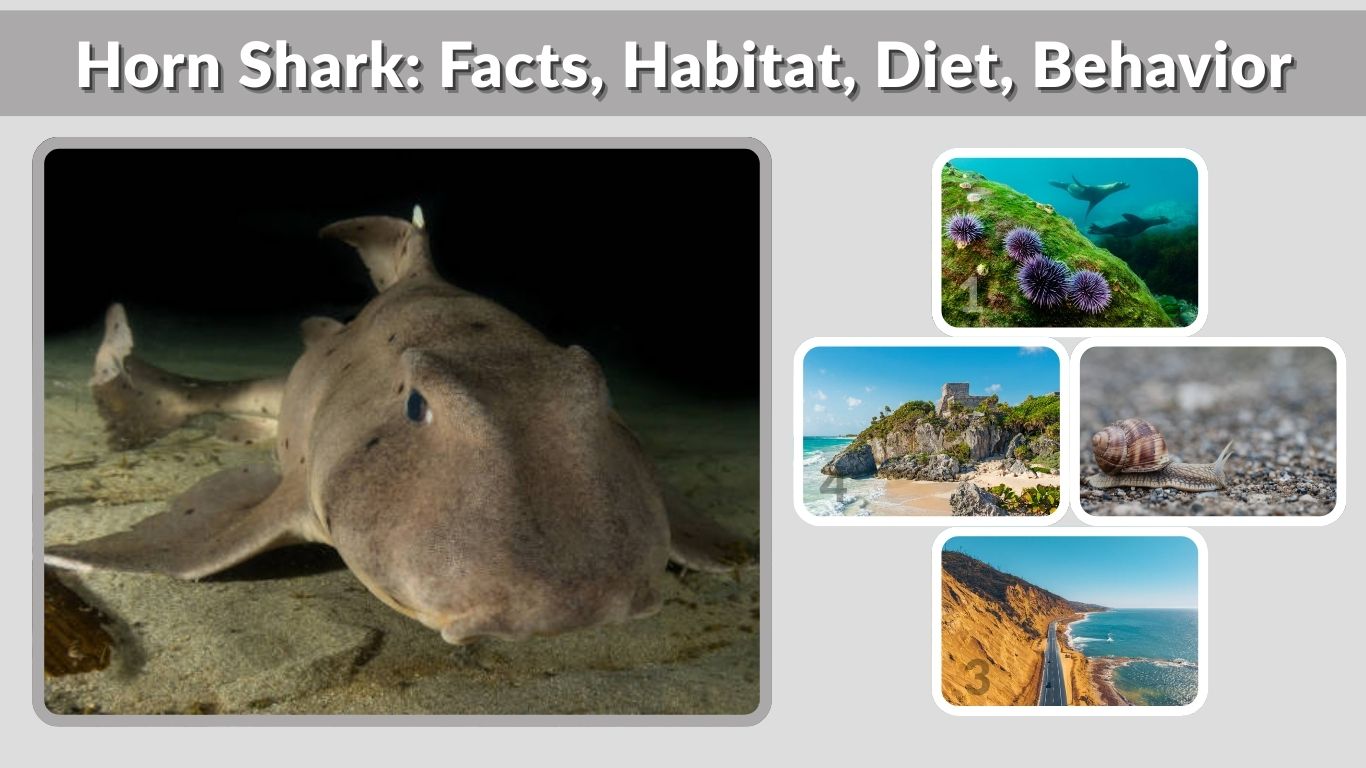
The horn shark is a small, bottom-dwelling shark species known for the distinctive ridges above its eyes that resemble horns. Native to the eastern Pacific Ocean, this unique shark is commonly found along the coasts of California and Mexico. Unlike fast-swimming open-ocean sharks, the horn shark prefers rocky reefs and kelp forests where it hunts at night. Its strong jaws and specialized teeth allow it to crush hard-shelled prey with ease. With a relatively long lifespan and calm temperament, the horn shark is an important part of coastal marine ecosystems.
What Is a Horn Shark?
The horn shark (Heterodontus francisci) is a member of the bullhead shark family, Heterodontidae. It is considered a primitive shark species, meaning its evolutionary history dates back millions of years. This species is well adapted to life near the ocean floor and is rarely found in deep offshore waters.
Scientific Name and Classification
The scientific name of the horn shark is Heterodontus francisci. The genus name “Heterodontus” means “different teeth,” referring to its unique dental structure. It belongs to the bullhead shark family, which includes other bottom-dwelling species with similar head shapes and defensive dorsal fin spines.
Unlike large predatory sharks such as great whites, horn sharks are relatively small and slow-moving. Their body design reflects their lifestyle as reef-dwelling hunters.
Why It’s Called the Horn Shark
The horn shark gets its name from the prominent ridges located above its eyes. These raised structures give the appearance of small horns and are one of the shark’s most recognizable features.
In addition to these ridges, horn sharks have short, blunt heads and strong jaws, giving them a sturdy appearance. The ridges may help protect the eyes while the shark searches for prey among rocks and crevices.
Quick Horn Shark Facts
- Scientific name: Heterodontus francisci
- Average length: 3–4 feet (0.9–1.2 meters)
- Habitat: Rocky reefs and kelp forests
- Diet: Sea urchins, crabs, mollusks, small fish
- Reproduction: Egg-laying (oviparous)
- Lifespan: Up to 20–25 years
These horn shark facts highlight how different this species is from the large, open-ocean sharks people often imagine.
Horn Shark Identification and Appearance
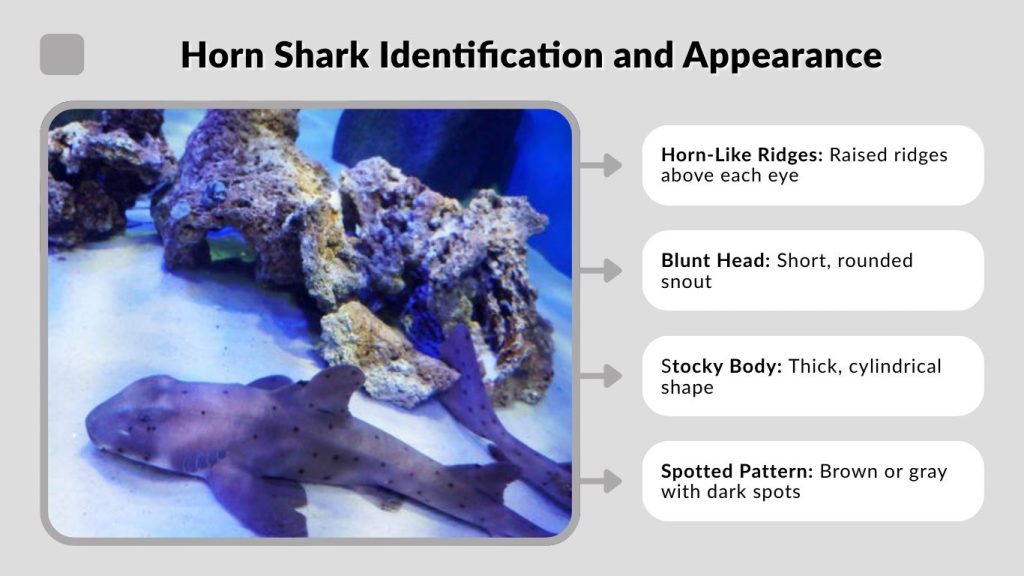
The horn shark has a distinctive and easy-to-recognize appearance compared to many other coastal sharks. Its stocky body, blunt head, and noticeable ridges above the eyes make it stand out among reef-dwelling species. Unlike sleek, fast-swimming sharks of the open ocean, the horn shark is built for maneuvering through rocky reefs and kelp forests.
Key Identification Features
- Horn-Like Ridges: Raised ridges above each eye
- Blunt Head: Short, rounded snout
- Stocky Body: Thick, cylindrical shape
- Spotted Pattern: Brown or gray with dark spots
- Two Dorsal Fins: Each with a sharp defensive spine
- Small Mouth: Positioned slightly underneath the head
- Average Size: 3–4 feet long
These features make horn shark identification relatively simple, especially for divers along the California and Mexican coasts.
Horn Shark Habitat
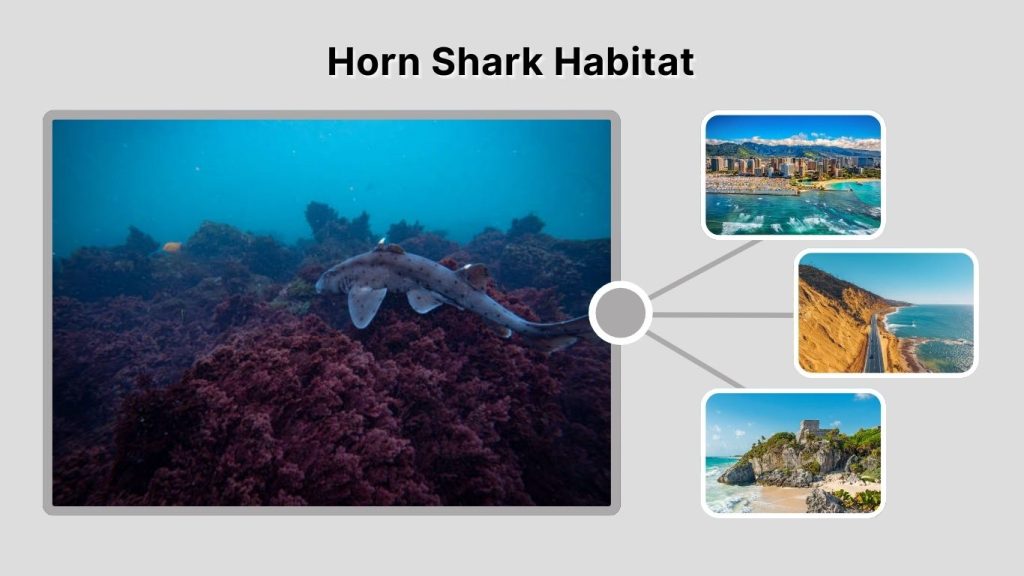
Horn sharks inhabit temperate coastal waters in the eastern Pacific Ocean.
Where Do Horn Sharks Live?
Horn sharks live along the western coast of North America, ranging from central California down to the Gulf of California in Mexico. They are most common in Southern California waters.
They are not migratory over long distances but may move seasonally between shallow and slightly deeper waters.
Preferred Environments
Horn sharks prefer:
- Rocky reefs
- Kelp forests
- Sandy seabeds near reef systems
- Coastal bays
During the day, they often rest inside caves, crevices, or under rocky ledges. Their camouflage and still posture make them difficult to spot.
Depth Range and Seasonal Movement
Horn sharks are typically found at depths ranging from 6 to 150 feet (2 to 45 meters). Juveniles often remain in shallower waters, while adults may move slightly deeper.
In cooler months, they may shift to deeper habitats, returning to shallower areas during warmer seasons.
Horn Shark Diet
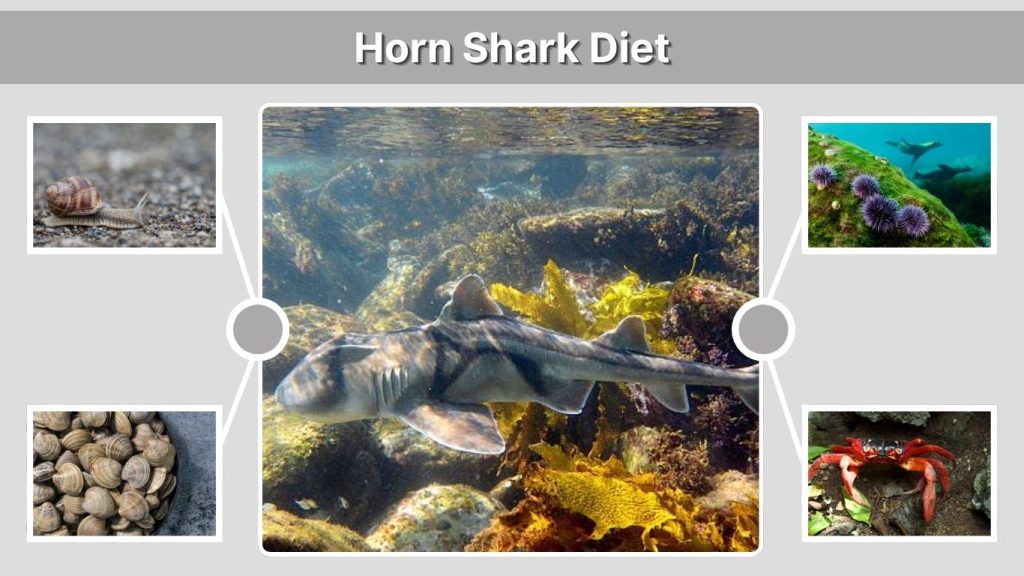
The horn shark diet consists mainly of hard-shelled marine animals found along the ocean floor. Unlike fast predatory sharks that chase fish in open water, horn sharks feed slowly and methodically among rocks and reefs.
What Do Horn Sharks Eat?
Horn sharks primarily eat:
- Sea urchins
- Crabs
- Shrimp
- Snails
- Clams
- Small fish
Sea urchins are one of their favorite foods. By feeding on urchins, horn sharks help maintain balance in reef ecosystems, since too many sea urchins can damage kelp forests.
Feeding Behavior
Horn sharks are nocturnal hunters. During the day, they remain hidden in rocky crevices. At night, they leave their resting spots to search for prey along the seabed.
They use their strong sense of smell to locate hidden animals and may even use their snout to push aside sand or small rocks while searching for food.
Teeth Adaptations
The horn shark has two types of teeth, which explains its scientific genus name Heterodontus, meaning “different teeth.”
- Sharp, pointed front teeth to grip prey
- Flat, molar-like back teeth to crush shells
This dental combination makes them highly effective at breaking open hard exoskeletons.
Horn Shark Behavior
Horn shark behavior reflects its bottom-dwelling lifestyle and calm nature.
Nocturnal and Bottom-Dwelling
Horn sharks are mostly inactive during the day. They often wedge themselves into rocky crevices, using their dorsal fin spines to anchor themselves in place. This behavior helps protect them from predators and strong currents.
At night, they become active and patrol reefs in search of food.
Social or Solitary?
Horn sharks are generally solitary animals. However, small groups may gather in favorable resting areas. These gatherings are not strongly social but rather based on habitat preference.
Juveniles are more likely to remain in shallow nursery areas, while adults occupy deeper reef zones.
Defense Mechanisms
Horn sharks are not aggressive, but they do have defensive features.
- Sharp dorsal fin spines
- Ability to wedge tightly into rocks
- Camouflage coloration
If threatened, they may arch their body or twist to discourage predators.
Horn Shark Reproduction and Life Cycle
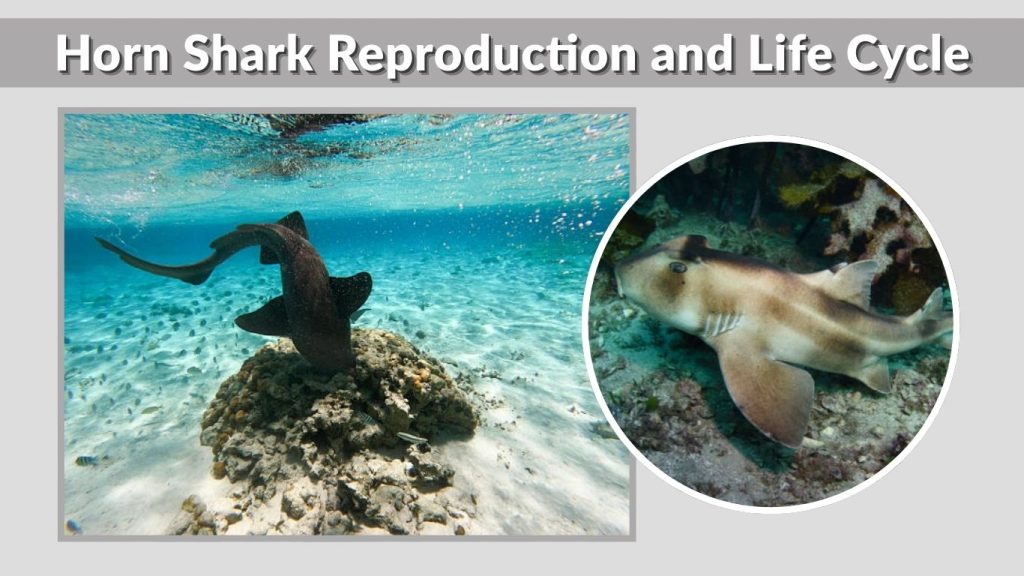
Horn sharks reproduce through egg-laying, making them oviparous.
Egg-Laying Species
During the breeding season, females lay spiral-shaped egg cases in rocky crevices. These egg cases are tough and corkscrew-shaped, which helps them stay secured between rocks.
A female may lay multiple eggs over several weeks.
Egg Development
The incubation period can last six to ten months, depending on water temperature. Once hatched, young horn sharks are fully independent and must find shelter immediately.
Juveniles typically remain in shallow waters where there are fewer predators and abundant food sources.
Horn Shark Lifespan
How Long Do Horn Sharks Live?
Horn sharks have a relatively long lifespan compared to many fish species. In the wild, they can live up to 20–25 years. Some individuals in captivity have lived even longer under controlled conditions.
Age of Maturity
Horn sharks grow slowly and reach sexual maturity at around 8–10 years of age. Their slow growth and late maturity mean stable habitats are important for maintaining healthy populations.
Are Horn Sharks Dangerous?
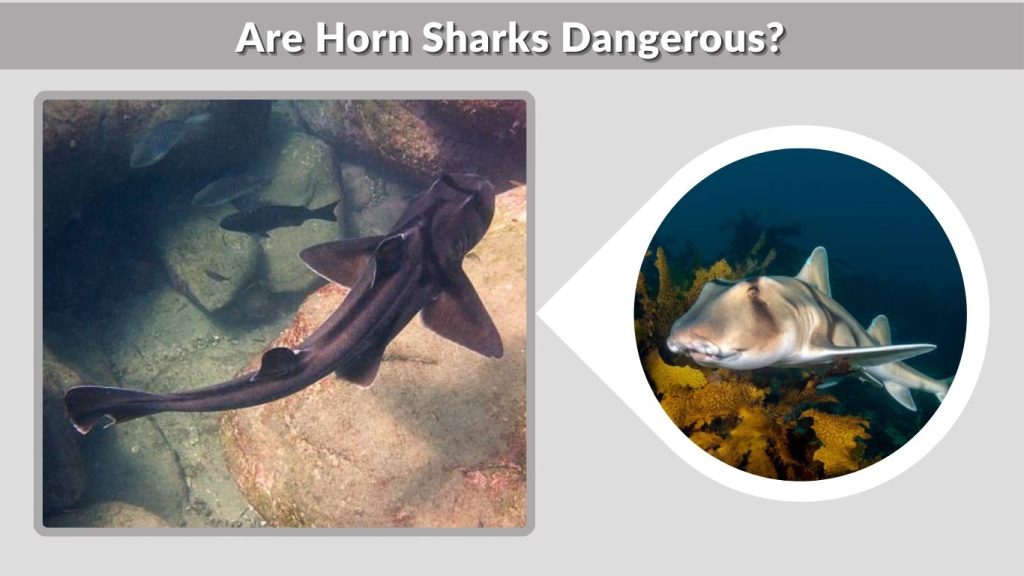
Horn sharks are not considered dangerous to humans. They are slow-moving and prefer to avoid confrontation. Most interactions with divers are calm and uneventful.
Bites are extremely rare and usually occur only if the shark is handled or provoked. Their small size and bottom-dwelling habits make them far less threatening than larger shark species.
Overall, horn sharks play an important ecological role by controlling populations of sea urchins and other invertebrates.
Conclusion
The horn shark is a unique and fascinating species found along the Pacific coast of North America. Recognizable by its horn-like ridges, stocky body, and spotted pattern, this small shark is well adapted to life among rocky reefs and kelp forests.
From its specialized crushing teeth to its spiral egg cases and long lifespan, the horn shark stands out among coastal shark species. Although it is not dangerous to humans, it plays a vital role in maintaining healthy marine ecosystems.
Protecting reef habitats ensures that this remarkable bottom-dwelling shark continues to thrive in the eastern Pacific.
FAQs
Where do horn sharks live?
Horn sharks live in the eastern Pacific Ocean, primarily along the coast of California and down to the Gulf of California in Mexico. They prefer rocky reefs, kelp forests, and sandy seabeds in shallow coastal waters.
What do horn sharks eat?
Horn sharks mainly eat sea urchins, crabs, shrimp, snails, and small fish. Their strong jaws and flat back teeth allow them to crush hard shells easily, making them well adapted to bottom-dwelling prey.
How long do horn sharks live?
Horn sharks can live up to 20–25 years in the wild. Some individuals in captivity have been known to live even longer under proper care and stable environmental conditions.
How big do horn sharks get?
Most adult horn sharks grow between 3 and 4 feet long. They are considered small compared to many other shark species, which makes them less intimidating to divers and coastal observers.
Are horn sharks dangerous to humans?
Horn sharks are not considered dangerous. They are slow-moving and typically avoid humans. Bites are extremely rare and usually occur only if the shark is handled or provoked.