




The northern saw-whet owl (Aegolius acadicus) is one of the smallest and most elusive owls in North America. Despite its tiny size, this nocturnal bird is a skilled hunter and an important part of forest ecosystems. It is best known for its repetitive “toot-toot” call, which resembles the sound of a saw being sharpened. Found in dense forests, the northern saw-whet owl is more often heard than seen, making it a fascinating subject for bird watchers.
What is a Northern Saw-Whet Owl?
The northern saw-whet owl is a small owl species belonging to the Strigidae family. Its scientific name, Aegolius acadicus, reflects its classification among true owls.
This owl is widely distributed across North America and is known for its secretive nature. Because of its small size and excellent camouflage, it often goes unnoticed during the day. At night, however, it becomes active, hunting for prey and communicating through its distinctive calls.
Northern Saw-Whet Owl Identification
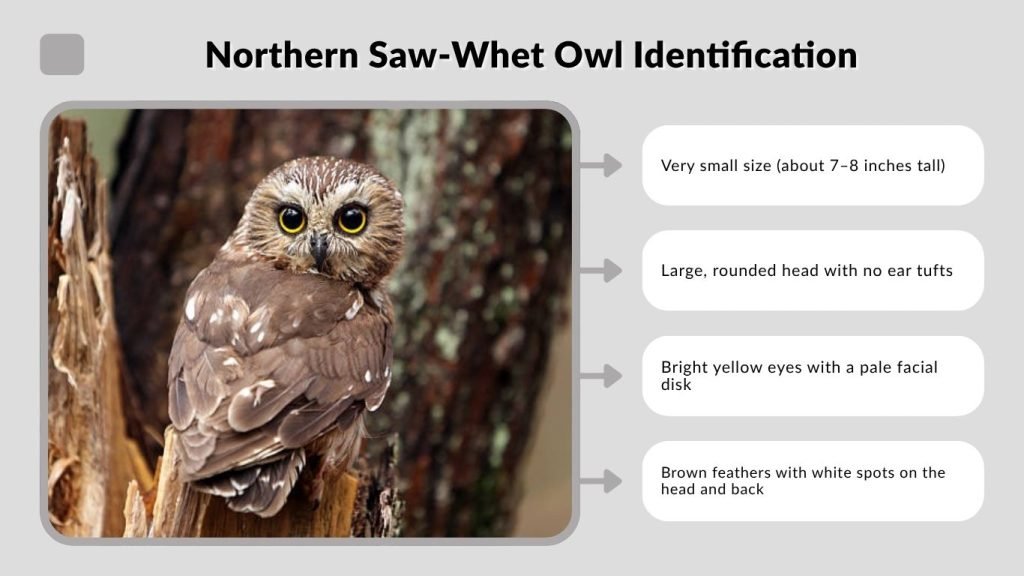
The northern saw-whet owl is a small, compact owl that can be difficult to spot due to its excellent camouflage and quiet behavior. Despite its tiny size, it has a distinctive appearance that helps bird watchers identify it, especially during nighttime activity or when perched quietly during the day.
Key identification features:
- Very small size (about 7–8 inches tall)
- Large, rounded head with no ear tufts
- Bright yellow eyes with a pale facial disk
- Brown feathers with white spots on the head and back
- Light-colored underside with streaks
- Short tail and compact body
- Juveniles appear darker with less spotting
- Distinct repetitive “toot-toot” call
These features make the northern saw-whet owl one of the most recognizable small owls, especially when identified by its unique call.
Northern Saw-Whet Owl Habitat & Range
Natural Habitat
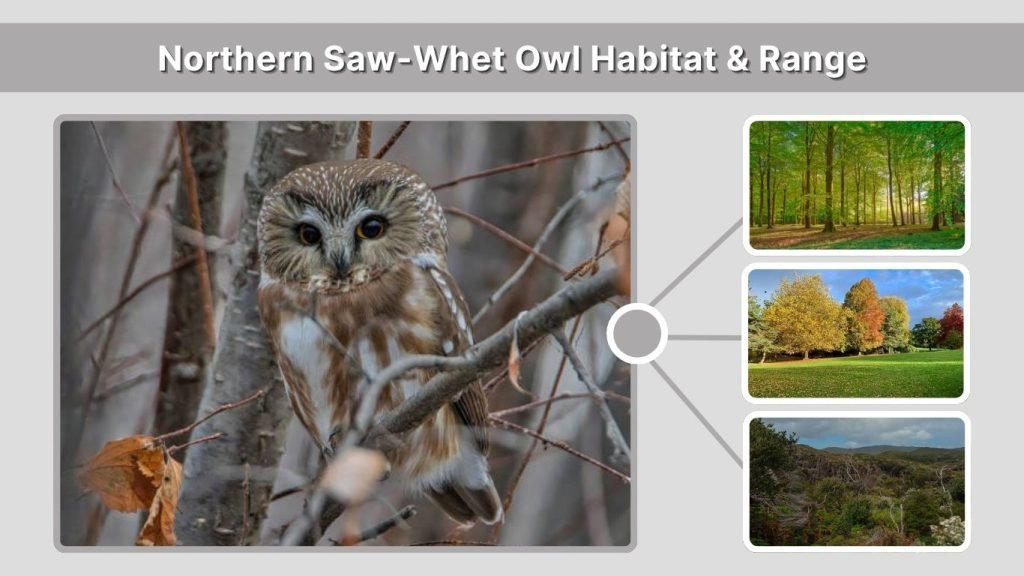
Northern saw-whet owls prefer dense forests, especially coniferous and mixed woodlands. These habitats provide shelter, nesting sites, and abundant prey.
They are often found in areas with thick vegetation, where they can remain hidden during the day.
Geographic Range
This species is widely distributed across North America. It can be found in Canada, the United States, and parts of Mexico, depending on the season.
Their range includes both breeding and wintering areas, with some populations remaining in the same region year-round.
Migration Patterns
Northern saw-whet owls are partially migratory. Some individuals migrate south during the winter, while others stay in their home range if food is available.
Migration patterns can vary depending on environmental conditions and food supply.
Northern Saw-Whet Owl Nesting & Reproduction
Nesting Habits
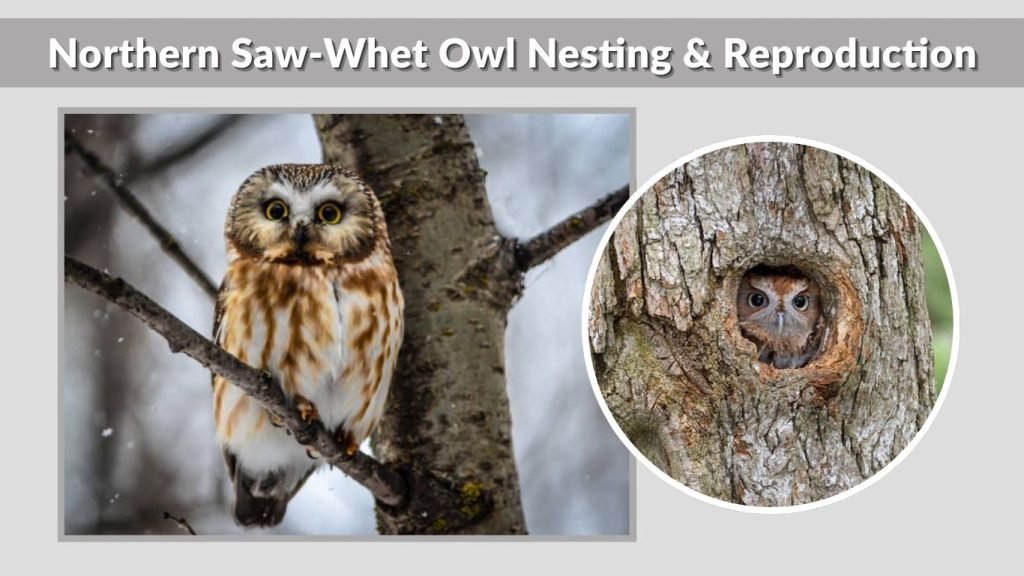
Northern saw-whet owls do not build their own nests. Instead, they rely on tree cavities, often those created by woodpeckers. They may also use nest boxes provided by humans.
These nesting sites provide safety from predators and harsh weather.
Breeding Season
The breeding season typically begins in early spring. During this time, males use their calls to attract females and establish territory.
Once a pair forms, they work together to prepare for nesting.
Eggs & Life Cycle
The female lays a clutch of eggs, usually between 4 and 7. She incubates them while the male provides food.
After hatching, the chicks grow quickly and depend on their parents for nourishment and protection. As they develop, they begin to explore outside the nest before eventually becoming independent.
Northern Saw-Whet Owl Sounds & Calls
Main Call
The northern saw-whet owl is famous for its repetitive call that sounds like a saw being sharpened. This “toot-toot” sound is steady and rhythmic, often repeated many times.
Types of Sounds
In addition to its main call, this owl produces softer vocalizations used for communication between mates and offspring.
Most of these sounds are heard at night, when the owl is most active.
What Do Their Calls Mean?
These calls serve important purposes such as attracting mates, marking territory, and maintaining communication.
During the breeding season, calling activity increases as males try to attract females and defend their territory.
Northern Saw-Whet Owl Diet & Hunting Behavior
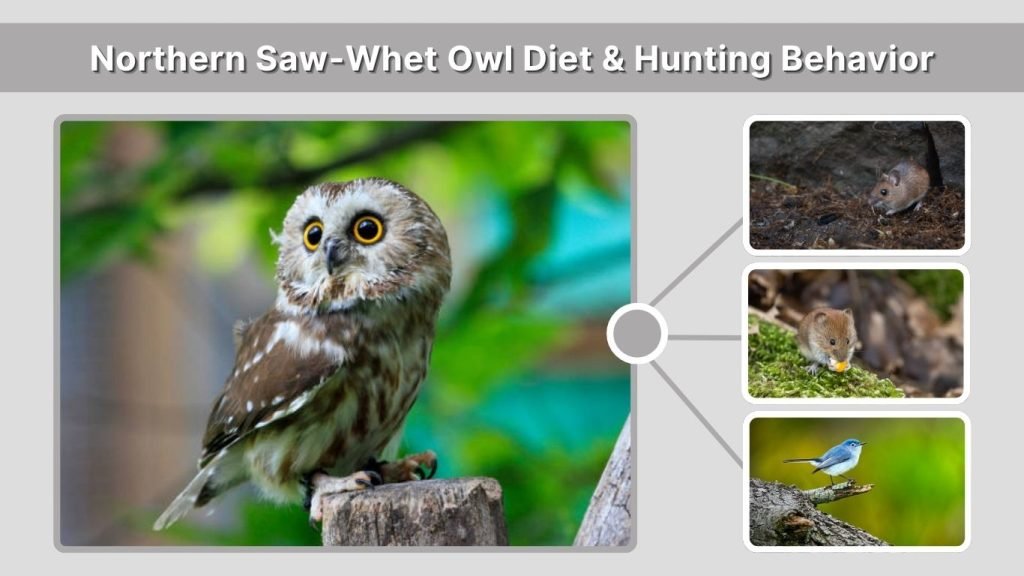
What Do Northern Saw-Whet Owls Eat?
Northern saw-whet owls primarily feed on small prey, making them important for controlling rodent populations. Their diet includes:
- Small mammals such as mice, voles, and shrews
- Insects like beetles and moths
- Occasionally small birds
They often swallow prey whole and later regurgitate pellets containing bones and fur.
Hunting Style
These owls are strictly nocturnal hunters. They rely on their excellent hearing and night vision to locate prey in darkness.
They usually hunt from a perch, silently watching for movement before swooping down. Their silent flight allows them to approach prey without being detected.
Predators
Despite being skilled hunters, northern saw-whet owls are vulnerable to larger predators. These include:
- Great horned owls
- Hawks
- Larger mammals
Their small size makes camouflage and secrecy essential for survival.
Northern Saw-Whet Owl Behavior & Adaptations
Northern saw-whet owls are very secretive and rarely seen during the day. They often roost quietly in dense foliage, relying on their camouflage to remain hidden.
They are solitary birds and are most active at night. Their small size and ability to remain motionless help them avoid predators.
These owls also have specialized adaptations such as excellent hearing, sharp talons, and silent flight, all of which make them effective hunters.
Northern Saw-Whet Owl Flight & Feathers
The feathers of the northern saw-whet owl are soft and specially designed to reduce noise during flight. This allows them to move silently through the forest.
In flight, they appear compact with rounded wings. Their movement is smooth and controlled, helping them navigate through dense trees.
Their feather patterns also provide excellent camouflage, blending with tree bark and forest surroundings.
Northern Saw-Whet Owl vs Other Owls
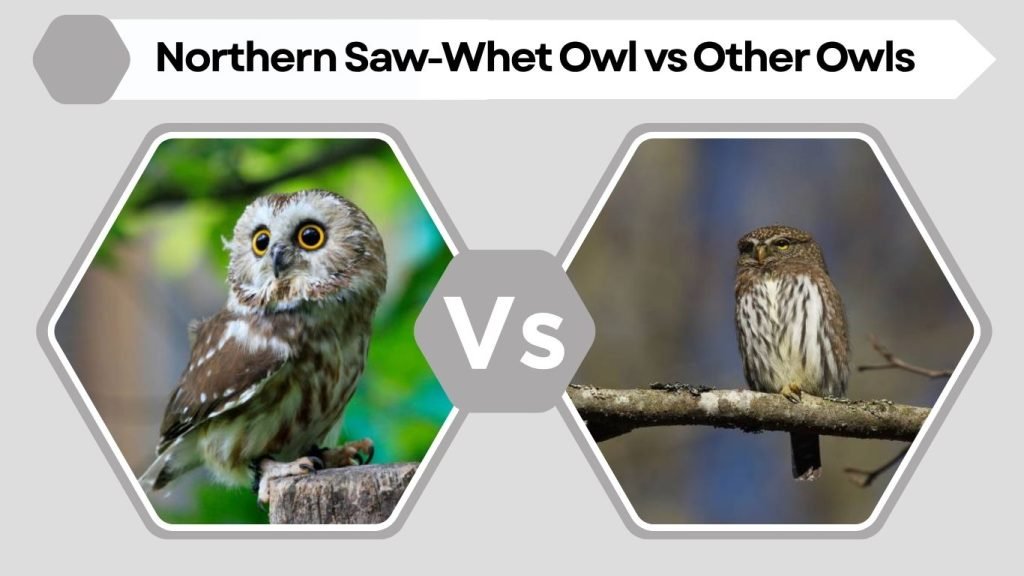
vs Northern Pygmy Owl
The northern saw-whet owl is smaller and more nocturnal than the northern pygmy owl. While the pygmy owl is active during the day, the saw-whet owl hunts at night.
Unique Traits
One of the most distinctive features of the northern saw-whet owl is its small size and repetitive call. These traits make it unique among North American owls.
Northern Saw-Whet Owl Lifespan, Conservation & Status
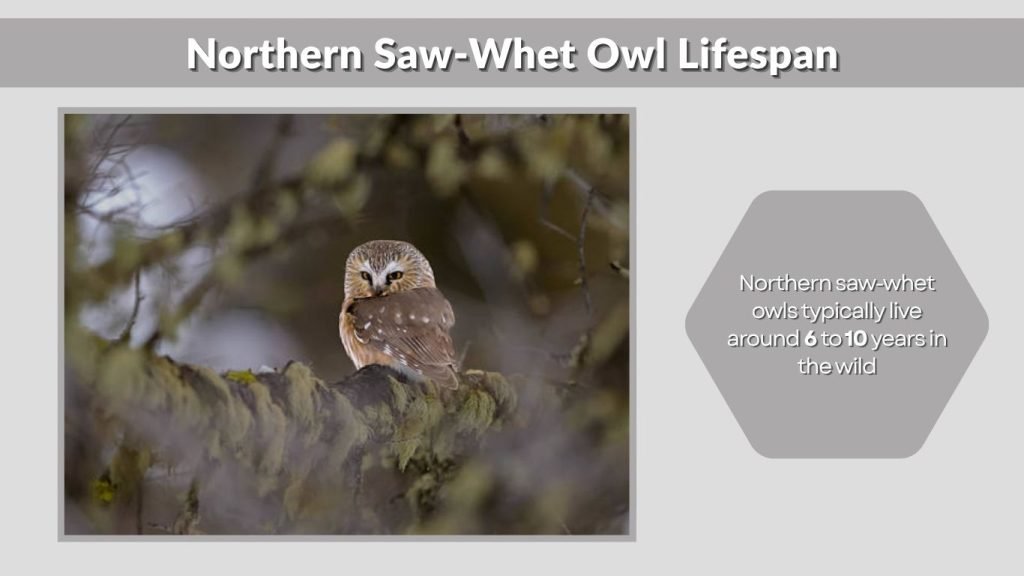
Lifespan
Northern saw-whet owls typically live around 6 to 10 years in the wild, although some may live longer under favorable conditions.
Are They Endangered?
They are not considered endangered and have a stable population. However, their secretive nature makes them difficult to study.
Threats
Main threats include habitat loss, climate changes, and predation by larger birds. Conservation efforts focus on protecting forest habitats and providing nesting sites.
Northern Saw-Whet Owl Symbolism & Meaning
Owls are often associated with wisdom and mystery, and the northern saw-whet owl is no exception. In some cultures, owls are seen as symbols of knowledge or guardians of the night.
Interpretations vary depending on cultural beliefs, but they are often linked to intuition and awareness.
Interesting Facts About Northern Saw-Whet Owls
- They are one of the smallest owls in North America.
- Their call sounds like a saw being sharpened.
- They can remain completely still to avoid detection.
- They swallow prey whole and produce pellets later.
- They are rarely seen due to their secretive behavior.
Conclusion
The northern saw-whet owl is a small yet fascinating bird that plays an important role in forest ecosystems. Its silent flight, excellent camouflage, and distinctive calls make it both elusive and captivating. Despite its small size, it is a skilled hunter and an important part of the natural balance. Protecting its habitat ensures that this remarkable owl continues to thrive in the wild.
FAQs
What does a northern saw-whet owl sound like?
The northern saw-whet owl makes a repetitive “toot-toot” call that sounds like a saw being sharpened.
Where do northern saw-whet owls live?
They live in dense forests across North America, especially in coniferous and mixed woodlands.
What do northern saw-whet owls eat?
They mainly eat small mammals like mice and voles, along with insects and occasionally small birds.
Are northern saw-whet owls endangered?
No, they are not considered endangered and generally have stable populations.
Do northern saw-whet owls migrate?
Some northern saw-whet owls migrate seasonally, while others stay in the same area depending on food availability.