






The long-eared owl (Asio otus) is a slender, medium-sized owl known for its distinctive ear tufts and secretive nature. Found across Europe, Asia, North America, and parts of Africa, this nocturnal bird is rarely seen but often heard during quiet nights. Its excellent camouflage and silent flight make it a skilled predator. In this article, you’ll explore its physical features, habitat, behavior, and diet, uncovering what makes this owl such a fascinating species.
Scientific Classification and Naming
Scientific Name and Taxonomy
The long-eared owl is scientifically known as Asio otus and belongs to the Strigidae family, which includes most typical owls. This species is closely related to the short-eared owl (Asio flammeus), sharing similar body structures but differing in behavior and habitat preferences.
Subspecies and Regional Variations
Long-eared owls are widely distributed and show slight variations depending on their geographic location. Eurasian populations are the most widespread, while African and Madagascar forms exhibit minor differences in size and plumage. Despite these variations, all belong to the same species and share similar ecological roles.
Long-Eared Owl Physical Description
Size and Measurements
The long-eared owl is considered medium-sized, typically measuring between 31 to 40 cm in length. Its wingspan ranges from 85 to 100 cm, giving it a graceful and buoyant flight. Compared to bulkier owls like the great horned owl, it appears slimmer and more elongated.
Distinctive Features
One of the most recognizable features of this owl is its long ear tufts. Despite their name, these are not actual ears but feather structures used for communication and camouflage. The owl also has striking orange eyes, a well-defined facial disk, and a sharp hooked beak.
Camouflage and Appearance in the Wild
The long-eared owl’s plumage is a mix of brown, black, and buff tones, allowing it to blend seamlessly with tree bark. When roosting, it stretches its body upright and narrows its profile, making it almost invisible among branches. This camouflage is essential for avoiding predators and human disturbance.
Long-Eared Owl Habitat and Distribution
Preferred Habitat
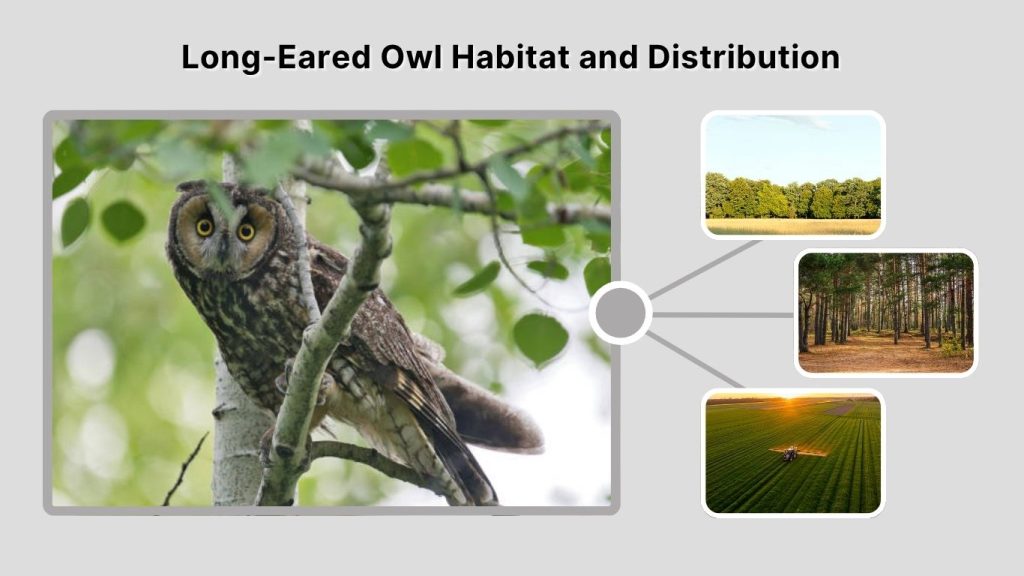
Long-eared owls favor areas that combine dense tree cover with open land. They are commonly found along forest edges, in woodlands, and in shelterbelts near agricultural fields. Open grasslands and meadows are especially important for hunting, as they provide access to prey.
Global Range
This species has an extensive range across the Northern Hemisphere. It is widely distributed throughout Europe and Asia and is also found in North America. In some regions, it extends into North Africa. Its adaptability allows it to thrive in both temperate and semi-arid environments.
Roosting Behavior
Unlike many solitary owls, long-eared owls often roost in groups, especially during winter. These communal roosts can contain several individuals perched closely together in dense foliage. Such behavior helps conserve warmth and provides safety in numbers.
Long-Eared Owl Behavior and Adaptations
Nocturnal Lifestyle
The long-eared owl is primarily nocturnal, becoming active shortly after sunset. During the day, it remains hidden in trees, relying on its camouflage to stay undetected. At night, it silently glides over open fields in search of prey.
Adaptations for Survival
This owl possesses several adaptations that make it an efficient hunter. Its wings are specially designed for silent flight, allowing it to approach prey without being heard. Its hearing is exceptionally sharp, enabling it to detect even the slightest movement of small animals in the dark. Additionally, its ability to rotate its head significantly enhances its field of vision.
Long-Eared Owl Diet and Hunting Techniques
What Do Long-Eared Owls Eat?
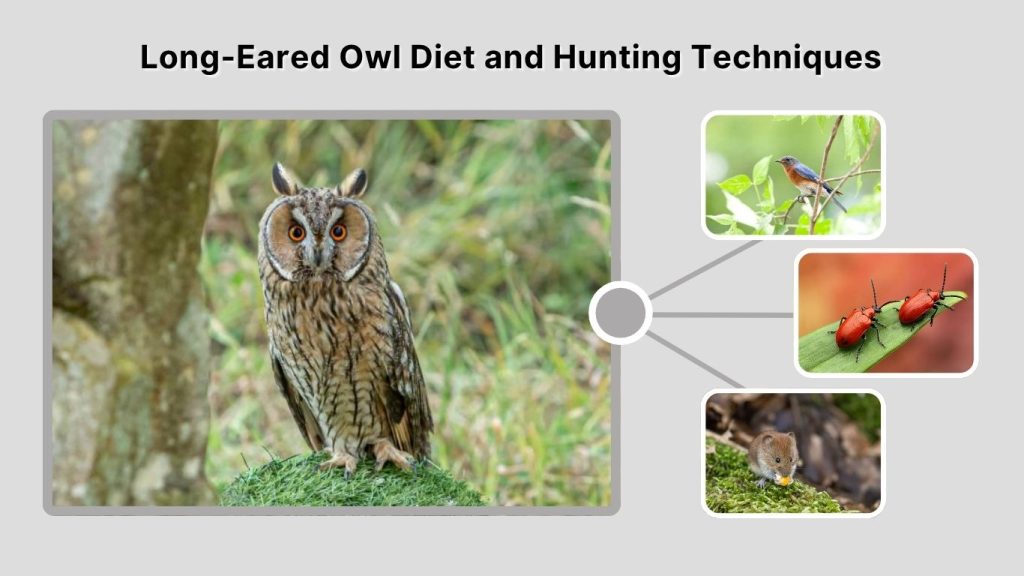
The diet of the long-eared owl mainly consists of small mammals, particularly voles and mice. These rodents form the bulk of its الغذા (diet), although the owl may occasionally consume small birds, insects, or amphibians when necessary.
Hunting Behavior
Long-eared owls typically hunt by flying low over open areas, using their keen hearing to locate prey beneath vegetation. Once a target is detected, they swoop down swiftly and capture it with their sharp talons. Their silent flight gives them a significant advantage, making it difficult for prey to escape.
Role in the Ecosystem
As predators of small mammals, long-eared owls play a crucial role in maintaining ecological balance. By controlling rodent populations, they help prevent overgrazing and protect crops, making them beneficial to both natural ecosystems and agriculture.
Long-Eared Owl Calls and Sounds
Types of Calls
The long-eared owl is more often heard than seen. Its most common call is a low, rhythmic hoot, often described as a soft “hoo” repeated at intervals. Males use this call primarily during the breeding season to attract mates and establish territory.
Calls of Chicks and Juveniles
Young long-eared owls produce high-pitched begging calls that can carry over long distances. These calls are often heard at night as chicks communicate with their parents for food.
When and Why They Call
Vocal activity is highest during the breeding season and at night. Calls serve multiple purposes, including communication between mates, territorial defense, and parent-offspring interaction.
Long-Eared Owl Breeding and Life Cycle
Breeding Season and Courtship
The breeding season of the long-eared owl typically begins in late winter to early spring. During this time, males become more vocal, using their deep hooting calls to attract females and establish territory. Courtship may also include aerial displays, where the male performs slow, buoyant flights to impress a potential mate.
Nesting Habits
Unlike many birds, long-eared owls do not build their own nests. Instead, they rely on abandoned nests created by other birds such as crows, magpies, or hawks. These nests are usually located in trees within dense vegetation, providing protection and concealment.
Eggs and Chick Development
Females usually lay between 3 to 6 eggs, depending on food availability. The incubation period lasts about 25 to 30 days, during which the female remains on the nest while the male provides food. After hatching, the chicks are covered in soft down and are entirely dependent on their parents. As they grow, they begin to explore nearby branches before eventually learning to fly.
Lifespan
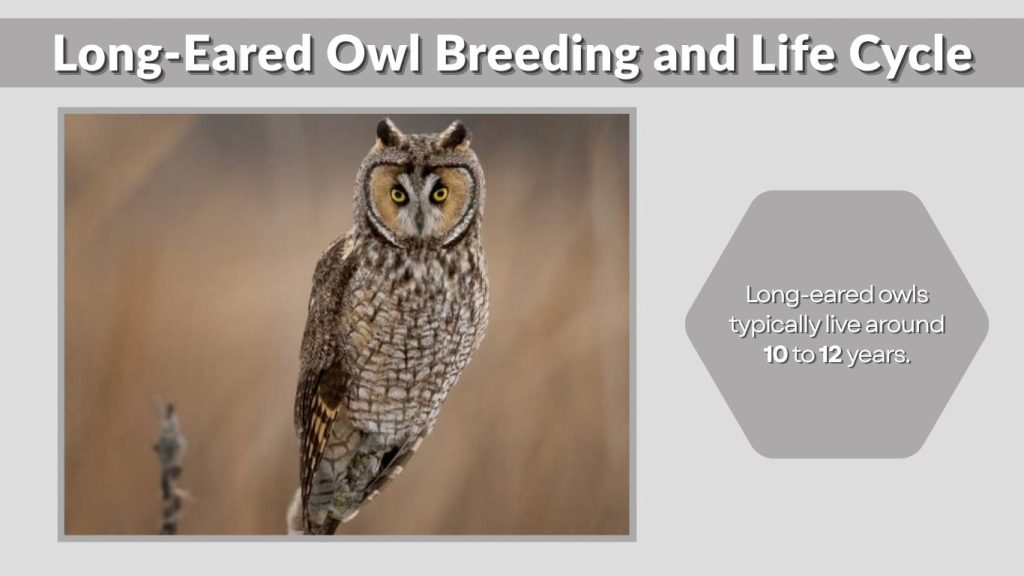
In the wild, long-eared owls typically live around 10 to 12 years, although some individuals may survive longer under favorable conditions. Their survival depends on factors such as food availability, habitat quality, and predation risks.
Long-Eared Owl Migration and Movement
Do Long-Eared Owls Migrate?
Long-eared owls are considered partially migratory. Some populations remain in the same area year-round, while others migrate to warmer regions during colder months. Migration patterns often depend on the availability of food, particularly small mammals.
Seasonal Movements
During winter, these owls may gather in communal roosts, sometimes moving short distances to find suitable habitats with abundant prey. In harsher climates, they may travel longer distances to ensure survival.
Long-Eared Owl vs Great Horned Owl
Key Differences in Appearance
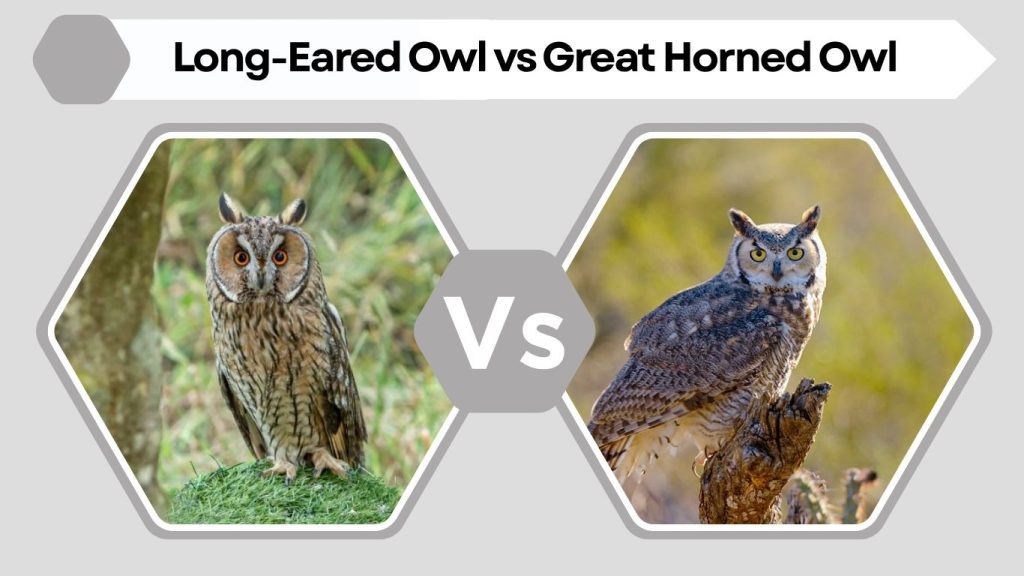
The long-eared owl is slimmer and smaller than the great horned owl. While both species have ear tufts, those of the long-eared owl are longer and positioned closer together, giving it a more elongated appearance. The great horned owl, on the other hand, appears bulkier and more powerful.
Behavioral Differences
Long-eared owls prefer wooded areas near open fields and are more secretive, often roosting in groups. In contrast, great horned owls are highly adaptable and can be found in a wider range of habitats. They are also more aggressive hunters and typically solitary.
Vocalization Differences
The calls of these two owls are distinct. Long-eared owls produce softer, rhythmic hoots, while great horned owls have deeper, more resonant calls that are easier to recognize over long distances.
Long-Eared Owl Conservation Status

Population Trends
The long-eared owl is currently considered a species of least concern on a global scale. However, local populations may vary, with some areas experiencing declines due to environmental changes.
Threats
One of the main threats to long-eared owls is habitat loss, particularly the removal of woodland edges and roosting sites. Human disturbance, pesticide use, and a decline in prey populations can also negatively impact their survival.
Protection and Conservation Efforts
Conservation efforts focus on preserving suitable habitats and maintaining healthy ecosystems. Protecting forests, reducing pesticide use, and raising awareness about the importance of owls can help ensure the survival of this species.
How to Spot a Long-Eared Owl
Best Locations to Look
Long-eared owls are most often found near forest edges, dense tree clusters, and areas close to open hunting grounds. Winter roosts in thick vegetation are among the best places to spot them.
Best Time for Observation
The best time to observe these owls is during dusk or nighttime when they are most active. The breeding season is also ideal, as increased vocal activity makes them easier to locate.
Tips for Identification
Listening for their soft hooting calls is one of the most effective ways to find them. Visually, look for their upright posture, long ear tufts, and slender silhouette perched among branches.
Interesting Facts About Long-Eared Owls
- Long-eared owls often roost in groups during winter, which is unusual for many owl species.
- Their ear tufts are not used for hearing but for communication and camouflage.
- They can rotate their heads up to 270 degrees, allowing them to scan their surroundings effectively.
- Their flight is nearly silent, making them highly efficient nocturnal hunters.
- They rely heavily on abandoned nests rather than building their own.
Conclusion
The long-eared owl is a remarkable bird that combines stealth, adaptability, and beauty. From its silent hunting techniques to its impressive camouflage, it is perfectly suited to a nocturnal lifestyle. Despite being rarely seen, its presence plays a vital role in maintaining ecological balance by controlling rodent populations. Understanding and protecting this species is essential, ensuring that future generations can continue to appreciate one of nature’s most fascinating nocturnal predators.
FAQs
What do long-eared owls eat?
Long-eared owls primarily feed on small mammals, especially voles and mice. They may also eat small birds, insects, and other small prey when rodents are scarce.
Where do long-eared owls live?
They are found across Europe, Asia, North America, and parts of Africa. They prefer habitats with dense trees for roosting and open fields or grasslands for hunting.
Are long-eared owls endangered?
Long-eared owls are currently listed as a species of least concern globally. However, local populations may decline due to habitat loss and reduced prey availability.
Do long-eared owls migrate?
Yes, some populations are partially migratory. While some stay in the same area year-round, others move to warmer regions during winter depending on food availability.
How can you identify a long-eared owl?
They can be identified by their long ear tufts, orange eyes, and slender body. Their upright posture and excellent camouflage make them blend easily into tree branches.