




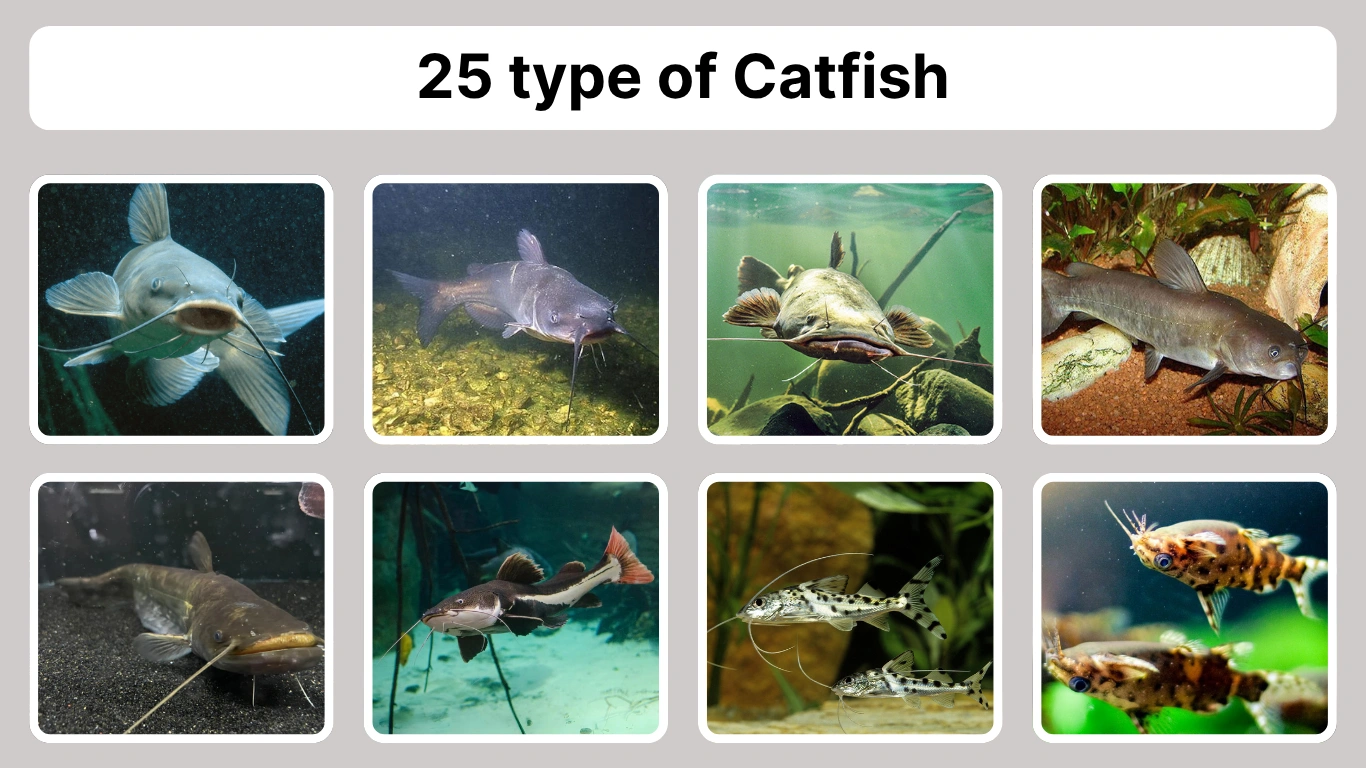
Catfish are a diverse group of freshwater and saltwater species known for their whisker-like barbels, bottom-dwelling behavior, and incredible adaptability. Found on nearly every continent, these fish vary dramatically in size, shape, and lifestyle—from the gentle herbivorous Mekong Giant Catfish to the fierce, predatory Goonch. Whether you’re an angler, aquarist, or nature enthusiast, understanding the unique traits of different catfish species can help you better appreciate their role in aquatic ecosystems.
In this article, we’ll explore 25 fascinating types of catfish from around the world. For each one, you’ll find detailed information about their appearance, natural habitat, behavior, diet, and reproduction. Let’s dive in and discover what makes each of these whiskered fish so unique.
1. Blue Catfish
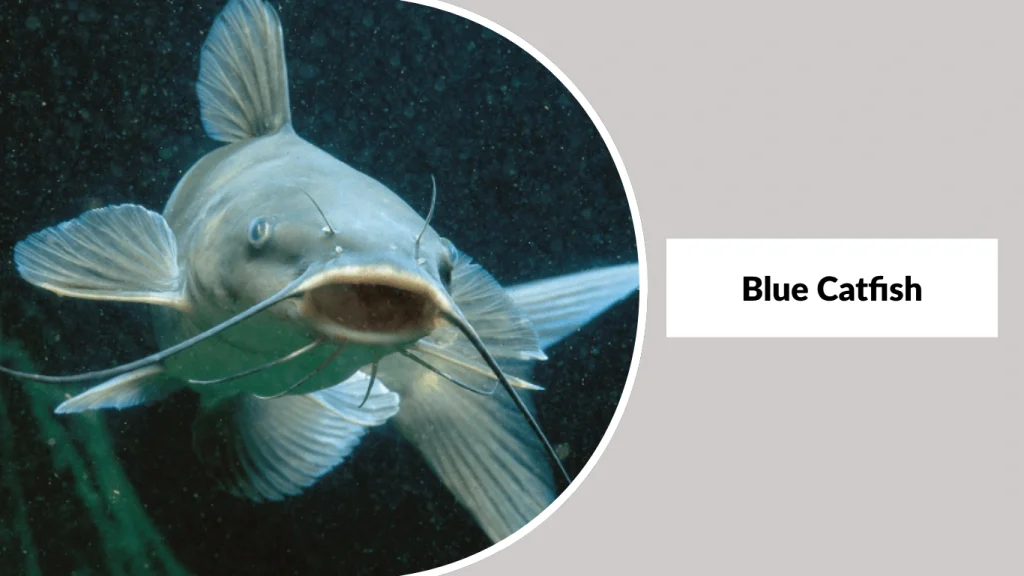
The Blue Catfish (Ictalurus furcatus) is one of the largest catfish species found in North America. Native to the Mississippi, Missouri, and Ohio River basins, this fish is popular among sport anglers due to its size, power, and abundance. They thrive in large rivers, reservoirs, and lakes, especially in deeper waters with moderate currents.
Identification
- Scientific Name: Ictalurus furcatus
- Color: Slate blue to silvery-gray
- Tail: Deeply forked
- Size: Commonly 20–40 inches; can exceed 100 pounds
- Barbels: 4 pairs of whisker-like barbels
- Fins: No spots; straight-edged anal fin with 30–36 rays
Habitat and Range
Blue catfish inhabit large freshwater river systems, reservoirs, and some brackish waters. They prefer slow-moving to moderate current waters with plenty of depth and cover. Their range extends from the central United States to parts of the southeast, including introduced populations in the Chesapeake Bay.
Behavior and Diet
This species is opportunistic and primarily nocturnal. Blue catfish feed on a wide range of prey including fish (like shad), crayfish, and mollusks. In areas with overpopulation, they can become invasive and disrupt ecosystems.
Reproduction
Blue catfish spawn during late spring and early summer when water temperatures reach around 70°F (21°C). Males guard the nest, usually in hollow logs or rock crevices, until the eggs hatch.
2. Channel Catfish
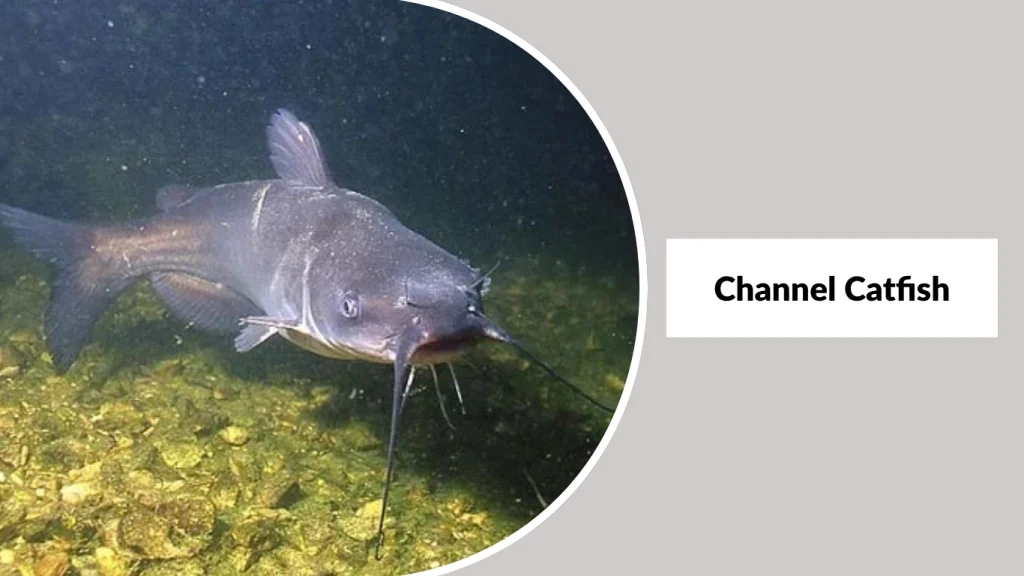
Channel Catfish (Ictalurus punctatus) is the most commonly fished catfish species in North America. Known for their excellent taste and abundance, they are a favorite among both commercial fisheries and recreational anglers. These catfish are highly adaptable and can thrive in a wide range of freshwater environments.
Identification
- Scientific Name: Ictalurus punctatus
- Color: Olive-brown to gray with dark spots (especially in juveniles)
- Tail: Deeply forked
- Size: Typically 12–24 inches; can reach up to 40 pounds
- Barbels: 4 pairs, black or dark gray
- Fins: Anal fin has 24–29 soft rays; slightly curved edge
Habitat and Range
Channel catfish are native to the central United States but have been widely introduced across the country. They prefer clean, slow-moving rivers, streams, ponds, and reservoirs with sandy or gravel bottoms. They tolerate a variety of conditions, which makes them ideal for stocking in public lakes and ponds.
Behavior and Diet
Channel catfish are primarily bottom feeders and rely heavily on their sense of smell and taste, using their barbels to detect food in murky waters. They consume insects, small fish, crustaceans, aquatic plants, and various organic matter, making them effective scavengers. They are most active during low-light hours—dusk, night, and dawn.
Reproduction
Spawning typically occurs in late spring to early summer when water temperatures reach 75–85°F (24–29°C). They nest in secluded, dark areas like undercut banks, hollow logs, or man-made structures. Males guard the eggs and newly hatched fry for several days to protect them from predators.
3. Flathead Catfish

The Flathead Catfish (Pylodictis olivaris), often called “mud cat” or “yellow cat,” is a large predatory species known for its flat head, long body, and solitary habits. Unlike other catfish, it prefers live prey and is highly sought after by trophy anglers for its size and powerful fight.
Identification
- Scientific Name: Pylodictis olivaris
- Color: Yellowish-brown to olive with mottled patterns
- Tail: Slightly notched (not deeply forked)
- Size: Commonly 20–40 inches; can exceed 100 pounds
- Barbels: 4 pairs, with a flat, wide head
- Fins: Broad head and smooth anal fin with 14–17 rays
Habitat and Range
Flathead catfish inhabit deep holes in rivers and large streams, especially near submerged logs and undercut banks. They prefer slow-moving or still freshwater with plenty of cover and are native to the Mississippi River basin, extending into parts of the southeastern and central U.S.
Behavior and Diet
Flatheads are nocturnal ambush predators. Unlike most catfish that feed on dead or decaying matter, flatheads hunt live prey. Their diet includes sunfish, perch, crayfish, and small catfish. They often remain hidden during the day and actively hunt at night, using stealth and patience.
Reproduction
Spawning takes place in late spring through early summer when water temperatures are between 70–80°F (21–27°C). Flatheads create nests in dark, hidden spaces like hollow logs or beneath debris. The male guards the eggs and newly hatched fry until they are strong enough to swim freely.
4. Bullhead Catfish
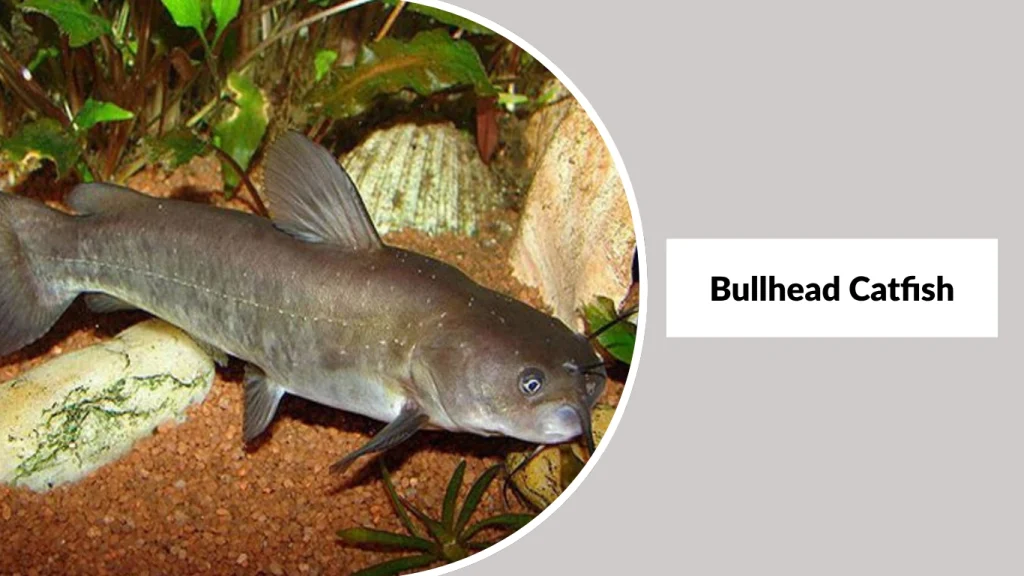
Bullhead catfish refer to several closely related species—primarily Black Bullhead, Brown Bullhead, and Yellow Bullhead. These small to medium-sized catfish are hardy, widely distributed, and known for tolerating low-oxygen and murky waters where other fish might struggle to survive.
Identification
- Scientific Names:
- Black Bullhead (Ameiurus melas)
- Brown Bullhead (Ameiurus nebulosus)
- Yellow Bullhead (Ameiurus natalis)
- Black Bullhead (Ameiurus melas)
- Color:
- Black Bullhead: Dark brown to black
- Brown Bullhead: Mottled brown and olive
- Yellow Bullhead: Yellowish to olive green
- Black Bullhead: Dark brown to black
- Tail: Rounded (not forked)
- Size: Typically 6–14 inches; max around 5 pounds
- Barbels: 4 pairs; often white in yellow bullhead
- Fins: Short anal fin with 21–27 rays
Habitat and Range
Bullhead catfish are found in ponds, lakes, rivers, and even ditches. They thrive in muddy, low-oxygen environments and tolerate high turbidity better than most fish. Native to eastern and central North America, they’ve been introduced to many other regions.
Behavior and Diet
These catfish are bottom feeders and scavengers. Their diet includes insects, plant matter, crustaceans, snails, and dead fish. They are most active at night but will feed during the day, especially in turbid waters. Bullheads are often caught by beginner anglers due to their abundance and willingness to bite.
Reproduction
Spawning occurs in late spring and early summer. Bullheads form nests in shallow, weedy areas. Both parents often help guard the eggs and young, which is rare among fish species. Fry stay close together in tight schools under the watchful eye of the adults for a short period after hatching.
5. Wels Catfish
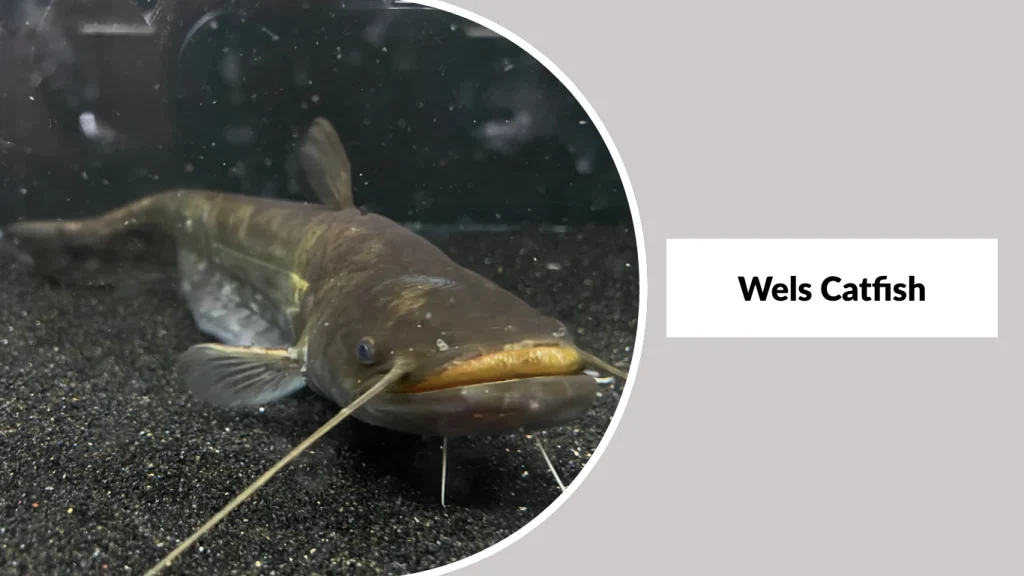
The Wels Catfish (Silurus glanis) is one of the largest freshwater fish in Europe and can grow to truly monstrous sizes. Native to Eastern and Central Europe, it is both feared and revered by anglers for its size, strength, and voracious appetite. It is an apex predator in many of the waters it inhabits.
Identification
- Scientific Name: Silurus glanis
- Color: Dark green to black with a pale underside
- Tail: Long, pointed (not forked)
- Size: Commonly 3–5 feet; can exceed 9 feet and 300 pounds
- Barbels: 6 total (2 long upper jaw barbels, 4 short on lower jaw)
- Fins: Long anal fin running nearly the length of the body’s underside
Habitat and Range
Wels catfish are native to rivers and lakes across Eastern and Central Europe, including the Danube, Volga, and Po rivers. They prefer deep, slow-moving or still waters with muddy bottoms. In recent decades, they’ve been introduced to Western Europe and parts of the UK and Spain, where they’ve become established.
Behavior and Diet
As an ambush predator, the Wels catfish feeds mostly at night and uses its sensitive barbels to detect vibrations and movement. Juveniles eat invertebrates and small fish, while adults consume fish, amphibians, waterfowl, rodents, and even small mammals. In some regions, they have been seen hunting in groups or beaching themselves to capture birds along shorelines.
Reproduction
Spawning occurs in late spring to early summer, when water temperatures rise above 68°F (20°C). Males build nests in protected, shallow areas with vegetation. After the female lays eggs, the male fertilizes them and guards the nest until hatching.
6. Redtail Catfish
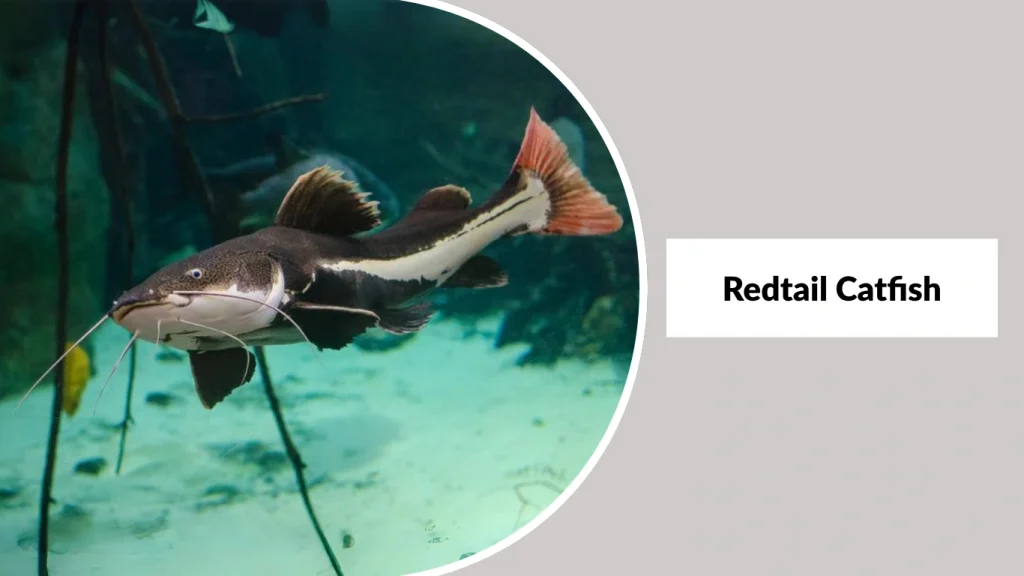
The Redtail Catfish (Phractocephalus hemioliopterus) is a strikingly beautiful and powerful species native to South America. Named for its vibrant red or orange tail, it is popular in the aquarium trade but can quickly outgrow home tanks due to its massive adult size.
Identification
- Scientific Name: Phractocephalus hemioliopterus
- Color: Dark gray to black body with white underside and bright red-orange tail
- Tail: Broad and rounded with vivid red or orange coloration
- Size: Commonly 2–3 feet in captivity; over 5 feet in the wild
- Barbels: 3 pairs, long and prominent
- Fins: Rounded pectoral and caudal fins; body is robust and thick
Habitat and Range
The Redtail catfish is native to the Amazon, Orinoco, and Essequibo river basins in South America. It thrives in slow-moving rivers, floodplains, and muddy backwaters with warm, oxygen-rich waters. Its range spans Brazil, Colombia, Venezuela, Peru, and neighboring countries.
Behavior and Diet
Redtail catfish are bottom-dwelling omnivores with strong predatory instincts. They feed on crustaceans, fish, insects, fruits, and even carrion. In aquariums, they will consume tankmates of any size they can fit in their mouth. They are solitary, territorial, and mostly nocturnal.
Reproduction
Little is known about their breeding in the wild, and they are rarely bred successfully in captivity due to their large size and specific requirements. In nature, they likely spawn during the rainy season when river levels rise, giving young fish more habitat and food.
7. Mekong Giant Catfish

The Mekong Giant Catfish (Pangasianodon gigas) is one of the largest freshwater fish in the world. Endemic to the Mekong River Basin in Southeast Asia, this species is critically endangered due to overfishing, dam construction, and habitat degradation. Despite its size, it is gentle and herbivorous.
Identification
- Scientific Name: Pangasianodon gigas
- Color: Pale gray to white with no stripes or markings
- Tail: Broad and deeply forked
- Size: Can exceed 9 feet in length and 600 pounds
- Barbels: Present in juveniles, but lost in adults
- Fins: Large, rounded fins; massive, torpedo-shaped body
Habitat and Range
The Mekong Giant Catfish is native exclusively to the Mekong River, which flows through countries like Thailand, Laos, Cambodia, and Vietnam. It requires long, uninterrupted stretches of river to complete its life cycle, which makes it especially vulnerable to dams and waterway disruptions.
Behavior and Diet
Unlike most catfish, adult Mekong Giant Catfish are herbivores, feeding mainly on algae and aquatic plants scraped from submerged surfaces. Juveniles may consume zooplankton and small invertebrates. Despite their immense size, they are peaceful and non-aggressive.
Reproduction
They are believed to spawn during the rainy season, migrating long distances upstream to specific breeding grounds in northern Thailand and Laos. However, exact spawning behavior in the wild remains poorly documented due to their declining population. Conservation efforts now include captive breeding and restocking programs.
8. Striped Raphael Catfish

The Striped Raphael Catfish (Platydoras armatulus), also known as the talking catfish, is a small, armored species popular in home aquariums. It gets its nickname from the grunting or clicking sounds it produces by rubbing its pectoral fins against its shoulder bones.
Identification
- Scientific Name: Platydoras armatulus
- Color: Dark brown to black with bold horizontal cream or white stripes
- Tail: Rounded
- Size: Typically 6–9 inches
- Barbels: 3 pairs; short and stiff
- Fins: Stiff, spiny fins and heavily armored body with bony plates
Habitat and Range
This species is native to the slow-moving rivers, streams, and flooded forests of the Amazon and Orinoco river basins in South America. It prefers murky waters with plenty of leaf litter, driftwood, and hiding places.
Behavior and Diet
Striped Raphael Catfish are nocturnal and secretive, spending daylight hours hidden under logs or rocks. They are omnivorous scavengers, feeding on insects, small crustaceans, detritus, and plant matter. In aquariums, they are peaceful tankmates that help clean up leftover food.
Reproduction
Reproduction in captivity is rare. In the wild, they are believed to spawn during the rainy season. Eggs are scattered and left unattended, and hatchlings grow in quiet, vegetation-rich water.
9. Pictus Catfish

The Pictus Catfish (Pimelodus pictus) is a sleek, fast-swimming species with distinctive black spots and long flowing whiskers. Native to South America, it is a favorite among aquarium enthusiasts for its energetic behavior and striking appearance.
Identification
- Scientific Name: Pimelodus pictus
- Color: Silver body with dark black spots
- Tail: Deeply forked
- Size: 4–5 inches in home tanks, up to 6 inches in the wild
- Barbels: Extremely long, often extending the full body length
- Fins: Clear or lightly marked; dorsal fin has a sharp spine
Habitat and Range
Pictus catfish are native to the Amazon and Orinoco river basins in Peru, Colombia, and Brazil. They inhabit clear or slightly murky waters with sandy or rocky bottoms, often in moderate to fast-flowing streams.
Behavior and Diet
Highly active and mostly nocturnal, Pictus catfish are known for constantly swimming along the bottom and midwater levels. They are opportunistic feeders, consuming small invertebrates, insect larvae, and leftover food. Though peaceful, they may eat smaller tankmates.
Reproduction
Breeding in captivity is very rare and challenging. In their natural environment, spawning is believed to occur during the rainy season, triggered by temperature and water quality changes. Eggs are scattered and left to hatch on their own.
10. Glass Catfish

The Glass Catfish (Kryptopterus vitreolus) is a small, fascinating species known for its transparent body that allows you to see its bones and internal organs. Its delicate appearance and peaceful nature make it a popular choice for community aquariums.
Identification
- Scientific Name: Kryptopterus vitreolus
- Color: Transparent body with a faint silvery sheen
- Tail: Forked, nearly invisible due to clarity
- Size: Typically 4–5 inches
- Barbels: 2 long pairs on the upper jaw
- Fins: Small and nearly invisible; lacks dorsal fin
Habitat and Range
Glass catfish are native to slow-moving rivers and streams in Thailand. They prefer clear, shaded freshwater environments with stable water parameters and dense vegetation. Their natural habitat often includes tree roots and overhanging plants.
Behavior and Diet
These catfish are schooling fish and should be kept in groups of five or more to reduce stress and encourage natural behavior. They are shy and prefer low light. Diet consists of zooplankton, insect larvae, and small invertebrates. In captivity, they adapt well to quality flakes, frozen, or live foods.
Reproduction
Breeding Glass Catfish in captivity is rare due to their sensitivity to water conditions and need for specific spawning triggers. In the wild, reproduction likely aligns with seasonal rainfall and temperature changes. Males and females spawn in dense vegetation, where eggs adhere to surfaces.
11. Upside-Down Catfish
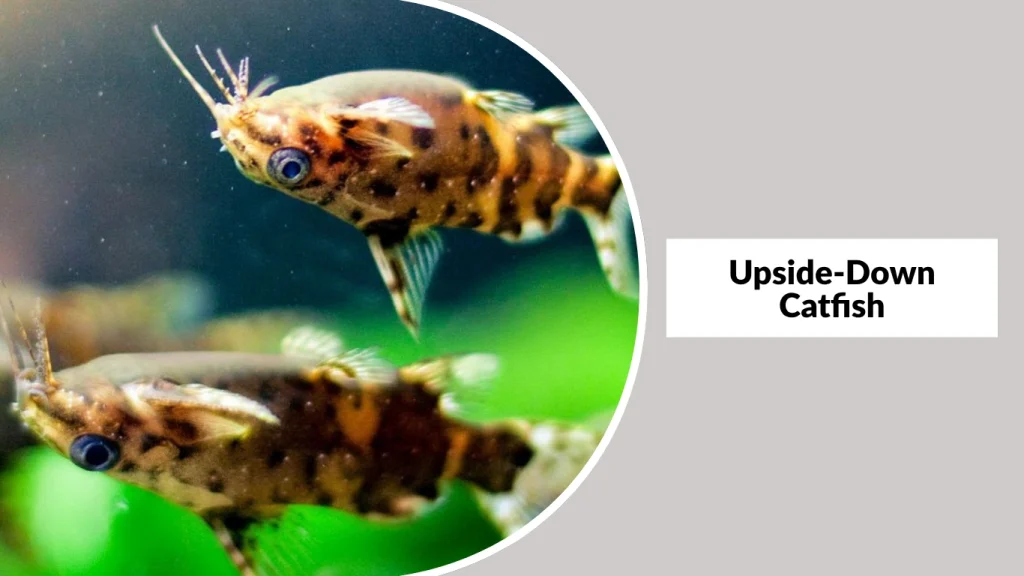
The Upside-Down Catfish (Synodontis nigriventris) is a unique and entertaining freshwater species known for its peculiar habit of swimming upside down. Native to Central Africa, it uses this behavior to feed on biofilm and insects from the undersides of leaves and submerged surfaces.
Identification
- Scientific Name: Synodontis nigriventris
- Color: Light brown to gray with darker spots and a pale belly
- Tail: Slightly forked
- Size: Typically 3–4 inches
- Barbels: 3 pairs; prominent and used for sensing in dark waters
- Fins: Tall dorsal fin with a strong spine; pectoral and tail fins well-developed for maneuverability
Habitat and Range
The Upside-Down Catfish is native to the Congo Basin in Central Africa. It inhabits slow-moving rivers, floodplains, and heavily vegetated areas with submerged roots and leaves, often under shaded canopies where light levels are low.
Behavior and Diet
These catfish exhibit reverse swimming behavior most of the time, especially when feeding near the water’s surface or underneath objects. This trait helps them access food sources that other fish can’t. Their diet includes insect larvae, small crustaceans, algae, and biofilm. They are peaceful, social fish that thrive in groups.
Reproduction
Spawning typically occurs during the rainy season in the wild. In captivity, breeding is rare but possible with soft, warm water and proper conditions. Eggs are usually laid among fine-leaved plants or spawning mops, and the fry are extremely small and delicate.
12. Iridescent Shark Catfish
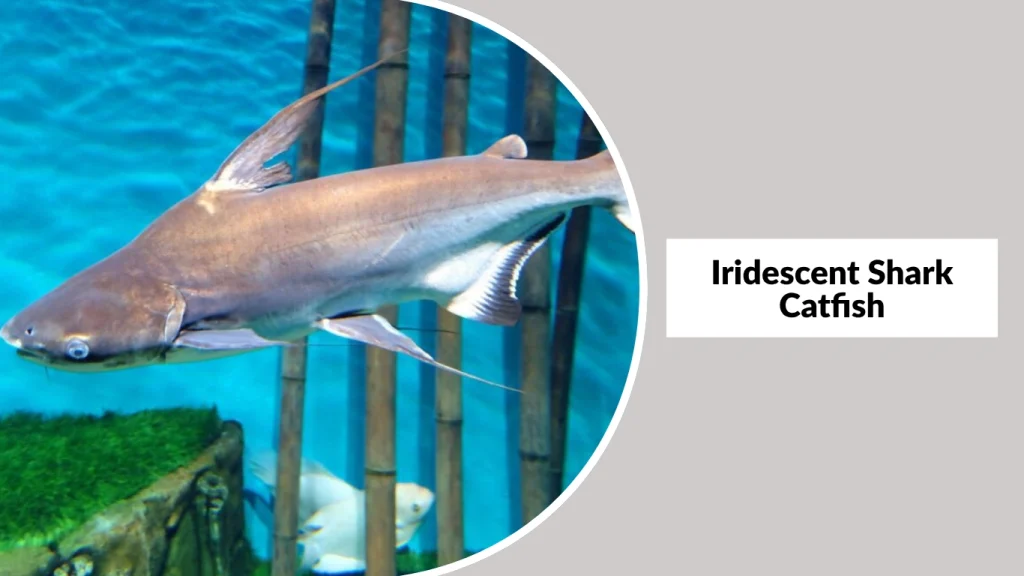
The Iridescent Shark Catfish (Pangasianodon hypophthalmus) is a sleek, fast-growing freshwater species with a shimmering, metallic appearance. Despite its name, it’s not a true shark but gets the nickname from its torpedo-shaped body and active swimming behavior. It’s popular in the aquarium trade but often outgrows home tanks.
Identification
- Scientific Name: Pangasianodon hypophthalmus
- Color: Silvery-gray with a metallic sheen and darker fins
- Tail: Deeply forked, with a black margin
- Size: Typically 3–4 feet in the wild; often 12–24 inches in captivity
- Barbels: 2 short pairs; often difficult to see in adults
- Fins: Strong, slightly pointed dorsal and pectoral fins; anal fin long and curved
Habitat and Range
Iridescent Sharks are native to the Mekong and Chao Phraya river systems in Southeast Asia, including Thailand, Cambodia, Laos, and Vietnam. They inhabit large rivers, deep pools, and flooded areas during the rainy season, often forming schools.
Behavior and Diet
These catfish are schooling fish by nature and should be kept in groups when housed in large aquariums. They are omnivorous and consume crustaceans, insects, small fish, algae, and plant matter. In captivity, they accept a wide variety of foods including pellets, vegetables, and frozen fare. They are active swimmers and need ample space.
Reproduction
In the wild, spawning occurs during the rainy season when water levels rise. Migrating upstream, they lay eggs in floodplains or deep pools. Commercial breeding is successful in fish farms, where hormone treatments and controlled environments are used to replicate natural spawning cues.
13. Electric Catfish
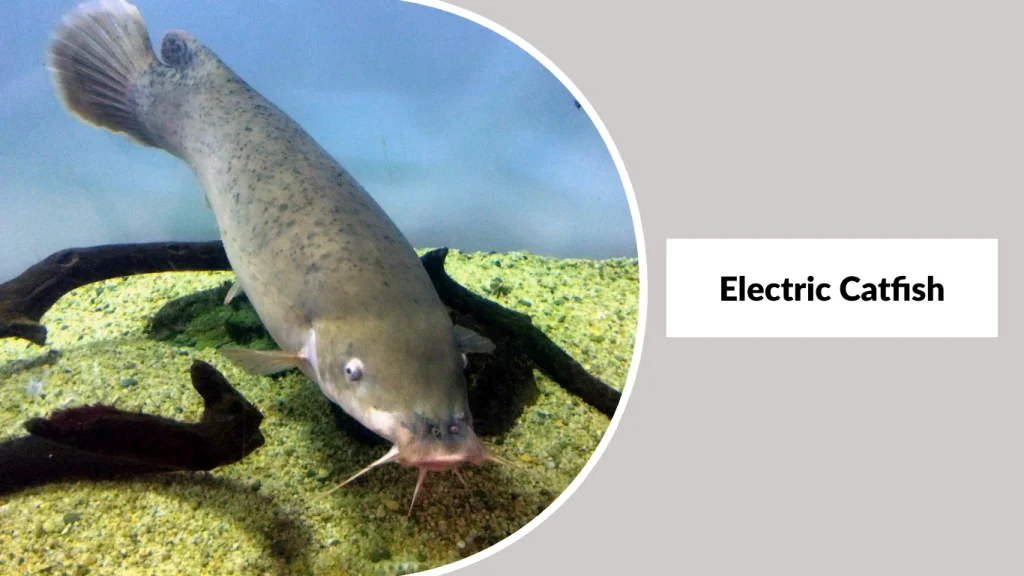
The Electric Catfish (Malapterurus electricus) is a remarkable species capable of producing electric shocks strong enough to stun prey or deter predators. Native to Africa, it is one of the few fish species with this defensive and hunting ability.
Identification
- Scientific Name: Malapterurus electricus
- Color: Brownish-gray with darker mottling or blotches
- Tail: Rounded
- Size: Commonly 12–24 inches; some grow up to 39 inches
- Barbels: 3 pairs; short and thick
- Fins: No dorsal fin spines; thick, fleshy body with small eyes
Habitat and Range
Electric catfish are found in the Nile River and various freshwater systems across West and Central Africa. They prefer slow-moving or still waters, such as muddy rivers, swamps, and lakes with low visibility and abundant cover.
Behavior and Diet
Nocturnal and solitary, they rely on their electric organ (which surrounds most of their body) to locate prey and defend themselves. Their diet includes fish, invertebrates, and carrion. They emit electric shocks of up to 350 volts, which are used to incapacitate prey before swallowing it whole.
Reproduction
Little is known about wild reproduction. In captivity, they are difficult to breed. It’s believed that they use secluded, sheltered environments such as rock caves or burrows to spawn. Both parents may guard the eggs and young fry in the early stages.
14. Clown Catfish

The Clown Catfish (also called Clown Synodontis or Synodontis decorus) is a strikingly patterned species admired for its bold coloration and long flowing dorsal fin. It’s a peaceful, hardy species often kept in large aquariums with plenty of hiding spaces.
Identification
- Scientific Name: Synodontis decorus
- Color: White to light gray body with bold black spots and a long, trailing dorsal fin
- Tail: Forked with dark edges
- Size: Typically 8–10 inches, but can grow larger
- Barbels: 3 pairs; long and slender
- Fins: Long dorsal spine, large pectoral fins, and spotted body
Habitat and Range
Native to the Congo River Basin in Central Africa, the Clown Catfish inhabits moderate to fast-flowing waters with rocky substrates and submerged roots. It is well adapted to environments with complex structure and high dissolved oxygen.
Behavior and Diet
This species is nocturnal and thrives in dimly lit environments. It is a peaceful omnivore that feeds on insect larvae, worms, plant matter, and algae. It will scavenge leftover food in aquariums and should be housed with similarly sized, non-aggressive tankmates.
Reproduction
Breeding Clown Catfish in captivity is extremely rare. In the wild, they are believed to breed during seasonal floods. Spawning occurs in hidden locations, where adhesive eggs are deposited. Fry remain hidden until they grow large enough to forage on their own.
15. Bumblebee Catfish
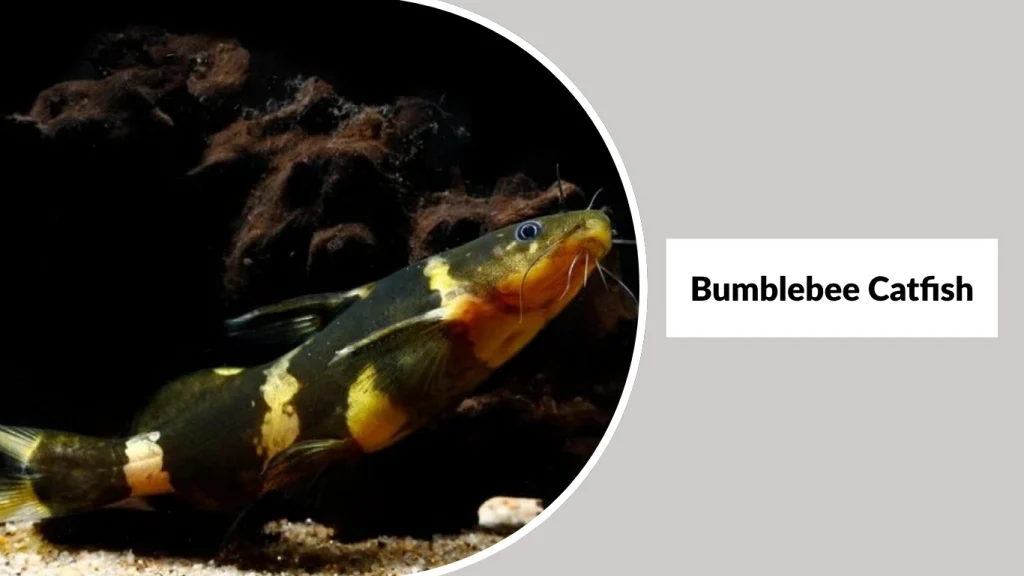
The Bumblebee Catfish (Microglanis iheringi) is a small, colorful species known for its striking yellow and black banded pattern that resembles a bumblebee. Native to South America, this catfish is a popular choice for small aquariums due to its manageable size and peaceful nature.
Identification
- Scientific Name: Microglanis iheringi
- Color: Alternating yellow and black horizontal bands
- Tail: Rounded
- Size: Typically 2–3 inches
- Barbels: 3 pairs; short and forward-facing
- Fins: Small, rounded fins; body stout and compact
Habitat and Range
The Bumblebee Catfish is found in slow-moving streams and rivers across Brazil and parts of Venezuela and Colombia. It prefers sandy or muddy bottoms with leaf litter and plenty of hiding places like roots, driftwood, and submerged rocks.
Behavior and Diet
This catfish is shy, nocturnal, and very reclusive during the day. It will often bury itself or hide under decorations. Despite its small size, it has a good appetite and feeds on insects, worms, small crustaceans, and leftover food particles. It is peaceful and can be kept with other small, non-aggressive fish.
Reproduction
Reproduction in captivity is rare and not well-documented. In the wild, spawning likely occurs in the wet season. Males may guard the eggs in protected environments such as crevices or under rocks. Young hatchlings feed on microscopic food before switching to small invertebrates.
16. Synodontis Catfish

Synodontis Catfish refers to a genus of catfish known for their attractive markings, peaceful behavior, and unique swimming habits. Many species within this genus are popular in aquariums, such as Synodontis multipunctatus, Synodontis eupterus, and Synodontis petricola.
Identification
- Scientific Name: Genus Synodontis (multiple species)
- Color: Varies by species—typically gray, brown, or cream with spots or marbling
- Tail: Forked or rounded depending on species
- Size: Ranges from 3 to 12 inches
- Barbels: 3 pairs; long and mobile
- Fins: Stiff dorsal spine; pectoral fins strong and often spined
Habitat and Range
Synodontis species are native to freshwater rivers and lakes across Africa, particularly in the Congo Basin, Lake Tanganyika, and Lake Malawi. They favor rocky areas, submerged wood, and areas with strong currents or heavy vegetation.
Behavior and Diet
Most Synodontis are bottom-dwelling scavengers, feeding on insects, crustaceans, snails, detritus, and algae. Some species, like Synodontis multipunctatus, are known for brood parasitism—laying their eggs in cichlid nests. These catfish are nocturnal, peaceful, and do well in community aquariums.
Reproduction
Reproduction varies by species. Synodontis multipunctatus famously tricks mouthbrooding cichlids into incubating its eggs, while others spawn in hidden locations. Most lay adhesive eggs, and parental care is limited.
17. Goonch Catfish

The Goonch Catfish (Bagarius yarrelli) is a powerful, muscular catfish species found in the fast-flowing rivers of South and Southeast Asia. Often referred to as the “giant devil catfish,” it has a fearsome reputation due to its size and predatory nature.
Identification
- Scientific Name: Bagarius yarrelli
- Color: Gray to dark brown with mottled patterns
- Tail: Strong and slightly forked
- Size: Commonly 3–5 feet; can exceed 6 feet and 200 pounds
- Barbels: 4 pairs; stout and rough
- Fins: Wide pectoral fins and thick caudal peduncle for strong current swimming
Habitat and Range
Goonch catfish are native to the Ganges, Brahmaputra, and Mekong River systems, and other rivers in India, Nepal, Thailand, and Laos. They thrive in deep pools and fast-moving, rocky stretches of rivers with strong currents.
Behavior and Diet
These fish are aggressive, powerful predators. They prey on fish, crustaceans, and even birds or small mammals that venture near the water. Mostly active at night, they ambush prey from the river bottom or crevices. Their strength and aggressive feeding behavior make them legendary among river anglers.
Reproduction
Spawning typically occurs during the monsoon season when river levels rise and the environment becomes more suitable for fry development. They likely spawn in secluded, rocky areas. Due to their size and specific conditions, breeding in captivity is virtually nonexistent.
18. Tiger Shovelnose Catfish

The Tiger Shovelnose Catfish (Pseudoplatystoma fasciatum) is a striking predatory catfish known for its long, flat snout and bold, tiger-like stripes. Native to South America, it is popular among experienced aquarists due to its appearance and size—but it’s not suitable for small tanks.
Identification
- Scientific Name: Pseudoplatystoma fasciatum
- Color: Silver-gray body with dark vertical bands and spots
- Tail: Forked and powerful
- Size: Commonly 2–3 feet; can exceed 4 feet in the wild
- Barbels: 3 pairs; long and slender
- Fins: Broad pectoral fins and a flattened, elongated head
Habitat and Range
This species is found in the Amazon and Orinoco River basins, particularly in slow-moving tributaries, floodplains, and deep pools with submerged structure. It prefers muddy bottoms and areas rich in prey.
Behavior and Diet
Tiger Shovelnose Catfish are aggressive, solitary hunters. They feed mostly at night on live prey such as fish, shrimp, and aquatic insects. Their large mouth and excellent speed make them efficient ambush predators. In captivity, they may become territorial and will eat smaller tankmates.
Reproduction
In the wild, spawning likely occurs during the rainy season when river systems flood. The exact conditions are still not well understood. Captive breeding is extremely rare and challenging due to size, aggression, and environmental needs.
19. Featherfin Catfish

The Featherfin Catfish (Synodontis eupterus) is admired for its long, flowing dorsal fin and peaceful temperament. It’s a popular freshwater species in the aquarium hobby and is known for both beauty and hardiness.
Identification
- Scientific Name: Synodontis eupterus
- Color: Light brown to gray with wavy dark markings or spots
- Tail: Slightly forked with clear markings
- Size: Typically 6–8 inches in captivity
- Barbels: 3 pairs; moderately long and flexible
- Fins: Tall, sail-like dorsal fin and strong pectorals
Habitat and Range
Native to the White Nile and Chad Basin in Central and East Africa, this species thrives in slow-moving waters with abundant vegetation and hiding spots like logs or caves.
Behavior and Diet
Featherfin catfish are peaceful, nocturnal bottom dwellers. They are excellent community fish, getting along with most similarly sized species. Their diet is omnivorous: sinking pellets, worms, insects, and plant matter. They often hide during the day and become active at night.
Reproduction
Spawning in captivity is rare. In the wild, it is assumed they breed during the wet season. Like other Synodontis species, they lay adhesive eggs in secluded spots, and fry remain hidden for protection after hatching.
20. Ripsaw Catfish

The Ripsaw Catfish (Oxydoras niger), also known as the Niger Catfish or Black Talking Catfish, is a heavily armored freshwater species native to South America. It’s named for the sharp, saw-like scutes along its sides, which provide protection from predators.
Identification
- Scientific Name: Oxydoras niger
- Color: Dark gray to black with a metallic sheen
- Tail: Slightly forked with a thick base
- Size: Commonly 2–3 feet; can reach up to 3.5 feet
- Barbels: 3 pairs; short and thick
- Fins: Dorsal and pectoral fins are strong; armored plates along the lateral line
Habitat and Range
The Ripsaw Catfish is native to the Amazon, Orinoco, and Essequibo river basins. It prefers slow-moving or still waters with muddy or sandy bottoms, and is often found in deep river channels and floodplains.
Behavior and Diet
Ripsaw catfish are peaceful, bottom-feeding scavengers. They are primarily nocturnal and use their sensitive barbels to search for food like detritus, decaying plant matter, small invertebrates, and organic debris. Though peaceful, their large size means they need a very spacious environment.
Reproduction
Reproduction in captivity is extremely rare. In the wild, they are thought to spawn during the rainy season when rising water levels create new feeding and breeding grounds. Eggs are likely scattered over substrate, with no parental care given after spawning.
21. Sailfin Catfish

The Sailfin Catfish (Pterygoplichthys gibbiceps) is a hardy and algae-eating species widely used in aquariums for tank cleaning. It is often mistaken for the common pleco but can be distinguished by its large, sail-like dorsal fin and reticulated body pattern.
Identification
- Scientific Name: Pterygoplichthys gibbiceps
- Color: Brown to dark gray with yellow or cream-colored reticulated (net-like) patterns
- Tail: Broad and rounded
- Size: Typically 12–18 inches; can grow up to 24 inches
- Barbels: Short and subtle
- Fins: High-rising dorsal fin with 10 or more soft rays
Habitat and Range
Native to the Amazon and Orinoco river systems, Sailfin Catfish are found in slow-moving rivers, ponds, and flooded areas with abundant algae and submerged wood. They have been introduced to many countries, where they’ve become invasive in some waterways.
Behavior and Diet
These catfish are primarily herbivorous, feeding on algae, plant matter, and detritus. They are bottom dwellers and are generally peaceful, though territorial with other plecos. Sailfin catfish are active at night and will often suction themselves to glass or rocks.
Reproduction
Breeding is more successful in ponds and warm environments. Males dig deep burrows in muddy banks where spawning occurs. The female lays eggs inside the tunnel, and the male guards them until they hatch. In natural habitats, reproduction often aligns with seasonal water level changes.
22. Jaguar Catfish
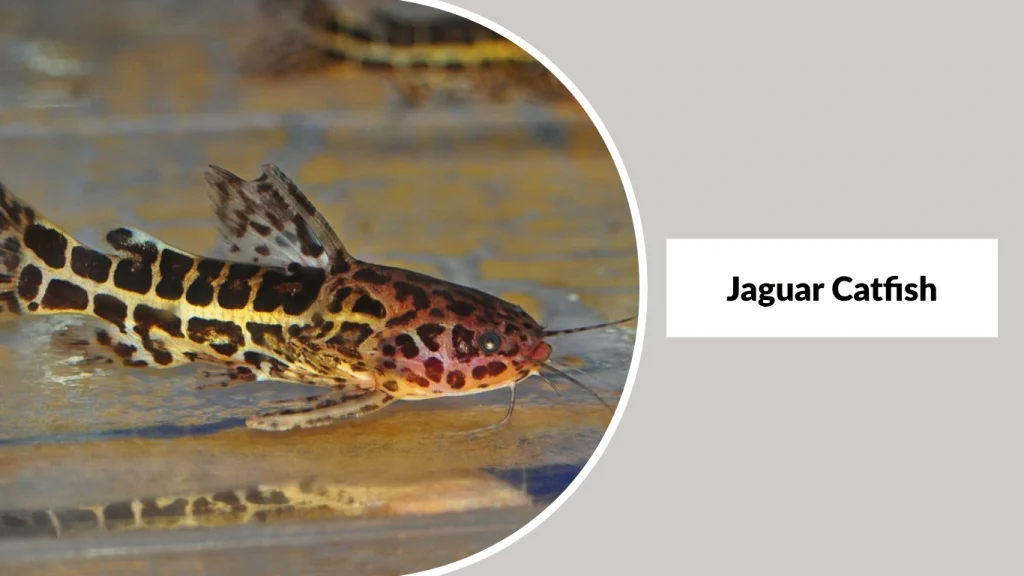
The Jaguar Catfish (Liosomadoras oncinus) is a rare and striking species known for its jaguar-like spots and reclusive nature. Native to the Amazon Basin, it’s a prized addition among advanced aquarists due to its beauty and secretive behavior.
Identification
- Scientific Name: Liosomadoras oncinus
- Color: Dark brown to black with golden or tan spots resembling a jaguar’s coat
- Tail: Rounded and thick
- Size: Typically 6–8 inches
- Barbels: 3 pairs; moderately long and sensitive
- Fins: Rounded fins with strong rays; compact and muscular body
Habitat and Range
Jaguar Catfish are found in the slow-moving backwaters and forested floodplains of the Amazon River system, especially in Brazil and Peru. They favor environments with dense leaf litter, sunken branches, and soft substrates.
Behavior and Diet
These nocturnal catfish are very shy and spend most of the day hiding in crevices or under driftwood. At night, they emerge to feed on worms, insects, crustaceans, and small fish. They are peaceful but predatory toward much smaller tankmates.
Reproduction
Breeding in captivity is virtually undocumented. In the wild, they likely spawn during the rainy season in secluded, heavily vegetated areas. Their breeding habits remain largely unknown due to their reclusive nature.
23. Asian Redtail Catfish
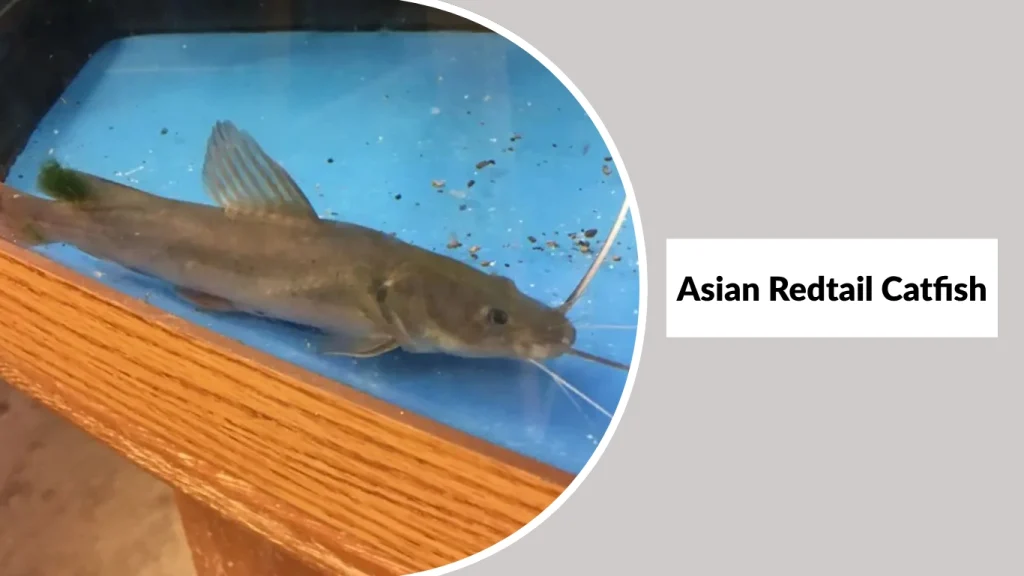
The Asian Redtail Catfish (Hemibagrus wyckioides) is a powerful, aggressive species that should only be kept by experienced aquarists with very large tanks or ponds. It is known for its strong build and vivid red caudal fin.
Identification
- Scientific Name: Hemibagrus wyckioides
- Color: Dark gray to nearly black body with a bright red tail
- Tail: Broad and deeply forked with red-orange coloration
- Size: Commonly 2–3 feet; can exceed 4 feet in large rivers
- Barbels: 4 pairs; long and highly mobile
- Fins: Muscular, well-developed pectoral and dorsal fins
Habitat and Range
Native to the Mekong and Chao Phraya River basins, the Asian Redtail Catfish is found in large rivers across Thailand, Laos, Cambodia, and Vietnam. It prefers deep, fast-moving water with plenty of space.
Behavior and Diet
This catfish is highly territorial and aggressive, especially as it matures. It is a strong carnivore, preying on fish, crustaceans, and sometimes amphibians. In captivity, it must be housed alone or with very robust tankmates in an extremely large aquarium or pond.
Reproduction
Spawning usually occurs during the monsoon season in the wild when water levels rise. Not much is known about their reproductive habits, but it’s believed that males guard nests hidden under submerged structures until the eggs hatch.
24. Lima Shovelnose Catfish
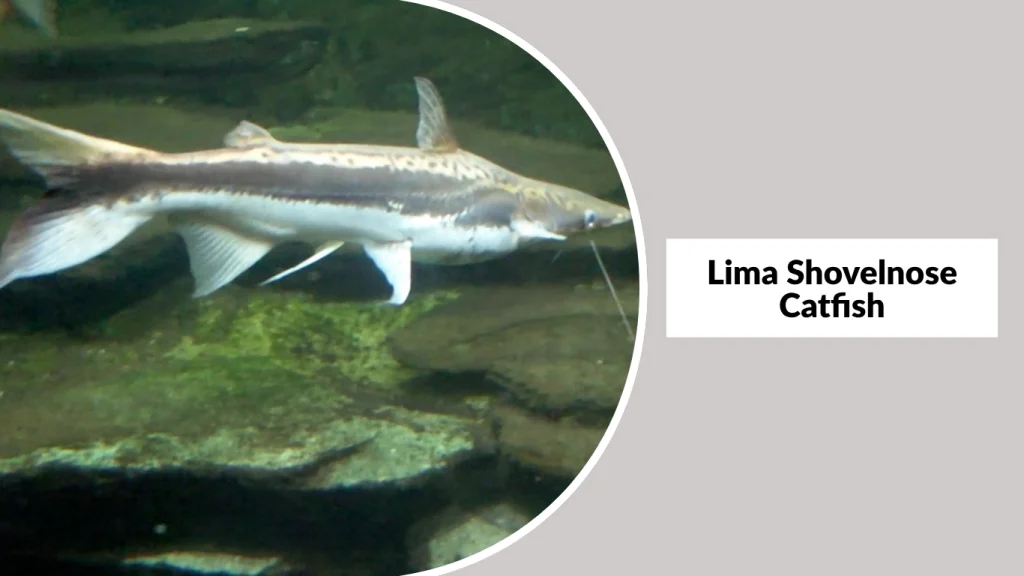
The Lima Shovelnose Catfish (Sorubim lima) is a sleek and elegant species known for its long, flat snout and slender body. It is relatively peaceful for a predatory catfish and is often found gliding gracefully along the tank bottom or midwater in large aquariums.
Identification
- Scientific Name: Sorubim lima
- Color: Grayish-brown with a pale underside and a dark horizontal stripe from snout to tail
- Tail: Forked
- Size: Typically 10–18 inches; can reach 24 inches in the wild
- Barbels: 3 pairs; very long, often extending past the body
- Fins: Long and thin body with pointed pectoral and dorsal fins
Habitat and Range
This species is native to the Amazon and Orinoco river basins and other freshwater systems in South America. It lives in slow to moderately flowing rivers, floodplains, and forest streams, often in areas with submerged branches and roots.
Behavior and Diet
Lima Shovelnose Catfish are nocturnal and predatory but generally calm. They feed on smaller fish, worms, and insects and will eat anything that fits in their mouth. Despite their size, they are not highly aggressive and can be housed with other large, peaceful fish.
Reproduction
Reproduction is poorly documented, and captive breeding is extremely rare. In the wild, they likely breed during the rainy season. Spawning sites are believed to be sheltered locations in submerged vegetation or crevices, where eggs are laid and left to hatch on their own.
25. Banjo Catfish
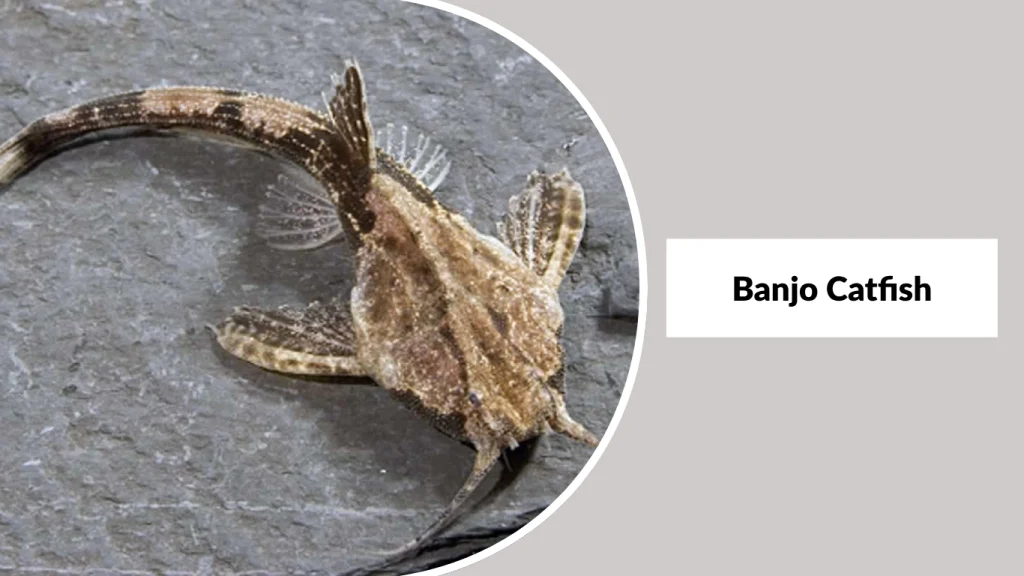
The Banjo Catfish (Bunocephalus coracoideus) is a unique and cryptic bottom-dwelling species named for its flattened, banjo-shaped body. Its exceptional camouflage allows it to blend seamlessly into leaf litter and muddy substrates.
Identification
- Scientific Name: Bunocephalus coracoideus
- Color: Mottled brown and tan with a broad, flattened body
- Tail: Rounded and often hard to distinguish from the body
- Size: Typically 4–6 inches
- Barbels: 3 pairs; short and stubby
- Fins: Small, rounded fins with a broad head and narrow tapering tail
Habitat and Range
Banjo Catfish are found in the Amazon Basin and other parts of northern South America. They inhabit shallow, slow-moving waters with sandy or muddy bottoms and plenty of decomposing plant material, where they bury themselves for protection.
Behavior and Diet
They are sedentary and extremely peaceful. By day, they lie motionless or buried in the substrate, emerging at night to feed on worms, detritus, insect larvae, and small invertebrates. Their behavior makes them ideal for calm, soft-bottom aquariums.
Reproduction
In captivity, spawning has been recorded in soft, acidic water. Females scatter eggs over fine gravel or leaf litter, and there’s no parental care. In the wild, spawning likely occurs during the wet season in secluded, plant-rich areas.