




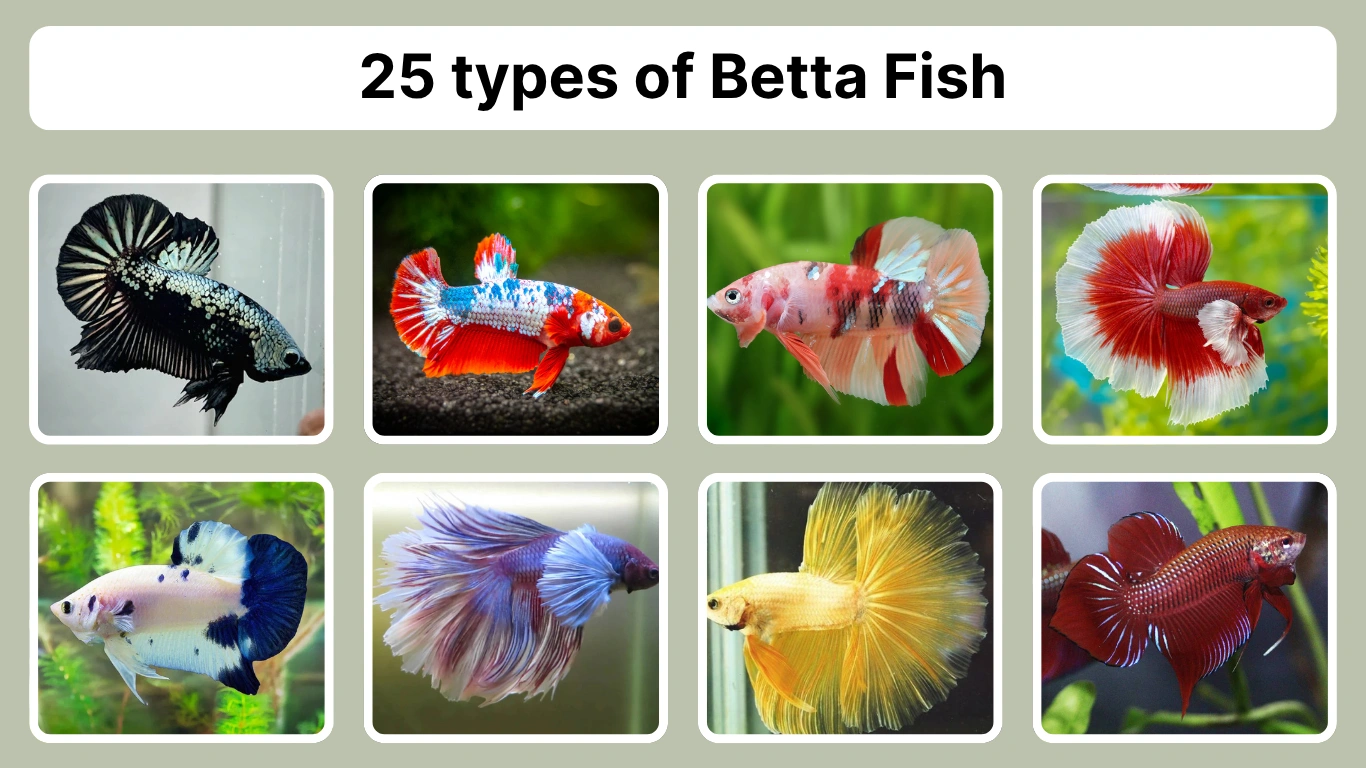
Betta fish, also known as Siamese fighting fish, are some of the most vibrant and diverse freshwater fish kept in aquariums. Their stunning colors, flowing fins, and unique personalities have made them favorites among aquarists worldwide. But did you know there are dozens of Betta varieties, each with its own tail shape, coloration, and scale pattern?
In this guide, we’ll explore 25 popular types of Betta fish—from the classic Veiltail and bold Crowntail to the rare Samurai and shimmering Dragon Scale varieties. Whether you’re a beginner or a seasoned Betta keeper, this list will help you identify and appreciate the beauty of each unique type.
1. Veiltail Betta
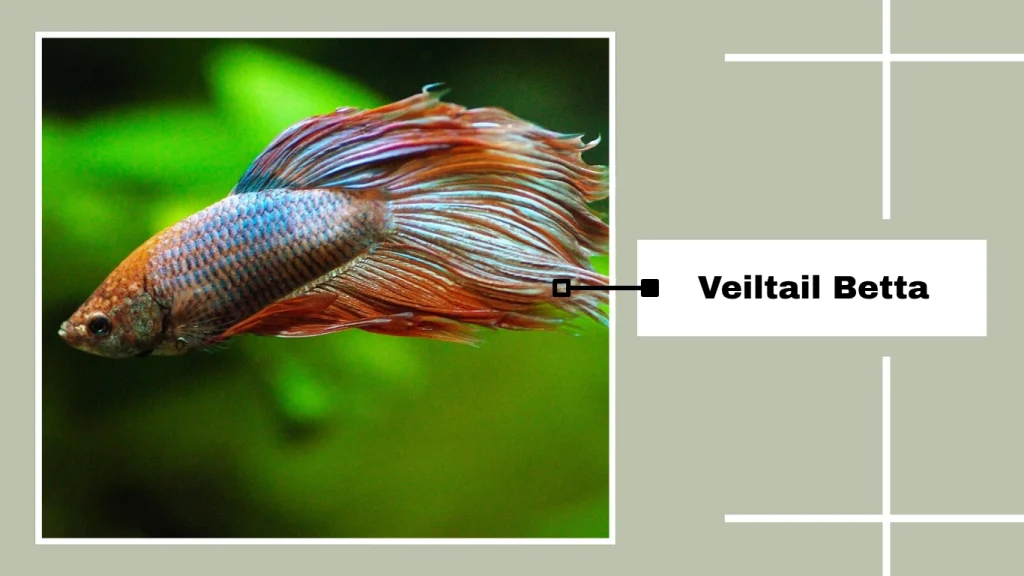
The Veiltail Betta is the most commonly recognized and widely available type of Betta fish. Known for its long, flowing tail that droops downward like a veil, this variety is popular among beginner aquarists due to its hardiness and vibrant coloration.
Identification
- Long, downward-hanging tail that resembles a veil
- Asymmetrical tail fin with extended rays
- Available in solid, marbled, or bi-colored patterns
- Often displays rich hues like red, blue, turquoise, and purple
- Males have more elaborate tails than females
Temperament and Behavior
Veiltail Bettas are semi-aggressive and prefer to be housed alone, especially males. They may flare their gills and tails to establish dominance when they feel threatened or are shown a mirror.
Care Requirements
Veiltail Bettas thrive in clean, warm water with temperatures between 76–82°F. They require a tank with at least 2.5 gallons of space, a filter, and regular water changes to stay healthy.
Breeding Information
Breeding Veiltail Bettas is relatively easy. The male builds a bubble nest at the water’s surface and guards the eggs after spawning. It’s important to remove the female after mating to prevent aggression.
2. Crowntail Betta

The Crowntail Betta is a striking variety known for its spiky, comb-like tail fins that resemble the prongs of a crown. This distinctive tail shape is the result of selective breeding and has made the Crowntail one of the most sought-after types among enthusiasts.
Identification
- Tail rays extend beyond the webbing, creating a spiky crown-like effect
- Can have single, double, or even triple ray extensions
- Fin webbing reduction ranges from 33% to over 50%
- Found in various colors such as red, blue, black, and multi-colored varieties
- Males display more dramatic finnage compared to females
Temperament and Behavior
Crowntail Bettas are known for their confidence and assertiveness. They may flare more frequently than other types, making them captivating to watch. Like all Betta males, they should be housed alone to avoid territorial fights.
Care Requirements
They require warm, well-filtered water (76–82°F) and low-flow conditions to prevent fin damage. Due to the extended rays, Crowntails are more susceptible to fin tearing and fin rot, so pristine water quality is essential.
Breeding Information
Breeding Crowntails follows standard Betta protocols. Select a healthy male and female, and introduce them in a breeding tank. The male builds a bubble nest, and post-spawning, he guards the eggs. To preserve the crowntail trait, careful selection of both parents with strong crown features is crucial.
3. Halfmoon Betta

The Halfmoon Betta is admired for its elegant, semi-circular tail that spreads 180 degrees when fully flared—resembling a half-moon. This tail type is particularly favored in shows and competitions due to its symmetry and grandeur.
Identification
- Tail spreads to a full 180° angle when flared
- Symmetrical, rounded caudal fin forming a half-circle shape
- Long, flowing fins on dorsal and anal sides
- Available in many vibrant colors and marble patterns
- Males have much fuller fins than females
Temperament and Behavior
Halfmoon Bettas can be more sensitive and less aggressive compared to Plakats but still territorial. Males will often flare to assert dominance, and like others, are best kept alone.
Care Requirements
Because of their large, delicate fins, Halfmoons need calm water without strong currents. They thrive in warm, clean water with gentle filtration. A 5-gallon or larger tank is ideal to maintain stable water parameters and prevent fin damage.
Breeding Information
Halfmoon Betta breeding requires experienced hands. While the spawning process is similar to other Bettas, offspring must be carefully selected to retain the halfmoon tail shape. Avoid breeding two halfmoons too frequently, as it may cause genetic issues like excessive fin branching.
4. Double Tail Betta

Double Tail Bettas, also known as “DT Betta,” have a unique genetic mutation that splits the caudal (tail) fin into two distinct lobes. This gives them a dramatic and symmetrical appearance, often accompanied by a broader dorsal fin and thicker body structure.
Identification
- Tail is split into two equal lobes
- Broader dorsal fin than other Betta types
- Shorter body and thicker build
- Available in solid, marbled, and butterfly color patterns
- The split tail is visible even when not flared
Temperament and Behavior
Double Tail Bettas are generally calm but still exhibit the territorial instincts of other Betta fish. Because of their shorter bodies and unique fin shape, they are less agile swimmers, which makes them less aggressive in some cases.
Care Requirements
Their broad fins are prone to tearing and fin rot, requiring extra care with water cleanliness and flow. Gentle filtration, water temperatures between 76–82°F, and a stress-free environment are key to their well-being.
Breeding Information
Breeding Double Tail Bettas can be challenging due to genetic deformities that may arise, such as spinal issues. Many breeders cross a double tail with a single tail Betta to reduce health risks while still producing some double tail offspring.
5. Plakat Betta

Plakat Bettas are the closest in appearance to their wild ancestors. Unlike long-finned Betta varieties, Plakats have short, sturdy fins and a muscular body, making them agile swimmers and often more aggressive.
Identification
- Short, rounded fins
- Strong, streamlined body
- Resemble wild-type Betta splendens
- Come in a wide range of solid and patterned colors
- Often confused with juvenile long-finned Bettas
Temperament and Behavior
Plakats are known for their high energy, strong aggression, and quick reflexes. They’re often favored in traditional Betta fights in some cultures (though fighting is not recommended or ethical).
Care Requirements
Due to their short fins, Plakats are less prone to fin rot and tolerate stronger currents better than long-finned varieties. They still require clean, warm water (78–82°F) and secure lids, as they are powerful jumpers.
Breeding Information
Plakat Bettas breed easily and often produce vigorous offspring. Their genetics are often used to strengthen the health and form of other fin types during selective breeding. The challenge lies in maintaining color and tail type consistency through generations.
6. Delta Tail Betta

Delta Tail Bettas are named after the Greek letter “Δ” because their tail spreads out wide like a triangle from the base, though not quite reaching the 180° spread of a Halfmoon. This tail shape offers a beautiful balance of form and function, combining elegance with easier care.
Identification
- Tail spreads outward in a triangular shape
- No sharp spikes or split tails
- Tail angle is less than 180°, typically between 120–160°
- Smooth, flowing fin edges
- Found in solid, marble, and multicolor patterns
Temperament and Behavior
Delta Tails are moderately active and display typical Betta territorial behavior. They may flare at reflections or other fish but are slightly less aggressive than Plakats.
Care Requirements
They are easier to maintain than long-finned types like Halfmoons due to reduced fin drag and fewer fin-related health problems. Maintain clean water (78–82°F), provide soft filtration, and avoid sharp decorations that may tear their tails.
Breeding Information
Delta Tails can produce a variety of tail types depending on the genetics of the pair. If bred with a Halfmoon, some offspring may inherit a more symmetrical or wider tail spread, creating Super Delta or Halfmoon types.
7. Super Delta Betta

Super Delta Bettas are an enhancement of the Delta Tail variety. While they don’t reach the full 180° spread of a Halfmoon, they come very close, offering a full, fan-like tail that is wide, symmetrical, and elegant.
Identification
- Tail spread ranges from 160° to just under 180°
- Symmetrical and broad tail without forming a full half-circle
- Long, graceful fins on all sides
- Available in diverse colors and scale patterns
- Often confused with Halfmoon when flaring
Temperament and Behavior
Super Delta Bettas are slightly more docile than Plakats but still show territorial behavior. Their wide tails make them look impressive during flaring or courtship displays.
Care Requirements
Like other long-finned types, Super Deltas require gentle water flow to prevent damage to their fins. Provide a 5-gallon tank minimum with a heater and sponge filter for optimal health.
Breeding Information
Breeding Super Deltas can result in a mix of Delta, Super Delta, and Halfmoon offspring depending on genetic pairing. Selective breeding is needed to maintain consistent tail shape and flare width across generations.
8. Rosetail Betta
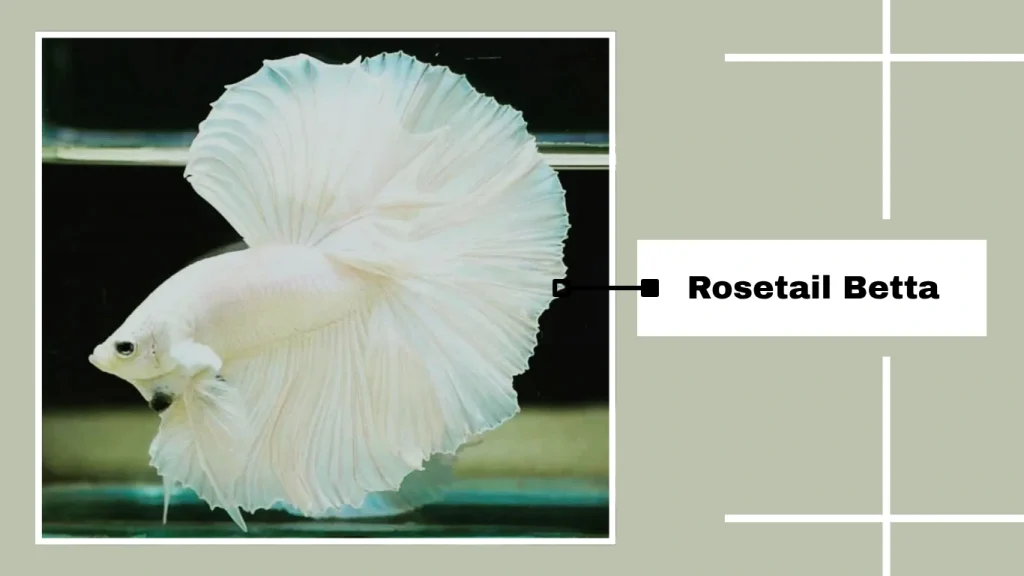
The Rosetail Betta is a breathtaking variety developed from Halfmoon Bettas, featuring an exaggerated 180° tail spread with highly ruffled and overlapping fin rays. The “rose-like” effect of the tail gives this fish its name, making it one of the most ornamental types.
Identification
- Tail exceeds 180°, often dramatically
- Fin rays are excessively branched, creating a frilly, rose-like appearance
- Extremely voluminous dorsal, caudal, and anal fins
- Available in solid, butterfly, marble, and multicolor varieties
- Distinctive look that is easy to recognize
Temperament and Behavior
Rosetail Bettas are peaceful but remain territorial like most Bettas. Due to their heavy finnage, they tend to be slower swimmers and may display less aggressive posturing.
Care Requirements
Their extreme finnage makes them highly prone to fin rot, tearing, and lethargy if water conditions aren’t perfect. Maintain pristine water, soft filtration, and warm temperatures (78–82°F). Avoid strong currents and sharp decorations.
Breeding Information
Rosetail Bettas should be bred cautiously. Excessive branching genes can lead to deformities, such as short spines or other physical flaws. Many breeders avoid pairing two Rosetails to reduce the risk of “feather tail” deformities and weakened fry. Selecting a Rosetail with a regular Halfmoon is a safer practice.
9. Half Sun Betta

The Half Sun Betta is a unique hybrid that blends characteristics of the Halfmoon and Crowntail varieties. It combines the wide, 180° tail spread of a Halfmoon with the slight ray extensions and fringed edges of a Crowntail, resulting in a fish that looks like a spiked sunburst.
Identification
- Tail spreads to 180°, like a Halfmoon
- Slightly spiky rays extend beyond the tail webbing
- Edges of fins appear serrated or fringed
- Distinct sunburst or flare-like tail pattern
- Available in solid, butterfly, and marble colorations
Temperament and Behavior
Half Sun Bettas are known for their elegance and vibrant displays, but they are still aggressive like most Betta types. Males, in particular, will not tolerate other males or similar-looking tank mates.
Care Requirements
Half Suns require a stable environment with gentle water flow to protect their extended fins. They need a minimum 5-gallon tank, with a heater and sponge filter. Water temperature should be maintained between 78–82°F.
Breeding Information
Breeding Half Suns involves crossing a Halfmoon with a Crowntail. Offspring can be highly variable, with a mix of tail types. Breeders must selectively pair fish with clear Half Sun features to reinforce the trait across generations. It’s important to avoid excessive crowning to prevent deformities.
10. Comb Tail Betta

Comb Tail Bettas are a result of crossing Veiltail and Crowntail varieties, producing a tail that has slight extensions on the rays but not as dramatic as a true Crowntail. This gives the edges of the fins a comb-like appearance—hence the name.
Identification
- Fin rays extend slightly beyond the webbing
- Tail and fins have a jagged, combed look
- Tail shape can vary but usually falls between veiltail and delta shapes
- Available in multiple colors and patterns
- Less dramatic than a Crowntail but more textured than a Veiltail
Temperament and Behavior
Comb Tail Bettas display moderate aggression and territorial behavior. Their fin length allows better swimming ability than Crowntails, making them more active and responsive.
Care Requirements
They do well in a 5-gallon tank or larger with gentle filtration. Maintain warm, clean water and avoid sharp decorations. Their fins are less fragile than Crowntails but still require care.
Breeding Information
Breeding Comb Tails can result in mixed fin types. To produce more defined comb traits, breeders selectively cross Comb Tails with Crowntails or other hybrids that show similar features.
11. Elephant Ear Betta (Dumbo)

The Elephant Ear Betta, commonly called Dumbo Betta, is named for its oversized pectoral fins that resemble elephant ears. These fins are often in a contrasting color to the body, creating a dramatic and eye-catching display.
Identification
- Very large pectoral fins, resembling “ears”
- Fins often appear paddle-shaped and extend horizontally
- Tail and body may be veiltail, halfmoon, or delta
- Typically features bi-color patterns, especially with white or pale pectoral fins
- Shorter body compared to standard long-fin types
Temperament and Behavior
Dumbo Bettas are curious and gentle in movement due to the drag of their large pectoral fins. However, they remain territorial toward other males and should be kept solo or with compatible tank mates.
Care Requirements
Their enlarged fins can make swimming more difficult, so they prefer tanks with low flow and wide swimming space. Keep water warm (78–82°F), clean, and well-oxygenated to reduce stress.
Breeding Information
Breeding Dumbo Bettas requires selecting parents with prominent pectoral fins. Consistency in fin size and contrast is key to preserving this trait. They may produce offspring with varying fin sizes unless both parents are true Dumbo types.
12. Feather Tail Betta

Feather Tail Bettas are an exaggerated version of the Rosetail variety, featuring extremely branched and ruffled caudal fins. The tail has a feathery or shredded look, often appearing soft and flowing like delicate lace.
Identification
- Extreme ray branching, creating a feathered effect
- Tail spread can exceed 180°, often uneven
- Highly ruffled and soft-edged fins
- Prone to curling or clumping if not well cared for
- Available in various solid and patterned colorations
Temperament and Behavior
Generally peaceful but still displays territorial behavior, especially in males. Due to their excessive finnage, they are slower and more delicate swimmers.
Care Requirements
Require stable, low-flow environments with exceptional water quality. Their fragile fins are very prone to damage and fin rot, so a sponge filter and smooth tank decor are essential. Maintain water temperature at 78–82°F.
Breeding Information
Feather Tail Bettas are rarely used in breeding due to the potential for deformities, such as curved spines and poor fry survival. When bred, they are usually paired with Halfmoons to balance form and health.
13. Spade Tail Betta
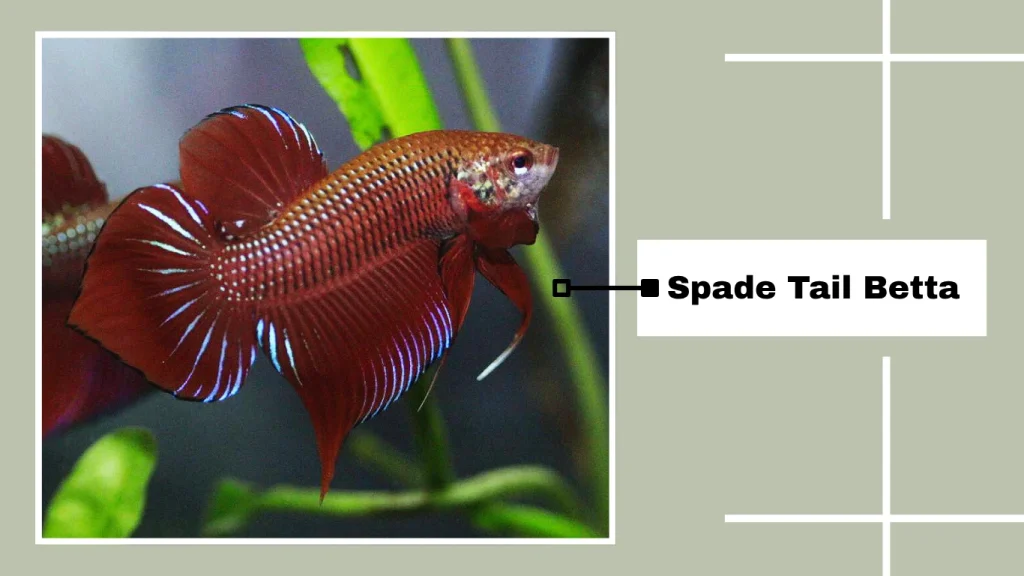
Spade Tail Bettas are less common and named for their tail, which tapers into a pointed spade-like shape. Unlike the broad or frilly types, their tail is smooth-edged and narrow at the tip.
Identification
- Tail is broad at the base and tapers to a point like a spade
- Smooth, non-frilled edges
- Symmetrical dorsal and anal fins
- Found in solid colors and bicolors
- Less dramatic but still elegant in movement
Temperament and Behavior
Spade Tails are active and alert, showing typical Betta behaviors such as flaring and patrolling their territory. They may be more agile swimmers compared to heavier-finned types.
Care Requirements
These Bettas are easier to maintain due to their simpler tail design. A 5-gallon tank with heater, sponge filter, and hiding spots works well. Clean water and temperatures between 76–82°F are ideal.
Breeding Information
Spade Tail traits are recessive and less predictable in breeding. They’re often used in experimental or hobbyist pairings rather than large-scale selective breeding programs.
14. Round Tail Betta

The Round Tail Betta features a tail that is fully rounded at the edges, similar in shape to a circle or fan. This variety is often mistaken for Delta Bettas, but the key distinction is the curved edge rather than a straight-line flare.
Identification
- Tail is fully rounded with smooth, curved edges
- Caudal fin forms a near-complete circle when flared
- Dorsal and anal fins are proportionally balanced
- Available in solid, marbled, and butterfly patterns
- Fins are typically shorter than Halfmoons but longer than Plakats
Temperament and Behavior
Round Tail Bettas are moderately active and show typical Betta behaviors like flaring and guarding territory. Their tail shape gives them more swimming ease than long-finned varieties.
Care Requirements
Their less exaggerated fins make them less prone to tearing, so they can thrive in moderate-flow tanks. A 5-gallon heated and filtered setup is ideal. Keep water temperature between 78–82°F and avoid sharp decorations.
Breeding Information
Round Tail Bettas are not bred as commonly as Halfmoons or Plakats. Breeding them may result in Delta, Halfmoon, or mixed tail offspring depending on the genetic lineage.
15. Giant Betta

Giant Bettas are selectively bred to be significantly larger than standard Betta splendens. While most Bettas grow to 2–3 inches, Giants can reach 4–7 inches in length, with larger bodies and longer lifespans.
Identification
- Body length ranges from 4 to 7 inches
- Broad body and larger fins (may be short or long depending on type)
- Tail shape varies—can be Halfmoon, Plakat, or Veiltail
- Common in solid colors, especially red, blue, and white
- More robust jaw and muscular appearance
Temperament and Behavior
Giant Bettas tend to be calmer than their smaller relatives but can still be territorial. Due to their size, they may interact more confidently with their environment and are more visible in larger tanks.
Care Requirements
They require a larger tank—at least 10 gallons is recommended. Gentle filtration, stable warm temperatures (78–80°F), and good surface access are essential for healthy growth. A varied protein-rich diet supports their larger build.
Breeding Information
Breeding Giant Bettas can be more challenging due to slower growth and reduced fertility in some lines. Careful selection is necessary to maintain size without sacrificing health or fin quality. Crossbreeding with standard Bettas can reduce size in offspring.
16. King Betta

The King Betta is a selectively bred variant of the Plakat Betta, known for its slightly larger size and stockier build. Though not as large as the Giant Betta, it has a commanding presence and is favored for its powerfully built body and short, functional fins.
Identification
- Slightly larger than standard Bettas (up to 3.5 inches)
- Short, rounded fins similar to Plakats
- Robust and muscular body shape
- Typically found in solid colors like green, blue, or red
- Less ornate but strong and active in appearance
Temperament and Behavior
King Bettas are assertive and agile. Their short fins make them fast swimmers and more aggressive toward tank mates. Males are extremely territorial and should be housed alone.
Care Requirements
A 5–10 gallon tank is ideal due to their active nature. Maintain stable water conditions with a temperature range of 78–82°F. They benefit from live or frozen foods and enjoy a layout with open swimming space and soft hiding spots.
Breeding Information
King Bettas are often used in breeding for strength and vitality. They breed similarly to Plakats, but careful pairing is required to maintain the slightly larger body trait without causing deformities or shortening the fins excessively.
17. Dragon Scale Betta

Dragon Scale Bettas are known for their thick, armor-like scales that shimmer under light. These scales give the fish a reptilian or metallic appearance, making them one of the most visually striking Betta types.
Identification
- Thick, metallic-looking scales covering the body
- Strong contrast between body and scale color
- Often feature white or silver scales over darker undercolor
- Tail types may vary: Halfmoon, Plakat, etc.
- Head may appear darker or mismatched due to scaling gap
Temperament and Behavior
Dragon Scale Bettas have a typical Betta temperament—curious, bold, and territorial. Males will display and flare often, especially near mirrors or perceived threats.
Care Requirements
Their eyes are prone to a condition called “diamond eye,” where scales grow over the eyes and impair vision. They require soft lighting, minimal current, and a 5-gallon or larger tank with stable, warm water (78–82°F).
Breeding Information
Dragon traits are dominant and easily passed on, but breeders must be cautious to avoid excessive scale growth, which can lead to diamond eye. Pairing with clean-scaled Bettas can help balance scale density in offspring.
18. Butterfly Betta

Butterfly Bettas are named for their beautiful, symmetrical color pattern. Their fins are typically divided into two or more contrasting bands of color, creating a striking “butterfly wing” appearance. This pattern is often seen on Halfmoons, Super Deltas, and other long-finned types.
Identification
- Fin colors display clear banding, often with a solid body color
- Outer edge of fins is a different, lighter or white color
- Pattern typically appears on all fins (caudal, dorsal, and anal)
- Found in various base colors: blue, red, yellow, purple, and more
- Popular in shows due to their dramatic, symmetrical look
Temperament and Behavior
Butterfly Bettas are visually active and love to flare, especially males. While behavior varies by tail type, they typically display moderate aggression and should not be kept with other male Bettas.
Care Requirements
They need a clean, stable tank with warm water (78–82°F), low-flow filtration, and gentle lighting to enhance their coloration. A 5-gallon tank or more is preferred to reduce stress and provide space for swimming.
Breeding Information
Breeding Butterfly Bettas requires selecting parents with strong, well-defined fin banding. The pattern can be diluted over generations, so consistency in color borders is key when selecting breeding pairs.
19. Marble Betta
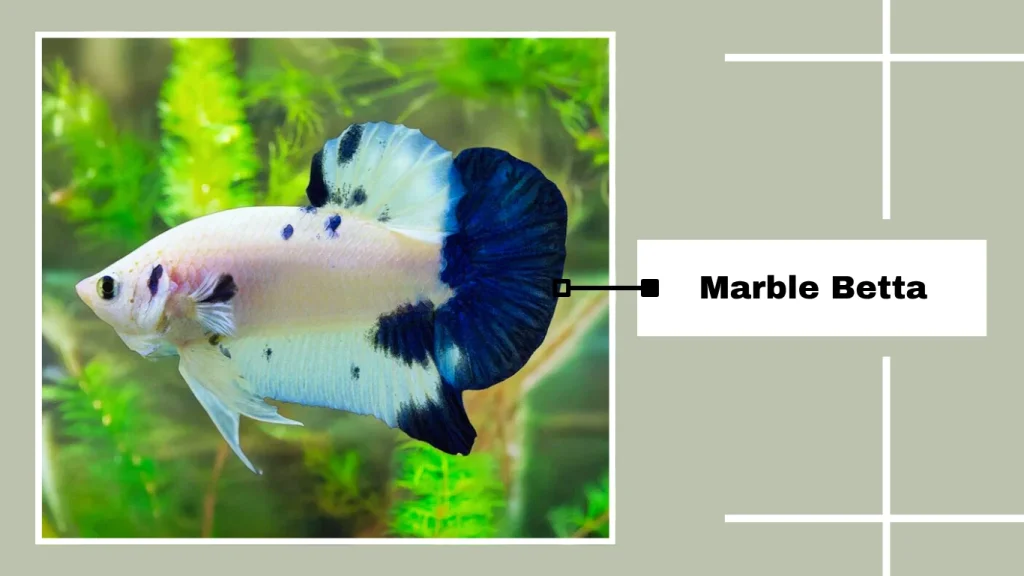
Marble Bettas are known for their unpredictable, shifting color patterns. They often change appearance over time due to a genetic trait called the “jumping gene,” making each fish uniquely dynamic throughout its life.
Identification
- Irregular blotches or splashes of color on body and fins
- Patterns may change drastically with age or environment
- Can include any mix of colors: red, white, black, blue, turquoise, etc.
- Found in both short- and long-finned types
- May appear solid at purchase and develop marbling later
Temperament and Behavior
Marble Bettas have typical Betta aggression levels. Their changing appearance makes them intriguing to observe, and they often flare actively, especially around other fish or reflections.
Care Requirements
Due to the unpredictable pigment changes, lighting and water quality may affect their coloration. Keep them in a stable 5+ gallon tank, with gentle filtration and regular water changes. Water temperature should remain between 78–82°F.
Breeding Information
Marble patterning is dominant but unstable. Breeding two Marbles often results in highly varied offspring, making it difficult to predict color outcomes. Many breeders pair Marbles with solid types to control the amount of pattern variability.
20. Koi Betta
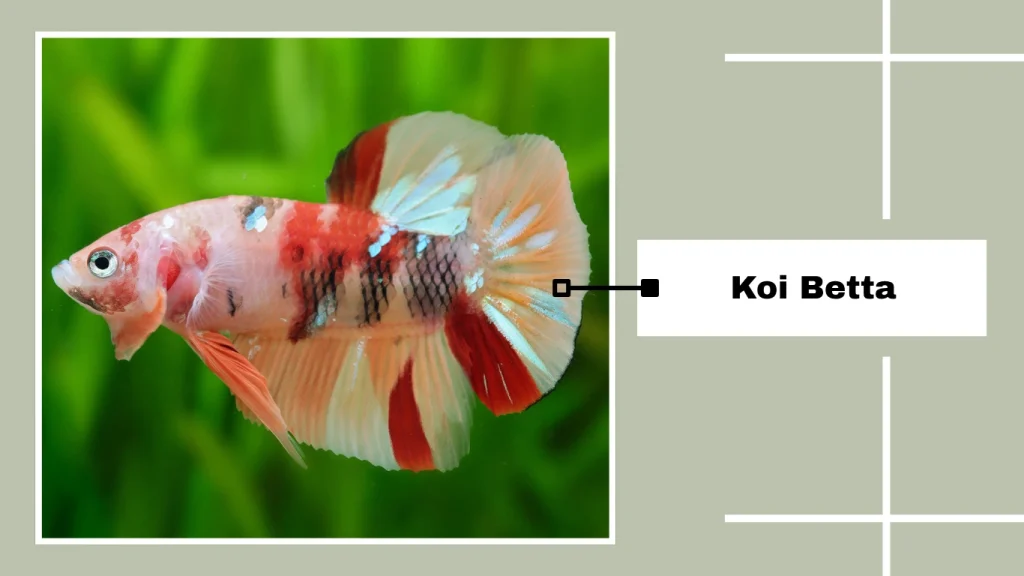
Koi Bettas are a special type of Marble Betta, selectively bred to resemble the colorful patterns of ornamental Koi fish. Their colors appear in blotches or patches—typically red, black, white, and orange—with a clean, cellophane-like base that enhances contrast.
Identification
- Multi-colored blotches similar to Koi carp
- Translucent or pale body base enhances color intensity
- Includes red, orange, black, white, yellow, and sometimes blue
- Often appear in Plakat form but can also be long-finned
- Color pattern may shift over time due to Marble genetics
Temperament and Behavior
Koi Bettas are active, curious, and often bold. Like other Bettas, males are highly territorial and should be housed alone or with compatible species in a well-managed community tank.
Care Requirements
Due to their genetic instability, color changes may occur frequently. They require warm, clean water (78–82°F), with soft flow and good biological filtration. A planted or decorated tank helps reduce stress and showcase their beauty.
Breeding Information
Breeding Koi Bettas requires careful selection to maintain the desired patchy appearance. Offspring often vary greatly in color, and not all will retain the classic Koi look. Crossing with other Koi or high-quality Marbles helps preserve this coloration.
21. Mustard Gas Betta

Mustard Gas Bettas are prized for their intense, contrasting color combination—typically a dark body with bright yellow or orange fins. The color transition between the body and fins may be accented with blue, green, or steel iridescence.
Identification
- Dark blue, green, or black body
- Yellow to orange fins with sharp contrast
- May include an iridescent “gas cloud” effect around fin edges
- Fins may appear dipped or outlined in a second color
- Common in Halfmoon, Delta, and Plakat forms
Temperament and Behavior
Mustard Gas Bettas are confident, vibrant, and often flare dramatically, making them visually impressive and expressive. Their contrast makes their displays particularly striking during courtship or territorial posturing.
Care Requirements
They require a stable, heated environment (78–82°F) and a minimum 5-gallon tank. Clean, well-oxygenated water and a high-protein diet will maintain vibrant coloration and strong fin health.
Breeding Information
Breeding Mustard Gas Bettas requires precision to keep the vivid contrast intact. The coloration is recessive and influenced by both iridescence and pigment layering. Breeders often work with specific lines to maintain the signature dark-to-light color transition.
22. Alien Betta

The Alien Betta is a unique hybrid species, created by crossing Betta splendens with wild species such as Betta smaragdina and Betta mahachaiensis. Known for their shimmering metallic bodies and wild-type behaviors, they’re visually stunning and genetically distinct from standard Bettas.
Identification
- Iridescent metallic scales, often blue, green, or turquoise
- Dark base body with webbed, sometimes jagged, fin patterns
- Head and body often show scale armor or “crocodile skin” texture
- Usually Plakat-shaped with short, rounded fins
- Colors may shift under different lighting angles
Temperament and Behavior
Alien Bettas are intelligent, reactive, and slightly more aggressive than typical Bettas due to their wild ancestry. They are alert swimmers and can flare intensely. Males are highly territorial and will fight other males.
Care Requirements
Because of their wild lineage, they prefer soft, slightly acidic water (pH 6.0–7.0) and higher humidity. A 10-gallon tank with live plants, gentle filtration, and tannin-rich water is ideal. Water temperature should stay between 78–82°F.
Breeding Information
Breeding Alien Bettas is challenging due to genetic complexity and potential infertility between hybrid lines. If successful, the offspring may vary in color and fin traits. Breeding projects often involve multiple generations of backcrossing to stabilize the line.
23. Black Orchid Betta

The Black Orchid Betta is a dark and mysterious variety known for its deep black or dark blue body, often with iridescent undertones or hints of red and purple in the fins. It’s one of the most visually dramatic and sought-after dark-color types.
Identification
- Deep black or blue body with metallic sheen
- May include red or purple hues in fins
- Typically has a “butterfly” or “lace” pattern overlay in fins
- Found in Crowntail, Halfmoon, and Plakat forms
- Body may look velvety or opaque under light
Temperament and Behavior
Black Orchid Bettas are calm but assertive. They exhibit classic Betta behaviors—flaring, building bubble nests, and guarding territory. Their dark coloration can make them more reactive to bright lights and tank changes.
Care Requirements
These Bettas do well in a 5-gallon tank with subdued lighting to highlight their dark tones. Maintain soft, clean water with a stable temperature between 78–80°F. A dark background and light substrate can help showcase their appearance.
Breeding Information
Breeding for deep black coloration is difficult. Many Black Orchid offspring fade to dark blue or marbled tones. Breeding requires careful pairing with other dark-genotype Bettas to preserve the richness of the color and pattern.
24. Fancy Betta

Fancy Bettas are not a specific tail or scale type but rather a category used to describe Bettas with vibrant, multicolored patterns that don’t fit standard classifications like marble or butterfly. They often feature random splashes, streaks, or gradients of several bright colors across their body and fins.
Identification
- Highly variable and unpredictable color combinations
- Can include 3 or more vivid colors (red, blue, yellow, white, black, etc.)
- Patterns may include patches, stripes, spots, or gradients
- Commonly found in Plakat, Halfmoon, and Delta tail forms
- No consistent standard—appearance varies from fish to fish
Temperament and Behavior
Fancy Bettas tend to be energetic and eye-catching, often flaring to show off their striking coloration. Behavior is typical of most Bettas: males are territorial and should be kept individually.
Care Requirements
Fancy Bettas thrive in stable environments with minimal stress, which helps preserve their coloration. Provide a clean, heated aquarium (78–82°F), gentle water flow, and high-quality food to enhance their vibrant patterns.
Breeding Information
Breeding Fancy Bettas is unpredictable, as the “fancy” trait isn’t a specific gene but a combination of multiple pigmentation factors. Offspring may display completely different colors and patterns. Selective breeding from high-quality parents is the key to producing show-grade Fancy Bettas.
25. Samurai Betta

The Samurai Betta is a rare and dramatic variety, easily recognized by its metallic, armor-like body pattern. It features a dark base color (often black or red) with thick, silver or white dragon-scale plates that resemble the armor of a Japanese samurai.
Identification
- Dark body base with thick, metallic dragon scaling
- Armor-like scale placement, often with sharp contrast
- Typically a Plakat body shape
- Colors include black, red, or blue base with white/silver overlay
- Sharp, defined body patterning, less marbled or faded
Temperament and Behavior
Samurai Bettas are bold and intense in presence. They often flare powerfully and exhibit dominant behavior in their territory. Males are especially reactive to reflections or perceived threats.
Care Requirements
They do best in a calm 5–10 gallon aquarium with a secure lid, soft filtration, and rich, stable water (pH 6.5–7.5, 78–82°F). Avoid abrasive decor that could scratch their thick, raised scales.
Breeding Information
Samurai traits are closely related to Dragon Scale genetics and require careful selection to avoid vision problems like “diamond eye.” Breeders aim to preserve the sharp contrast between the base and scale layers, which makes Samurai Bettas stand out.