



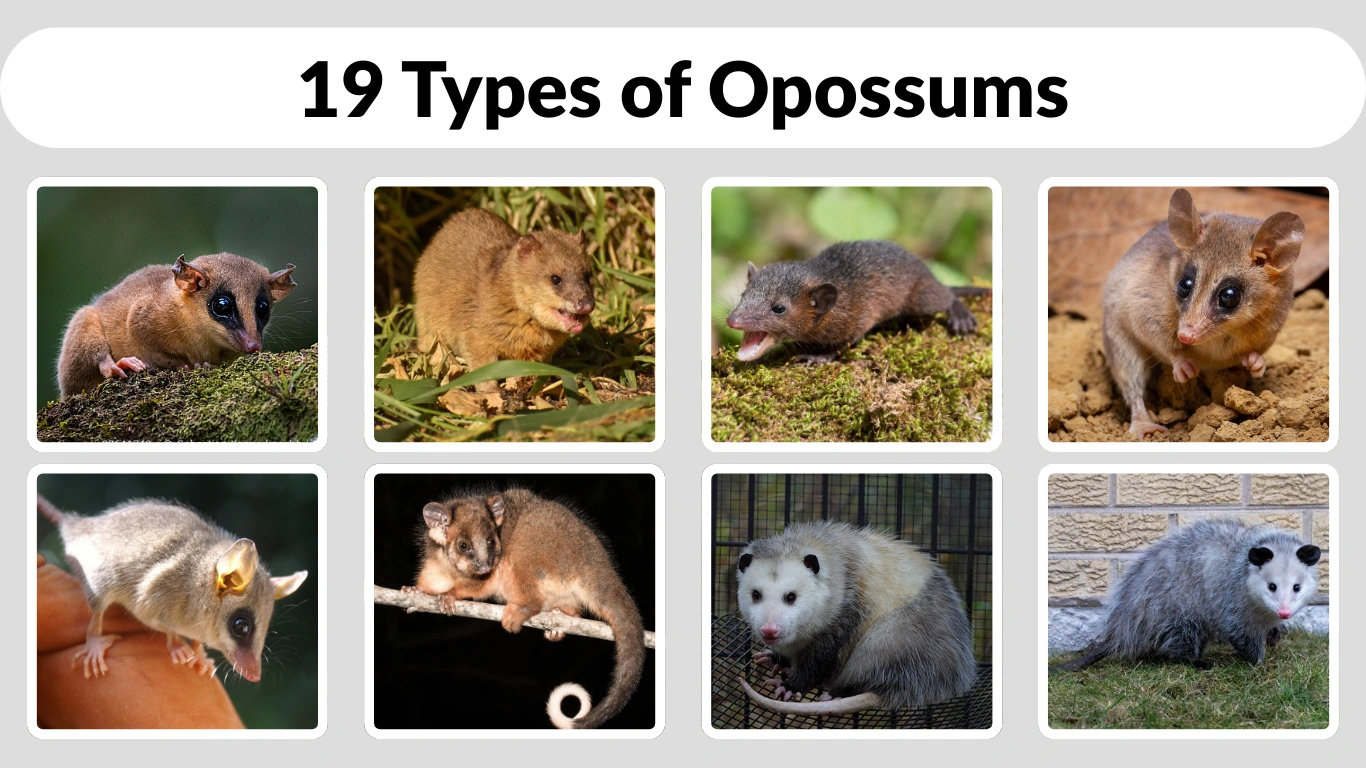
Opossums are diverse marsupials native to the Americas, ranging from tiny, arboreal mouse opossums to semi-aquatic species like the Yapok. This guide highlights 19 unique opossum types, detailing their identification traits, habitats, behaviors, and diets. Whether you’re studying wildlife or exploring these fascinating nocturnal creatures for personal interest, this overview provides a clear understanding of the remarkable adaptability and ecological importance of opossums across varied environments.
1. Virginia Opossum
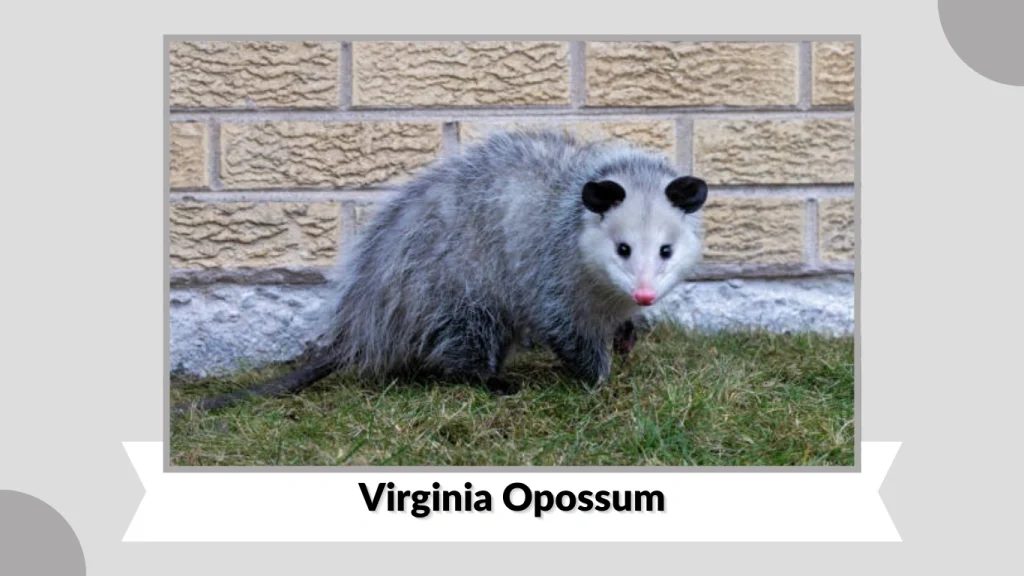
The Virginia Opossum (Didelphis virginiana) is the only marsupial native to the United States and Canada. Known for its adaptability, prehensile tail, and ability to “play dead,” it thrives in forests, suburbs, and rural landscapes across North America.
Identification
- Grey to white fur with a pale face
- Long, hairless prehensile tail
- Pointed snout with many sharp teeth
- Small, rounded ears often black-tipped
- Dexterous front paws and strong hind feet
Habitat
Virginia opossums live in forests, swamps, farmlands, and urban areas. They prefer habitats with nearby water sources and abundant cover. Their range stretches from Central America through the United States and into southern Canada, expanding north due to climate changes and adaptability.
Behaviors
These opossums are nocturnal and solitary, spending daylight hours in hollow logs, burrows, or abandoned nest sites. Known for “playing possum,” they enter an involuntary defensive trance when threatened. They are skilled climbers, using their tail for balance, and often forage widely each night.
Diet
Virginia opossums are opportunistic omnivores that eat fruits, insects, small animals, carrion, eggs, and human food waste. Their flexible diet allows them to thrive in diverse environments. They also help control pests by eating ticks, beetles, and other unwanted insects.
2. Common Opossum
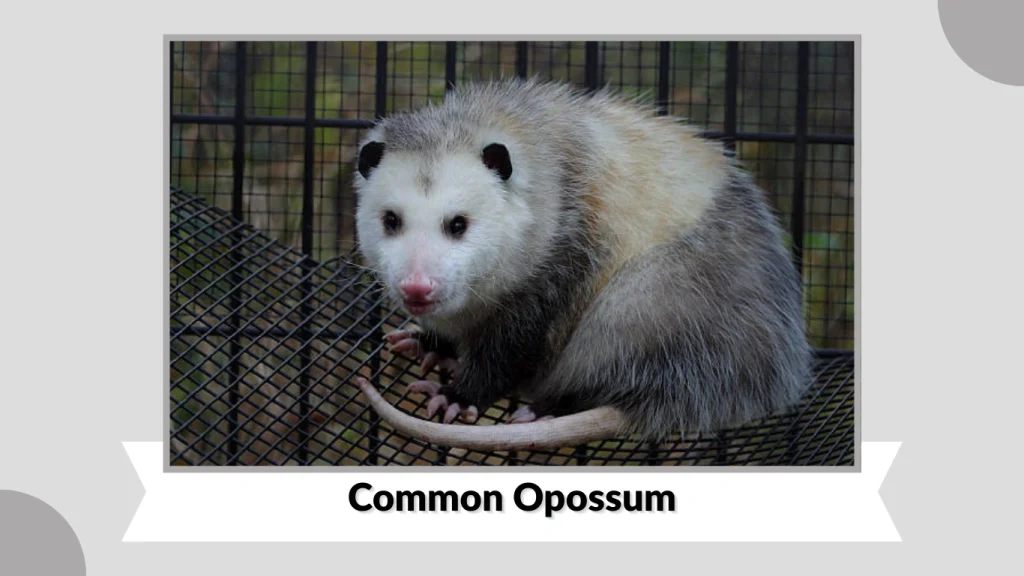
The Common Opossum (Didelphis marsupialis) is a widespread and adaptable marsupial native to Central and South America. Known for its scavenging habits and ability to thrive near human settlements, it plays an important ecological role as both predator and cleanup species.
Identification
- Coarse grey, black, or brown fur
- Pale or white face with dark eye rings
- Long, hairless prehensile tail
- Pointed snout and sharp teeth
- Rounded black ears and agile limbs
Habitat
Common opossums inhabit tropical forests, savannas, wetlands, farmlands, and urban areas. They thrive in regions with abundant food sources and shelter. Their natural range extends from Mexico through Central America and into northern South America, including Brazil, Colombia, and Venezuela.
Behaviors
They are nocturnal, solitary, and highly adaptable. Common opossums forage at night, climbing trees and exploring the forest floor. When threatened, they may hiss, growl, or enter a passive defensive state similar to “playing possum.” They often use abandoned burrows, tree hollows, or human structures for shelter.
Diet
Their diet is highly varied, consisting of fruits, insects, small vertebrates, eggs, carrion, and human food scraps. As omnivorous scavengers, they help clean ecosystems by consuming decaying matter and controlling insect and rodent populations.
3. Gray Four-eyed Opossum
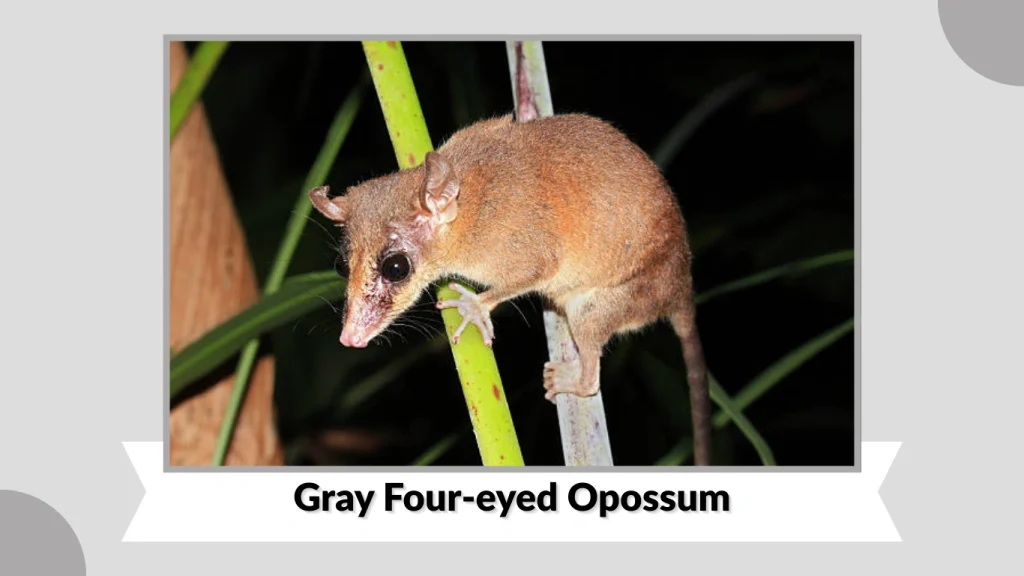
The Gray Four-eyed Opossum (Philander opossum) is named for the two pale spots above its eyes that resemble an extra pair of eyes. This medium-sized opossum is common in tropical forests and is known for its agility and adaptability.
Identification
- Grey to brown fur with a pale underside
- Distinct white or cream-colored eye spots (“four-eyed” appearance)
- Long, nearly hairless prehensile tail
- Pointed snout and slender build
- Agile limbs suited for climbing and ground movement
Habitat
Gray Four-eyed Opossums inhabit rainforests, dry forests, mangroves, and secondary growth woodlands throughout Central and northern South America. They prefer environments with dense vegetation and reliable food sources. They often shelter in tree hollows, dense foliage, or burrows.
Behaviors
They are nocturnal, solitary, and highly arboreal. Gray Four-eyed Opossums move fluidly through trees and on the ground while foraging. They may hiss or growl when threatened but typically flee. They use nests made of leaves and twigs for resting during the day.
Diet
Their diet includes fruits, insects, small vertebrates, eggs, and occasionally nectar. As omnivores, they play an important role in seed dispersal and insect control within tropical ecosystems. They adapt their feeding habits based on seasonal food availability.
4. Brown Four-eyed Opossum
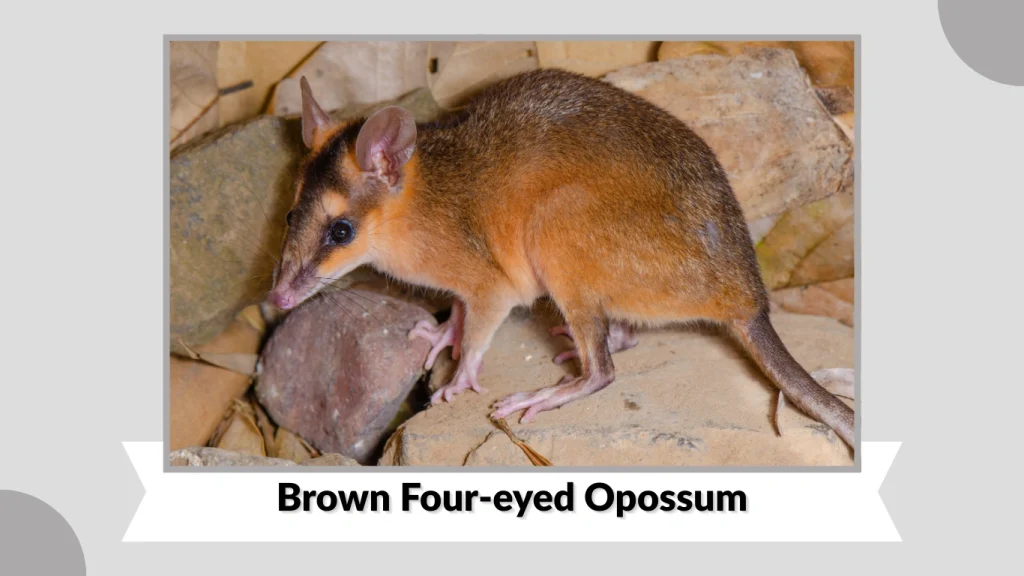
The Brown Four-eyed Opossum (Metachirus nudicaudatus) is a solitary, ground-dwelling opossum known for the pale spots above its eyes and its preference for dense forest habitats. It is widely distributed across Central and South America.
Identification
- Brown to reddish-brown fur
- Pale “eye spots” that create a four-eyed appearance
- Long, nearly hairless prehensile tail
- Slender body with pointed snout
- Strong limbs adapted for both digging and climbing
Habitat
This species inhabits rainforests, tropical dry forests, and dense understory vegetation. It is found from southern Mexico through Central America and into much of northern and central South America. Brown Four-eyed Opossums prefer areas with thick leaf litter and abundant cover for nesting.
Behaviors
They are nocturnal, solitary, and primarily terrestrial. While capable climbers, they spend much of their time on the forest floor searching for food. They construct leaf nests or use burrows for daytime shelter. When threatened, they may freeze, flee, or vocalize softly.
Diet
Their diet is omnivorous, consisting of fruits, insects, seeds, small vertebrates, and eggs. Seasonal fruit availability strongly influences their feeding patterns, and they play a key role in seed dispersal throughout their range.
5. Woolly Opossum
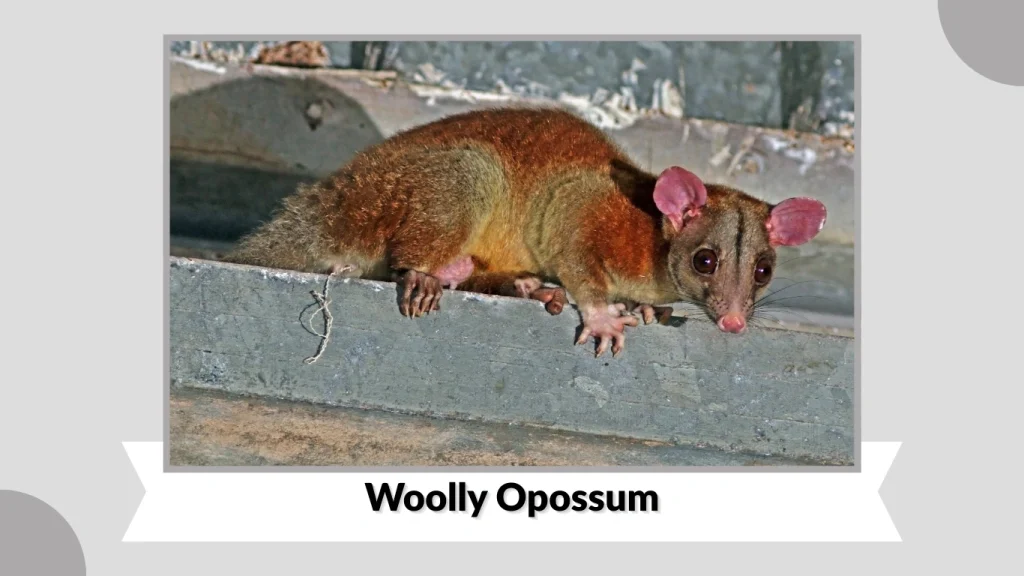
The Woolly Opossum (Caluromys philander) is a nocturnal, arboreal marsupial known for its soft fur and exceptional climbing abilities. Found throughout Central and South America, it thrives in humid forest environments and is one of the more visually distinctive opossums.
Identification
- Dense, soft, wool-like fur
- Reddish-brown, grey, or yellowish coat depending on region
- Long prehensile tail with a white or pale tip
- Large eyes adapted for night vision
- Slender body with agile limbs for climbing
Habitat
Woolly Opossums inhabit tropical rainforests, cloud forests, and wet woodlands. They prefer high canopy and dense vegetation for nesting and foraging. Their range extends from southern Mexico through Central America into northern and central South America, including the Amazon Basin.
Behaviors
These opossums are highly arboreal and rarely descend to the ground. They are solitary and active at night, moving gracefully through branches using their prehensile tail for balance. Woolly Opossums build leafy nests in trees and exhibit gentle, cautious behavior when threatened.
Diet
Their diet consists mainly of fruits, nectar, insects, and small vertebrates. Due to their fondness for nectar and pollen, they act as important pollinators in tropical forests. Seasonal fruiting patterns greatly influence their feeding habits.
6. Bare-tailed Woolly Opossum
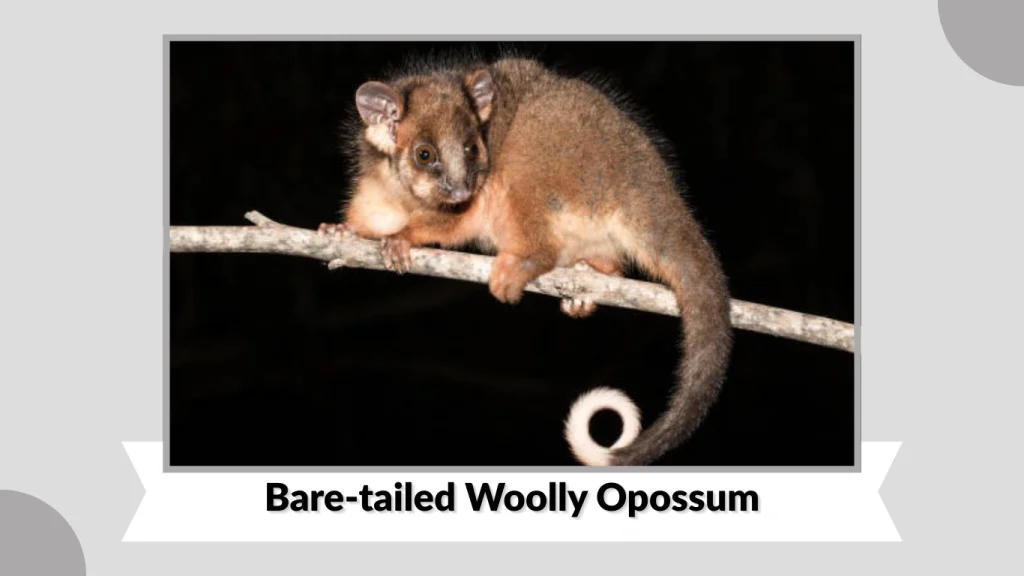
The Bare-tailed Woolly Opossum (Caluromys derbianus) is a slender, arboreal marsupial known for its silky fur and mostly hairless tail. Found in Central America, it is a graceful climber that thrives in moist, forested habitats.
Identification
- Soft, woolly fur in shades of grey, brown, or reddish
- Mostly hairless, prehensile tail
- Large eyes adapted for nocturnal vision
- Slender limbs with strong grasping feet
- Triangular face with a pointed snout
Habitat
This species inhabits tropical rainforests, cloud forests, and humid woodlands from southern Mexico through Panama. It prefers dense canopy cover and often nests in tree hollows or leafy platforms. Moist environments provide ideal foraging and shelter conditions.
Behaviors
Bare-tailed Woolly Opossums are nocturnal, solitary, and highly arboreal. They move quietly through the canopy using their tail for balance. They build nests from leaves and tend to avoid open ground. When threatened, they may freeze or retreat into dense foliage.
Diet
Their diet consists of fruits, nectar, insects, and small vertebrates. They play an important role in pollination and seed dispersal, especially in flowering tropical trees. Seasonal food availability influences their nightly foraging patterns.
7. Derby’s Woolly Opossum
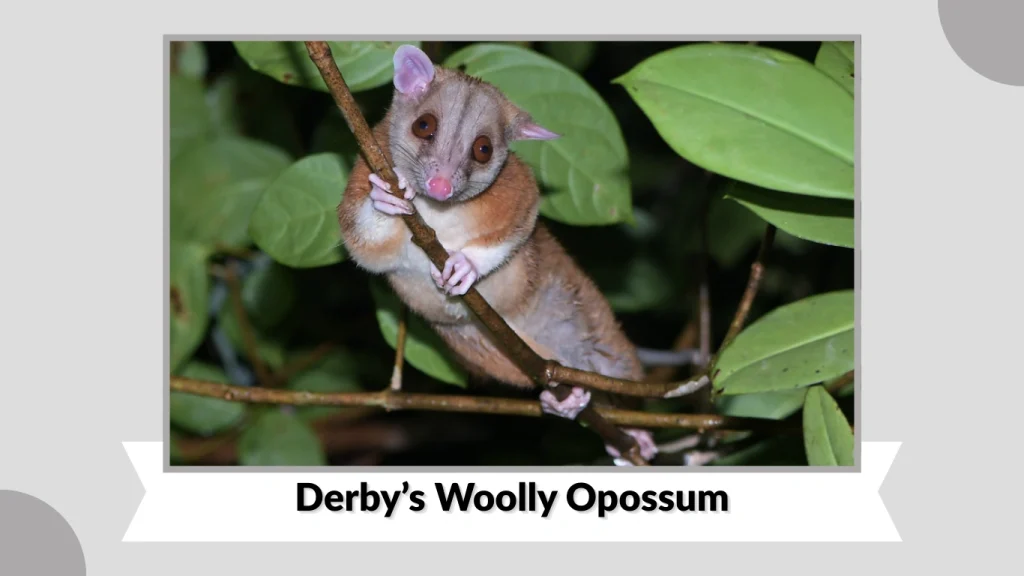
The Derby’s Woolly Opossum (Caluromys derbianus derbianus / sometimes treated as Caluromys derbianus) is a soft-furred, arboreal marsupial known for its gentle appearance and preference for moist forest habitats in Central and northern South America.
Identification
- Thick, woolly fur ranging from grey-brown to reddish
- Long, prehensile tail with a pale or whitish tip
- Large, dark eyes suited for nocturnal activity
- Slender limbs adapted for climbing
- Narrow, pointed snout
Habitat
Derby’s Woolly Opossums inhabit humid forests, cloud forests, and tropical woodlands from Central America into parts of northern South America. They favor dense canopy layers and sheltered nesting sites such as tree hollows and leafy clusters.
Behaviors
They are nocturnal, solitary, and highly arboreal. Derby’s Woolly Opossums move quietly through branches, relying on their prehensile tail for balance and stability. They construct nests from leaves and moss. When threatened, they may freeze or retreat upward into dense foliage.
Diet
Their diet includes fruits, nectar, insects, small vertebrates, and occasionally eggs. As important pollinators and seed dispersers, they contribute significantly to tropical forest ecosystem health. Their feeding habits vary with seasonal fruit availability.
8. White-eared Opossum
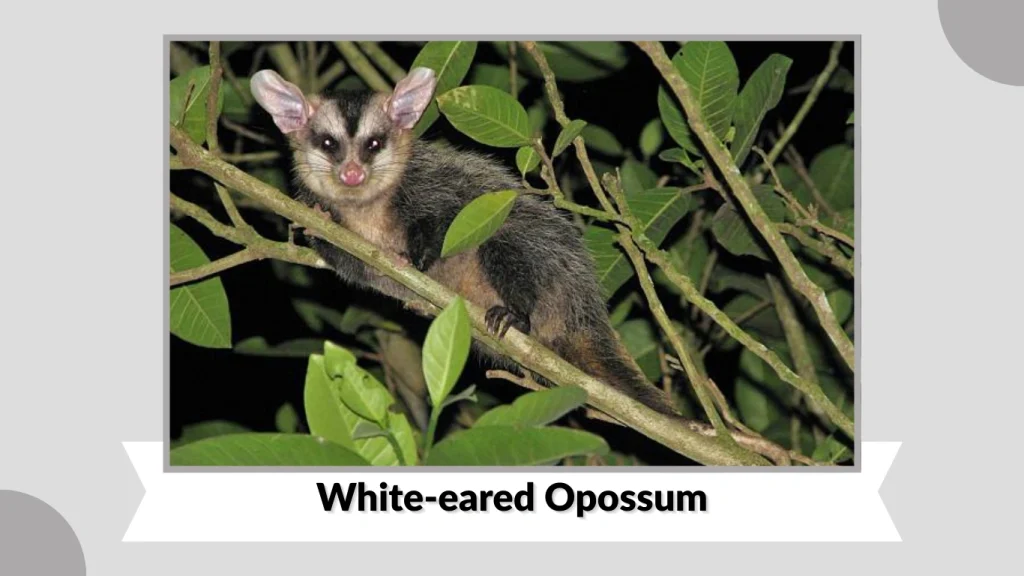
The White-eared Opossum (Didelphis albiventris) is a robust and adaptable species found across much of South America. Recognized by its striking white ears, it thrives in forests, savannas, and even human-altered environments.
Identification
- Distinct white or pale-colored ears
- Blackish to grey fur with lighter underparts
- Long, hairless prehensile tail
- Pointed snout and black facial markings
- Strong limbs suited for both climbing and ground movement
Habitat
White-eared Opossums inhabit rainforests, dry forests, grasslands, scrublands, and agricultural areas. Their range extends across Brazil, Argentina, Paraguay, Uruguay, and Bolivia. They are highly adaptable and often found near human settlements.
Behaviors
These opossums are nocturnal, solitary, and opportunistic. They climb well but spend considerable time on the ground while foraging. When threatened, they may hiss, growl, or enter a passive defensive state. They shelter in burrows, tree hollows, or abandoned nests during the day.
Diet
Their omnivorous diet includes fruits, insects, small vertebrates, carrion, eggs, and human food scraps. Their flexibility in food choice contributes to their wide distribution and ability to live in varied habitats.
9. Black-eared Opossum
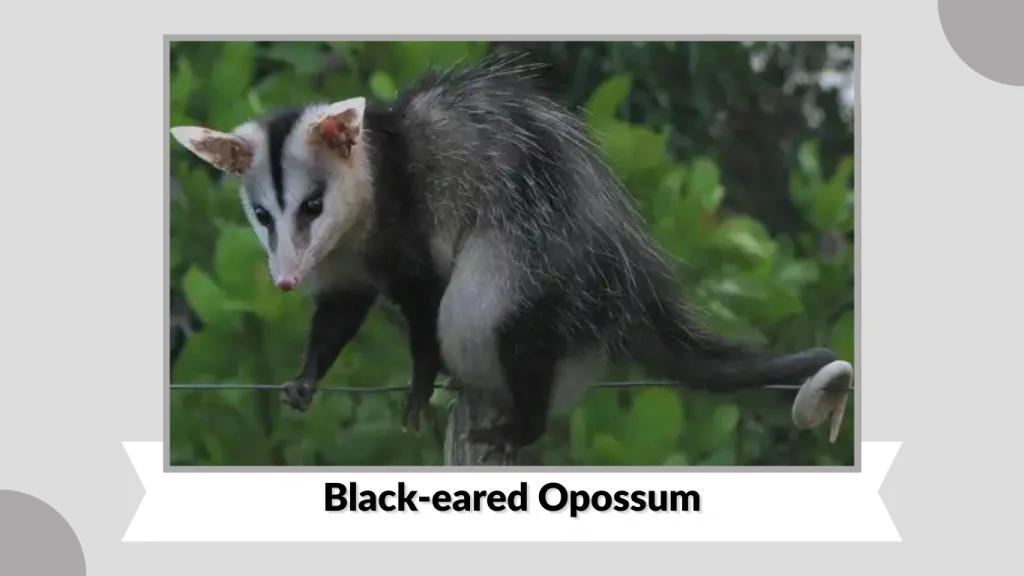
The Black-eared Opossum (Didelphis aurita) is a large, adaptable marsupial common in eastern South America. It is closely related to the White-eared Opossum but distinguished by its darker ear coloration and more forest-oriented habits.
Identification
- Black or dark-colored ears
- Grey to black fur with pale underparts
- Long, hairless prehensile tail
- Pointed snout and prominent whiskers
- Strong limbs ideal for climbing and ground foraging
Habitat
Black-eared Opossums inhabit Atlantic rainforests, secondary forests, urban woodlands, and scrublands throughout Brazil, Paraguay, and Argentina. They favor moist, densely vegetated habitats but readily adapt to human-modified areas.
Behaviors
They are nocturnal, solitary, and opportunistic. Skilled climbers, they move easily between the ground and trees while foraging. When threatened, they may growl, hiss, or remain motionless. They typically rest in hollow logs, tree cavities, or dense vegetation during daytime.
Diet
Their diet is omnivorous and flexible, including fruits, insects, small vertebrates, eggs, carrion, and food waste near settlements. Their adaptability in diet allows them to thrive in ecosystems ranging from deep forests to suburban environments.
10. Mouse Opossum
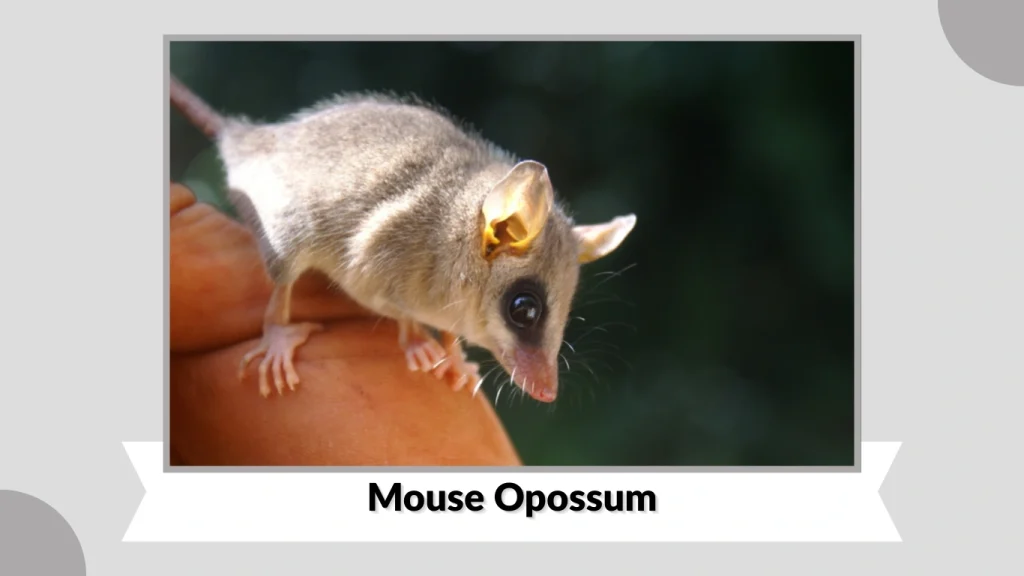
The Mouse Opossum (general term for several Marmosa species) is a small, agile marsupial known for its mouse-like appearance, large eyes, and quick movements. These tiny opossums inhabit forests and shrublands throughout Central and South America.
Identification
- Very small body size with mouse-like proportions
- Large, dark eyes adapted for night activity
- Long, slender prehensile tail
- Soft fur in shades of brown, grey, or reddish
- Pointed snout and delicate limbs
Habitat
Mouse Opossums inhabit tropical rainforests, dry forests, shrublands, and sometimes disturbed or secondary growth habitats. They are found from southern Mexico through much of Central and South America. They commonly use tree hollows, leaf nests, or vine tangles for daytime shelter.
Behaviors
They are nocturnal, solitary, and extremely agile climbers. Mouse Opossums move quickly through low branches and understory vegetation. When threatened, they may leap, freeze, or retreat into dense foliage. Females often carry multiple young attached to their nipples, as they typically lack a full pouch.
Diet
Their diet includes insects, fruit, nectar, small vertebrates, and eggs. They play important roles as both insect predators and seed dispersers. Their feeding habits shift seasonally according to fruit availability and insect abundance.
11. Gray Mouse Opossum
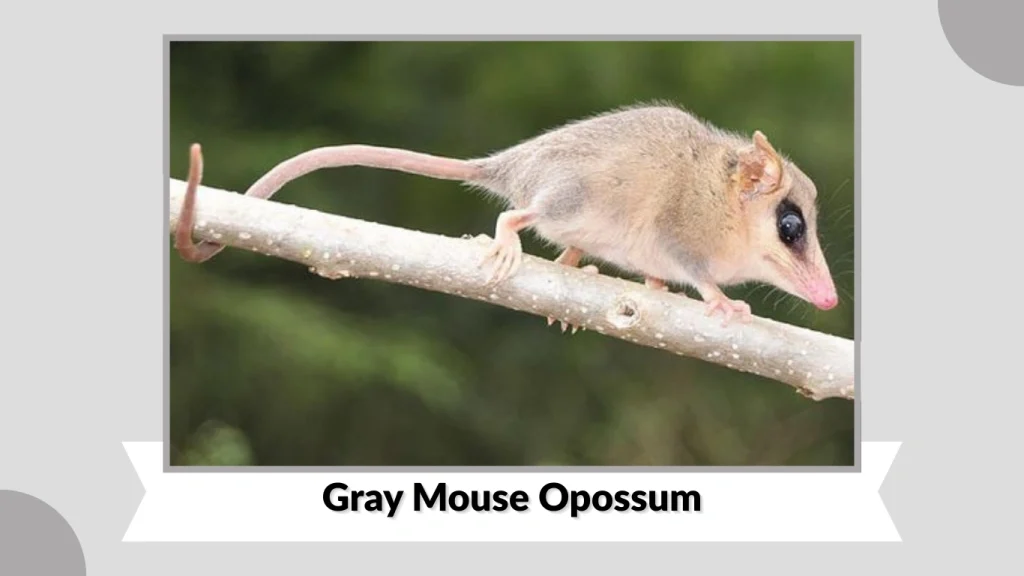
The Gray Mouse Opossum (Marmosa canescens) is a small, swift marsupial native to Central and South America. Known for its grey coloration and delicate build, it thrives in forested and semi-open habitats.
Identification
- Soft grey fur with lighter underparts
- Long, slender prehensile tail
- Large, round eyes adapted for nocturnal vision
- Pointed snout and fine whiskers
- Small, lightweight body suited for quick movement
Habitat
Gray Mouse Opossums inhabit rainforests, dry forests, secondary forests, and shrubby areas. They range from Central America into northern South America. They prefer environments with dense vegetation and readily use tree hollows or leafy nests for shelter.
Behaviors
They are nocturnal, solitary, and highly agile. Gray Mouse Opossums move quickly through branches and understory plants, often foraging both above ground and at ground level. When disturbed, they may leap away or hide in dense cover.
Diet
Their diet consists of insects, fruits, nectar, small vertebrates, and eggs. They play important ecological roles as both pollinators and seed dispersers due to their frequent consumption of nectar and fruit.
12. Agile Mouse Opossum
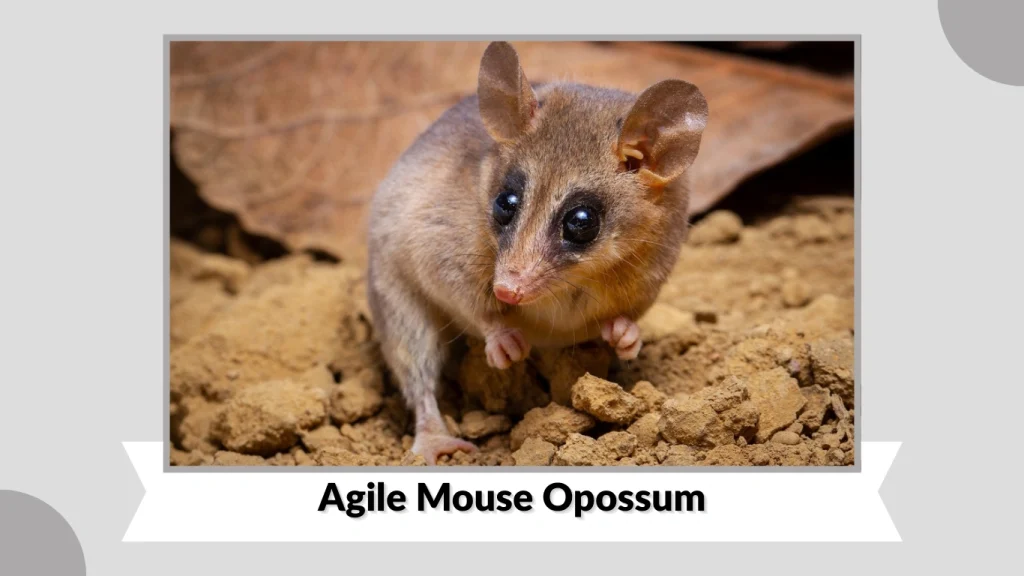
The Agile Mouse Opossum (Marmosa agilis) is a quick, lightweight marsupial known for its speed and adaptability. Found across northern South America, it thrives in diverse forest habitats and is one of the most widespread Marmosa species.
Identification
- Soft brown or grey fur with pale underparts
- Long, slender prehensile tail
- Large, dark eyes suited for nighttime activity
- Pointed snout and delicate facial structure
- Small, agile body built for rapid movement
Habitat
Agile Mouse Opossums inhabit rainforests, dry forests, savannas, and secondary growth areas. They are found in countries such as Venezuela, Colombia, Brazil, and the Guianas. They prefer dense vegetation and frequently nest in tree cavities or woven leaf nests.
Behaviors
They are nocturnal, solitary, and exceptionally swift climbers. Agile Mouse Opossums forage across trees and understory layers, using rapid movements to capture insects or avoid predators. They may freeze when startled, then flee quickly into dense cover.
Diet
Their diet includes insects, spiders, fruit, nectar, and occasionally small vertebrates. They are important pollinators and seed dispersers in tropical ecosystems, often tracking seasonal fruiting patterns.
13. Red Mouse Opossum
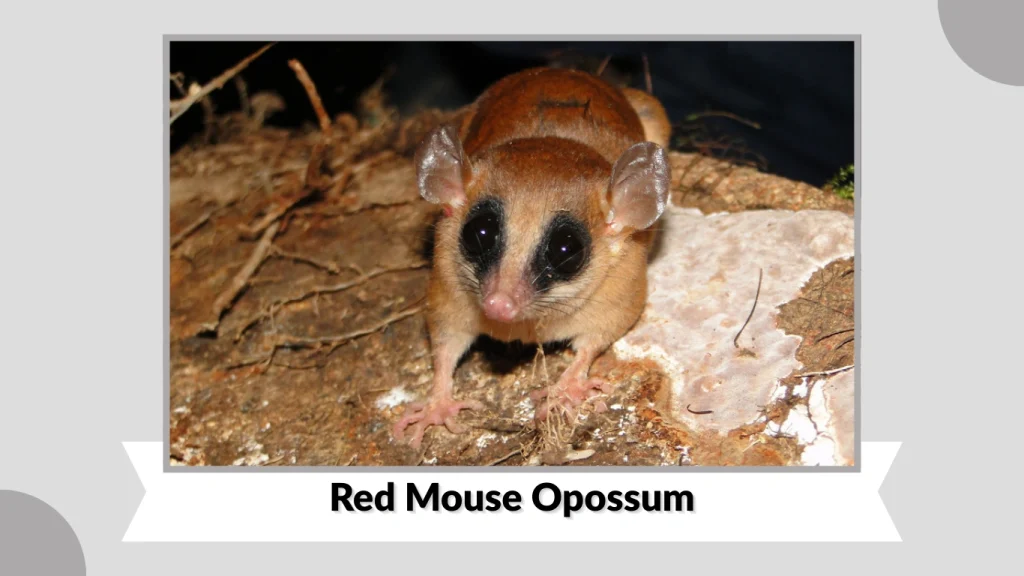
The Red Mouse Opossum (Marmosa rubra) is a small, striking marsupial known for its reddish fur and preference for moist forest environments. It is less commonly seen than other mouse opossum species but is highly adapted to life in dense vegetation.
Identification
- Distinct reddish or rust-colored fur
- Pale or whitish underparts
- Long, slender prehensile tail
- Large, dark eyes for nocturnal activity
- Small, delicate body with agile limbs
Habitat
Red Mouse Opossums inhabit humid rainforests and dense understory vegetation, primarily in Peru and surrounding regions of the western Amazon. They prefer moist environments with plenty of cover for shelter and foraging.
Behaviors
They are nocturnal, solitary, and skilled climbers. Red Mouse Opossums move rapidly through vines, branches, and leaf litter while foraging. When disturbed, they may leap away or hide in dense foliage. They often nest in tree hollows or leafy structures.
Diet
Their diet includes insects, fruits, nectar, spiders, and small vertebrates. Seasonal shifts in fruiting influence their feeding patterns, and they contribute to forest health through seed dispersal and pollination.
14. Water Opossum (Yapok)
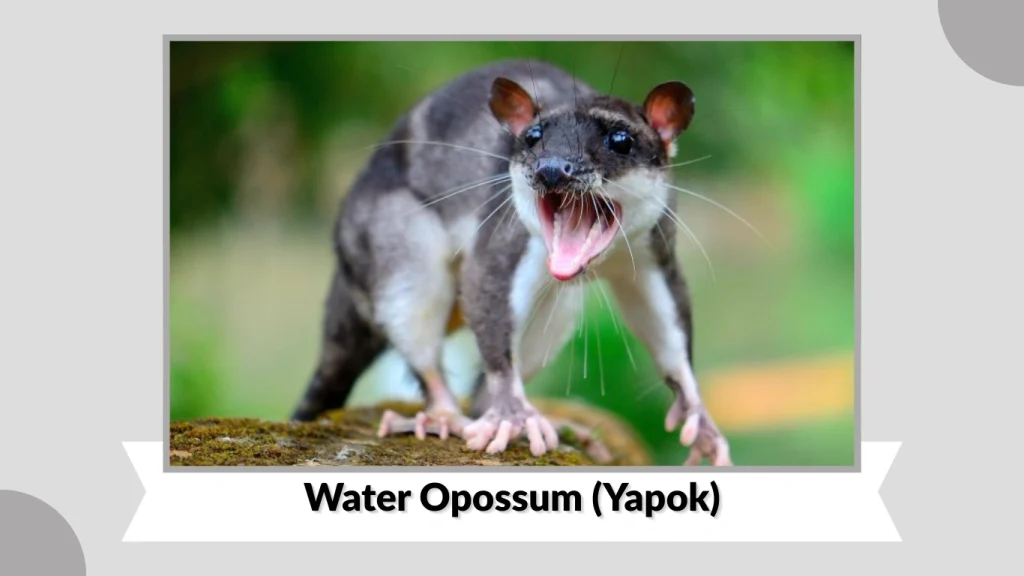
The Water Opossum, also known as the Yapok (Chironectes minimus), is the only truly aquatic marsupial in the world. Found near streams and rivers in Central and South America, it is uniquely adapted for swimming and nighttime hunting.
Identification
- Waterproof fur with grey and black patterning
- Webbed hind feet for powerful swimming
- Long, partially furred prehensile tail
- Rounded ears and streamlined body
- Females have a watertight pouch for carrying young
Habitat
Water Opossums inhabit rivers, streams, wetlands, and forested waterways from southern Mexico to northern Argentina. They rely on clean, flowing water for hunting and prefer dense riparian vegetation for daytime shelter.
Behaviors
They are nocturnal and semi-aquatic, spending nights diving and swimming in search of prey. Water Opossums rest in burrows or vegetation near the water’s edge. They are solitary and highly elusive, rarely seen due to their nocturnal and underwater habits.
Diet
Their diet consists mainly of aquatic animals such as fish, crustaceans, frogs, aquatic insects, and small invertebrates. They use their webbed feet and sensitive whiskers to locate prey in dark or murky water.
15. Patagonian Opossum
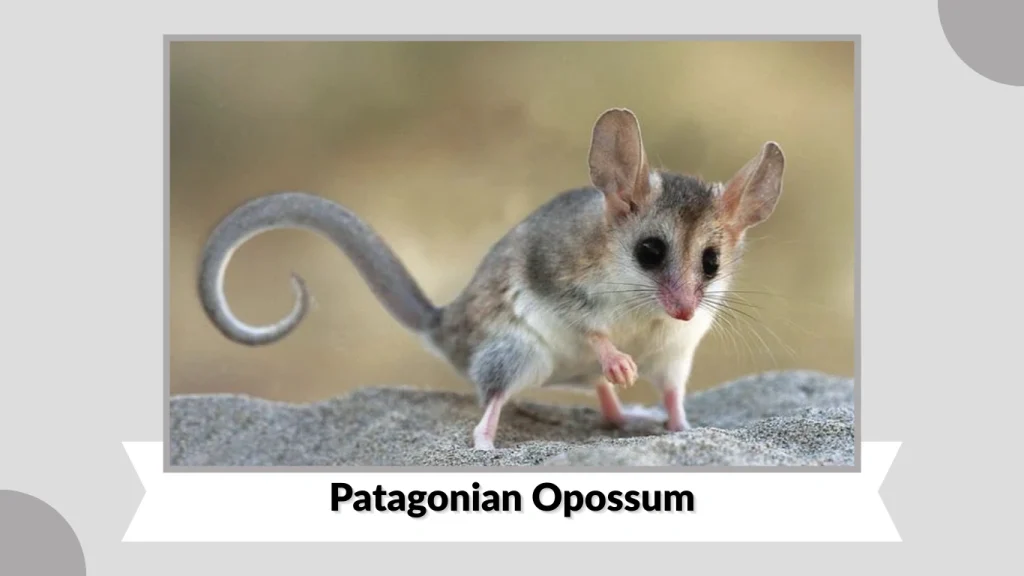
The Patagonian Opossum (Lestodelphys halli) is a small, cold-adapted marsupial native to the southern regions of South America. It is the southernmost-living marsupial in the world and is known for its resilience in harsh, dry environments.
Identification
- Soft grey or brown fur with lighter underparts
- Small, rounded body with short limbs
- Long, slender tail with sparse hair
- Large eyes suited for nocturnal activity
- Pointed snout and fine whiskers
Habitat
Patagonian Opossums inhabit arid grasslands, scrublands, and Patagonian steppe environments in Argentina. They prefer dry, open areas with scattered vegetation and often shelter in burrows, rock crevices, or dense shrubs to escape cold temperatures.
Behaviors
They are nocturnal, solitary, and highly adapted to cold climates. Patagonian Opossums move swiftly across the ground while hunting and may store fat seasonally to survive winter scarcity. They typically hide during the day and emerge at night to forage.
Diet
Their diet includes insects, small mammals, reptiles, bird eggs, and carrion. They are more carnivorous than many other opossums, relying heavily on small vertebrate prey due to the limited plant resources of their environment.
16. Lutrine Opossum
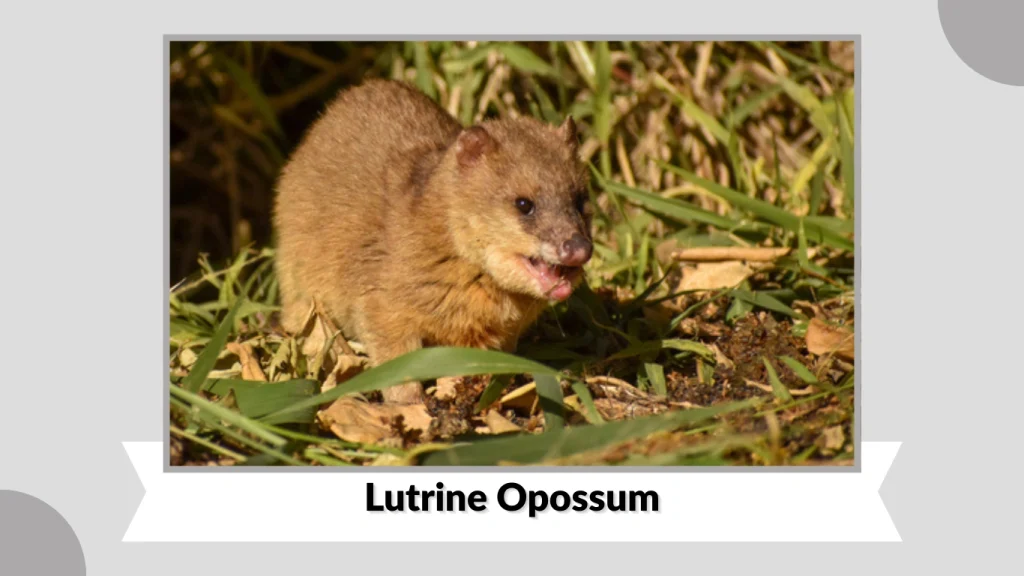
The Lutrine Opossum (Lutreolina crassicaudata) is a semi-aquatic marsupial known for its otter-like body and strong swimming ability. Found in marshes and wetlands of South America, it is one of the most carnivorous opossum species.
Identification
- Long, slender, otter-like body
- Dense brown or blackish fur with lighter underparts
- Long, thick tail with partial fur coverage
- Small rounded ears and elongated snout
- Webbed or partially webbed hind feet
Habitat
Lutrine Opossums inhabit wetlands, marshes, riverbanks, and flooded grasslands across Brazil, Paraguay, Argentina, and Uruguay. They prefer areas with abundant water and dense vegetation for both hunting and shelter.
Behaviors
These opossums are nocturnal, solitary, and excellent swimmers. They hunt both in water and on land, using stealth and quick movements to capture prey. They shelter in burrows, dense reeds, or abandoned nests and may aggressively defend themselves when threatened.
Diet
Their diet is largely carnivorous, including fish, frogs, crustaceans, insects, and small mammals. They also scavenge carrion. Their hunting skills and aquatic adaptations make them one of the most specialized predators among opossums.
17. Southern Red-sided Opossum
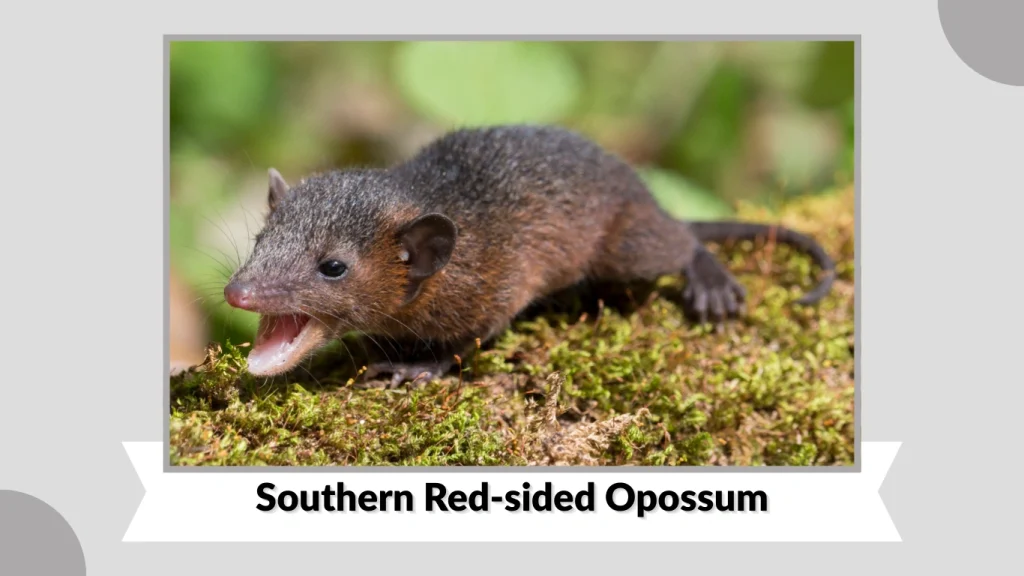
The Southern Red-sided Opossum (Monodelphis sorex) is a small, terrestrial marsupial known for its reddish flanks and mouse-like appearance. Native to South America, it thrives in forested and shrubby environments.
Identification
- Distinct reddish or orange flanks (“red-sided” appearance)
- Brown or grey dorsal fur with lighter underparts
- Short, non-prehensile tail
- Small, pointed snout and large dark eyes
- Compact, mouse-like body
Habitat
Southern Red-sided Opossums inhabit Atlantic forests, scrublands, and secondary growth areas in Brazil, Paraguay, and Argentina. They prefer dense ground vegetation, leaf litter, and areas rich in insects and small prey.
Behaviors
They are predominantly nocturnal and solitary. Unlike many opossums, they are mainly terrestrial and do not climb extensively. Southern red-sided opossums move quickly through underbrush, often hiding in burrows, logs, or thick vegetation. They may emit soft squeaks when threatened.
Diet
Their diet includes insects, spiders, worms, small vertebrates, and occasional fruit. They are more carnivorous than many arboreal opossums, relying heavily on terrestrial invertebrates.
18. Marmosa Opossum

The Marmosa Opossum (general term for species within the Marmosa genus) is a small, agile marsupial known for its delicate features and arboreal lifestyle. Found throughout Central and South America, it thrives in diverse forest habitats.
Identification
- Small body with soft brown, grey, or reddish fur
- Long, slender prehensile tail
- Large, dark, rounded eyes suited for night vision
- Narrow, pointed snout
- Lightweight, agile build
Habitat
Marmosa opossums inhabit rainforests, cloud forests, dry forests, and secondary woodlands across Central and South America. They prefer dense vegetation and typically sleep in tree hollows, vine tangles, or leaf nests during the day.
Behaviors
They are nocturnal, solitary, and highly arboreal. Marmosa opossums move swiftly through branches and understory plants. Females often lack a full pouch, carrying young attached directly to their nipples. When threatened, they may freeze or flee into dense canopy cover.
Diet
Their diet includes insects, nectar, fruits, small vertebrates, spiders, and eggs. They play key ecological roles as both pollinators and seed dispersers, particularly in fruit-rich tropical forests.
Say next for the final species!
19. Philander Opossum
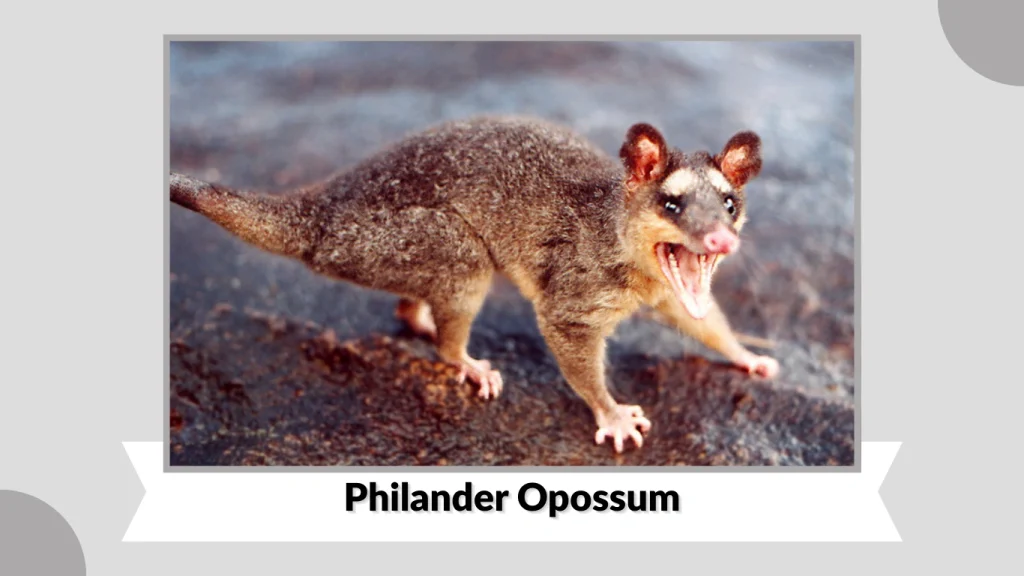
The Philander Opossum (Philander philander), also known as the Gray Four-eyed Opossum in some classifications, is a medium-sized, adaptable marsupial found throughout South America. It is recognized for its distinctive “eye spots” and its ability to thrive in varied forest habitats.
Identification
- Pale or white spots above each eye (“four-eyed” look)
- Grey to grey-brown fur with lighter underparts
- Long, nearly hairless prehensile tail
- Slender face with pointed snout
- Agile limbs suited for climbing and ground movement
Habitat
Philander opossums inhabit rainforests, mangroves, secondary forests, and wetlands across the Amazon Basin, the Guianas, and parts of Brazil. They prefer humid environments with dense vegetation and abundant nesting sites such as tree hollows or thick foliage.
Behaviors
They are nocturnal, solitary, and semi-arboreal. Philander opossums move easily through trees and on the forest floor while foraging. When threatened, they may hiss or retreat to elevated branches. They build leafy nests and often shift locations based on food availability.
Diet
Their omnivorous diet includes fruits, insects, small vertebrates, eggs, and carrion. They are effective seed dispersers and a key part of tropical forest ecosystems, helping regulate insect populations and support plant diversity.
FAQs
1. How many species of opossums exist?
There are more than 100 species of opossums, but this guide highlights 19 notable types. These marsupials are native to the Americas and vary widely in size, behavior, and habitat preference, from aquatic species like the Yapok to tiny arboreal mouse opossums.
2. What do opossums typically eat?
Opossums are omnivores, eating insects, fruits, small animals, eggs, carrion, and sometimes human food scraps. Many species also consume nectar and play key ecological roles as pollinators and seed dispersers, especially in tropical forests.
3. Are opossums dangerous to humans?
Opossums are generally not dangerous. They are shy, avoid confrontation, and may “play dead” when frightened. While they can bite if provoked, they rarely show aggression and usually flee from potential threats.
4. Where do opossums live?
Opossums inhabit a wide range of environments, including rainforests, dry forests, savannas, wetlands, grasslands, and even urban areas. Their distribution spans from southern Canada (for the Virginia Opossum) through Central and South America.
5. Why do some opossums have a ‘four-eyed’ appearance?
Species like the Gray and Brown Four-eyed Opossums have pale spots above their eyes, creating the illusion of an extra pair of eyes. These markings may help with camouflage or communication, though the exact purpose varies by species.