




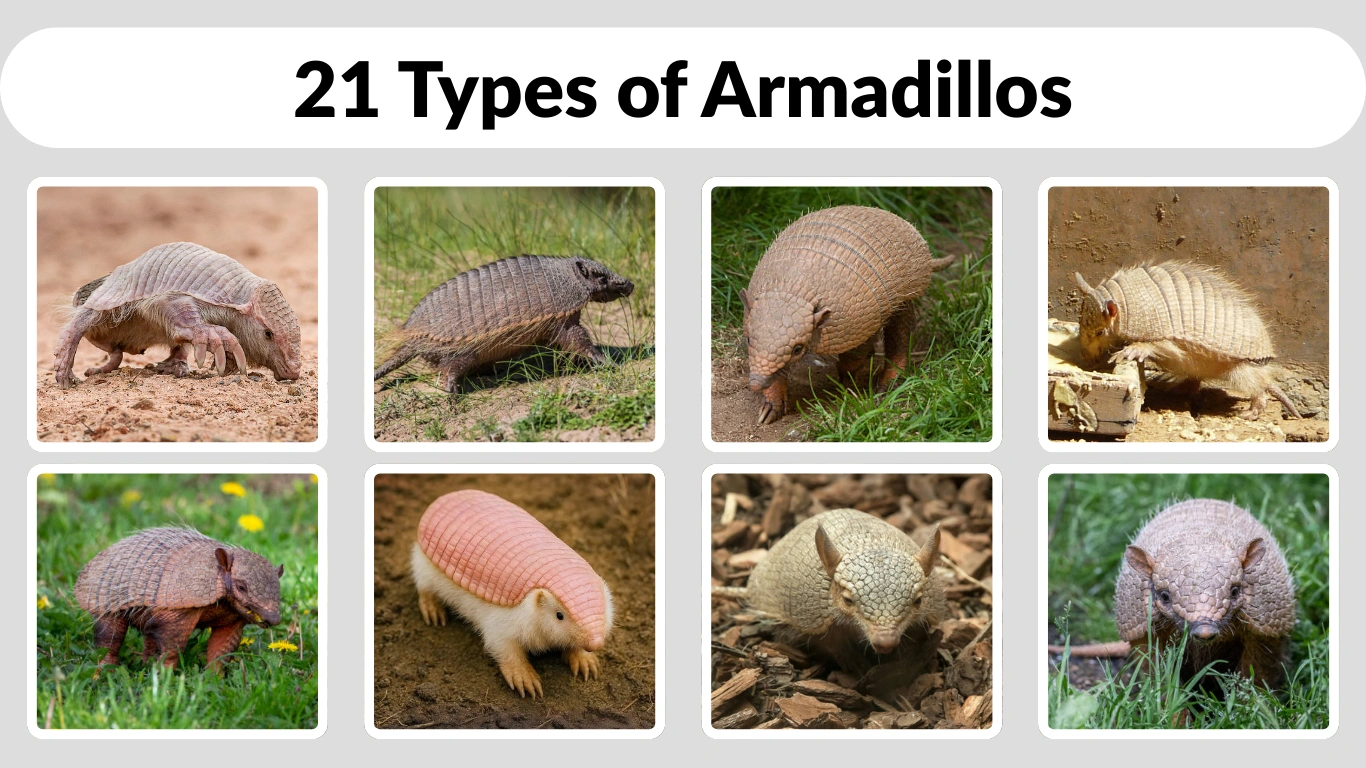
Armadillos are unique, armor-plated mammals found throughout Central and South America, each species adapted to distinct habitats ranging from deserts to rainforests. This guide explores 21 different armadillo types, highlighting their identification features, natural habitats, behaviors, and diets. Whether you’re studying wildlife or exploring these fascinating creatures for personal interest, this overview offers clear insight into the remarkable diversity and survival strategies of armadillos.
1. Nine-banded Armadillo
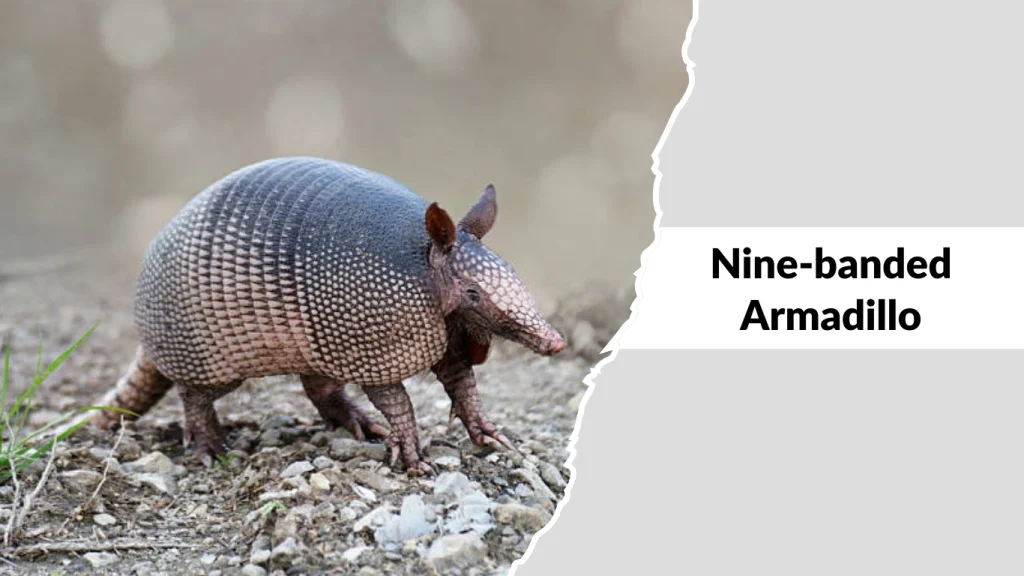
The Nine-banded Armadillo (Dasypus novemcinctus) is the most widespread armadillo species, known for its tough, flexible armor and ability to adapt to a wide range of environments. Found throughout the Americas, it is especially common in the southern United States.
Identification
- Nine (sometimes 8–11) flexible armor bands
- Grey-brown protective shell
- Long, narrow snout
- Strong digging claws
- Long, tapered tail covered in bony rings
Habitat
Nine-banded armadillos inhabit forests, grasslands, wetlands, and semi-arid regions. They prefer habitats with loose soil for burrowing and access to water. Their range extends from South America through Central America and into much of the southern United States, where expansion continues northward.
Behaviors
They are primarily nocturnal or crepuscular, spending daylight hours in burrows. Nine-banded armadillos are excellent diggers and skilled foragers, using their keen sense of smell to find insects. When startled, they may jump vertically—an unusual defensive reaction. They typically lead solitary lives except during breeding.
Diet
Their diet consists mainly of insects, grubs, beetles, ants, termites, and other small invertebrates. They also consume plants, fruits, and carrion when available. Nine-banded armadillos rely heavily on digging to uncover food hidden beneath soil and leaf litter.
2. Brazilian Three-banded Armadillo

The Brazilian Three-banded Armadillo (Tolypeutes tricinctus) is one of the only armadillo species capable of rolling completely into a ball. Its distinctive armor and defensive behavior make it one of the most recognizable and unique armadillos in South America.
Identification
- Three movable armor bands
- Smooth, rounded shell that closes completely
- Short limbs with strong claws
- Small head with pointed snout
- Tail short and tucked tightly when rolled
Habitat
This species is native to northeastern Brazil, inhabiting dry forests, savannas, and scrublands. It favors areas with sparse vegetation and sandy or soft soil that makes digging easier. Habitat loss and fragmentation have restricted its natural range.
Behaviors
The Brazilian Three-banded Armadillo is famous for its ability to roll into a tight ball, protecting its vulnerable underside from predators. It is mostly solitary and active during cooler hours. Unlike many armadillos, it does not rely heavily on burrows and often shelters under vegetation or natural debris.
Diet
Its diet includes ants, termites, beetles, and other small invertebrates. Using its long, sticky tongue, it efficiently extracts insects from cracks and soil. Seasonal food availability may lead to shifts in feeding intensity and movement patterns.
3. Southern Three-banded Armadillo

The Southern Three-banded Armadillo (Tolypeutes matacus) is a compact, well-armored species known for its unique ability to curl completely into a protective ball. Found in South America, it thrives in dry, open habitats.
Identification
- Three movable armor bands
- Smooth, domed shell that seals when curled
- Short legs with strong digging claws
- Rounded head with pointed snout
- Short tail that fits neatly inside the ball
Habitat
This species inhabits dry Chaco woodlands, savannas, and scrublands across Argentina, Bolivia, Paraguay, and parts of Brazil. It prefers arid or semi-arid areas with scattered vegetation and sandy soils. Habitat loss and hunting have affected some populations.
Behaviors
The Southern Three-banded Armadillo is solitary and primarily nocturnal or crepuscular. Its most notable behavior is rolling into a near-perfect sphere when threatened, shielding its soft underside. Unlike many armadillos, it does not dig extensive burrows and instead shelters under logs or vegetation.
Diet
Its diet consists mainly of insects such as ants and termites. It uses a long, sticky tongue to extract prey from small crevices. Occasional plant material or soft fruits may supplement its primarily insectivorous diet.
4. Six-banded Armadillo
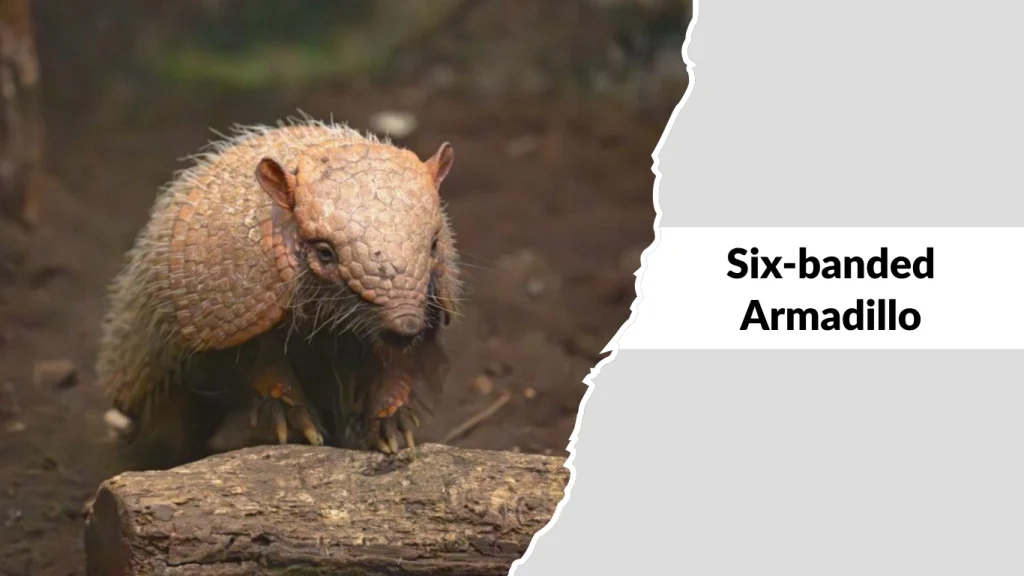
The Six-banded Armadillo (Euphractus sexcinctus), also known as the Yellow Armadillo, is a medium-sized species recognized for its golden-tan armor and active daytime behavior. It is one of the most adaptable armadillos in South America.
Identification
- Typically six (sometimes 6–8) armor bands
- Yellowish to light brown shell
- Strong forelimbs with powerful claws
- Long snout and rounded ears
- Sturdy body with a relatively long tail
Habitat
Six-banded armadillos inhabit grasslands, savannas, forests, and agricultural regions. They are found across Brazil, Bolivia, Paraguay, Uruguay, and northern Argentina. They prefer well-drained soils for burrowing and are often seen in open habitats.
Behaviors
Unlike most armadillos, the Six-banded Armadillo is often diurnal, meaning it is active during the day. It is an energetic forager, digging frequently in search of food. When threatened, it may hiss loudly or flee to the safety of a burrow. It is generally solitary except during mating.
Diet
Their diet includes insects, larvae, fruits, roots, carrion, and even small vertebrates. They are opportunistic omnivores, making them highly adaptable to varying environments and food availability.
5. Seven-banded Armadillo
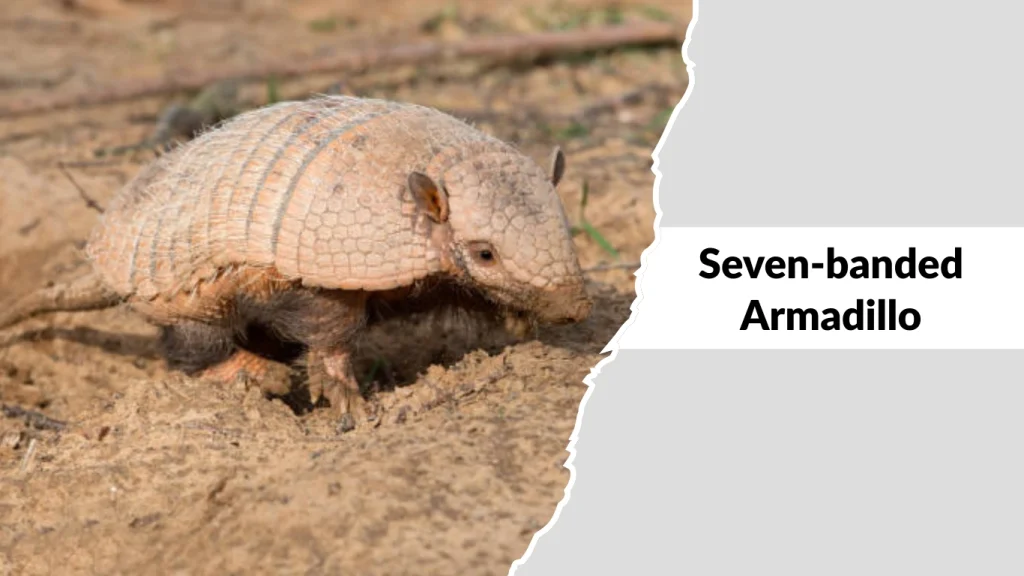
The Seven-banded Armadillo (Dasypus septemcinctus) is a small, slender armadillo species found across central and northern South America. Known for its narrow body and flexible armor bands, it is well adapted to warm, open habitats.
Identification
- Usually seven movable armor bands
- Slim, elongated body with pale brown coloration
- Long, narrow snout
- Short legs with fine digging claws
- Tail covered in small bony rings
Habitat
Seven-banded armadillos inhabit savannas, grasslands, dry forests, and scrublands across Brazil, Paraguay, Uruguay, Bolivia, and northern Argentina. They prefer soft soil for burrowing and thrive in warm, moderately dry environments.
Behaviors
They are primarily nocturnal and solitary, spending daylight hours in burrows. Seven-banded armadillos are skilled diggers and cautious foragers, relying heavily on scent to locate food. They tend to be shy and retreat quickly into burrows when disturbed.
Diet
Their diet focuses mainly on insects—especially ants, termites, and beetle larvae. They may also consume soft plant material, small invertebrates, and occasional fruit. Their long tongue allows efficient feeding from narrow soil crevices.
6. Greater Long-nosed Armadillo

The Greater Long-nosed Armadillo (Dasypus kappleri) is one of the largest species within the long-nosed armadillo group. It is known for its elongated snout and preference for dense, humid forest environments in northern South America.
Identification
- Elongated snout ideal for probing soil
- Dark brown to blackish armor
- Multiple (typically 10–13) narrow armor bands
- Large, sturdy body compared to other long-nosed species
- Strong digging claws and long tail
Habitat
This species inhabits tropical rainforests, swampy forests, and riverine areas across the Amazon Basin. It is found in countries such as Brazil, Venezuela, Peru, Colombia, Ecuador, and the Guianas. Moist, shaded forest floors provide ideal foraging and burrowing conditions.
Behaviors
Greater Long-nosed Armadillos are primarily nocturnal and solitary. They construct deep burrows in soft, moist soil and are highly secretive. Their movements are slow and deliberate, and they rely on keen scent detection to locate food. They may wade into shallow water while foraging.
Diet
Their diet focuses on insects, worms, termites, beetles, millipedes, and other soil-dwelling invertebrates. They also consume fungi and occasionally fallen fruit. Moist forest environments support the rich underground food sources they rely on.
7. Northern Long-nosed Armadillo
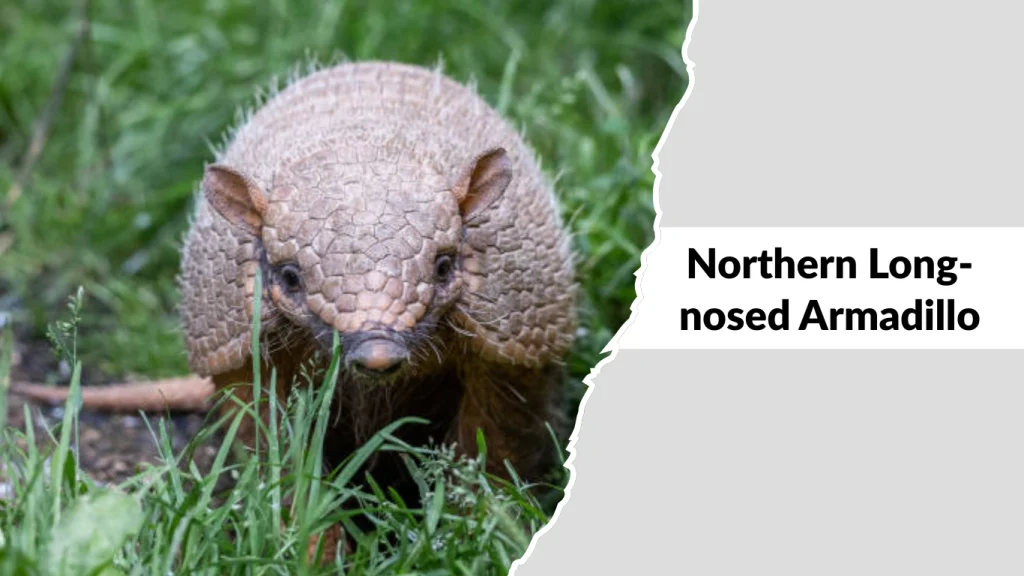
The Northern Long-nosed Armadillo (Dasypus sabanicola) is a slender, little-known species native to northern South America. It closely resembles other long-nosed armadillos but is smaller and adapted to drier, open environments.
Identification
- Long, narrow snout typical of the Dasypus genus
- Light brown to greyish armor
- Multiple flexible armor bands
- Slender legs with digging claws
- Thin, ringed tail
Habitat
This species inhabits savannas, dry grasslands, and open scrublands in Venezuela and Colombia. It prefers areas with soft or sandy soil for burrowing. Unlike rainforest species, it thrives in drier climates with seasonal vegetation.
Behaviors
Northern Long-nosed Armadillos are solitary and primarily nocturnal. They spend daytime in burrows to avoid heat, emerging at night to forage. They rely heavily on scent to locate invertebrates and exhibit cautious, slow movement when exploring new areas.
Diet
Their diet consists mainly of ants, termites, beetle larvae, worms, and other small soil invertebrates. They occasionally consume soft plant matter or fallen fruits but remain highly insectivorous overall.
8. Pink Fairy Armadillo
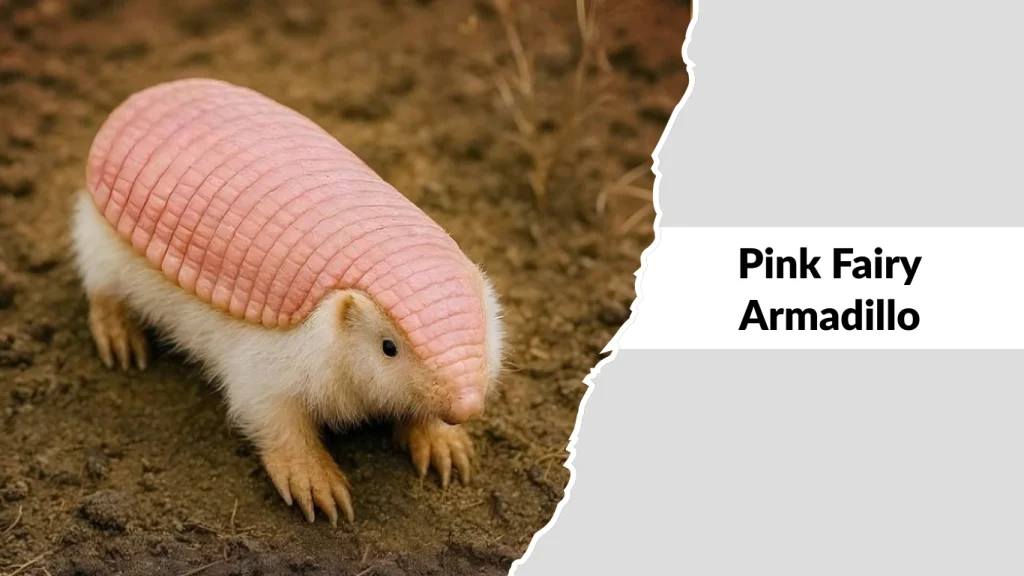
The Pink Fairy Armadillo (Chlamyphorus truncatus) is the smallest and one of the rarest armadillos in the world. Famous for its pale pink shell and delicate size, it is a highly specialized species adapted to sandy environments.
Identification
- Smallest armadillo species (about 4–6 inches long)
- Pale pink, flexible armor plate on the back
- Silky white fur underneath
- Spade-shaped foreclaws for digging
- Short, blunt tail and compact body
Habitat
Pink Fairy Armadillos inhabit central Argentina, particularly sandy plains, grasslands, and scrub deserts. They require loose, dry soil for burrowing and maintaining underground tunnels. Their secretive nature and specialized habitat make sightings extremely rare.
Behaviors
They are highly fossil (burrow-adapted) and spend most of their lives underground. Pink Fairy Armadillos are solitary, nocturnal, and sensitive to environmental changes. Their unique “sand-swimming” ability allows them to move quickly beneath the surface, avoiding predators and extreme temperatures.
Diet
Their diet consists mainly of ants and larvae, with occasional seeds, worms, and plant material. They use strong claws and a keen sense of smell to locate food beneath sandy soil. Their moisture needs are largely met through their insect-based diet.
9. Screaming Hairy Armadillo
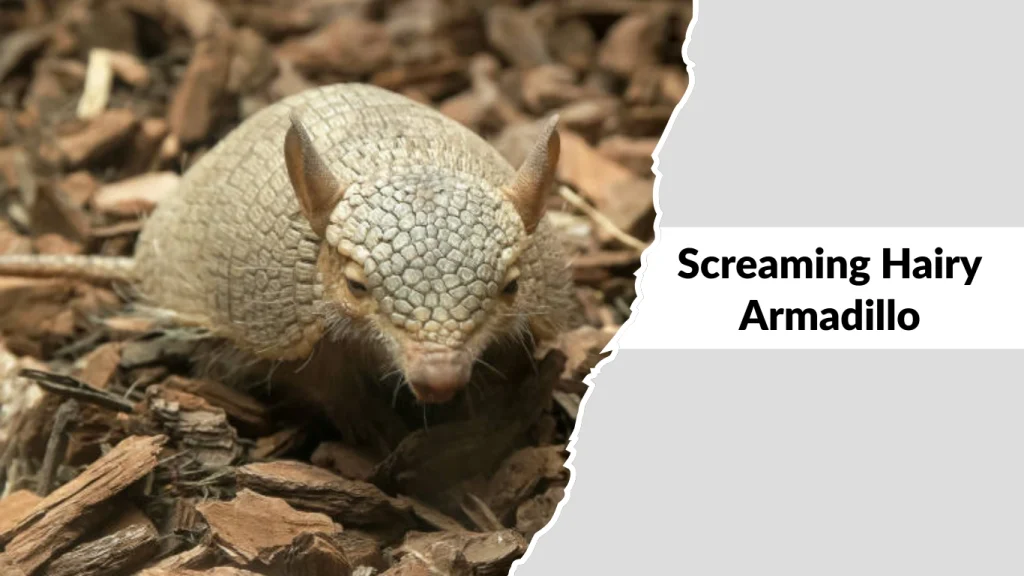
The Screaming Hairy Armadillo (Chaetophractus vellerosus) gets its name from the loud, high-pitched squeal it produces when threatened. It is a small, hardy species found in arid and semi-arid environments of South America.
Identification
- Light-colored armor with noticeable hair around the plates
- Compact body with short limbs
- Long snout and small rounded ears
- Tail covered with short bony rings
- Emits a distinctive screaming vocalization when alarmed
Habitat
This species inhabits arid plains, dry grasslands, deserts, and scrub regions of Argentina, Bolivia, and Paraguay. It prefers sandy or loose soil that supports its burrowing lifestyle. It is well adapted to extreme temperature variations.
Behaviors
The Screaming Hairy Armadillo is primarily nocturnal but may be active during the day in cooler seasons. It produces a sharp scream when threatened, a defensive trait unique among armadillos. It digs burrows for shelter and foraging, often creating multiple entrances.
Diet
Its diet includes insects, larvae, small vertebrates, seeds, and plant material. It is an opportunistic omnivore and may also scavenge carrion. This varied diet allows it to thrive in harsh, resource-scarce environments.
10. Big Hairy Armadillo
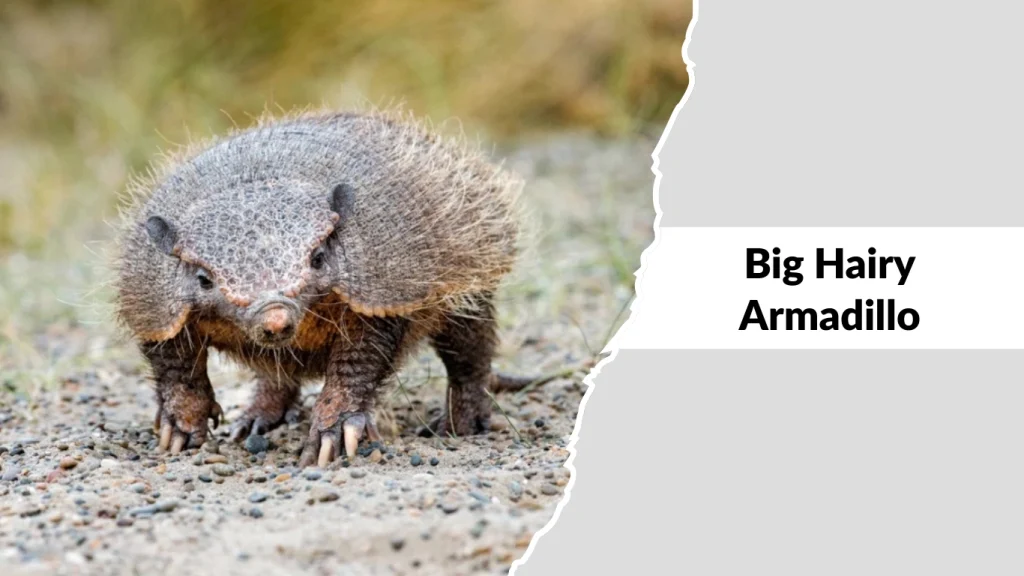
The Big Hairy Armadillo (Chaetophractus villosus) is one of the largest and most robust hairy armadillos. Known for its dense coat and strong digging skills, it thrives in open habitats across southern South America.
Identification
- Large body covered with coarse brownish hair
- Thick armor bands with hair protruding between them
- Strong forelimbs with large, curved claws
- Long snout and rounded ears
- Sturdy build suited for powerful digging
Habitat
Big Hairy Armadillos inhabit grasslands, savannas, shrublands, and agricultural areas. Their range includes Argentina, Chile, Paraguay, Bolivia, and Uruguay. They prefer soft, well-drained soil for burrowing and can adapt to modified landscapes.
Behaviors
They are mainly nocturnal but may be active during the day, especially in cooler months. Big Hairy Armadillos are strong diggers, creating extensive burrows used for shelter and protection. They are solitary and territorial, often vocalizing when disturbed.
Diet
Their diet is highly varied, consisting of insects, worms, roots, fruits, carrion, and small animals. As opportunistic omnivores, they adapt quickly to food availability, which supports their survival in diverse habitats.
11. Andean Hairy Armadillo
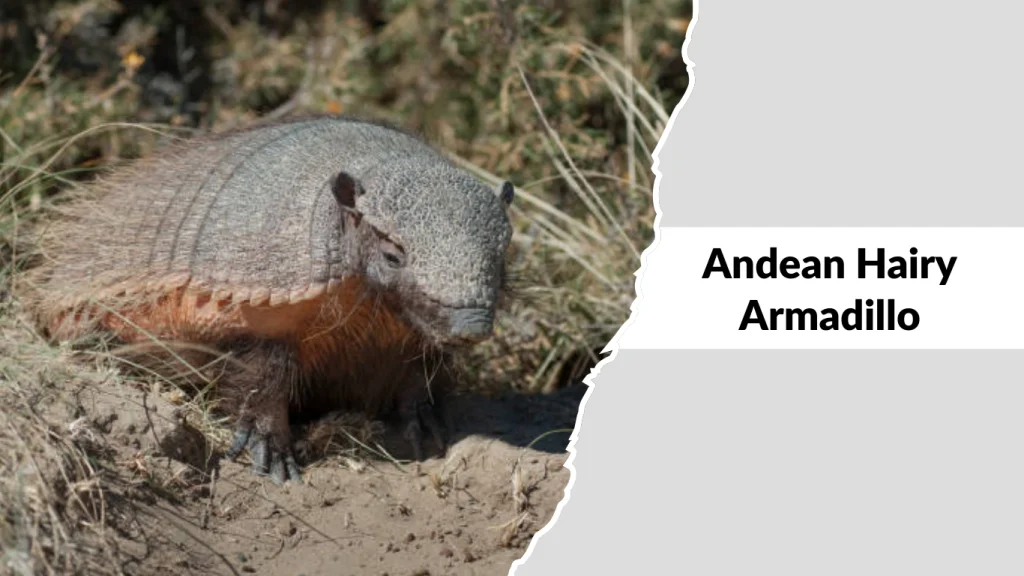
The Andean Hairy Armadillo (Chaetophractus nationi) is a small, mountain-dwelling armadillo found in high-altitude regions of the Andes. It is known for its dense fur, which provides insulation in cold environments.
Identification
- Thick, dark fur covering the armor and limbs
- Light brown to yellowish armor plates
- Short legs with strong digging claws
- Compact body adapted to cooler climates
- Tail covered with small bands and sparse hair
Habitat
This species inhabits high-altitude grasslands, scrublands, and rocky plains of Bolivia, Peru, and northern Chile. It prefers elevations between 2,500 and 4,000 meters, where temperatures are cool and vegetation is sparse. Burrows offer essential shelter from harsh weather.
Behaviors
Andean Hairy Armadillos are primarily diurnal, unlike many armadillos. They spend much of their time foraging and digging in the thin mountain soils. They are generally solitary and rely on burrows for thermal regulation. When threatened, they may flee or hide quickly in rocky crevices.
Diet
Their diet includes insects, roots, tubers, small vertebrates, and plant matter. They are opportunistic feeders, taking advantage of whatever resources are available in the harsh Andean landscape. Their strong claws help them extract food from rocky or compacted soil.
12. Chacoan Hairy Armadillo
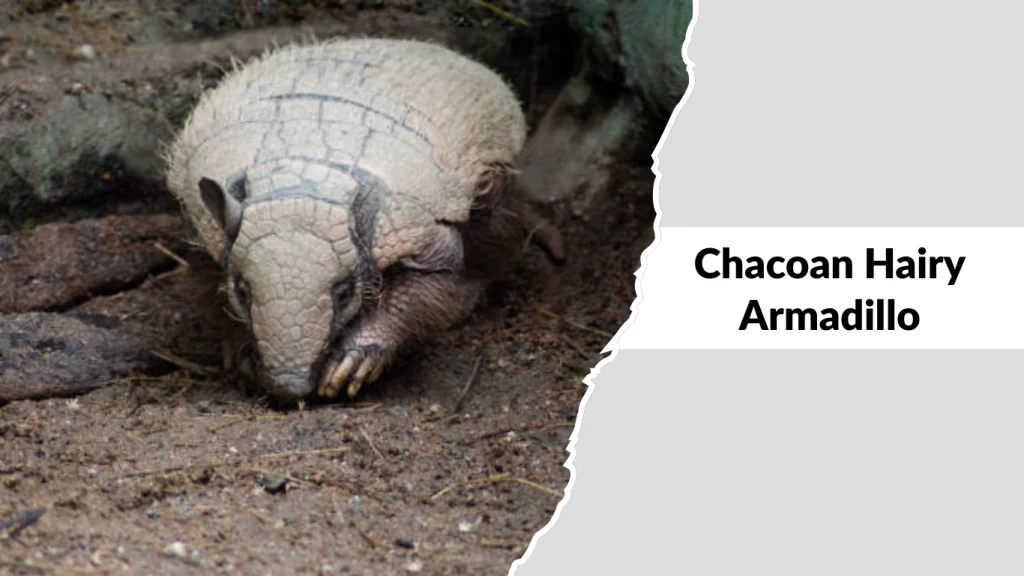
The Chacoan Hairy Armadillo (Chaetophractus spinosus) is a hardy species adapted to the dry Chaco region of South America. Its spiny, hair-covered armor and strong digging abilities help it thrive in harsh, semi-arid environments.
Identification
- Armor plates covered with stiff, spiny hair
- Yellowish to brown armor coloration
- Strong forelimbs with curved claws
- Stout body with dense fur underneath
- Long snout and small rounded ears
Habitat
This species inhabits the Gran Chaco region of Argentina, Paraguay, and Bolivia. It thrives in dry forests, thorn scrub, and semi-arid plains. Loose, sandy soil allows it to dig deep burrows, which provide shelter from heat and predators.
Behaviors
Chacoan Hairy Armadillos are primarily nocturnal but may show daytime activity in cooler seasons. They create extensive burrow systems with multiple entrances. When threatened, they may dig rapidly to escape or wedge themselves into burrows using their armored backs.
Diet
Their diet includes insects, worms, roots, fruits, seeds, and carrion. They are opportunistic omnivores, capable of adjusting their feeding habits to seasonal resource availability in the dry Chaco environment.
13. Llanos Long-nosed Armadillo
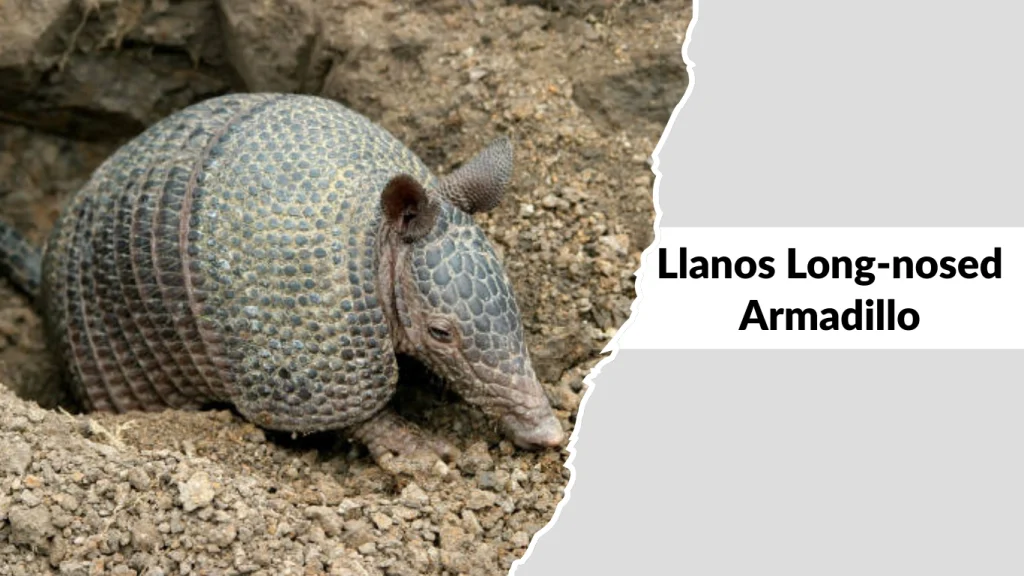
The Llanos Long-nosed Armadillo (Dasypus sabanillae) is a lesser-known species native to the grassy plains of the Llanos region in Colombia and Venezuela. It closely resembles other long-nosed armadillos but is adapted to more seasonal, open landscapes.
Identification
- Elongated snout typical of long-nosed armadillos
- Light to medium brown armor
- Multiple narrow, flexible armor bands
- Slender legs with sharp digging claws
- Thin, ringed tail
Habitat
This species inhabits the Llanos savannas, a vast tropical grassland ecosystem characterized by seasonal flooding and dry periods. It prefers well-drained soil for burrowing and areas with abundant insect life. The Llanos’ alternating wet–dry seasons shape its behavior and distribution.
Behaviors
Long-nosed Armadillos are mostly nocturnal and solitary. They spend daytime inside burrows to avoid heat and predators. Their movement is careful and deliberate, relying heavily on scent to locate prey. During wet seasons, they may shift burrow locations to avoid flooding.
Diet
Their diet consists mainly of ants, termites, larvae, beetles, and other soil invertebrates. They may also intake small amounts of plant material or soft fruits, but they remain primarily insectivorous. Their long tongue allows them to extract prey deep within soil crevices.
14. Red-bellied Armadillo

The Red-bellied Armadillo (Euphractus minimus) is a smaller, lesser-known armadillo species notable for its reddish-tinged underside and compact build. It is found in parts of northern South America, where it inhabits open and forest-edge environments.
Identification
- Distinct reddish or pinkish belly
- Light brown to yellowish armor plates
- Short limbs with strong claws
- Slender snout and small ears
- Short, ringed tail
Habitat
Red-bellied Armadillos inhabit grasslands, open woodlands, and forest margins in Brazil, Suriname, Guyana, and nearby regions. They prefer loose or sandy soil that enables easy burrowing. Their range is somewhat patchy due to habitat fragmentation.
Behaviors
They are mostly nocturnal but may show crepuscular activity. Red-bellied Armadillos are solitary and spend daylight hours in burrows. When threatened, they may flee quickly or dig themselves partially into the ground. They tend to be shy and avoid areas with heavy human activity.
Diet
Their diet includes insects, earthworms, larvae, roots, seeds, and fruits. They may also scavenge small amounts of carrion. Their flexible feeding habits help them adapt to a variety of habitat conditions.
15. Mulita (Southern Long-nosed Armadillo)

The Mulita, or Southern Long-nosed Armadillo (Dasypus hybridus), is a small, slender armadillo native to southeastern South America. It is one of the more adaptable species, commonly found in both wild habitats and agricultural landscapes.
Identification
- Multiple narrow, flexible armor bands
- Light brown or greyish shell
- Long, pointed snout
- Slender body with fine hair between plates
- Thin, ringed tail
Habitat
Mulitas inhabit grasslands, savannas, forest edges, and farmland across Argentina, Uruguay, Brazil, and Paraguay. They prefer soft, workable soil for digging burrows and thrive in areas with abundant insect prey. They tolerate moderate human disturbance more than many armadillo species.
Behaviors
They are primarily nocturnal, emerging from burrows to forage during the night. Mulitas are solitary and shy, often retreating quickly when threatened. They rely on scent to locate food and can dig rapidly to escape danger or create shelter.
Diet
Their diet consists mainly of insects, larvae, ants, termites, and worms. They also consume plant roots, fruits, and seeds. As opportunistic feeders, Mulitas adapt their diet seasonally based on food availability.
16. Peludo Armadillo
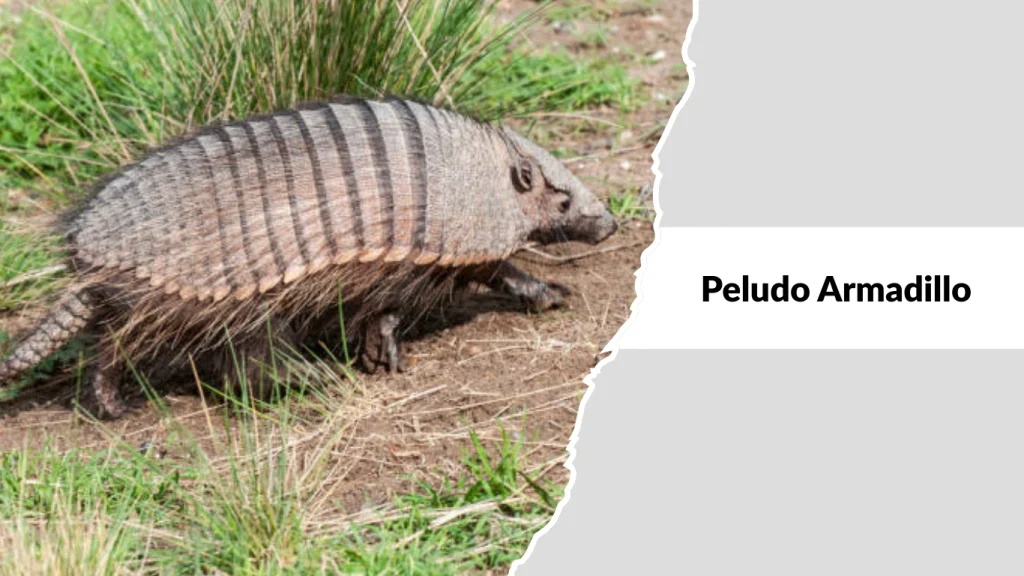
The Peludo Armadillo (Chaetophractus villosus patagonicus or regional variant) is a robust, hairy armadillo found in southern South America. Known for its thick fur and strong digging ability, it thrives in open, dry environments.
Identification
- Dense, coarse hair covering and protruding between armor plates
- Broad, heavy shell with multiple bands
- Strong forelimbs with large claws
- Long snout and rounded ears
- Sturdy body adapted for digging
Habitat
Peludo Armadillos inhabit Patagonian grasslands, dry scrub, and open plains in Argentina and southern Chile. They prefer loose or sandy soil for burrowing and survive well in windswept, arid landscapes with sparse vegetation.
Behaviors
They are mostly nocturnal or crepuscular, depending on temperature. Peludos are powerful diggers, creating deep burrows used for shelter and thermoregulation. They lead solitary lives and may travel significant distances while foraging. When threatened, they may dig rapidly to escape.
Diet
Their diet includes insects, small vertebrates, roots, fruits, seeds, and carrion. As highly opportunistic omnivores, Peludos adjust their feeding habits to seasonal availability, enabling them to thrive even in nutrient-poor environments.
17. Azara’s Long-nosed Armadillo
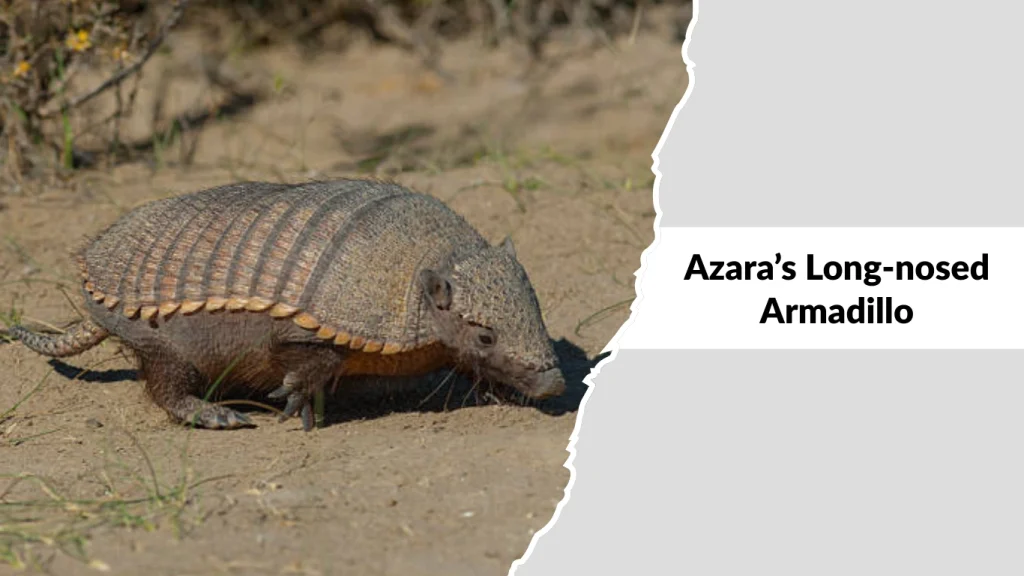
The Azara’s Long-nosed Armadillo (Dasypus pilosus) is a rare and distinctive species primarily found in the Andean regions of Peru. Known for its unusually hairy body and specialized mountain adaptations, it stands out among long-nosed armadillos.
Identification
- More hair covering the armor than most Dasypus species
- Dark brown to blackish shell with fine banding
- Long, narrow snout for probing soil
- Slender limbs with sharp claws
- Tail covered in narrow bony rings
Habitat
Azara’s Long-nosed Armadillos inhabit cloud forests, montane grasslands, and high-altitude valleys in Peru. They prefer moist, cool environments with soft soil that supports burrowing. Their range is fragmented and often isolated due to mountain terrain.
Behaviors
They are primarily nocturnal and shy, spending daylight hours in burrows or under dense vegetation. Their slow, cautious movement and strong digging ability help them navigate steep or uneven landscapes. They are solitary and rarely seen by humans.
Diet
Their diet includes insects, earthworms, larvae, and other soil invertebrates. Moist mountain soil supports a rich community of underground prey. They may also consume fungi and small amounts of plant matter as supplemental food sources.
18. Yuphard Armadillo
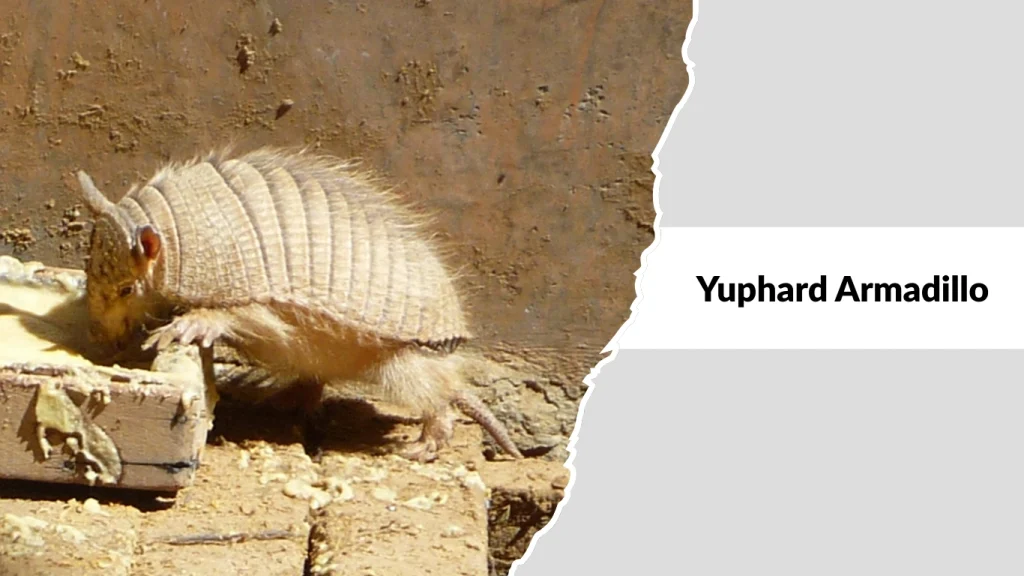
The Yuphard Armadillo (a lesser-known and poorly documented species) is considered one of the more obscure armadillos within South America. Its exact classification is debated, but it is generally referenced in extended armadillo lists due to its regional distinctiveness.
Identification
- Small to medium-sized body
- Light brown to greyish armor
- Multiple narrow, flexible bands
- Long snout typical of insectivorous armadillos
- Slender limbs with digging claws
Habitat
Yuphard Armadillos are believed to inhabit dry forests, open plains, and scrublands in limited regions of South America. Their preferred environments include areas with soft soil and modest vegetation cover, offering suitable conditions for burrowing and foraging.
Behaviors
They are presumed to be nocturnal and solitary, like most long-nosed armadillos. Their behaviors likely include burrowing for shelter, cautious nighttime foraging, and evasive digging when threatened. Due to limited field research, many aspects of their behavior remain uncertain.
Diet
Their diet likely consists of ants, termites, beetle larvae, worms, and other soil-dwelling invertebrates. They may also supplement their insect-based diet with plant matter such as roots or soft fruits when available.
19. Bolivian Armadillo
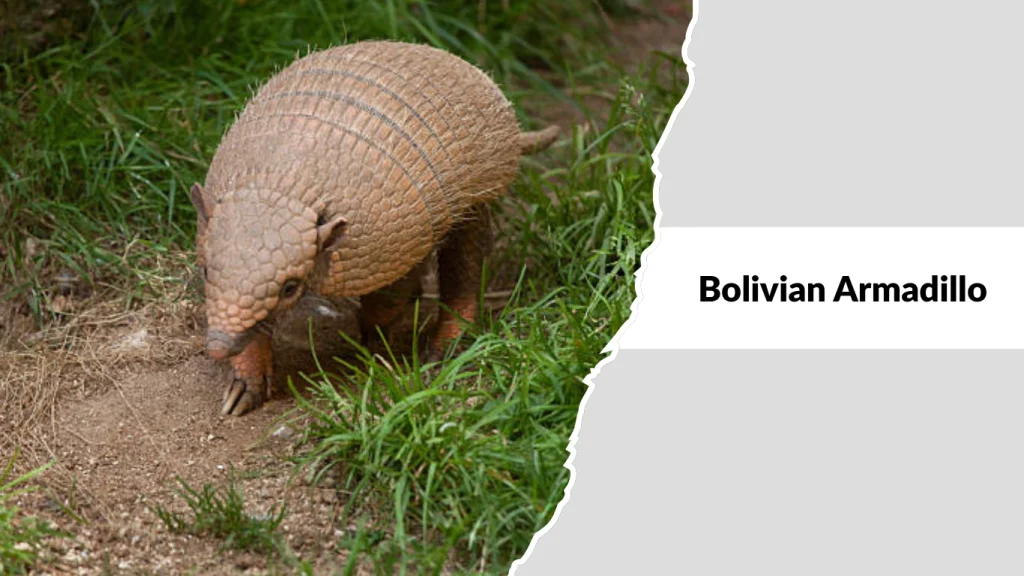
The Bolivian Armadillo (Dasypus boliviensis) is a little-known species native to parts of Bolivia. Similar in appearance to other long-nosed armadillos, it is adapted to forested and semi-open environments in tropical South America.
Identification
- Narrow, elongated snout
- Light to medium brown armor
- Multiple flexible armor bands
- Slender legs with sharp digging claws
- Ringed tail typical of Dasypus species
Habitat
Bolivian Armadillos inhabit tropical forests, forest edges, and savanna-like regions in Bolivia. They prefer moist, soft soil for burrowing and areas rich in insect life. Their distribution is limited and not fully mapped due to their elusive nature.
Behaviors
They are primarily nocturnal and solitary, spending daytime in burrows or dense vegetation. Their behavior includes careful, slow foraging and reliance on a strong sense of smell to detect underground prey. They are shy and retreat quickly when disturbed.
Diet
Their diet includes ants, termites, insects, worms, and larvae. They may also consume roots, small fruits, and fungi. Moist forest soil supports a wide variety of invertebrates that sustain this species.
20. Greater Fairy Armadillo
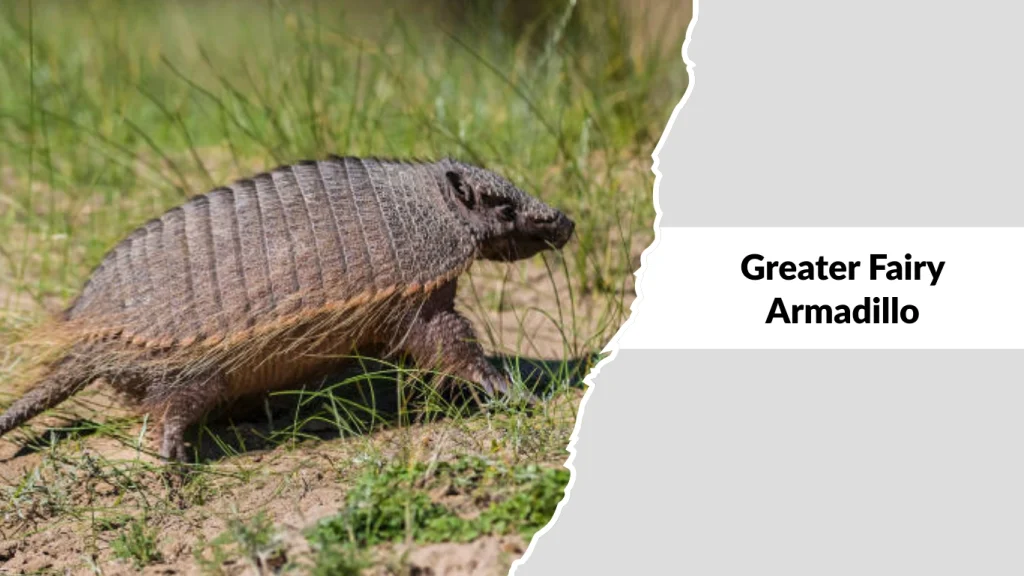
The Greater Fairy Armadillo (Calyptophractus retusus) is a rare and elusive species closely related to the Pink Fairy Armadillo. It is larger, more heavily built, and adapted to dry, sandy environments in South America.
Identification
- Pale, pinkish-tan armor with soft texture
- Dense, silky fur underneath the shell
- Strong, spade-like foreclaws for digging
- Compact body and short limbs
- Short tail and partially flexible shell
Habitat
Greater Fairy Armadillos inhabit dry Chaco regions, sandy plains, and scrub deserts of Bolivia, Paraguay, and northern Argentina. They depend on loose, sandy soil to construct their burrows and to perform their characteristic “sand swimming.”
Behaviors
They are highly fossorial and spend most of their lives underground. Greater Fairy Armadillos are nocturnal and extremely secretive, rarely seen by humans. When threatened, they may rapidly bury themselves or retreat into nearby tunnels. Their behavior is adapted almost entirely to subterranean living.
Diet
Their diet consists mainly of ants, termites, larvae, and soft-bodied invertebrates. They also consume roots and plant matter when available. Their insect-rich diet provides sufficient moisture in dry habitats.
21. Ochraceous Fairy Armadillo
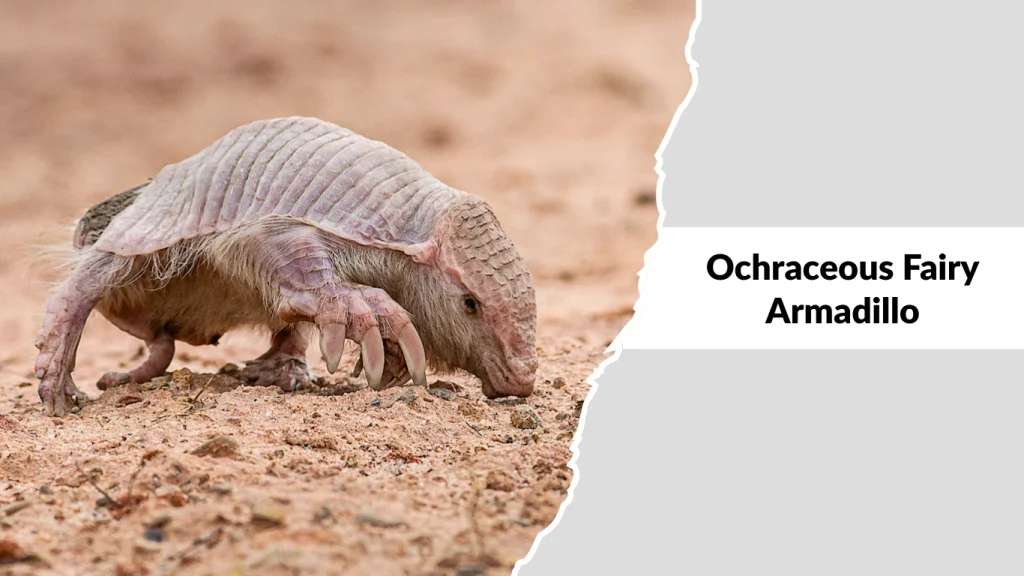
The Ochraceous Fairy Armadillo (Calyptophractus sp., often referenced as an obscure or debated species) is one of the least-documented armadillos. Known primarily from limited reports, it is considered part of the fairy armadillo group due to its size and sandy-soil adaptations.
Identification
- Small body with pale ochre or yellowish-tan armor
- Soft, flexible shell resembling other fairy armadillos
- Short limbs with strong digging claws
- Fine, light-colored fur beneath the shell
- Reduced tail size and compact overall form
Habitat
This rare armadillo is believed to inhabit sandy deserts, scrublands, and arid plains of southern South America. It relies on loose, dry soil for burrowing and likely occupies subterranean tunnels similar to other fairy armadillo species.
Behaviors
Ochraceous Fairy Armadillos are presumed to be nocturnal, solitary, and highly fossorial. Their behavior probably includes “sand swimming,” rapid digging, and a strong reliance on burrows for protection. Due to limited sightings, much of their behavior remains speculative.
Diet
Their diet likely consists of ants, termites, insect larvae, and small soil invertebrates. Occasional plant roots or tubers may supplement their nutrition, especially in dry seasons when insect availability fluctuates.
FAQs
1. How many species of armadillos exist today?
There are 21 recognized types of armadillos, though taxonomists continue to debate a few obscure or lesser-known species. These armadillos range from tiny burrowing specialists like the Pink Fairy Armadillo to larger, more widespread species such as the Nine-banded Armadillo.
2. Where do most armadillos live?
Armadillos are native to Central and South America, with the Nine-banded Armadillo extending into the southern United States. Different species live in deserts, grasslands, rainforests, scrublands, and savannas depending on their adaptations.
3. Are armadillos dangerous to humans?
Generally, armadillos are not dangerous. They are shy, solitary animals that avoid confrontation. They may scratch if handled, and rarely carry diseases that can spread through direct contact, but they pose minimal risk when left undisturbed.
4. What do armadillos eat?
Most armadillos are insectivores, feeding primarily on ants, termites, larvae, and worms. Some species also eat roots, fruits, seeds, fungi, and carrion. Their long snouts and sticky tongues help them extract prey from soil and crevices.
5. Why are some armadillo species endangered or rare?
Threats include habitat loss, hunting, climate change, and low reproductive rates. Specialized species like the Pink Fairy Armadillo are highly sensitive to environmental changes, while others face pressure from agriculture, deforestation, and human expansion.