

Sea otters are charismatic marine mammals known for their intelligence, dense fur, and vital role in coastal ecosystems. Found along cold ocean shorelines, these animals depend on specific habitats to survive and thrive. Understanding where sea otters live, how they survive, and their unique lifecycle provides insight into their ecological importance and conservation needs. This article explores sea otter habitats, survival strategies, lifecycle stages, and average lifespan in the wild and captivity.
Where Sea Otters Live
Sea otters live exclusively in coastal marine environments along the northern Pacific Ocean. Their range stretches across cold and temperate shorelines where food is abundant and waters are relatively shallow. Unlike many marine mammals, sea otters rarely venture into deep open oceans.
Most populations are concentrated along the coasts of Alaska, western Canada, and the United States, particularly California. Smaller populations are also found near Russia and northern Japan. These areas provide stable ecosystems that support the otters’ high-energy lifestyle.
Sea otters depend heavily on nearshore habitats because they must surface frequently to breathe and feed multiple times a day. Calm waters with protection from strong waves are essential for resting and raising young.
Kelp forests play a critical role in where sea otters live. These underwater forests offer shelter, anchoring points, and rich feeding grounds, making them one of the most important habitats for sea otter survival.
Common Sea Otter Habitats
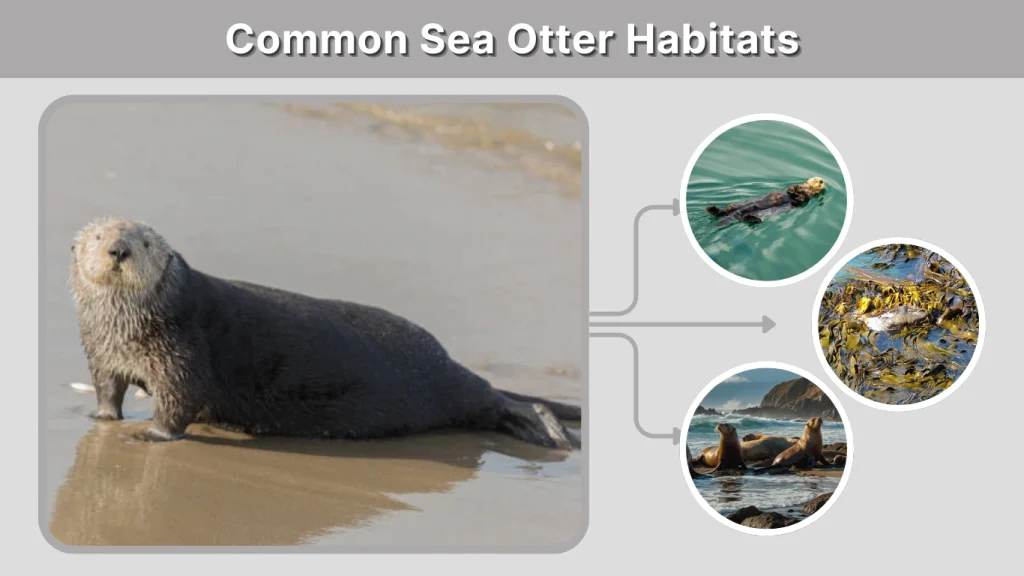
Sea otters choose habitats that balance safety, food availability, and environmental stability.
- Shallow coastal waters
- Kelp forests and seaweed beds
- Rocky shorelines and reefs
- Protected bays and estuaries
- Areas with minimal ice movement
These habitats allow sea otters to forage efficiently while reducing exposure to predators and rough ocean conditions.
How Sea Otters Survive in the Wild
Sea otters have developed unique survival strategies that set them apart from other marine mammals. Instead of relying on blubber, they depend on fur—the densest of any animal species—to stay warm in cold water.
Their fur traps air close to the skin, creating insulation. To maintain this layer, sea otters spend a significant amount of time grooming, ensuring their fur remains clean and functional. Without proper grooming, they risk hypothermia.
Sea otters also have extremely high metabolisms. They must eat approximately 20–25% of their body weight each day, which drives their constant foraging behavior. This need for frequent feeding keeps them closely tied to productive coastal habitats.
Living in groups, known as rafts, also improves survival. Rafts provide safety in numbers and reduce the risk of drifting away while resting.
Sea Otter Diet and Feeding Behavior

What Sea Otters Eat
- Sea urchins
- Crabs
- Clams and mussels
- Snails and abalone
Unique Feeding Traits
- Use of rocks as tools
- Foraging on the seafloor
- Storing food in underarm skin folds
These feeding behaviors help sea otters access hard-shelled prey that many predators cannot exploit.
Sea Otter Lifecycle Overview
The sea otter lifecycle begins with the birth of a single pup, which is fully furred and buoyant. Pups depend entirely on their mothers for warmth, grooming, and food during early development.
As pups grow, they learn essential survival skills such as swimming, diving, and hunting. Mothers play a critical role by demonstrating techniques and gradually encouraging independence.
Juvenile otters slowly transition into adulthood, eventually establishing their own home ranges and social patterns within coastal ecosystems.
Sea Otter Reproduction and Parenting
Sea otters do not follow a strict breeding season, allowing reproduction to occur throughout the year. This flexibility helps populations adapt to changing environmental conditions and food availability. Females typically give birth to one pup at a time.
Pregnancy includes a delayed implantation period, which allows the mother to time birth for favorable conditions. Once born, the pup floats on the surface while the mother forages, a behavior made possible by the pup’s dense natal fur.
Maternal care is intensive and long-lasting. Mothers groom, feed, and protect their pups for several months, teaching them essential survival skills before independence. Male sea otters do not participate in raising young.
Lifespan of Sea Otters
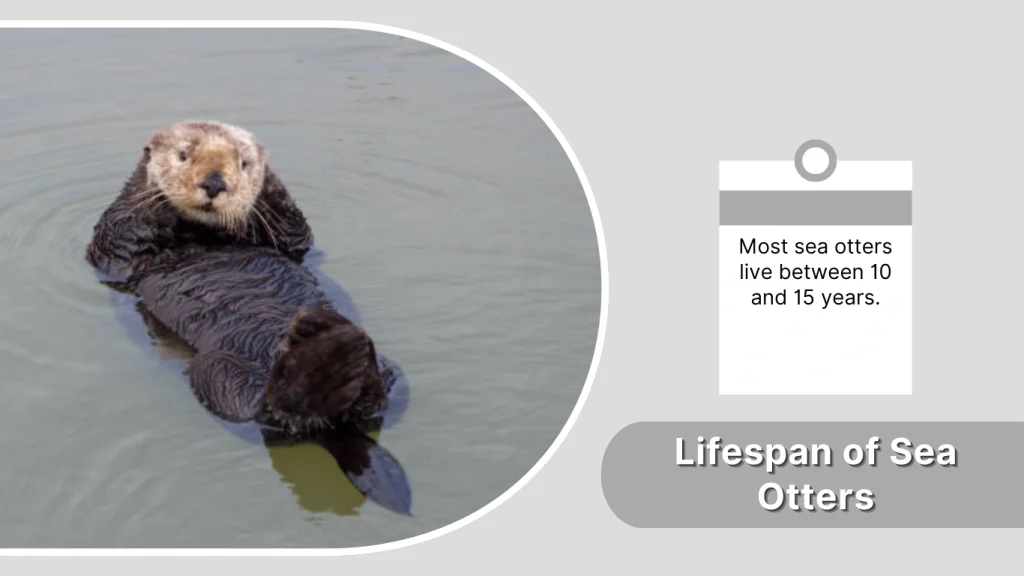
Sea otters have relatively shorter lifespans compared to some marine mammals, largely due to environmental pressures and predation. In the wild, most sea otters live between 10 and 15 years.
Females often live longer than males, as males face higher risks due to territorial behavior and aggressive encounters. Juvenile mortality is also high, especially during the first year of life.
In captivity, sea otters can live significantly longer, sometimes reaching 20 to 25 years. Consistent food supply, absence of predators, and access to veterinary care greatly improve survival rates.
Longevity depends on several factors, including habitat quality, disease exposure, and human-related threats such as pollution and fishing gear entanglement.
Factors That Affect Sea Otter Survival
- Availability of prey species
- Exposure to oil spills and pollution
- Predation by sharks and orcas
- Disease and parasites
- Climate-driven habitat changes
These factors can rapidly influence population stability, especially in areas where otter numbers are already low.
Ecological Role of Sea Otters
Sea otters play a crucial role in maintaining healthy marine ecosystems. As keystone predators, they regulate populations of sea urchins and other invertebrates that feed on kelp.
Without sea otters, sea urchin populations can explode, leading to the destruction of kelp forests. This loss affects fish, invertebrates, and even coastal protection provided by kelp systems.
By controlling prey species, sea otters indirectly support biodiversity and carbon storage in coastal waters, making them vital to long-term ecosystem health.
Conservation Status and Ongoing Threats

Major Threats to Sea Otters
- Oil spills and chemical pollution
- Habitat degradation
- Entanglement in fishing nets
- Climate change impacts
Conservation Efforts
- Legal protection under marine laws
- Habitat restoration projects
- Wildlife rescue and rehabilitation
- Population monitoring programs
Despite protection, many sea otter populations remain vulnerable. Continued conservation efforts are essential to ensure their survival.
Why Sea Otters Matter
Sea otters are more than charismatic marine mammals—they are ecosystem engineers. Their presence helps stabilize food webs, protect kelp forests, and support coastal biodiversity.
Understanding where sea otters live, how they survive, and how long they live highlights the importance of protecting their habitats. Conserving sea otters ultimately benefits entire marine ecosystems and the communities that depend on them.
FAQs
Where do sea otters live most commonly?
Sea otters are most commonly found along the northern Pacific Ocean coastline, especially in Alaska and California. They prefer shallow coastal waters with kelp forests, which provide both food and protection from predators and strong currents.
How do sea otters survive in cold water?
Sea otters survive cold water through extremely dense fur rather than blubber. Their fur traps air for insulation, and their high metabolism generates body heat, requiring them to eat frequently to maintain energy.
What is the lifecycle of a sea otter?
The sea otter lifecycle includes birth, juvenile development, adulthood, and reproduction. Pups rely heavily on their mothers, while adults establish territories and reproduce throughout the year without a fixed breeding season.
How long do sea otters live?
In the wild, sea otters typically live 10–15 years. In captivity, they can live over 20 years due to reduced threats, consistent food supply, and veterinary care.
Why are sea otters important to the ecosystem?
Sea otters are keystone species that regulate sea urchin populations. Without them, urchins can destroy kelp forests, leading to biodiversity loss and weakened coastal ecosystems.