





Swans are among the largest and most elegant water birds, admired for their long necks, powerful wings, and calm presence on lakes and rivers. Found across both the Northern and Southern Hemispheres, swans inhabit a wide range of freshwater and coastal wetlands. There are six commonly recognized swan species, each with unique physical traits, behaviors, and geographic ranges. Understanding these differences helps with easy identification and appreciation of these majestic birds.
1. Mute Swan (Cygnus olor)

The Mute Swan is one of the most recognizable and widespread swan species in the world. Known for its elegant white plumage and graceful posture, it is commonly found on lakes, rivers, and wetlands. Despite its calm appearance, this swan can be highly territorial, especially during the breeding season.
Identification
- Large white body with long, curved neck
- Bright orange bill with a prominent black knob at the base
- Black facial markings around the bill
- Wings often raised in a curved “S” shape while swimming
Size and Appearance
Mute Swans are among the largest flying birds. Adults typically measure 125–170 cm (49–67 inches) in length, with a wingspan reaching up to 240 cm (94 inches). Males (cobs) are slightly larger than females (pens), especially in neck thickness and knob size.
Habitat and Range
Originally native to Europe and parts of Asia, Mute Swans have been widely introduced to North America, Australia, and New Zealand. They prefer calm freshwater habitats such as ponds, lakes, slow-moving rivers, and marshes, often near human settlements.
Behavior and Diet
Mute Swans are mostly non-migratory and remain in the same area year-round if water does not freeze. They primarily feed on aquatic plants, algae, and submerged vegetation, occasionally consuming small invertebrates. During nesting season, they are known for aggressive defense of their territory.
2. Whooper Swan (Cygnus cygnus)
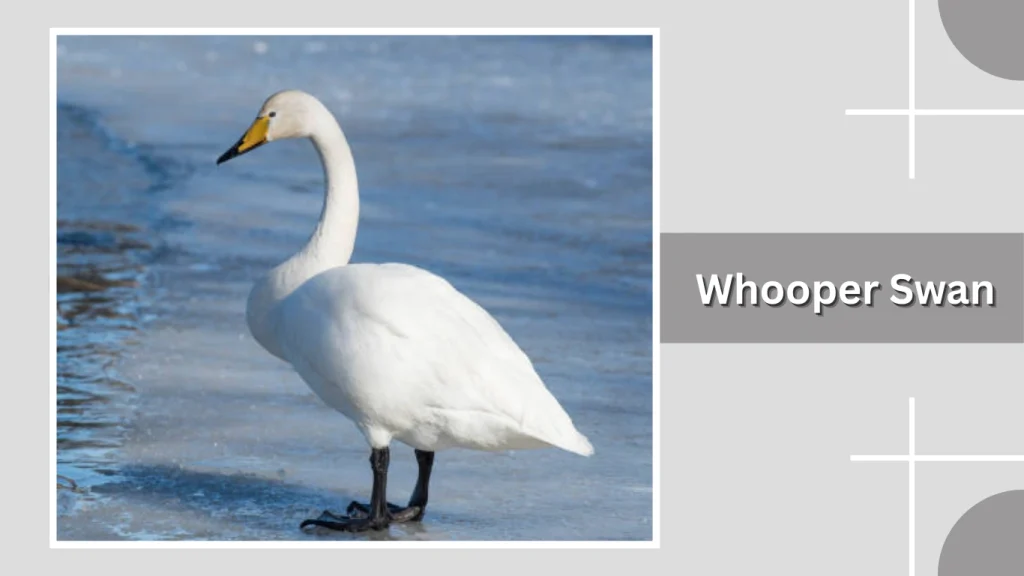
The Whooper Swan is a powerful and vocal swan species known for its loud, trumpeting calls. It is one of the most common wild swans in northern regions and is often seen migrating in large, impressive flocks across open landscapes and wetlands.
Identification
- Large white body with a straight, long neck
- Yellow and black bill, with yellow extending to the nostrils
- No black knob at the base of the bill
- Upright posture compared to the Mute Swan
Size and Appearance
Whooper Swans are slightly smaller than Mute Swans but still very large birds. Adults typically reach 140–165 cm (55–65 inches) in length, with a wingspan of up to 235 cm (92 inches). Both males and females look similar, though males are usually a bit heavier.
Habitat and Range
Whooper Swans breed in Iceland, Scandinavia, and northern Russia and migrate south during winter. In colder months, they are commonly found in Northern and Central Europe and East Asia, favoring lakes, estuaries, flooded fields, and slow rivers.
Behavior and Diet
This species is highly migratory and known for strong family bonds. Whooper Swans feed on aquatic vegetation, grasses, roots, and crops such as grain and potatoes during winter. Their loud calls help maintain contact within flocks during flight and feeding.
3. Tundra Swan (Cygnus columbianus)
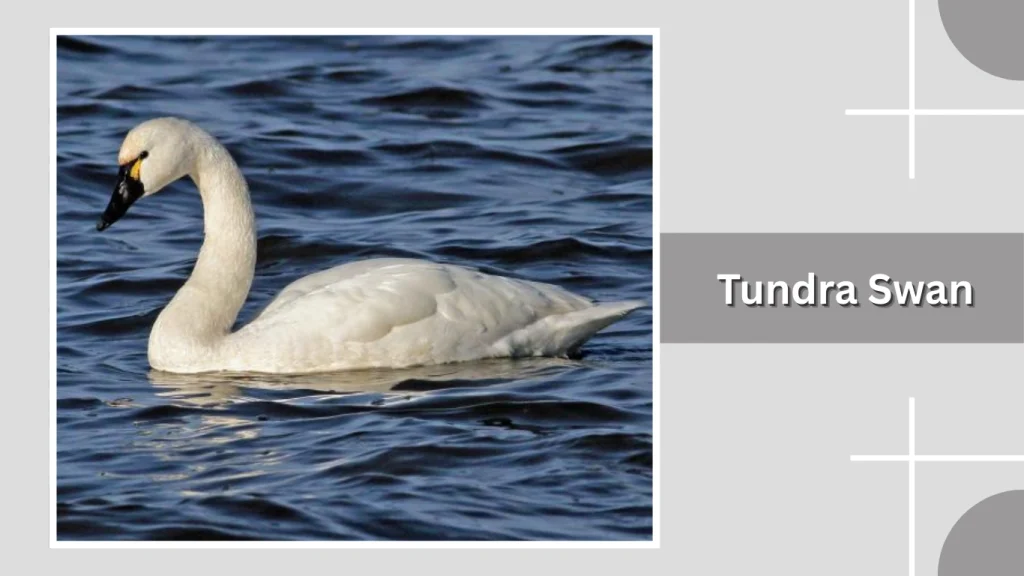
The Tundra Swan is a graceful, migratory swan species known for traveling long distances between Arctic breeding grounds and warmer wintering areas. It is slimmer and more delicate in appearance compared to some other swans.
Identification
- White body with a long, straight neck
- Mostly black bill, often with a small yellow spot near the eye (in some populations)
- No knob at the base of the bill
- More compact body than Mute and Whooper Swans
Size and Appearance
Tundra Swans are slightly smaller than Whooper and Mute Swans. Adults usually measure 120–150 cm (47–59 inches) in length, with a wingspan of up to 210 cm (83 inches). Males and females look very similar, with minimal visible differences.
Habitat and Range
They breed in the Arctic tundra of North America and Eurasia and migrate south for winter. During migration and winter, they are commonly found in coastal bays, estuaries, lakes, rivers, and agricultural fields across North America and parts of Asia.
Behavior and Diet
Tundra Swans are strong, long-distance migrants, often traveling in family groups. Their diet consists mainly of aquatic plants, tubers, roots, grasses, and grains, especially in wintering areas. They are generally quieter than Whooper Swans but still communicate with soft calls.
4. Trumpeter Swan (Cygnus buccinator)
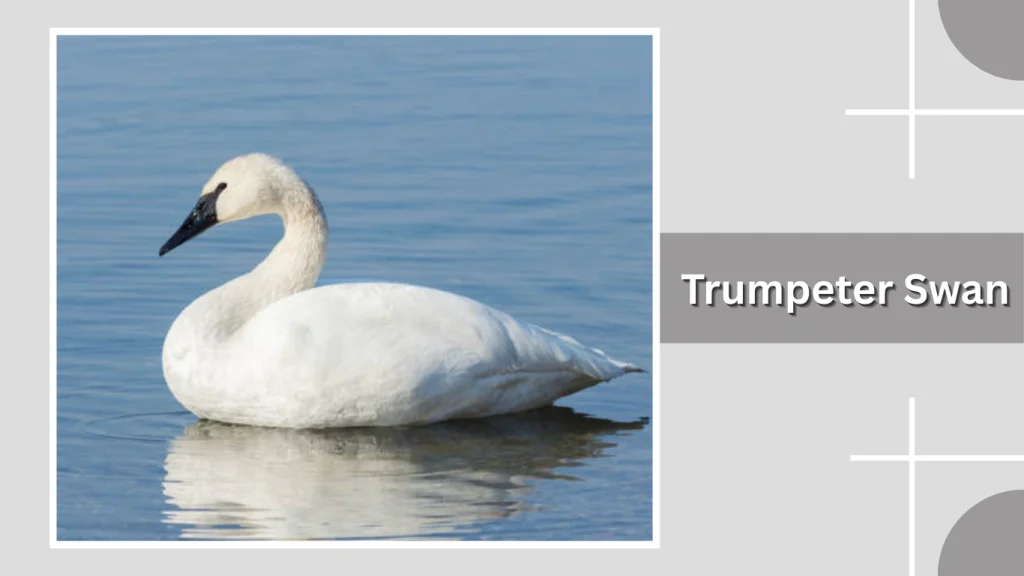
The Trumpeter Swan is the largest native swan species of North America and is named for its deep, trumpet-like call. Once close to extinction, it has made a strong recovery due to conservation efforts.
Identification
- Entirely white body with a very long neck
- Large, all-black bill with no yellow markings
- No knob at the base of the bill
- Straight neck profile when swimming
Size and Appearance
Trumpeter Swans are the largest swans in the world. Adults typically measure 140–180 cm (55–71 inches) in length and can have a wingspan of up to 250 cm (98 inches). Males are noticeably heavier and larger than females.
Habitat and Range
They are native to North America, breeding mainly in Alaska, Canada, and the northern United States. Preferred habitats include large lakes, ponds, marshes, and slow-moving rivers with abundant aquatic vegetation.
Behavior and Diet
Trumpeter Swans are partially migratory, with some populations moving south during winter. They feed primarily on submerged aquatic plants, along with roots, stems, and occasional invertebrates. They are generally quiet outside the breeding season but very defensive when nesting.
5. Black Swan (Cygnus atratus)
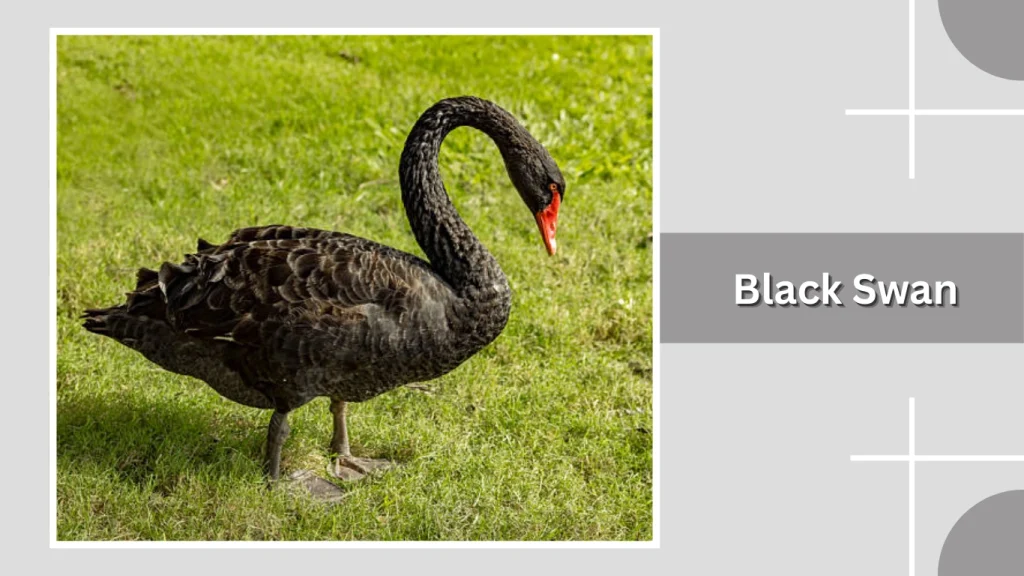
The Black Swan is a striking and easily recognizable swan species known for its dark plumage and contrasting red bill. Unlike most swans, it is native to the Southern Hemisphere and is commonly seen in large flocks.
Identification
- Black feathers with white flight feathers visible in flight
- Bright red bill with a pale tip
- Long neck often held in graceful curves
- Red eyes in adults
Size and Appearance
Black Swans are slightly smaller than Mute Swans but still large birds. Adults usually measure 110–140 cm (43–55 inches) in length, with a wingspan of around 200–220 cm (79–87 inches). Males and females look similar, though males are typically a bit larger.
Habitat and Range
This species is native to Australia, including Tasmania. Black Swans inhabit lakes, rivers, wetlands, and coastal bays, and they have also been introduced to parts of Europe, New Zealand, and Asia.
Behavior and Diet
Black Swans are partially migratory, moving in response to water availability rather than seasons. They feed mainly on aquatic plants, algae, and grasses, often foraging in shallow water or on land near water bodies.
6. Black-necked Swan (Cygnus melancoryphus)
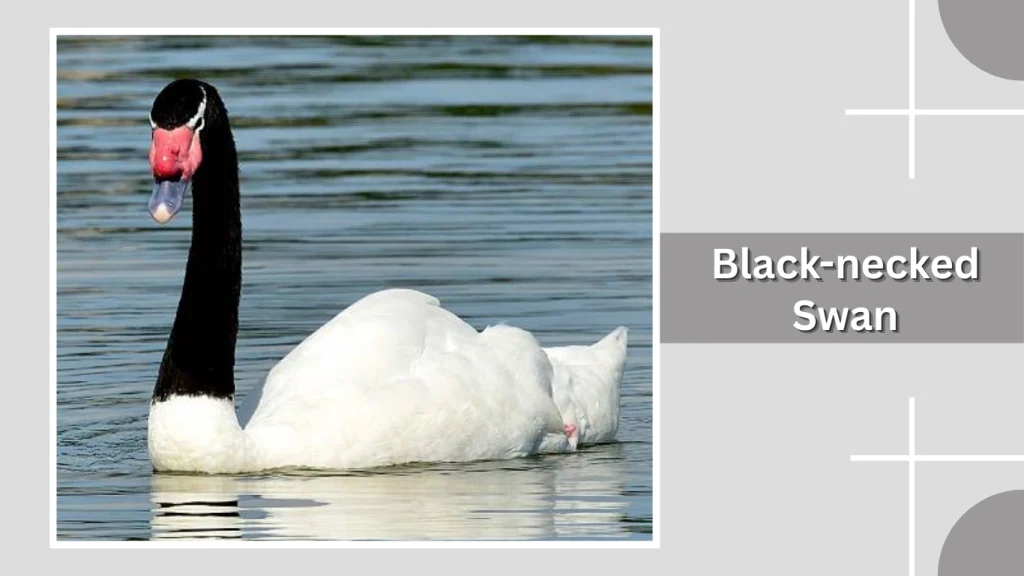
The Black-necked Swan is a distinctive swan species recognized by its contrasting white body and black neck. It is the only swan species native to South America and is often seen gliding calmly across shallow wetlands.
Identification
- White body with a long black neck
- Bright red knob at the base of the bill
- Grayish bill with darker tip
- Neck usually held upright or gently curved
Size and Appearance
Black-necked Swans are medium-sized compared to other swans. Adults typically reach 102–124 cm (40–49 inches) in length, with a wingspan of about 177–200 cm (70–79 inches). Males are slightly larger and have a more prominent red knob than females.
Habitat and Range
They are found across southern South America, including Chile, Argentina, Uruguay, and southern Brazil. Preferred habitats include shallow lakes, lagoons, marshes, and coastal wetlands with abundant aquatic vegetation.
Behavior and Diet
Black-necked Swans are mostly sedentary, though some populations move locally in response to water levels. Their diet consists mainly of aquatic plants, algae, and submerged vegetation. They are generally peaceful but become protective when nesting and raising young.
FAQs
How many types of swans are commonly found?
There are six commonly recognized swan species found around the world. These include the Mute Swan, Whooper Swan, Tundra Swan, Trumpeter Swan, Black Swan, and Black-necked Swan. Each species differs in size, color, distribution, and behavior.
Which swan species is the largest?
The Trumpeter Swan is the largest swan species and also one of the heaviest flying birds. It has a wingspan that can reach nearly 2.5 meters and is native to North America.
Are all swans white in color?
No, not all swans are white. The Black Swan has entirely black plumage, while the Black-necked Swan has a white body with a black neck. These species are native to the Southern Hemisphere.
Do swans migrate?
Some swan species are migratory, such as the Whooper Swan and Tundra Swan, which travel long distances between breeding and wintering areas. Others, like the Mute Swan, are mostly non-migratory if conditions remain suitable.
Where are swans commonly found?
Swans are commonly found in lakes, rivers, wetlands, marshes, and coastal areas. Their distribution spans Europe, Asia, North and South America, and Australia, depending on the species.