





Sharks are among the most fascinating and ancient creatures in the ocean, having existed for hundreds of millions of years. From massive filter feeders to fast, agile predators, sharks come in a wide range of shapes, sizes, and behaviors. This guide explores 35 different types of sharks, highlighting their unique features, habitats, behaviors, diets, and life cycles to help you better understand these remarkable marine animals.
1. Great White Shark
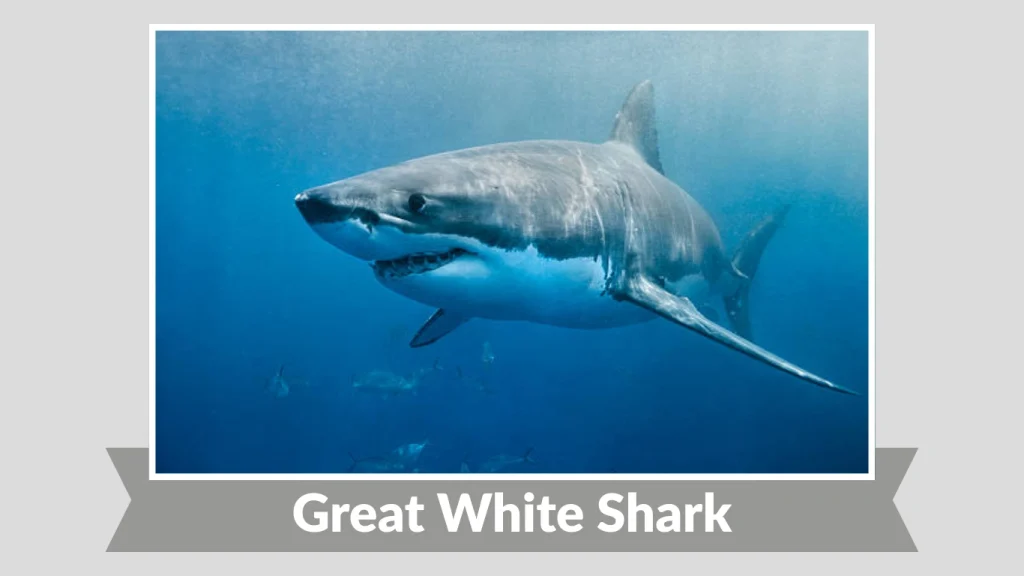
The great white shark is one of the most recognizable and studied shark species in the world. Known for its size, power, and role as an apex predator, it plays a crucial part in maintaining healthy marine ecosystems.
Identification
- Large, robust body with a torpedo-shaped profile
- Gray to slate-blue upper body with a white underside
- Powerful crescent-shaped tail
- Conical snout and rows of large, serrated triangular teeth
- Can grow over 20 feet (6 meters) in length
Habitat
Great white sharks are found in coastal and offshore waters of temperate and subtropical oceans worldwide. They commonly inhabit areas with abundant prey, such as seal colonies, continental shelves, and coastal drop-offs.
Behaviors
Great whites are solitary hunters but may gather temporarily where food is plentiful. They are known for breaching behavior during hunting and rely on stealth, speed, and surprise when attacking prey from below.
Diet and Lifecycle
Their diet includes seals, sea lions, fish, rays, and smaller sharks. Great white sharks are ovoviviparous, meaning embryos develop inside eggs that hatch within the mother, and pups are born live after a gestation period of about 11 months.
2. Tiger Shark
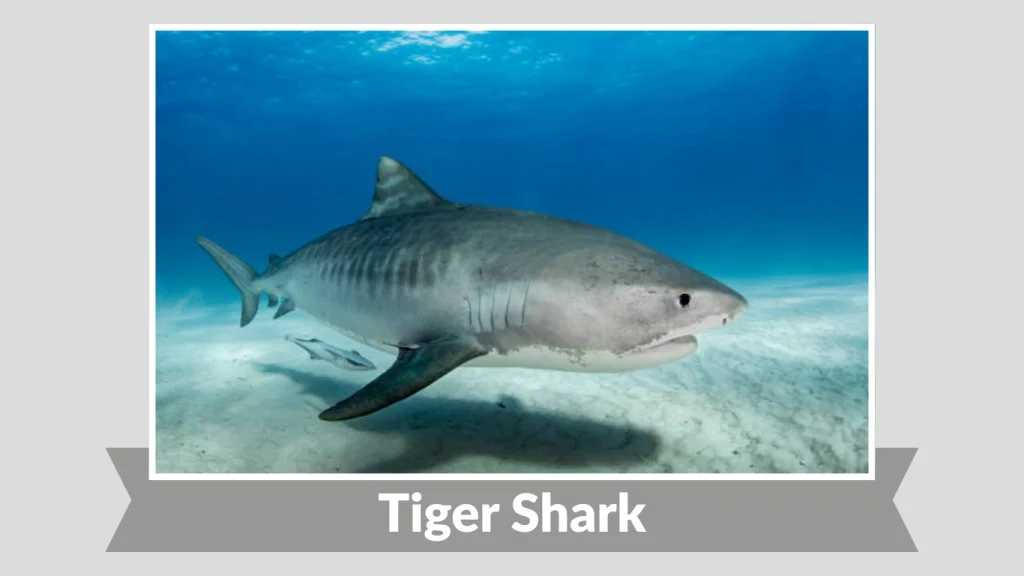
The tiger shark is a large, powerful species named for the dark vertical stripes along its body. It is known for its broad diet and adaptability, making it one of the most successful predators in tropical and subtropical oceans.
Identification
- Thick, heavy-bodied shape with a blunt snout
- Dark vertical stripes on a gray or brown body
- White to yellowish underside
- Large, curved, serrated teeth designed for cutting
- Can grow up to 18 feet (5.5 meters) long
Habitat
Tiger sharks are commonly found in warm coastal waters, coral reefs, lagoons, and open oceans. They often patrol shallow areas near shorelines, islands, and river mouths, especially at night.
Behaviors
This species is mostly solitary and highly opportunistic. Tiger sharks are strong swimmers and are most active during dusk and nighttime, when they hunt using stealth rather than speed.
Diet and Lifecycle
Tiger sharks eat a wide variety of prey, including fish, sea turtles, seabirds, rays, and other sharks. They are ovoviviparous, giving birth to live young after a gestation period of about 13–16 months, with litters ranging from 10 to over 80 pups.
3. Bull Shark
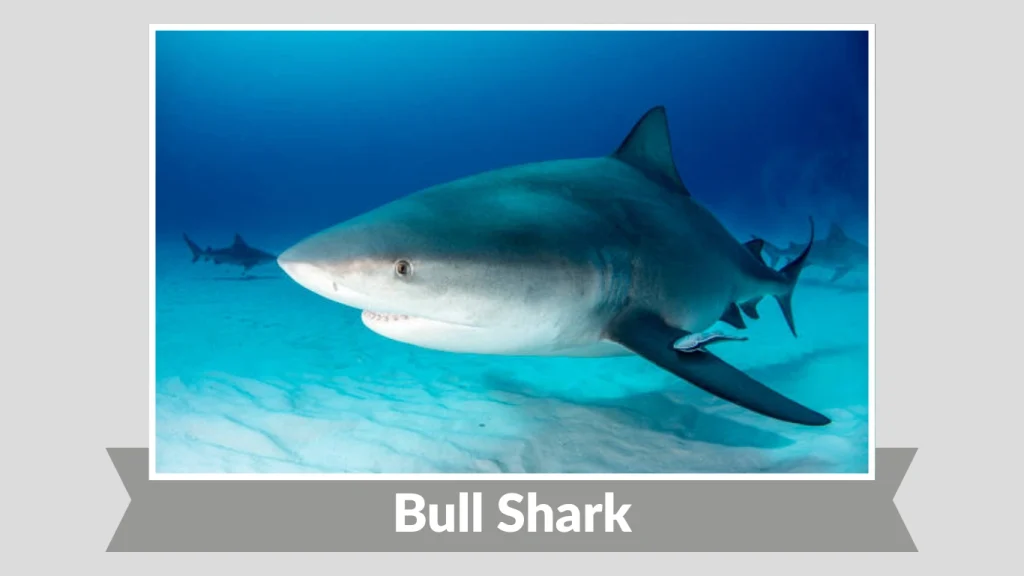
The bull shark is known for its aggressive nature and ability to survive in both saltwater and freshwater. Its adaptability and strength make it one of the most dangerous shark species to humans.
Identification
- Stocky, heavy-bodied appearance
- Short, blunt snout
- Gray upper body with a white underside
- Small eyes compared to body size
- Grows up to about 11–13 feet (3.5–4 meters)
Habitat
Bull sharks are found in warm coastal waters worldwide and are famous for traveling far into rivers and estuaries. They are commonly seen near shorelines, river mouths, and shallow bays.
Behaviors
This species is highly territorial and often swims in shallow waters. Bull sharks are strong, slow-moving hunters that rely on surprise attacks rather than long chases.
Diet and Lifecycle
Bull sharks feed on fish, rays, turtles, dolphins, and other sharks. They are viviparous, meaning embryos develop inside the mother with a placental connection, and females give birth to 1–13 pups after about a year of gestation.
4. Hammerhead Shark
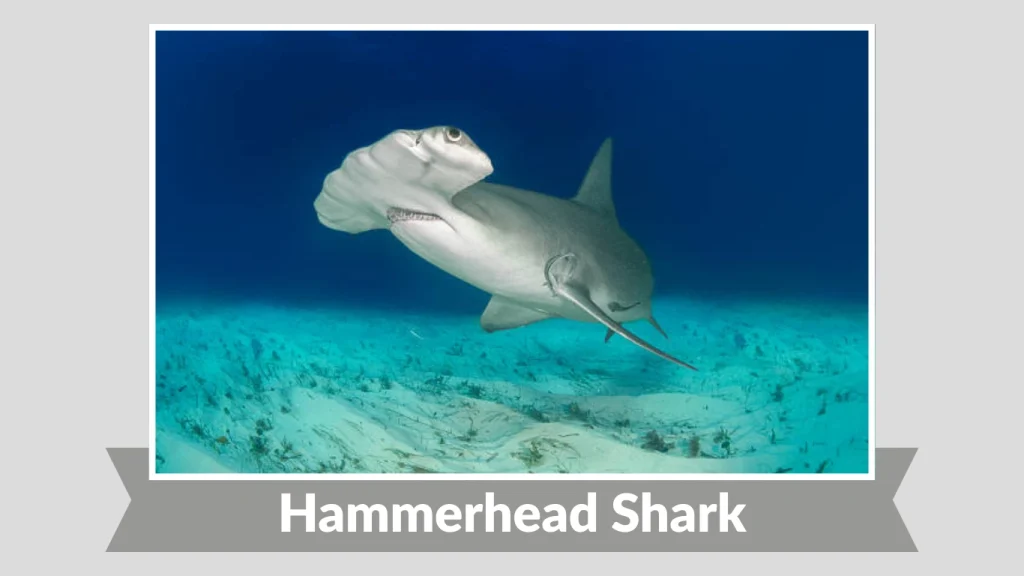
Hammerhead sharks are easily recognized by their unique, flattened head shape called a cephalofoil. This unusual structure enhances their sensory abilities, making them highly efficient hunters.
Identification
- Distinct hammer-shaped head with eyes on each end
- Gray to olive-green upper body
- White underside
- Tall, curved dorsal fin
- Can reach lengths of 20 feet (6 meters), depending on species
Habitat
Hammerhead sharks inhabit warm temperate and tropical waters around the world. They are commonly found along coastlines, continental shelves, and around coral reefs and seamounts.
Behaviors
Some hammerhead species are solitary, while others form large schools during the daytime. They are active hunters that use their wide head to pin prey against the seafloor and to detect electrical signals from buried animals.
Diet and Lifecycle
Their diet consists mainly of fish, squid, octopus, and rays. Hammerhead sharks are viviparous, giving birth to live young after a gestation period of 8–12 months, with litter sizes ranging from 6 to more than 40 pups.
5. Whale Shark
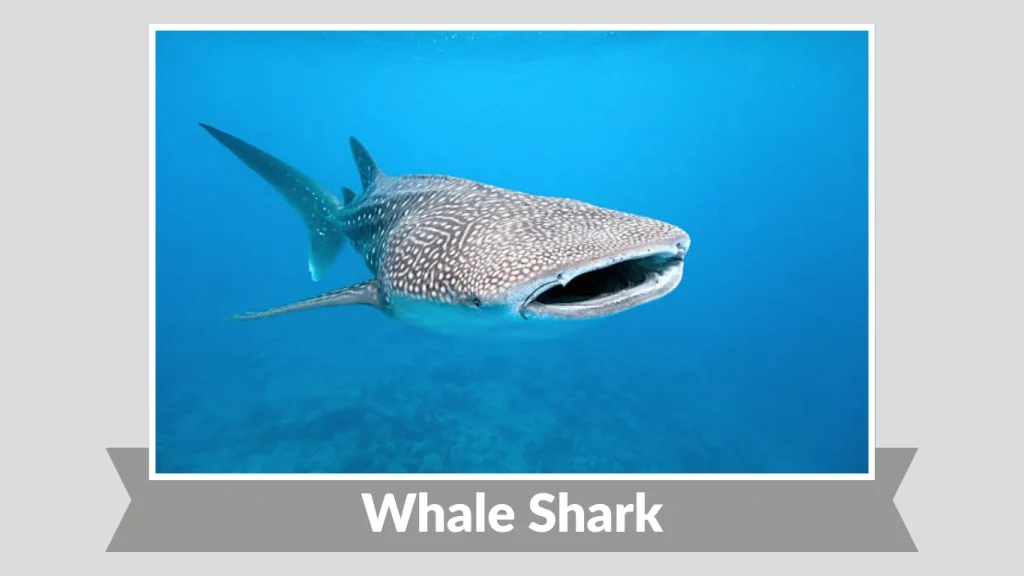
The whale shark is the largest fish in the ocean and is known for its gentle nature. Despite its massive size, it feeds primarily on tiny organisms and poses no threat to humans.
Identification
- Enormous, broad head with a wide, flat mouth
- Gray to bluish body covered in white spots and stripes
- Thick skin and a cylindrical body shape
- Small eyes positioned near the front of the head
- Can grow over 40 feet (12 meters) long
Habitat
Whale sharks are found in warm tropical and subtropical oceans worldwide. They prefer open waters but often gather near coastal areas where plankton blooms occur.
Behaviors
This species is slow-moving and solitary, though large feeding aggregations can form seasonally. Whale sharks often swim near the surface while feeding and are known for their calm, non-aggressive behavior.
Diet and Lifecycle
Whale sharks feed by filter-feeding on plankton, small fish, and fish eggs. They are ovoviviparous, giving birth to live pups that hatch from eggs inside the mother, with litters potentially numbering in the hundreds.
6. Basking Shark
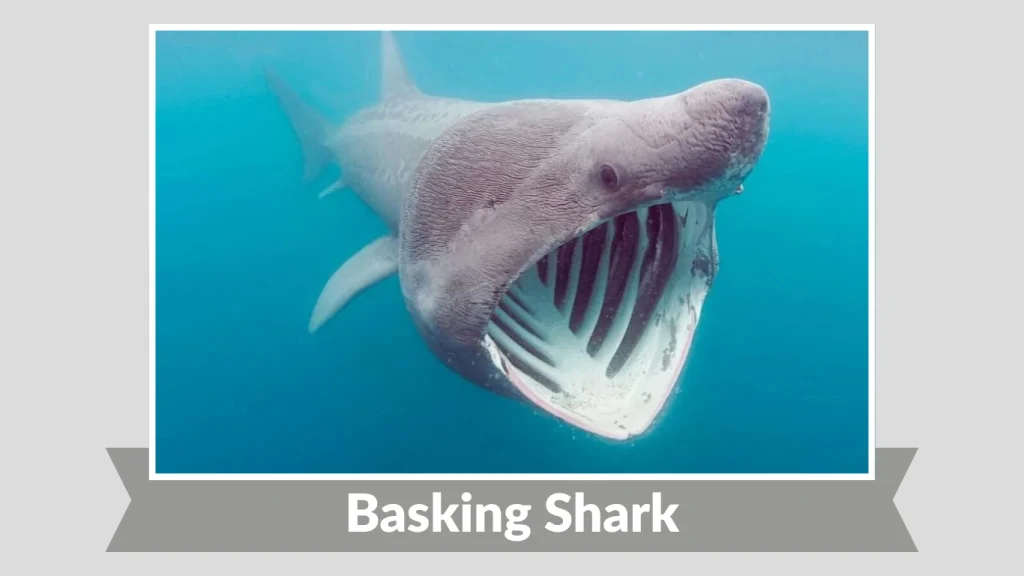
The basking shark is the second-largest fish in the world and is best known for its huge mouth and slow, gentle swimming style. It is a harmless filter feeder that spends much of its time near the ocean surface.
Identification
- Very large, bulky body with a conical snout
- Massive mouth that opens wide while feeding
- Dark gray to brownish coloration
- Large triangular dorsal fin often visible above water
- Can grow up to 26 feet (8 meters) long
Habitat
Basking sharks are found in temperate oceans worldwide. They are commonly seen near the surface in coastal and offshore waters, especially in areas with high plankton concentrations.
Behaviors
These sharks are slow swimmers and are often observed “basking” at the surface while feeding. They are generally solitary but may gather in small groups during seasonal plankton blooms.
Diet and Lifecycle
Basking sharks feed exclusively on plankton, filtering tiny organisms from the water. They are ovoviviparous, with embryos developing inside the mother before live birth, though much of their reproductive behavior remains poorly understood.
7. Mako Shark
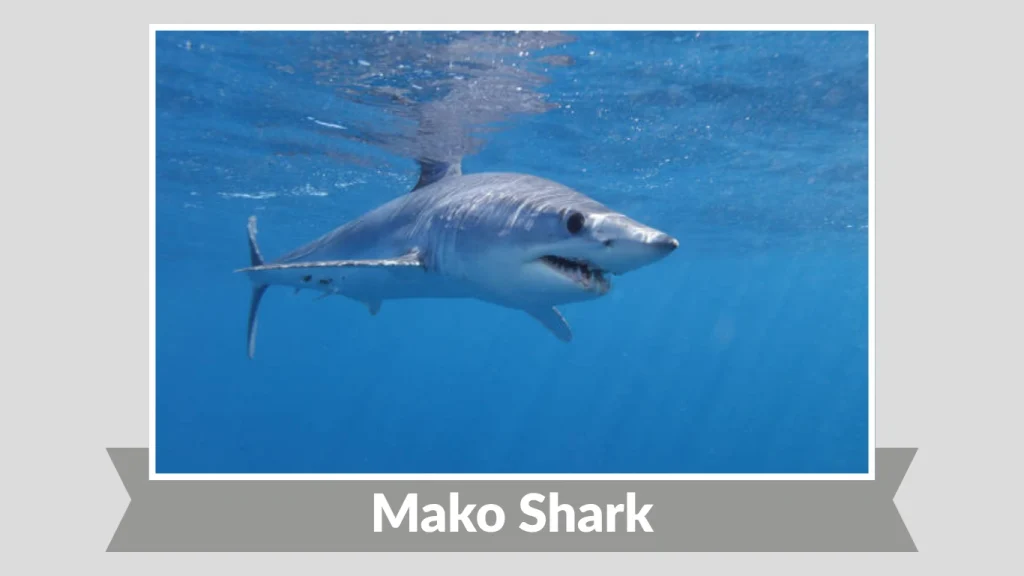
The mako shark is the fastest shark species and one of the ocean’s most powerful predators. It is known for its speed, agility, and striking blue coloration.
Identification
- Streamlined, torpedo-shaped body
- Deep blue upper body with a white underside
- Pointed snout and large black eyes
- Long, narrow tail fin built for speed
- Grows up to about 13 feet (4 meters)
Habitat
Mako sharks live in temperate and tropical oceans worldwide. They are primarily found in open ocean waters but may approach coastal areas where prey is abundant.
Behaviors
Highly active and energetic, mako sharks are capable of powerful bursts of speed and dramatic leaps out of the water. They are usually solitary and constantly on the move in search of prey.
Diet and Lifecycle
Their diet includes fast-swimming fish such as tuna and swordfish, as well as squid and smaller sharks. Mako sharks are ovoviviparous, giving birth to live young after a gestation period of about 15–18 months.
8. Blue Shark
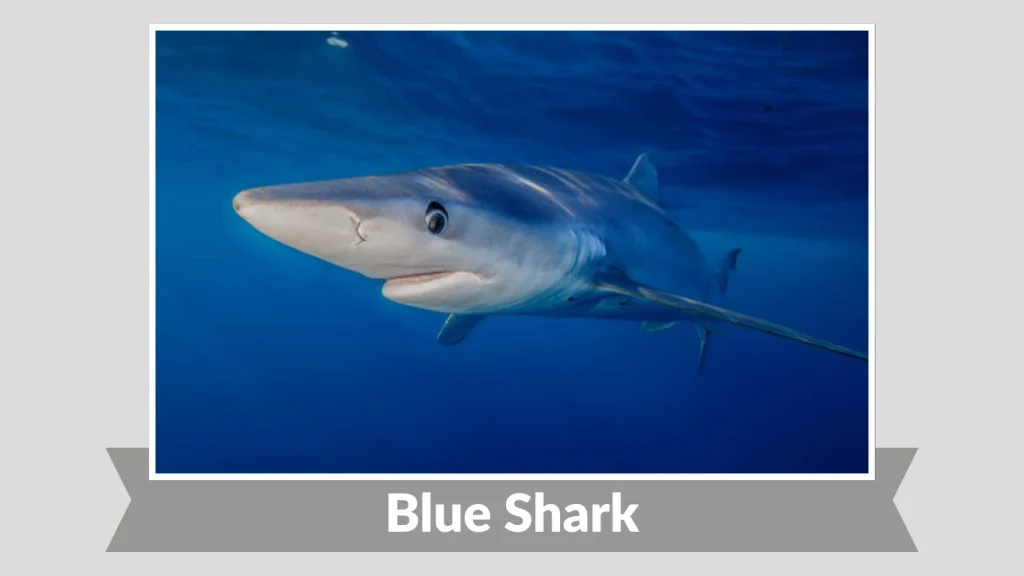
The blue shark is a sleek, wide-ranging species known for its deep blue coloration and graceful swimming style. It is one of the most abundant shark species in the open ocean.
Identification
- Slender body with an elongated snout
- Deep blue upper body with bright white underside
- Very long pectoral fins
- Large eyes adapted for low light
- Can grow up to 12 feet (3.6 meters) long
Habitat
Blue sharks are found in temperate and tropical oceans around the world. They primarily inhabit open ocean waters but may occasionally move closer to continental shelves and coastal areas.
Behaviors
This species is mostly solitary but can form loose groups, especially around food sources. Blue sharks are strong, efficient swimmers and often migrate long distances following ocean currents.
Diet and Lifecycle
Blue sharks feed mainly on squid, fish, and occasionally seabirds. They are viviparous, producing large litters of live young—sometimes over 100 pups—after a gestation period of about 9–12 months.
9. Nurse Shark
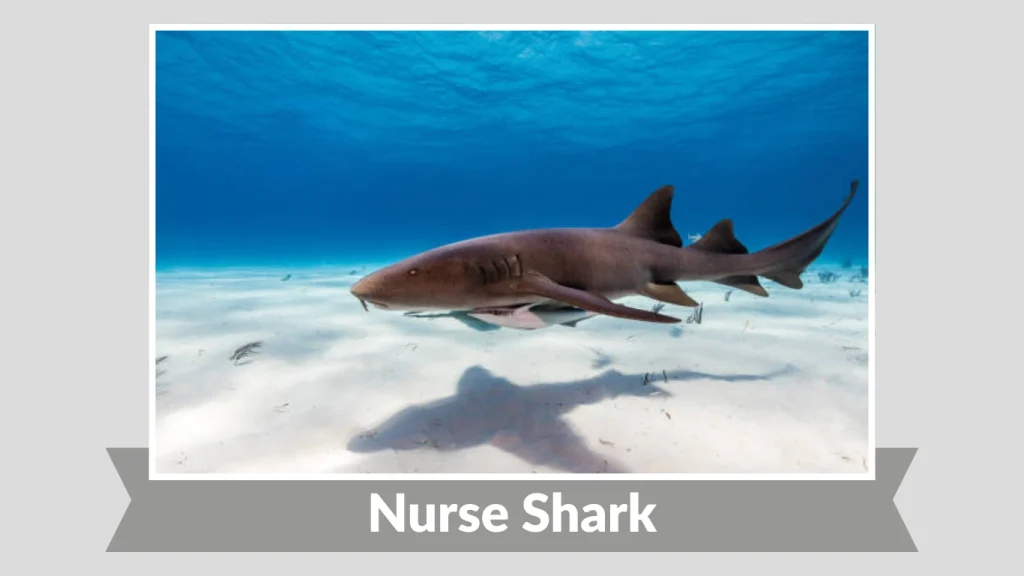
The nurse shark is a slow-moving, bottom-dwelling species known for its calm temperament. It is commonly seen resting on the seafloor during the day, especially around reefs and shallow coastal areas.
Identification
- Broad, flat head with a rounded snout
- Yellow-brown to grayish body coloration
- Small eyes and prominent barbels near the mouth
- Long tail with a large lower lobe
- Grows up to about 10 feet (3 meters) long
Habitat
Nurse sharks are found in tropical and subtropical coastal waters worldwide. They prefer shallow reefs, mangroves, sandy bottoms, and seagrass beds.
Behaviors
These sharks are mostly nocturnal and spend daylight hours resting in groups. They use suction feeding at night to extract prey from crevices and the seafloor.
Diet and Lifecycle
Nurse sharks feed on crustaceans, mollusks, fish, and small rays. They are ovoviviparous, giving birth to live young after a gestation period of around 6 months, with litters typically ranging from 20 to 30 pups.
10. Lemon Shark
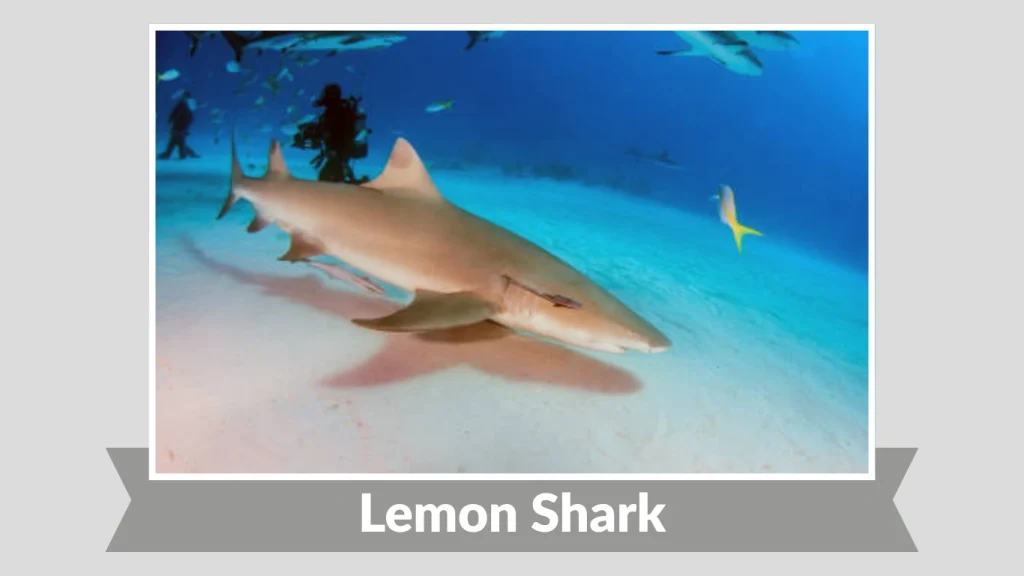
The lemon shark is a large coastal species named for its yellowish skin, which helps it blend into sandy environments. It is well studied due to its predictable behavior and shallow-water habitat.
Identification
- Stout body with a blunt, rounded snout
- Yellow-brown to olive coloration
- Two dorsal fins of nearly equal size
- Flattened head with small eyes
- Can reach lengths of about 11 feet (3.4 meters)
Habitat
Lemon sharks are commonly found in tropical and subtropical coastal waters. They prefer shallow areas such as coral reefs, lagoons, mangroves, and sandy flats.
Behaviors
This species is social and often forms loose groups, especially in juvenile stages. Lemon sharks show strong site fidelity and often return to the same areas year after year.
Diet and Lifecycle
Their diet includes fish, crustaceans, and smaller sharks. Lemon sharks are viviparous, giving birth to live pups after a gestation period of about 10–12 months, with litter sizes typically ranging from 4 to 17 young.
11. Blacktip Shark
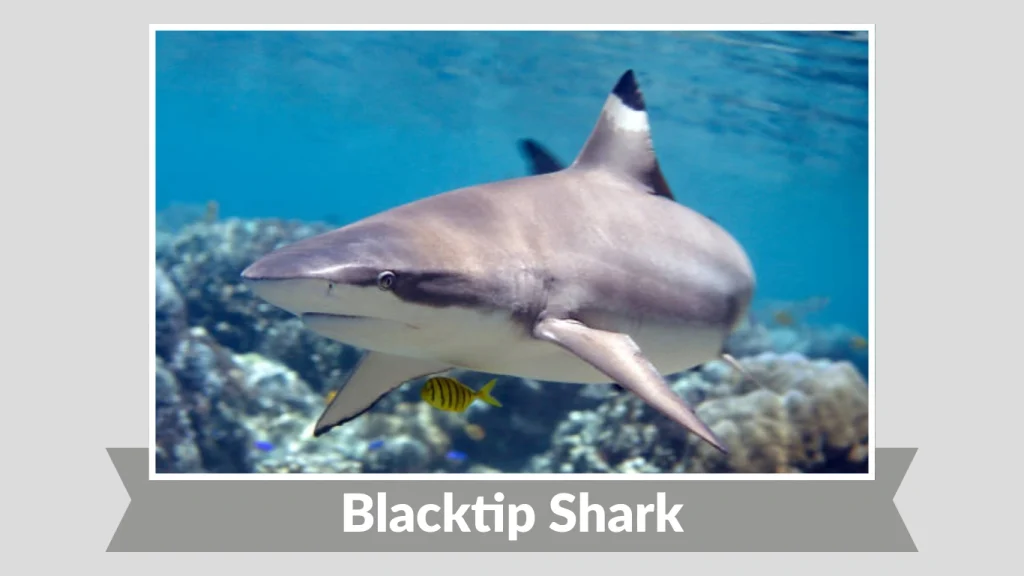
The blacktip shark is a fast, agile species easily identified by the black markings on its fins. It is commonly seen in shallow coastal waters and is known for its energetic feeding behavior.
Identification
- Slim, streamlined body
- Distinct black tips on dorsal, pectoral, and tail fins
- Gray to bronze upper body with a white underside
- Pointed snout and large eyes
- Grows up to about 8 feet (2.4 meters) long
Habitat
Blacktip sharks inhabit warm coastal waters, including bays, estuaries, reefs, and continental shelves. They are often found in very shallow water near shorelines.
Behaviors
This species is highly active and often seen spinning or leaping out of the water while feeding. Blacktip sharks commonly form schools and migrate seasonally along coastlines.
Diet and Lifecycle
They primarily feed on small fish, squid, and crustaceans. Blacktip sharks are viviparous, giving birth to 1–10 pups after a gestation period of around 9–12 months.
12. Spinner Shark
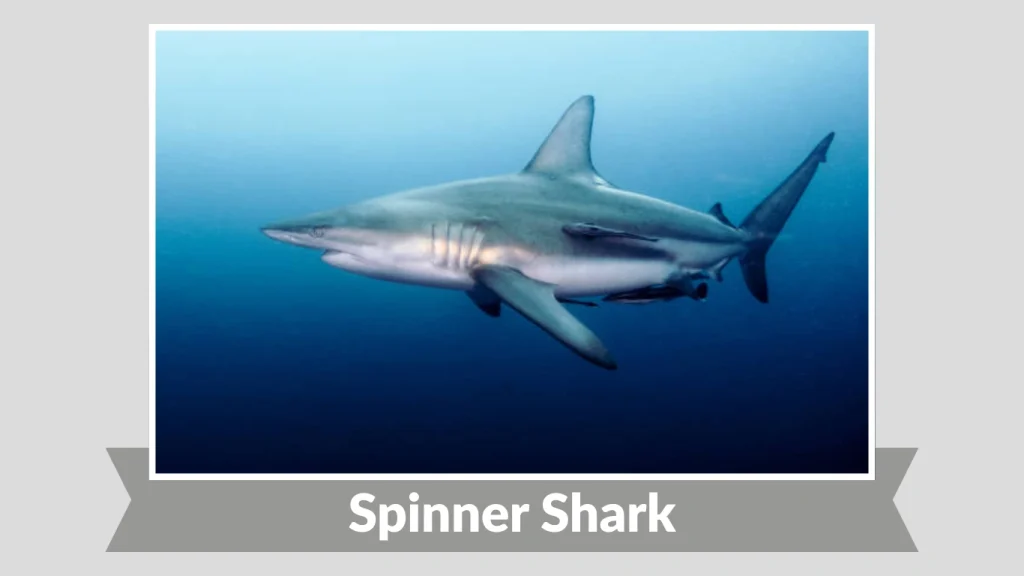
The spinner shark is named for its acrobatic spinning leaps out of the water, often seen during feeding frenzies. It closely resembles the blacktip shark but is more associated with offshore waters.
Identification
- Slender, streamlined body
- Long, pointed snout
- Black tips on most fins, including the anal fin
- Gray upper body with a white underside
- Can grow up to about 10 feet (3 meters) long
Habitat
Spinner sharks are found in warm temperate and tropical oceans worldwide. They inhabit coastal waters, continental shelves, and occasionally open ocean environments.
Behaviors
This species is highly energetic and often leaps while spinning multiple times when attacking schools of fish. Spinner sharks are fast swimmers and may travel in groups during feeding.
Diet and Lifecycle
Their diet mainly consists of small schooling fish and squid. Spinner sharks are viviparous, giving birth to live young after a gestation period of approximately 11–15 months, with litters typically ranging from 3 to 20 pups.
13. Sand Tiger Shark
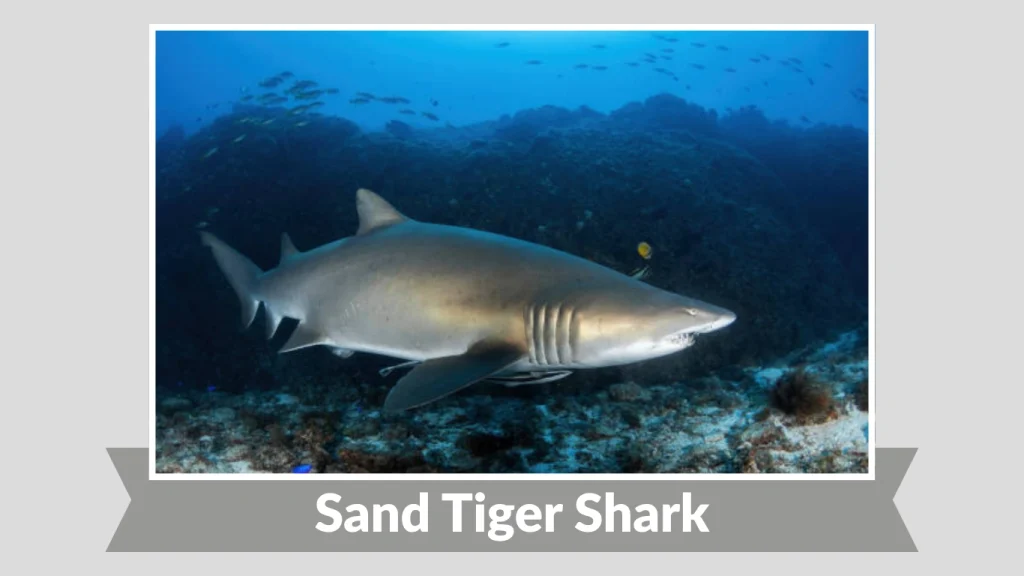
The sand tiger shark is a large, intimidating-looking species known for its protruding teeth and slow swimming style. Despite its fearsome appearance, it is generally non-aggressive toward humans.
Identification
- Robust body with a flattened, pointed snout
- Reddish-brown or gray body with dark spots
- Long, needle-like teeth that protrude even when the mouth is closed
- Large dorsal fins set far back on the body
- Can grow up to about 10–11 feet (3–3.5 meters) long
Habitat
Sand tiger sharks are found in temperate and subtropical coastal waters worldwide. They prefer sandy bottoms, reefs, shipwrecks, and shallow bays.
Behaviors
This species is slow-moving and often hovers motionless in the water by gulping air. Sand tiger sharks are typically solitary but may gather in small groups at favored sites.
Diet and Lifecycle
Their diet includes bony fish, rays, squid, and smaller sharks. Sand tiger sharks are ovoviviparous and practice intrauterine cannibalism, where the strongest embryos consume others before birth, resulting in very small litter sizes.
14. Goblin Shark
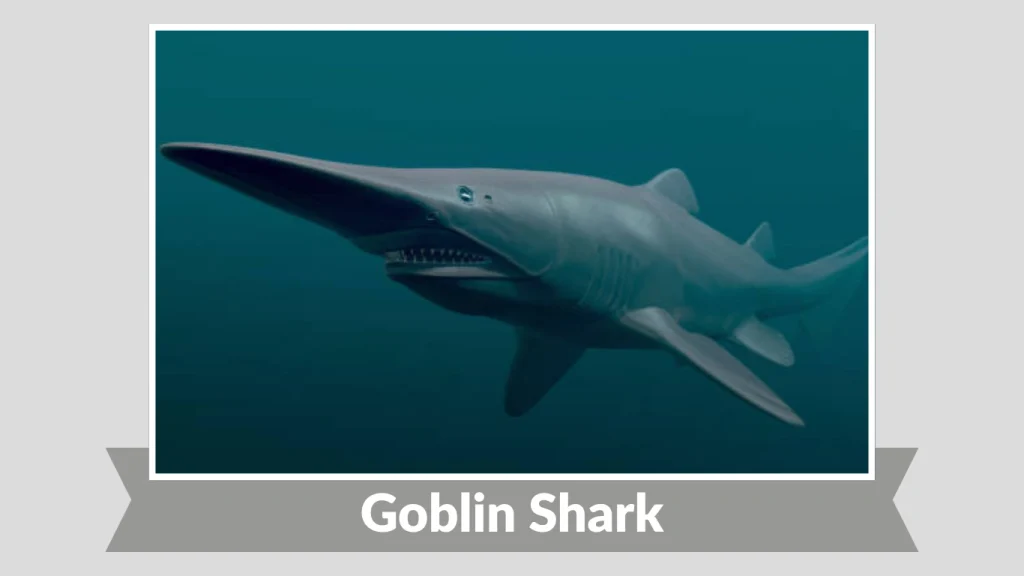
The goblin shark is a rare deep-sea species often called a “living fossil” due to its ancient lineage. It is best known for its unusual appearance and extendable jaws.
Identification
- Elongated, flattened snout with a pointed tip
- Pale pink to gray body coloration
- Slender, flabby body structure
- Highly protrusible jaws with long, nail-like teeth
- Can grow up to about 12–13 feet (3.5–4 meters) long
Habitat
Goblin sharks inhabit deep ocean waters along continental slopes and submarine canyons. They are usually found at depths ranging from 300 to over 4,000 feet.
Behaviors
This species is slow-moving and relies on stealth rather than speed. Goblin sharks use their extendable jaws to rapidly capture prey in the dark depths of the ocean.
Diet and Lifecycle
Their diet consists of deep-sea fish, crustaceans, and cephalopods. Very little is known about their reproduction, but they are believed to be ovoviviparous like many other deep-sea sharks.
15. Thresher Shark
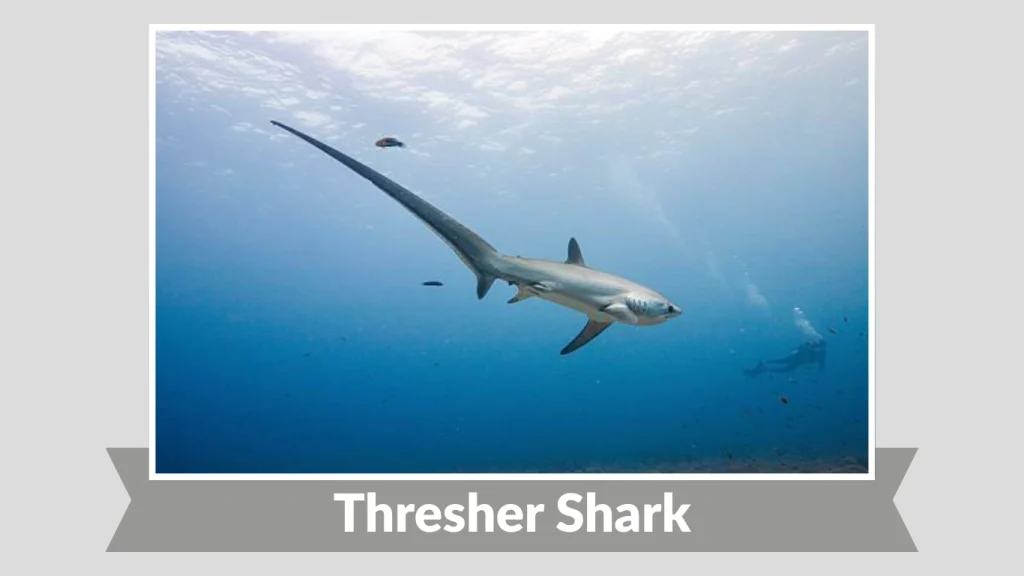
The thresher shark is famous for its extraordinarily long tail, which it uses as a weapon to stun prey. This unique hunting method makes it one of the most distinctive shark species.
Identification
- Very long upper tail lobe, nearly as long as the body
- Streamlined body with a pointed snout
- Dark brown to bluish-gray upper body
- White or pale underside
- Can reach lengths of up to 20 feet (6 meters), including the tail
Habitat
Thresher sharks are found in temperate and tropical oceans worldwide. They inhabit both coastal and open ocean waters, often near continental shelves and offshore islands.
Behaviors
This species is usually solitary and prefers deeper waters during the day. Thresher sharks are known for using powerful tail slaps to stun or kill schools of fish before feeding.
Diet and Lifecycle
Their diet mainly includes small schooling fish and squid. Thresher sharks are ovoviviparous, giving birth to live young after a gestation period of about 9 months, with litters typically consisting of 2–7 pups.
16. Reef Shark
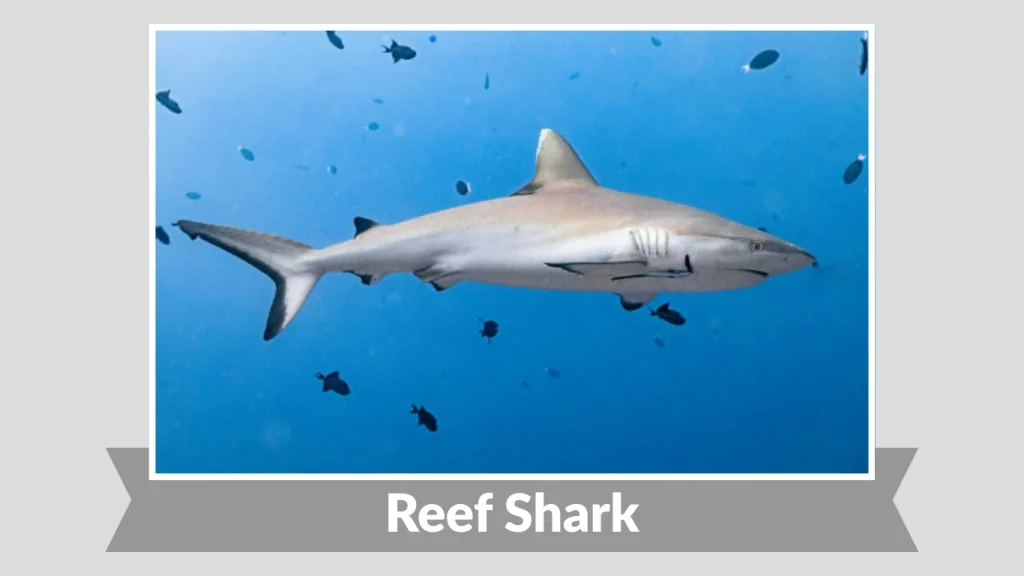
Reef sharks are medium-sized sharks commonly seen around coral reefs. They are important predators in reef ecosystems and are generally cautious around humans.
Identification
- Slim, streamlined body
- Rounded snout with large eyes
- Gray to brown upper body with a white underside
- Black or white markings on fins, depending on species
- Typically grow up to 6–10 feet (1.8–3 meters) long
Habitat
Reef sharks inhabit shallow tropical coral reefs, lagoons, and reef drop-offs. They are closely associated with reef systems and rarely venture into deep open waters.
Behaviors
These sharks are active swimmers and often patrol reef edges. Reef sharks may be solitary or form small groups and are usually more active during dawn and dusk.
Diet and Lifecycle
Their diet includes reef fish, squid, octopus, and crustaceans. Reef sharks are viviparous, giving birth to live pups after a gestation period of about 10–12 months, with relatively small litter sizes.
17. Oceanic Whitetip Shark
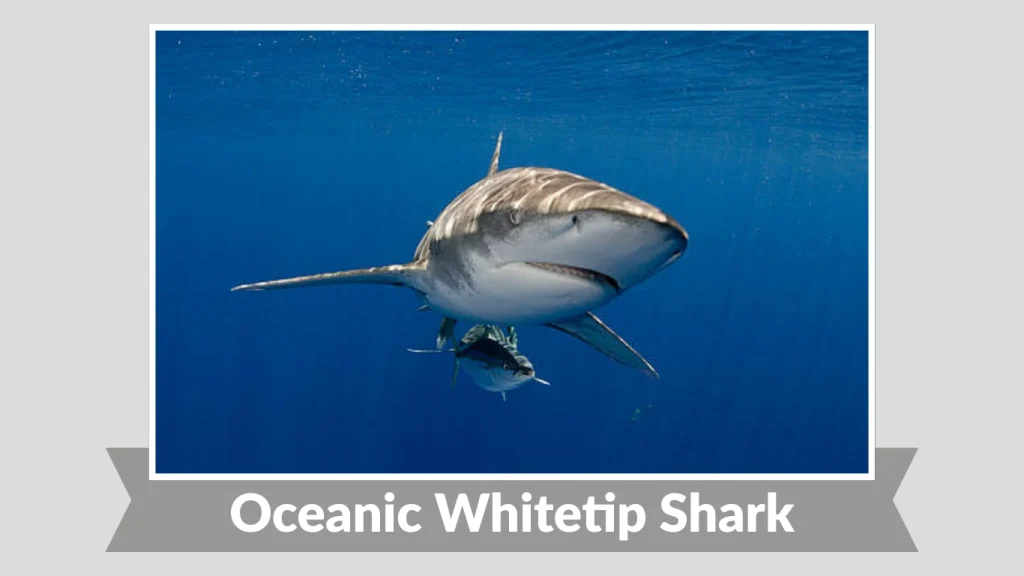
The oceanic whitetip shark is a powerful open-ocean species recognized by its long fins with white tips. It is one of the most widespread sharks in deep offshore waters.
Identification
- Stocky body with a blunt, rounded snout
- Long, paddle-like pectoral fins
- White tips on dorsal, pectoral, and tail fins
- Bronze to gray body coloration
- Grows up to about 13 feet (4 meters) long
Habitat
This species lives in warm tropical and subtropical open oceans. It is rarely found near shore and prefers deep waters far from land.
Behaviors
Oceanic whitetip sharks are slow-moving but highly opportunistic. They are known for their bold behavior and may approach unfamiliar objects, especially in isolated ocean environments.
Diet and Lifecycle
Their diet includes fish, squid, rays, and carrion. Oceanic whitetip sharks are viviparous, giving birth to live young after a gestation period of about 9–12 months, with litters ranging from 1 to 15 pups.
18. Dusky Shark
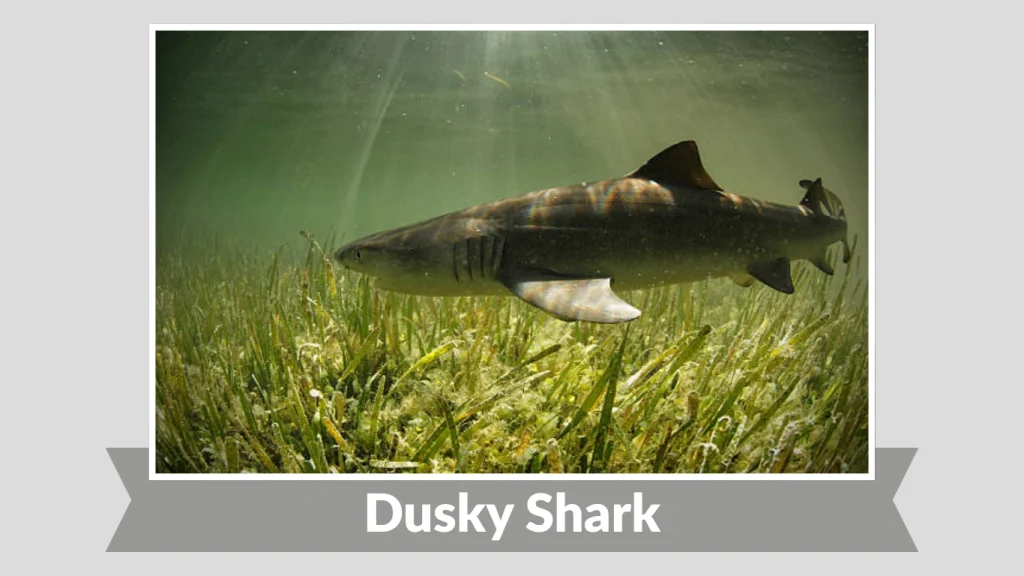
The dusky shark is a large, coastal species known for its slow growth and long lifespan. It is a powerful predator that plays an important role in marine food chains.
Identification
- Streamlined yet robust body
- Rounded snout shorter than the mouth width
- Gray to brownish upper body with a pale underside
- Tall, triangular first dorsal fin
- Can grow up to about 14 feet (4.2 meters) long
Habitat
Dusky sharks inhabit temperate and tropical coastal waters worldwide. They are commonly found along continental shelves and offshore waters near coastlines.
Behaviors
This species is generally solitary and cautious. Dusky sharks migrate seasonally and are most active during early morning and late afternoon.
Diet and Lifecycle
Their diet consists of bony fish, rays, squid, and other sharks. Dusky sharks are viviparous and have a long gestation period of about 16–22 months, giving birth to litters of 6–14 pups.
19. Silky Shark
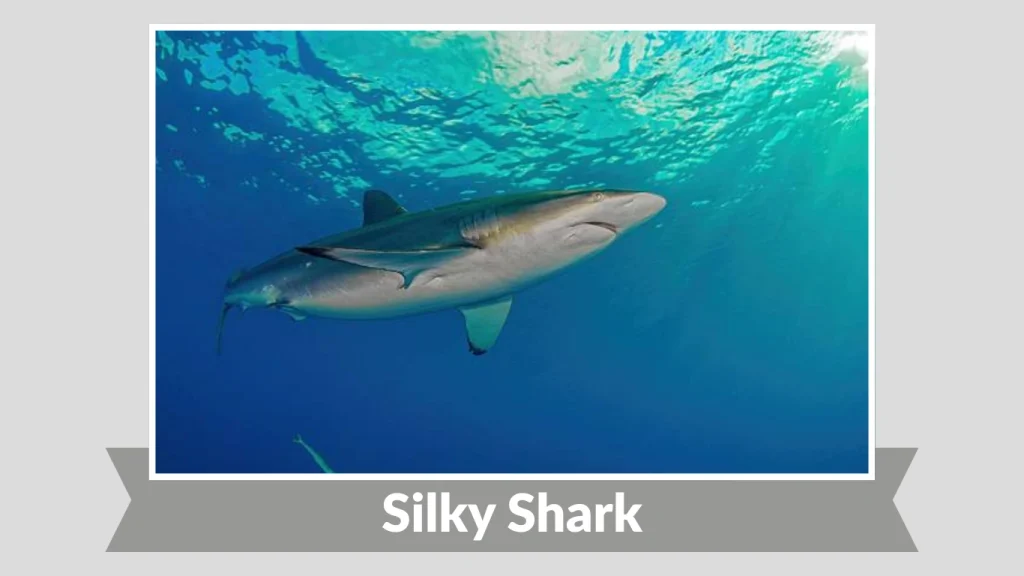
The silky shark is a sleek, fast-swimming species named for its smooth skin texture. It is commonly found in warm offshore waters and often associates with tuna schools.
Identification
- Slender, streamlined body with a rounded snout
- Dark gray to bronze upper body with a white underside
- Smooth, silky-feeling skin
- Moderate-sized eyes and long pectoral fins
- Grows up to about 11 feet (3.3 meters) long
Habitat
Silky sharks inhabit tropical and subtropical oceans worldwide. They are most commonly found in open ocean waters but may approach continental shelves and island slopes.
Behaviors
This species is active and often travels in loose groups. Silky sharks are known for following fishing vessels and are highly responsive to sounds and vibrations in the water.
Diet and Lifecycle
Their diet includes bony fish, squid, and crustaceans. Silky sharks are viviparous, giving birth to live young after a gestation period of about 12 months, with litters typically ranging from 2 to 14 pups.
20. Bronze Whaler Shark
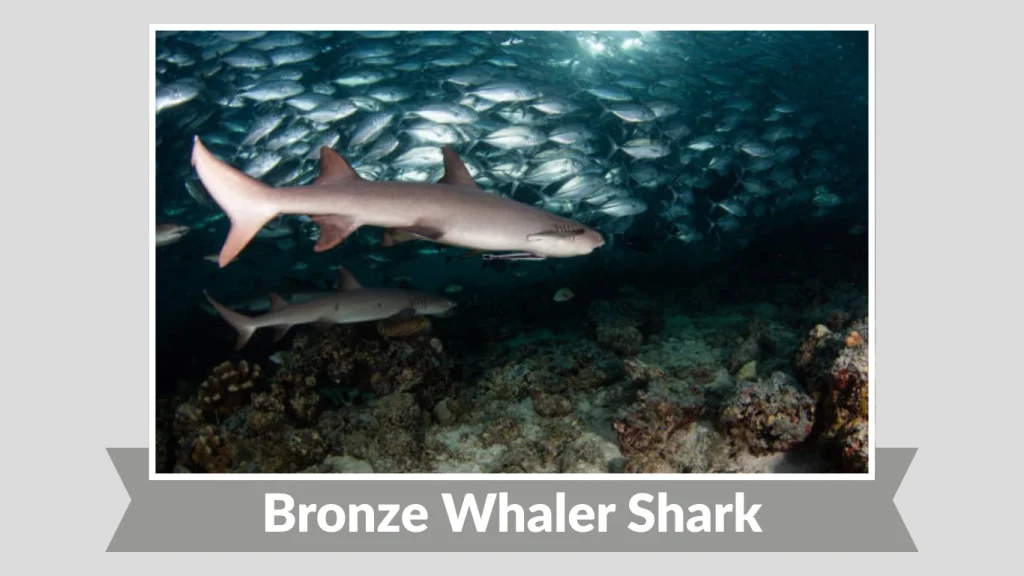
The bronze whaler shark, also known as the copper shark, is a strong, fast-swimming coastal species. It is recognized for its bronze-colored body and active hunting style.
Identification
- Streamlined, powerful body
- Coppery-brown to bronze upper coloration
- White underside
- Pointed snout and large eyes
- Can reach lengths of about 11 feet (3.4 meters)
Habitat
Bronze whaler sharks are found in temperate coastal waters, particularly along continental shelves and near shorelines. They often patrol surf zones and shallow bays.
Behaviors
This species is energetic and inquisitive. Bronze whaler sharks are often seen in small groups and are known for their fast, agile movements while hunting.
Diet and Lifecycle
Their diet consists mainly of fish, squid, and rays. Bronze whaler sharks are viviparous, giving birth to live young after a gestation period of about 12 months, with litters usually ranging from 7 to 24 pups.
21. Greenland Shark
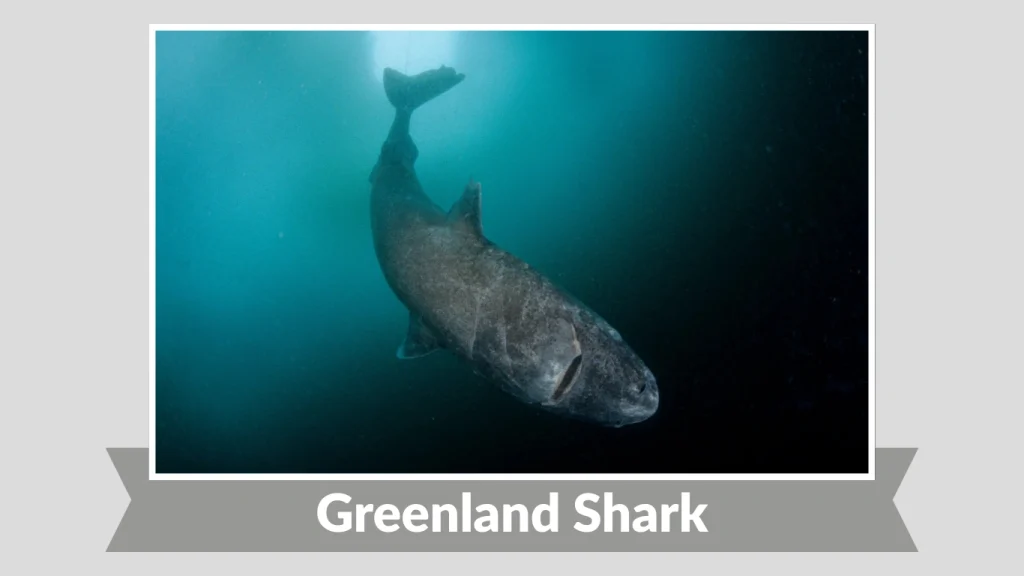
The Greenland shark is a slow-moving deep-sea species famous for its extreme longevity. It inhabits cold Arctic and sub-Arctic waters and is one of the longest-living vertebrates known.
Identification
- Heavy, cylindrical body
- Small eyes relative to body size
- Dark gray to brownish coloration
- Rounded snout and small dorsal fins
- Can grow up to about 21 feet (6.4 meters) long
Habitat
Greenland sharks live in cold, deep waters of the North Atlantic and Arctic Oceans. They are commonly found at great depths but may move into shallower waters during colder seasons.
Behaviors
This species is slow and sluggish, conserving energy in cold environments. Greenland sharks are mostly solitary and rely on stealth rather than speed to capture prey.
Diet and Lifecycle
Their diet includes fish, seals, squid, and carrion. Greenland sharks grow extremely slowly and are believed to reach sexual maturity after more than a century, though much of their reproductive biology remains unknown.
22. Wobbegong Shark
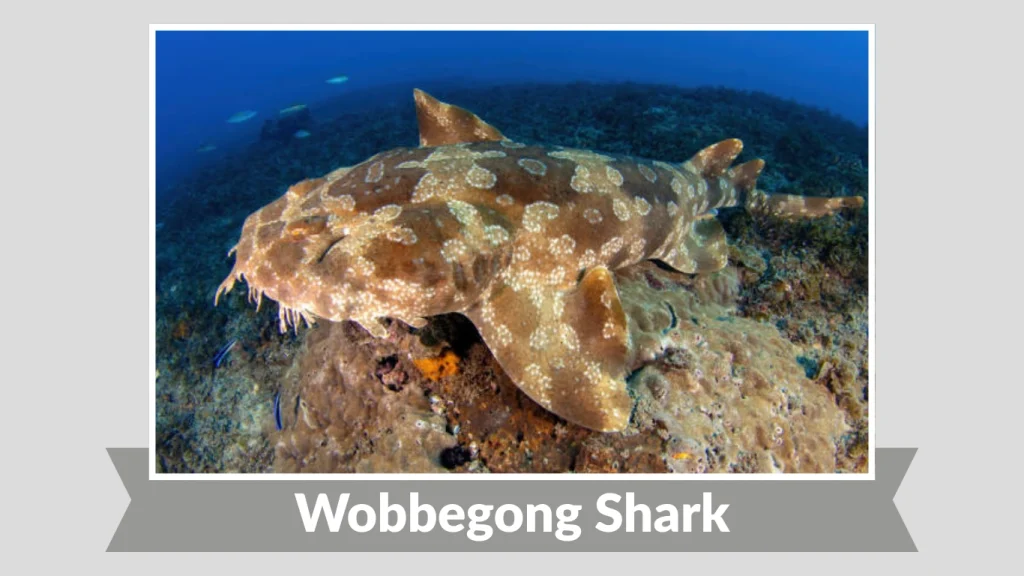
The wobbegong shark is a bottom-dwelling species known for its excellent camouflage and tasselled appearance. It is often called a carpet shark due to its habit of resting on the seafloor.
Identification
- Flattened body with a broad head
- Distinctive skin flaps and barbels around the mouth
- Intricate patterns of browns and yellows for camouflage
- Small eyes positioned on top of the head
- Typically grows up to about 10 feet (3 meters) long
Habitat
Wobbegong sharks are found in shallow coastal waters of the Indo-Pacific region. They prefer coral reefs, rocky bottoms, and seagrass areas.
Behaviors
This species is mostly sedentary and spends long periods resting on the seafloor. Wobbegongs rely on ambush tactics, remaining motionless until prey comes within reach.
Diet and Lifecycle
Their diet includes fish, crustaceans, octopus, and small sharks. Wobbegong sharks are ovoviviparous, giving birth to live young after a gestation period of about 10–11 months.
23. Angel Shark
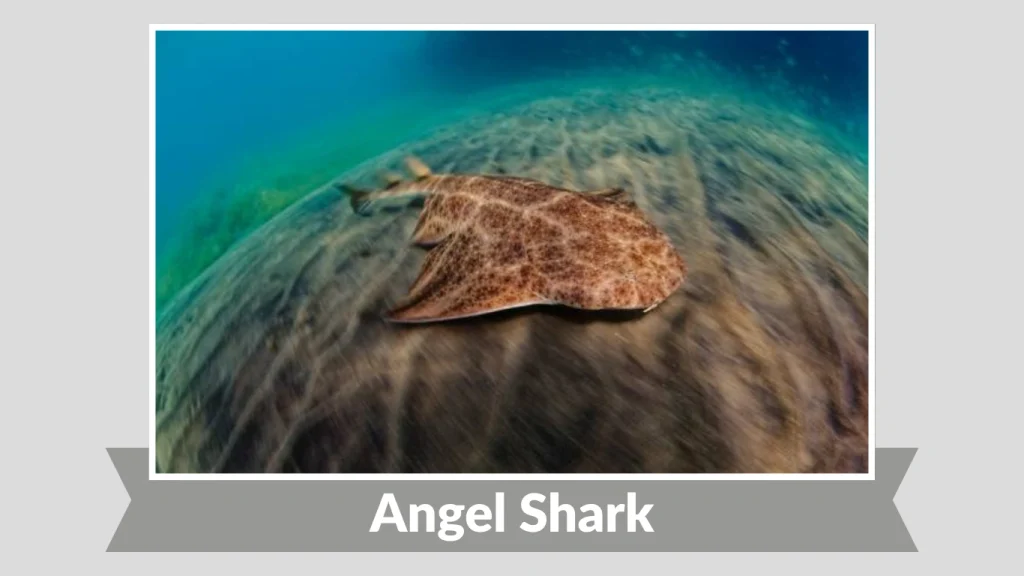
The angel shark is a flat-bodied species that closely resembles a ray. It is an effective ambush predator and spends much of its life partially buried in sand.
Identification
- Broad, flattened body with wide pectoral fins
- Large eyes positioned on top of the head
- Sandy gray or brown coloration for camouflage
- Two small dorsal fins set far back on the body
- Can grow up to about 8 feet (2.4 meters) long
Habitat
Angel sharks inhabit temperate and tropical coastal waters. They are commonly found on sandy or muddy seafloors near reefs and continental shelves.
Behaviors
This species is a classic ambush hunter. Angel sharks lie motionless, buried in sediment, and strike rapidly when prey passes overhead.
Diet and Lifecycle
Their diet consists mainly of fish, crustaceans, and squid. Angel sharks are ovoviviparous, giving birth to live young after a gestation period of about 10 months, with litters usually ranging from 7 to 25 pups.
24. Zebra Shark
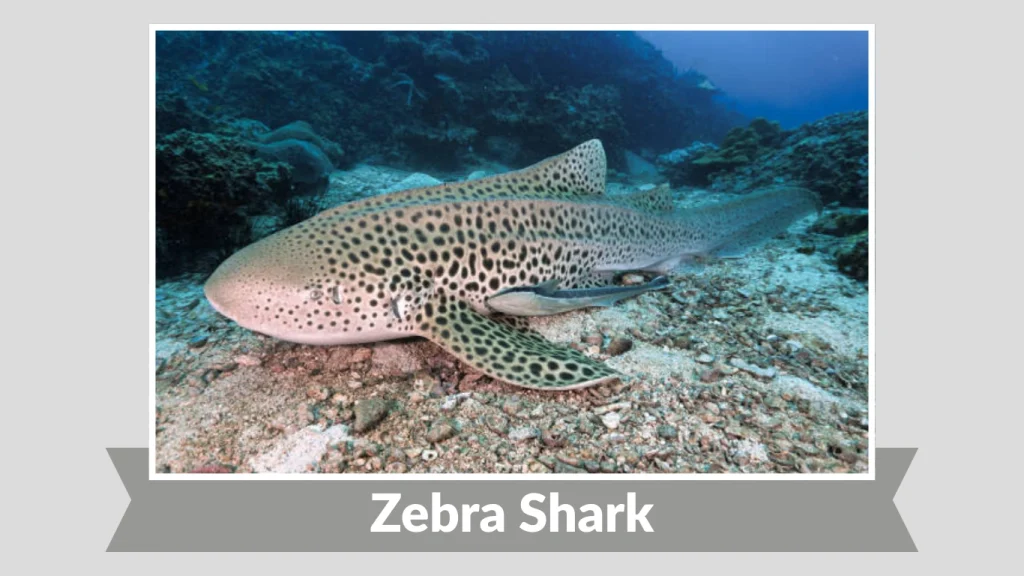
The zebra shark is a distinctive species known for its changing appearance from juvenile to adult. Juveniles have dark stripes, while adults develop a spotted pattern.
Identification
- Long, slender body with a broad, flattened head
- Juveniles with dark stripes; adults with brown spots
- Long tail nearly as long as the body
- Small mouth with ridged teeth
- Can grow up to about 11 feet (3.5 meters) long
Habitat
Zebra sharks are found in tropical Indo-Pacific waters. They prefer coral reefs, sandy flats, and shallow coastal areas.
Behaviors
This species is slow-moving and usually solitary. Zebra sharks spend much of their time resting on the seafloor during the day and become more active at night.
Diet and Lifecycle
Their diet includes mollusks, crustaceans, fish, and sea snakes. Zebra sharks are oviparous, laying large egg cases that are anchored to the seafloor until hatching.
25. Frilled Shark
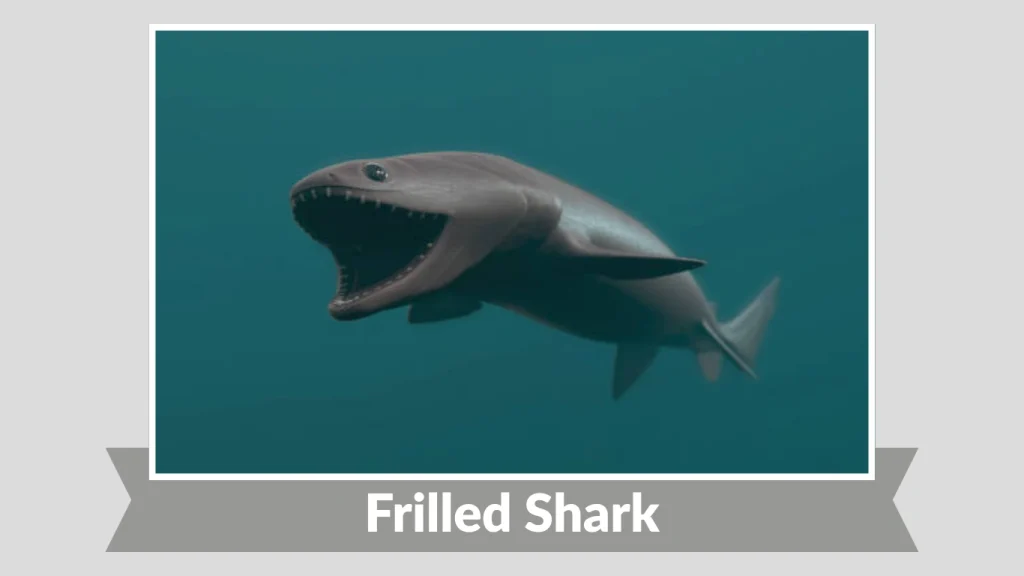
The frilled shark is a rare deep-sea species with an eel-like appearance. It is considered a primitive shark and has changed very little over millions of years.
Identification
- Long, slender, eel-like body
- Six pairs of frilled gill slits around the throat
- Dark brown to gray coloration
- Terminal mouth with many needle-like teeth
- Can grow up to about 6.5 feet (2 meters) long
Habitat
Frilled sharks inhabit deep ocean waters along continental slopes. They are usually found at depths of 1,600 to 5,000 feet, rarely coming close to the surface.
Behaviors
This species is slow-moving and elusive. Frilled sharks use sudden lunging motions to capture prey, aided by their flexible bodies.
Diet and Lifecycle
Their diet mainly consists of squid, deep-sea fish, and other sharks. Frilled sharks are ovoviviparous and are believed to have one of the longest gestation periods of any vertebrate, possibly lasting over three years.
26. Porbeagle Shark
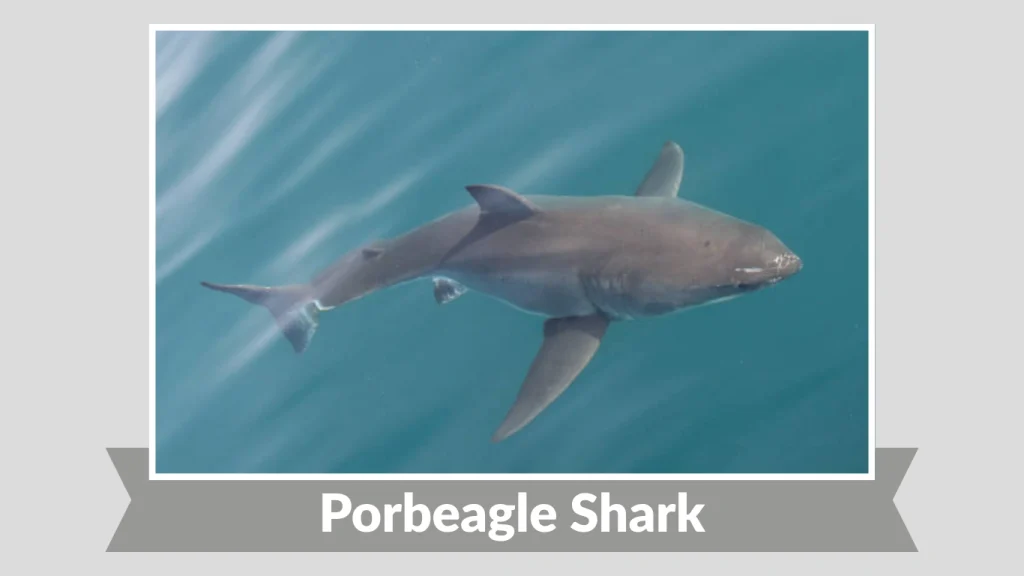
The porbeagle shark is a powerful, cold-water species closely related to the great white shark. It is known for its strength, speed, and ability to regulate its body temperature.
Identification
- Thick, muscular body with a pointed snout
- Dark blue-gray upper body with a white underside
- White patch at the base of the rear dorsal fin
- Large, triangular teeth
- Can grow up to about 12 feet (3.7 meters) long
Habitat
Porbeagle sharks inhabit cold and temperate waters of the North Atlantic and Southern Hemisphere. They are found in both coastal and offshore waters, often near continental shelves.
Behaviors
This species is an active and aggressive hunter. Porbeagle sharks are strong swimmers and are known to leap out of the water when hooked or pursuing prey.
Diet and Lifecycle
Their diet includes mackerel, herring, squid, and other sharks. Porbeagle sharks are ovoviviparous, giving birth to live young after a gestation period of about 8–9 months, with litters typically consisting of 1–5 pups.
27. Shortfin Mako Shark
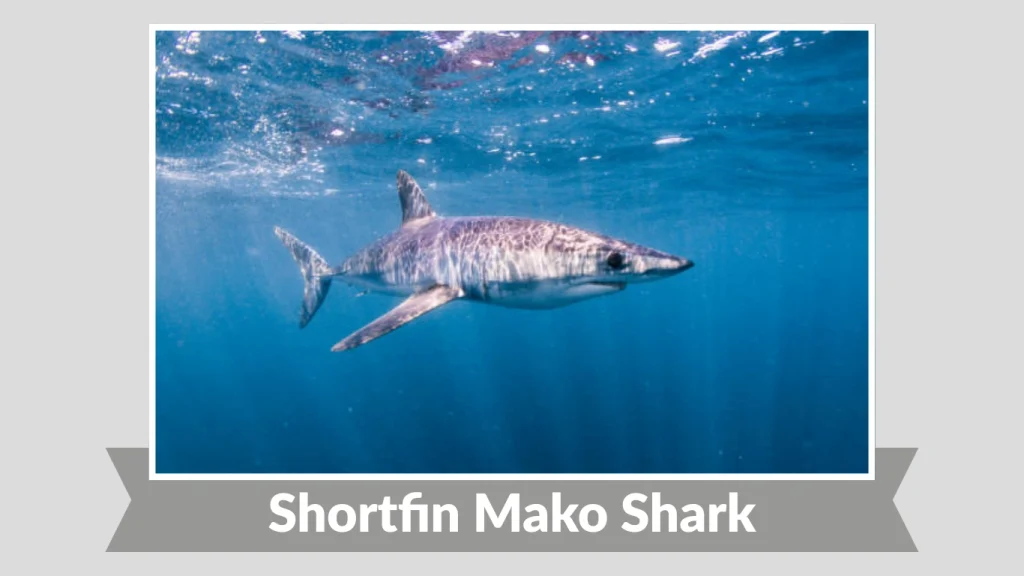
The shortfin mako shark is the fastest fish in the ocean, capable of incredible bursts of speed. It is a highly efficient predator built for pursuit in open waters.
Identification
- Sleek, torpedo-shaped body
- Metallic blue upper body with a white underside
- Short, broad pectoral fins
- Large eyes and pointed snout
- Can grow up to about 13 feet (4 meters) long
Habitat
Shortfin mako sharks are found in tropical and temperate oceans worldwide. They primarily inhabit open ocean waters but may occasionally approach coastal areas.
Behaviors
This species is extremely active and known for its powerful swimming and aerial leaps. Shortfin makos are solitary hunters that rely on speed and endurance to catch prey.
Diet and Lifecycle
Their diet includes tuna, swordfish, squid, and other fast-moving fish. Shortfin mako sharks are ovoviviparous, with embryos practicing intrauterine cannibalism, and give birth after a gestation period of about 15–18 months.
28. Longfin Mako Shark
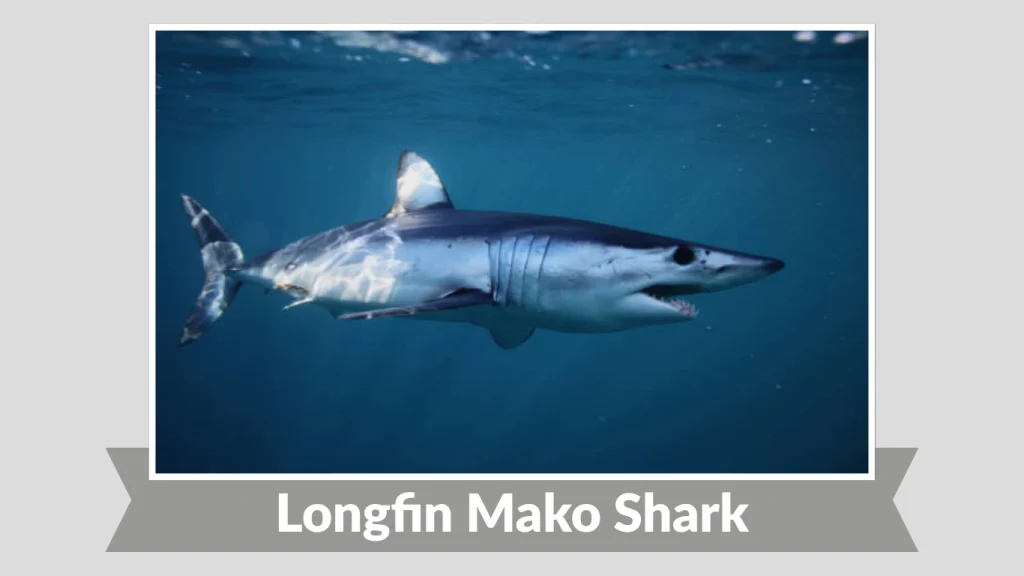
The longfin mako shark is a rare and less-studied relative of the shortfin mako. It is distinguished by its longer fins and preference for deeper offshore waters.
Identification
- Slender body with extremely long pectoral fins
- Dark blue-gray upper body with a pale underside
- Large eyes adapted for deep water
- Pointed snout and narrow tail
- Can grow up to about 14 feet (4.3 meters) long
Habitat
Longfin mako sharks inhabit deep offshore waters of tropical and temperate oceans. They are usually found far from land at significant depths.
Behaviors
This species is believed to be a slow cruiser compared to the shortfin mako. Due to its deep-sea lifestyle, much of its behavior remains poorly documented.
Diet and Lifecycle
Their diet likely includes deep-water fish and squid. Longfin mako sharks are ovoviviparous, but limited information is available about their reproductive cycle.
29. Bonnethead Shark
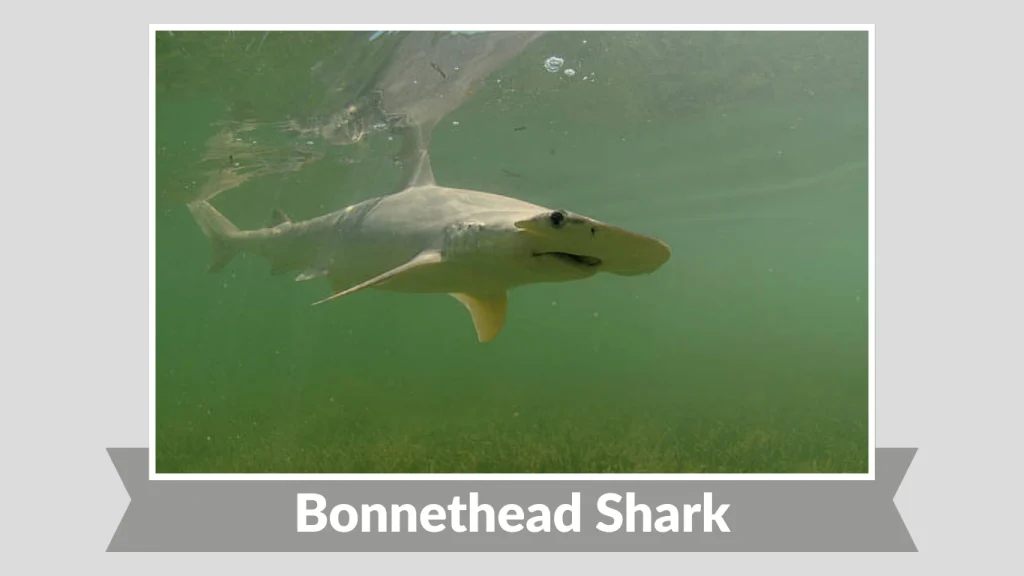
The bonnethead shark is a small member of the hammerhead family, easily recognized by its shovel-shaped head. It is one of the most common and well-studied small sharks.
Identification
- Small, flattened head shaped like a shovel
- Gray to brown upper body with a pale underside
- Slender body compared to larger hammerheads
- Small mouth with fine teeth
- Typically grows up to about 5 feet (1.5 meters) long
Habitat
Bonnethead sharks inhabit shallow coastal waters of the western Atlantic and eastern Pacific. They are commonly found in bays, estuaries, seagrass beds, and sandy bottoms.
Behaviors
This species is active during the day and often swims in small groups. Bonnethead sharks are agile hunters and frequently move with tides while foraging in shallow waters.
Diet and Lifecycle
Their diet consists mainly of crabs, shrimp, mollusks, and small fish. Bonnethead sharks are viviparous, giving birth to live young after a gestation period of about 4–5 months, with litters typically ranging from 6 to 13 pups.
30. Sevengill Shark
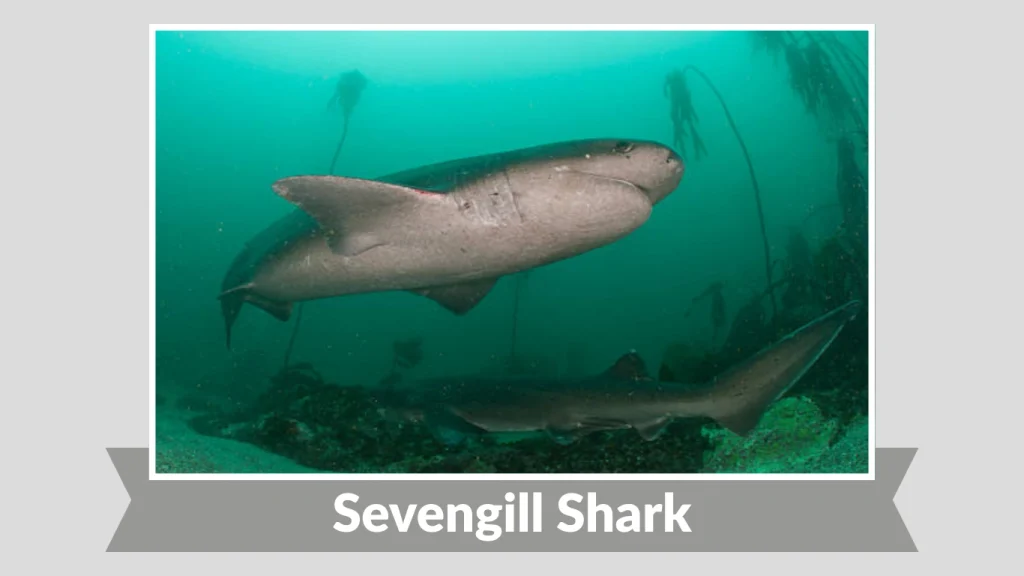
The sevengill shark is a primitive species recognized by having seven gill slits instead of the usual five. It is a powerful predator with a broad head and strong jaws.
Identification
- Seven gill slits on each side of the head
- Broad, blunt snout
- Large mouth with comb-like lower teeth
- Gray to brown body coloration
- Can grow up to about 10 feet (3 meters) long
Habitat
Sevengill sharks inhabit temperate coastal waters around the world. They are commonly found near continental shelves, bays, and deep channels.
Behaviors
This species is slow-moving but highly effective as an ambush predator. Sevengill sharks are mostly solitary and are more active at night.
Diet and Lifecycle
Their diet includes fish, rays, seals, and other sharks. Sevengill sharks are ovoviviparous, giving birth to live young after a gestation period of about one year, with litters that can exceed 80 pups.
31. Sixgill Shark
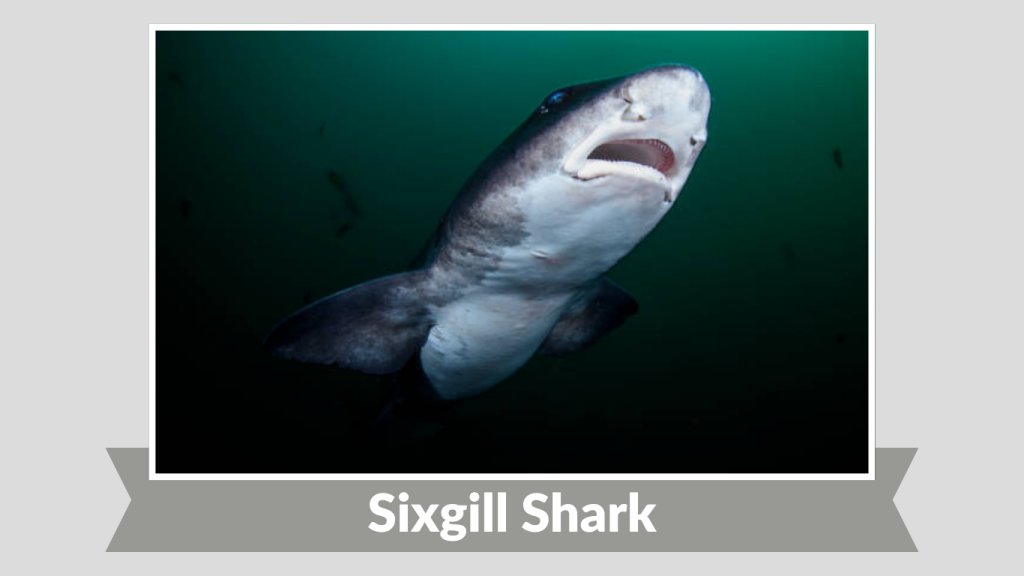
The sixgill shark is a large, deep-water species considered one of the most primitive living sharks. It is rarely seen due to its preference for deep ocean habitats.
Identification
- Six gill slits instead of the typical five
- Long, heavy body with a blunt snout
- Large eyes with greenish reflection
- Gray to brownish-black coloration
- Can grow up to about 16 feet (4.8 meters) long
Habitat
Sixgill sharks inhabit deep waters of temperate and tropical oceans worldwide. They are most commonly found along continental slopes and deep-sea trenches, occasionally moving into shallower waters at night.
Behaviors
This species is slow-moving and solitary. Sixgill sharks are opportunistic feeders and often scavenge, relying on stealth rather than speed to capture prey.
Diet and Lifecycle
Their diet includes fish, rays, squid, crustaceans, and carrion. Sixgill sharks are ovoviviparous and produce large litters of live young after a gestation period that is not well documented.
32. Carpet Shark
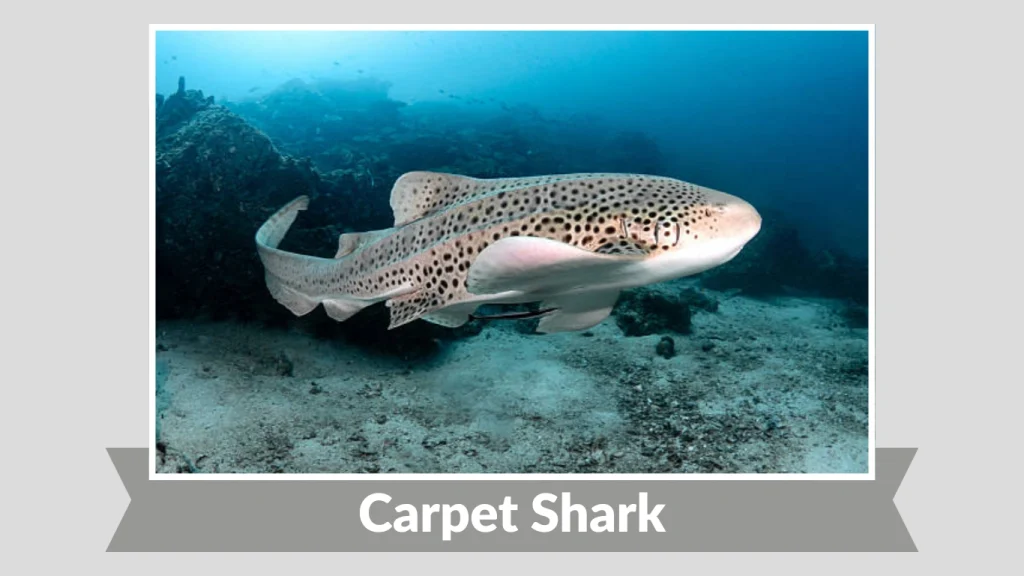
Carpet sharks are a diverse group of bottom-dwelling sharks known for their camouflaged bodies and sedentary behavior. The term refers to several species rather than a single shark.
Identification
- Flattened body adapted for resting on the seafloor
- Mottled patterns that blend with surroundings
- Small eyes positioned on top of the head
- Wide mouth often with barbels
- Size varies by species, generally under 13 feet (4 meters)
Habitat
Carpet sharks are found in tropical and temperate waters, especially around coral reefs, rocky bottoms, and sandy seabeds. They prefer shallow coastal environments.
Behaviors
These sharks are typically slow-moving and spend much of their time resting. Carpet sharks rely on camouflage and ambush tactics rather than active pursuit.
Diet and Lifecycle
Their diet includes small fish, crustaceans, and mollusks. Reproductive methods vary among species and may include oviparity or ovoviviparity.
33. Cookiecutter Shark
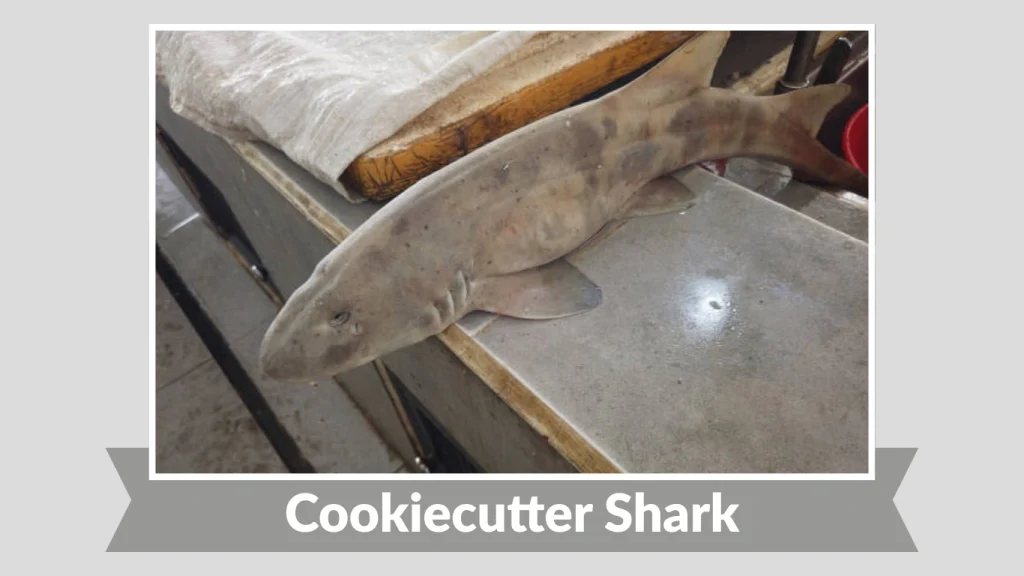
The cookiecutter shark is a small but notorious deep-sea species known for taking round bites out of much larger animals. Despite its size, it has a big impact on ocean life.
Identification
- Small, cigar-shaped body
- Dark brown upper body with a lighter underside
- Distinct dark collar behind the gills
- Large eyes relative to body size
- Grows up to about 20 inches (50 cm) long
Habitat
Cookiecutter sharks inhabit deep tropical and subtropical oceans worldwide. They migrate vertically, staying deep during the day and moving closer to the surface at night.
Behaviors
This species is a stealthy parasite-like feeder. It attaches to larger animals using suction and removes circular plugs of flesh using its sharp lower teeth.
Diet and Lifecycle
Their diet includes fish, marine mammals, squid, and occasionally other sharks. Cookiecutter sharks are ovoviviparous, giving birth to live young, though details of their reproduction are limited.
34. Lantern Shark
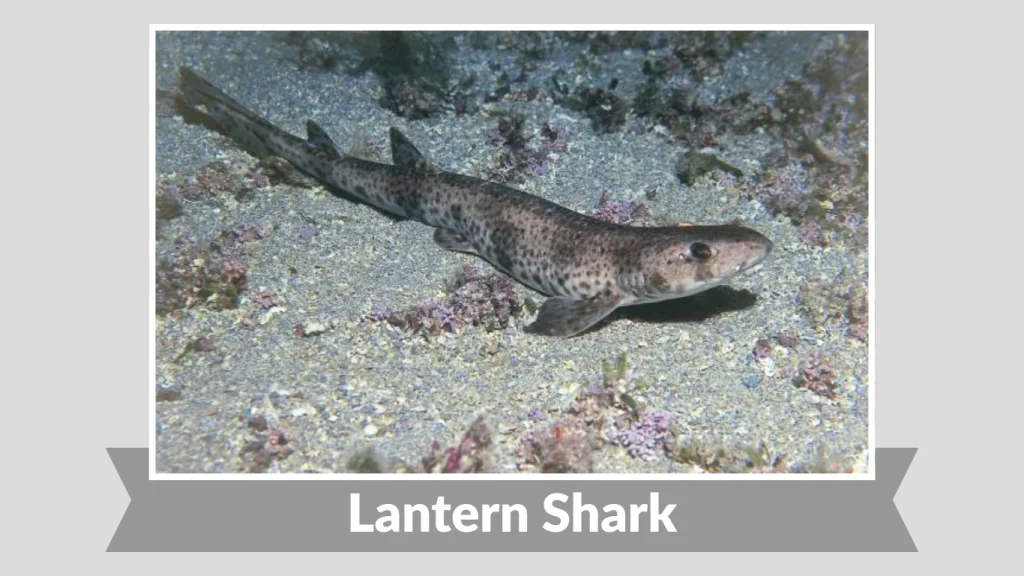
Lantern sharks are small deep-sea sharks known for their ability to produce light through bioluminescence. This adaptation helps them avoid predators in dark ocean depths.
Identification
- Small, slender body
- Dark brown to black coloration
- Light-producing organs (photophores) on the underside
- Large eyes suited for low-light conditions
- Usually under 2 feet (60 cm) long
Habitat
Lantern sharks inhabit deep waters of temperate and tropical oceans. They are most commonly found along continental slopes and deep-sea regions.
Behaviors
These sharks use bioluminescence for counter-illumination, helping them blend with faint surface light when viewed from below. They are slow-moving and rarely encountered.
Diet and Lifecycle
Their diet consists of small fish, crustaceans, and squid. Lantern sharks are ovoviviparous, giving birth to live young after eggs hatch inside the mother.
35. Sawshark
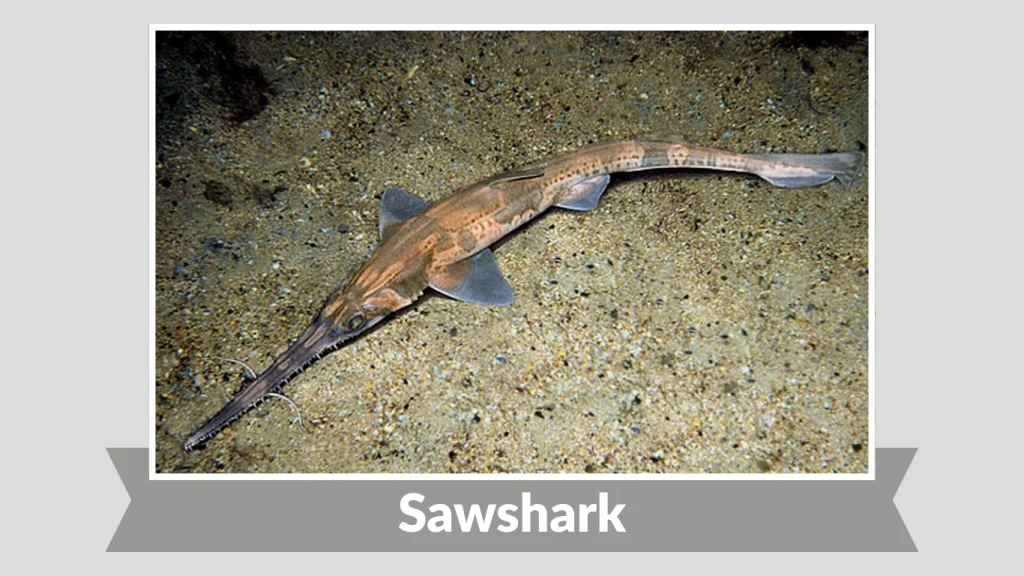
The sawshark is a distinctive shark species known for its long, saw-like snout lined with sharp teeth. This unique feature is used for both hunting and defense.
Identification
- Long, flat rostrum edged with sharp tooth-like spines
- Two long barbels located midway along the snout
- Slender body with a brown or gray coloration
- Small mouth located under the head
- Can grow up to about 5 feet (1.5 meters) long
Habitat
Sawsharks are found in temperate and tropical waters worldwide. They typically inhabit deep continental shelves and slopes, though some species move into shallower waters.
Behaviors
This species uses side-to-side slashing motions of its snout to stun or injure prey. Sawsharks are generally bottom-dwellers and spend much of their time near the seafloor.
Diet and Lifecycle
Their diet includes small fish, crustaceans, and squid. Sawsharks are ovoviviparous, giving birth to live young after a gestation period that varies by species.