




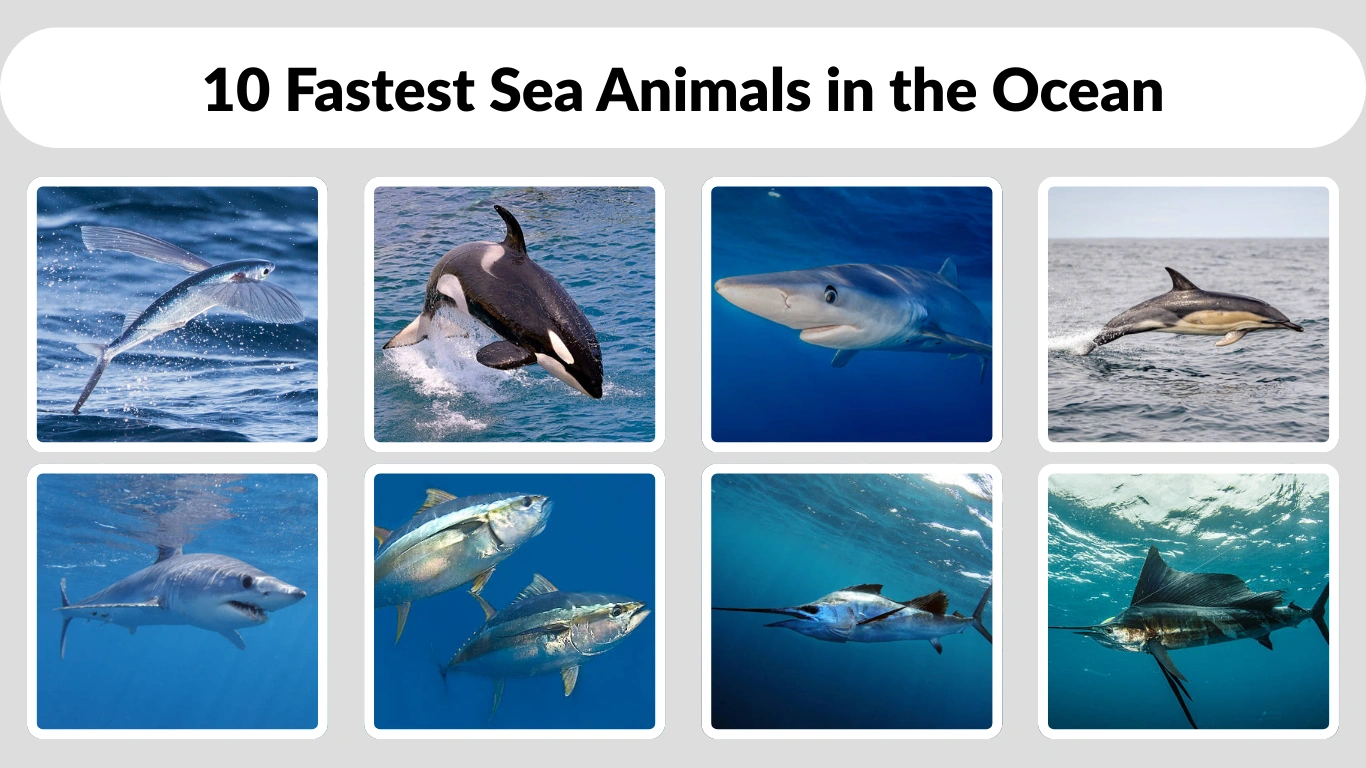
The ocean is home to some of the fastest creatures on Earth, where speed often means the difference between survival and starvation. From sleek predatory fish to powerful marine mammals, fast sea animals are specially designed with streamlined bodies, strong muscles, and efficient fins or tails that allow them to move through water with incredible power. In this article, we explore ten of the fastest sea animals, highlighting how their speed, body design, and hunting strategies make them true champions of the marine world.
1. Sailfish (Istiophorus platypterus)
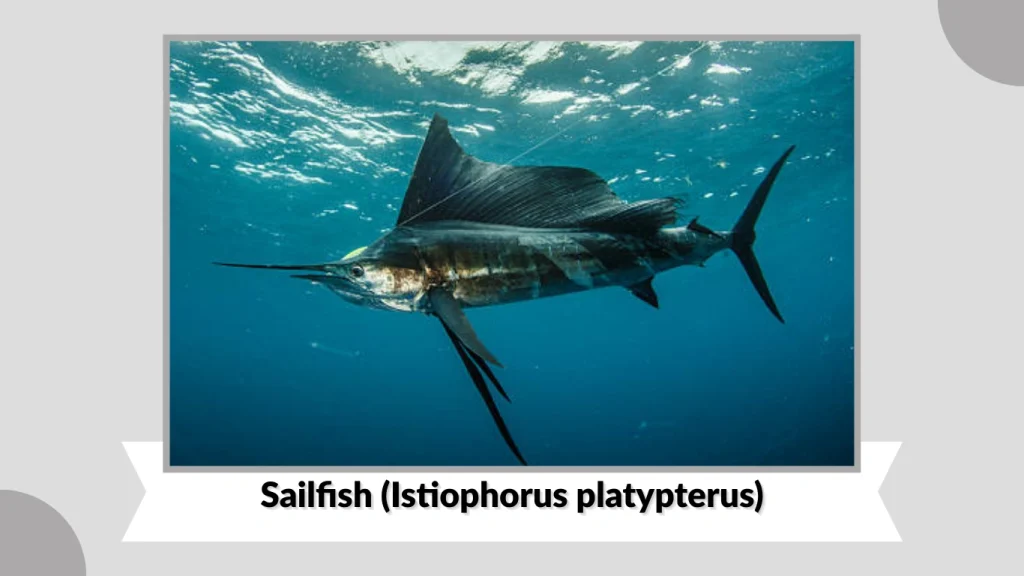
The sailfish is widely regarded as the fastest sea animal in the world. It is famous for its incredible speed, sleek body, and large sail-like dorsal fin. Sailfish can accelerate with explosive power, allowing them to chase down fast-moving fish in open oceans. Their speed, agility, and sharp bill make them one of the most efficient predators in marine environments.
Identification
- Long, pointed bill and streamlined torpedo-shaped body
- Very large, sail-like dorsal fin running along the back
- Deep blue upper body with silvery sides and belly
- Long, narrow pectoral fins and crescent-shaped tail
- Adults can reach up to 3 meters in length
Speed & Acceleration
Sailfish are believed to reach burst speeds of up to 68–70 miles per hour (110 km/h), making them the fastest swimmers in the ocean. Their powerful tail strokes and flexible body allow rapid acceleration, helping them surprise schools of fish. This sudden speed gives sailfish a major advantage when hunting fast prey like sardines and mackerel.
Body Design for Speed
The sailfish’s slim, hydrodynamic body reduces water resistance, while its stiff, crescent-shaped tail generates strong forward thrust. When swimming fast, the large dorsal fin can fold down into a groove, minimizing drag. Tiny tooth-like scales also help streamline water flow across the body, further boosting speed.
Hunting Strategy at High Speed
Sailfish often hunt in groups, using their speed to slash through schools of fish with their bills. By stunning or injuring multiple fish in a single high-speed pass, they make prey easier to catch. Their rapid turning ability, combined with bursts of speed, allows them to dominate fast-moving prey in open water.
2. Sailfish (Istiophorus platypterus)
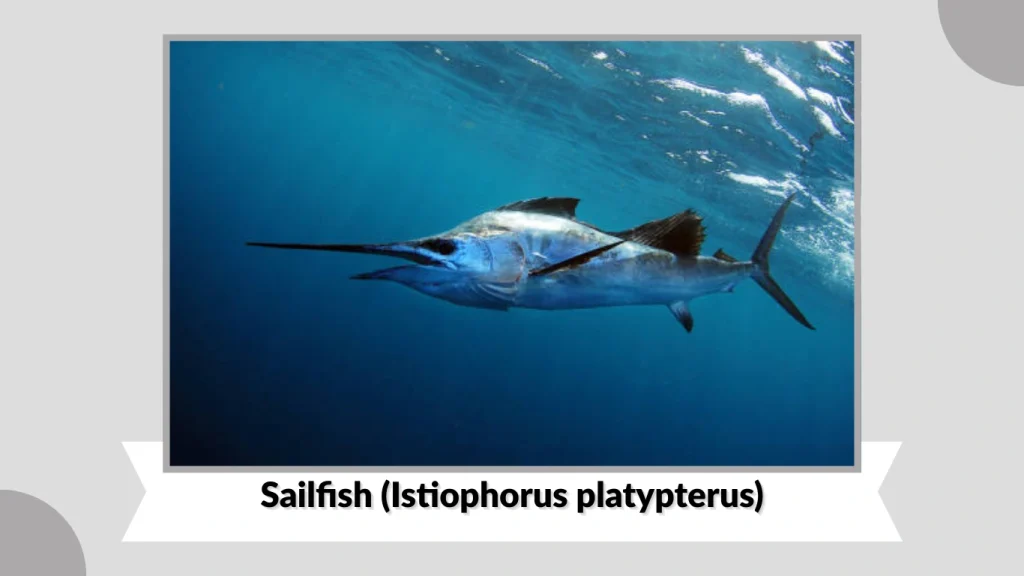
The sailfish is widely regarded as the fastest sea animal in the world. It is famous for its incredible speed, sleek body, and large sail-like dorsal fin. Sailfish can accelerate with explosive power, allowing them to chase down fast-moving fish in open oceans. Their speed, agility, and sharp bill make them one of the most efficient predators in marine environments.
Identification
- Long, pointed bill and streamlined torpedo-shaped body
- Very large, sail-like dorsal fin running along the back
- Deep blue upper body with silvery sides and belly
- Long, narrow pectoral fins and crescent-shaped tail
- Adults can reach up to 3 meters in length
Speed & Acceleration
Sailfish are believed to reach burst speeds of up to 68–70 miles per hour (110 km/h), making them the fastest swimmers in the ocean. Their powerful tail strokes and flexible body allow rapid acceleration, helping them surprise schools of fish. This sudden speed gives sailfish a major advantage when hunting fast prey like sardines and mackerel.
Body Design for Speed
The sailfish’s slim, hydrodynamic body reduces water resistance, while its stiff, crescent-shaped tail generates strong forward thrust. When swimming fast, the large dorsal fin can fold down into a groove, minimizing drag. Tiny tooth-like scales also help streamline water flow across the body, further boosting speed.
Hunting Strategy at High Speed
Sailfish often hunt in groups, using their speed to slash through schools of fish with their bills. By stunning or injuring multiple fish in a single high-speed pass, they make prey easier to catch. Their rapid turning ability, combined with bursts of speed, allows them to dominate fast-moving prey in open water.
3. Shortfin Mako Shark (Isurus oxyrinchus)
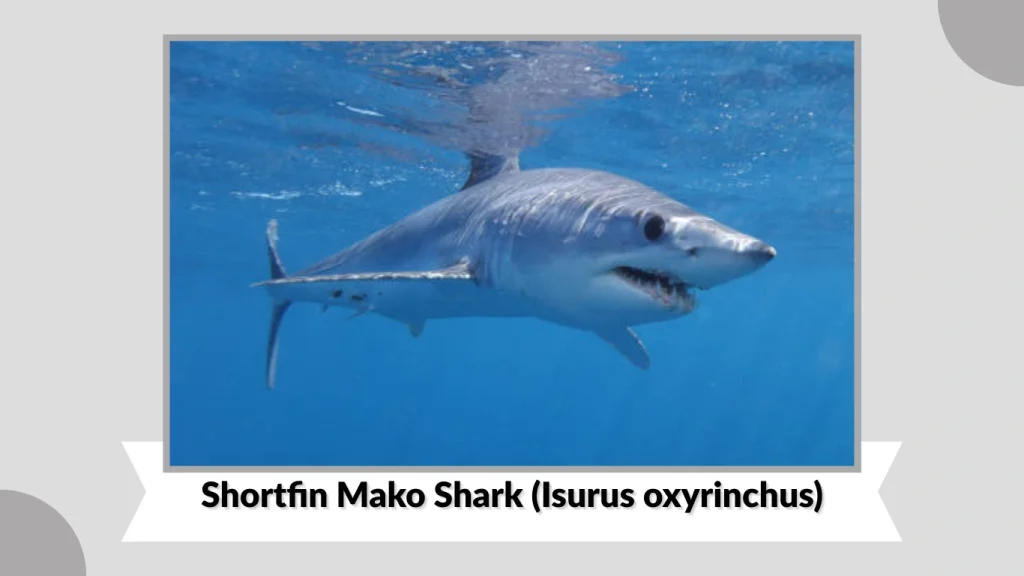
The shortfin mako shark is the fastest shark species in the ocean and one of the fastest fish overall. It is famous for its torpedo-shaped body, powerful tail, and high-energy hunting style. This shark is an elite open-ocean predator, capable of sudden bursts of speed that allow it to ambush and overtake extremely fast prey.
Identification
- Streamlined, metallic-blue body with a white underside
- Pointed snout and large black eyes
- Strong, crescent-shaped tail with a well-developed lower lobe
- Narrow waist near the tail for reduced drag
- Adults commonly reach 3–4 meters in length
Speed & Acceleration
Shortfin mako sharks can reach speeds of around 45–50 miles per hour (72–80 km/h) in short bursts. They are capable of sudden explosive acceleration, which is why they can leap several meters out of the water when chasing prey. Their warm-blooded physiology helps fuel powerful muscle contractions.
Body Design for Speed
The mako’s stiff, streamlined body minimizes drag, while its large tail fin provides immense thrust. Specialized red muscle tissue retains heat, allowing muscles to contract more efficiently than in cold-blooded fish. This gives the mako shark greater speed and endurance compared to most other sharks.
High-Speed Predatory Behavior
Shortfin makos hunt fast-moving fish such as tuna, swordfish, and mackerel. They use high-speed ambush attacks, charging from below or behind. Their speed, combined with sharp teeth and strong jaws, allows them to capture agile prey that few other predators can catch.
4. Yellowfin Tuna (Thunnus albacares)
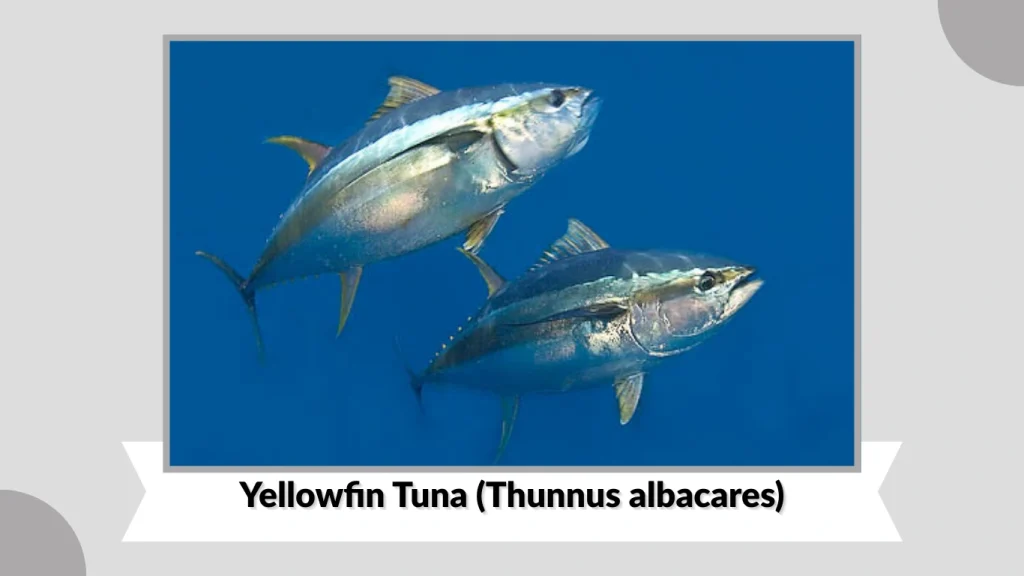
The yellowfin tuna is one of the fastest and most powerful swimming fish in the ocean. Built for constant motion, it is capable of maintaining high speeds over long distances, making it one of the ocean’s greatest endurance swimmers. Its speed, stamina, and streamlined body allow it to dominate warm open-water environments.
Identification
- Streamlined, torpedo-shaped body built for fast swimming
- Bright yellow second dorsal fin and finlets
- Dark blue back with silver sides and belly
- Strong, narrow tail base with a rigid crescent-shaped tail
- Adults can reach over 2 meters in length
Speed & Acceleration
Yellowfin tuna can reach burst speeds of about 45–50 miles per hour (70–80 km/h). Unlike many fish, they can also sustain high cruising speeds for long periods. This ability allows them to travel vast ocean distances and chase fast prey without tiring quickly.
Body Design for Speed
Their smooth, torpedo-like body reduces drag, while finlets behind the dorsal and anal fins stabilize water flow. The stiff, crescent tail generates powerful thrust. Yellowfin tuna are partially warm-blooded, keeping their muscles warmer than the surrounding water, which improves muscle performance and swimming efficiency.
Fast-Paced Hunting Style
Yellowfin tuna hunt schooling fish such as sardines, anchovies, squid, and mackerel. They often work in groups, herding prey into tight balls before rushing through at high speed. Their constant motion and rapid turns make them deadly hunters in the open ocean.
5. Swordfish (Xiphias gladius)
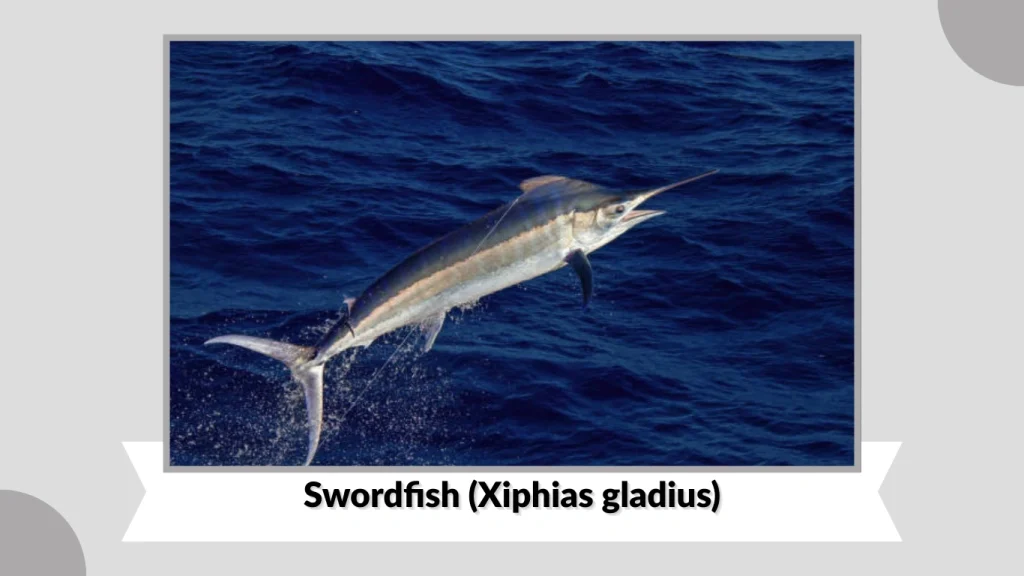
The swordfish is a powerful and extremely fast ocean predator, easily recognized by its long, flat, sword-like bill. It is built for high-speed swimming and long-distance travel, making it one of the fastest sea animals. Swordfish combine speed, strength, and sharp striking ability to dominate open-ocean hunting grounds.
Identification
- Long, flat bill shaped like a sword
- Sleek, muscular body with smooth skin
- Dark brown or black upper body with lighter underside
- Large crescent-shaped tail for strong propulsion
- Adults can grow over 4 meters long
Speed & Acceleration
Swordfish are believed to reach speeds of around 50 miles per hour (80 km/h) in short bursts. Their powerful tail strokes allow sudden acceleration, enabling them to slash through schools of fish. This rapid speed helps them surprise prey and escape larger predators.
Body Design for Speed
The swordfish’s smooth, scaleless skin reduces water resistance, while its narrow tail base and rigid crescent tail provide strong forward thrust. Special tissues near the eyes can warm the brain and eyes, improving vision and reaction time during high-speed chases.
High-Speed Strike Hunting
Swordfish often use their bill to slash and injure schools of fish and squid before turning back to eat the wounded prey. Their speed allows them to make rapid passes through prey groups, stunning multiple animals in seconds and maximizing hunting success.
6. Common Dolphin (Delphinus delphis)
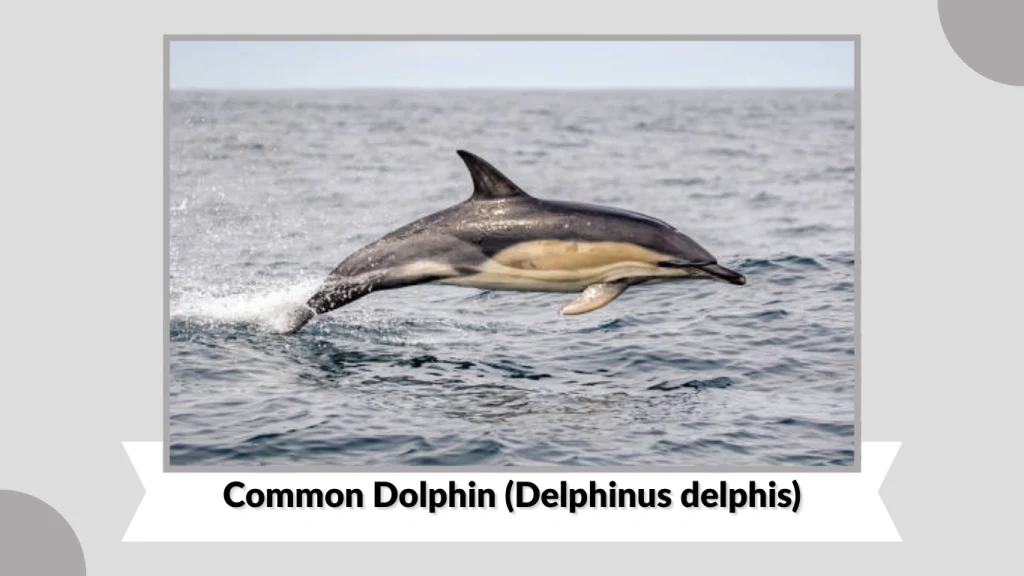
The common dolphin is one of the fastest marine mammals and is famous for its agility, endurance, and playful swimming behavior. It often rides the bow waves of boats and leaps repeatedly out of the water, showing off its remarkable speed and control. This dolphin uses speed not only for hunting but also for social interaction and migration.
Identification
- Slender, streamlined body with a long narrow beak
- Distinctive yellowish and gray hourglass pattern on the sides
- Tall, curved dorsal fin at the center of the back
- Strong flukes that provide powerful thrust
- Adults usually reach 1.7–2.4 meters in length
Speed & Acceleration
Common dolphins can swim at speeds of up to 35–40 miles per hour (56–64 km/h) in short bursts. They are capable of rapid acceleration, allowing them to chase down fast-moving fish and quickly change direction. Their speed also helps them avoid predators such as large sharks.
Body Design for Speed
The dolphin’s smooth, torpedo-shaped body reduces drag, while the powerful tail flukes move up and down to generate strong propulsion. Their flexible spine enhances thrust, and their smooth skin reduces turbulence, making them highly efficient swimmers.
Fast Cooperative Hunting
Common dolphins often hunt in pods, using speed and teamwork to herd schools of fish into tight groups. They take turns rushing through prey balls at high speed, capturing fish such as sardines, anchovies, and squid.
7. Killer Whale (Orcinus orca)
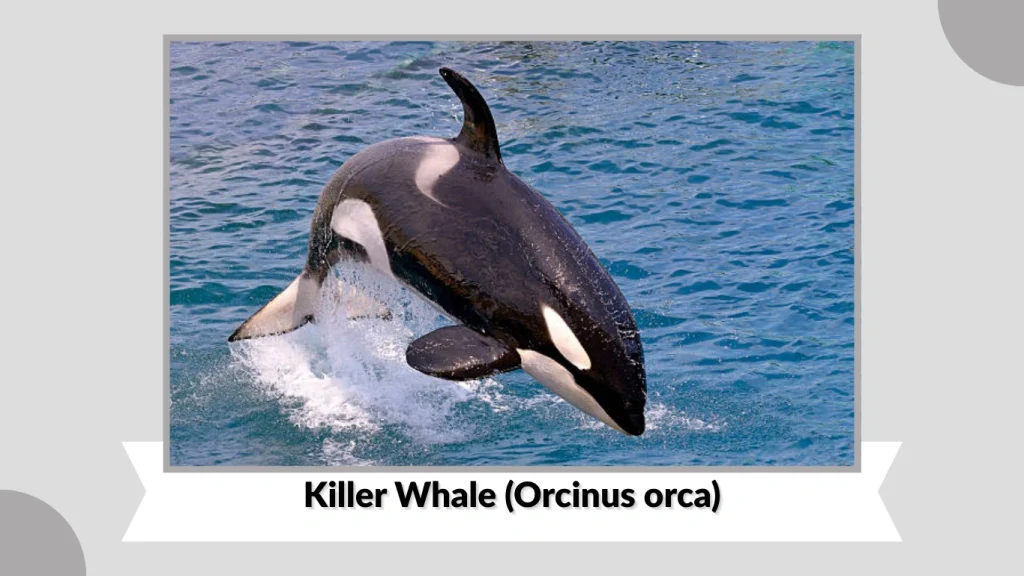
The killer whale, or orca, is the largest member of the dolphin family and one of the fastest marine mammals in the ocean. Despite its massive size, it is capable of impressive bursts of speed, making it a top predator in nearly every ocean. Orcas use their speed, intelligence, and teamwork to hunt a wide variety of prey.
Identification
- Large, robust body with a striking black-and-white color pattern
- Tall, triangular dorsal fin, especially high in males
- Rounded forehead and powerful tail flukes
- Smooth skin and strong, muscular build
- Adults can grow up to 9 meters in length
Speed & Acceleration
Killer whales can reach speeds of about 34 miles per hour (55 km/h). They use powerful tail strokes to accelerate quickly when attacking prey. This speed allows them to chase fast-moving animals such as seals, dolphins, and large fish.
Body Design for Speed
The orca’s streamlined body minimizes water resistance, while its massive tail flukes generate strong propulsion. A flexible spine and thick muscle layers provide both speed and endurance, enabling long pursuits across open water.
High-Speed Cooperative Predation
Orcas often hunt in coordinated pods, using speed to surround, chase, and isolate prey. Some groups use rapid swimming to create waves that wash seals off ice floes, while others chase fish schools at high speed before striking.
8. Blue Shark (Prionace glauca)
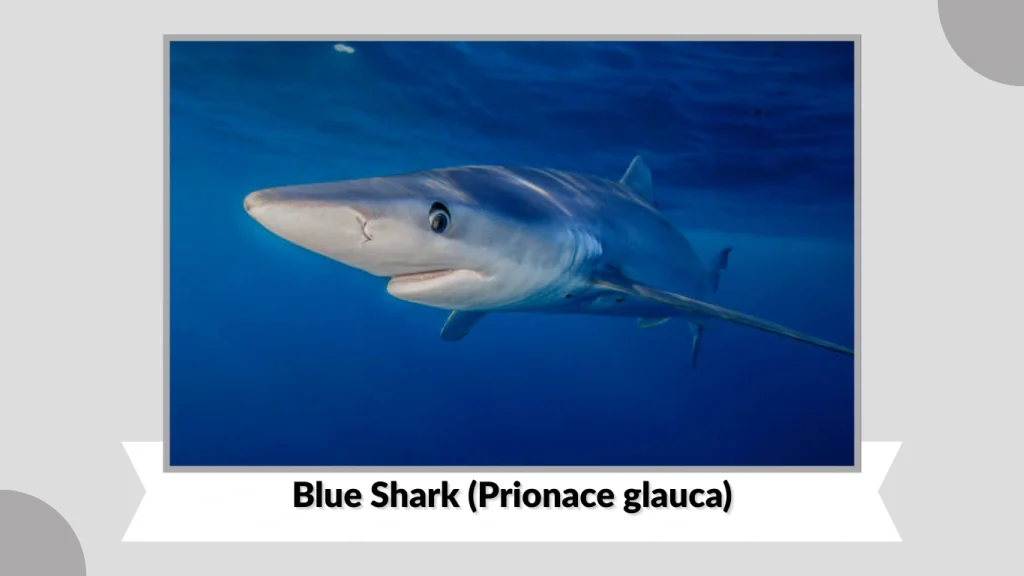
The blue shark is one of the fastest and most graceful sharks in the open ocean. Known for its long, slim body and brilliant blue coloration, this species is built for speed and endurance. It spends most of its life cruising vast oceanic waters, using its efficient swimming ability to cover long distances and hunt agile prey.
Identification
- Slender, elongated body with a deep blue upper side
- Long pointed snout and very long pectoral fins
- White underside that contrasts with blue back
- Narrow waist near the tail and strong caudal fin
- Adults usually reach 2–3 meters in length
Speed & Acceleration
Blue sharks can swim at speeds of up to around 25–30 miles per hour (40–48 km/h). While not the absolute fastest predator, their sustained cruising speed and sudden bursts of acceleration allow them to keep up with fast-moving fish and squid in open waters.
Body Design for Speed
Their long, slim shape reduces drag, and their oversized pectoral fins provide lift and stability at high speeds. The powerful tail fin delivers steady propulsion, making the blue shark an efficient long-distance swimmer.
Fast Open-Ocean Hunting
Blue sharks hunt mainly squid, mackerel, and small schooling fish. They rely on steady high-speed cruising to locate prey, then use quick accelerations to overtake and capture fast, slippery animals.
9. Flying Fish (Exocoetidae family)
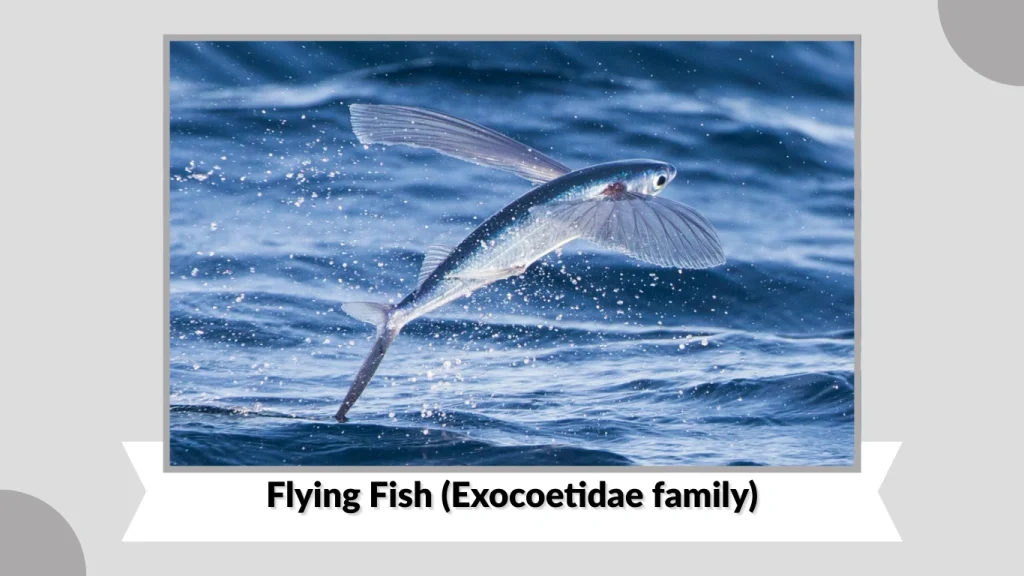
Flying fish are famous for their incredible speed and their ability to glide above the ocean surface. They are not true flyers, but their powerful swimming speed allows them to launch out of the water and escape predators by traveling long distances through the air. This unique ability makes them one of the fastest small sea animals.
Identification
- Slim, streamlined body with large wing-like pectoral fins
- Some species also have enlarged pelvic fins
- Silvery-blue body adapted for open ocean life
- Strong, deeply forked tail with an extended lower lobe
- Usually grow between 15–45 cm long
Speed & Acceleration
Flying fish can reach underwater speeds of about 35 miles per hour (56 km/h) to break the surface. Once airborne, they can glide for over 200 meters. Their rapid acceleration allows them to escape fast predators like tuna, marlin, and dolphins.
Body Design for Speed
Their torpedo-shaped body minimizes drag, while their powerful tail provides the thrust needed to leave the water. The large pectoral fins spread wide to catch air, turning speed into lift and enabling long glides.
High-Speed Escape Strategy
Flying fish rely on speed mainly for survival. They build momentum underwater, burst out of the sea at high speed, and glide just above the surface, often changing direction midair to avoid predators.
10. Wahoo (Acanthocybium solandri)
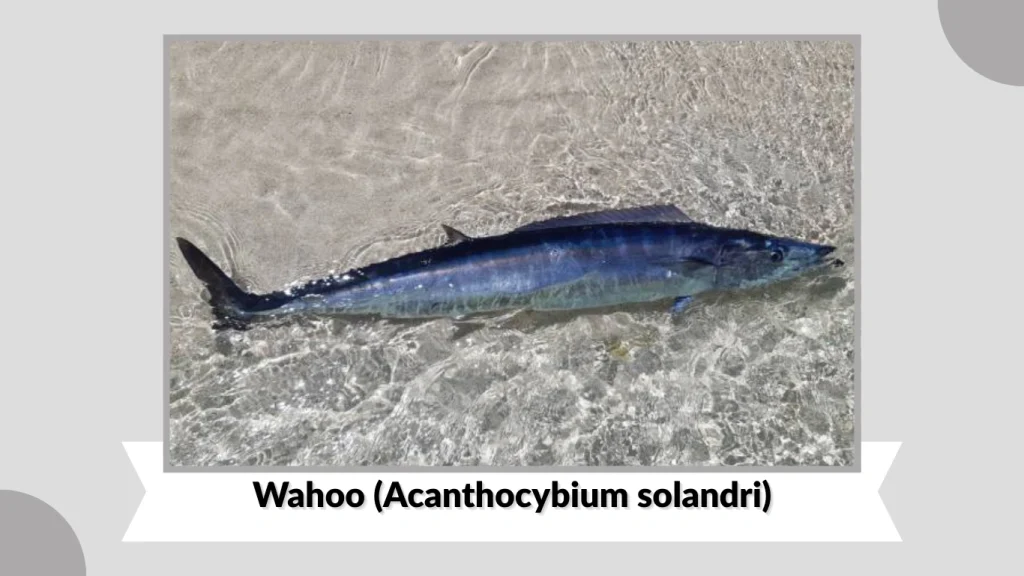
The wahoo is one of the fastest fish in the ocean and is built purely for speed. With its long, narrow body and powerful tail, the wahoo is capable of explosive acceleration and short, extremely fast sprints. It is a top predator in tropical and subtropical seas and is highly prized by sport fishers for its power and speed.
Identification
- Long, torpedo-shaped body with a pointed snout
- Iridescent blue back with silver sides marked by dark vertical bars
- Very narrow tail base with a stiff, deeply forked tail
- Small fins that can fold into grooves to reduce drag
- Adults usually reach up to 2.5 meters in length
Speed & Acceleration
Wahoo are believed to reach speeds of up to 60 miles per hour (97 km/h) in short bursts. Their explosive acceleration allows them to overtake some of the fastest prey in the ocean, including flying fish and small tuna.
Body Design for Speed
The wahoo’s ultra-streamlined body minimizes resistance, while its rigid crescent tail generates extreme thrust. Retractable fins reduce drag during high-speed chases, making the wahoo one of the most efficient sprint swimmers in the sea.
High-Speed Predatory Attacks
Wahoo hunt fast schooling fish and squid in open water. They rely on surprise and rapid sprints, striking prey at extreme speed before it can react. Their speed makes escape nearly impossible for most small fish.