




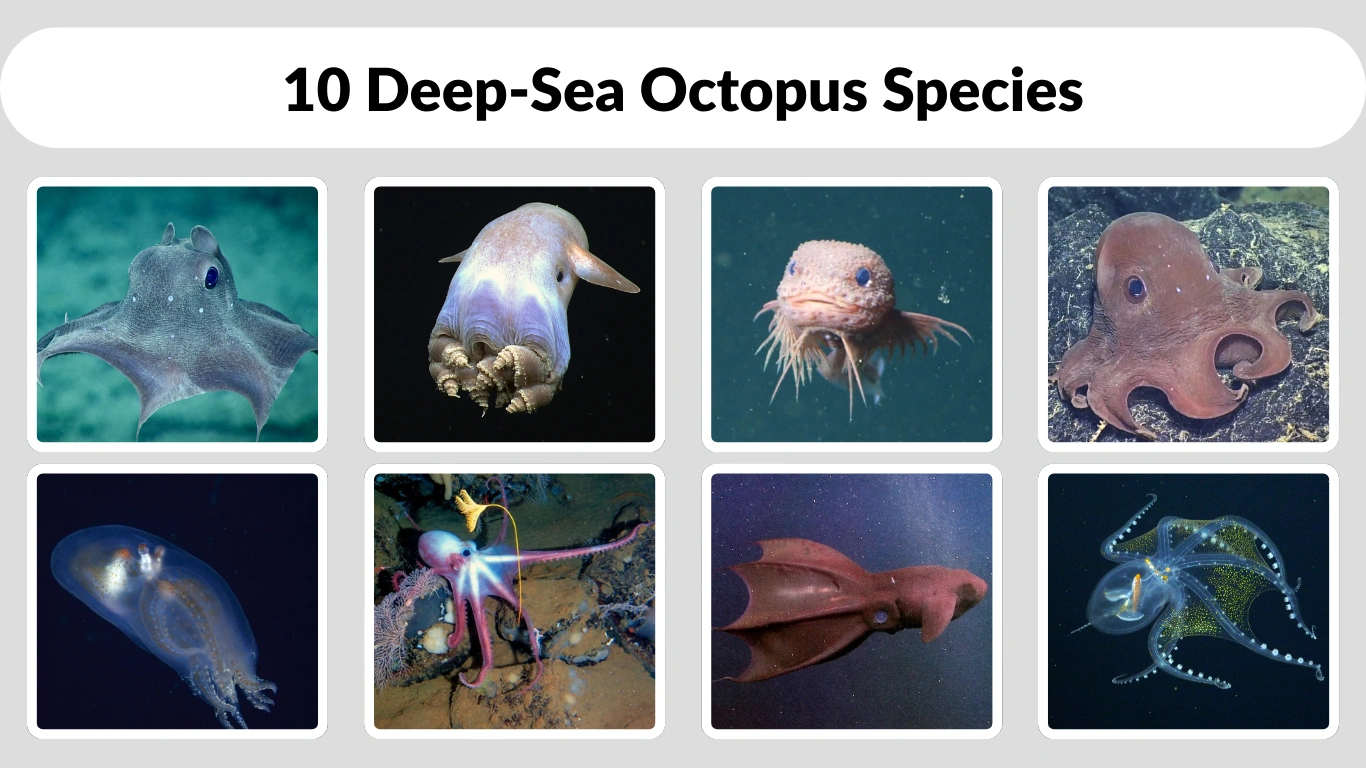
Deep-sea octopuses are some of the most mysterious animals on Earth, living in total darkness, freezing temperatures, and crushing water pressure. Unlike shallow-water octopuses, these species have soft, jelly-like bodies, slow movements, and special adaptations that allow them to survive where sunlight never reaches. From the famous dumbo octopus to strange transparent and long-armed forms, deep-sea octopuses show how life can thrive even in the most extreme ocean environments.
1. Dumbo Octopus (Grimpoteuthis spp.)
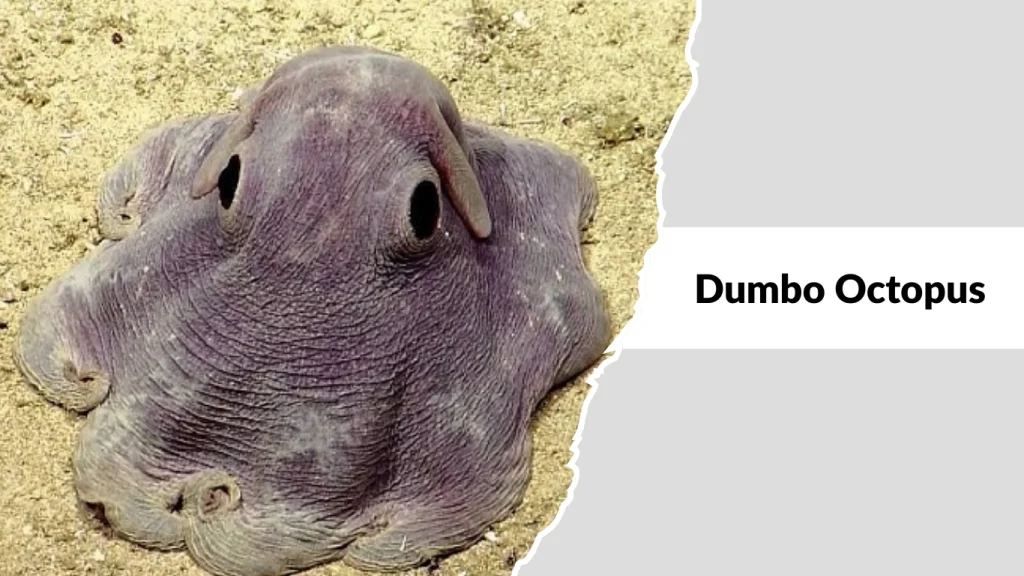
The dumbo octopus is one of the most iconic deep-sea octopuses, named for the ear-like fins on its head that resemble the cartoon elephant Dumbo. It lives in the dark, high-pressure depths of the ocean and swims by gently flapping these fins. Unlike many shallow-water octopuses, dumbo octopuses drift gracefully above the seafloor rather than crawling, making them true deep-sea specialists.
Identification
- Soft, jelly-like rounded body
- Two ear-shaped fins on the head
- Short arms connected by a web of skin
- Pale pink, white, or light reddish coloration
- Large eyes adapted to low-light conditions
Deep-Sea Habitat
Dumbo octopuses live at extreme depths, usually between 1,000 and 4,000 meters, and some have been recorded even deeper. They are found in oceans all over the world, including the Pacific, Atlantic, and Indian Oceans. These octopuses stay just above the seafloor, floating in cold, dark water where sunlight never reaches.
Deep-Sea Feeding Behavior
Unlike fast reef octopuses, dumbo octopuses are gentle drifters. They feed on small deep-sea animals such as worms, copepods, amphipods, and tiny crustaceans. Instead of chasing prey, they hover above the bottom and use their arms to scoop food into their mouth, often swallowing prey whole.
Deep-Sea Lifecycle & Lifespan
Dumbo octopuses have a slow and unusual life cycle suited to deep-sea conditions. Females can lay eggs at different times rather than all at once. Eggs are attached to rocks on the seafloor and develop slowly in the cold water. The young hatch as fully formed miniature octopuses. They are believed to live longer than most shallow-water octopuses, possibly 3 to 5 years or more.
2. Vampire Squid (Vampyroteuthis infernalis)

The vampire squid is a strange and ancient deep-sea cephalopod that shares features of both squids and octopuses. Despite its frightening name, it is a gentle deep-water drifter rather than an aggressive predator. It is perfectly adapted to the oxygen-poor zones of the deep ocean, where few other animals can survive.
Identification
- Small, dark body with reddish-black coloration
- Large blue eyes adapted to extreme low light
- Eight arms connected by a web of skin, giving a cloak-like look
- Soft, jelly-like body with two small fins
- Tiny spines along the arms instead of strong suckers
Deep-Sea Habitat
Vampire squids live in the deep ocean at depths of about 600 to 900 meters, especially in oxygen minimum zones. They are found worldwide in tropical and temperate seas. These depths are cold, dark, and low in oxygen, but the vampire squid has special blood pigments that allow it to survive where most animals cannot.
Deep-Sea Feeding Behavior
Unlike hunting octopuses, the vampire squid feeds mainly on marine snow—tiny falling particles of dead plankton, feces, and organic debris. It uses sticky filaments and its webbed arms to collect this drifting food and bring it to its mouth. This slow feeding style is perfect for the low-energy deep-sea environment.
Deep-Sea Lifecycle & Lifespan
Very little is known about the full life cycle of the vampire squid. Females are thought to reproduce multiple times, releasing small batches of eggs rather than all at once. The young hatch as miniature versions of adults. Because of their slow metabolism, vampire squids are believed to have a relatively long lifespan compared to shallow-water cephalopods.
3. Glass Octopus (Vitreledonella richardi)
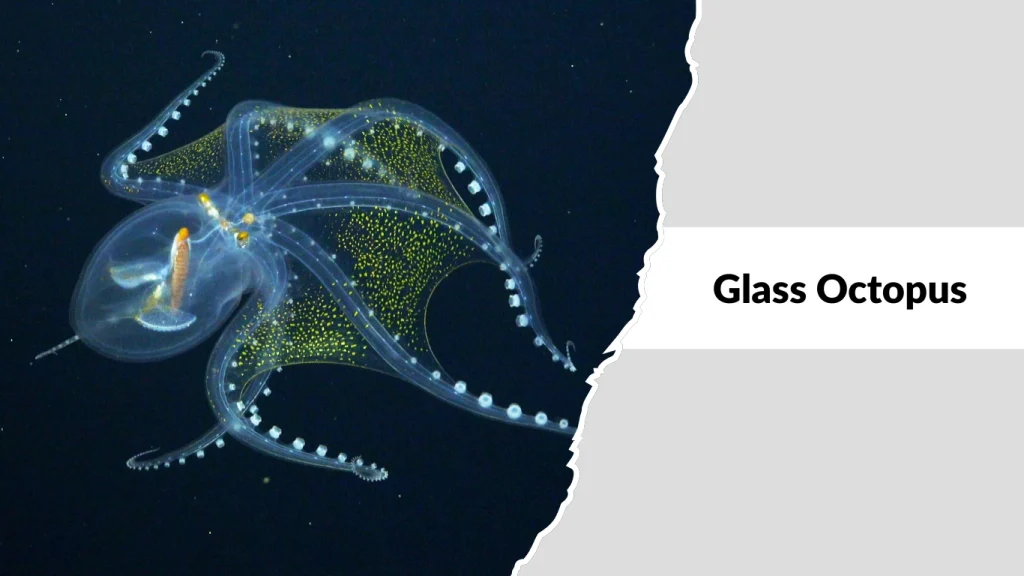
The glass octopus is one of the most unusual deep-sea octopuses, famous for its nearly transparent body that makes it almost invisible in the dark ocean. Through its clear tissues, its internal organs and eyes are often visible. This rare octopus floats in deep open waters and is specially adapted to avoid predators in the deep sea.
Identification
- Nearly transparent, glass-like body
- Visible internal organs and optic nerves
- Short arms with delicate suckers
- Large eyes adapted to dim light
- Soft, fragile appearance
Deep-Sea Habitat
The glass octopus lives in deep open waters, usually between 500 and 2,000 meters. It is found in tropical and subtropical oceans worldwide. Unlike bottom-dwelling octopuses, it is pelagic, meaning it floats in midwater rather than crawling on the seafloor. Its transparent body helps it blend into the dark environment.
Deep-Sea Feeding Behavior
The glass octopus feeds on small drifting animals such as copepods, tiny crustaceans, and larval fish. It moves slowly through the water, capturing prey with its delicate arms. Because food is scarce in deep waters, it relies on energy-efficient movements and opportunistic feeding.
Deep-Sea Lifecycle & Lifespan
Little is known about the exact life cycle of the glass octopus. Females are believed to carry and release eggs that hatch into miniature transparent young. Development is slow due to cold temperatures. Like many deep-sea octopuses, it is thought to live longer than shallow-water species, although its exact lifespan remains unknown.
4. Bigfin Octopus (Magnapinna spp.)
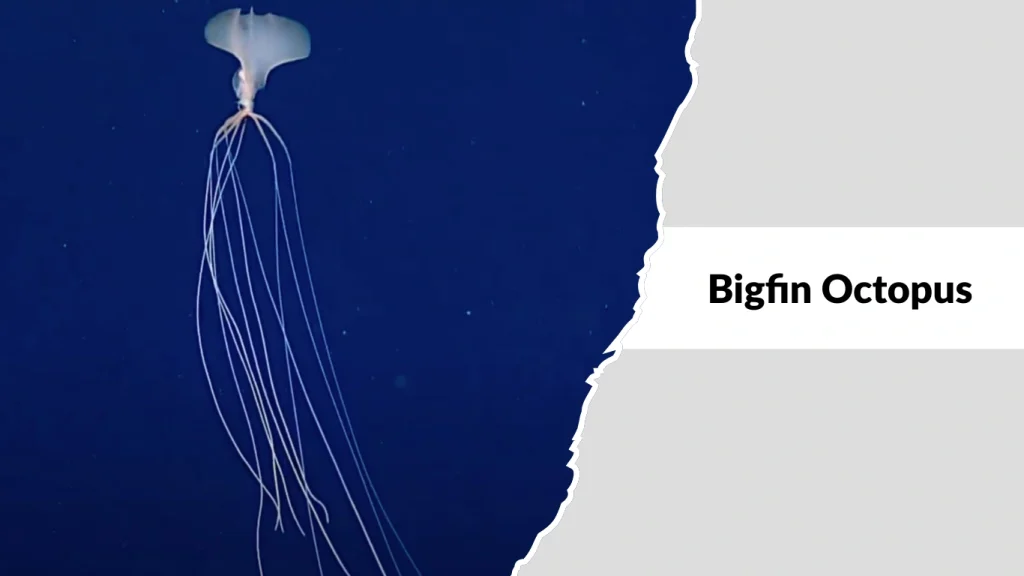
The bigfin octopus is one of the strangest deep-sea octopuses ever discovered, known for its extremely long, thin arms and distinctive “elbow-like” bends. Its ghostly appearance and slow movements have made it famous in deep-sea footage. This octopus lives in the deepest parts of the ocean and is rarely observed.
Identification
- Very small body compared to extremely long arms
- Thin, thread-like arms that can be several meters long
- Distinct elbow-like bends in the arms
- Pale white or light pink coloration
- Soft, delicate deep-sea body structure
Deep-Sea Habitat
Bigfin octopuses are found in the deep ocean, often at depths of 2,000 to over 5,000 meters. They have been recorded in the Pacific, Atlantic, and Indian Oceans. These depths are completely dark, extremely cold, and under enormous pressure. Bigfin octopuses drift above the seafloor, rarely interacting with the bottom.
Deep-Sea Feeding Behavior
Very little is known about how bigfin octopuses feed. Scientists believe they may extend their long arms to trap small crustaceans and drifting organisms. The arms may act like nets, allowing the octopus to collect food from the water column without active chasing.
Deep-Sea Lifecycle & Lifespan
Because sightings are rare, the life cycle of the bigfin octopus is not well understood. It is believed that they lay eggs on the seafloor and that the young hatch as fully formed miniature octopuses. Their slow movement and deep habitat suggest a slow-growing species with a potentially long lifespan.
5. Deep-Sea Cirrate Octopus (Cirrata group)

Deep-sea cirrate octopuses are a group of umbrella-shaped octopuses specially adapted to life in the deepest parts of the ocean. They are different from common octopuses because they have fins, internal shells, and soft, gelatinous bodies. These octopuses are slow-moving drifters that live far below sunlight.
Identification
- Soft, jelly-like umbrella-shaped body
- Two small fins on the head
- Arms connected by a wide web of skin
- Small cirri (tiny hair-like structures) along the arms
- Pale pink, white, or reddish coloration
Deep-Sea Habitat
Cirrate octopuses live at depths ranging from about 1,000 to over 4,000 meters. They are found in deep oceans worldwide. They usually float just above the seafloor, using their fins to move slowly through cold, dark waters where pressure is extreme and food is limited.
Deep-Sea Feeding Behavior
These octopuses feed on small deep-sea animals such as worms, crustaceans, and tiny mollusks. They drift gently and use their arms and cirri to guide food toward their mouth. Unlike shallow octopuses, they do not rely on fast attacks or venom.
Deep-Sea Lifecycle & Lifespan
Cirrate octopuses reproduce slowly. Females lay large eggs that develop over a long time in cold water. The young hatch as fully developed miniature octopuses. Because of their slow metabolism and deep habitat, cirrates are believed to live longer than shallow-water octopuses, possibly several years.
6. Flapjack Octopus (Opisthoteuthis californiana)
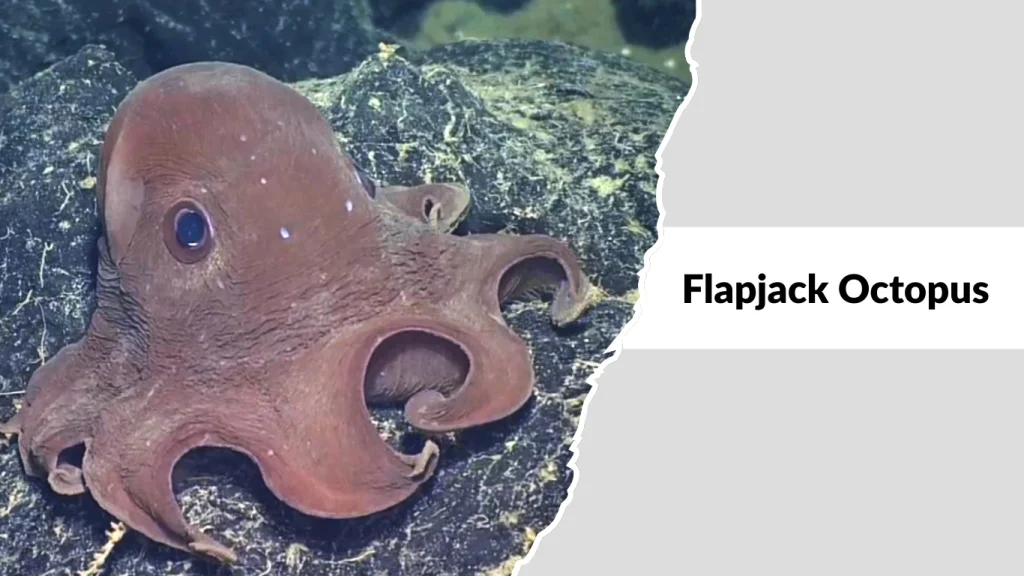
The flapjack octopus is a small, round-bodied deep-sea octopus best known for its cute, flattened shape and ear-like fins. When resting, it often looks like a soft pancake on the seafloor, but when swimming, it flaps its fins gently like wings. This species is a true deep-sea dweller adapted to cold, dark environments.
Identification
- Rounded, flattened body with a soft, gelatinous texture
- Two small ear-like fins on the head
- Arms connected by a wide web, giving a “pancake” shape
- Pale pink, orange, or light brown coloration
- Usually very small, often under 20 cm across
Deep-Sea Habitat
Flapjack octopuses live in the deep waters of the eastern Pacific Ocean, especially off the coast of California and Mexico. They are commonly found at depths between 1,000 and 3,500 meters. These octopuses rest on or just above the seafloor in cold, dark conditions with extremely high pressure.
Deep-Sea Feeding Behavior
They feed on small deep-sea invertebrates such as worms, snails, tiny crustaceans, and amphipods. The flapjack octopus drifts slowly or creeps gently along the bottom, capturing prey with its webbed arms and guiding food toward its mouth.
Deep-Sea Lifecycle & Lifespan
Little is known about their exact life cycle. Like other deep-sea octopuses, they lay large eggs that develop slowly. The young hatch as miniature versions of adults. Because of slow growth in cold water, flapjack octopuses are believed to have relatively long lifespans compared to shallow-water octopuses.
7. Telescope Octopus (Amphitretus pelagicus)
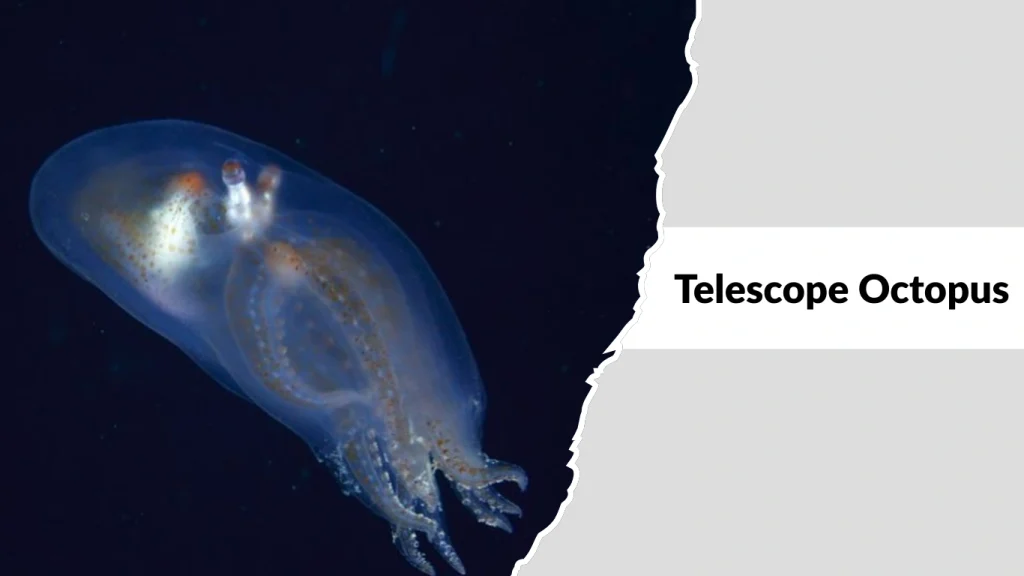
The telescope octopus is a strange deep-sea species named for its tubular, telescope-like eyes that stick out from its head. These unique eyes help it detect faint light and movement in the deep ocean. It has a nearly transparent body and floats in open deep water rather than living on the seafloor.
Identification
- Transparent, jelly-like body
- Long tubular eyes pointing upward
- Short arms connected by a web
- Two small fins on the head
- Very delicate, fragile appearance
Deep-Sea Habitat
Telescope octopuses live in the open deep ocean, usually between 200 and 1,000 meters, sometimes deeper. They are found in tropical and subtropical seas worldwide. They float motionless or drift slowly, watching above them for prey silhouetted against faint light.
Deep-Sea Feeding Behavior
They mainly feed on small drifting animals such as crustaceans and tiny fish. Using their upward-pointing eyes, they detect movement and gently move their arms to capture prey. Their slow movements conserve energy in the food-scarce deep sea.
Deep-Sea Lifecycle & Lifespan
Not much is known about the telescope octopus life cycle. Females release eggs into deep water, and the young hatch as miniature transparent octopuses. Development is slow due to cold temperatures, suggesting a longer lifespan than shallow-water octopuses.
8. Shadowy Snailfish Octopus (Deep-sea octopus-like species)
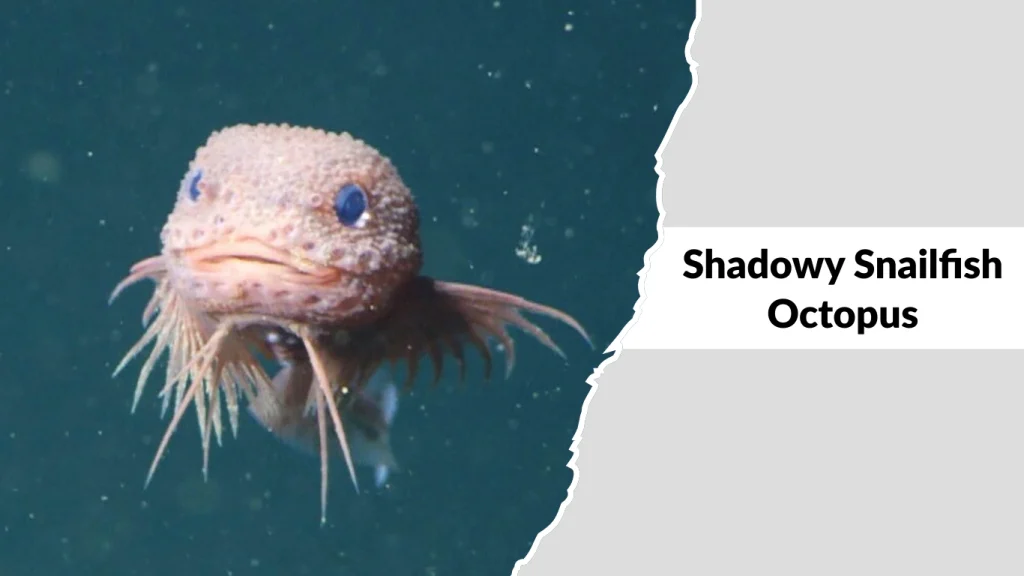
The so-called “shadowy snailfish octopus” is often used informally to describe rare, shadow-like deep-sea octopus forms that resemble both snailfish and cirrate octopuses in appearance. These animals are extremely poorly known and are usually recorded only by deep-sea cameras. They drift slowly in the deep ocean and appear ghostly and soft-bodied.
Identification
- Very soft, gelatinous, shadow-like body
- Rounded shape with weak, flowing arms
- Pale or translucent coloration
- Small fins used for gentle swimming
- Fragile deep-sea body structure
Deep-Sea Habitat
These octopus-like deep-sea forms are observed in very deep waters, often below 2,000 meters. They inhabit cold, dark regions of the ocean floor and midwater zones where sunlight never reaches. Because of the extreme depth, they are rarely collected and mostly known from video footage.
Deep-Sea Feeding Behavior
They likely feed on small deep-sea invertebrates such as amphipods, worms, and drifting organic matter. Slow drifting and gentle arm movements help them capture food while conserving energy.
Deep-Sea Lifecycle & Lifespan
Almost nothing is scientifically confirmed about their life cycle. Based on similar deep-sea octopuses, they probably lay large eggs that develop slowly and hatch into fully formed young. Their lifespan is believed to be longer than shallow-water octopuses due to slow metabolism.
9. Grimpoteuthis (Dumbo Octopus Genus)

Grimpoteuthis is the scientific genus that includes many species of dumbo octopuses found in the deep sea. These octopuses are known for their ear-like fins, soft umbrella-shaped bodies, and slow, graceful swimming. Members of this genus are some of the deepest-living octopuses ever recorded.
Identification
- Soft, rounded body with umbrella-like webbing
- Two ear-shaped fins on the head
- Short arms with small suckers
- Pale pink, white, or reddish tones
- Large eyes adapted to low light
Deep-Sea Habitat
Grimpoteuthis species live in very deep ocean waters, often between 1,000 and 4,000 meters, and some have been recorded even deeper. They are found in oceans worldwide. They float just above the seafloor, using their fins to move slowly through the dark, cold environment.
Deep-Sea Feeding Behavior
They feed on small bottom-dwelling animals such as worms, tiny crustaceans, and copepods. Instead of chasing prey, they hover and gently gather food with their arms. This low-energy feeding style suits the deep-sea environment where food is limited.
Deep-Sea Lifecycle & Lifespan
Grimpoteuthis octopuses reproduce slowly. Females lay large eggs one at a time over long periods. The eggs are attached to hard surfaces on the seabed. Young hatch as fully formed miniature octopuses. Their slow metabolism suggests a relatively long lifespan.
10. Opisthoteuthis (Flapjack Octopus Genus)
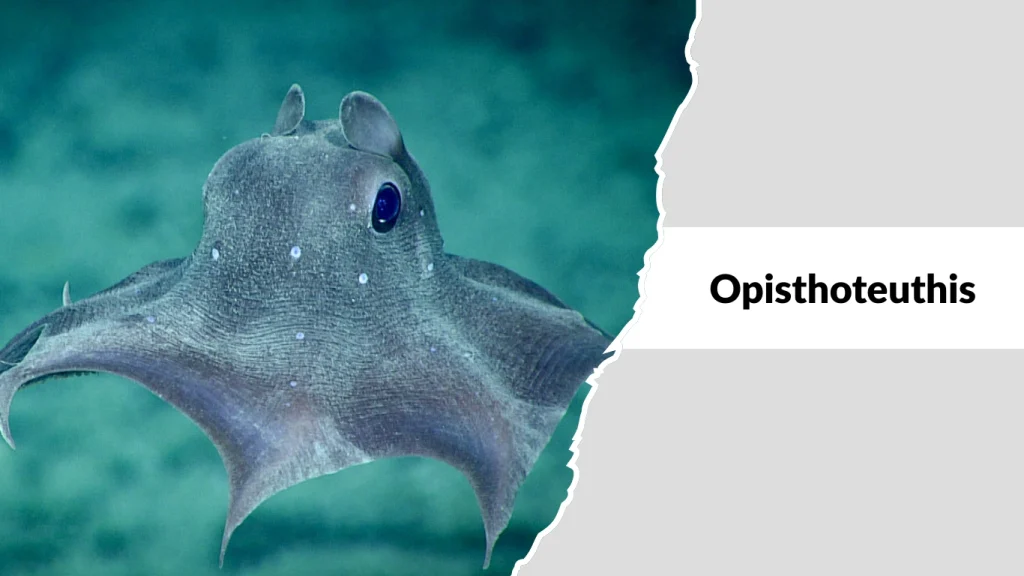
Opisthoteuthis is a deep-sea octopus genus that includes several species commonly known as flapjack octopuses. These octopuses are recognized by their flattened, pancake-like bodies and gentle fin-driven swimming. They are true deep-sea animals, living far below sunlight in cold, high-pressure environments.
Identification
- Rounded, flattened body with umbrella-like webbing
- Two small fins on the head used for swimming
- Soft, gelatinous texture
- Short arms with small suckers
- Pale pink, orange, or whitish coloration
Deep-Sea Habitat
Opisthoteuthis species live at depths ranging from about 1,000 to over 4,000 meters. They are found in deep oceans worldwide. They often rest on or float just above the seafloor, moving slowly in the dark, cold environment.
Deep-Sea Feeding Behavior
They feed on small deep-sea organisms such as worms, crustaceans, and tiny mollusks. By drifting close to the bottom, they gently scoop prey into their mouth. They do not rely on speed or venom, instead using slow, energy-saving feeding methods.
Deep-Sea Lifecycle & Lifespan
These octopuses lay large eggs that are attached to deep-sea rocks. The eggs develop slowly in cold water. The young hatch as miniature versions of adults. Because of slow growth and low metabolism, Opisthoteuthis species are believed to live longer than shallow-water octopuses.