
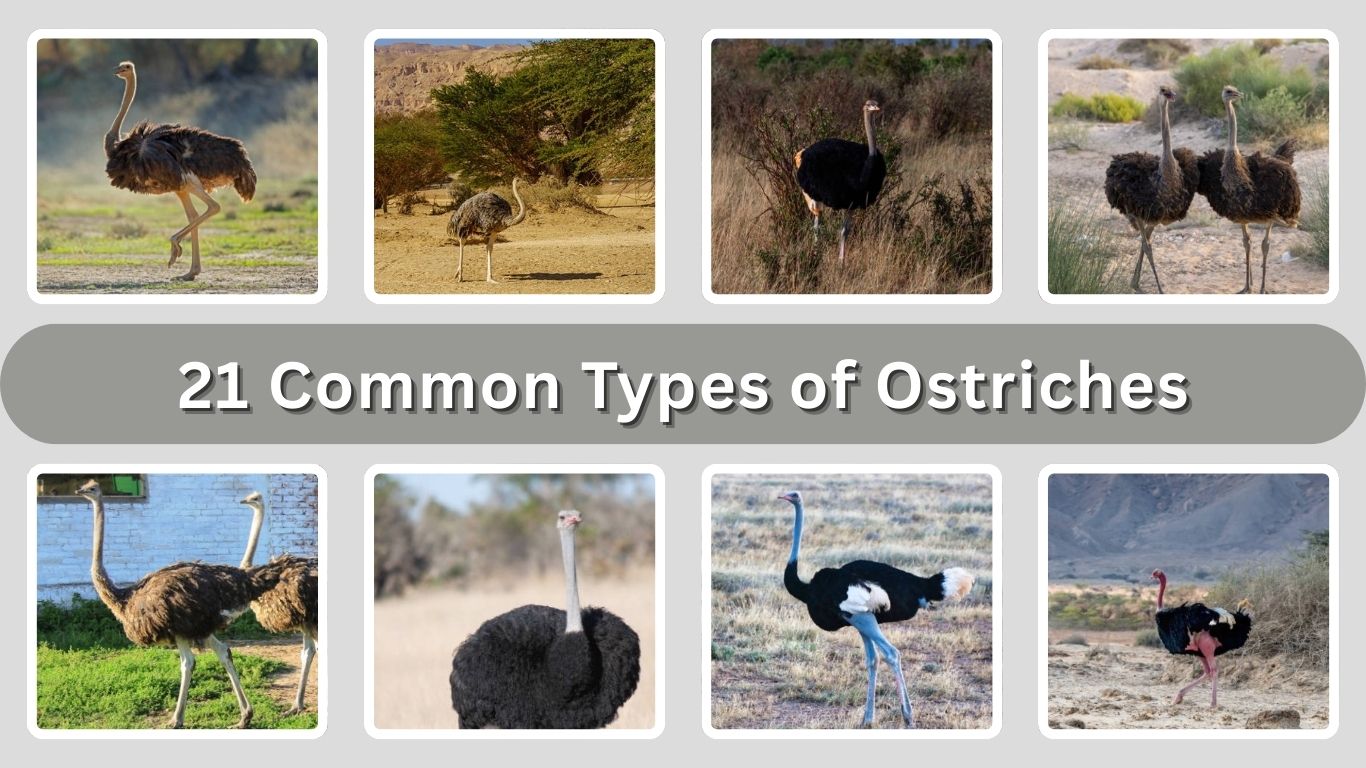
Ostriches are the largest living birds on Earth, famous for their powerful legs, long necks, and incredible running speed. Native mainly to Africa, these flightless birds are adapted to open landscapes such as savannas, grasslands, and deserts. Although many people think there is only one kind of ostrich, several regional types and subspecies exist, each with unique features, colors, and habitat preferences. This guide explores 21 common types of ostriches, highlighting their diversity across different parts of the world.
1. Common Ostrich (Struthio camelus)
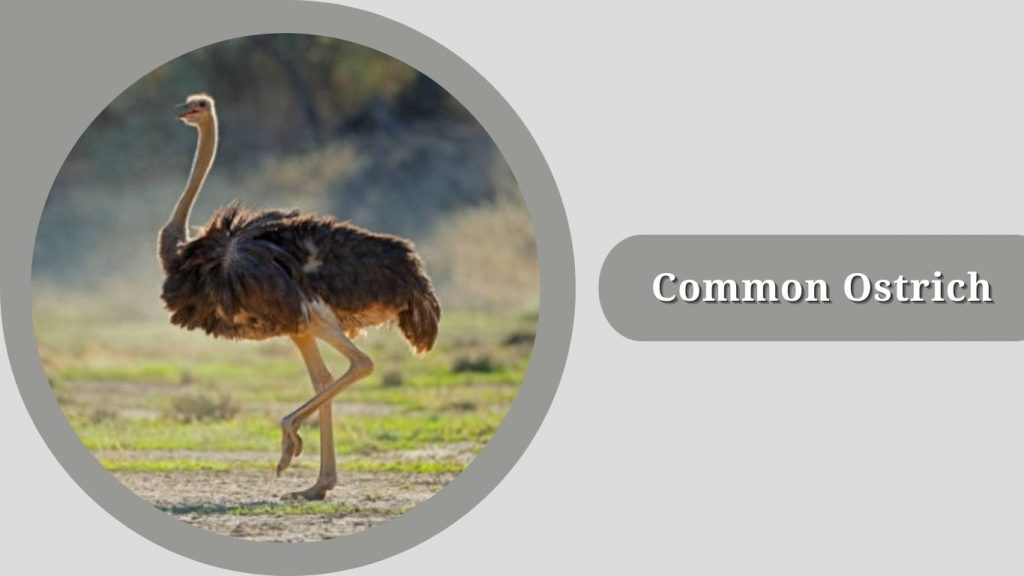
The common ostrich is the largest living bird on Earth and is native to wide regions of Africa. It is famous for its powerful legs, long neck, sharp eyesight, and incredible running speed. Although flightless, the common ostrich is extremely well adapted to open savannas and semi-deserts, where it survives through speed, awareness, and strong social behavior.
Identification
- Tall, flightless bird reaching up to 9 feet (2.7 m)
- Long bare neck and long powerful legs
- Males have black feathers with white wing and tail tips
- Females are brownish-gray for camouflage
- Large eyes (about 2 inches wide) for sharp vision
- Two-toed feet designed for fast running
Habitat
Common ostriches mainly live in African savannas, open grasslands, scrublands, and semi-desert regions. They prefer wide, open spaces where they can see predators from far away. Ostriches often stay near water sources but can survive long periods without drinking by getting moisture from plants.
Diet
The common ostrich is omnivorous. It mainly eats grasses, leaves, seeds, roots, and fruits, but it also consumes insects, lizards, and small vertebrates. Ostriches swallow small stones to help grind food in their gizzard, since they do not have teeth.
Behaviors and Lifecycle
Common ostriches are social birds and often live in small groups. They are active during the day and rest at night. During breeding season, dominant males attract several females. Females lay eggs in a shared nest, and both parents help incubate them. Chicks hatch after about 42 days and can run within hours of birth.
2. North African Ostrich (Struthio camelus camelus)
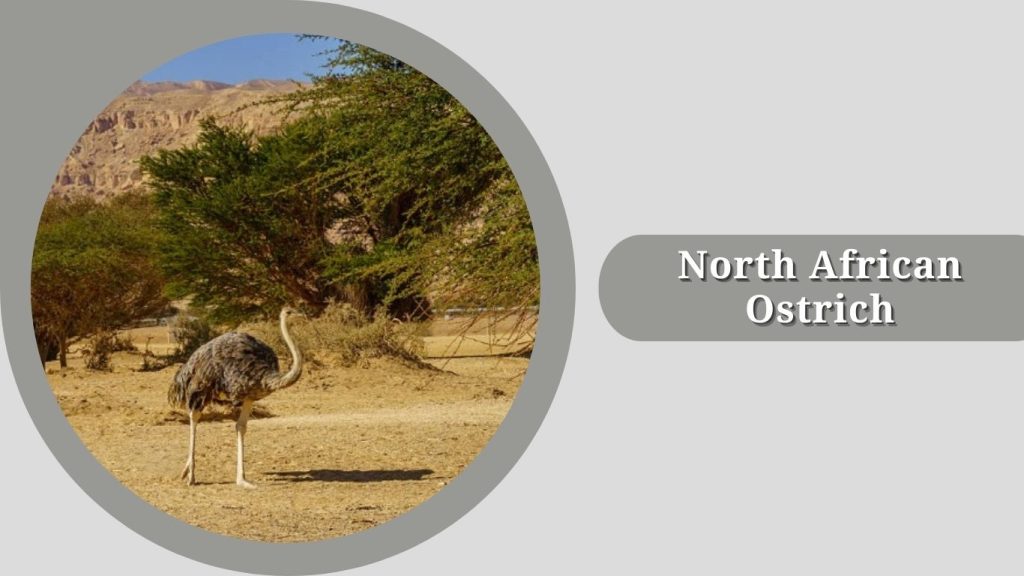
The North African ostrich, also called the red-necked ostrich, is one of the largest and most powerful ostrich subspecies. It historically ranged across North Africa and parts of the Middle East. This ostrich is well known for the pinkish-red skin on its neck and legs, especially in adult males.
Identification
- Largest ostrich subspecies
- Reddish or pink neck and legs (brighter in males)
- Black body feathers with white wing and tail feathers in males
- Females are grayish-brown
- Very long neck and strong two-toed feet
- Thick eyelashes and large eyes
Habitat
North African ostriches inhabit deserts, semi-deserts, dry savannas, and open plains. They prefer wide open landscapes where they can rely on eyesight and speed for protection. Historically, they were found from Morocco across to Egypt and into parts of the Arabian Peninsula.
Diet
Their diet mainly consists of grasses, leaves, seeds, flowers, and fruits. They also eat insects and small reptiles when available. Like other ostriches, they swallow pebbles to help grind food inside their gizzard.
Behaviors and Lifecycle
North African ostriches are usually seen in small groups. They are alert and aggressive when threatened, capable of delivering powerful kicks. During breeding season, males establish territories and attract females. Eggs are laid in a communal nest, and incubation lasts about 40–45 days before chicks hatch.
3. Somali Ostrich (Struthio molybdophanes)
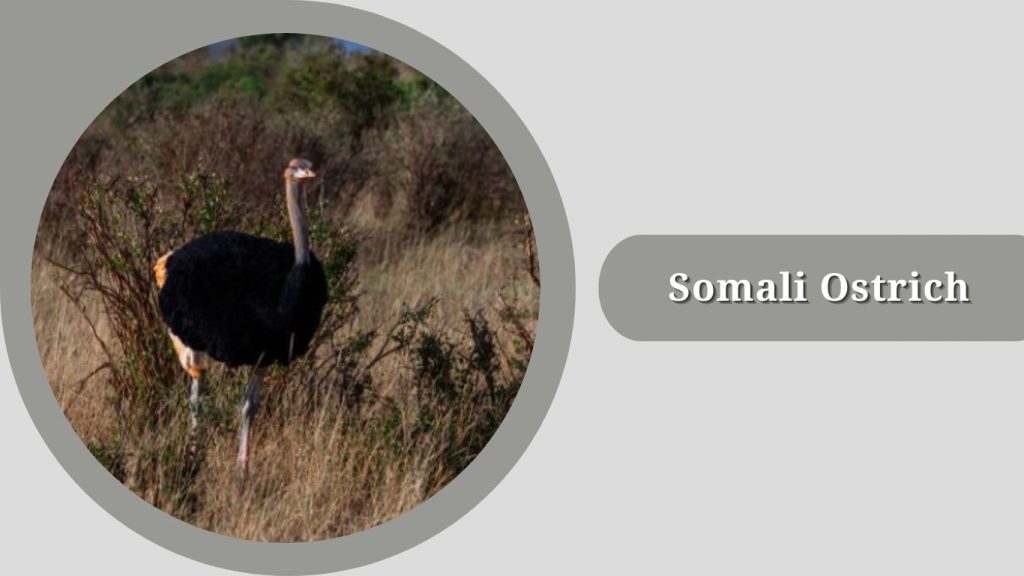
The Somali ostrich is a distinct species found in the Horn of Africa. It is slightly smaller than the common ostrich but easily recognized by its bluish-gray skin and more upright posture. This ostrich is especially adapted to hot, dry environments.
Identification
- Bluish-gray neck and thighs
- Less fluffy feathers compared to common ostrich
- Males have black and white plumage; females are brown
- Narrower body shape
- Long bare legs adapted for running
- Straight, upright stance
Habitat
Somali ostriches live in dry grasslands, bushlands, and semi-arid regions of Somalia, Ethiopia, and northern Kenya. They favor hot climates with sparse vegetation and often roam large territories in search of food and water.
Diet
They feed on grasses, shrubs, seeds, fruits, and roots. Insects and small animals are occasionally eaten. Somali ostriches can survive long dry periods by obtaining moisture from plants.
Behaviors and Lifecycle
Somali ostriches are generally more solitary or found in pairs. Males defend breeding territories and perform courtship displays. Several females may lay eggs in one nest. After about 42 days of incubation, chicks hatch and are cared for mainly by the male.
4. Masai Ostrich (Struthio camelus massaicus)
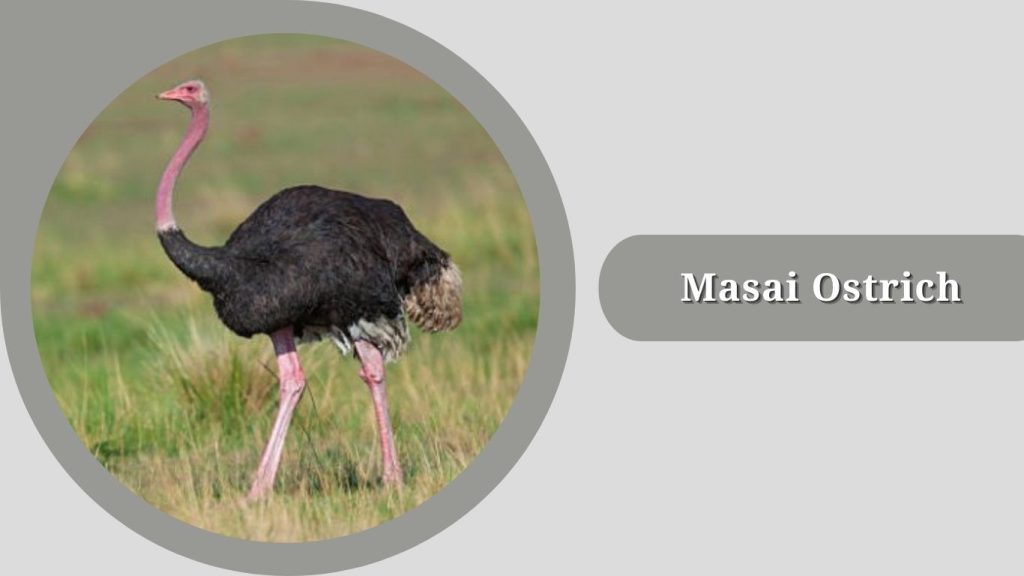
The Masai ostrich is a large East African subspecies of the common ostrich, widely known for the bright pink to red skin on its neck and legs, especially in adult males. It is one of the fastest land birds and is well adapted to life in hot, open landscapes.
Identification
- Bright pink to reddish neck and legs (males)
- Males have black bodies with white tail and wing feathers
- Females are brownish-gray for camouflage
- Tall body with long, bare neck
- Strong two-toed feet
- Large forward-facing eyes
Habitat
Masai ostriches live mainly in open savannas, dry grasslands, and semi-arid plains of Kenya and Tanzania. They prefer wide, treeless areas where they can detect predators from long distances and escape quickly by running.
Diet
Their diet includes grasses, seeds, leaves, flowers, and fruits. They also eat insects, lizards, and small rodents. Stones are swallowed to help grind tough plant material inside the gizzard.
Behaviors and Lifecycle
Masai ostriches live in small flocks, often mixed with grazing mammals. During breeding season, males defend territories and perform wing displays. Several females lay eggs in one nest. Incubation lasts about six weeks, and chicks are able to run shortly after hatching.
5. South African Ostrich (Struthio camelus australis)
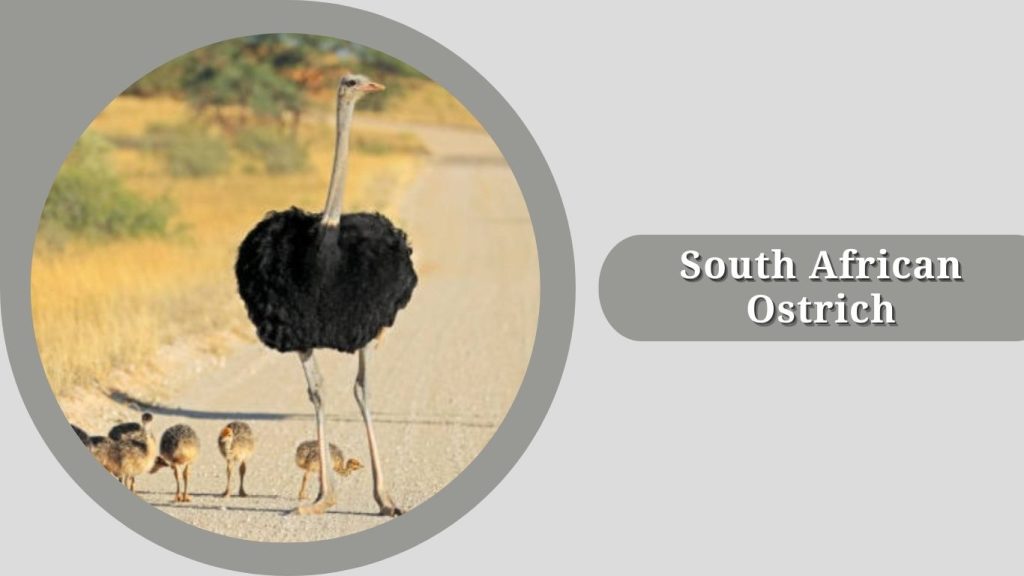
The South African ostrich is the most widespread and commonly farmed ostrich subspecies. It is slightly smaller than the North African ostrich but is highly valued for its feathers, meat, and leather.
Identification
- Slightly smaller build than North African ostrich
- Males have jet-black feathers with white wing tips
- Females are grayish-brown
- Long flexible neck and powerful legs
- Two large toes on each foot
- Prominent eyes with thick lashes
Habitat
South African ostriches inhabit open grasslands, savannas, and semi-desert regions of southern Africa, including Namibia, Botswana, and South Africa. They adapt well to both wild habitats and managed farming environments.
Diet
They mainly eat grasses, seeds, shrubs, fruits, and roots. Insects and small vertebrates may also be consumed. Access to grit and stones is important to aid digestion.
Behaviors and Lifecycle
These ostriches are social and often form groups. Males become territorial during breeding season and dig shallow nests. Females lay large eggs that are incubated by both parents. Chicks hatch after about 42 days and remain under adult protection for several months.
6. Arabian Ostrich (Struthio camelus syriacus) — Extinct
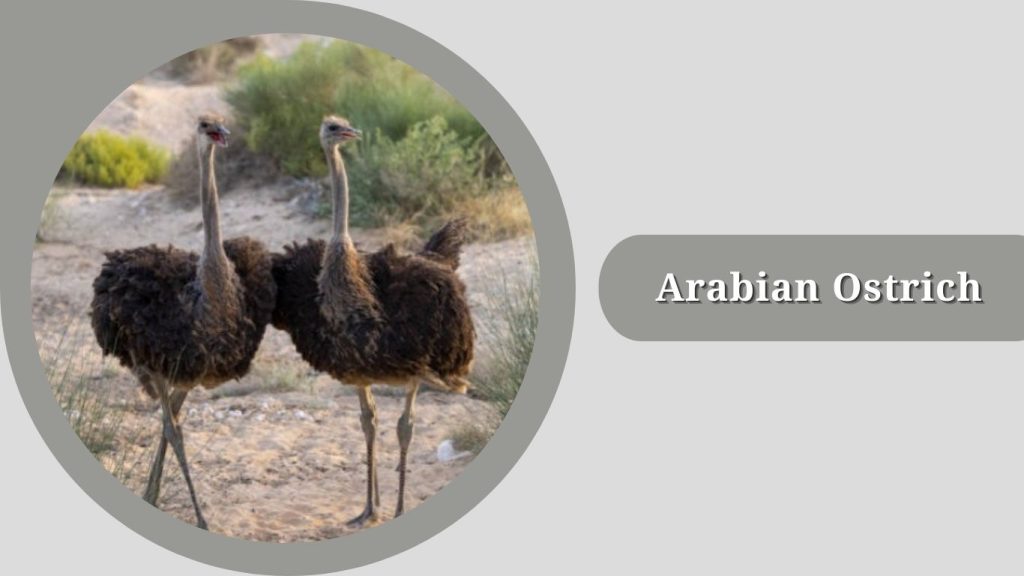
The Arabian ostrich was once native to the Middle East and parts of the Arabian Peninsula. It was smaller and paler than African ostriches but well adapted to desert environments. Overhunting and habitat loss led to its extinction in the mid-20th century.
Identification
- Smaller and slimmer than African ostriches
- Pale brown to gray plumage
- Long neck and legs with light skin tone
- Males darker than females
- Two-toed feet adapted for fast running
- Large eyes for long-distance vision
Habitat
Arabian ostriches lived in deserts, dry plains, and semi-arid steppe regions of Saudi Arabia, Jordan, Iraq, and surrounding areas. They preferred open land with scattered shrubs where they could travel long distances for food.
Diet
Their diet consisted mainly of desert grasses, seeds, roots, fruits, and leaves. They also consumed insects and small animals when available. Like other ostriches, they swallowed stones to help grind food.
Behaviors and Lifecycle
They lived in small groups and were active mostly during cooler parts of the day. Males defended territories during breeding season. Several females laid eggs in a shared nest. Incubation lasted about six weeks before chicks hatched.
7. Barbary Ostrich (Struthio camelus camelus)
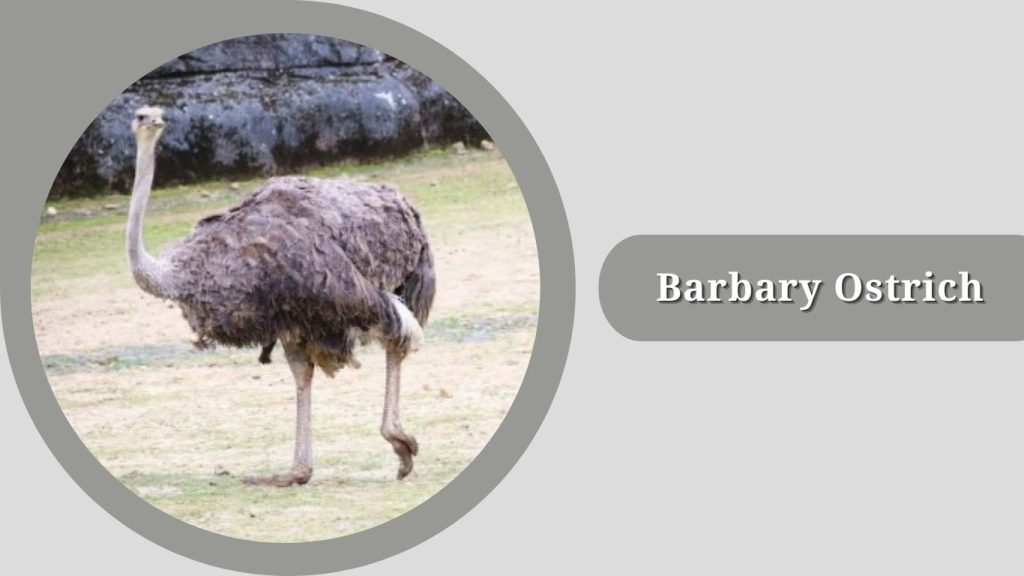
The Barbary ostrich, often grouped with the North African ostrich, was one of the largest ostrich forms and historically ranged across North Africa. It was famous for its impressive size and strong build.
Identification
- Very large body size
- Long neck with reddish skin (males)
- Black-and-white plumage in males
- Brownish-gray feathers in females
- Thick, powerful legs
- Broad wings used in displays
Habitat
Barbary ostriches inhabited deserts, dry savannas, and open plains across the Sahara fringe and North African grasslands. They preferred wide, open areas where their speed and eyesight offered protection.
Diet
They fed on grasses, leaves, seeds, fruits, and flowers. Insects and small reptiles were also eaten. Stones were swallowed to aid digestion of tough vegetation.
Behaviors and Lifecycle
Barbary ostriches were social and often moved in small flocks. During breeding season, males performed courtship dances and guarded nests. Females laid eggs in communal nests, and both parents helped incubate them until hatching.
8. Red-necked Ostrich (Struthio camelus camelus)
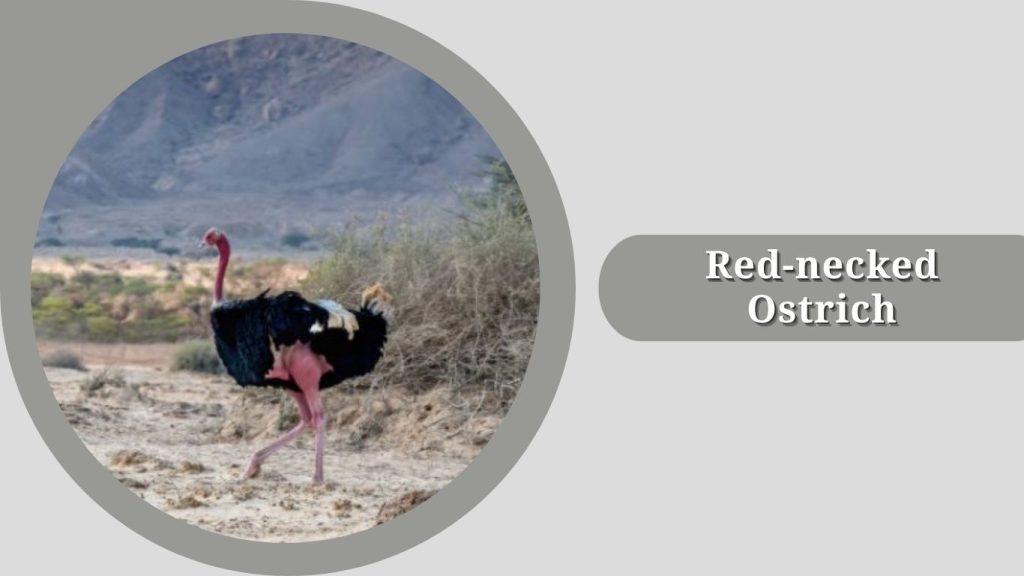
The red-necked ostrich is the largest living ostrich subspecies and is named for the bright reddish skin on the neck and legs of adult males. It is extremely powerful, fast, and well adapted to harsh desert and savanna environments.
Identification
- Bright red or pink neck and legs in males
- Largest and heaviest ostrich subspecies
- Males have black bodies with white wing and tail feathers
- Females are light brown to gray
- Thick legs with two strong toes
- Very large eyes and long eyelashes
Habitat
Red-necked ostriches live in deserts, semi-deserts, and open savannas of North and parts of East Africa. They favor wide open spaces where they can rely on speed and vision to escape predators.
Diet
Their diet consists of grasses, seeds, leaves, fruits, and roots. They also eat insects, lizards, and small rodents when available. They can survive long periods without direct water.
Behaviors and Lifecycle
They are usually found in small groups. Males become aggressive in breeding season and defend territories. Several females lay eggs in a shared nest. Incubation lasts about 42 days, and chicks are able to walk and run shortly after hatching.
9. Blue-necked Ostrich (Struthio molybdophanes)
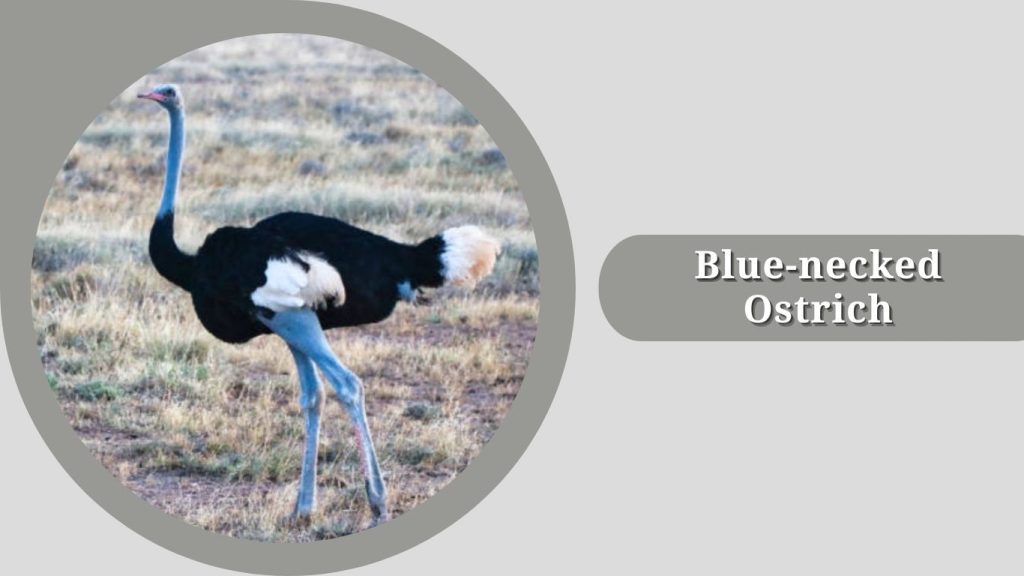
The blue-necked ostrich refers to the Somali ostrich, known for its bluish-gray skin and distinct appearance. It is often considered separate from the common ostrich due to genetic differences.
Identification
- Bluish-gray neck, thighs, and facial skin
- Less fluffy plumage than common ostrich
- Males black with white wing feathers
- Females dull brown
- Slimmer body and more upright stance
- Long powerful legs
Habitat
Blue-necked ostriches inhabit dry bushland, scrub, and semi-arid grasslands of Somalia, Ethiopia, and northern Kenya. They are well adapted to extreme heat and sparse vegetation.
Diet
They eat grasses, seeds, shrubs, fruits, and roots. Insects and small animals are also consumed occasionally. Moisture is mostly obtained from plant material.
Behaviors and Lifecycle
They are more solitary than other ostriches. Males maintain breeding territories and attract females with display movements. Eggs are laid in shallow nests, and chicks hatch after about six weeks.
10. Black-necked Ostrich (Struthio camelus australis)
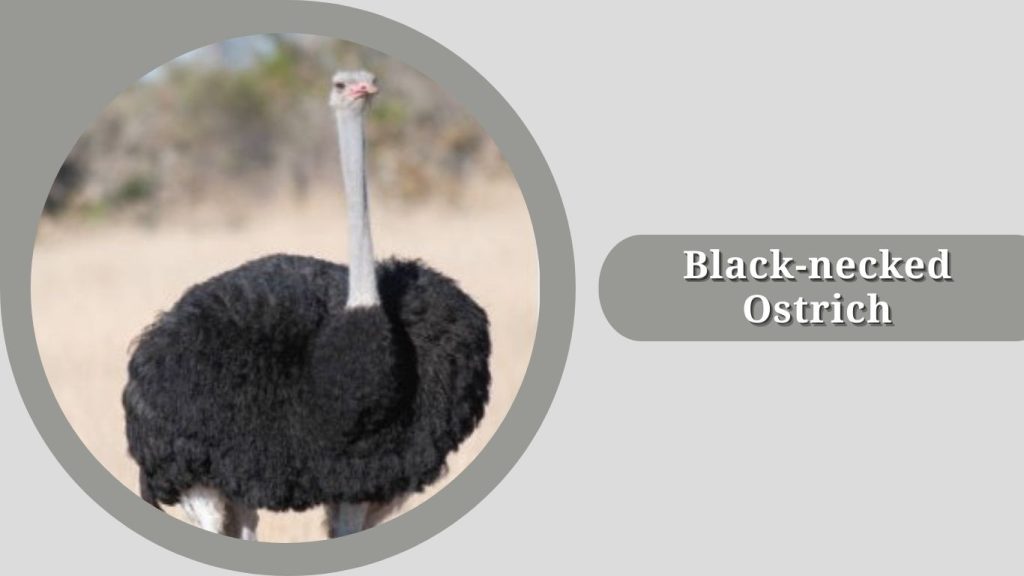
The black-necked ostrich is a common name often used for the southern African ostrich populations, especially adult males whose black body feathers contrast strongly with the pale neck. These ostriches are well known from both wild habitats and farming systems.
Identification
- Black body feathers in males with white wing tips
- Pale gray to pinkish neck
- Females are brownish-gray
- Tall upright posture
- Very strong, muscular legs
- Two-toed feet for fast running
Habitat
Black-necked ostriches live mainly in grasslands, open savannas, and semi-desert regions of southern Africa. They adapt well to open plains and can tolerate high temperatures and low rainfall.
Diet
They feed mostly on grasses, seeds, shrubs, fruits, and roots. They also eat insects and small vertebrates. Small stones are swallowed to help grind plant food.
Behaviors and Lifecycle
They are social birds that live in groups. Males perform wing-flapping displays during breeding season. Females lay eggs in a shared nest, and both parents incubate them. Chicks hatch after about 42 days.
11. Ethiopian Ostrich (Struthio camelus)
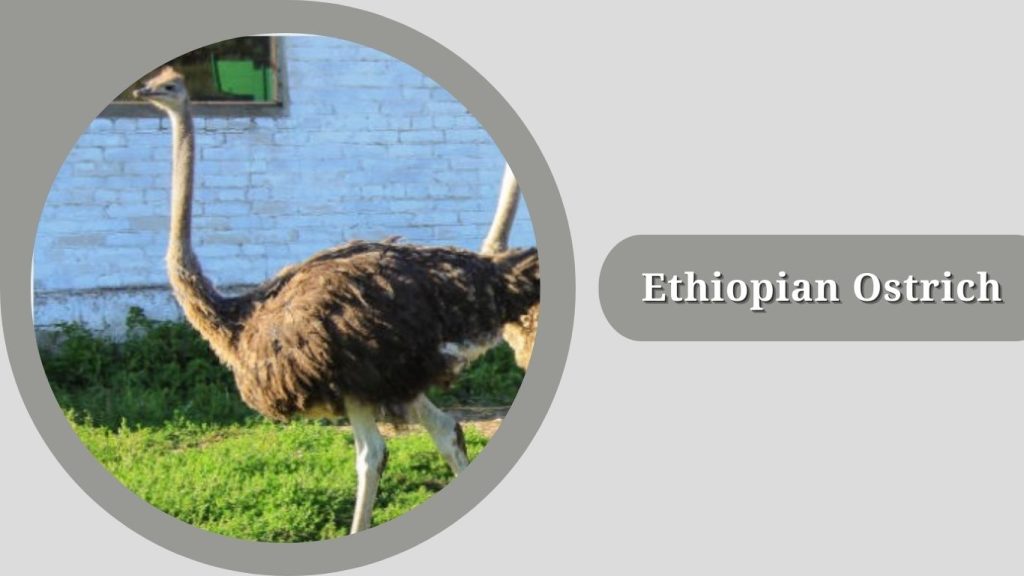
The Ethiopian ostrich refers to ostrich populations found in Ethiopia and nearby regions. These birds are adapted to highland savannas and dry lowland plains, showing strong endurance and heat tolerance.
Identification
- Large, tall body
- Long neck with pinkish or gray skin
- Black-and-white plumage in males
- Brownish-gray feathers in females
- Broad wings used for balance
- Thick, powerful legs
Habitat
Ethiopian ostriches inhabit dry savannas, open plains, and semi-arid zones of Ethiopia and surrounding countries. They prefer open areas with scattered vegetation.
Diet
They eat grasses, leaves, seeds, fruits, and roots. Insects, locusts, and small reptiles may also be eaten. They rely heavily on plant moisture.
Behaviors and Lifecycle
They are active during the day and often form loose groups. Breeding males establish territories. Eggs are laid in shallow nests and incubated for about six weeks before hatching.
12. Kenyan Ostrich (Struthio camelus massaicus)
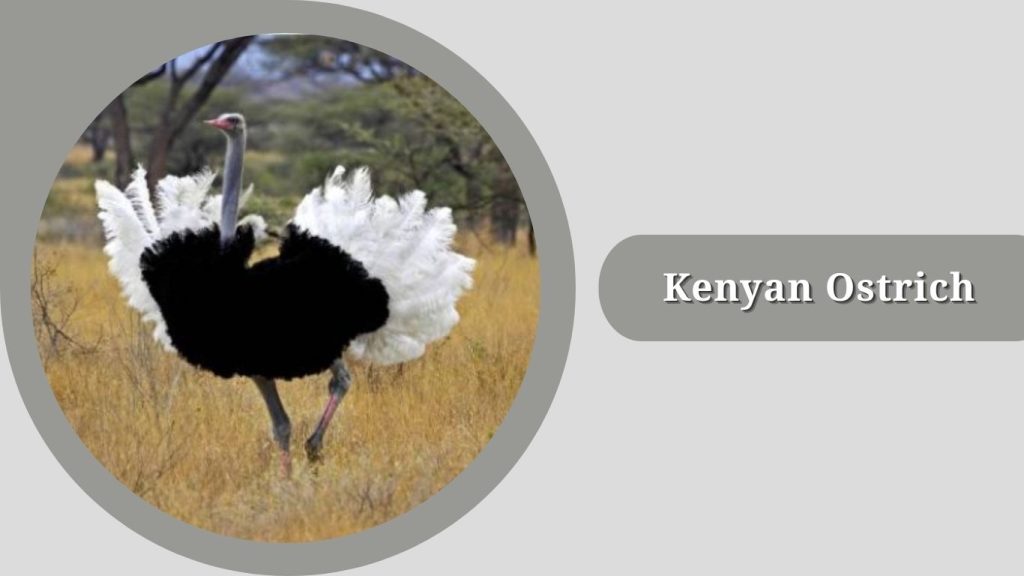
The Kenyan ostrich is a regional form of the Masai ostrich found across the open plains of Kenya. It is well known for its long legs, alert posture, and excellent running ability, making it one of Africa’s most efficient open-land birds.
Identification
- Pink to reddish neck and legs
- Males have black bodies with white wing and tail feathers
- Females are dusty brown
- Long bare neck and thighs
- Very large eyes
- Strong two-toed feet
Habitat
Kenyan ostriches inhabit savannas, grasslands, and semi-arid plains. They prefer wide open spaces where they can detect predators early and escape quickly.
Diet
They feed on grasses, seeds, shrubs, leaves, fruits, and roots. Insects and small animals are also eaten when available. They often swallow pebbles to help grind food.
Behaviors and Lifecycle
They live in small groups or loose flocks. During breeding season, males perform display dances and guard nests. Females lay eggs in communal nests, and chicks hatch after about 42 days.
13. Tanzanian Ostrich (Struthio camelus massaicus)
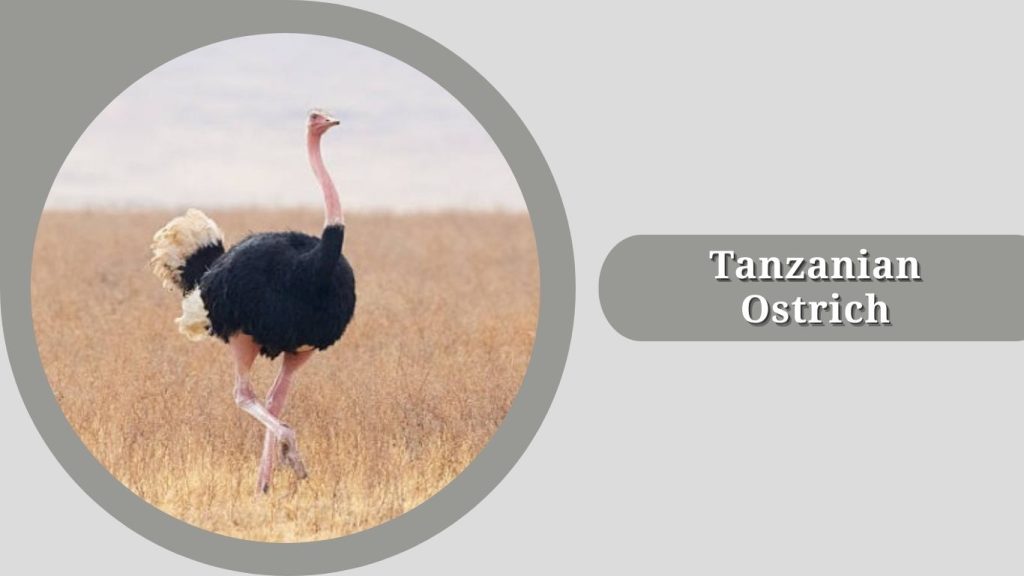
The Tanzanian ostrich is another regional population of the Masai ostrich, commonly seen roaming the Serengeti and surrounding plains. It is highly adapted to dry climates and long-distance movement.
Identification
- Bright pink neck and legs in adult males
- Black-and-white plumage in males
- Females are grayish-brown
- Tall, slender frame
- Long eyelashes protecting the eyes
- Thick muscular legs
Habitat
Tanzanian ostriches live in open savannas, dry grasslands, and semi-desert plains. They avoid dense forests and prefer flat terrain.
Diet
Their diet includes grasses, seeds, leaves, flowers, and fruits. They also consume insects, lizards, and occasionally small rodents.
Behaviors and Lifecycle
They are diurnal and social, often seen near grazing mammals. During breeding season, males defend territories. Eggs hatch after about six weeks, and chicks are guarded closely by adults.
14. Sudanese Ostrich (Struthio camelus camelus)
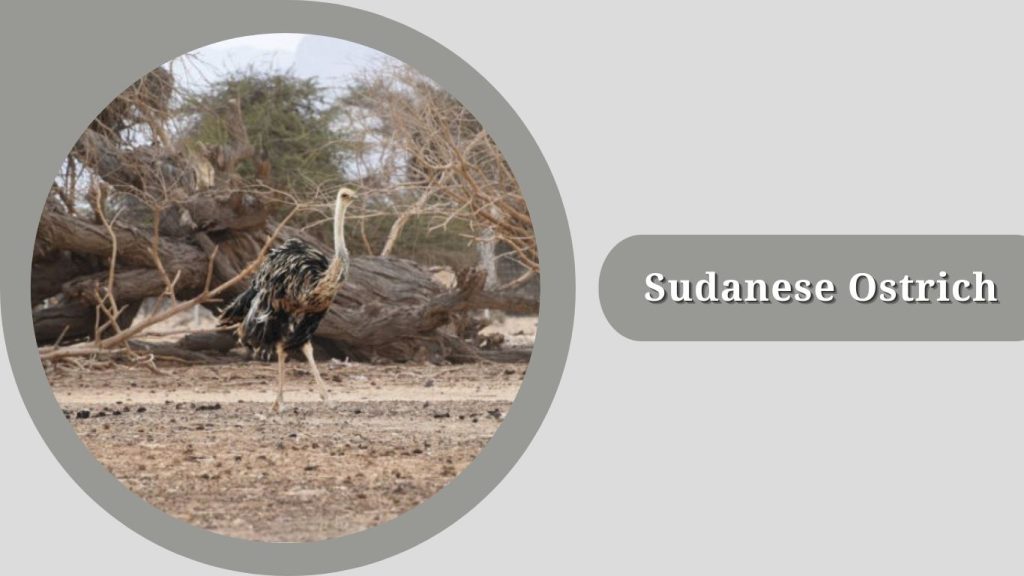
The Sudanese ostrich refers to North African ostrich populations historically found across Sudan and nearby regions. It is one of the larger ostrich forms and is well adapted to extreme heat and arid environments.
Identification
- Very large body size
- Reddish or pink neck and legs (males)
- Black plumage with white wing tips in males
- Females are sandy brown
- Long strong legs with two toes
- Long bare neck
Habitat
Sudanese ostriches inhabit dry savannas, semi-deserts, and open plains. They prefer flat, open land with scattered vegetation, allowing clear visibility of predators.
Diet
They eat grasses, seeds, leaves, fruits, and roots. Insects and small reptiles may supplement their diet. They can survive long periods without free-standing water.
Behaviors and Lifecycle
They are social birds and often form small groups. Males defend breeding territories. Females lay eggs in communal nests. Incubation lasts around 42 days before chicks hatch.
15. West African Ostrich (Struthio camelus camelus)
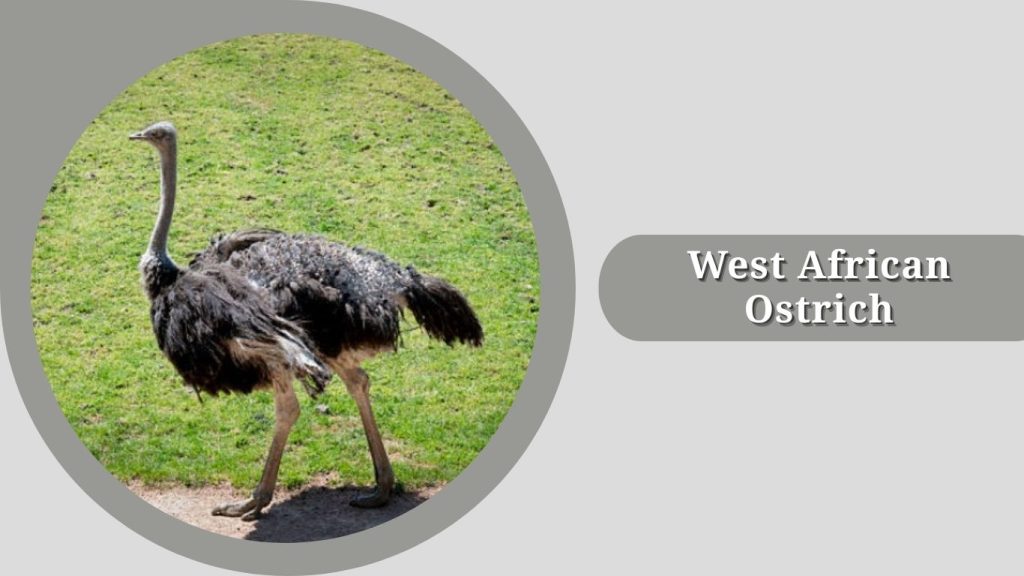
The West African ostrich historically lived across parts of the Sahel and western savanna regions. It was known for its strong build and wide-ranging movements in search of food.
Identification
- Large, heavy-bodied ostrich
- Pale pink to red neck in males
- Black-and-white plumage in males
- Females are light brown
- Powerful legs built for endurance
- Broad wings used for balance
Habitat
West African ostriches inhabited dry grasslands, savannas, and semi-arid regions of the Sahel. They preferred open terrain with sparse trees and shrubs.
Diet
They fed mainly on grasses, seeds, shrubs, fruits, and leaves. Insects and small animals were also eaten occasionally.
Behaviors and Lifecycle
They lived in small flocks and were active during daylight. Breeding males established territories, and multiple females laid eggs in a single nest. Chicks hatched after about six weeks.
16. East African Ostrich (Struthio camelus massaicus)
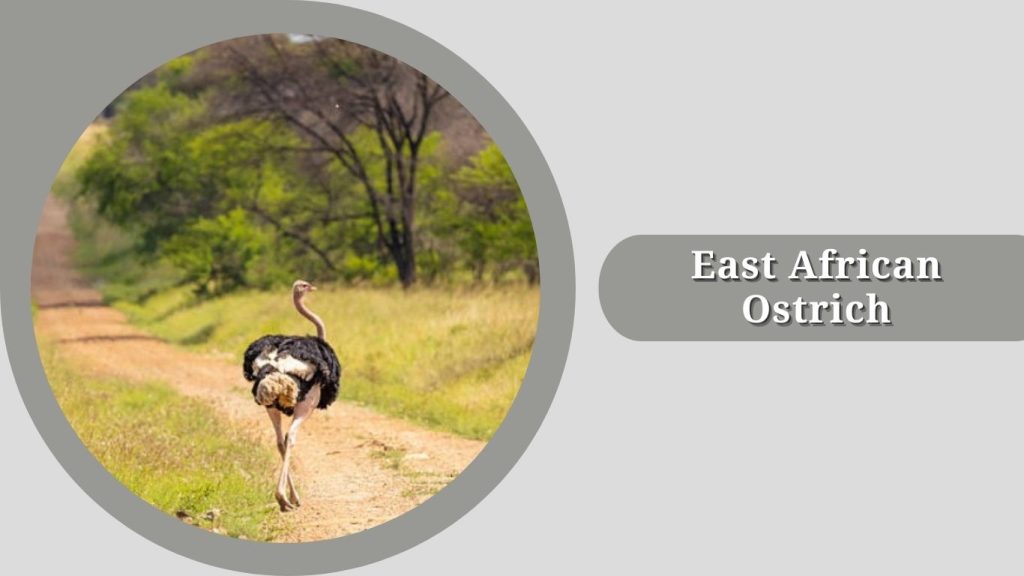
The East African ostrich is commonly associated with the Masai ostrich populations found across Kenya, Tanzania, and surrounding regions. It is recognized for its tall build, strong legs, and excellent adaptation to hot savanna climates.
Identification
- Bright pink to red neck and legs in adult males
- Males have black bodies with white tail and wing feathers
- Females are brownish-gray
- Tall, slender appearance
- Very large eyes with thick lashes
- Two-toed feet for fast running
Habitat
East African ostriches live mainly in open savannas, dry grasslands, and semi-arid plains. They thrive in flat landscapes with sparse vegetation and wide visibility.
Diet
Their diet includes grasses, leaves, seeds, fruits, and roots. They also eat insects, lizards, and small mammals when available. Stones are swallowed to help grind tough plant matter.
Behaviors and Lifecycle
They are social and often live in small groups. During breeding season, males defend territories and display for females. Eggs are laid in communal nests, and chicks hatch after about 42 days.
17. Southern Ostrich (Struthio camelus australis)
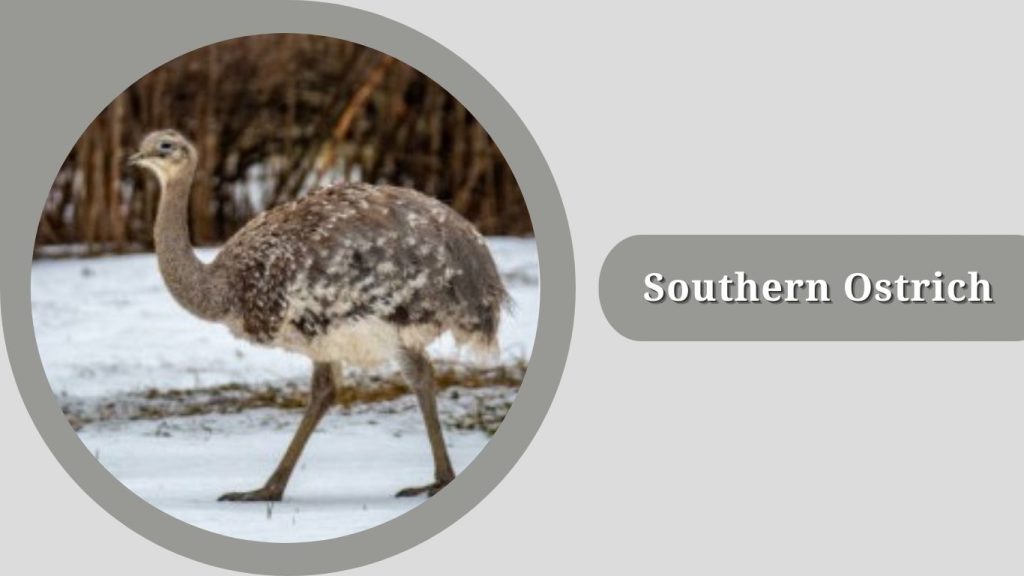
The southern ostrich refers to ostrich populations native to southern Africa. These birds are commonly seen in open plains and are the main type used in ostrich farming.
Identification
- Slightly smaller than North African ostriches
- Males black with white wing feathers
- Females grayish-brown
- Long pale neck and strong legs
- Large rounded body
- Thick muscular thighs
Habitat
Southern ostriches inhabit open grasslands, savannas, and semi-desert regions of southern Africa. They are highly adaptable and tolerate dry conditions well.
Diet
They feed on grasses, shrubs, seeds, fruits, and roots. Insects and small animals are occasionally eaten. Grit and stones help them digest food.
Behaviors and Lifecycle
They live in loose flocks. During breeding season, males establish territories and dig shallow nests. Eggs hatch after about six weeks, and chicks are cared for by adults.
18. Nubian Ostrich (Struthio camelus camelus)
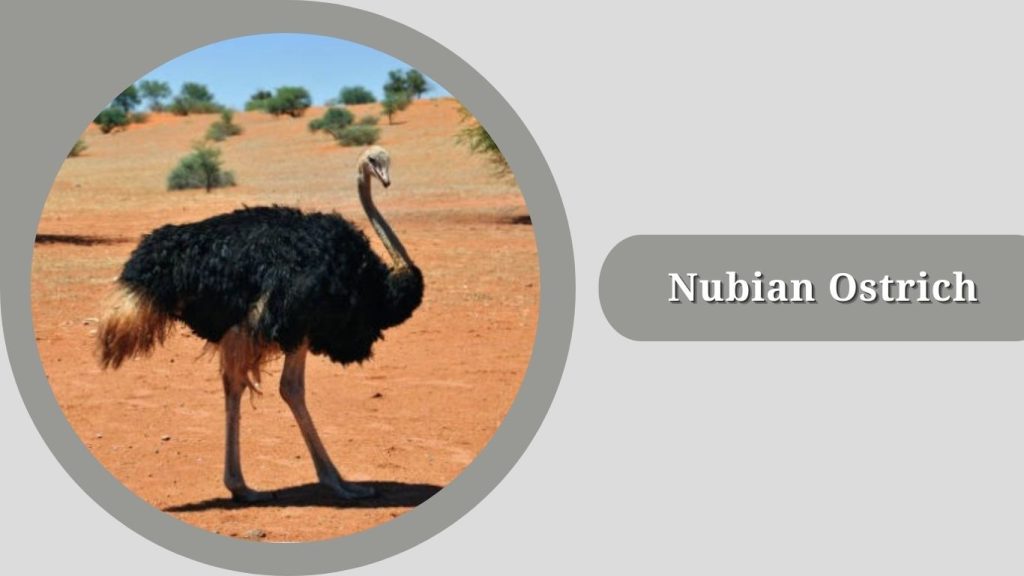
The Nubian ostrich is a regional name for North African ostrich populations once common in Nubia and surrounding desert regions. It was known for its tall stature and strong survival skills in extremely hot, dry climates.
Identification
- Very tall body structure
- Reddish neck and legs in adult males
- Males have black feathers with white wing tips
- Females are sandy brown
- Thick, powerful legs
- Long bare neck and thighs
Habitat
Nubian ostriches historically lived in deserts, semi-deserts, and dry savannas of northeastern Africa. They preferred open plains with scattered vegetation and access to seasonal water.
Diet
Their diet included grasses, seeds, leaves, fruits, and roots. Insects and small reptiles were also consumed. They relied heavily on plant moisture.
Behaviors and Lifecycle
They lived in small groups and were active mainly during cooler hours. Males guarded nests during breeding season. Females laid eggs in communal nests, and chicks hatched after about 42 days.
19. Sahel Ostrich (Struthio camelus camelus)
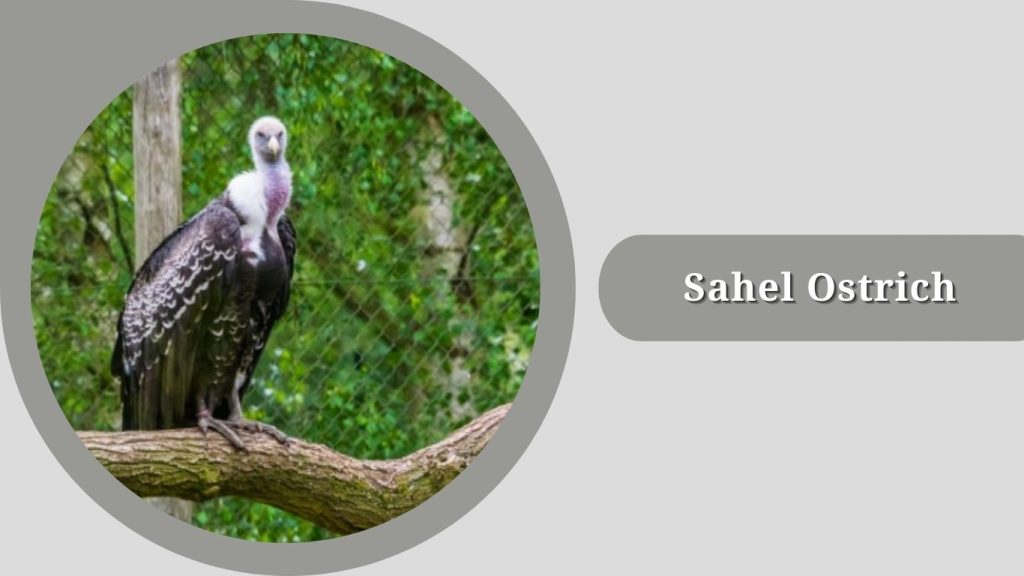
The Sahel ostrich refers to ostrich populations adapted to the Sahel belt south of the Sahara. These ostriches are strong long-distance walkers and runners, covering large territories.
Identification
- Large and tall-bodied
- Pale pink to reddish neck in males
- Black-and-white plumage in males
- Females light brown
- Long powerful legs
- Broad wings used for display
Habitat
Sahel ostriches inhabit dry grasslands, open savannas, and semi-arid plains. They prefer flat landscapes with scattered shrubs and seasonal grasses.
Diet
They feed on grasses, seeds, leaves, flowers, and fruits. Insects and small animals are occasionally eaten, especially during the rainy season.
Behaviors and Lifecycle
They often roam in small flocks. Breeding males establish territories and dig shallow nests. Eggs hatch after about six weeks, and chicks quickly learn to forage.
20. Cape Ostrich (Struthio camelus australis)
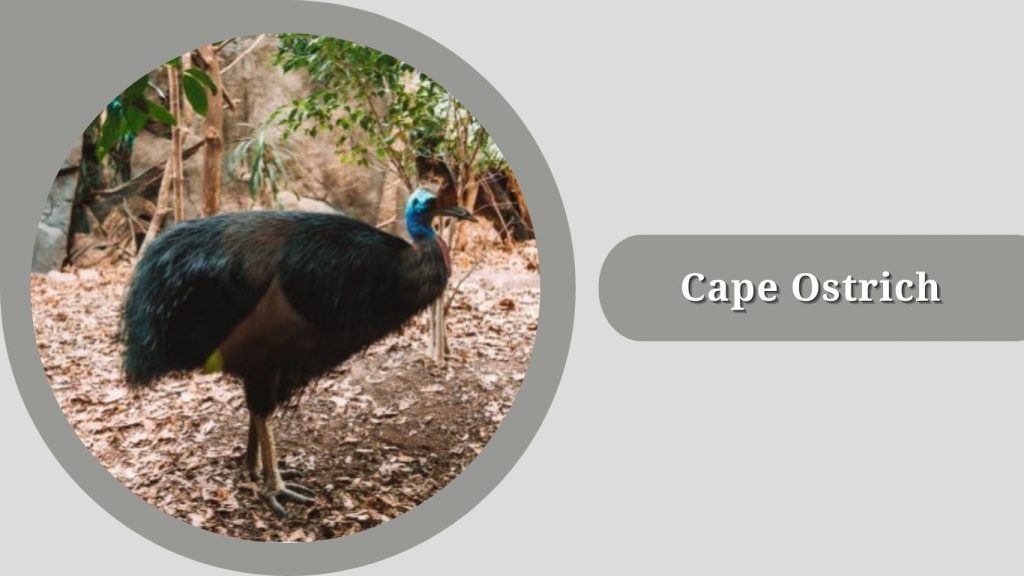
The Cape ostrich is a southern African ostrich type historically associated with the Cape region of South Africa. It is well known for its role in early ostrich farming and for its strong, adaptable nature.
Identification
- Large, tall flightless bird
- Males have black bodies with white wing feathers
- Females are grayish-brown
- Pale neck and long bare thighs
- Strong muscular legs
- Two-toed feet
Habitat
Cape ostriches inhabit open grasslands, semi-desert regions, and savannas of southern Africa. They thrive in open areas with scattered vegetation and mild winters.
Diet
They eat grasses, leaves, seeds, fruits, shrubs, and roots. Insects and small vertebrates may also be eaten. Stones are swallowed to help digestion.
Behaviors and Lifecycle
They are social and often form groups. During breeding season, males dig shallow nests and attract females. Eggs are incubated for about 42 days, and chicks remain with adults for several months.
21. Saharan Ostrich (Struthio camelus camelus)
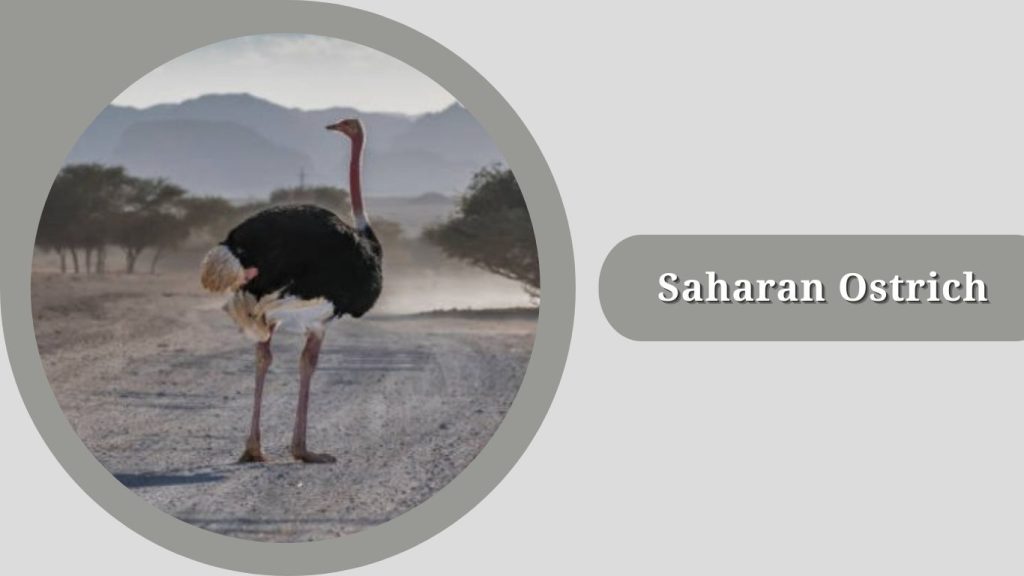
The Saharan ostrich refers to North African ostrich populations adapted to life in the Sahara and surrounding desert zones. It was famous for endurance and heat tolerance.
Identification
- Very large body size
- Reddish or pink neck and legs
- Males have black feathers with white wing tips
- Females sandy to grayish-brown
- Long strong legs
- Thick eyelashes to protect eyes from sand
Habitat
Saharan ostriches lived in deserts, semi-deserts, and dry savannas. They preferred wide open plains where they could travel long distances between feeding areas.
Diet
They fed on desert grasses, seeds, leaves, fruits, and roots. Insects and small animals were eaten when available.
Behaviors and Lifecycle
They lived in small flocks and were most active during cooler parts of the day. Males guarded nests during breeding season. Chicks hatched after about six weeks and were led by adults soon after.