




Civets are small to medium-sized nocturnal mammals best known for their long bodies, pointed faces, and strong musky scent glands. Belonging mainly to the family Viverridae, civets are found across Africa and Asia, where they inhabit forests, grasslands, wetlands, and even areas close to human settlements. With more than a dozen distinct species, civets vary widely in size, color patterns, and lifestyle—from tree-dwelling palm civets to semi-aquatic otter civets—making them a fascinating and diverse group of mammals.
1. African Civet (Civettictis civetta)
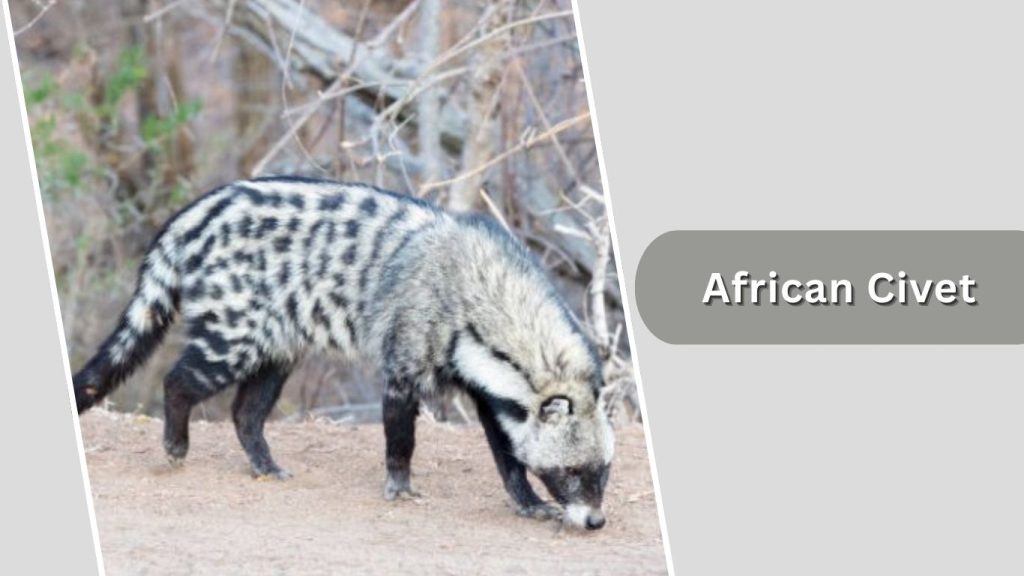
The African civet is the largest true civet species and one of the most recognizable members of the Viverridae family. Native to sub-Saharan Africa, this nocturnal mammal is known for its bold black-and-white patterning, musky scent glands, and highly adaptable nature. It thrives in forests, savannas, and even areas close to human settlements, making it one of the most widespread civets on the continent.
Identification
- Medium to large civet with a long, stocky body and short legs
- Coarse gray or cream fur covered in black spots and stripes
- Distinct black facial mask with white markings
- Long, bushy tail with dark rings
- Prominent dorsal crest running from neck to tail
- Adults usually weigh between 7–20 kg (15–44 lb)
Habitat and Distribution
African civets are widely distributed across sub-Saharan Africa, from Senegal and Ethiopia down to South Africa. They occupy a broad range of habitats, including dense forests, woodland edges, grasslands, and riverine areas. Their adaptability allows them to live near farms and villages, where food is often easier to find.
They prefer areas with good ground cover, which provides shelter during the day. By daylight, African civets usually rest in thick vegetation, burrows, or hollow logs, emerging at night to forage.
Diet and Feeding Behavior
African civets are omnivorous and opportunistic feeders. Their diet includes fruits, berries, roots, insects, rodents, birds, eggs, reptiles, and carrion. They are also known to eat agricultural crops, which sometimes brings them into conflict with farmers.
They rely heavily on their strong sense of smell to locate food. Slow but deliberate, they forage alone, walking long distances at night in search of whatever food source is seasonally available.
Behavior and Lifespan
African civets are solitary and mostly nocturnal. They mark territories using perineal scent glands, producing a strong musky secretion historically known as civet, once used in perfumes. Although generally shy, they can be aggressive if threatened.
In the wild, African civets typically live around 10–15 years, while individuals in captivity may live longer due to consistent food supply and absence of predators.
2. Asian Palm Civet (Paradoxurus hermaphroditus)
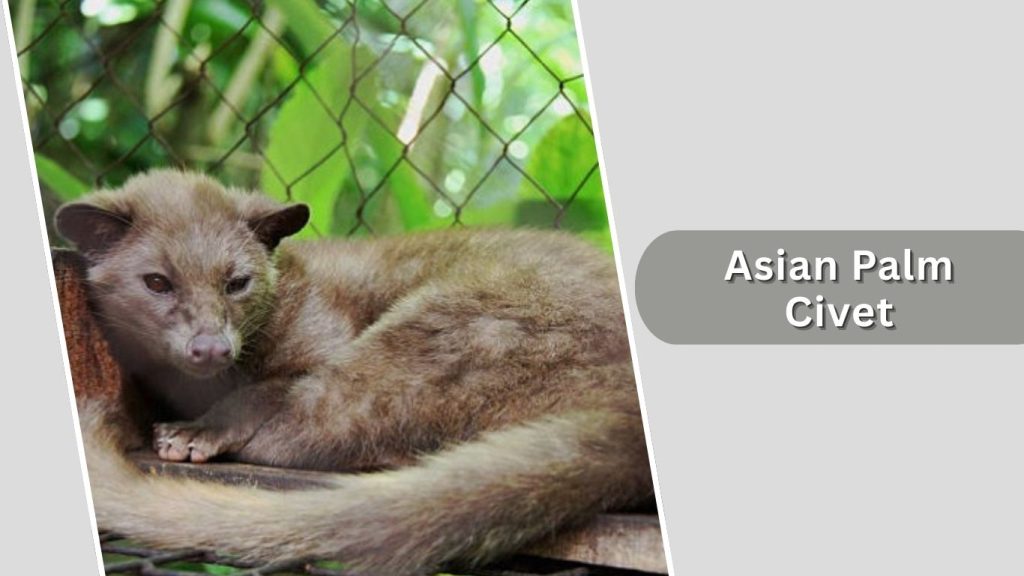
The Asian palm civet, often called the toddy cat, is a small, slender civet widely distributed across South and Southeast Asia. It is best known for its adaptability to forests, plantations, and urban areas, as well as for its role in producing kopi luwak coffee. This civet is highly arboreal and an excellent climber.
Identification
- Slender body with short legs and a long tail
- Grayish-brown fur with faint dark spots or stripes
- Pinkish nose and pointed snout
- Large, dark eyes adapted for night vision
- Tail usually as long as the body
- Adults typically weigh 2–5 kg (4.4–11 lb)
Habitat and Distribution
Asian palm civets are found from India and Nepal through southern China, Southeast Asia, and Indonesia. They inhabit tropical forests, secondary growth, plantations, and even city outskirts. Their ability to live close to humans makes them one of the most commonly seen civets in Asia.
They often shelter in tree hollows, roofs, or dense vegetation during the day and emerge at night to forage both on the ground and in trees.
Diet and Feeding Behavior
Asian palm civets are omnivorous, feeding on fruits, berries, nectar, insects, small mammals, birds, and eggs. Fruit makes up a major part of their diet, and they play an important ecological role as seed dispersers in tropical forests.
They are slow-moving but skilled climbers, often searching fruiting trees at night.
Behavior and Lifespan
Asian palm civets are solitary and nocturnal. They communicate through scent marking, vocalizations, and body postures. They are generally shy but may become bold in urban settings where food is abundant.
In the wild, they usually live 8–15 years, with longer lifespans recorded in captivity.
3. Large Indian Civet (Viverra zibetha)

The large Indian civet is one of the biggest civet species in Asia, known for its robust build and striking spotted coat. It ranges across South and Southeast Asia and prefers dense vegetation near water sources. Though widespread, it is rarely seen due to its secretive and nocturnal habits.
Identification
- Large, heavy-bodied civet with short legs
- Pale yellow to gray coat with bold black spots and stripes
- Distinct dark facial mask and white markings
- Long tail with dark rings
- Strong, musky scent glands
- Adults often weigh 7–15 kg (15–33 lb)
Habitat and Distribution
Large Indian civets occur from India and Nepal through southern China, Thailand, Vietnam, and parts of Indonesia. They live in forests, scrublands, grasslands, and river valleys, often close to water.
They rest in dense undergrowth or burrows during the day and become active at night, roaming large areas in search of food.
Diet and Feeding Behavior
Their diet includes small mammals, birds, frogs, insects, crabs, fruits, and roots. They are opportunistic predators and scavengers, adapting their feeding habits to seasonal availability.
They hunt mainly on the ground, using stealth and their keen sense of smell.
Behavior and Lifespan
Large Indian civets are solitary, territorial, and nocturnal. They communicate primarily through scent marking. When threatened, they may hiss, growl, or display aggressive postures.
In the wild, they typically live around 10–12 years, with longer lifespans recorded in captivity.
4. Small Indian Civet (Viverricula indica)
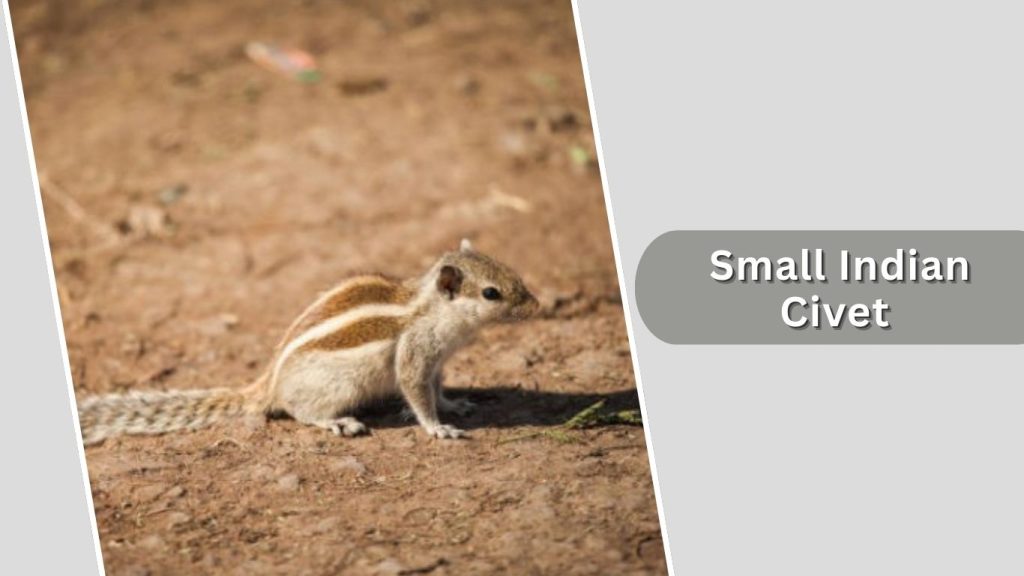
The small Indian civet is a slender, long-bodied civet widely distributed across South and Southeast Asia. Despite its name, it is highly adaptable and can live in forests, grasslands, plantations, and even near villages. It is known for its spotted coat, pointed face, and strong musky odor.
Identification
- Slim body with short legs and a narrow chest
- Grayish to yellowish coat with black spots and stripes
- Distinct dark facial mask with pale markings
- Long, tapering tail with dark rings
- Short, rounded ears and pointed snout
- Adults usually weigh 2–4 kg (4.4–8.8 lb)
Habitat and Distribution
Small Indian civets are found from India and Sri Lanka through southern China and Southeast Asia. They occupy forests, scrublands, grasslands, agricultural areas, and the edges of human settlements.
They hide in dense vegetation, burrows, or rock crevices during the day and become active after dusk.
Diet and Feeding Behavior
They are omnivorous, feeding on insects, rodents, birds, reptiles, eggs, fruits, and roots. Their flexible diet allows them to survive in many environments, including disturbed habitats.
They forage mostly on the ground, moving quietly while searching for prey and fallen fruits.
Behavior and Lifespan
Small Indian civets are solitary and nocturnal. They are territorial and frequently use scent marking to communicate. When threatened, they may growl, spit, or release a strong musky odor.
In the wild, they typically live around 8–12 years, with longer lifespans in captivity.
5. Malabar Large-spotted Civet (Viverra civettina)
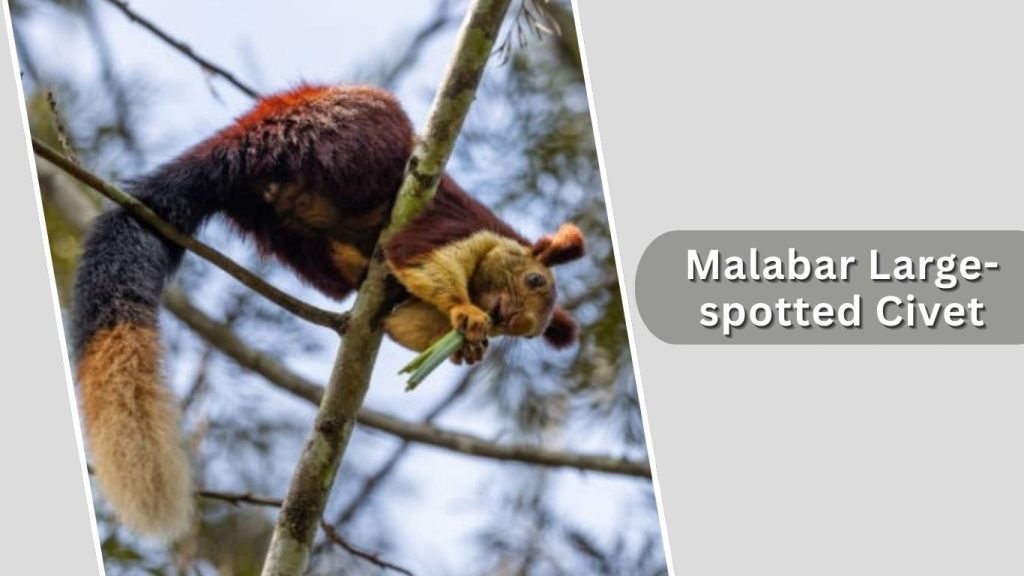
The Malabar large-spotted civet is one of the rarest civets in the world and is endemic to the Western Ghats of India. It is larger and more heavily built than the small Indian civet and is distinguished by its bold spotting pattern. Due to habitat loss, it is critically endangered and very rarely seen.
Identification
- Medium to large civet with a stocky body
- Pale yellowish coat with large black spots and stripes
- Broad head with a blunt snout
- Long tail with dark rings
- Coarse fur and strong scent glands
- Adults generally larger and heavier than small Indian civets
Habitat and Distribution
This species is restricted to the lowland forests and coastal plains of the Western Ghats in southwestern India. It prefers dense evergreen forests, swampy areas, and plantations with thick ground cover.
Most records come from fragmented habitats, making its current population extremely uncertain.
Diet and Feeding Behavior
The Malabar large-spotted civet is believed to be omnivorous, feeding on small mammals, birds, insects, crabs, fruits, and roots. Due to its rarity, much of its feeding ecology remains poorly documented.
It likely forages on the ground at night, using smell to locate prey.
Behavior and Lifespan
Very little is known about its behavior in the wild. It is assumed to be solitary and nocturnal, similar to other Viverra civets. Habitat destruction and human disturbance are major threats to its survival.
Its exact lifespan is unknown, but related civet species usually live around 10–15 years.
6. Malayan Civet (Viverra tangalunga)

The Malayan civet is a medium-sized civet native to Southeast Asia and is well adapted to both natural forests and human-modified landscapes. It is commonly found in lowland rainforests, plantations, and rural areas, where it plays an important role in controlling insect and small vertebrate populations.
Identification
- Medium-sized, elongated body with short legs
- Grayish-brown coat covered in dark spots and stripes
- Black facial markings with a pale muzzle
- Long tail with dark rings
- Coarse fur and prominent scent glands
- Adults usually weigh between 3–7 kg (6.6–15.4 lb)
Habitat and Distribution
Malayan civets occur in Thailand, Malaysia, Indonesia, Brunei, and the Philippines. They inhabit tropical rainforests, secondary forests, mangroves, and agricultural areas, often close to water sources.
They shelter in dense undergrowth or hollow logs during the day and roam widely at night.
Diet and Feeding Behavior
They are omnivorous, feeding on insects, small mammals, birds, reptiles, amphibians, fruits, and carrion. Their flexible feeding habits allow them to thrive in disturbed habitats.
They forage mainly on the ground, using stealth and a strong sense of smell.
Behavior and Lifespan
Malayan civets are solitary, nocturnal, and territorial. They communicate primarily through scent marking and vocalizations. When threatened, they may hiss, growl, or stand their ground.
In the wild, they generally live around 10–15 years.
7. Sunda Clouded Civet (Diplogale hosei)
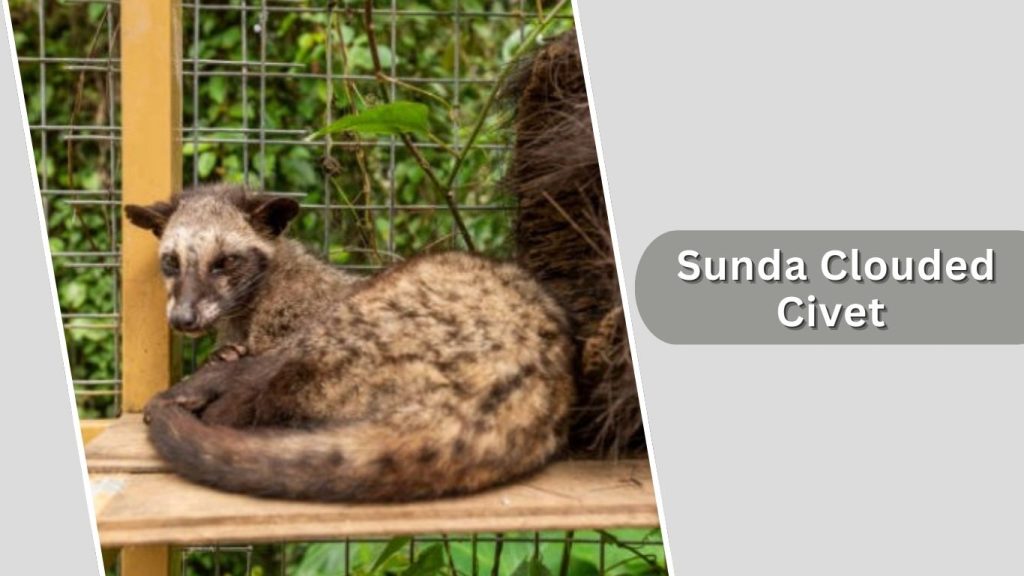
The Sunda clouded civet is a rare and little-known civet species endemic to the island of Borneo. It is distinctive for its soft fur and cloud-like markings. Because of its secretive nature and limited range, it is one of the least studied members of the civet family.
Identification
- Medium-sized civet with very soft, dense fur
- Pale gray to bluish coat with clouded dark markings
- Rounded head with a short, blunt snout
- Relatively short tail compared to body length
- Large eyes adapted for nocturnal vision
- Subtle facial markings
Habitat and Distribution
This species is found only in Borneo, where it inhabits montane and lowland rainforests. It prefers dense, undisturbed forest habitats and is rarely recorded near human settlements.
Most observations come from remote forested regions.
Diet and Feeding Behavior
Very little is known about its natural diet. It is believed to be carnivorous to omnivorous, feeding on small mammals, birds, insects, and possibly fruits.
It likely hunts and forages at night, spending much of its time on the ground.
Behavior and Lifespan
The Sunda clouded civet is presumed to be solitary and nocturnal. Due to the scarcity of sightings, its social behavior and lifespan remain largely unknown.
Conservationists consider it vulnerable due to habitat loss and deforestation.
8. Otter Civet (Cynogale bennettii)
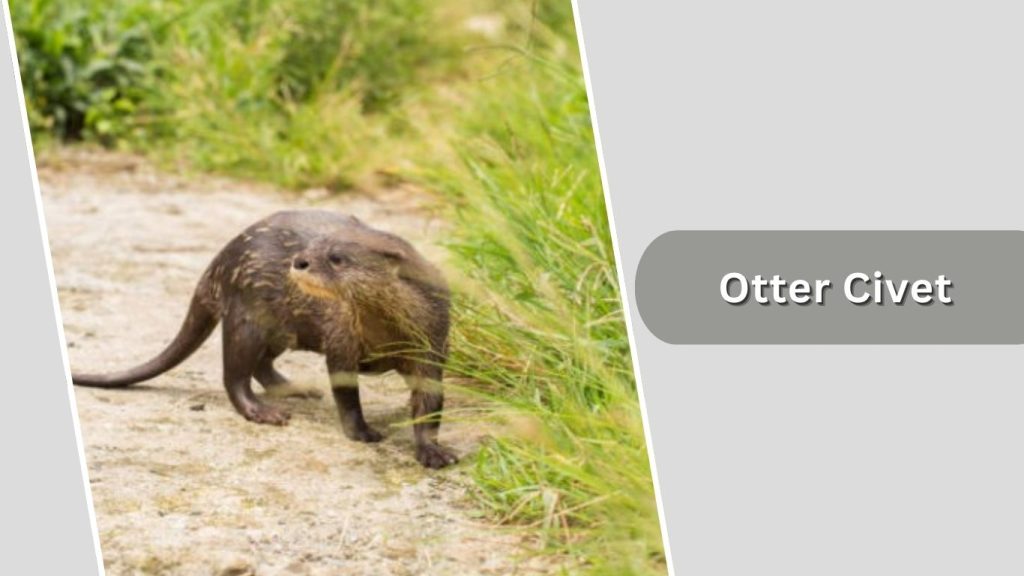
The otter civet is a unique semi-aquatic civet species known for its sleek body, webbed feet, and strong association with freshwater habitats. Unlike most civets, it is specially adapted for hunting in water and along muddy riverbanks, making it one of the most distinctive members of the civet family.
Identification
- Long, low body with short, powerful legs
- Dense, dark brown fur with a glossy appearance
- Partially webbed feet adapted for swimming
- Broad, flattened head with small ears
- Long tail that aids in balance and movement
- Strong musky scent glands
Habitat and Distribution
Otter civets are found in Southeast Asia, including Thailand, Malaysia, Indonesia, and parts of Borneo. They primarily inhabit wetlands, mangrove swamps, peat forests, and river edges where water is abundant.
They spend much of their time near streams and swamps, resting in dense vegetation or burrows close to water.
Diet and Feeding Behavior
Their diet mainly consists of fish, frogs, crabs, snails, and other aquatic organisms. They may also consume insects and small terrestrial animals.
Otter civets forage at night, using their sensitive whiskers and strong sense of smell to locate prey in shallow water and soft mud.
Behavior and Lifespan
Otter civets are solitary and nocturnal. They are secretive animals and are rarely seen in the wild. Their populations are declining due to wetland destruction and pollution.
Little is known about their exact lifespan, but related civets typically live around 10–15 years.
9. Binturong (Arctictis binturong)
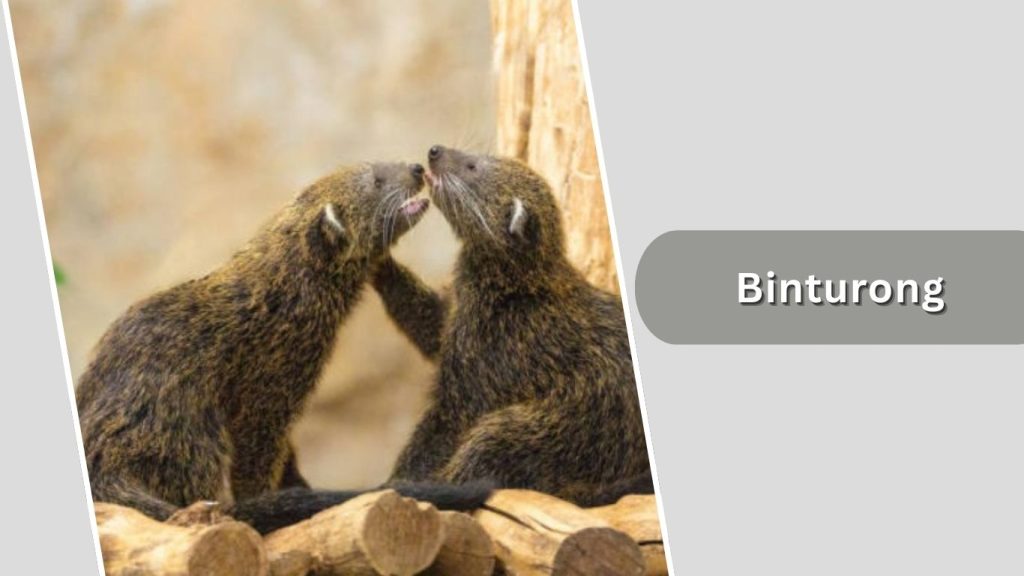
The binturong, often called the bearcat, is the largest civet relative and is easily recognized by its thick fur, heavy body, and prehensile tail. Although not a true civet, it belongs to the same family group and is commonly included in civet listings.
Identification
- Large, heavy-bodied mammal with long shaggy fur
- Black to dark brown coat
- Prehensile tail capable of gripping branches
- Broad face with long white whiskers
- Strong limbs and curved claws
- Adults can weigh 9–20 kg (20–44 lb)
Habitat and Distribution
Binturongs are native to South and Southeast Asia, including India, Nepal, southern China, and Indonesia. They live mainly in dense tropical forests, spending much of their time in trees.
They prefer old-growth forests but can also survive in secondary forests.
Diet and Feeding Behavior
They are omnivorous, feeding on fruits, figs, small mammals, birds, eggs, and insects. Fruit makes up a large part of their diet, making them important seed dispersers.
They forage slowly and deliberately, both in trees and on the ground.
Behavior and Lifespan
Binturongs are mostly nocturnal and solitary, though they may be seen in small family groups. They use scent glands to mark territory and communicate.
In captivity, they can live up to 20 years, while wild lifespans are believed to be shorter.
10. Masked Palm Civet (Paguma larvata)
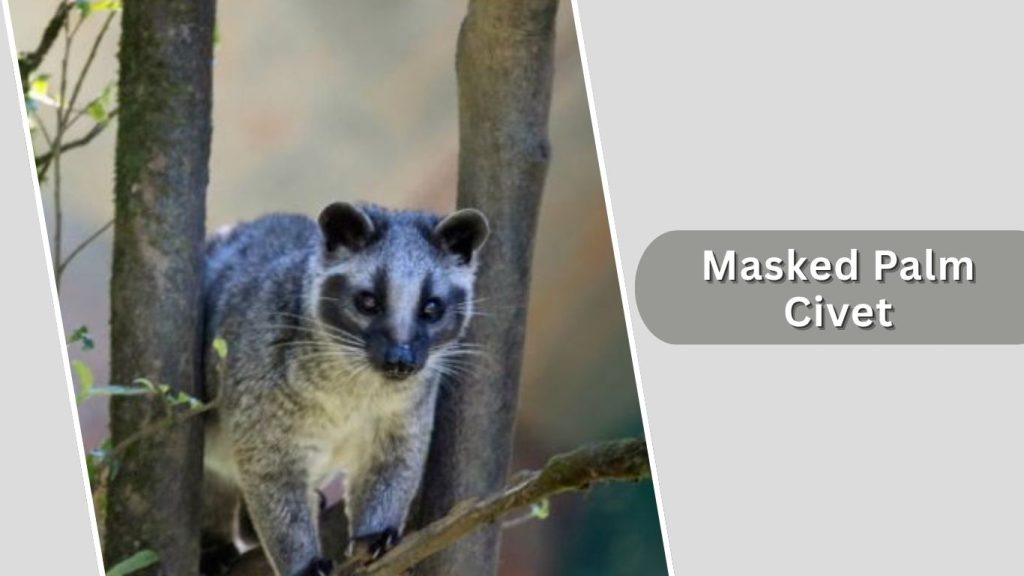
The masked palm civet is a small, agile civet known for the dark “mask” pattern around its eyes and its strong ability to adapt to human environments. It is widely distributed in East and Southeast Asia and is often seen in forests, farms, and even urban areas.
Identification
- Slender body with soft gray to brown fur
- Distinct black facial mask around the eyes
- White muzzle and throat
- Long, bushy tail nearly as long as the body
- Large eyes suited for night vision
- Adults usually weigh 3–5 kg (6.6–11 lb)
Habitat and Distribution
Masked palm civets are found in China, Taiwan, the Himalayas, and Southeast Asia. They inhabit forests, bamboo groves, plantations, and suburban areas.
They commonly rest in tree hollows, caves, or roofs during the day and become active after sunset.
Diet and Feeding Behavior
They are omnivorous, eating fruits, berries, insects, small mammals, birds, and eggs. They are also known to raid orchards, feeding on cultivated fruits.
They forage both on the ground and in trees, using agility and keen senses.
Behavior and Lifespan
Masked palm civets are solitary and nocturnal. They communicate using scent marking and vocal sounds. Although shy, they can become bold in human-dominated landscapes.
They typically live around 8–12 years in the wild.
11. Brown Palm Civet (Paradoxurus jerdoni)
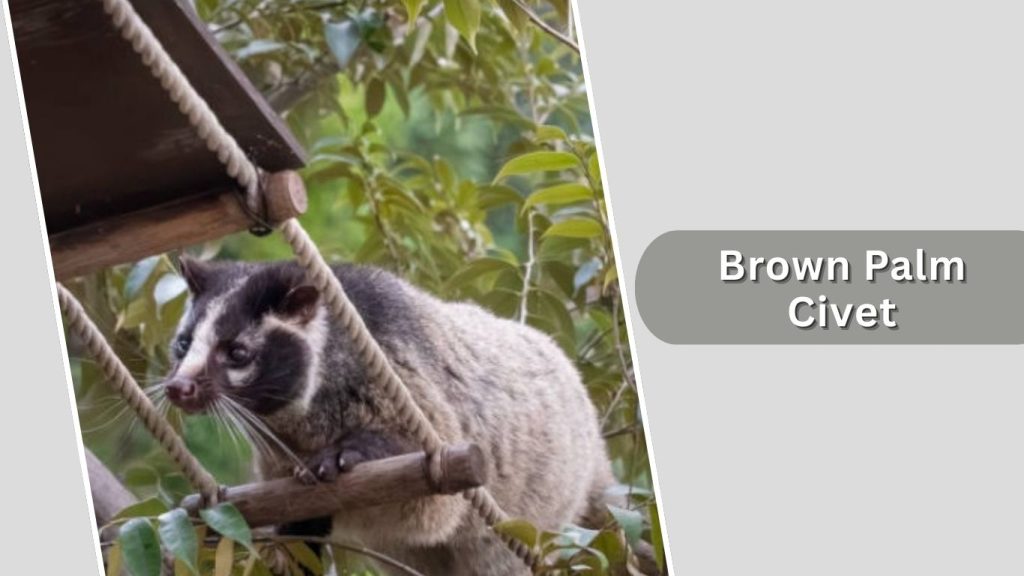
The brown palm civet is a rare civet species endemic to the Western Ghats of India. It is darker and more uniformly colored than many other civets and is closely associated with dense tropical forests.
Identification
- Medium-sized civet with dark brown, almost black fur
- Thick, soft coat with little visible spotting
- Broad head with short muzzle
- Long tail with faint or no rings
- Rounded ears and large eyes
- Heavily furred body adapted to forest life
Habitat and Distribution
This species is restricted to the Western Ghats mountain range of southwestern India. It inhabits evergreen forests, shola forests, and coffee plantations with heavy tree cover.
It is mostly arboreal, spending much time in trees.
Diet and Feeding Behavior
Brown palm civets mainly feed on fruits, berries, nectar, insects, and small vertebrates. Fruit forms a large portion of their diet, making them important seed dispersers.
They forage at night in forest canopies and on the ground.
Behavior and Lifespan
Brown palm civets are solitary and nocturnal. They are rarely seen due to their secretive nature and forest-dwelling habits.
Their exact lifespan is unknown, but it is believed to be similar to other palm civets, around 10–15 years.
12. Golden Palm Civet (Paradoxurus zeylonensis)
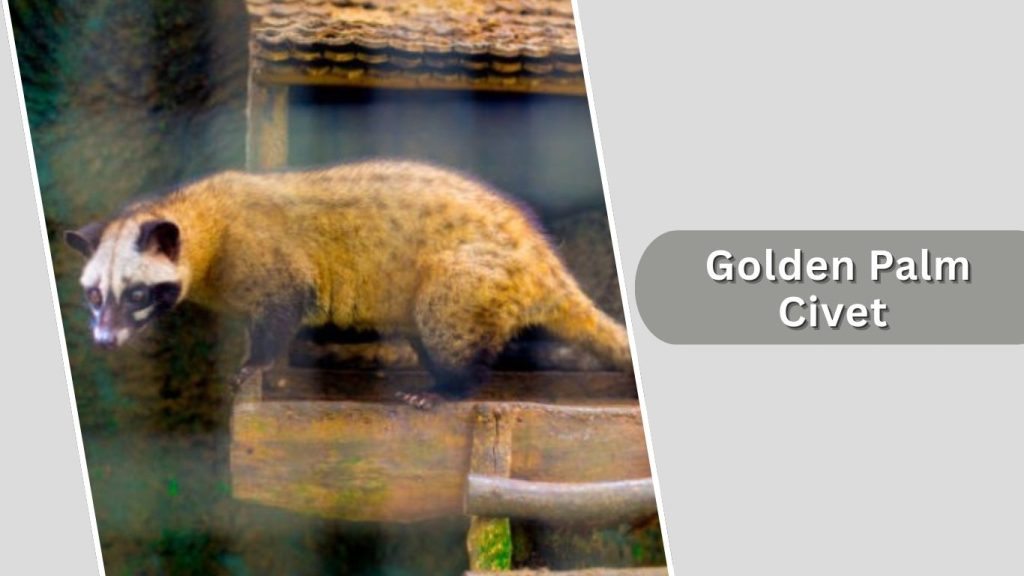
The golden palm civet is a rare and beautiful civet species endemic to Sri Lanka. It is known for its rich golden-brown coat and strong dependence on dense forest habitats. Because of its limited range and ongoing deforestation, it is considered a species of conservation concern.
Identification
- Medium-sized civet with golden to reddish-brown fur
- Soft, thick coat with little visible spotting
- Rounded head with short snout
- Long tail, usually darker toward the tip
- Large eyes adapted for night vision
- Compact, agile body
Habitat and Distribution
Golden palm civets are found only in Sri Lanka, mainly in tropical rainforests, montane forests, and well-wooded plantations. They prefer dense canopy cover and areas rich in fruiting trees.
They rest in tree hollows and dense vegetation during the day.
Diet and Feeding Behavior
They are omnivorous but largely frugivorous, feeding mainly on fruits, berries, nectar, insects, and small vertebrates. Their fruit-based diet makes them important for seed dispersal in forest ecosystems.
They forage at night, both in trees and on the forest floor.
Behavior and Lifespan
Golden palm civets are solitary and nocturnal. They communicate through scent marking and soft vocalizations. Due to their secretive nature, they are rarely observed.
Their exact lifespan is unknown, but it is estimated to be around 10–15 years.
13. Three-striped Palm Civet (Arctogalidia trivirgata)
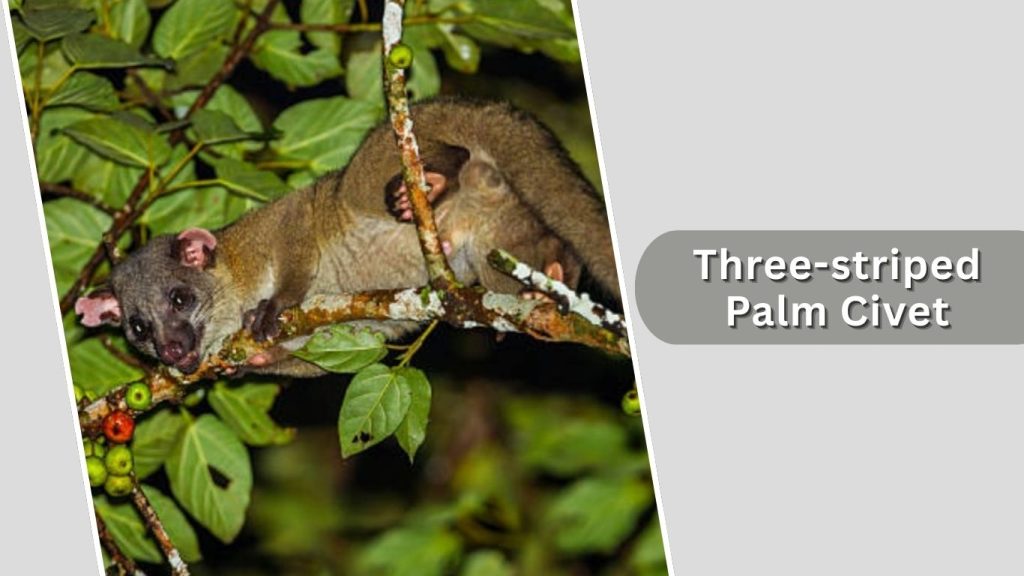
The three-striped palm civet is a slender, arboreal civet recognized by the dark stripes running along its back. It is highly adapted to life in trees and is an excellent climber, spending much of its life in forest canopies.
Identification
- Slim body with soft gray to brown fur
- Three distinct dark stripes along the back
- Long, bushy tail for balance
- Pointed face with large eyes
- Short legs with sharp, curved claws
- Lightweight, agile build
Habitat and Distribution
This species occurs in Southeast Asia, including Thailand, Malaysia, Indonesia, and parts of southern China. It inhabits tropical rainforests and mature secondary forests.
It is mostly arboreal and rarely descends to the ground.
Diet and Feeding Behavior
Three-striped palm civets mainly feed on fruits, figs, insects, nectar, and small vertebrates. They play a key role in forest regeneration by dispersing seeds.
They forage quietly at night, moving through tree branches in search of food.
Behavior and Lifespan
They are solitary and nocturnal. During the day, they rest in tree hollows or dense foliage.
Their lifespan is not well documented, but it is believed to be similar to other small palm civets, around 10–15 years.
14. Small-toothed Palm Civet (Arctogalidia stigmatica)
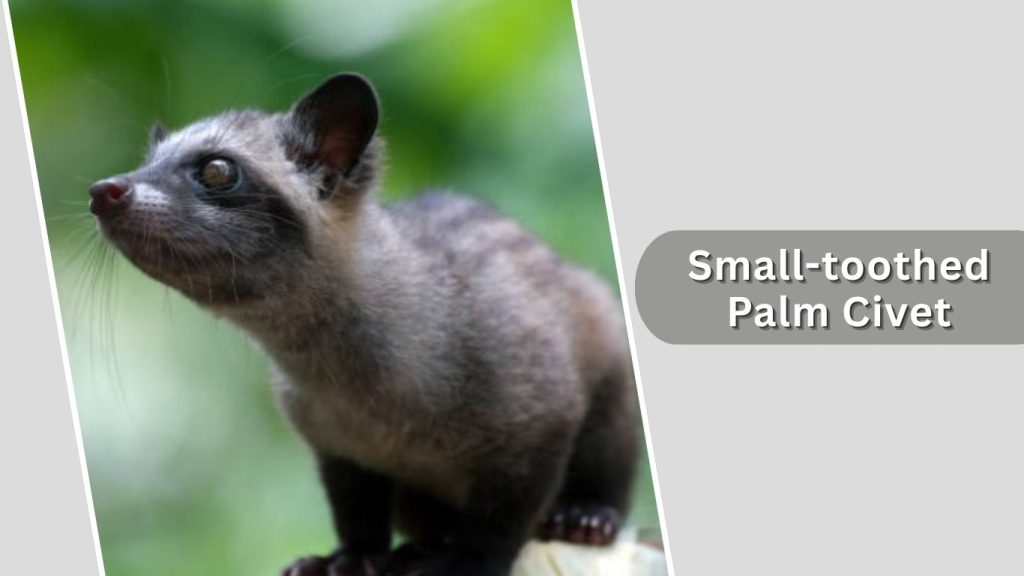
The small-toothed palm civet is a slender, tree-dwelling civet known for its delicate skull structure and relatively small teeth. It is mainly found in the rainforests of Southeast Asia and is well adapted to a nocturnal, arboreal lifestyle.
Identification
- Slim body with soft grayish-brown fur
- Faint dark markings along the back
- Long, bushy tail used for balance
- Narrow head with short snout
- Large eyes for night vision
- Light, agile build
Habitat and Distribution
This species occurs in southern Thailand, Malaysia, Indonesia, and Borneo. It inhabits lowland and hill rainforests, preferring dense canopy cover.
It spends most of its time in trees, resting in hollows or thick foliage during the day.
Diet and Feeding Behavior
Small-toothed palm civets mainly feed on fruits, figs, insects, and other invertebrates, with occasional small vertebrates. Their fruit-rich diet makes them effective seed dispersers.
They forage quietly at night, moving through branches in search of ripe fruits.
Behavior and Lifespan
They are solitary and nocturnal. Due to their secretive, arboreal nature, they are rarely observed in the wild.
Their lifespan is not well documented, but it is estimated to be around 10–15 years.
15. Sulawesi Palm Civet (Macrogalidia musschenbroekii)
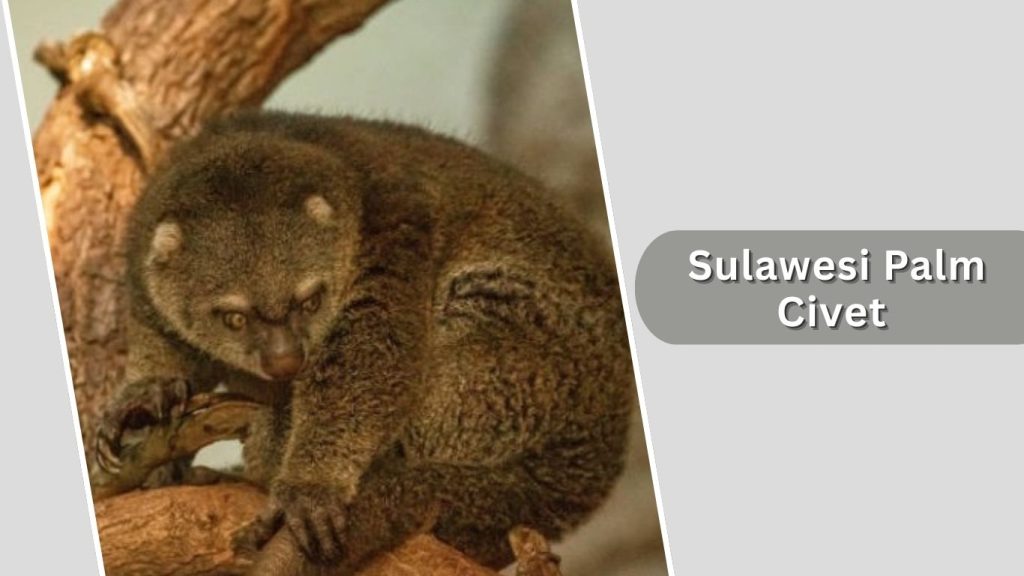
The Sulawesi palm civet is a unique civet species endemic to the Indonesian island of Sulawesi. It is larger than most palm civets and has a more robust build, reflecting its partly ground-dwelling habits.
Identification
- Large palm civet with a heavy, elongated body
- Dark brown to blackish coat
- Long tail with minimal ring pattern
- Broad head with strong jaws
- Short legs and sturdy build
- Thick fur adapted to humid forests
Habitat and Distribution
This civet is found only on Sulawesi and nearby small islands. It inhabits tropical lowland forests, hill forests, and forest edges.
It spends time both in trees and on the ground, often near dense vegetation.
Diet and Feeding Behavior
Sulawesi palm civets are omnivorous, feeding on fruits, small mammals, birds, insects, and other forest animals. They are considered important seed dispersers as well as small-prey predators.
They forage mainly at night.
Behavior and Lifespan
They are solitary and nocturnal. Very little is known about their social behavior due to their limited range and elusive nature.
Their exact lifespan is unknown but likely falls within 10–15 years.
16. Javan Ferret-badger (Melogale orientalis)
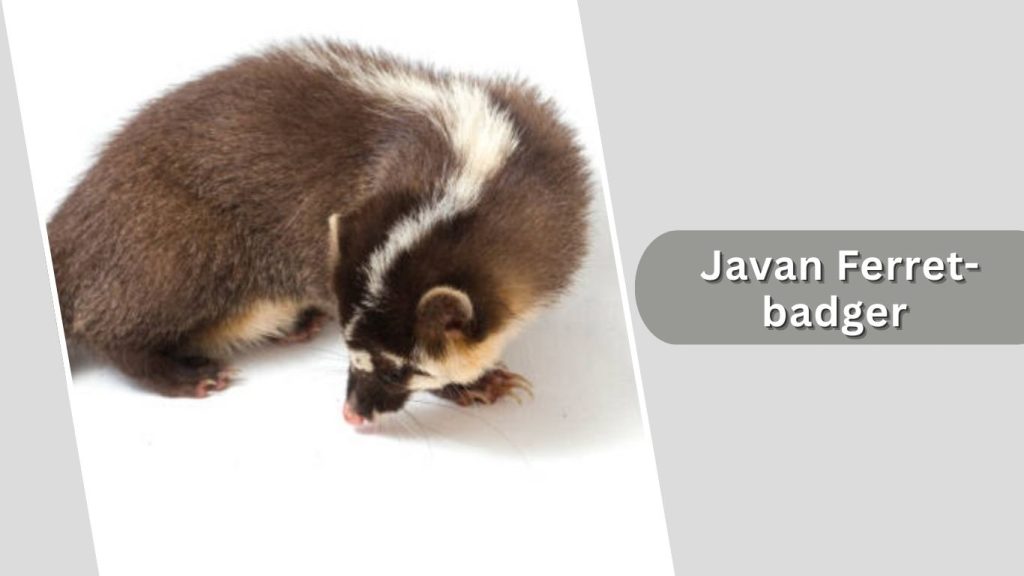
The Javan ferret-badger is a small, ground-dwelling member of the civet-related group found only on the island of Java. Although not a true civet, it belongs to the same broader family line and is often included in civet lists due to its close relation and similar habits.
Identification
- Small, elongated body with short legs
- Dark brown to black fur
- Distinct white stripe from nose to head
- Short, bushy tail
- Pointed snout with strong teeth
- Low-slung, muscular build
Habitat and Distribution
This species is endemic to Java, Indonesia. It inhabits forests, plantations, and mountainous regions, often in areas with dense undergrowth.
It shelters in burrows, rock crevices, or thick vegetation during the day.
Diet and Feeding Behavior
Javan ferret-badgers feed on insects, worms, small mammals, birds, eggs, fruits, and roots. Their mixed diet allows them to thrive in both natural and altered habitats.
They forage mostly on the ground at night, using smell and touch to locate food.
Behavior and Lifespan
They are solitary and nocturnal. When threatened, they can be aggressive and release a strong-smelling secretion.
Their lifespan is not well documented, but related species often live around 8–12 years.
17. Owston’s Palm Civet (Chrotogale owstoni)
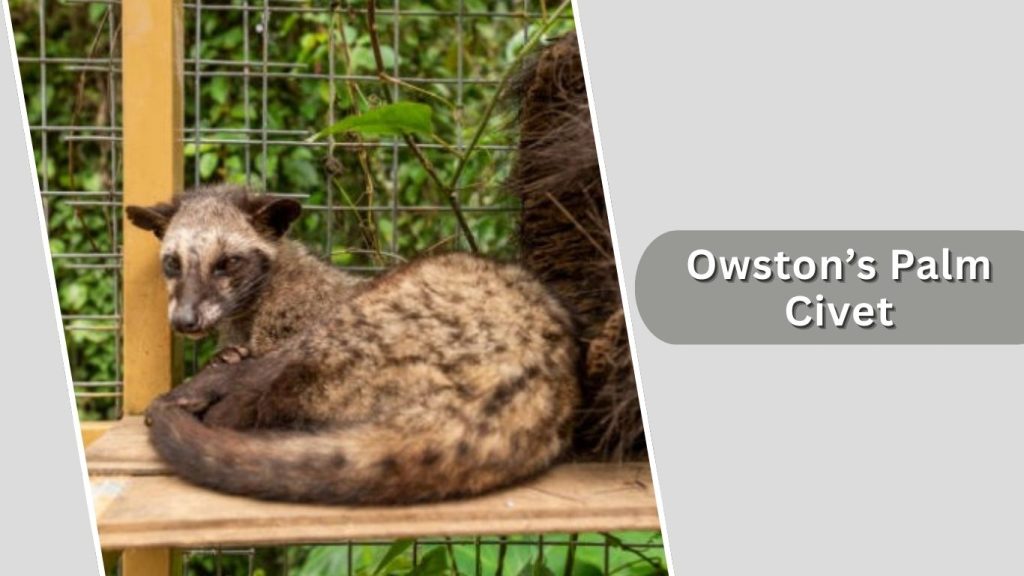
Owston’s palm civet is a rare and striking civet species distinguished by its bold stripes and long, bushy tail. It is native to parts of Southeast Asia and is considered endangered due to habitat loss and hunting.
Identification
- Slender body with reddish-brown fur
- Bold dark stripes along the back and sides
- Long, ringed tail
- Elongated face with pointed snout
- Large eyes adapted for night vision
- Light, agile build
Habitat and Distribution
This species occurs in northern Vietnam, Laos, and southern China. It inhabits subtropical and tropical forests, often in mountainous regions.
It prefers dense forest cover and is rarely seen.
Diet and Feeding Behavior
Owston’s palm civets feed on insects, earthworms, fruits, small mammals, and other forest organisms. They are considered important controllers of insect populations.
They forage at night, moving both on the ground and in low vegetation.
Behavior and Lifespan
They are solitary and nocturnal. Due to their elusive behavior, little is known about their reproduction and longevity.
Their estimated lifespan is around 10–15 years.
18. Hose’s Palm Civet (Diplogale hosei)
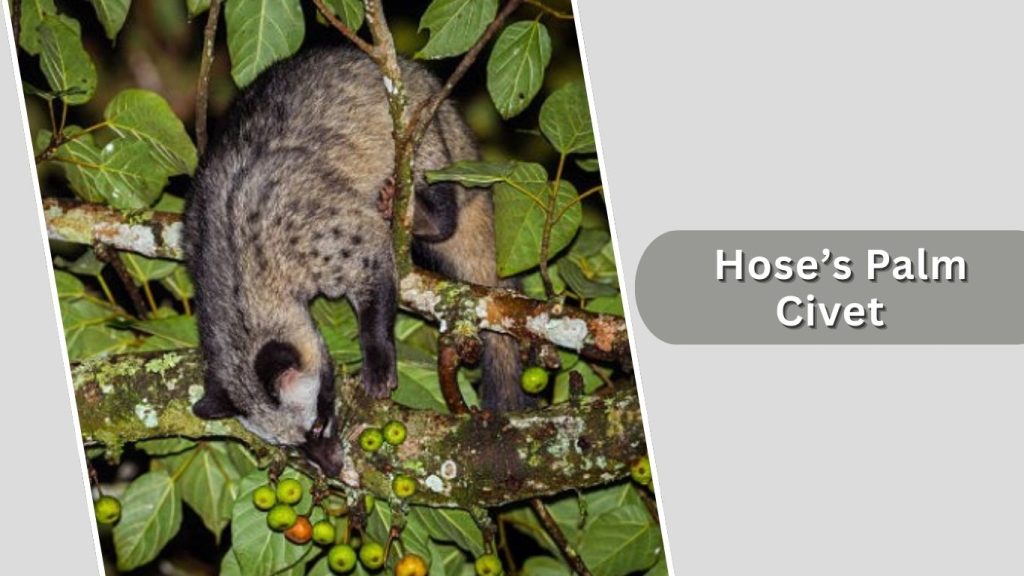
The Hose’s palm civet is one of the rarest and least-known civets in the world. Endemic to the island of Borneo, this elusive species has been recorded only a handful of times, making it a subject of great interest among mammalogists and conservationists.
Identification
- Medium-sized civet with very soft, dense fur
- Dark brown to chestnut-colored coat
- Rounded head with short, blunt snout
- Large eyes adapted for nocturnal vision
- Relatively short tail compared to body length
- Subtle facial markings
Habitat and Distribution
Hose’s palm civet is found only in Borneo, where it inhabits lowland and montane rainforests. It prefers undisturbed, dense forest environments and is rarely encountered near human settlements.
Most confirmed sightings come from remote forested regions.
Diet and Feeding Behavior
Very little is known about its natural diet. It is believed to feed on small mammals, birds, insects, and possibly fruits, similar to other forest-dwelling civets.
It likely forages on the ground at night, relying on stealth and smell.
Behavior and Lifespan
Almost nothing is known about its behavior in the wild. It is assumed to be solitary and nocturnal. Due to its extreme rarity, its lifespan and reproductive habits remain undocumented.
Deforestation is considered the main threat to this species.