





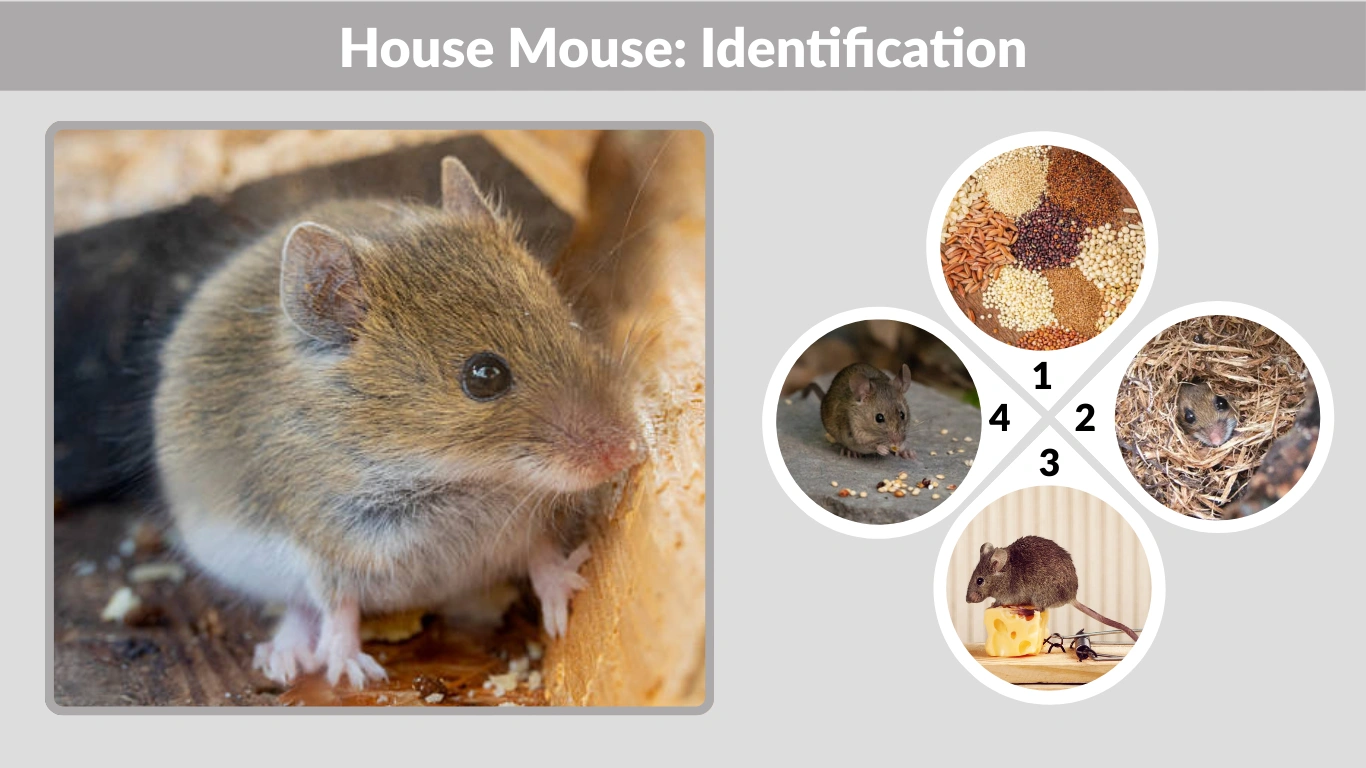
The house mouse (Mus musculus) is one of the most widespread mammals in the world and the most common rodent found living alongside humans. It is highly adaptable and capable of surviving in nearly any environment where food and shelter are available. Because house mice reproduce quickly and remain hidden, a small problem can turn into a serious infestation in a short time. Understanding house mouse identification, habitat, behavior, and early warning signs is essential for protecting homes, food supplies, and health.
What Is a House Mouse?
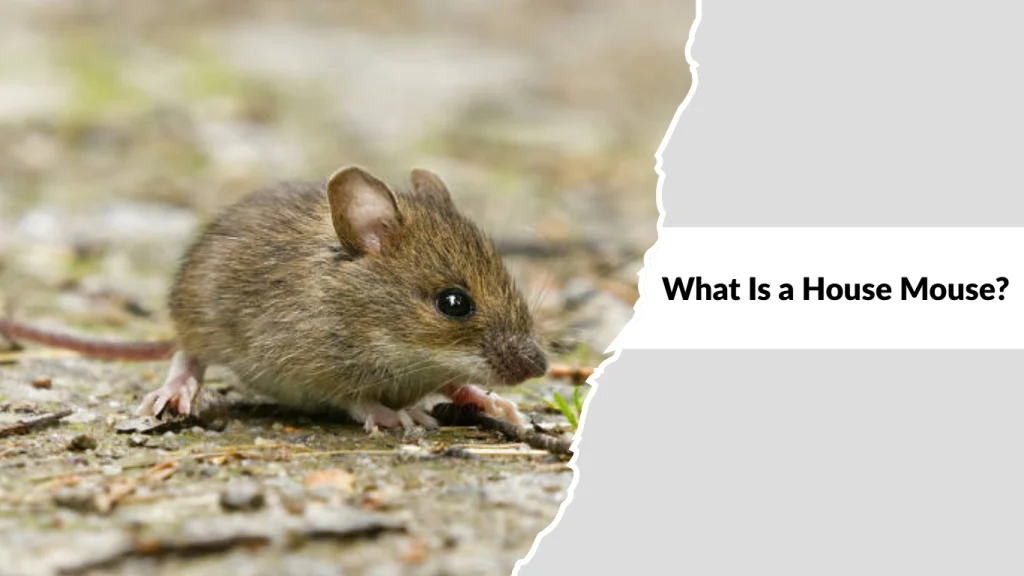
A house mouse is a small rodent species that has evolved to live in close association with people. Unlike wild field mice, house mice depend heavily on human structures for warmth, nesting space, and reliable food sources. They are found on every continent except Antarctica and thrive in cities, villages, farms, and warehouses.
Scientific Classification
The scientific name of the house mouse is Mus musculus. It belongs to the rodent family Muridae, which also includes rats and other mice. Because of its adaptability and rapid reproduction, the house mouse has spread globally through human trade and settlement. It is also widely used in laboratories, making it one of the most studied mammals on Earth.
Origin and Spread
House mice are believed to have originated in parts of Asia, where they first began living near early human settlements thousands of years ago. As agriculture and trade expanded, house mice traveled with stored grain and cargo, eventually spreading across Europe, Africa, and the Americas. Today, they are firmly established in both urban and rural environments worldwide.
Why House Mice Are So Successful
House mice succeed because they can eat almost anything, breed year-round indoors, and squeeze through extremely small openings. They adapt quickly to new environments, learn food locations fast, and build nests in hidden spaces. Their ability to survive on little water and avoid predators inside buildings gives them a major advantage over many other rodents.
Physical Characteristics of the House Mouse
House mice are small, agile rodents with bodies designed for squeezing, climbing, and gnawing. Their teeth grow continuously, forcing them to chew on many materials.
Size and Body Structure
An adult house mouse usually measures about 7 to 10 centimeters in body length, with a tail nearly as long as its body. Most weigh between 12 and 30 grams. Their bodies are slender, with flexible bones that allow them to pass through holes as small as a coin.
Fur Color and Texture
House mouse fur is typically smooth and short. Common colors include light brown, gray, dark brown, and sometimes nearly black. The belly is often lighter than the back. Urban populations often show darker coloration, while rural mice may appear more brown or tan.
Tail, Ears, and Facial Features
The tail of a house mouse is thin, long, and almost hairless. Their ears are relatively large and rounded, and their eyes are dark and prominent. A pointed snout, long whiskers, and sharp incisors help them navigate tight spaces and gnaw through wood, plastic, and even soft metals.
How to Identify a House Mouse
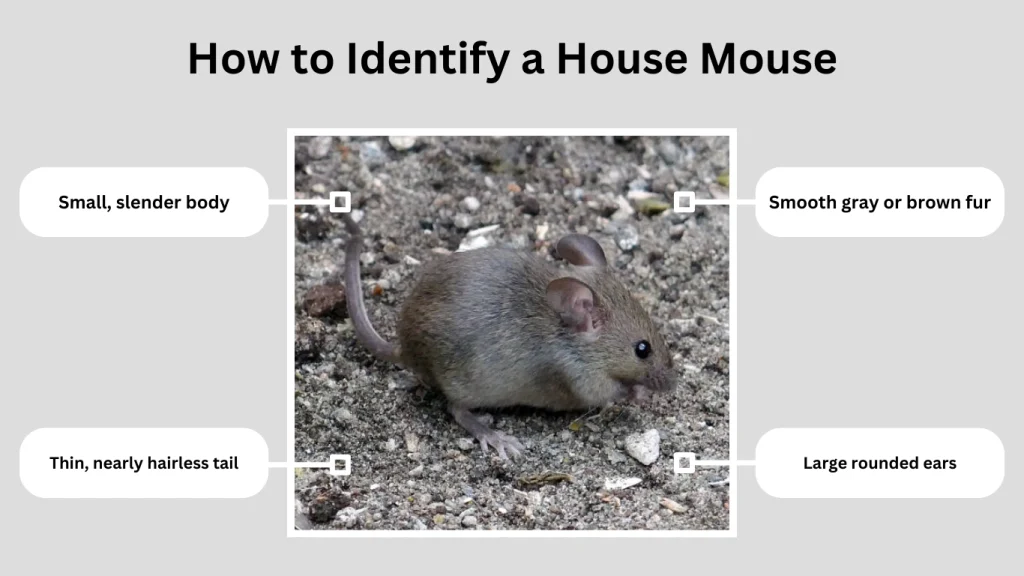
Correct identification helps distinguish house mice from rats or wild field mice.
- Small, slender body
- Smooth gray or brown fur
- Thin, nearly hairless tail
- Large rounded ears
- Rice-shaped droppings
- Gnaw marks on food packaging and wood
- Grease smears along walls
House mouse droppings are usually 3 to 6 millimeters long and found in kitchens, cupboards, wall edges, and storage areas.
House Mouse Habitat and Living Areas
House mice prefer warm, protected spaces close to food. They can live entirely indoors or move between outdoor and indoor locations.
Indoor Environments
Inside buildings, house mice often nest in wall voids, ceilings, behind appliances, cupboards, and storage rooms. Kitchens and pantries are common activity centers due to constant food access. They establish runways along walls and behind furniture.
Outdoor and Semi-Outdoor Areas
Outside, house mice may live in sheds, garages, barns, woodpiles, garbage areas, and farm structures. In rural environments, they may move between crop fields and buildings but usually return indoors for shelter.
Nesting Habits
House mice build soft nests using shredded paper, cloth, insulation, cardboard, and plant fibers. These nests are hidden in dark, undisturbed areas and often contain multiple individuals, especially in established infestations.
House Mouse Diet and Feeding Behavior

Common Foods
House mice are omnivores. They eat grains, cereals, bread, meat scraps, sweets, pet food, and almost any unprotected household food. They also chew soap, glue, and cardboard when food is limited.
Feeding Patterns
House mice usually feed many times each night, taking small amounts of food from multiple sources. Rather than eating large meals, they nibble frequently and return to familiar feeding spots. They often drag food back to nesting sites and may see stored items such as cupboards or pet bowls as permanent food stations.
Water Needs and Survival
House mice need very little free water. They get most of their moisture from food and condensation. This ability allows them to survive in dry environments, including inside walls and storage rooms, where other animals could not live.
Signs of a House Mouse Infestation
Early detection can prevent a small problem from becoming a serious infestation.
- Droppings in drawers, cupboards, and along walls
- Scratching and scurrying sounds at night
- Chewed food packaging and wiring
- Shredded paper, fabric, or insulation
- Strong, unpleasant odors
- Greasy smears along baseboards
Fresh droppings are dark and soft, while older droppings become dry and crumbly.
House Mouse Behavior and Lifestyle

Activity Patterns
House mice are primarily nocturnal. They usually travel along the same paths every night, staying close to walls and hidden edges. Their movement patterns create visible runways, making it easier to predict where traps should be placed.
Reproduction and Life Cycle
House mice breed rapidly, especially indoors. Females can give birth to several litters each year, with each litter containing multiple pups. Young mice mature quickly and can begin reproducing in just a few weeks, which explains why infestations expand so fast.
Social Structure
House mice live in small colonies with a dominant male. They communicate through sound, scent, and body language. Territorial marking with urine is common, which is why infested areas often develop strong odors.
Problems and Dangers Caused by House Mice
House mice are more than a nuisance; they present serious health and safety risks.
- Food contamination
- Disease transmission
- Electrical wire damage
- Structural damage
- Rapid population growth
- Secondary pest attraction
They spread bacteria such as salmonella through droppings and urine, damage insulation and furniture, and may chew wires, increasing fire hazards.
How to Get Rid of House Mice
Trapping Methods
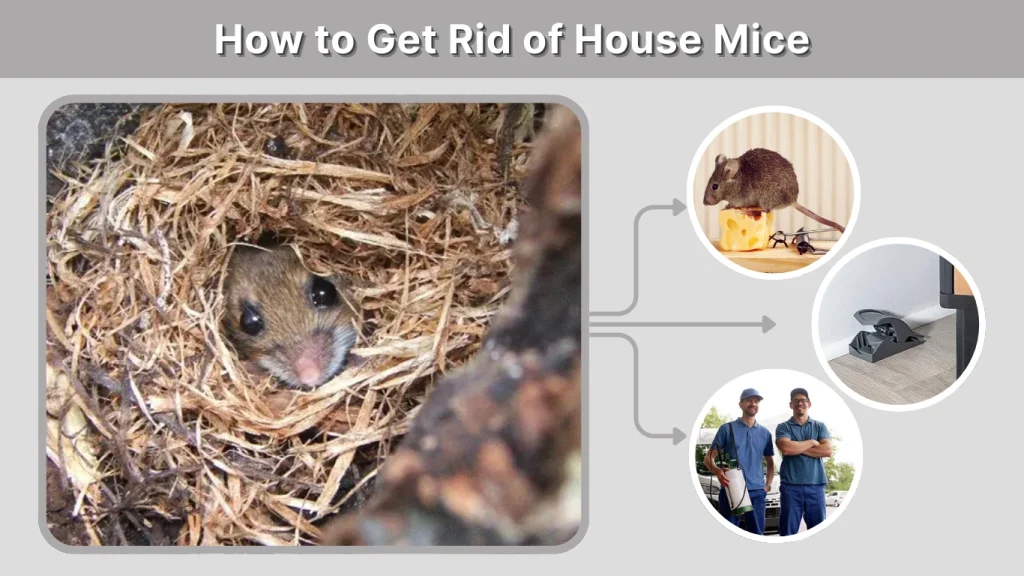
Snap traps remain one of the most effective tools for house mouse control. They should be placed along walls, behind appliances, and near droppings. Live traps can be used for humane capture, but relocation must be done carefully and legally. Electronic traps provide another controlled option.
Sanitation and Exclusion
Trapping alone is not enough. Food must be sealed in airtight containers, crumbs removed daily, and garbage managed tightly. Entry points such as gaps around pipes, doors, vents, and foundations must be sealed to stop new mice from entering.
When to Call Pest Control
If mice continue appearing, strong odors persist, or scratching sounds increase, professional pest control is recommended. Experts can locate hidden nests, identify access points, and implement long-term control plans.
How to Prevent House Mouse Infestations
Home Proofing
Seal cracks and holes with metal mesh, steel wool, or cement. Repair door sweeps and damaged vents. Even very small openings should be closed.
Food Storage Practices
Store all food, including pet food, in sealed containers. Clean kitchens daily, and never leave food exposed overnight.
Long-Term Monitoring
Regular inspections of storage areas, basements, and attics help detect early signs. Seasonal prevention is especially important before cold or rainy weather.
FAQs
What does a house mouse look like?
A house mouse is small and slender with smooth gray or brown fur, a thin nearly hairless tail, large rounded ears, and dark eyes. Adults usually measure under 10 centimeters in body length, not including the tail.
Are house mice dangerous to humans?
Yes. House mice can contaminate food, spread bacteria and viruses, damage wiring, and trigger allergies. Because they live inside buildings, their presence creates higher health risks than outdoor mice.
How fast do house mice reproduce?
House mice reproduce extremely fast. A female can have multiple litters each year, and young mice mature quickly. This rapid cycle allows populations to grow large within just a few months.
What attracts house mice into homes?
Food, warmth, shelter, and clutter attract house mice. Open food containers, crumbs, garbage, and small entry gaps provide everything mice need to survive indoors.
What is the best way to get rid of house mice?
The most effective method combines trapping, sealing entry points, and strict sanitation. Removing food access and blocking entry prevents new mice while traps eliminate existing ones.