


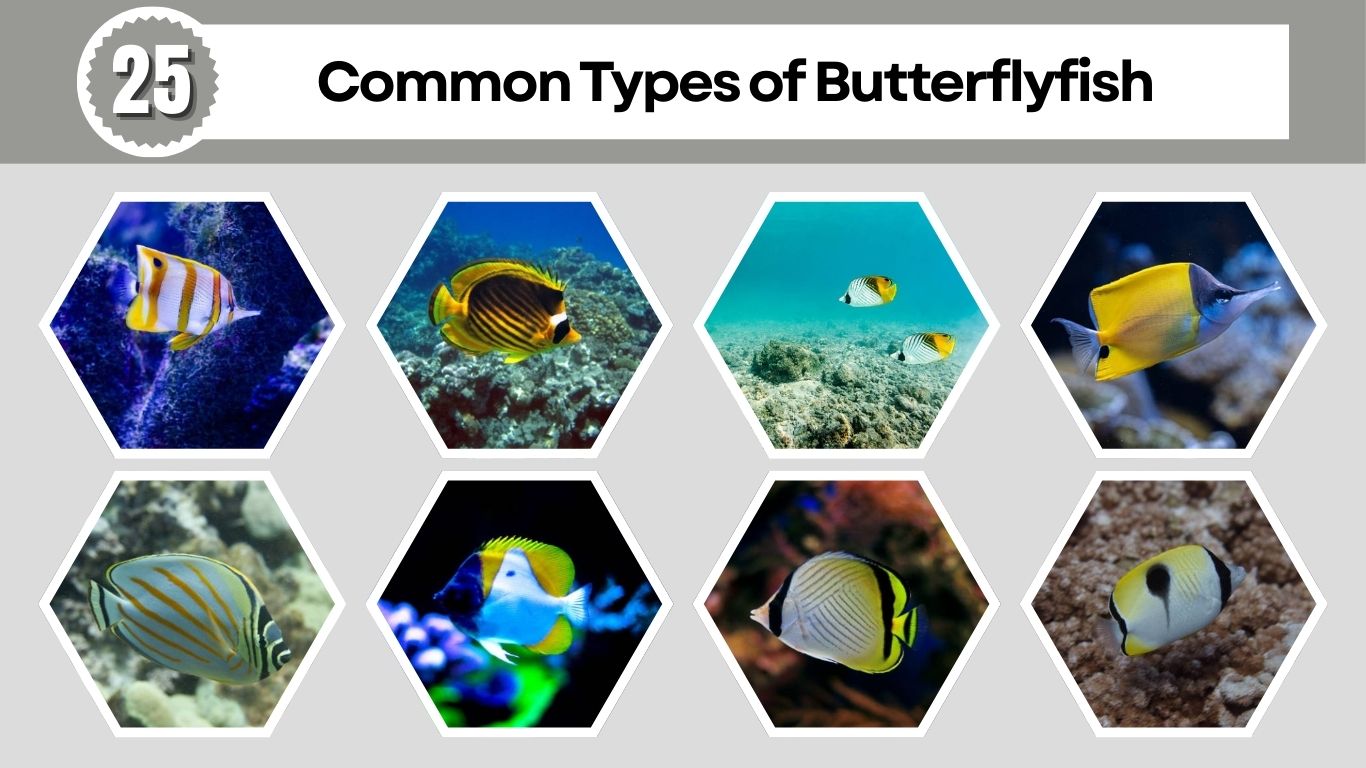
Butterflyfish are among the most colorful and recognizable reef fish in the ocean, known for their thin, disk-shaped bodies and striking patterns. They are mainly found in warm tropical waters, especially around coral reefs of the Indo-Pacific region. With over a hundred species worldwide, butterflyfish display an incredible range of colors, stripes, and spots. Many species are closely tied to coral health, feeding on coral polyps and small reef organisms, making them important indicators of reef ecosystem conditions.
1. Copperband Butterflyfish (Chelmon rostratus)
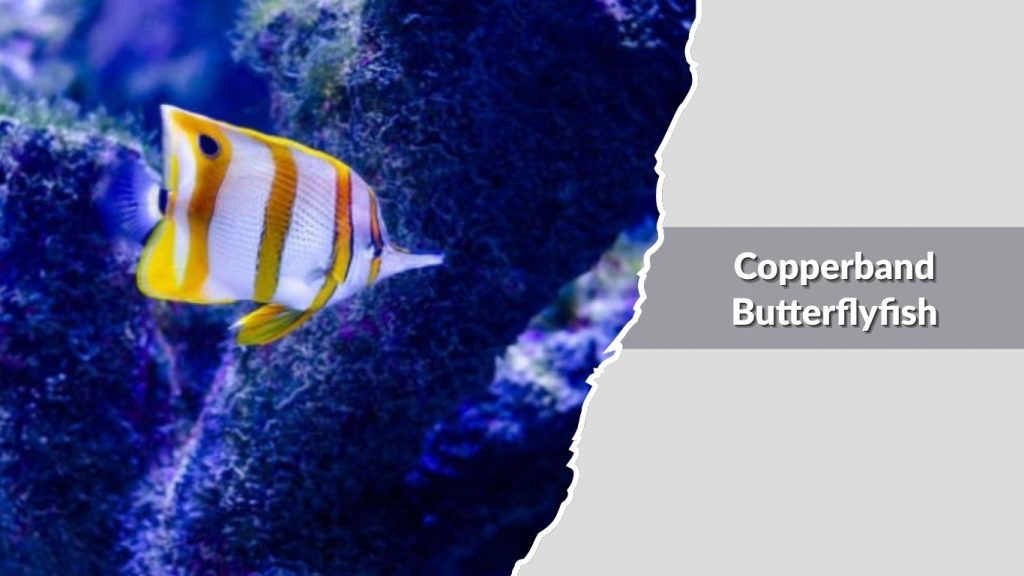
The copperband butterflyfish is one of the most recognizable butterflyfish species, admired for its bright copper-orange bands, elongated snout, and elegant swimming style. It is native to the Indo-Pacific and is commonly found around coral reefs, where it uses its narrow mouth to pick small prey from crevices.
Identification
- White body with vertical copper-orange bands
- Very long, narrow snout adapted for probing cracks
- Distinct dark eyespot near the rear dorsal fin
- Tall, disk-shaped body with delicate fins
- Grows up to about 8 inches (20 cm)
Habitat
Copperband butterflyfish live mainly in coral reefs, lagoons, and protected reef slopes. They are often seen alone or in pairs, swimming close to reef surfaces where they search for food among coral branches and rocky cracks.
Behavior
This species is generally peaceful and slow-moving. It spends much of the day picking at reef surfaces, using its long snout to reach prey that other fish cannot. Copperband butterflyfish are usually shy and retreat quickly into reef structures when threatened.
Diet
Their diet consists mostly of small invertebrates such as worms, tiny crustaceans, anemones, and coral polyps. In aquariums, they can be challenging to feed and often require live or specially prepared foods.
Lifespan
In the wild, copperband butterflyfish typically live around 5 to 7 years, depending on habitat quality and predation pressure.
2. Raccoon Butterflyfish (Chaetodon lunula)
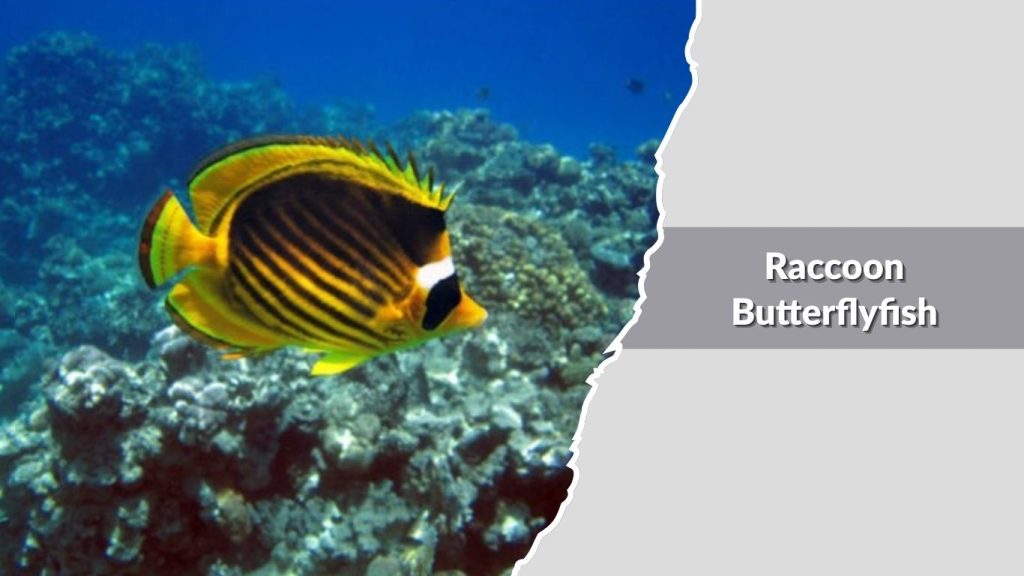
The raccoon butterflyfish is a bold and easily recognized species known for its black facial “mask” and bright yellow body. It is widespread throughout the Indo-Pacific and is often seen gliding over coral reefs and lagoons, especially during the evening hours.
Identification
- Bright yellow body with a large black facial mask
- Distinct white band behind the black face area
- Rounded, disk-shaped body with smooth fins
- Small mouth adapted for picking reef organisms
- Usually grows up to about 8 inches (20 cm)
Habitat
Raccoon butterflyfish live in coral reefs, lagoons, and reef flats. They often hide among corals or rocky crevices during the day and are commonly found in both shallow and moderately deep reef environments.
Behavior
They are more active at dusk and nighttime compared to many butterflyfish. Raccoon butterflyfish are usually seen alone or in pairs and are known to be hardy and adaptable reef dwellers.
Diet
Their diet includes coral polyps, sea anemones, worms, and small crustaceans. They constantly pick at reef surfaces, playing a role in controlling small invertebrate populations.
Lifespan
Raccoon butterflyfish generally live around 5 to 8 years in the wild under favorable reef conditions.
3. Threadfin Butterflyfish (Chaetodon auriga)
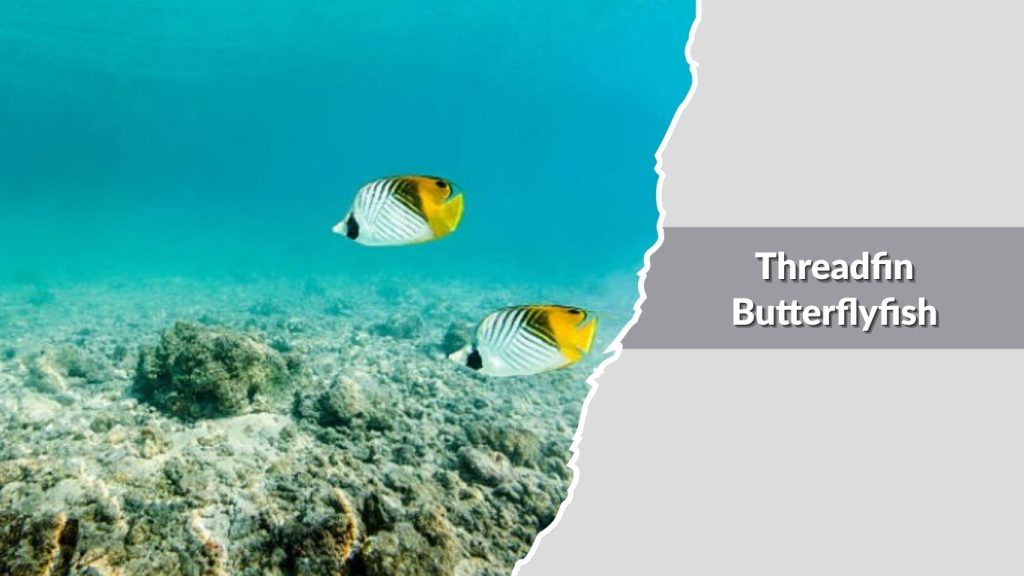
The threadfin butterflyfish is a striking reef species famous for the long, trailing filament that extends from the rear of its dorsal fin. Its bright yellow body and bold markings make it one of the most eye-catching butterflyfish on coral reefs across the Indo-Pacific.
Identification
- Bright yellow body with diagonal black bands
- Long white “thread” extending from the dorsal fin
- Prominent black eyespot near the rear of the body
- Thin black lines running across the face
- Grows up to about 9 inches (23 cm)
Habitat
Threadfin butterflyfish inhabit coral reefs, reef slopes, and lagoons. They are often seen swimming in pairs or small groups near reef edges and open coral areas.
Behavior
They are active daytime swimmers, constantly moving across the reef in search of food. Threadfin butterflyfish are generally peaceful but can be territorial around favored feeding spots.
Diet
Their diet mainly consists of coral polyps, small invertebrates, algae, and tiny crustaceans. They pick continuously at reef surfaces using their small, pointed mouths.
Lifespan
Threadfin butterflyfish typically live about 6 to 10 years in the wild, depending on reef health and environmental conditions.
4. Longnose Butterflyfish (Forcipiger flavissimus)
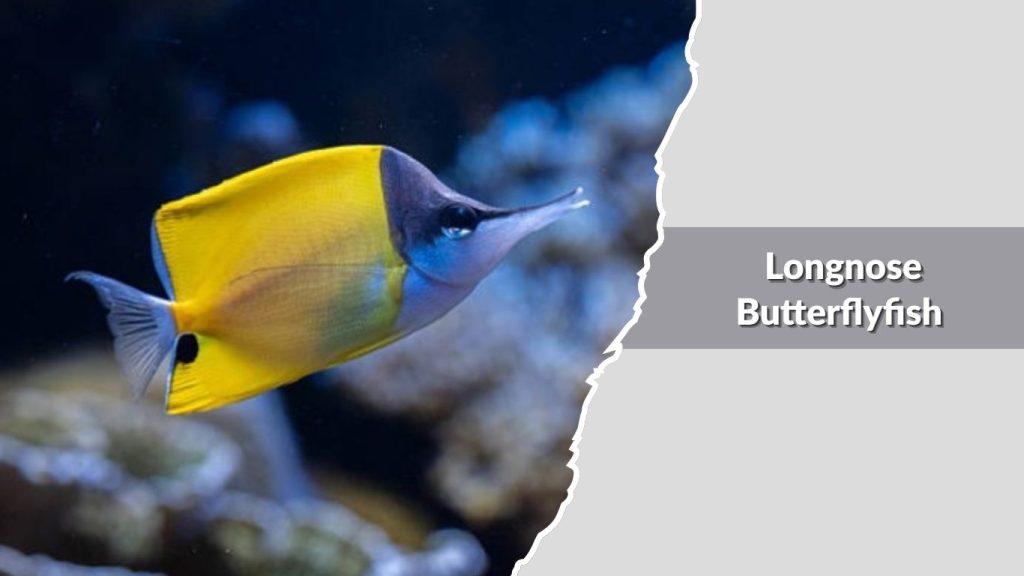
The longnose butterflyfish is well known for its extremely long, slender snout, which it uses to reach deep into coral crevices. Its bright yellow body and delicate black markings make it one of the most graceful butterflyfish found on Indo-Pacific coral reefs.
Identification
- Bright yellow body with a very long, narrow snout
- Thin black band through the eyes
- Small black spot near the rear dorsal fin
- Tall, flattened body shape
- Grows up to about 8 inches (20 cm)
Habitat
Longnose butterflyfish inhabit coral reefs, reef slopes, and lagoons. They are often seen in pairs, swimming slowly along reef faces and coral heads where small prey hide.
Behavior
They are gentle, deliberate swimmers that spend much of the day probing holes and cracks for food. Longnose butterflyfish are usually monogamous and maintain small territories.
Diet
Their diet includes tiny crustaceans, worms, and other small invertebrates. The long snout allows them to reach prey inaccessible to many other reef fish.
Lifespan
In the wild, longnose butterflyfish generally live around 5 to 8 years under natural reef conditions.
5. Ornate Butterflyfish (Chaetodon ornatissimus)
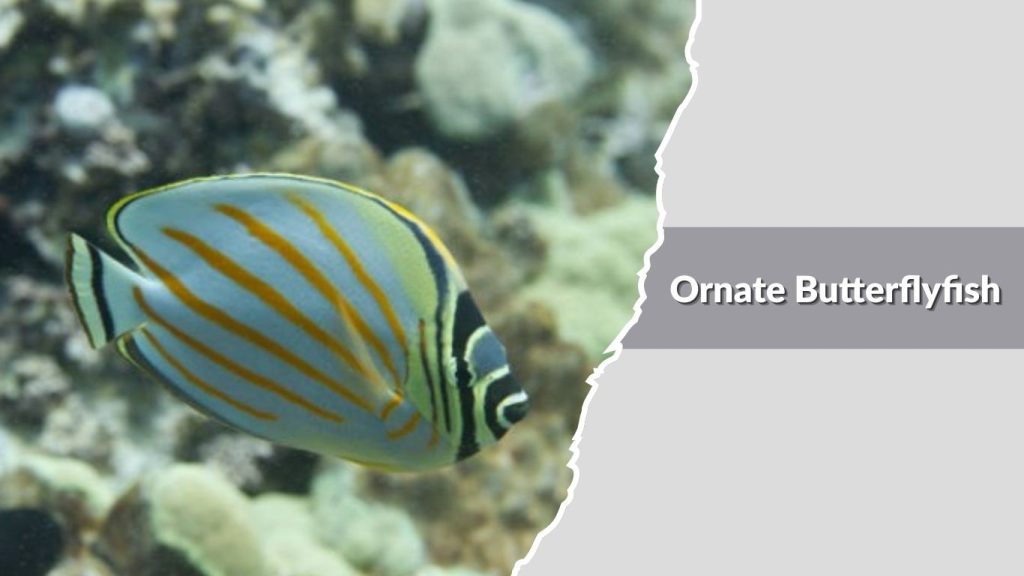
The ornate butterflyfish is often called one of the most beautifully patterned butterflyfish species. Its intricate lines, vivid colors, and elegant shape make it a standout on Indo-Pacific coral reefs, where it lives closely associated with coral-rich environments.
Identification
- Creamy white body covered with fine diagonal orange and blue lines
- Bold black band running through the eye
- Bright orange and yellow accents on fins
- Deep, disk-shaped body
- Grows up to about 8 inches (20 cm)
Habitat
Ornate butterflyfish are typically found on coral-rich reef flats, reef slopes, and lagoon reefs. They prefer areas with abundant live coral growth, where they spend most of their time feeding.
Behavior
They are usually seen alone or in pairs and are closely tied to coral habitats. Ornate butterflyfish are slow, careful swimmers that stay close to reef structures for protection.
Diet
Their diet consists mainly of coral polyps, along with small invertebrates living on reef surfaces. Because of this specialized diet, they are considered indicators of healthy coral reefs.
Lifespan
Ornate butterflyfish are believed to live around 5 to 7 years in the wild, depending on reef conditions.
6. Pyramid Butterflyfish (Hemitaurichthys polylepis)
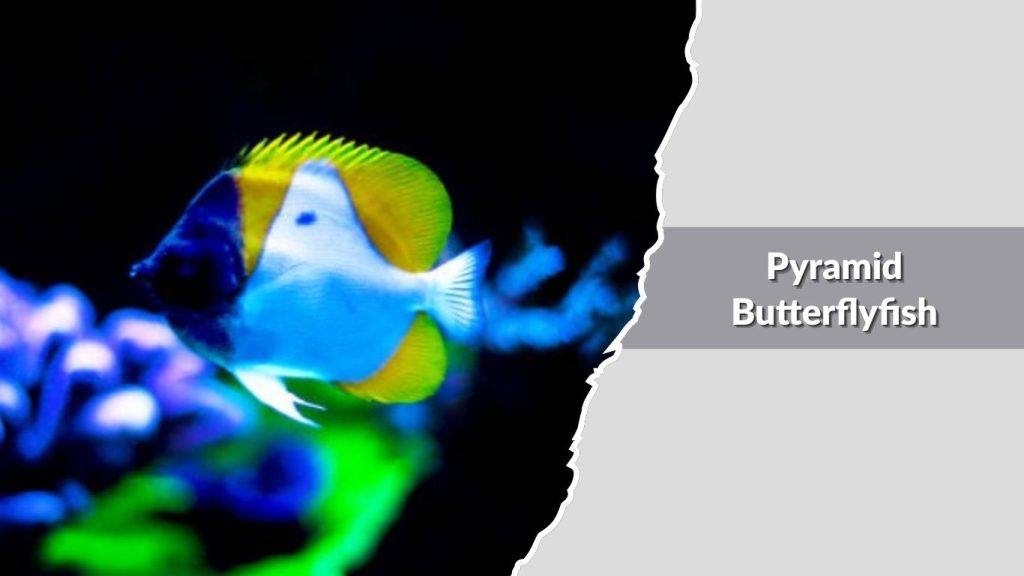
The pyramid butterflyfish is a striking reef species recognized for its bold black-and-white triangular pattern and bright yellow accents. Unlike many coral-feeding butterflyfish, it often forms large schools in open water above reefs.
Identification
- White body with a large black triangular patch
- Bright yellow dorsal and tail fins
- Distinct black marking rising from the mid-body
- Tall, disk-shaped profile
- Grows up to about 7 inches (18 cm)
Habitat
Pyramid butterflyfish are commonly found above outer reef slopes, drop-offs, and reef walls. They prefer clear, open reef environments and are often seen swimming in midwater schools.
Behavior
This species is highly social and frequently forms large, visible groups. They spend much of their time swimming in the water column rather than staying close to coral surfaces.
Diet
Their diet mainly consists of zooplankton captured from the water column. They swim into passing plankton clouds and pick off tiny drifting organisms.
Lifespan
Pyramid butterflyfish typically live around 6 to 9 years in the wild.
7. Forceps Butterflyfish (Forcipiger longirostris)
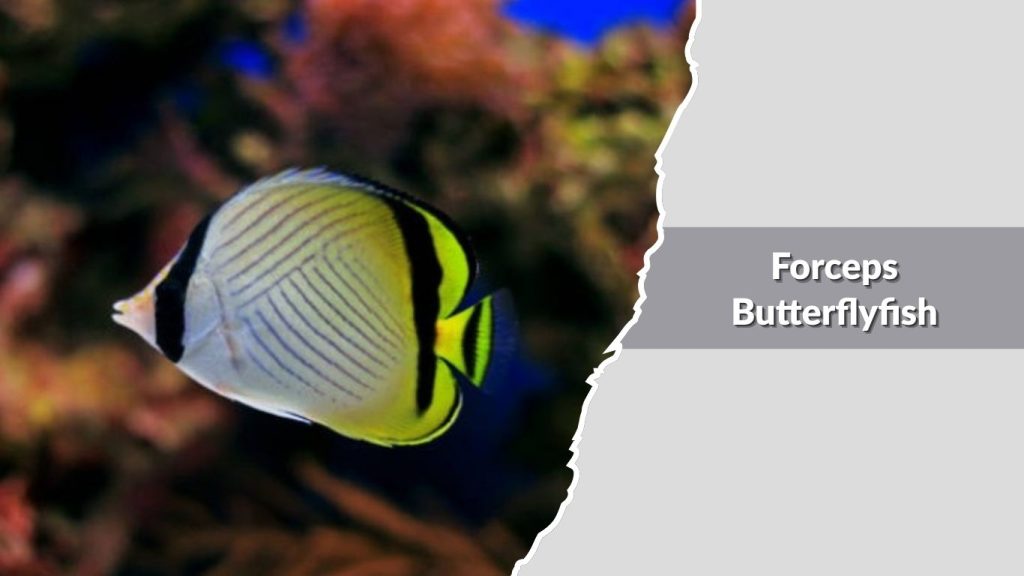
The forceps butterflyfish is easily recognized by its extremely long, thin snout, which resembles a pair of forceps. It is closely related to the longnose butterflyfish but has a darker facial area and a more elongated mouth structure.
Identification
- Bright yellow body with a very long, slender snout
- Dark black face mask covering the eyes
- Small black spot near the rear dorsal fin
- Thin, delicate fins and flattened body
- Grows up to about 9 inches (23 cm)
Habitat
Forceps butterflyfish inhabit coral reefs, reef slopes, and deep reef faces. They are often found in pairs or small groups, swimming slowly near reef structures.
Behavior
They are calm, methodical feeders, spending long periods probing deep crevices. This species is usually seen in pairs and is known to form strong pair bonds.
Diet
Their diet includes tiny crustaceans, worms, and small invertebrates hidden within coral and rock.
Lifespan
Forceps butterflyfish generally live around 5 to 8 years in the wild.
8. Teardrop Butterflyfish (Chaetodon unimaculatus)
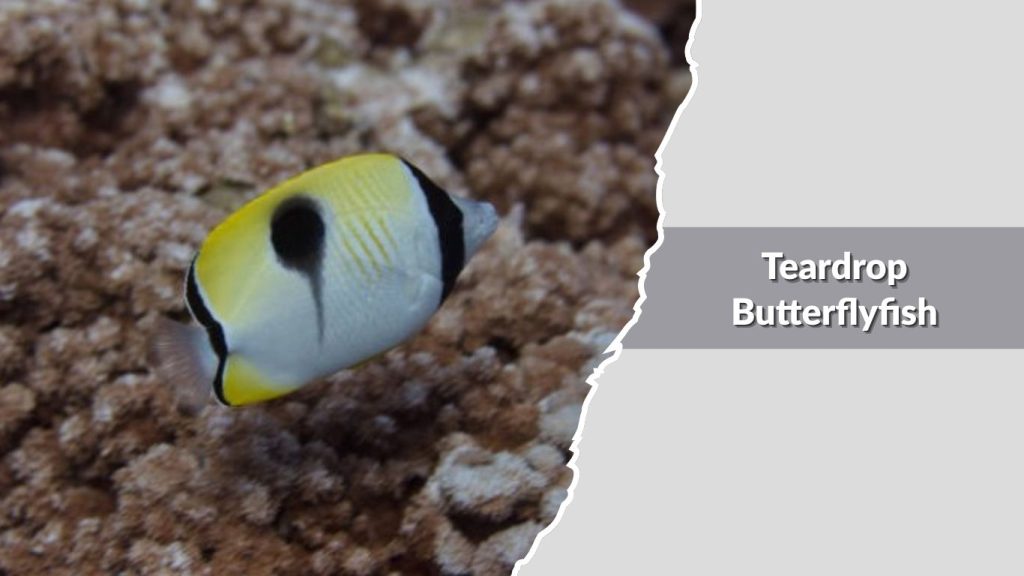
The teardrop butterflyfish is named for the distinctive dark teardrop-shaped spot near the rear of its body. It is a bright yellow reef fish commonly found across the Indo-Pacific, often seen hovering close to coral-rich areas.
Identification
- Bright yellow body with a single large black “teardrop” spot
- Thin black band running through the eye
- Rounded, disk-like body shape
- Clear to lightly tinted fins
- Grows up to about 8 inches (20 cm)
Habitat
Teardrop butterflyfish inhabit coral reefs, reef flats, and lagoon reefs. They are usually found close to coral heads and reef structures where food is abundant.
Behavior
They are generally seen alone or in pairs and are relatively shy. Teardrop butterflyfish spend much of their time picking at coral surfaces and retreat quickly when threatened.
Diet
Their diet mainly consists of coral polyps, small invertebrates, and reef-dwelling organisms living on hard surfaces.
Lifespan
Teardrop butterflyfish typically live around 5 to 7 years in the wild.
9. Chevron Butterflyfish (Chaetodon trifascialis)
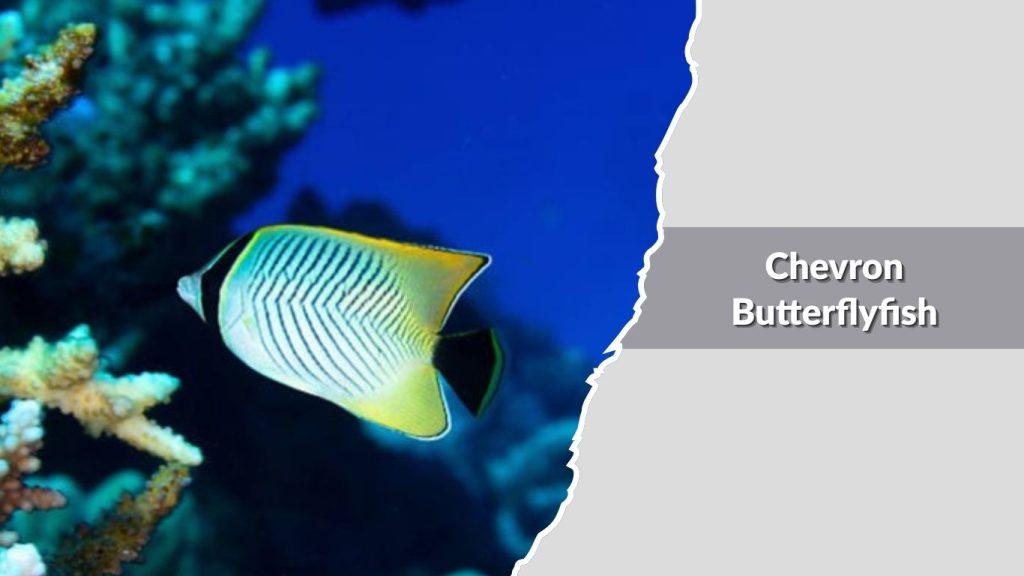
The chevron butterflyfish is a striking species known for its bold V-shaped (chevron) patterns and close association with coral reefs. It is often found swimming among branching corals, where its markings blend well with complex reef structures.
Identification
- Pale yellow body with dark V-shaped chevron lines
- Black band through the eye
- Bright yellow tail fin
- Tall, flattened body shape
- Grows up to about 7 inches (18 cm)
Habitat
Chevron butterflyfish are mainly found on coral-rich reefs, especially areas dominated by branching corals. They prefer shallow reef flats and reef slopes with abundant live coral.
Behavior
They are usually solitary or seen in pairs and are highly territorial around feeding areas. Chevron butterflyfish spend most of the day moving among coral branches.
Diet
Their diet consists largely of coral polyps, making them strongly dependent on healthy reef ecosystems.
Lifespan
In the wild, chevron butterflyfish generally live around 5 to 7 years.
10. Pearlscale Butterflyfish (Chaetodon xanthurus)
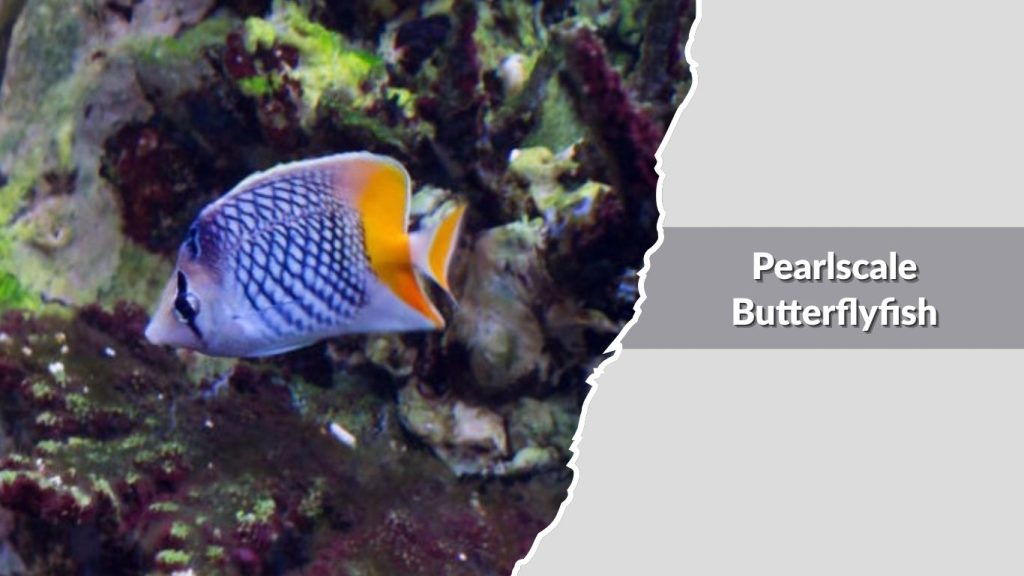
The pearlscale butterflyfish is admired for its delicate, pearly pattern formed by pale spots edged in dark lines across its body. It is a peaceful reef fish found across the Indo-Pacific, often gliding gracefully along coral slopes.
Identification
- Light yellow body covered with pearly white, scale-like spots
- Thin dark edging around each scale
- Black band running through the eye
- Yellow tail and fins
- Grows up to about 6 inches (15 cm)
Habitat
Pearlscale butterflyfish inhabit coral reefs, lagoons, and reef slopes. They are commonly found near coral heads, rocky crevices, and sheltered reef areas.
Behavior
They are usually seen alone or in pairs and are calm, slow swimmers. Pearlscale butterflyfish spend much of their time exploring reef surfaces for food.
Diet
Their diet includes coral polyps, small invertebrates, and tiny organisms living on reef structures.
Lifespan
Pearlscale butterflyfish typically live around 5 to 8 years in the wild.
11. Vagabond Butterflyfish (Chaetodon vagabundus)
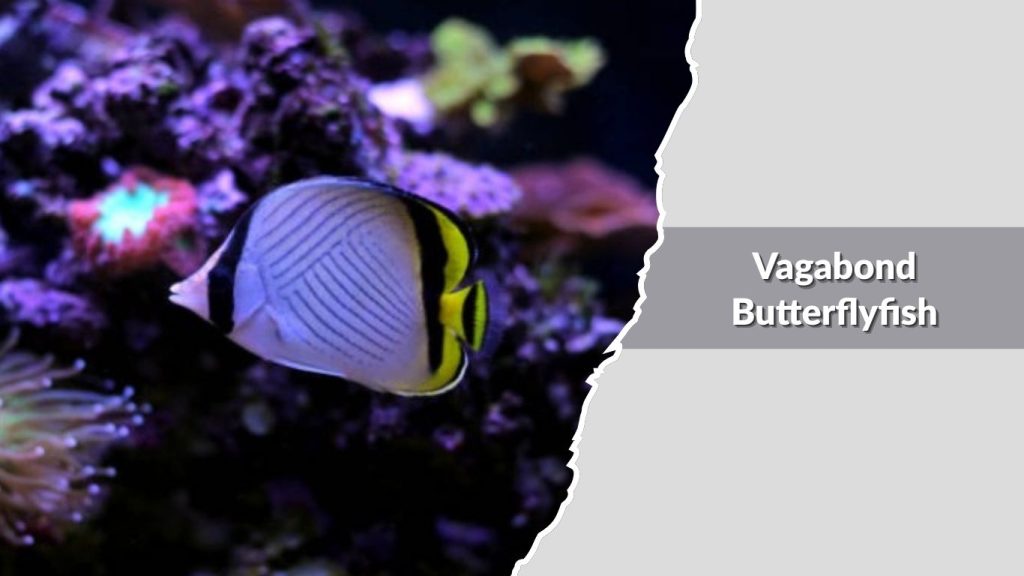
The vagabond butterflyfish is a widespread and adaptable species known for its bold striping and frequent presence on coral reefs and rocky coastal areas. It is one of the more commonly encountered butterflyfish across the Indo-Pacific region.
Identification
- White body with dark vertical stripes
- Bright yellow tail and rear fins
- Black band running through the eye
- Tall, disk-shaped profile
- Grows up to about 9 inches (23 cm)
Habitat
Vagabond butterflyfish live on coral reefs, rocky reefs, and coastal lagoons. They are often found in both shallow reef flats and deeper reef slopes.
Behavior
They are usually seen alone or in pairs and are active daytime swimmers. Vagabond butterflyfish move constantly across the reef in search of food.
Diet
Their diet includes coral polyps, algae, worms, and small crustaceans, making them more flexible feeders than many butterflyfish.
Lifespan
Vagabond butterflyfish generally live around 6 to 10 years in the wild.
12. Lined Butterflyfish (Chaetodon lineolatus)
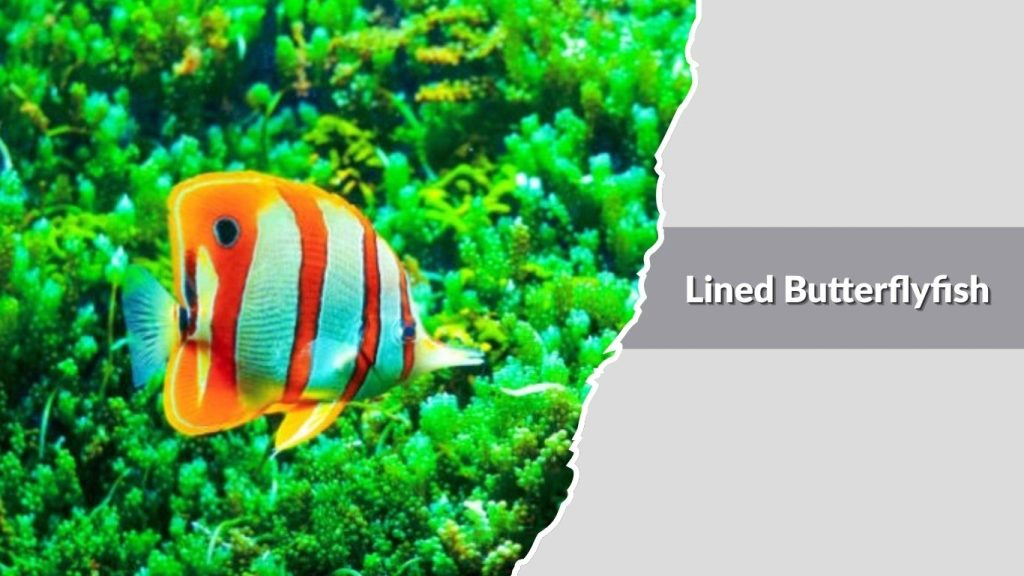
The lined butterflyfish is one of the largest butterflyfish species and is easily recognized by the fine horizontal lines that run across its pale body. It is widely distributed throughout the Indo-Pacific and is commonly seen on coral-rich reefs.
Identification
- Pale white to yellowish body with thin horizontal dark lines
- Bold black band through the eye
- Yellow fins and tail
- Large, tall, disk-shaped body
- Can grow up to about 12 inches (30 cm)
Habitat
Lined butterflyfish inhabit coral reefs, reef slopes, and lagoon reefs. They are often found near rich coral growth and reef walls.
Behavior
They are usually solitary or seen in pairs. Lined butterflyfish move slowly and deliberately, spending much of the day picking food from reef surfaces.
Diet
Their diet consists mainly of coral polyps, along with small invertebrates living among coral.
Lifespan
Lined butterflyfish typically live around 7 to 10 years in the wild.
13. Saddled Butterflyfish (Chaetodon ephippium)
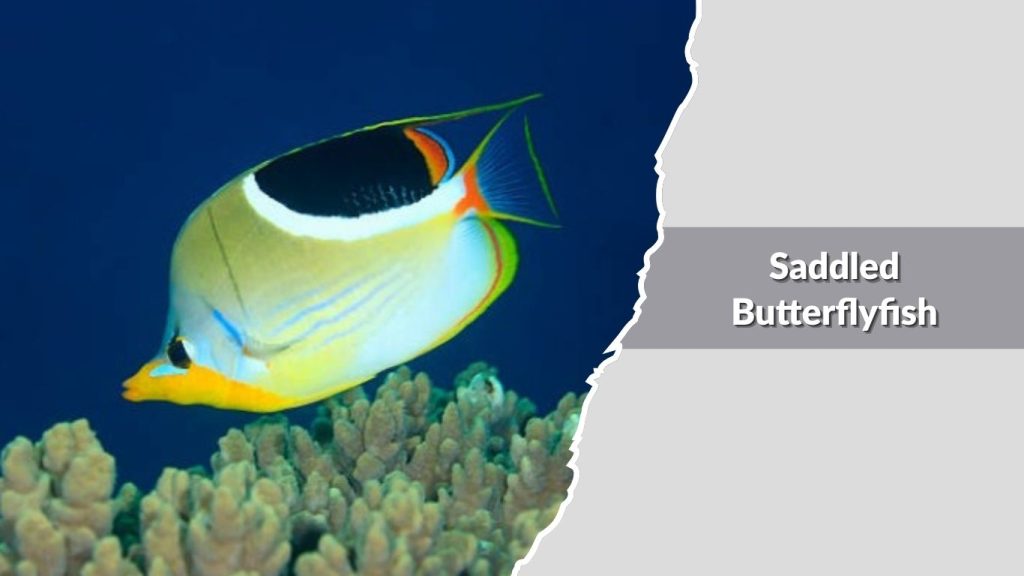
The saddled butterflyfish is named for the dark saddle-shaped marking on its back. It is a bright yellow reef fish commonly found across the Indo-Pacific, often swimming near coral heads and rocky reef structures.
Identification
- Bright yellow body with a dark “saddle” patch on the upper back
- Thin black band through the eye
- Rounded, disk-shaped profile
- Clear to lightly yellow fins
- Grows up to about 9 inches (23 cm)
Habitat
Saddled butterflyfish inhabit coral reefs, reef flats, lagoons, and sheltered reef slopes. They are usually found near coral-rich areas and rocky outcrops.
Behavior
They are calm, daytime-active fish often seen alone or in pairs. Saddled butterflyfish stay close to reef structures for feeding and protection.
Diet
Their diet includes coral polyps, algae, worms, and small invertebrates.
Lifespan
Saddled butterflyfish generally live around 6 to 9 years in the wild.
14. Blackback Butterflyfish (Chaetodon melannotus)
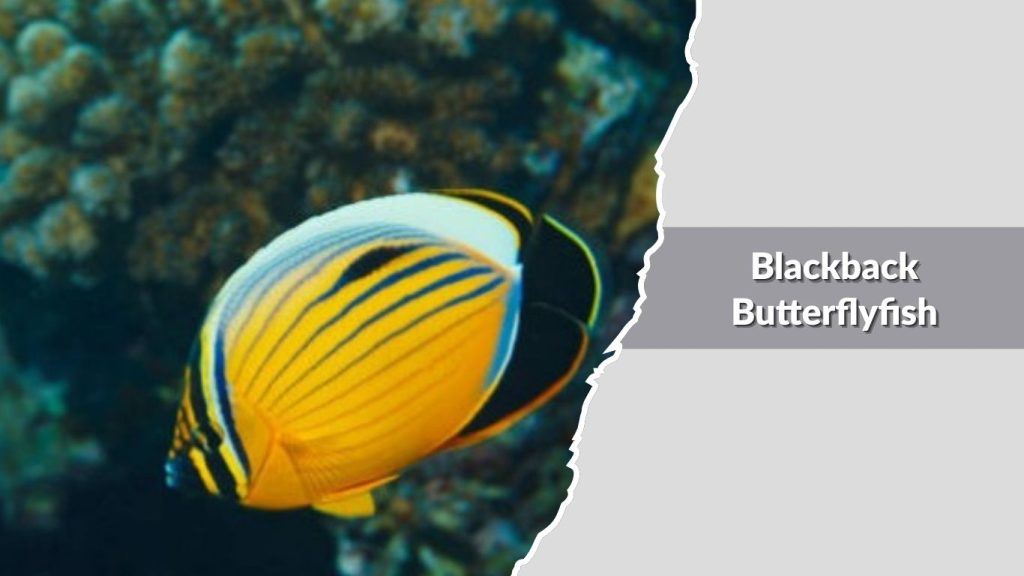
The blackback butterflyfish is a striking species recognized for the dark patch covering the upper rear portion of its body. Its strong contrast of yellow, white, and black makes it easily identifiable on coral reefs.
Identification
- Bright yellow body with a large black patch on the back
- White face with a thin black eye band
- Yellow tail and fins
- Tall, disk-shaped body
- Grows up to about 9 inches (23 cm)
Habitat
Blackback butterflyfish inhabit coral reefs, reef slopes, and lagoons. They prefer coral-rich environments with plenty of hiding places.
Behavior
They are usually seen alone or in pairs and are relatively shy. Blackback butterflyfish spend much of the day feeding along reef surfaces.
Diet
Their diet mainly consists of coral polyps, along with small invertebrates found on reef structures.
Lifespan
Blackback butterflyfish typically live around 5 to 8 years in the wild.
15. Yellow Butterflyfish (Chaetodon semilarvatus)
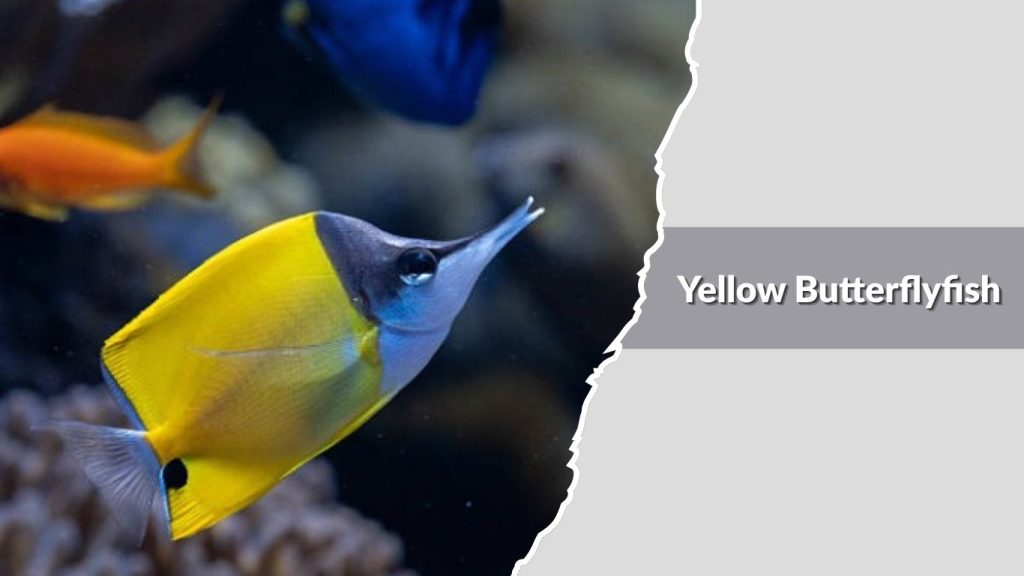
The yellow butterflyfish is a brilliantly colored species best known for its solid golden-yellow body and fine blue lines on the face. It is native mainly to the Red Sea and nearby regions, where it is a common sight on coral reefs.
Identification
- Bright golden-yellow body
- Thin blue lines across the face and near the eyes
- Black vertical band through the eye
- Rounded, disk-shaped body
- Grows up to about 9 inches (23 cm)
Habitat
Yellow butterflyfish live on coral reefs, reef slopes, and lagoons. They are especially common in coral-rich Red Sea reefs.
Behavior
They are usually seen in pairs or small groups and are active daytime swimmers. Yellow butterflyfish are often bold and visible on open reef faces.
Diet
Their diet mainly consists of coral polyps, algae, and small invertebrates.
Lifespan
Yellow butterflyfish generally live around 6 to 10 years in the wild.
16. Klein’s Butterflyfish (Chaetodon kleinii)
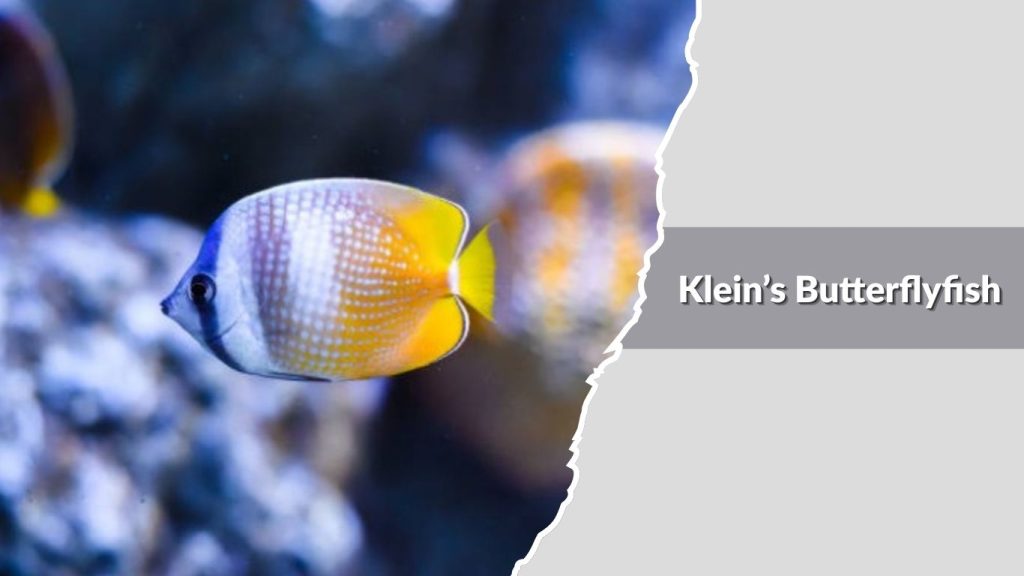
Klein’s butterflyfish is a hardy and adaptable species known for its soft yellow color and subtle markings. It is widespread across the Indo-Pacific and is often seen in pairs or small groups on coral reefs and rocky coastal areas.
Identification
- Light yellow to olive body color
- Thin dark vertical line through the eye
- Faint darker patch on the upper body
- Rounded, disk-shaped profile
- Grows up to about 6 inches (15 cm)
Habitat
Klein’s butterflyfish inhabit coral reefs, lagoons, and rocky reef slopes. They are commonly found in both shallow and moderately deep waters.
Behavior
They are social and often seen in pairs or small groups. Klein’s butterflyfish are active during the day and constantly move across reef surfaces.
Diet
Their diet includes coral polyps, algae, plankton, and small invertebrates, making them more flexible feeders than many butterflyfish.
Lifespan
Klein’s butterflyfish typically live around 5 to 8 years in the wild.
17. Mertens’ Butterflyfish (Chaetodon mertensii)
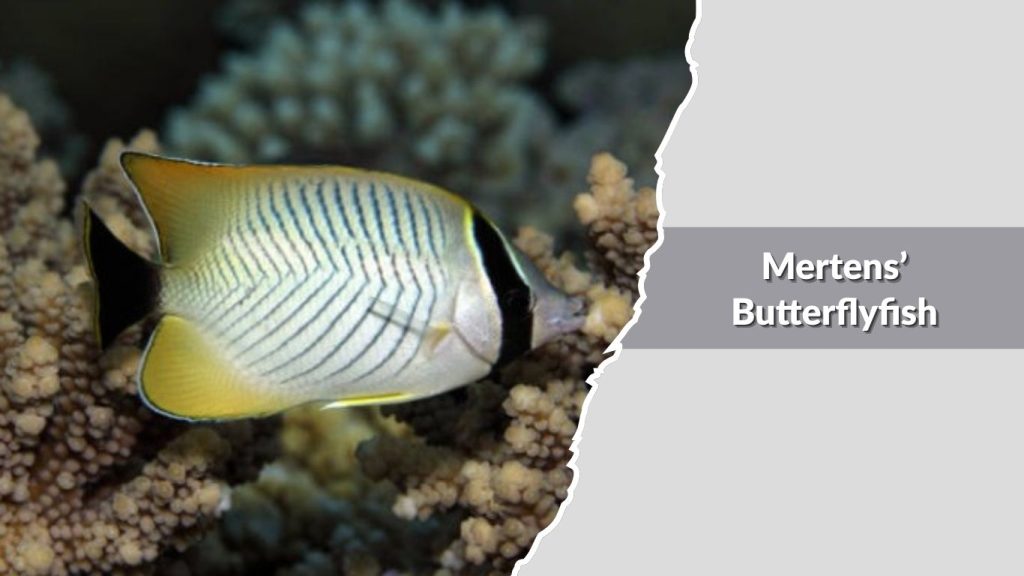
Mertens’ butterflyfish is a beautifully patterned species known for its clean white body, yellow rear section, and dark head markings. It is native to the central Pacific and is especially common around Hawaiian reef systems.
Identification
- White front body with bright yellow rear half
- Black vertical band through the eye
- Thin black edging on fins
- Tall, disk-shaped profile
- Grows up to about 6 inches (15 cm)
Habitat
Mertens’ butterflyfish inhabit coral reefs, reef slopes, and lagoon reefs. They are often seen swimming near coral heads and rocky reef structures.
Behavior
They are usually found in pairs and are relatively calm, spending much of their day grazing along reef surfaces.
Diet
Their diet mainly consists of coral polyps, algae, and small invertebrates living on reef structures.
Lifespan
Mertens’ butterflyfish generally live around 5 to 8 years in the wild.
18. Indian Butterflyfish (Chaetodon mitratus)
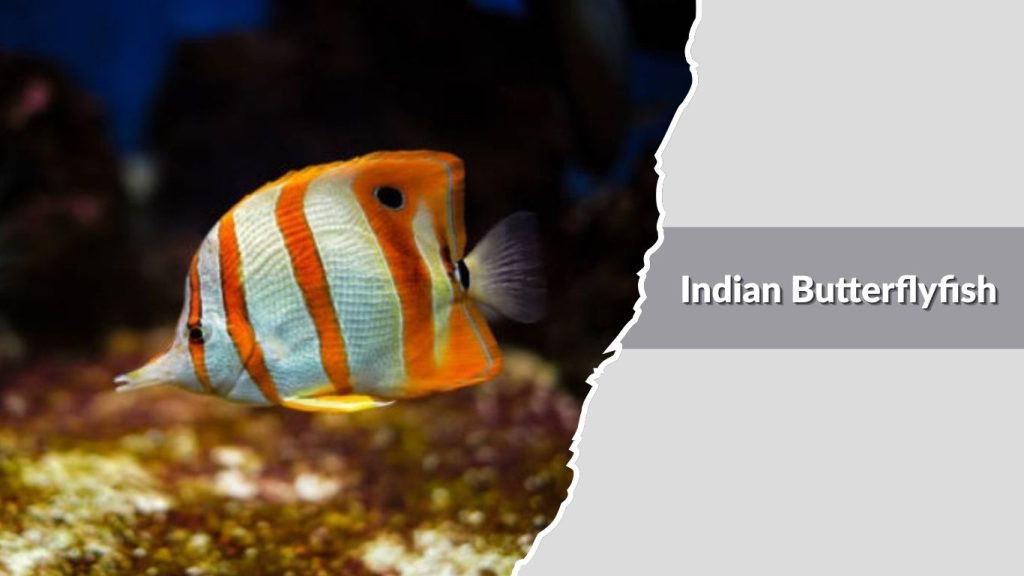
The Indian butterflyfish is a richly colored species known for its deep red body and contrasting pale vertical bands. It is native to the Indian Ocean region and is often found on coral reefs with abundant hiding places.
Identification
- Deep reddish to brick-red body color
- Two pale vertical bands on the body
- Black facial markings around the eyes
- Rounded, disk-shaped body
- Grows up to about 5 inches (13 cm)
Habitat
Indian butterflyfish inhabit coral reefs, rocky reef slopes, and lagoon reefs. They prefer areas with caves and overhangs for shelter.
Behavior
They are generally shy and secretive, usually seen alone or in pairs. Indian butterflyfish spend much of their time close to reef structures.
Diet
Their diet consists mainly of coral polyps and small invertebrates found among coral and rock.
Lifespan
Indian butterflyfish typically live around 4 to 7 years in the wild.
19. Spot-banded Butterflyfish (Chaetodon punctatofasciatus)
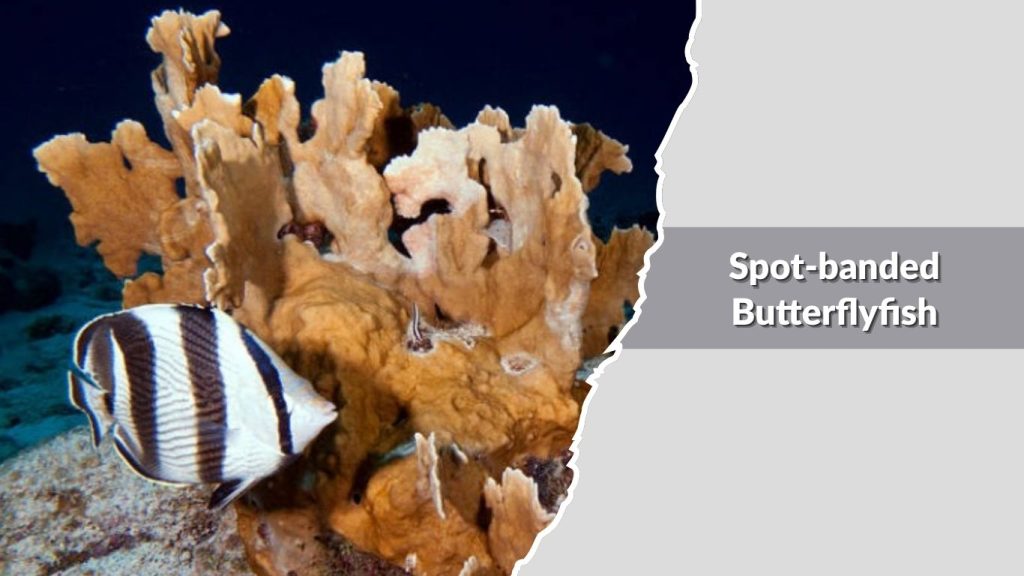
The spot-banded butterflyfish is recognized for its combination of dark spots and vertical bands across a pale yellow body. It is a widespread Indo-Pacific species often found near coral-rich reef systems.
Identification
- Pale yellow body with rows of small dark spots
- Faint vertical bands along the sides
- Black band through the eye
- Rounded, disk-shaped profile
- Grows up to about 6 inches (15 cm)
Habitat
Spot-banded butterflyfish inhabit coral reefs, reef flats, and lagoon reefs. They are usually seen near coral heads and rocky reef structures.
Behavior
They are generally calm and are often found alone or in pairs. Spot-banded butterflyfish move slowly across reef surfaces while feeding.
Diet
Their diet includes coral polyps, algae, and small invertebrates.
Lifespan
Spot-banded butterflyfish generally live around 5 to 8 years in the wild.
20. Double Saddle Butterflyfish (Chaetodon ulietensis)
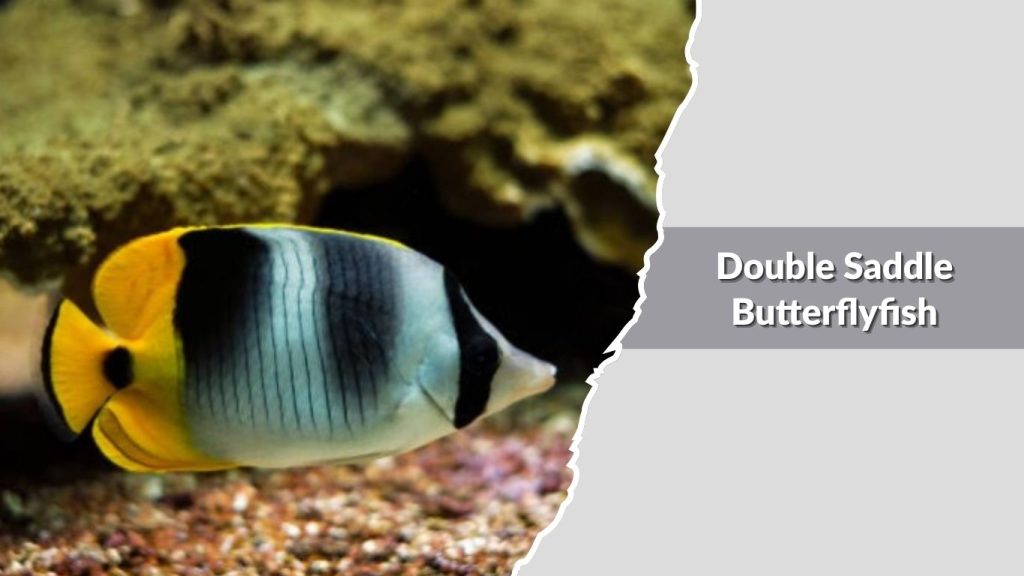
The double saddle butterflyfish is named for the two dark saddle-like patches on its back. It is a bright yellow reef species commonly found across the Indo-Pacific, often seen swimming over coral reefs and rocky lagoons.
Identification
- Bright yellow body with two dark saddle patches on the back
- Thin black band through the eye
- Rounded, disk-shaped profile
- Clear to lightly yellow fins
- Grows up to about 6 inches (15 cm)
Habitat
Double saddle butterflyfish inhabit coral reefs, reef flats, and lagoon reefs. They prefer shallow reef environments with abundant coral growth.
Behavior
They are usually seen alone or in pairs and are active daytime swimmers. Double saddle butterflyfish move frequently across the reef while feeding.
Diet
Their diet mainly consists of coral polyps, algae, and small invertebrates.
Lifespan
Double saddle butterflyfish typically live around 5 to 8 years in the wild.
21. Bluelashed Butterflyfish (Chaetodon bennetti)
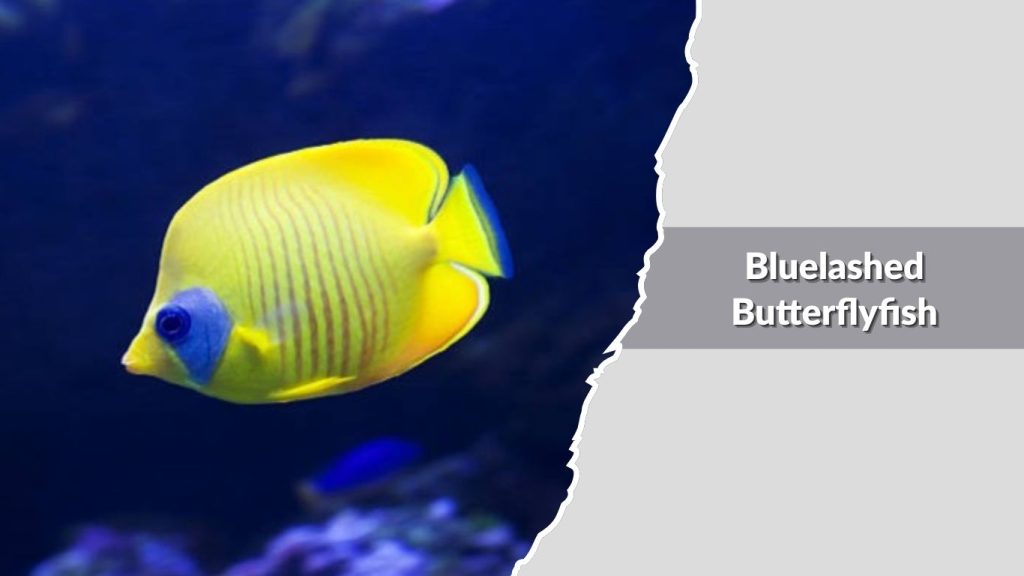
The bluelashed butterflyfish is named for the thin blue line that runs across its eye, giving the appearance of blue eyelashes. It is a slender, elegant species found mainly in the Indian Ocean and parts of the western Pacific.
Identification
- Pale yellow to whitish body
- Thin blue line across and behind the eye
- Long, narrow snout
- Dark spot near the rear dorsal fin
- Grows up to about 7 inches (18 cm)
Habitat
Bluelashed butterflyfish inhabit coral reefs, reef slopes, and lagoon reefs. They are often seen near coral heads and reef walls.
Behavior
They are usually solitary or found in pairs. Bluelashed butterflyfish are calm, slow swimmers that stay close to reef structures.
Diet
Their diet mainly consists of coral polyps and small invertebrates picked from reef surfaces.
Lifespan
Bluelashed butterflyfish generally live around 5 to 8 years in the wild.
22. Pakiston Butterflyfish (Chaetodon pakistanensis)
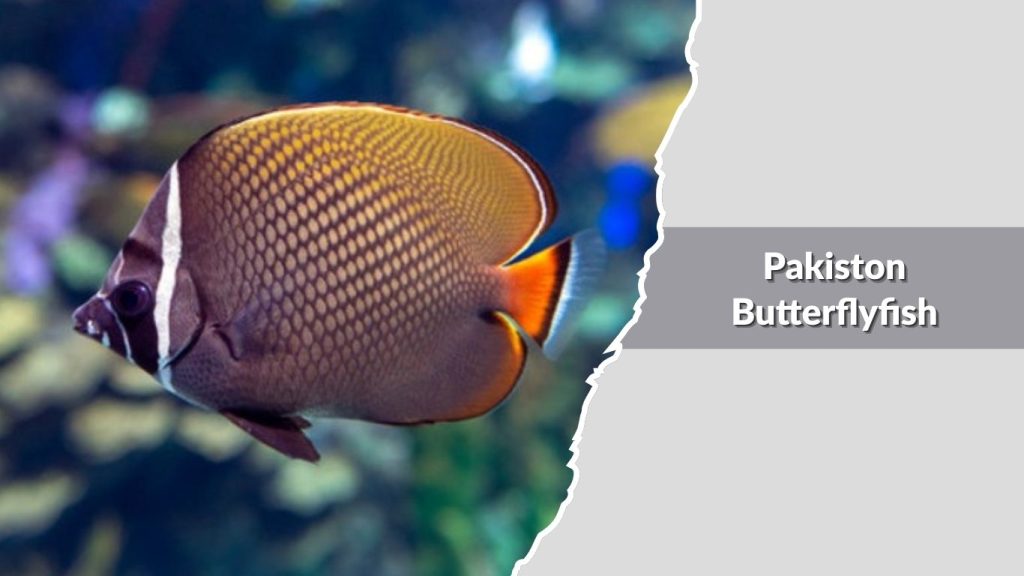
The Pakiston butterflyfish is a distinctive regional species known for its clean yellow-and-white body pattern and limited natural range. It is native mainly to the northern Arabian Sea and nearby coastal reefs, where it is considered relatively uncommon.
Identification
- White front body with bright yellow rear half
- Thin black band through the eye
- Yellow dorsal and tail fins
- Tall, disk-shaped profile
- Grows up to about 7 inches (18 cm)
Habitat
Pakiston butterflyfish inhabit coral reefs, rocky coastal reefs, and reef slopes. They are often seen near coral growth and rocky shelters in warm tropical waters.
Behavior
They are generally seen alone or in pairs and are calm, slow swimmers. Pakiston butterflyfish spend much of the day picking food from reef surfaces.
Diet
Their diet mainly consists of coral polyps, algae, and small invertebrates living among coral and rocks.
Lifespan
Pakiston butterflyfish typically live around 5 to 8 years in the wild.
23. Tinker’s Butterflyfish (Chaetodon tinkeri)
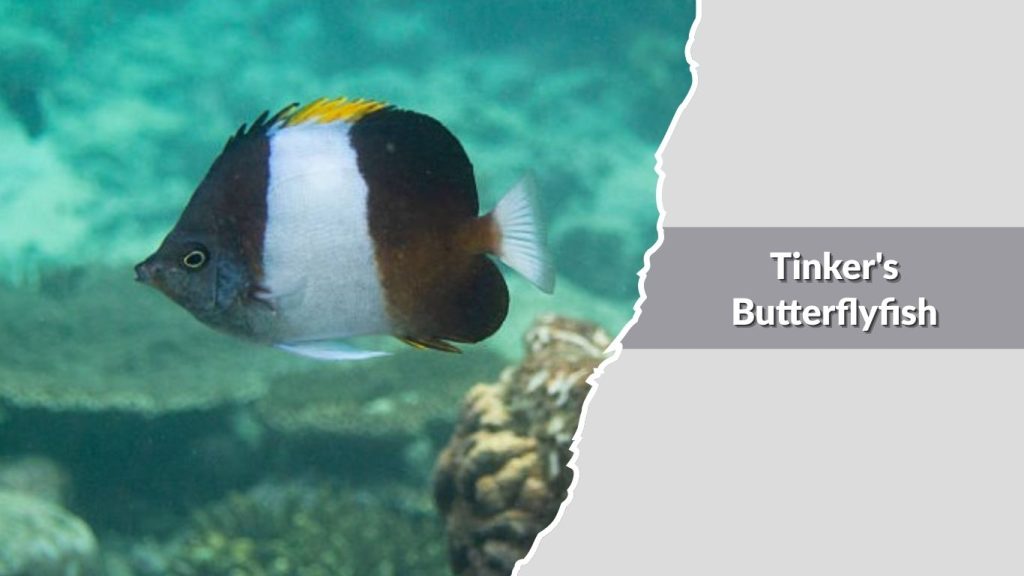
Tinker’s butterflyfish is a deep-reef species admired for its soft pastel colors and delicate striping. It is native mainly to the central Pacific, especially around Hawaii, and is usually found at greater depths than many other butterflyfish.
Identification
- White body with soft lavender to pink vertical stripes
- Yellow edging on the fins
- Black facial markings around the eyes
- Rounded, disk-shaped body
- Grows up to about 7 inches (18 cm)
Habitat
Tinker’s butterflyfish inhabit deep coral reef slopes and drop-offs, often at depths beyond typical recreational diving limits. They prefer clear, stable reef environments.
Behavior
They are generally shy and slow-moving. Tinker’s butterflyfish are often seen alone or in pairs, hovering close to deep reef walls.
Diet
Their diet includes small invertebrates, plankton, and organisms living on deep reef surfaces.
Lifespan
Tinker’s butterflyfish typically live around 6 to 10 years in the wild.
24. Burgess’ Butterflyfish (Chaetodon burgessi)
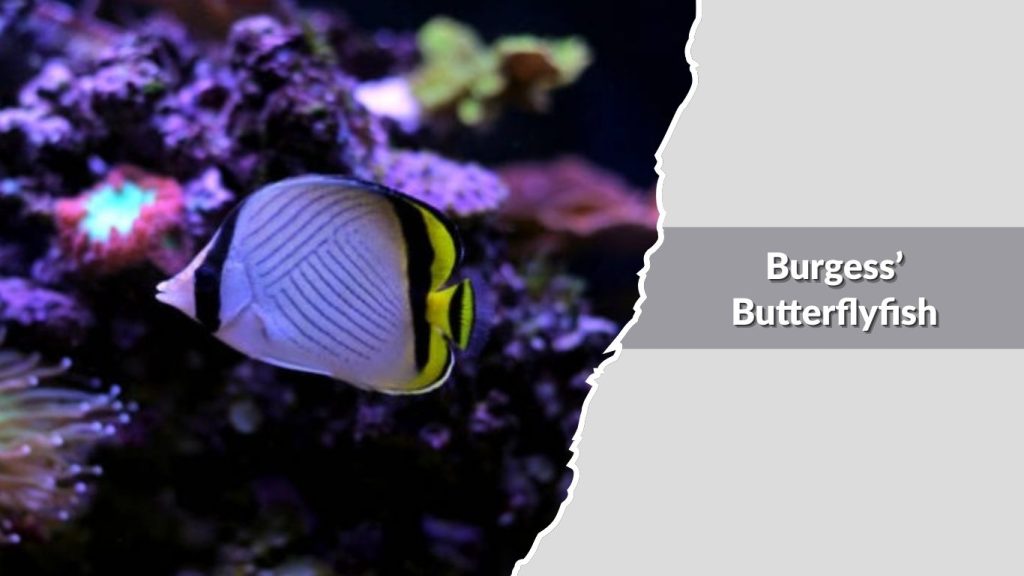
Burgess’ butterflyfish is a colorful deep-reef species known for its warm orange tones and elegant patterning. It is mainly found in the western Pacific and is less commonly seen than many shallow-water butterflyfish.
Identification
- White to pale body with orange vertical bands
- Bright orange snout and face area
- Thin black line through the eye
- Yellow-orange fins
- Grows up to about 6 inches (15 cm)
Habitat
Burgess’ butterflyfish live on deep coral reef slopes and outer reef drop-offs. They prefer clear, offshore reefs with steep walls and abundant coral cover.
Behavior
They are generally shy and slow swimmers, often seen alone or in pairs. Burgess’ butterflyfish stay close to reef walls and crevices for protection.
Diet
Their diet mainly consists of small invertebrates, coral polyps, and reef-dwelling organisms picked from hard surfaces.
Lifespan
Burgess’ butterflyfish are believed to live around 6 to 9 years in the wild.
25. Sunburst Butterflyfish (Chaetodon kleinii)
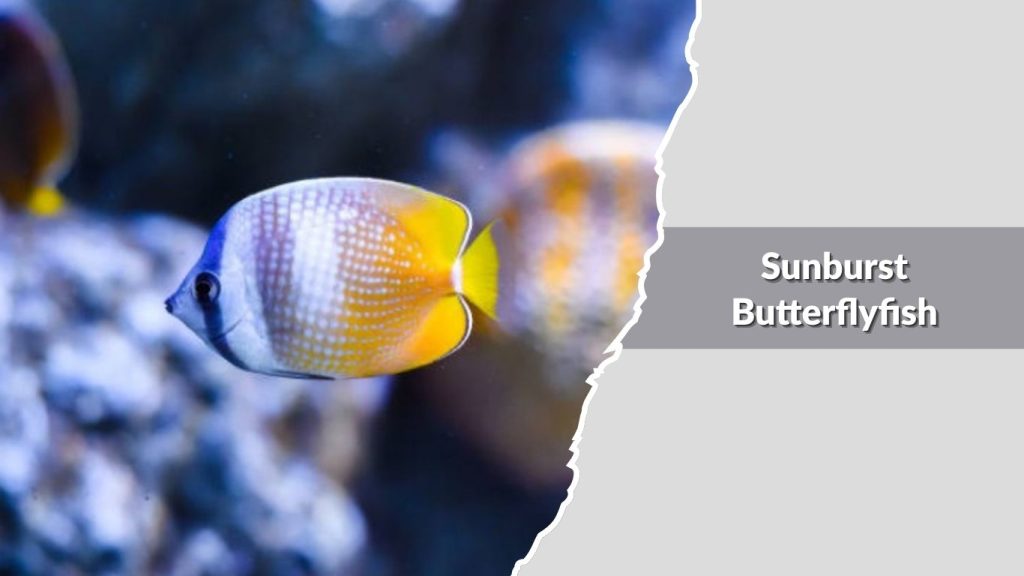
The sunburst butterflyfish is admired for its warm yellow coloration and subtle glowing patterns that give it a “sunlit” appearance. It is found across parts of the Indo-Pacific and is commonly seen gliding over coral reefs and rocky lagoon areas.
Identification
- Bright yellow body with soft orange shading
- Thin dark band through the eye
- Rounded, disk-shaped profile
- Clear to lightly yellow fins
- Grows up to about 6 inches (15 cm)
Habitat
Sunburst butterflyfish inhabit coral reefs, lagoons, and sheltered reef slopes. They are usually found near coral heads and rocky reef structures.
Behavior
They are calm, daytime-active fish often seen alone or in pairs. Sunburst butterflyfish move gently across the reef while feeding.
Diet
Their diet includes coral polyps, algae, plankton, and small invertebrates.
Lifespan
Sunburst butterflyfish generally live around 5 to 8 years in the wild.
FAQs
What are butterflyfish best known for?
Butterflyfish are best known for their bright colors, thin bodies, and round, disk-like shape. Most species have bold patterns, eye bands, and eye spots that help confuse predators. They are strongly associated with coral reefs and are often considered indicators of healthy reef ecosystems.
Where do butterflyfish usually live?
Butterflyfish mainly live in tropical and subtropical oceans, especially across the Indo-Pacific region. They are commonly found around coral reefs, reef slopes, lagoons, and reef flats, where coral growth and reef structures provide both food and shelter.
What do butterflyfish eat in the wild?
Most butterflyfish feed on coral polyps, small invertebrates, worms, algae, and plankton. Some species are highly specialized coral feeders, while others are more adaptable and can survive on a wider range of reef-based foods.
Are butterflyfish good for home aquariums?
Butterflyfish can be challenging to keep in home aquariums because many species rely on live coral for food. They require large, stable reef tanks and specialized diets. Only certain hardy species are considered suitable for experienced marine aquarium keepers.
How long do butterflyfish usually live?
In the wild, butterflyfish typically live between 5 and 10 years, depending on the species and reef conditions. Healthy coral reefs with abundant food sources greatly improve their survival and lifespan.