




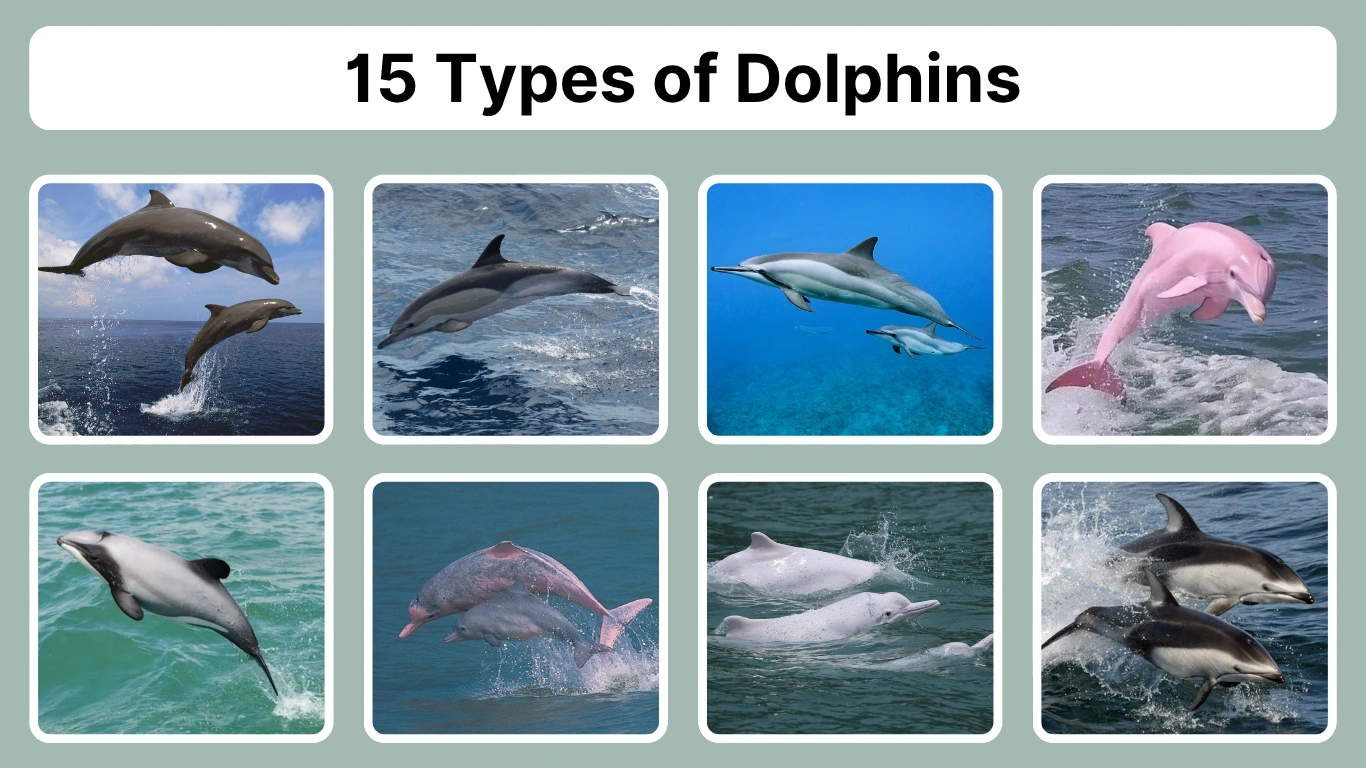
Dolphins are some of the most intelligent and beloved marine mammals on Earth. Known for their playful behavior, complex communication, and social bonds, dolphins inhabit oceans and rivers across the globe. They come in many shapes and sizes—from the famous Bottlenose Dolphin to the elusive Amazon River Dolphin and the acrobatic Spinner Dolphin.
In this guide, you’ll discover 15 unique types of dolphins, each with its own distinctive appearance, habitat, behavior, and feeding habits. Whether you’re fascinated by deep-diving ocean dwellers or rare pink river dolphins, this list will take you on a deep dive into the captivating world of dolphins.
1. Bottlenose Dolphin (Tursiops truncatus)

The Bottlenose Dolphin is the most well-known and widely recognized dolphin species, often seen in aquariums, marine parks, and popular wildlife documentaries. With high intelligence, playful nature, and adaptability, they are considered the “face” of the dolphin world.
Identification
- Length: 8–12 feet
- Weight: 300–1,400 pounds
- Color: Gray on top fading to light gray or white below
- Snout: Short and rounded, giving it the “bottle-shaped” appearance
- Dorsal Fin: Tall and curved, located mid-back
Natural Habitat and Range
Bottlenose dolphins are found in warm and temperate seas worldwide. They thrive in both coastal waters and open oceans and are commonly seen in bays, estuaries, and even river mouths.
Diet and Feeding Habits
Their diet includes fish, squid, and crustaceans. They use echolocation to hunt and often feed cooperatively, herding fish into tight balls before striking.
Behavior and Social Structure
Bottlenose dolphins are highly social, living in groups called pods, usually consisting of 10–30 individuals. They are known for complex vocalizations, tool use, and remarkable problem-solving abilities. Their playful behavior includes leaping, surfing on waves, and interacting with boats.
2. Common Dolphin (Delphinus delphis)

The Common Dolphin is known for its colorful hourglass pattern and energetic behavior. Despite its name, it is not as frequently seen as the Bottlenose Dolphin but is abundant in offshore waters.
Identification
- Length: 6–8 feet
- Weight: 200–300 pounds
- Color: Dark gray back, white belly, and yellow-tan hourglass pattern on the sides
- Beak: Long and slender
- Dorsal Fin: Tall and curved with a pointed tip
Natural Habitat and Range
Common dolphins are found in warm temperate and tropical oceans worldwide, especially in offshore waters. They form large pods and are often seen riding the bow waves of ships.
Diet and Feeding Habits
They feed on schooling fish like sardines and anchovies, as well as squid. Feeding often occurs in coordinated groups to trap prey.
Behavior and Social Structure
Highly social and fast swimmers, common dolphins live in large groups—sometimes numbering in the hundreds or even thousands. They’re known for acrobatic jumps and frequent vocalizations.
3. Spinner Dolphin (Stenella longirostris)
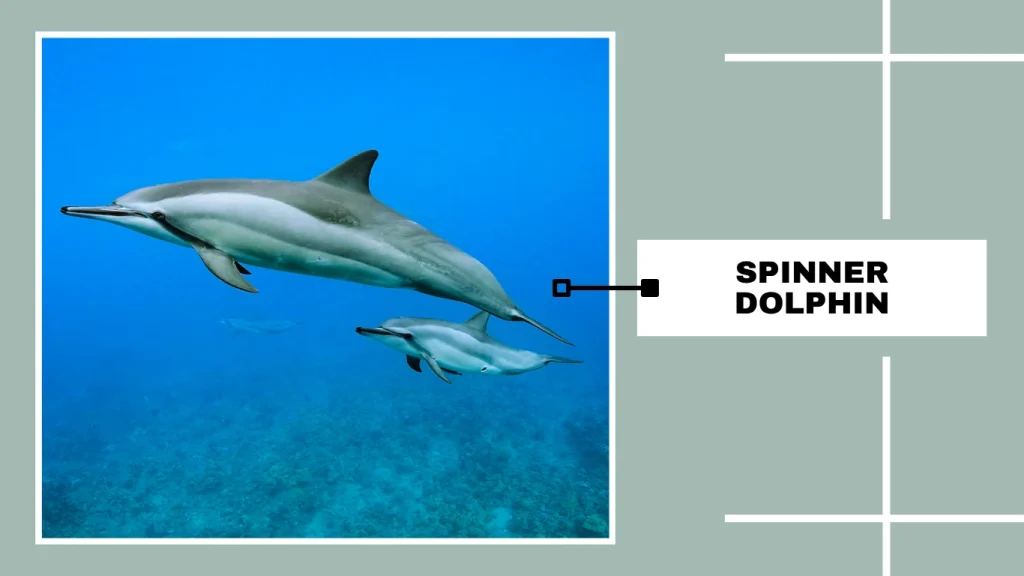
Spinner Dolphins are famous for their incredible spinning leaps above the water, making them one of the most acrobatic dolphin species.
Identification
- Length: 5–7 feet
- Weight: 130–170 pounds
- Color: Three-tone pattern—dark gray back, light gray sides, white belly
- Beak: Long and narrow
- Dorsal Fin: Tall and sickle-shaped
Natural Habitat and Range
They inhabit tropical and subtropical oceans worldwide and are frequently found in coastal regions, islands, and offshore areas.
Diet and Feeding Habits
Primarily nocturnal feeders, they hunt for small fish and squid at night in deep water. During the day, they rest in shallow bays or near the coast.
Behavior and Social Structure
Spinner dolphins travel in pods of 50 to several hundred. Their name comes from their unique ability to leap high out of the water and spin several times before splashing down. They are social, vocal, and rely on strong group coordination.
4. Risso’s Dolphin (Grampus griseus)

Risso’s Dolphin is a robust and deep-diving species known for its blunt head and extensive body scarring, which increases with age and social interaction.
Identification
- Length: 8.5–13 feet
- Weight: 600–1,100 pounds
- Color: Dark gray in youth, becoming pale gray to white with age due to scarring
- Beak: Absent (blunt, rounded head)
- Dorsal Fin: Tall and curved
Natural Habitat and Range
Found in temperate and tropical oceans worldwide, Risso’s Dolphins prefer deep offshore waters but occasionally come closer to shore.
Diet and Feeding Habits
They primarily eat squid and other cephalopods, often diving to great depths to hunt at night.
Behavior and Social Structure
Risso’s dolphins are moderately social, often traveling in groups of 10–50. They are not as acrobatic as other dolphins but do breach and spy-hop. Their pale, scratched appearance is caused by interactions with other dolphins and squid.
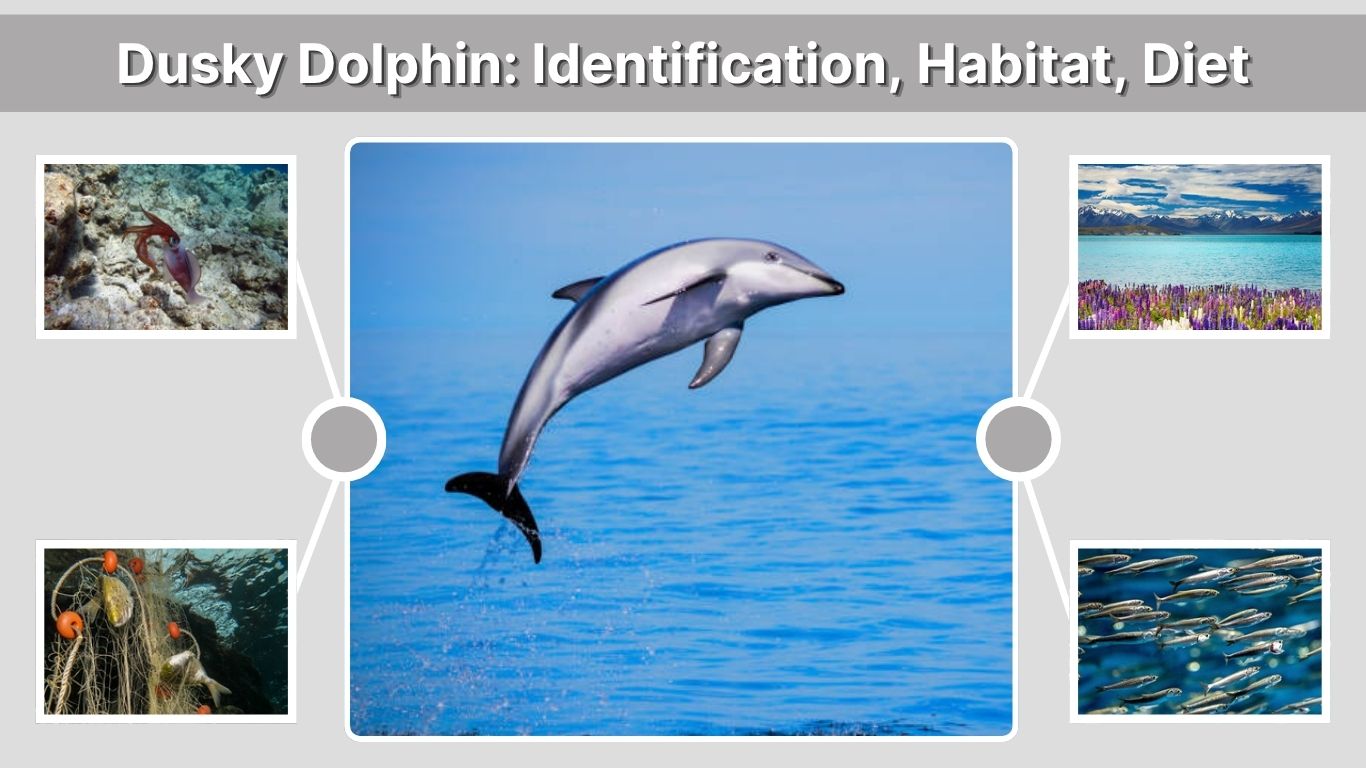
5. Dusky Dolphin (Lagenorhynchus obscurus)

The Dusky Dolphin is a small, agile, and highly acrobatic dolphin, particularly known for its energetic leaps and tight social bonds.
Identification
- Length: 5–6 feet
- Weight: 150–200 pounds
- Color: Dark gray to black back, light gray flanks, and white belly
- Beak: Short and well-defined
- Dorsal Fin: Moderately tall and curved
Natural Habitat and Range
They are most commonly found in coastal and continental shelf waters of the Southern Hemisphere, especially off New Zealand, South America, and southern Africa.
Diet and Feeding Habits
Dusky dolphins feed on schooling fish (like anchovies and sardines), squid, and crustaceans. They often herd fish toward the surface in groups for efficient feeding.
Behavior and Social Structure
Highly social and playful, they form groups ranging from a few individuals to over 1,000. Known for somersaults, flips, and spins, dusky dolphins are favorites among wildlife watchers for their coordinated acrobatics.
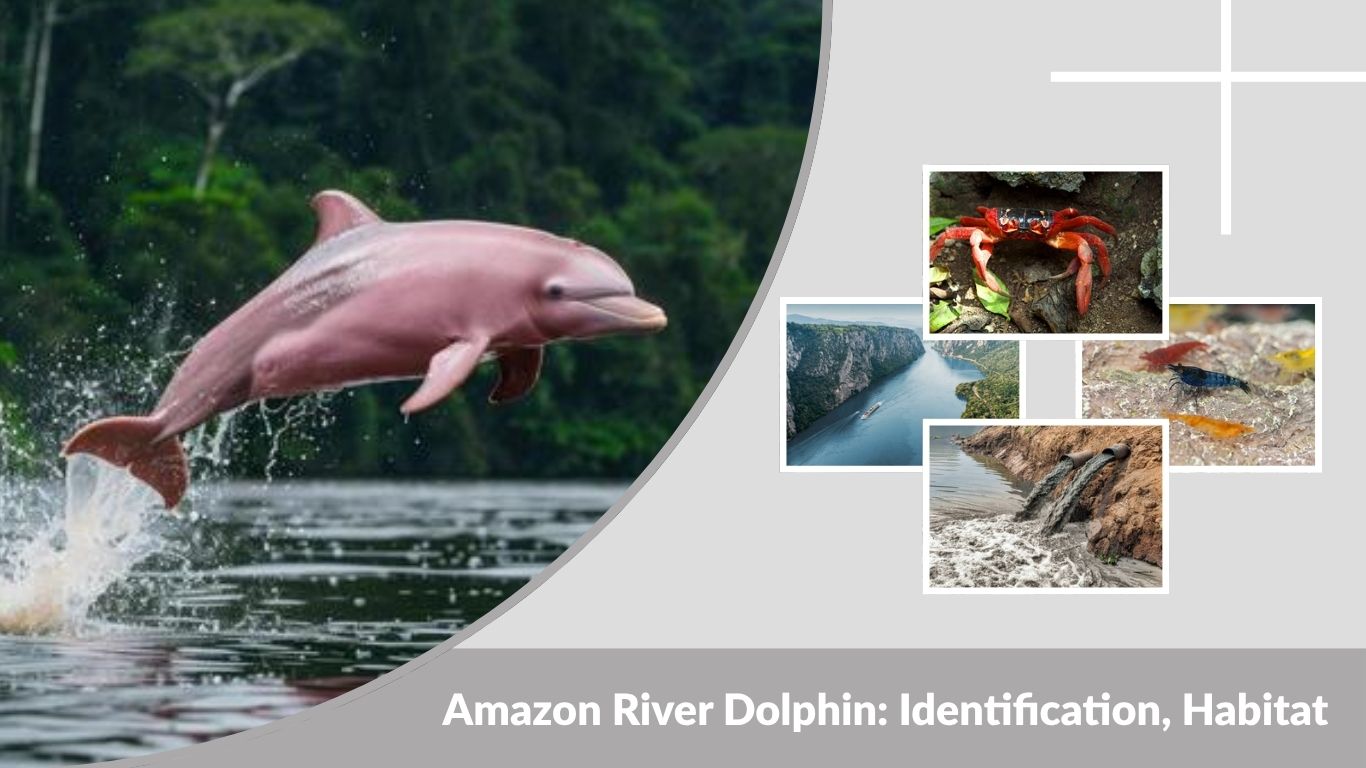
6. Amazon River Dolphin (Inia geoffrensis)

Also known as the Pink River Dolphin or Boto, this freshwater species is one of the most unique dolphins, with flexible bodies and a distinctive pink coloration that intensifies with age.
Identification
- Length: 6–8.5 feet
- Weight: 185–355 pounds
- Color: Born gray; turns pink with age (males are usually pinker)
- Beak: Long and narrow with visible teeth
- Dorsal Fin: Small ridge instead of a true fin
Natural Habitat and Range
Found exclusively in the Amazon and Orinoco River basins in South America. They navigate flooded forests, narrow tributaries, and wide rivers with ease.
Diet and Feeding Habits
Amazon River Dolphins eat over 50 species of fish, as well as crabs and turtles. Their flexible necks and long beaks help them maneuver and capture prey in complex environments.
Behavior and Social Structure
Typically solitary or in small groups of 2–4. They are intelligent and curious, often approaching boats. Males may display branches or perform spins to attract females during mating season.
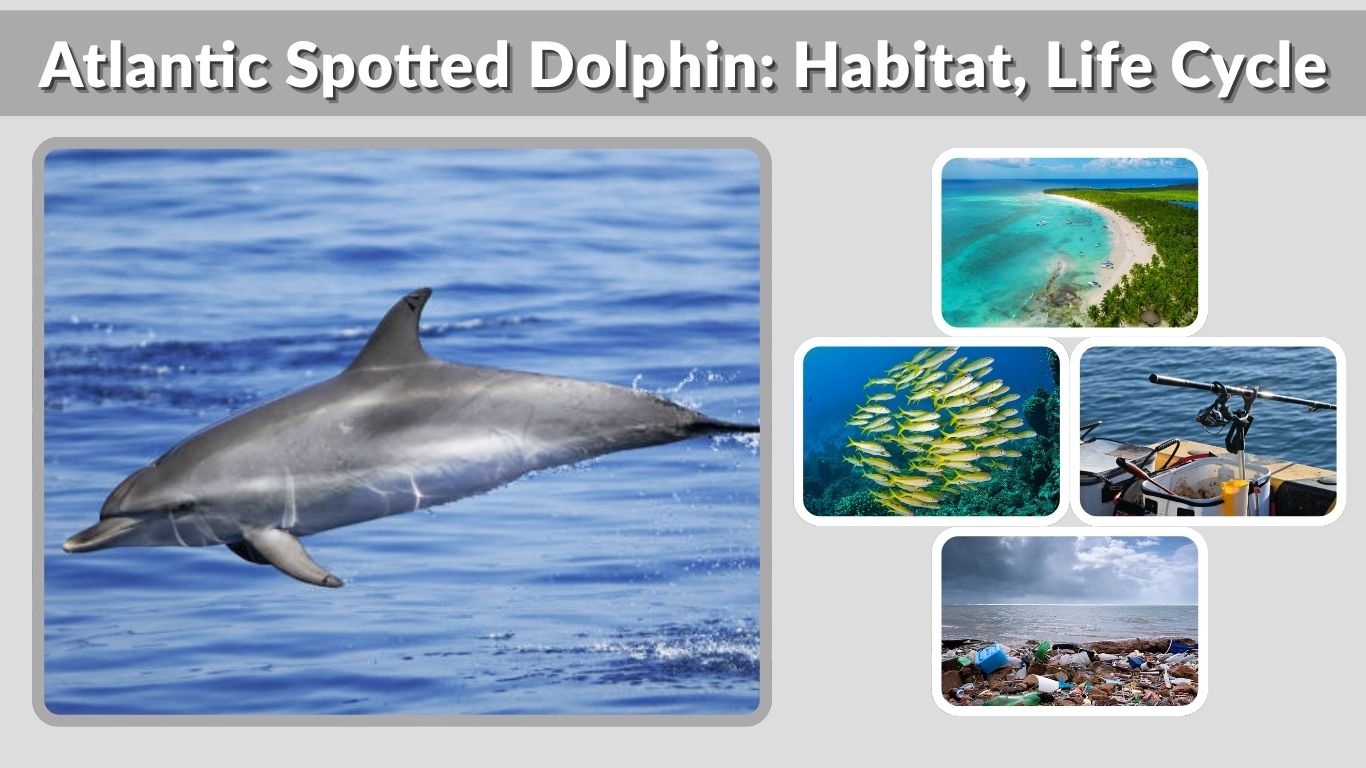
7. Atlantic Spotted Dolphin (Stenella frontalis)

This beautifully patterned dolphin is recognized for the distinct spots that develop as it ages. It is fast, agile, and often interacts playfully with boats and swimmers.
Identification
- Length: 5.5–7.5 feet
- Weight: 200–300 pounds
- Color: Gray with white spots that become more pronounced with age
- Beak: Medium-length with white tip
- Dorsal Fin: Curved and prominent
Natural Habitat and Range
Found in warm, shallow waters of the Atlantic Ocean, especially near the Bahamas, Gulf of Mexico, and eastern U.S. coast.
Diet and Feeding Habits
Feeds on small fish, squid, and crustaceans. Often forages cooperatively in groups using herding strategies.
Behavior and Social Structure
Atlantic Spotted Dolphins live in groups of 5–50, sometimes joining with Bottlenose Dolphins. They’re known for leaping, spinning, and riding boat wakes. Social bonds are strong, and they exhibit a wide range of vocalizations.
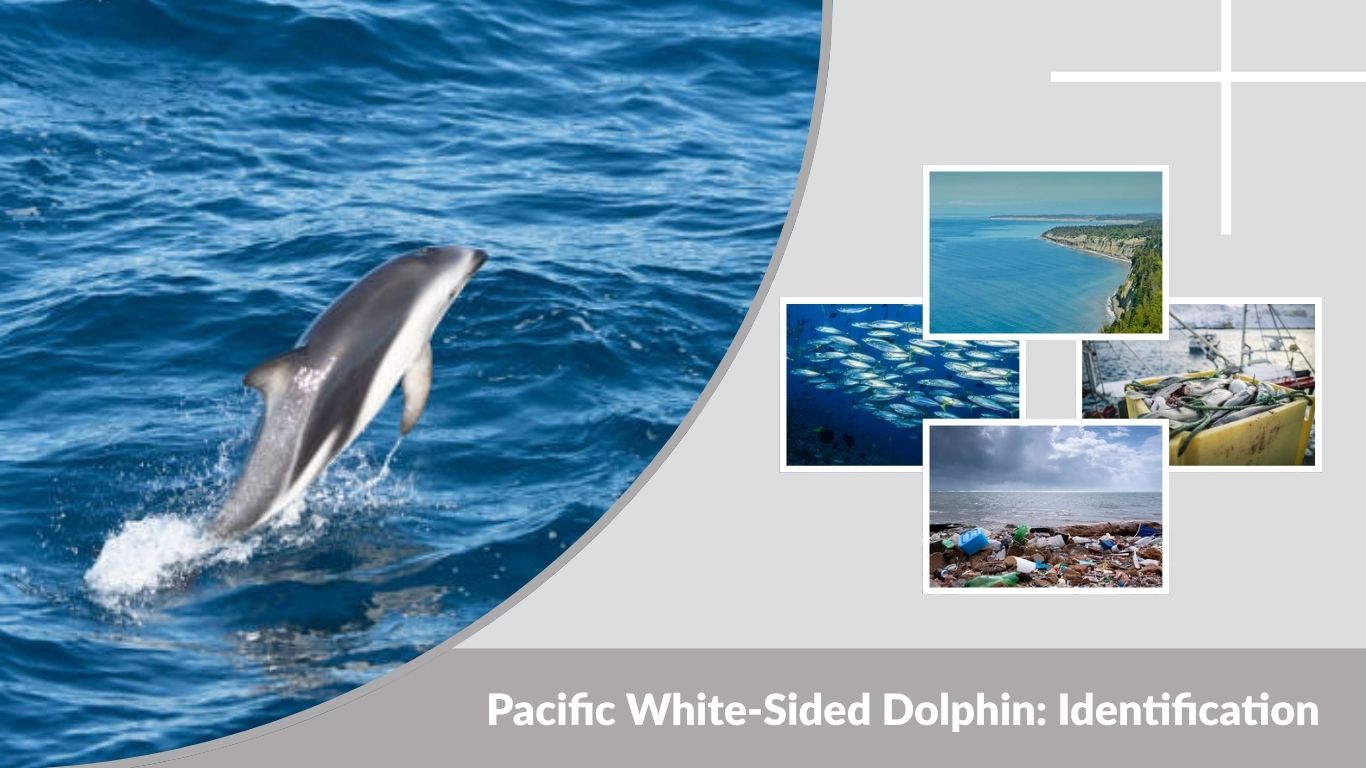
8. Pacific White-Sided Dolphin (Lagenorhynchus obliquidens)
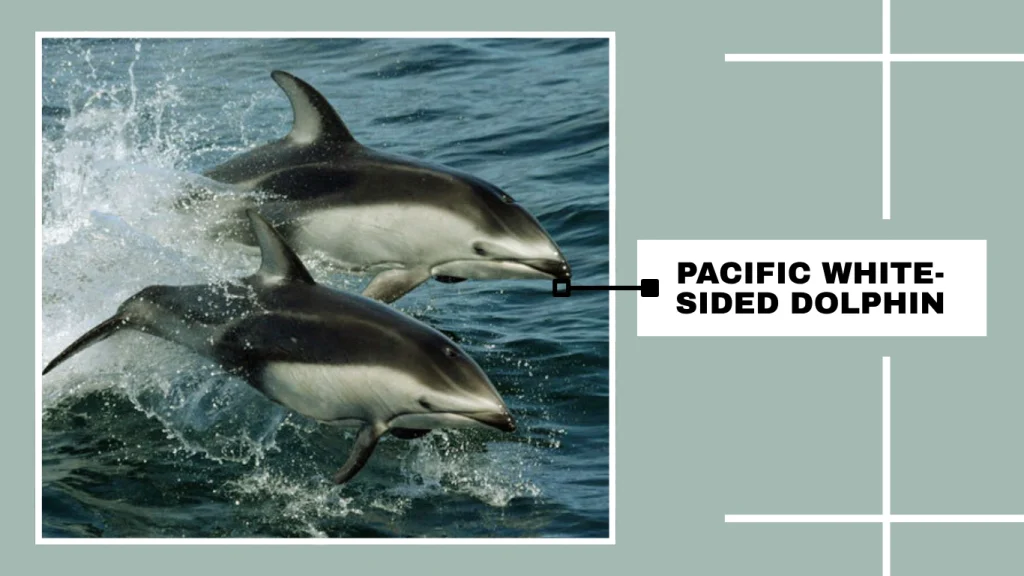
Known for its striking coloration and energetic movements, the Pacific White-Sided Dolphin is a favorite among whale watchers for its frequent bow-riding and leaping behavior.
Identification
- Length: 6–8 feet
- Weight: 300–400 pounds
- Color: Dark gray to black back, white sides, and light gray stripe along the flank
- Beak: Short and well-defined
- Dorsal Fin: Large, curved, and bi-colored
Natural Habitat and Range
Found in the cool temperate waters of the North Pacific Ocean, especially off the coasts of Japan, Alaska, British Columbia, and California.
Diet and Feeding Habits
Feeds on squid and schooling fish such as herring, anchovies, and sardines. They are known for coordinated group feeding.
Behavior and Social Structure
Highly social and acrobatic, they live in pods of 10–100 individuals. They frequently leap, spin, and surf in the wake of ships, often traveling with other dolphin species or even whales.
9. Striped Dolphin (Stenella coeruleoalba)
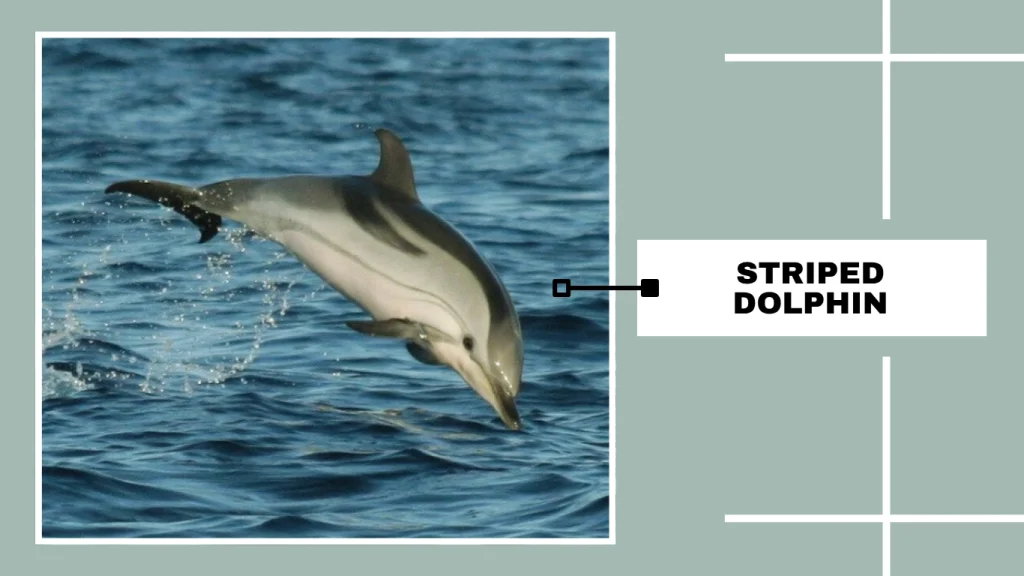
The Striped Dolphin is easily recognized by the bold, dark stripe running from its eye to its tail. It’s among the most active and aerial of all dolphin species.
Identification
- Length: 6–9 feet
- Weight: 200–350 pounds
- Color: Blue-gray back with white or light gray belly and distinctive black stripes
- Beak: Long and thin
- Dorsal Fin: Tall and curved
Natural Habitat and Range
Inhabits deep offshore waters in tropical and warm temperate oceans around the world, including the Mediterranean Sea.
Diet and Feeding Habits
Eats squid, shrimp, and small schooling fish. Often dives deep and uses echolocation to find prey.
Behavior and Social Structure
Very fast and agile swimmers, striped dolphins travel in pods of 25–100 or more. They are known for high, spinning leaps and splashy re-entries, often in synchronized groups.
10. Hector’s Dolphin (Cephalorhynchus hectori)

Hector’s Dolphin is one of the smallest and rarest dolphin species, found only in New Zealand’s coastal waters. Its round dorsal fin and petite size make it instantly recognizable.
Identification
- Length: 4–5 feet
- Weight: 90–130 pounds
- Color: Pale gray with black facial markings and flippers
- Beak: Very short
- Dorsal Fin: Rounded and Mickey Mouse ear-shaped
Natural Habitat and Range
Endemic to New Zealand, mostly in shallow coastal waters along the South Island. A subspecies, Māui Dolphin, is critically endangered and found only off the North Island’s west coast.
Diet and Feeding Habits
Feeds on small fish and squid in shallow, murky waters. They use echolocation to navigate and forage close to the seafloor.
Behavior and Social Structure
Hector’s Dolphins form small pods of 2–8 individuals. They are shy but can be playful around boats. Their population is threatened by bycatch in fishing nets and habitat degradation.
11. Fraser’s Dolphin (Lagenodelphis hosei)

Fraser’s Dolphin is a deep-diving, robust dolphin with a stocky build and a unique facial shape. It’s one of the less-studied oceanic dolphins due to its offshore habitat.
Identification
- Length: 6.5–8.5 feet
- Weight: 450–650 pounds
- Color: Dark gray back, pale belly, and a dark stripe from eye to anus
- Beak: Short and stubby
- Dorsal Fin: Small and triangular
Natural Habitat and Range
Found in deep tropical and subtropical waters around the world, especially in the Pacific and Indian Oceans. Rarely seen near shore.
Diet and Feeding Habits
Eats deep-water fish, squid, and crustaceans. Feeds at night, likely diving hundreds of meters to locate prey using echolocation.
Behavior and Social Structure
Fraser’s Dolphins travel in large, tight-knit pods of 100–500 individuals. They swim fast and close together, often creating a lot of surface splashing. Their behavior is still being researched due to their elusive, offshore lifestyle.
12. Rough-Toothed Dolphin (Steno bredanensis)
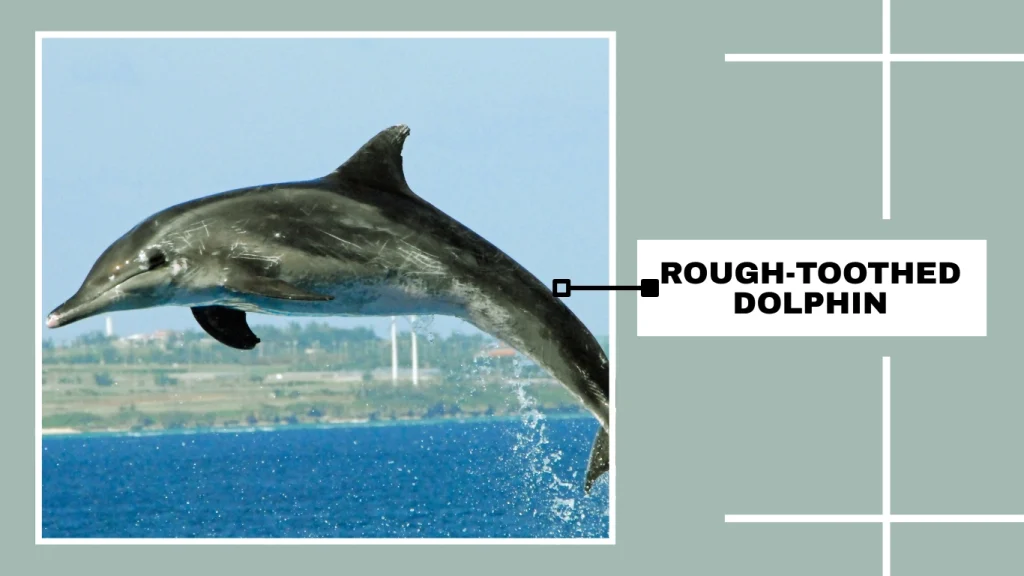
The Rough-Toothed Dolphin stands out with its gently sloping forehead, slender body, and distinctive ridged teeth. It’s a deep-water species that often shows curiosity around boats.
Identification
- Length: 8–9 feet
- Weight: 300–350 pounds
- Color: Dark gray to purplish with a white throat and belly that often has pink mottling
- Beak: Long and narrow
- Dorsal Fin: Prominent and slightly falcate
Natural Habitat and Range
Found in warm tropical and subtropical waters worldwide, especially in deep oceanic regions. Occasionally spotted near coasts, particularly around Hawaii and the Gulf of Mexico.
Diet and Feeding Habits
Feeds on fish, squid, and occasionally octopus. Uses echolocation and often hunts cooperatively in small groups.
Behavior and Social Structure
Usually found in groups of 10–20 but may form superpods of 100+. They are calm swimmers, often surfacing slowly in tight formation, and are known for interspecies socializing, including with pilot whales and other dolphins.
13. Clymene Dolphin (Stenella clymene)
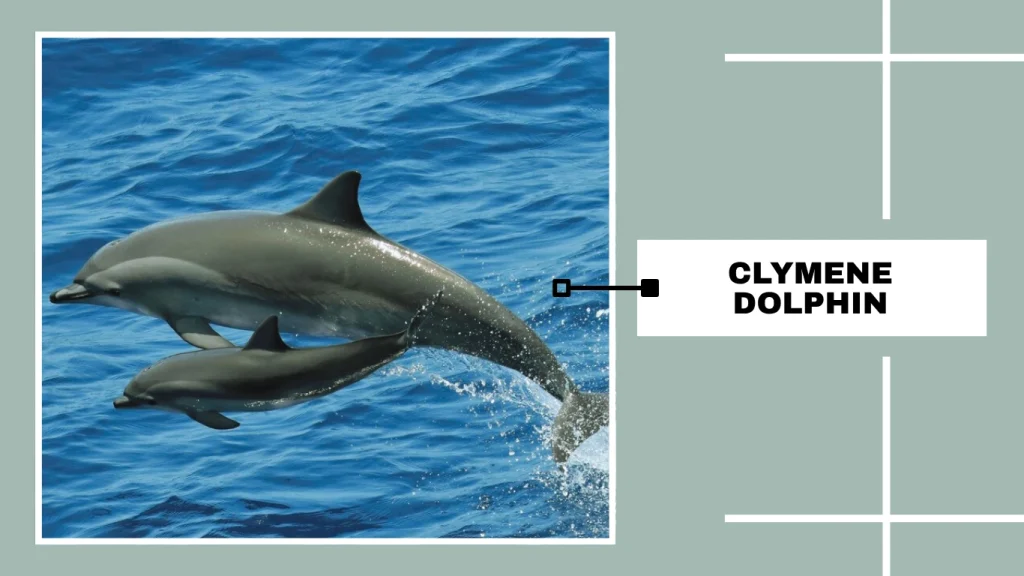
The Clymene Dolphin is a small, agile species known for its midair spinning behavior. It closely resembles the Spinner Dolphin but is genetically and morphologically distinct.
Identification
- Length: 6–6.5 feet
- Weight: 165–200 pounds
- Color: Gray with a distinctive dark cape and lighter underside, with a “smile-like” stripe on the face
- Beak: Short and narrow
- Dorsal Fin: Curved and positioned mid-back
Natural Habitat and Range
Found in the warm, deep waters of the Atlantic Ocean, particularly off the coasts of the southeastern U.S., Gulf of Mexico, and West Africa.
Diet and Feeding Habits
Eats small fish and squid, feeding mostly at night in offshore environments.
Behavior and Social Structure
Lives in pods of 40–60 dolphins. Known for acrobatic spinning jumps similar to Spinner Dolphins. Less studied than other species due to its remote, offshore habitat.
14. Indo-Pacific Humpback Dolphin (Sousa chinensis)
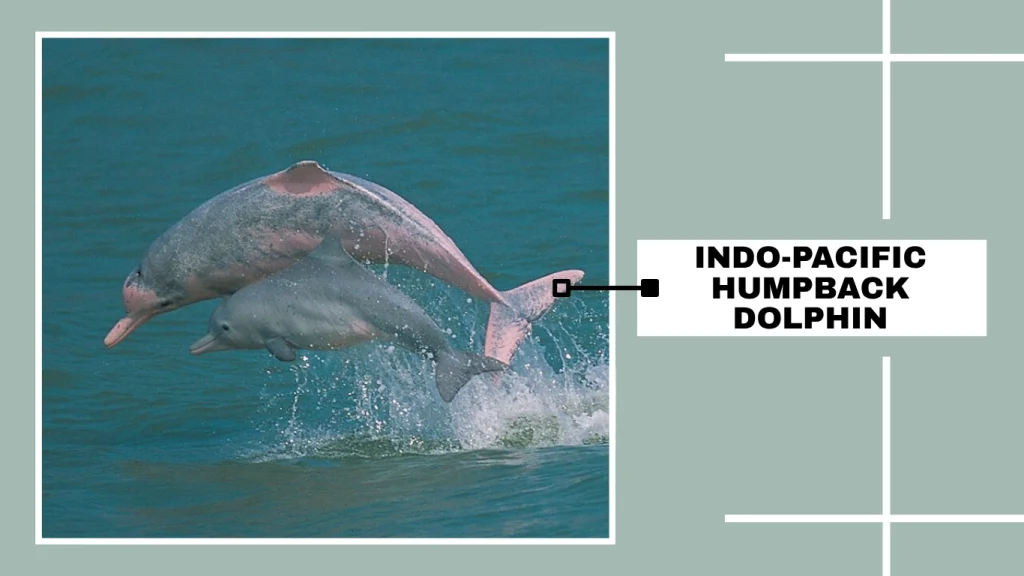
The Indo-Pacific Humpback Dolphin is known for the distinctive hump beneath its dorsal fin and its pale coloration, which in some populations appears pink.
Identification
- Length: 6.5–9 feet
- Weight: 400–600 pounds
- Color: Varies from gray to white to pink, depending on age and population
- Beak: Long and narrow
- Dorsal Fin: Small and curved, sitting on a noticeable hump
Natural Habitat and Range
Inhabits shallow coastal waters of the Indian and western Pacific Oceans, especially near estuaries, mangroves, and bays. Frequently seen off Hong Kong, India, and Southeast Asia.
Diet and Feeding Habits
Feeds on small fish and cephalopods in murky, nearshore waters. Often hunts alone or in small groups using coordinated movements.
Behavior and Social Structure
Typically found in small pods of 3–15 individuals. Known for slow, deliberate movements and occasional breaching. Sensitive to pollution, boat traffic, and habitat loss.
15. Chinese White Dolphin (a subspecies of Indo-Pacific Humpback Dolphin)
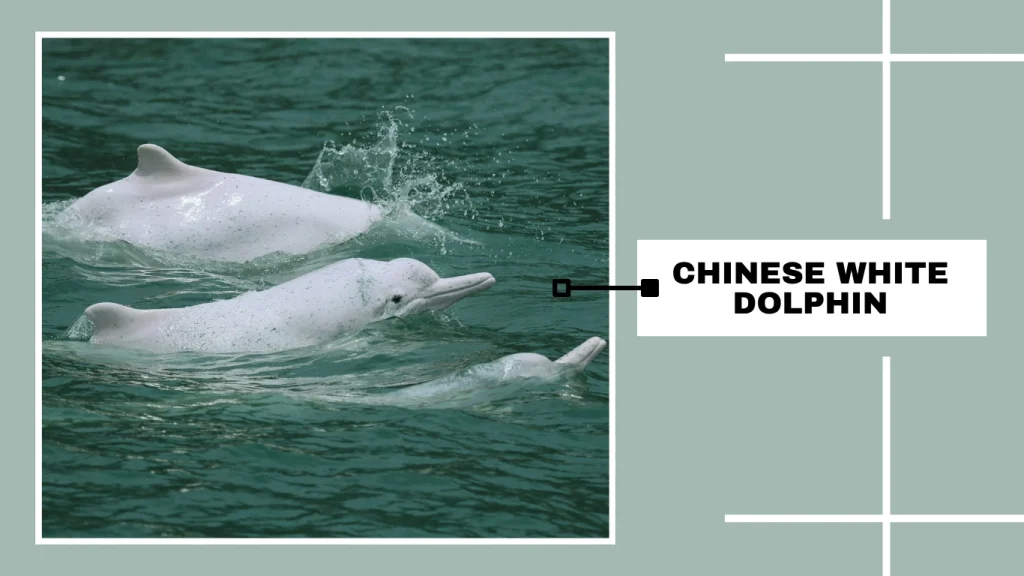
Often referred to as the “Pink Dolphin” of Hong Kong, the Chinese White Dolphin is actually a color variant of the Indo-Pacific Humpback Dolphin and draws much attention due to its near-albino pink skin.
Identification
- Length: 7–9 feet
- Weight: 500–600 pounds
- Color: White to pale pink (increases with age)
- Beak: Long and narrow
- Dorsal Fin: Small, set on a rounded hump
Natural Habitat and Range
Found mainly around the Pearl River Estuary near Hong Kong and Macau. Prefers shallow estuarine and coastal waters.
Diet and Feeding Habits
Feeds on fish, shrimp, and squid in nearshore and brackish waters. Often forages during tidal changes when prey is more accessible.
Behavior and Social Structure
Generally shy but occasionally active near boats. Lives in small groups, and conservation efforts focus on reducing threats from shipping, pollution, and habitat development. The population is declining and considered vulnerable.