






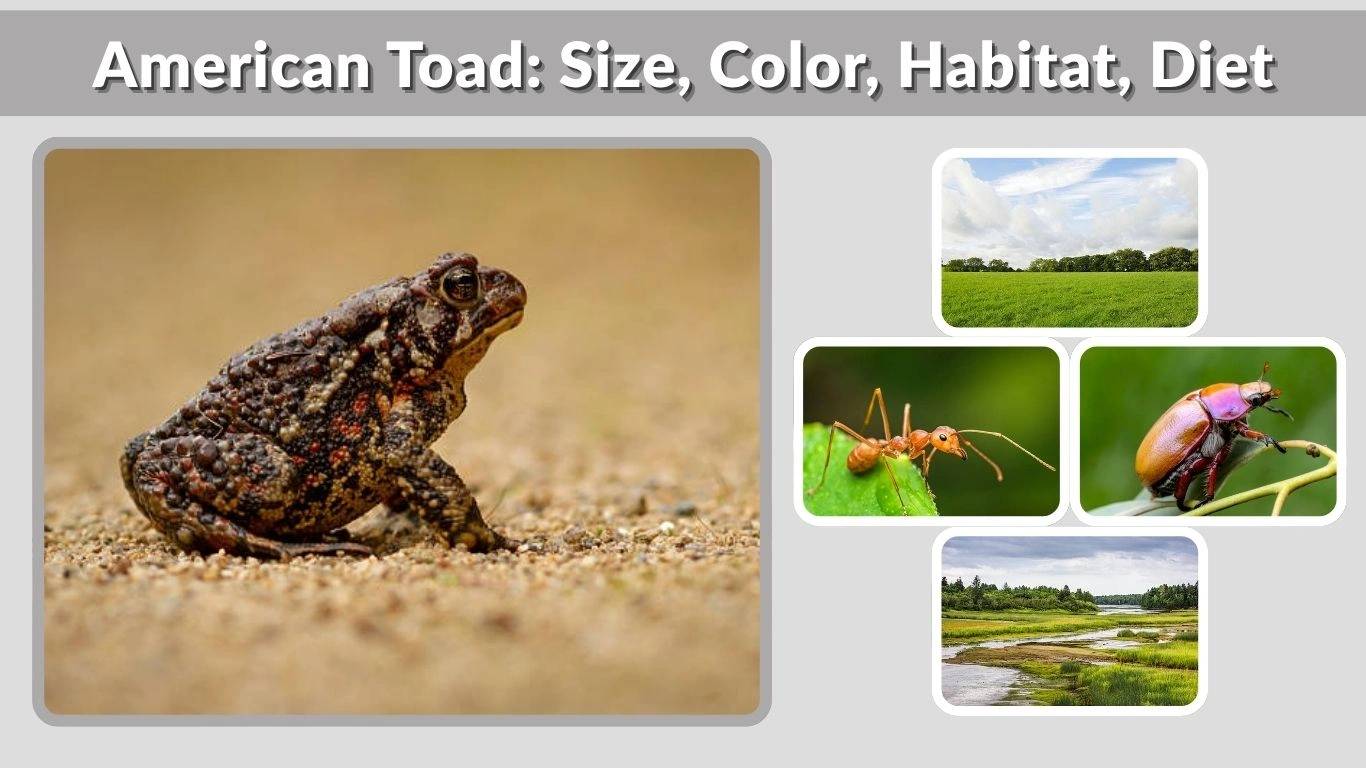
The American toad (Anaxyrus americanus) is one of the most common amphibians found across North America. Known for its warty skin and distinctive trill call, this species plays a vital role in maintaining ecological balance by controlling insect populations. It thrives in a wide range of environments, from forests to suburban gardens. This article explores the American toad’s size, color, habitat, diet, and lifecycle, offering a comprehensive understanding of this adaptable and fascinating amphibian.
Overview of the American Toad
The American toad belongs to the family Bufonidae, commonly known as true toads. It is widely distributed across the eastern and central regions of the United States and Canada. This species is easily recognized by its dry, bumpy skin and the presence of parotoid glands located behind its eyes, which secrete a mild toxin as a defense mechanism.
American toads are often confused with Fowler’s toads, but they can be distinguished by their spotting patterns—American toads usually have one or two warts per dark spot, while Fowler’s toads tend to have more. Another identifying feature is their long, musical trill, which males use during the breeding season to attract females.
Size and Physical Characteristics
Average Size
American toads are relatively small amphibians, typically measuring between 2 and 4.5 inches (5 to 11.5 cm) in length. Females are generally larger than males, a common trait among amphibians. Their weight varies depending on age and environmental conditions, but they remain lightweight and compact.
Body Structure
These toads have a stocky, rounded body with short legs, which makes them better suited for walking or short hops rather than long jumps. Their skin is dry and covered in raised bumps or “warts,” which help reduce water loss and provide camouflage.
Special Features
One of the most notable features of the American toad is its parotoid glands. These glands release a toxin that can deter predators, although it is usually harmless to humans. Their eyes have horizontal pupils, which enhance their ability to detect movement, especially at night. Additionally, they possess cranial crests—raised ridges on their heads—that vary slightly among individuals.
Color and Appearance
Common Color Variations
The American toad exhibits a range of colors, including shades of brown, gray, olive, and even reddish tones. This variation depends largely on the toad’s habitat and geographic location. Such diversity allows the species to blend effectively into its surroundings.
Camouflage Adaptation
Camouflage is one of the American toad’s strongest survival tools. Its coloration closely matches the forest floor, soil, or leaf litter, making it difficult for predators to spot. This natural disguise is essential for avoiding threats and increasing its chances of survival.
Markings and Patterns
American toads typically have dark spots scattered across their backs, each containing one or two warts. Their underside is usually lighter in color, often white or cream, with little to no spotting. Juveniles may appear more brightly colored and smoother compared to adults, gradually developing more pronounced textures and markings as they mature.
Habitat and Distribution
Geographic Range
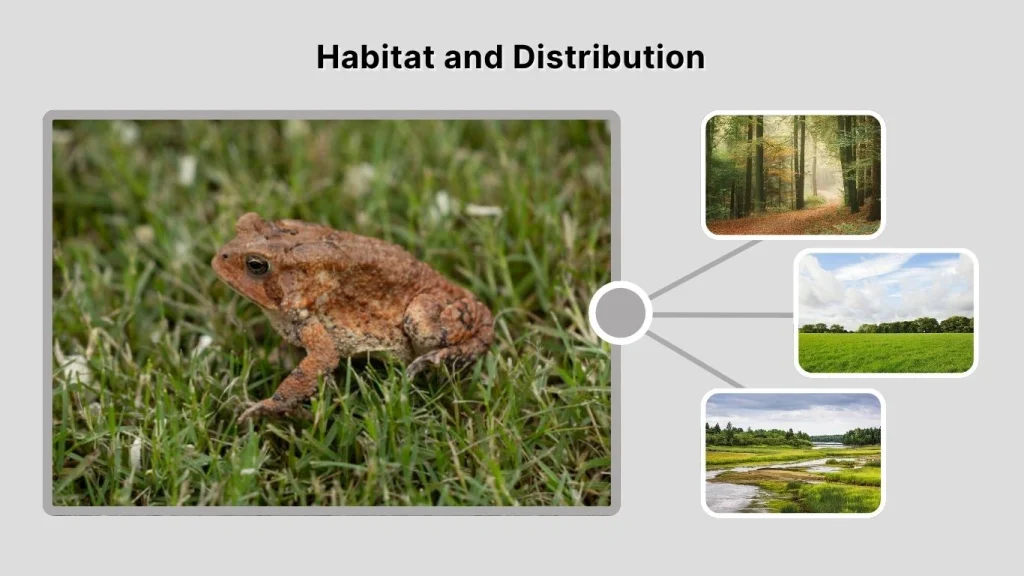
The American toad is widely distributed across eastern and central North America. It can be found from southern Canada down through the eastern United States, extending into parts of the Midwest. Its ability to adapt to different environments has contributed to its broad range.
Preferred Habitats
This species thrives in a variety of habitats, including deciduous forests, grasslands, and wetlands. It is also commonly found in human-altered environments such as gardens, parks, and agricultural areas. The American toad prefers areas with loose soil where it can easily burrow.
Moisture and Shelter Needs
Although they are more tolerant of dry conditions than many amphibians, American toads still require moisture to survive. They often seek shelter under logs, rocks, or leaf litter during the day to avoid dehydration. Burrowing into the soil is another common behavior that helps them maintain moisture levels.
Seasonal Behavior
American toads are most active during the warmer months of spring and summer. In colder regions, they hibernate during winter by burrowing below the frost line. As temperatures rise in spring, they emerge and migrate to breeding sites, often returning to the same locations each year.
Diet and Feeding Habits
Primary Diet
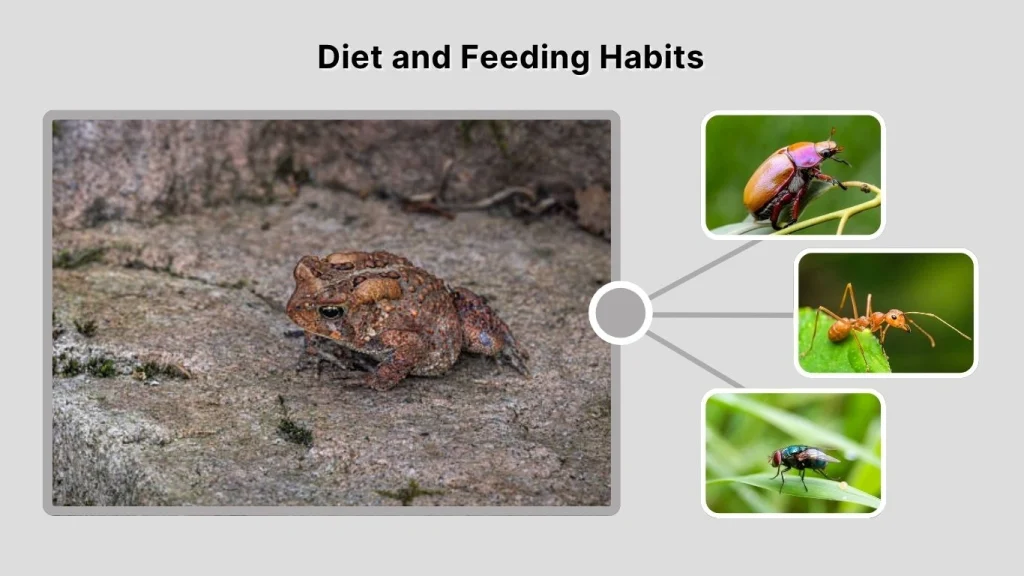
American toads are carnivorous and primarily feed on small invertebrates. Their diet includes insects such as beetles, ants, flies, and moths, as well as worms and spiders. This varied diet makes them highly beneficial for controlling pest populations.
Hunting Behavior
These toads are nocturnal hunters, meaning they are most active at night. They use a sit-and-wait strategy, remaining still until prey comes within reach. Once an opportunity arises, they quickly extend their sticky tongue to capture their prey with remarkable accuracy.
Role in Ecosystem
By consuming large quantities of insects, American toads play a crucial role in maintaining ecological balance. They help reduce agricultural pests and contribute to healthier ecosystems, making them valuable allies to both nature and humans.
Feeding Differences by Life Stage
The diet of the American toad changes as it grows. Tadpoles are primarily herbivorous, feeding on algae and plant material in the water. As they develop into juveniles and eventually adults, their diet shifts to small insects and other invertebrates.
Lifecycle and Reproduction
1 Breeding Season
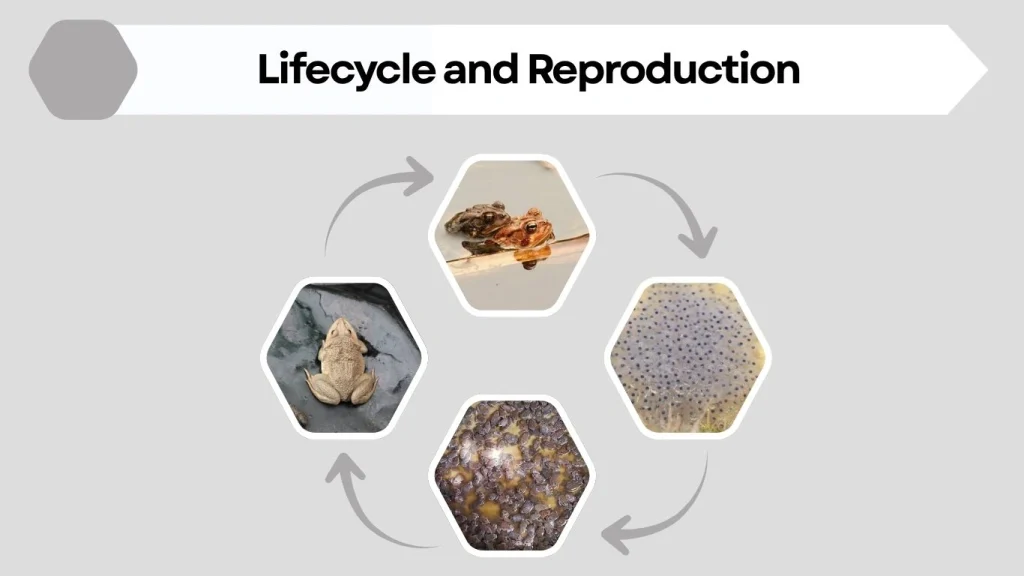
The breeding season of the American toad typically begins in early spring and can last into early summer, depending on the climate. Warmer temperatures and rainfall act as key triggers for breeding activity. During this time, toads gather in shallow freshwater bodies such as ponds, marshes, and temporary pools.
2 Mating Behavior
Male American toads are known for their distinctive, long, musical trill, which they use to attract females. This call can last up to 30 seconds and is often heard during evenings near breeding sites. Once a female approaches, the male clasps her in a position called amplexus, ensuring successful fertilization as eggs are released.
3 Egg Stage
Females lay their eggs in long, gelatinous strings that can contain thousands of eggs. These strings are usually attached to vegetation in shallow water. The eggs hatch within a few days to two weeks, depending on environmental conditions such as temperature and water quality.
4 Tadpole Stage
After hatching, the larvae enter the tadpole stage, where they live entirely in water. Tadpoles feed on algae, plant material, and organic debris. During this stage, they grow rapidly and begin developing key features such as hind legs. This phase typically lasts several weeks.
5 Metamorphosis
As development continues, tadpoles undergo metamorphosis. They gradually develop front legs, lungs, and lose their tails. This transformation allows them to transition from an aquatic to a terrestrial lifestyle. Once metamorphosis is complete, the young toads leave the water and begin life on land.
6 Adult Stage
American toads reach sexual maturity in about 2 to 3 years. In the wild, they can live anywhere from 2 to 10 years, depending on environmental conditions and predation. Adults continue the cycle by returning to breeding sites each year, often the same ones where they were born.
Predators and Defense Mechanisms
Common Predators
Despite their defenses, American toads are preyed upon by a variety of animals. Common predators include snakes, birds, raccoons, skunks, and larger amphibians. Tadpoles are especially vulnerable to fish and aquatic insects.
Defense Strategies
To protect themselves, American toads rely on several defense mechanisms. Their parotoid glands secrete a toxin that can irritate or deter predators. When threatened, they may inflate their bodies to appear larger and more difficult to swallow. Additionally, their excellent camouflage helps them blend into their surroundings and avoid detection.
Behavior and Adaptations
American toads are primarily nocturnal, meaning they are most active during the night. This behavior helps them avoid predators and reduces water loss in dry conditions. During the day, they hide under logs, rocks, or in burrows.
Burrowing is an important adaptation for survival. By digging into the soil, they can escape extreme temperatures and maintain moisture. American toads also exhibit strong site fidelity, often returning to the same breeding grounds year after year.
Another notable adaptation is their ability to live in human-altered environments. They are frequently found in gardens and backyards, where they help control insect populations.
Conservation Status
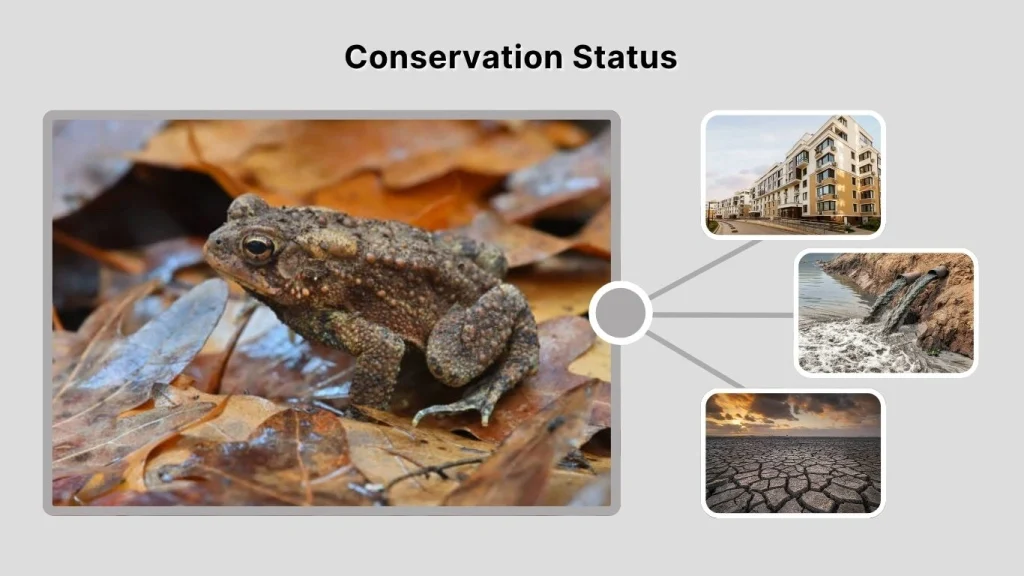
The American toad is currently considered a species of least concern, with stable populations across much of its range. Its adaptability to various habitats has helped it thrive even in areas affected by human activity.
However, the species still faces several threats. Habitat loss due to urban development, pollution of water sources, and road mortality are significant concerns. Climate change may also impact breeding patterns and habitat availability.
Conservation efforts focus on protecting wetlands, reducing pollution, and raising awareness about the importance of amphibians in ecosystems. Even small actions, such as creating backyard habitats or avoiding pesticide use, can help support local toad populations.
FAQs
Are American toads poisonous to humans?
American toads produce a mild toxin from their parotoid glands, but it is generally harmless to humans. However, it can cause irritation if it comes into contact with eyes or open wounds. Pets, especially dogs, may be more sensitive to the toxin.
What do American toads eat in gardens?
In gardens, American toads feed on pests such as beetles, slugs, ants, and caterpillars. This makes them beneficial for natural pest control and helpful for maintaining healthy plants.
How long do American toads live?
American toads typically live between 2 and 10 years in the wild. Their lifespan depends on factors such as habitat quality, availability of food, and exposure to predators.
Where do American toads go in winter?
During winter, American toads hibernate by burrowing into the soil below the frost line. This protects them from freezing temperatures and allows them to survive until spring.
Can American toads be kept as pets?
Yes, American toads can be kept as pets, but they require proper care, including a moist environment and a diet of live insects. In many areas, it is important to check local regulations before keeping wild amphibians.


