







The cane toad (Rhinella marina) is one of the most well-known amphibians in the world, recognized for its large size and toxic defense system. Native to Central and South America, this species has been introduced to many regions, including Australia and the Caribbean, in an attempt to control agricultural pests. However, it quickly became an invasive species, causing ecological harm. Understanding cane toad identification, habitat, diet, and life cycle is essential for recognizing its impact and avoiding potential dangers.
What is a Cane Toad?
The cane toad is a large, terrestrial amphibian belonging to the Bufonidae family. It is known for its adaptability, resilience, and ability to thrive in a wide range of environments. Unlike many native toads, cane toads have few natural predators due to their highly toxic skin secretions.
Origin and Distribution
Cane toads are originally native to Central and South America, where they inhabit forests, grasslands, and wetlands. Over time, humans introduced them to various parts of the world, including Australia, Hawaii, and several Pacific islands. Today, they are considered one of the most invasive amphibian species globally.
Why Were Cane Toads Introduced?
The primary reason for introducing cane toads was to control pests in sugarcane plantations. Farmers hoped the toads would reduce beetle populations that damaged crops. However, this strategy failed because cane toads could not effectively control the pests, and instead, they multiplied rapidly, spreading far beyond agricultural areas.
Cane Toad Identification

Cane toads are relatively easy to identify due to their large size and distinctive features. Unlike many native toads, they have a bulky body, rough skin, and noticeable poison glands behind their eyes. Correct identification is important, especially in areas where they coexist with less harmful species.
Key Identification Features
- Large, heavy-bodied toad
- Dry, rough, and warty skin
- Prominent parotoid (poison) glands behind the eyes
- Broad, flat head with no distinct ridges
- Color ranges from brown and gray to olive
- Short legs with slow, hopping movement
- Active mostly at night (nocturnal)
- Often found near lights or human habitation
Quick Identification Tips
- Look for large size + big poison glands
- Check for a smooth head without crests
- Notice slow movement and ground-dwelling behavior
Cane Toad Size
One of the most striking features of the cane toad is its size. It is among the largest toad species in the world.
Average Size
Most adult cane toads measure between 10 to 15 centimeters (4 to 6 inches) in length. This makes them significantly larger than many native toad species.
Maximum Size
Some cane toads can grow up to 24 centimeters (about 9.5 inches), making them exceptionally large for amphibians. In certain regions, especially where food is abundant, individuals may reach even larger sizes.
Weight Range
Large cane toads can weigh over 1 kilogram (2.2 pounds). Their bulky bodies and thick skin contribute to their heavy weight, giving them a robust and solid appearance.
Cane Toad Habitat

Cane toads are highly adaptable and can survive in a variety of environments, which contributes to their success as an invasive species.
Preferred Environments
They thrive in tropical and subtropical climates where temperatures are warm and humidity levels are relatively high. Common habitats include grasslands, forests, wetlands, and agricultural areas.
Urban Adaptation
One of the reasons cane toads are so widespread is their ability to live in urban environments. They are often found in gardens, parks, roadsides, and even near homes. They seek shelter in drains, pipes, and piles of debris during the day.
Water Dependency
Although cane toads can survive in relatively dry conditions, they still require water for breeding. They typically lay their eggs in ponds, ditches, and slow-moving water bodies. Their ability to travel long distances in search of water helps them expand their range rapidly.
Cane Toad Diet

Cane toads are opportunistic feeders, meaning they will eat almost anything they can catch and swallow. This flexible diet plays a major role in their survival and spread.
Common Foods
Their diet mainly consists of insects such as beetles, ants, termites, and grasshoppers. However, they are not limited to insects. Cane toads will also consume small vertebrates, including frogs, lizards, and even small rodents.
Opportunistic Feeding
In urban areas, cane toads often feed on pet food left outside, kitchen scraps, and garbage. This ability to adapt to human environments makes them even more difficult to control.
Hunting Behavior
Cane toads are sit-and-wait predators. They remain still and wait for prey to come close before quickly capturing it with their sticky tongue. They are also attracted to artificial lights, where insects gather, making feeding easier.
Cane Toad Life Cycle

The cane toad has a rapid and highly efficient life cycle, which contributes significantly to its success as an invasive species. Its ability to reproduce in large numbers allows populations to grow quickly.
Egg Stage
Female cane toads lay thousands of eggs at a time in long, jelly-like strings in freshwater. These eggs are usually deposited in ponds, ditches, or slow-moving water. A single female can produce up to 30,000 eggs in one breeding season, greatly increasing survival chances.
Tadpole Stage
After hatching, the eggs develop into small, black tadpoles. Even at this early stage, cane toads are toxic to predators. The tadpoles often form large groups in the water, feeding on algae and organic matter while growing rapidly.
Metamorphosis
Within a few weeks, the tadpoles undergo metamorphosis. They develop legs, lungs, and other adult features, eventually leaving the water as tiny toadlets. At this stage, they are still highly vulnerable but already possess toxins for defense.
Adult Stage
As they mature, cane toads grow into large, fully developed adults. They become more resilient and capable of surviving in various environments. Cane toads can live for 10 to 15 years in the wild, with some individuals living even longer under favorable conditions.
Cane Toad vs Southern Toad

Cane toads are often confused with native species like the southern toad, but there are several clear differences that help distinguish them.
Key Differences
The most noticeable difference is size. Cane toads are much larger and heavier than southern toads. They also have significantly larger poison glands, making them more dangerous to predators and pets.
Appearance Differences
Southern toads typically have distinct ridges or crests on their heads, while cane toads have a smoother, broader head. Cane toads also tend to have a more robust and bulky body compared to the slimmer build of southern toads.
Toxicity Comparison
While both species produce toxins, the cane toad is far more toxic. Its poison can be deadly to animals that attempt to eat it, whereas the southern toad’s toxin is much less potent.
Interesting Cane Toad Facts
Cane toads are fascinating creatures with several unique traits that set them apart from other amphibians.
Unique Traits
One of their most notable features is their ability to secrete a powerful toxin from glands behind their eyes. This toxin acts as a strong defense mechanism against predators. Additionally, cane toads can adapt to a wide range of environments, from forests to urban areas.
Survival Abilities
Cane toads are highly resilient and can travel long distances in search of food or water. Their ability to survive in harsh conditions and reproduce rapidly makes them difficult to control once established in a region.
Ecological Impact
Due to their toxic nature and lack of natural predators in introduced areas, cane toads can severely disrupt ecosystems. Many native animals that attempt to eat them die, leading to imbalances in local wildlife populations.
Are Cane Toads Dangerous?
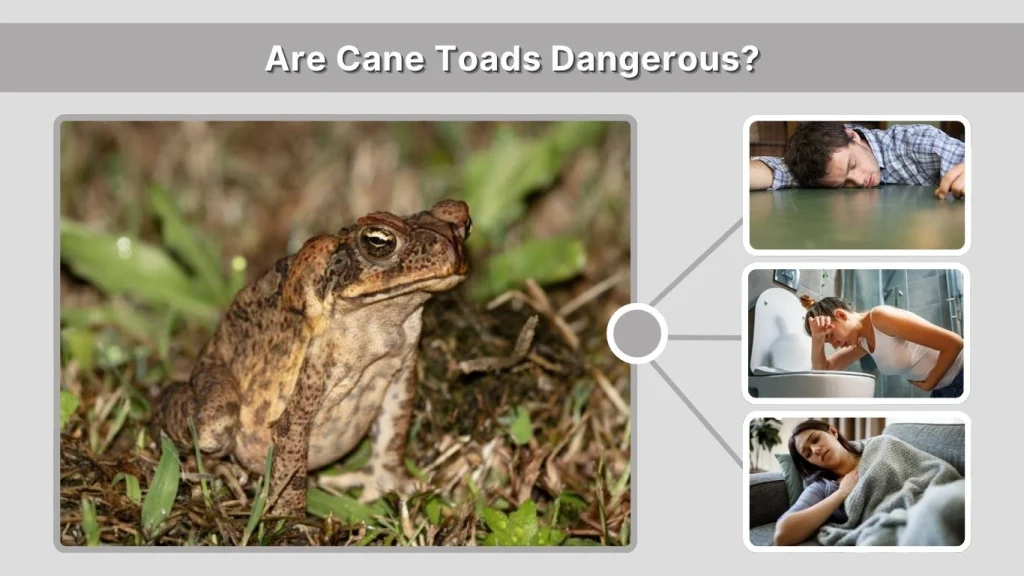
Cane toads can pose a risk to both animals and humans, mainly due to their toxic secretions.
Toxic Effects
The toxin released by cane toads can cause serious harm if ingested or if it comes into contact with sensitive areas such as the eyes or mouth. Pets, especially dogs, are particularly at risk because they may try to bite or lick the toad.
Symptoms of Exposure
In animals, symptoms of cane toad poisoning include excessive drooling, vomiting, weakness, and in severe cases, heart complications or death. In humans, handling a cane toad can cause skin irritation or eye discomfort if proper hygiene is not followed.
Safety Tips
To avoid risks, it is best not to handle cane toads. If contact occurs, hands should be washed thoroughly. Pet owners should keep animals away from areas where cane toads are common, especially at night when the toads are most active.
Environmental Impact of Cane Toads
Cane toads are considered one of the most problematic invasive species in many parts of the world.
Invasive Species Issues
Once introduced, cane toads spread rapidly due to their high reproductive rate and adaptability. They can quickly establish large populations, making control efforts challenging.
Threat to Native Species
Native predators often attempt to eat cane toads but are killed by their toxins. This leads to a decline in native species such as snakes, lizards, and mammals. Additionally, cane toads compete with native amphibians for food and habitat.
Control Efforts
Various control measures have been attempted, including trapping, fencing, and public awareness campaigns. However, completely eliminating cane toads from affected regions has proven extremely difficult.
Conclusion
The cane toad is a remarkable yet controversial species known for its size, adaptability, and powerful toxins. While it was originally introduced to control pests, it has become a widespread invasive species with significant ecological consequences. Understanding cane toad identification, habitat, diet, and life cycle is essential for recognizing its impact and avoiding potential dangers. By increasing awareness and taking appropriate precautions, people can better manage interactions with this species while helping protect native ecosystems.
FAQs
What is a cane toad?
A cane toad (Rhinella marina) is a large, toxic amphibian native to Central and South America. It has been introduced to many parts of the world for pest control but is now considered an invasive species in several regions.
How can you identify a cane toad?
Cane toads can be identified by their large size, dry warty skin, and prominent poison glands behind their eyes. They usually have a broad head, heavy body, and colors ranging from brown to gray or olive.
How big do cane toads get?
Cane toads typically grow between 10–15 cm (4–6 inches) long, but some can reach up to 24 cm (about 9.5 inches). Large individuals may weigh over 1 kilogram.
Where do cane toads live?
Cane toads prefer tropical and subtropical climates and can be found in forests, grasslands, wetlands, and urban areas. They often stay near water sources for breeding.
What do cane toads eat?
Cane toads are omnivores and opportunistic feeders. They eat insects, small animals like frogs and lizards, and even pet food or garbage in urban environments.


