

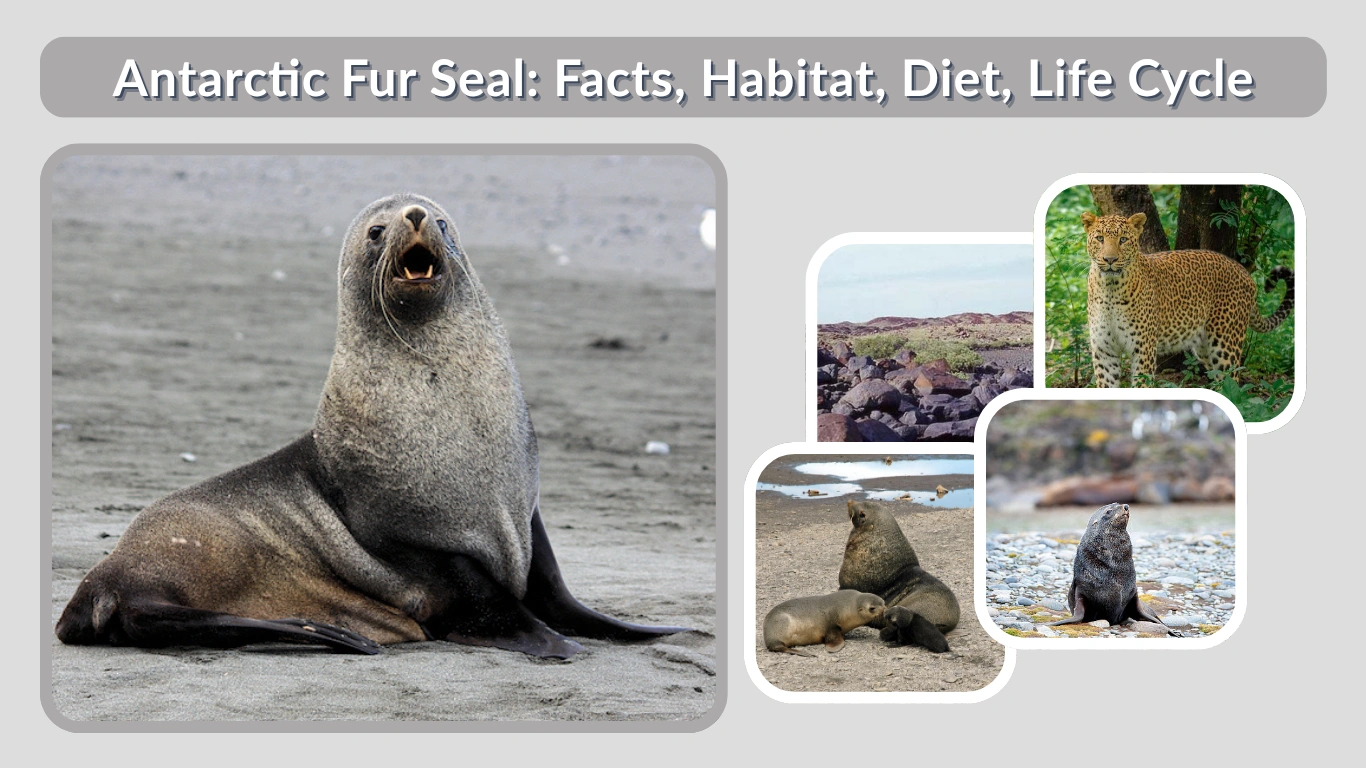
The Antarctic fur seal (Arctocephalus gazella) is one of the most fascinating marine mammals found in the Southern Ocean. Known for its thick, insulating fur and playful behavior, this species thrives in some of the harshest environments on Earth. Antarctic fur seals are mainly found around sub-Antarctic islands and the icy waters surrounding Antarctica, where they play a crucial role in the marine ecosystem.
Unlike true seals, Antarctic fur seals have external ear flaps and strong front flippers, allowing them to move more efficiently both in water and on land. Once heavily hunted for their fur, these seals have made a remarkable recovery and are now one of the most abundant seal species in the region. Understanding their lifestyle, habitat, and behavior helps highlight the importance of protecting Antarctic wildlife.
Antarctic Fur Seal Facts
Antarctic fur seals are medium-sized marine mammals with several unique characteristics that set them apart from other seal species. Adult males can weigh up to 200 kg (440 lbs), while females are much smaller, typically weighing around 50 kg (110 lbs). This significant size difference is an example of sexual dimorphism, which is common among fur seals.
One of the most distinctive features of Antarctic fur seals is their dense fur. Unlike many other marine mammals that rely mainly on blubber, these seals depend heavily on their thick fur for insulation against freezing temperatures. Their sleek, streamlined bodies make them excellent swimmers, capable of reaching impressive speeds while hunting.
They are also highly vocal animals. During the breeding season, males produce loud calls to establish and defend their territories, while mothers and pups use specific sounds to recognize each other among thousands of seals in crowded colonies.
Interesting Facts About Antarctic Fur Seals
Antarctic fur seals were nearly driven to extinction during the 18th and 19th centuries due to intense commercial hunting. However, strict conservation measures have allowed their population to rebound dramatically.
These seals are incredibly agile in the water and can dive to significant depths in search of food. They are also known for their strong territorial behavior, especially during the breeding season when males compete aggressively for access to females.
Antarctic Fur Seal Habitat

Antarctic fur seals primarily inhabit the sub-Antarctic islands, including South Georgia, the South Sandwich Islands, and other remote locations. These areas provide ideal breeding grounds with rocky shores and accessible beaches where large colonies can form.
While they spend much of their time in the ocean hunting for food, they return to land during the breeding season. These breeding colonies can become extremely crowded, with thousands of seals gathering in a relatively small area.
Climate Adaptations
Living in such cold environments requires special adaptations. Antarctic fur seals have a dense underfur layer that traps air and provides excellent insulation against icy waters. This allows them to maintain their body temperature even in freezing conditions.
They also display seasonal movement patterns, often traveling long distances in search of food. Their ability to adapt to changing environmental conditions is key to their survival in the unpredictable Antarctic climate.
Antarctic Fur Seal Physical Characteristics
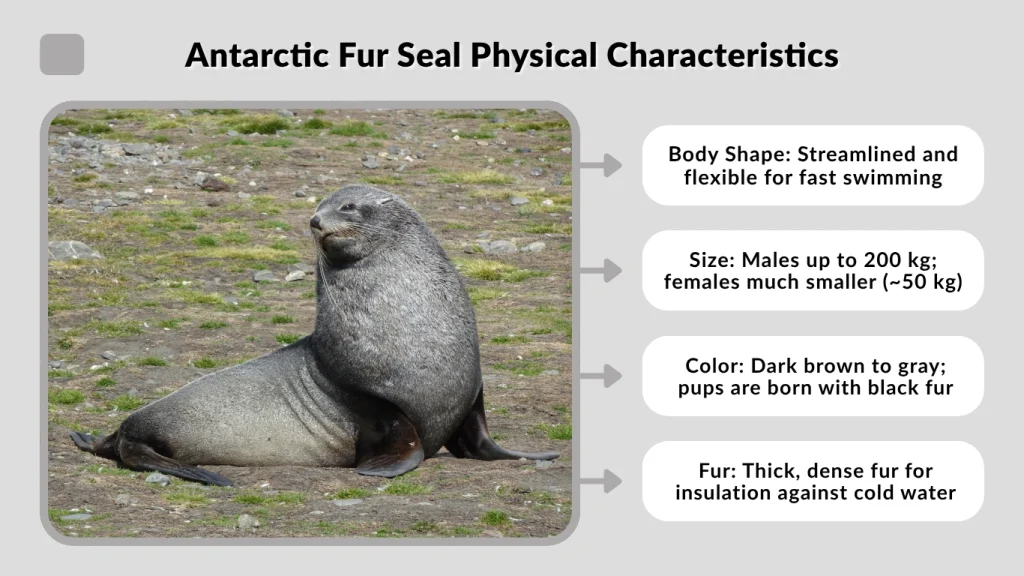
Antarctic fur seals have a streamlined and agile body that makes them highly efficient swimmers in cold ocean waters. Their physical features are specially adapted for both life in the sea and movement on land. From their dense fur to their powerful flippers, every part of their body helps them survive in the harsh Antarctic environment.
Key Physical Characteristics:
- Body Shape: Streamlined and flexible for fast swimming
- Size: Males up to 200 kg; females much smaller (~50 kg)
- Fur: Thick, dense fur for insulation against cold water
- Color: Dark brown to gray; pups are born with black fur
- Flippers: Strong front flippers for propulsion, hind flippers for steering
- Ears: Small external ear flaps (unlike true seals)
- Whiskers: Sensitive vibrissae to detect prey in water
- Sexual Dimorphism: Males larger with thicker neck and shoulders
This combination of features allows Antarctic fur seals to be both powerful hunters in the ocean and well-adapted residents of icy coastal environments.
Antarctic Fur Seal Diet
The diet of Antarctic fur seals mainly consists of krill, which is a small shrimp-like crustacean found in large quantities in the Southern Ocean. Krill forms the foundation of their diet, but they also consume fish and squid when available.
These seals are opportunistic feeders, meaning they adjust their diet based on what is available in their environment. Their feeding habits play an important role in maintaining the balance of the marine ecosystem.
Hunting Techniques
Antarctic fur seals are skilled hunters. They can dive to considerable depths and remain underwater for several minutes while searching for prey. Many of their feeding activities occur at night when prey such as krill moves closer to the ocean surface.
They also use their sensitive whiskers to detect vibrations in the water, helping them locate prey even in low-visibility conditions.
Antarctic Fur Seal Life Cycle
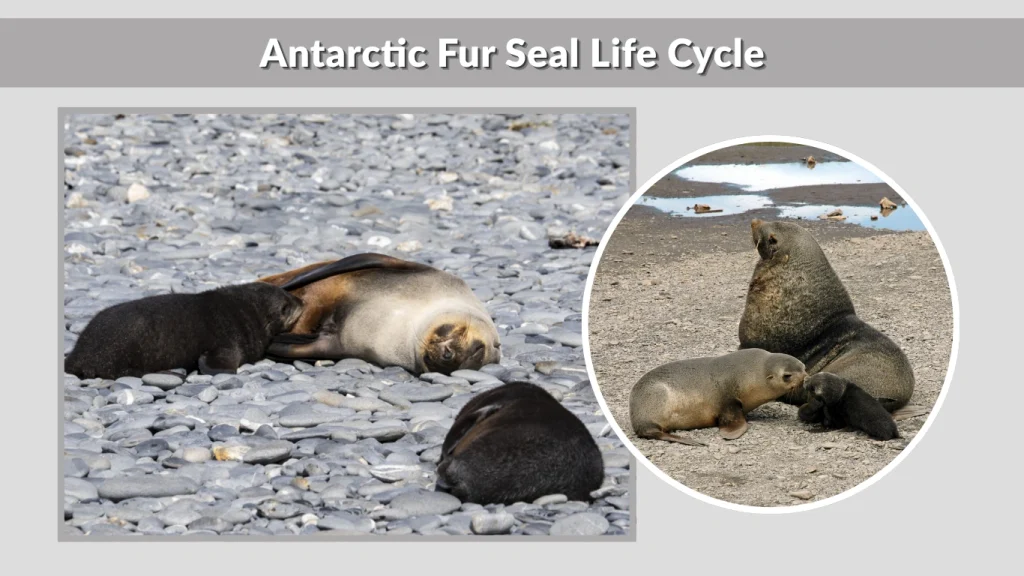
The life cycle of the Antarctic fur seal is closely tied to the seasonal rhythms of the Antarctic environment. Their reproduction, growth, and development are all adapted to maximize survival in a challenging climate.
Breeding and Mating Season
The breeding season for Antarctic fur seals typically occurs between November and January. During this time, adult males arrive at breeding sites before females and establish territories along. These territories are fiercely defended, and males often engage in aggressive fights to maintain control.
Antarctic fur seals follow a polygynous mating system, meaning one dominant male mates with multiple females within his territory. The stronger and larger males are usually more successful in attracting mates.
Birth and Development
After mating, females undergo a gestation period of about 11 to 12 months. Interestingly, this includes a delayed implantation phase, allowing the timing of birth to align with favorable environmental conditions.
Pups are usually born between late November and early December. At birth, they are relatively small but quickly begin to grow with the help of their mother’s rich, high-fat milk.
Growth Stages
The life stages of an Antarctic fur seal include pup, juvenile, and adult. During the early weeks, pups remain on land while their mothers alternate between nursing and foraging trips at sea.
As they grow, young seals gradually learn how to swim and hunt. By the time they reach adulthood, they are fully capable of surviving independently in the ocean.
Antarctic Fur Seal Baby (Pups)
Baby Antarctic fur seals, known as pups, are born with thick black fur that helps keep them warm in the cold environment. They are highly dependent on their mothers during the early stages of life.
Early Life Challenges
Life is not easy for young pups. They face numerous challenges, including harsh weather conditions and the risk of predation. Leopard seals and seabirds are among the main threats to young fur seals.
Additionally, overcrowded breeding colonies can sometimes lead to accidental injuries or separation from their mothers, which can reduce their chances of survival.
Nursing and Weaning
Mother fur seals produce nutrient-rich milk that is essential for the rapid growth of their pups. Nursing occurs intermittently, as mothers must leave their pups behind while they go out to sea to feed.
The weaning process usually occurs after about four months. By this time, pups begin to develop the skills needed to survive on their own, including swimming and basic hunting techniques.
Antarctic Fur Seal Lifespan
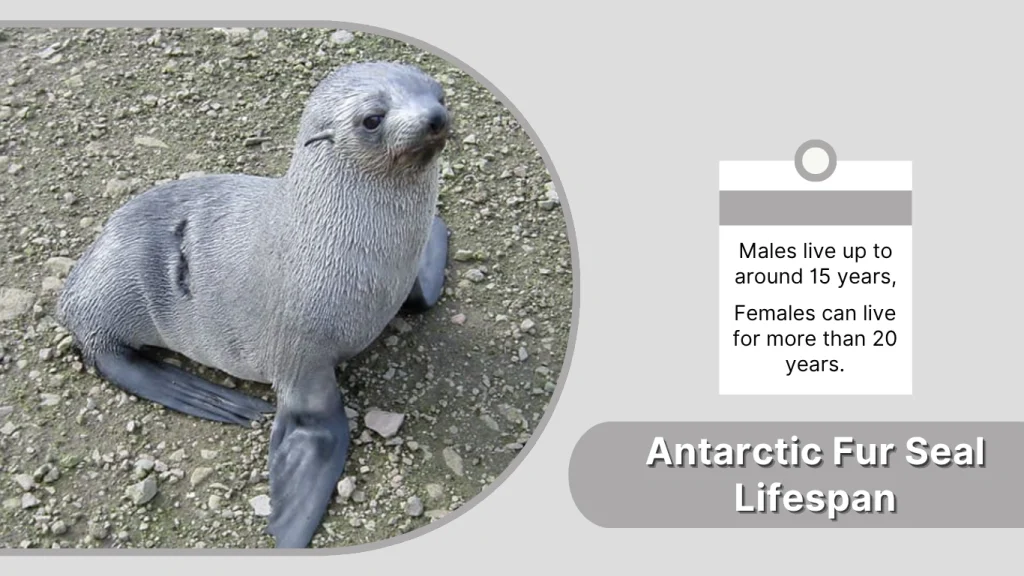
The lifespan of Antarctic fur seals varies depending on several factors, including sex and environmental conditions. On average, males live up to around 15 years, while females can live for more than 20 years.
Factors Affecting Lifespan
Several factors influence how long these seals live. Predation is one of the primary natural threats, especially from killer whales and leopard seals. Environmental changes, such as shifts in food availability, can also impact survival rates.
Human activity, although less of a threat today than in the past, can still influence their lifespan through climate change and ecosystem disruption.
Behavior and Social Structure
Antarctic fur seals are highly social animals, especially during the breeding season when they gather in large colonies. These colonies can consist of thousands of individuals, creating a complex social structure.
Males are known for their aggressive behavior when defending territory. They use vocalizations, physical displays, and sometimes direct combat to establish dominance.
Communication plays a key role in their social interactions. Mothers and pups use unique vocal calls to identify each other, which is essential in crowded colonies.
Outside the breeding season, these seals are more solitary and spend most of their time at sea.
Antarctic Fur Seal Predators and Threats
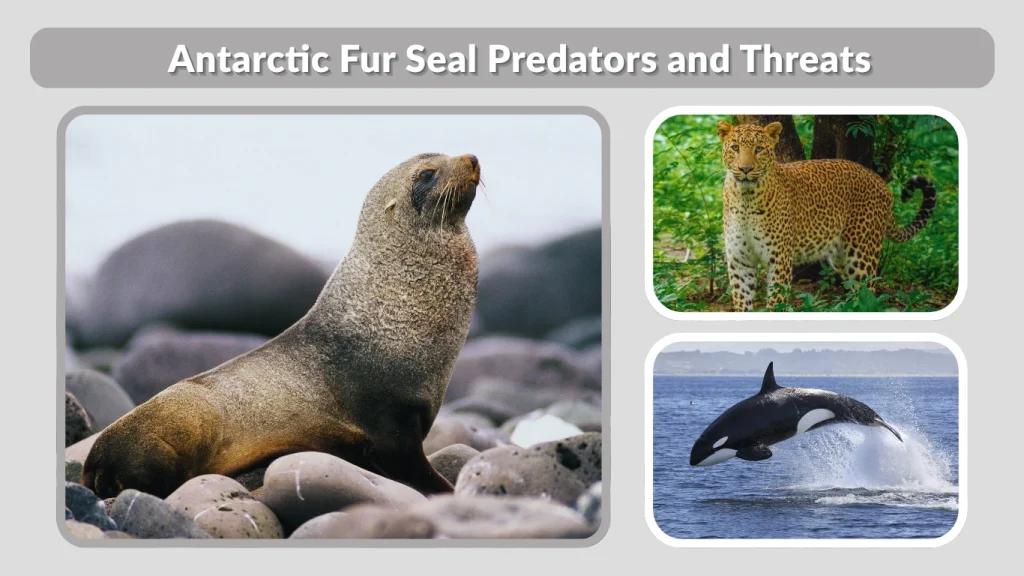
Antarctic fur seals face several natural predators in their environment. The most significant threats come from leopard seals and killer whales, both of which are powerful marine hunters.
Human and Environmental Threats
Historically, Antarctic fur seals were heavily hunted for their fur, which led to a dramatic decline in their population. Fortunately, conservation efforts have helped them recover.
Today, climate change poses a growing threat. Changes in ocean temperature and ice conditions can affect the availability of krill, which is the primary food source for these seals. A decline in krill populations can have serious consequences for their survival.
Conservation Status
The Antarctic fur seal is currently classified as “Least Concern” by the International Union for Conservation of Nature (IUCN). This status reflects their successful recovery from near extinction in the past.
Large populations can now be found across sub-Antarctic regions, particularly on South Georgia Island. However, continued monitoring is essential to ensure that environmental changes do not negatively impact their numbers in the future.
Conservation efforts focus on protecting their habitats and maintaining the health of the marine ecosystem, particularly krill populations.
FAQs
Where do Antarctic fur seals live?
Antarctic fur seals are mainly found on sub-Antarctic islands such as South Georgia and the South Sandwich Islands. They spend most of their time in the Southern Ocean but return to land during the breeding season.
What do Antarctic fur seals eat?
Their diet primarily consists of krill, along with fish and squid. Krill is the most important food source and plays a key role in their survival.
How long do Antarctic fur seals live?
Male Antarctic fur seals typically live up to around 15 years, while females can live longer, often exceeding 20 years in the wild.
Are Antarctic fur seals endangered?
No, Antarctic fur seals are currently classified as “Least Concern” by the IUCN. Their population has recovered significantly after historical overhunting.
How do Antarctic fur seals survive in cold environments?
They survive extreme cold благодаря their dense fur, which traps air and provides insulation. This thick coat helps maintain body temperature even in icy waters.
Conclusion
The Antarctic fur seal is a remarkable example of resilience and adaptation in one of the world’s most extreme environments. From their dense insulating fur to their complex social behaviors, these animals are perfectly suited to life in the Antarctic region.
Although they have recovered from the brink of extinction, ongoing environmental challenges highlight the importance of continued conservation efforts. Protecting Antarctic fur seals not only preserves a unique species but also helps maintain the balance of the entire marine ecosystem.