
Geese are large, social waterfowl known for their strong pair bonds, loud calls, and impressive migratory journeys. Found across a wide range of habitats, from Arctic tundra and high mountains to wetlands, grasslands, and coastal areas, geese play an important role in many ecosystems. With diverse sizes, colors, and behaviors, the world’s geese species reflect remarkable adaptation to different environments and climates across multiple continents.
1. Canada Goose (Branta canadensis)

The Canada Goose is one of the most familiar and widely distributed goose species in the world. Known for its bold black-and-white head pattern and loud honking calls, it is commonly seen in parks, lakes, rivers, and open fields, often close to human settlements.
Identification
- Black head and long black neck
- Distinctive white chinstrap extending from cheek to cheek
- Brownish-gray body with lighter underparts
- Broad wings and strong, direct flight
Size and Appearance
Canada Geese are large, heavy-bodied birds. Adults typically measure 90–110 cm (35–43 inches) in length, with a wingspan of up to 170 cm (67 inches). Males are slightly larger than females, though both sexes look very similar.
Habitat and Range
They are native to North America but have been introduced to parts of Europe and Asia. Canada Geese thrive in lakes, rivers, wetlands, grasslands, agricultural fields, and urban parks, adapting easily to human-altered environments.
Behavior and Diet
Canada Geese are highly social and migratory, often flying in iconic V-shaped formations. Their diet consists mainly of grasses, aquatic plants, grains, and seeds. They are known for strong pair bonds and aggressive nest defense during the breeding season.
2. Snow Goose (Anser caerulescens)

The Snow Goose is a well-known migratory goose species famous for its massive flocks and long-distance seasonal movements. It is commonly seen during migration and winter, often covering fields and wetlands in large numbers.
Identification
- White body with black wingtips visible in flight
- Pink bill with a dark “grinning patch” along the edges
- Pink legs and feet
- Some individuals appear in a darker “blue morph”
Size and Appearance
Snow Geese are medium-sized geese, typically measuring 64–79 cm (25–31 inches) in length. Their wingspan ranges from 135–165 cm (53–65 inches). Males are slightly larger than females, but overall appearance is similar.
Habitat and Range
They breed in the Arctic tundra of North America and migrate south for winter. During migration and winter, they are commonly found in coastal marshes, lakes, wetlands, and agricultural fields across the United States and Mexico.
Behavior and Diet
Snow Geese are highly migratory and very social, forming enormous flocks. They feed mainly on grasses, sedges, roots, tubers, and grains, often foraging in fields and shallow wetlands. Their loud, constant calls are a key feature of large flocks.
3. Greater White-fronted Goose (Anser albifrons)

The Greater White-fronted Goose, often called the “specklebelly,” is a widespread and highly migratory goose species. It is well known for its energetic calls and long seasonal movements between Arctic breeding grounds and warmer wintering areas.
Identification
- Brownish-gray body with a lighter belly
- Distinct white patch at the base of the bill
- Orange legs and feet
- Dark speckling on the belly in adults
Size and Appearance
This is a medium-sized goose, measuring about 64–78 cm (25–31 inches) in length, with a wingspan of 130–165 cm (51–65 inches). Males are slightly larger, but both sexes share similar plumage.
Habitat and Range
They breed in the Arctic regions of North America and Eurasia and migrate south in winter. During non-breeding seasons, they are found in wetlands, lakes, flooded fields, grasslands, and agricultural areas.
Behavior and Diet
Greater White-fronted Geese are strong migrants and often travel in large flocks. Their diet includes grasses, sedges, roots, grains, and berries, and they frequently forage on farmland during winter.
4. Barnacle Goose (Branta leucopsis)

The Barnacle Goose is a striking, medium-sized goose known for its bold black, white, and gray plumage. It is a highly migratory species and is often seen in compact flocks along coastlines and open grasslands.
Identification
- Black head and neck with a white face
- Pale gray back with finely barred pattern
- Black breast and tail
- Short black bill
Size and Appearance
Barnacle Geese typically measure 55–70 cm (22–28 inches) in length, with a wingspan of around 130–145 cm (51–57 inches). Males and females are similar in size and appearance.
Habitat and Range
They breed in Arctic regions such as Greenland, Svalbard, and parts of Russia. In winter, they migrate to northwestern Europe, favoring coastal marshes, estuaries, grasslands, and farmland.
Behavior and Diet
Barnacle Geese are highly social and migratory, often moving in tight family groups. Their diet consists mainly of grasses, mosses, sedges, and agricultural crops, especially during winter months.
5. Greylag Goose (Anser anser)

The Greylag Goose is the largest and one of the most important wild goose species in Europe. It is best known as the ancestor of most domestic geese and is commonly seen in wetlands, lakes, and open countryside.
Identification
- Gray-brown body with pale-edged feathers
- Large pink or orange bill
- Pale belly with light barring
- Pink legs and feet
Size and Appearance
Greylag Geese are large, heavy-bodied birds. Adults usually measure 74–91 cm (29–36 inches) in length, with a wingspan of 147–180 cm (58–71 inches). Males are generally larger than females.
Habitat and Range
They are native to Europe and western Asia, breeding in marshes, lakes, and reed beds. In winter, many populations migrate to southern Europe, North Africa, and parts of Asia, often using farmland and grasslands.
Behavior and Diet
Greylag Geese are partially migratory and highly social. Their diet includes grasses, roots, aquatic plants, grains, and cereals. They are vocal birds, especially during flight and at feeding sites.
6. Brant Goose (Branta bernicla)
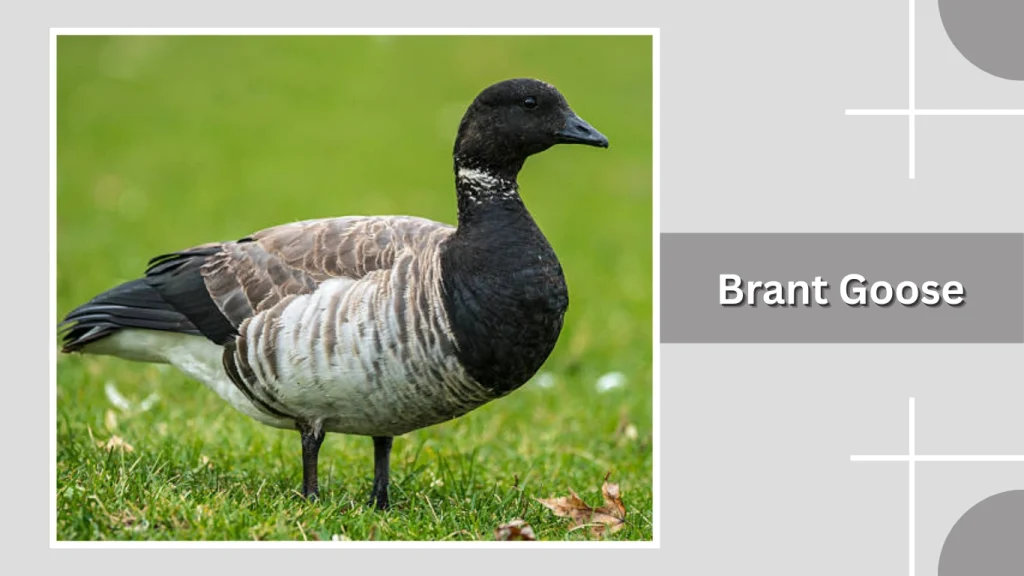
The Brant Goose is a small, compact goose species closely associated with coastal habitats. It is well known for its long-distance migrations and strong dependence on marine environments.
Identification
- Dark brown to black head, neck, and chest
- Small white patch or necklace on the side of the neck
- Dark gray-brown body
- Short black bill and legs
Size and Appearance
Brant Geese are smaller than most other geese. Adults typically measure 55–66 cm (22–26 inches) in length, with a wingspan of 110–125 cm (43–49 inches). Males and females look very similar.
Habitat and Range
They breed in the Arctic tundra and migrate to coastal regions during winter. Brant Geese are commonly found along shorelines, estuaries, salt marshes, and coastal lagoons in North America and Eurasia.
Behavior and Diet
This species is strongly migratory and often travels in compact flocks. Its diet is mainly marine vegetation, especially eelgrass and sea lettuce, making it one of the few geese highly specialized for coastal feeding.
7. Emperor Goose (Anser canagicus)

The Emperor Goose is a distinctive and relatively localized goose species, often admired for its finely patterned plumage and colorful legs. It is sometimes called the “Painted Goose” due to its unique appearance.
Identification
- White head and nape with black chin and throat
- Gray body with fine dark barring
- Pink bill with a darker tip
- Bright orange legs and feet
Size and Appearance
Emperor Geese are medium-sized birds, measuring about 63–69 cm (25–27 inches) in length, with a wingspan of around 135–150 cm (53–59 inches). Both sexes are similar in size and coloration.
Habitat and Range
They breed along the coasts of western Alaska and parts of northeastern Russia. During winter, they remain mostly in coastal areas of Alaska and the Aleutian Islands, favoring tidal flats, estuaries, and rocky shorelines.
Behavior and Diet
Unlike many geese, Emperor Geese are short-distance migrants. Their diet includes grasses, sedges, algae, mollusks, and marine invertebrates, which they forage from both land and shallow coastal waters.
8. Ross’s Goose (Anser rossii)

The Ross’s Goose is a small, compact goose species often seen mixed in with large flocks of Snow Geese. Its shorter neck and smaller bill help distinguish it from similar-looking species.
Identification
- White body with black wingtips visible in flight
- Short pink bill lacking a prominent grinning patch
- Short neck and rounded head
- Pink legs and feet
Size and Appearance
Ross’s Geese are among the smallest geese. Adults typically measure 53–64 cm (21–25 inches) in length, with a wingspan of 113–135 cm (44–53 inches). Males and females are similar in appearance.
Habitat and Range
They breed in the Canadian Arctic and migrate south during winter. In non-breeding seasons, they are commonly found in wetlands, lakes, reservoirs, and agricultural fields across the central and western United States.
Behavior and Diet
Ross’s Geese are highly migratory and social, often forming mixed flocks with Snow Geese. Their diet consists mainly of grasses, sedges, roots, grains, and agricultural crops.
9. Pink-footed Goose (Anser brachyrhynchus)

The Pink-footed Goose is a medium-sized migratory goose best known for its pink legs and feet and its short, dark bill with a pink band. It is a common sight during migration in parts of Europe.
Identification
- Brownish-gray body with lighter underparts
- Short dark bill with a pink band
- Pink legs and feet
- Dark head and neck with paler edges
Size and Appearance
Pink-footed Geese measure about 60–75 cm (24–30 inches) in length, with a wingspan of 135–170 cm (53–67 inches). Males are slightly larger, but both sexes look alike.
Habitat and Range
They breed in Greenland, Iceland, and Svalbard and migrate to northwestern Europe for winter. Typical habitats include wetlands, lakes, grasslands, estuaries, and agricultural fields.
Behavior and Diet
This species is highly migratory and travels in large, noisy flocks. Their diet includes grasses, roots, berries, grains, and crops, especially during winter when feeding in farmland.
10. Bean Goose (Anser fabalis)

The Bean Goose is a large, robust goose species known for its dark plumage and strong migratory behavior. It gets its name from its habit of feeding in harvested bean and grain fields.
Identification
- Brownish-gray body with darker head and neck
- Orange or pink band on a black bill
- Orange legs and feet
- Heavy-bodied appearance
Size and Appearance
Bean Geese are fairly large, measuring 68–88 cm (27–35 inches) in length, with a wingspan of 147–180 cm (58–71 inches). Males are typically larger than females.
Habitat and Range
They breed in northern Europe and Asia, especially in tundra and taiga zones. During winter, they migrate south to central and western Europe and East Asia, using wetlands, lakes, marshes, and agricultural land.
Behavior and Diet
Bean Geese are strong migrants and often move in organized flocks. Their diet includes grasses, roots, tubers, grains, and agricultural crops, making farmland an important winter feeding area.
11. Lesser White-fronted Goose (Anser erythropus)

The Lesser White-fronted Goose is a small and rare goose species, easily recognized by its bold facial markings. It is considered vulnerable due to population declines across much of its range.
Identification
- Dark brown body with lighter underparts
- Prominent white patch extending high on the forehead
- Yellow eye-ring around the eye
- Orange legs and feet
Size and Appearance
This species is smaller than the Greater White-fronted Goose, measuring 53–66 cm (21–26 inches) in length, with a wingspan of 120–145 cm (47–57 inches). Males and females appear similar.
Habitat and Range
They breed in Arctic regions of northern Europe and Asia and migrate south in winter. During non-breeding seasons, they are found in wetlands, lakes, river valleys, and grasslands in southeastern Europe and East Asia.
Behavior and Diet
Lesser White-fronted Geese are highly migratory and usually travel in small flocks. Their diet consists of grasses, sedges, herbs, roots, and seeds, and they often feed in natural grasslands rather than farmland.
12. Red-breasted Goose (Branta ruficollis)

The Red-breasted Goose is one of the most colorful and striking goose species in the world. Its bold chestnut-red breast and contrasting black-and-white pattern make it easily recognizable.
Identification
- Bright reddish-brown breast and face patches
- Black head, neck, and back
- White patches on the face and flanks
- Short, thick black bill
Size and Appearance
Red-breasted Geese are relatively small, measuring 53–56 cm (21–22 inches) in length, with a wingspan of 120–135 cm (47–53 inches). Males and females look very similar.
Habitat and Range
They breed in Arctic Siberia and migrate to wintering grounds around the Black Sea region, especially in Romania and Bulgaria. Preferred habitats include tundra wetlands, lakes, grasslands, and agricultural fields during winter.
Behavior and Diet
This species is highly migratory and often seen in mixed flocks with other geese. Their diet includes grasses, shoots, leaves, seeds, and crops, particularly during the winter season.
13. Egyptian Goose (Alopochen aegyptiaca)

The Egyptian Goose is a distinctive and somewhat duck-like goose species, easily recognized by its bold eye markings and rich body colors. Despite its name, it is more closely related to shelducks than true geese.
Identification
- Brown and gray body with chestnut patches
- Dark brown eye patch surrounded by lighter feathers
- Pink bill with a dark tip
- Long pink legs
Size and Appearance
Egyptian Geese are medium-sized birds, measuring 63–73 cm (25–29 inches) in length, with a wingspan of about 134–154 cm (53–61 inches). Males and females look similar, though males are slightly larger.
Habitat and Range
They are native to Africa, especially along the Nile Valley and sub-Saharan regions. The species has been introduced to Europe and parts of Asia, where it inhabits lakes, rivers, wetlands, grasslands, and urban parks.
Behavior and Diet
Egyptian Geese are mostly non-migratory and very territorial, particularly during breeding. Their diet includes grasses, seeds, leaves, aquatic plants, and small insects, and they often forage on land rather than in water.
14. Nene (Hawaiian Goose) (Branta sandvicensis)
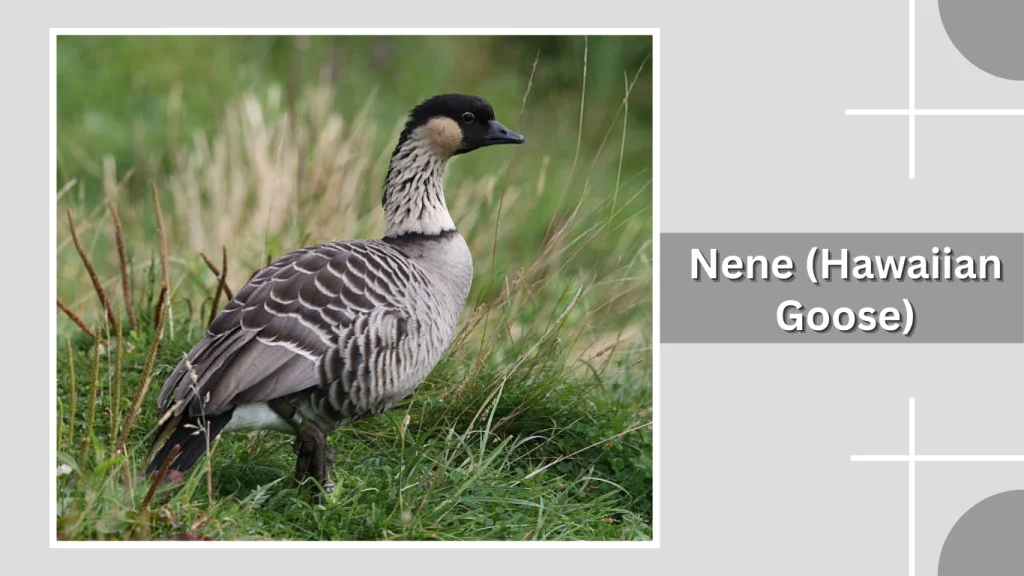
The Nene, also known as the Hawaiian Goose, is a rare and endangered goose species endemic to the Hawaiian Islands. It is well adapted to volcanic landscapes rather than typical wetland habitats.
Identification
- Brown body with buff-edged feathers
- Black head and face with pale cheek markings
- Thick, partially webbed feet adapted for walking on lava
- Short black bill
Size and Appearance
Nene Geese are relatively small, measuring 56–69 cm (22–27 inches) in length, with a wingspan of around 100–120 cm (39–47 inches). Males are slightly larger than females.
Habitat and Range
They are found only in Hawaii, inhabiting lava fields, grasslands, shrublands, and coastal plains. Unlike most geese, they do not rely heavily on water bodies and often nest far from wetlands.
Behavior and Diet
Nene Geese are mostly non-migratory and form strong pair bonds. Their diet consists of grasses, leaves, seeds, berries, and fruits, and they spend much of their time grazing on land.
15. Swan Goose (Anser cygnoides)

The Swan Goose is a large, long-necked goose species best known as the wild ancestor of many domestic goose breeds in Asia. It has a graceful appearance and a more swan-like posture compared to other geese.
Identification
- Long neck with a darker stripe running down the back
- Brownish-gray body with paler underparts
- Black bill with a prominent knob at the base
- Orange legs and feet
Size and Appearance
Swan Geese are large birds, measuring 81–94 cm (32–37 inches) in length, with a wingspan of 160–185 cm (63–73 inches). Males are noticeably larger and have a more prominent bill knob.
Habitat and Range
They are native to eastern Asia, breeding in Mongolia, northeastern China, and eastern Russia. During winter, they migrate to China, Korea, and Japan, favoring lakes, rivers, wetlands, and open grasslands.
Behavior and Diet
Swan Geese are highly migratory and usually seen in small flocks. Their diet includes grasses, sedges, aquatic plants, seeds, and grains, and they often feed both on land and in shallow water.
16. Bar-headed Goose (Anser indicus)
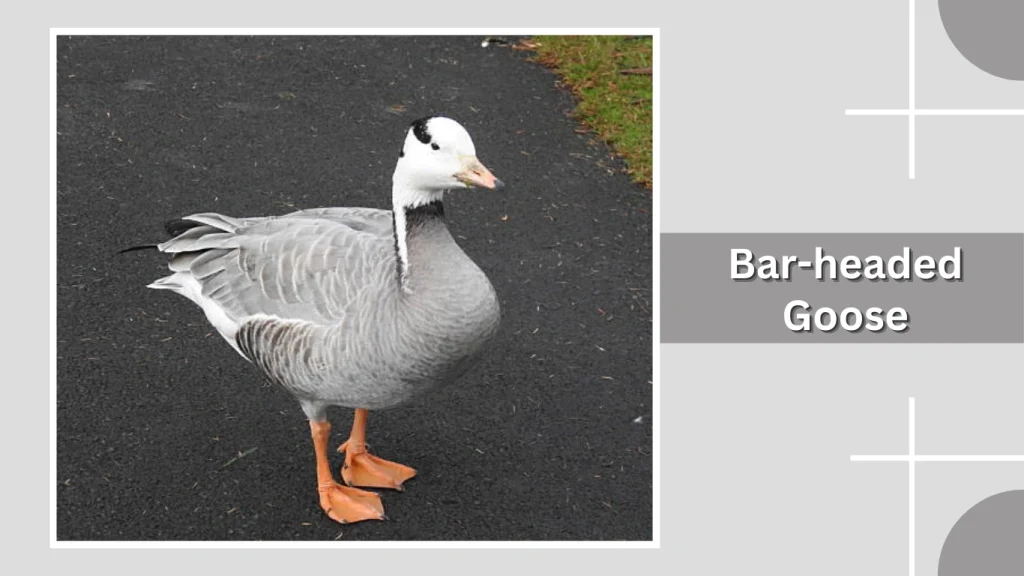
The Bar-headed Goose is famous for its extreme high-altitude migrations, including flights over the Himalayas. Its pale body and distinctive head markings make it easy to identify.
Identification
- Pale gray body with lighter underparts
- White head with two bold black bars across the crown
- Orange bill and legs
- Long neck and upright posture
Size and Appearance
Bar-headed Geese are medium-sized, measuring 71–76 cm (28–30 inches) in length, with a wingspan of 140–160 cm (55–63 inches). Males and females are similar in appearance.
Habitat and Range
They breed in Central Asia, especially on high-altitude lakes in Tibet, Mongolia, and India. In winter, they migrate to South Asia, inhabiting wetlands, rivers, lakes, and agricultural fields.
Behavior and Diet
This species is highly migratory and known for endurance flying. Their diet consists mainly of grasses, roots, shoots, seeds, and crops, and they often forage on farmland during winter.
17. Cape Barren Goose (Cereopsis novaehollandiae)

The Cape Barren Goose is a large, heavy-bodied goose species native to Australia. It is easily recognized by its bulky shape and distinctive bill, making it one of the most unusual-looking geese in the world.
Identification
- Pale gray body with dark spotting
- Large greenish-yellow bill with a black tip
- Thick neck and stocky build
- Pink legs and feet
Size and Appearance
Cape Barren Geese are among the largest geese, measuring 75–100 cm (30–39 inches) in length, with a wingspan of 150–190 cm (59–75 inches). Males are slightly larger than females.
Habitat and Range
They are found mainly in southern Australia, breeding on offshore islands and coastal grasslands. Outside the breeding season, they inhabit pastures, open grasslands, and coastal areas.
Behavior and Diet
This species is mostly non-migratory and strongly terrestrial. Their diet consists almost entirely of grasses and herbs, and they spend much of their time grazing on land rather than swimming.
18. Orinoco Goose (Neochen jubata)

The Orinoco Goose is a distinctive South American goose species known for its chestnut body, pale head, and long legs. It is more terrestrial than many other geese and often seen perching in trees or grazing on land near rivers.
Identification
- Pale buff or whitish head
- Chestnut-brown body and wings
- Black tail with white edges
- Long pink legs and a short pink bill
Size and Appearance
Orinoco Geese are medium-sized, measuring 61–76 cm (24–30 inches) in length, with a wingspan of about 135–150 cm (53–59 inches). Males are slightly larger, but both sexes look similar.
Habitat and Range
They are native to northern South America, especially along the Orinoco and Amazon river basins. Preferred habitats include rivers, savannas, wetlands, sandbanks, and open grasslands near water.
Behavior and Diet
Orinoco Geese are mostly non-migratory and often seen in pairs rather than large flocks. Their diet includes grasses, aquatic plants, seeds, and fruits, and they commonly forage on land during the day.
19. Spur-winged Goose (Plectropterus gambensis)

The Spur-winged Goose is the largest goose species in Africa and is easily identified by the sharp spur on its wings. It has a bold black-and-white appearance and a strong, confident posture.
Identification
- Black head and upper body with white facial patches
- White breast and belly
- Large black bill, often with a red facial knob (males)
- Noticeable bony spur on the wing
Size and Appearance
Spur-winged Geese are very large, measuring 75–115 cm (30–45 inches) in length, with a wingspan of up to 200 cm (79 inches). Males are significantly larger than females.
Habitat and Range
They are native to sub-Saharan Africa, inhabiting lakes, rivers, marshes, floodplains, and agricultural areas. They are especially common near permanent water sources.
Behavior and Diet
This species is mostly non-migratory and often aggressive when breeding. Their diet includes grasses, seeds, aquatic plants, insects, and small vertebrates, making them more omnivorous than most geese.
20. Andean Goose (Chloephaga melanoptera)

The Andean Goose is a high-altitude goose species adapted to life in the Andes Mountains. It is known for its striking white body, black wings, and ability to survive in cold, oxygen-poor environments.
Identification
- Mostly white body
- Black wings and tail
- Pink bill with a black tip
- Reddish legs and feet
Size and Appearance
Andean Geese are medium-sized birds, measuring 70–80 cm (28–31 inches) in length, with a wingspan of around 135–160 cm (53–63 inches). Males and females are similar in appearance.
Habitat and Range
They are found in the Andes of South America, especially in Peru, Bolivia, Chile, and Argentina. Typical habitats include high-altitude lakes, wetlands, grasslands, and puna regions, often above 3,000 meters.
Behavior and Diet
Andean Geese are mostly sedentary and live in pairs or small groups. Their diet consists mainly of grasses, aquatic plants, and algae, and they graze extensively around mountain lakes and wetlands.
21. Magellan Goose (Chloephaga picta)

The Magellan Goose is a distinctive South American goose species known for its strong sexual dimorphism, with males and females having very different appearances. It is commonly found in open landscapes and coastal regions.
Identification
- Male: White body with black barring on the flanks and black wing tips
- Female: Brown body with heavy dark streaking
- Pink bill and legs in both sexes
- Stocky body with relatively short neck
Size and Appearance
Magellan Geese are medium-sized, measuring 60–75 cm (24–30 inches) in length, with a wingspan of 135–150 cm (53–59 inches). Males are slightly larger and more boldly patterned than females.
Habitat and Range
They are native to southern South America, especially Patagonia, Tierra del Fuego, and the Falkland Islands. Preferred habitats include grasslands, coastal plains, wetlands, and farmland.
Behavior and Diet
Magellan Geese are partially migratory and usually seen in pairs or small flocks. Their diet consists mainly of grasses, herbs, seeds, and agricultural crops, and they spend much of their time grazing on land.
FAQs
How many types of geese are there in the world?
There are around 20–30 recognized goose species worldwide, depending on classification. These include true geese, sheldgeese, and closely related species found across multiple continents and habitats.
What is the most common goose species?
The Canada Goose is considered the most common and widespread goose species, especially in North America, where it is frequently seen in parks, lakes, fields, and urban areas.
Do all geese migrate?
No, not all geese migrate. Many species, such as the Canada Goose and Greylag Goose, are partially migratory, while others like the Nene are mostly non-migratory.
What do geese mainly eat?
Geese are primarily herbivorous, feeding on grasses, aquatic plants, seeds, roots, and grains. Some species also consume small insects and invertebrates occasionally.
How can you tell male and female geese apart?
In most goose species, males and females look very similar. Differences are often subtle, with males usually being slightly larger, though some species like the Magellan Goose show clear visual differences.