




The crabeater seal is one of the most fascinating yet misunderstood animals in the Antarctic region. Despite its name, this seal does not actually eat crabs, which often surprises many readers. Found across the icy waters surrounding Antarctica, it is considered one of the most abundant large mammals on Earth. With its unique feeding adaptations, extreme habitat, and important role in the ecosystem, the crabeater seal is truly remarkable. In this article, we will explore its diet, habitat, behavior, and other interesting facts.
What is a Crabeater Seal?
Scientific Classification
The crabeater seal’s scientific name is Lobodon carcinophaga, which roughly translates to “lobe-toothed crab eater.” It belongs to the family Phocidae, also known as true seals. Unlike sea lions, true seals do not have external ear flaps and rely on their flippers to move awkwardly on land but gracefully in water.
Physical Characteristics
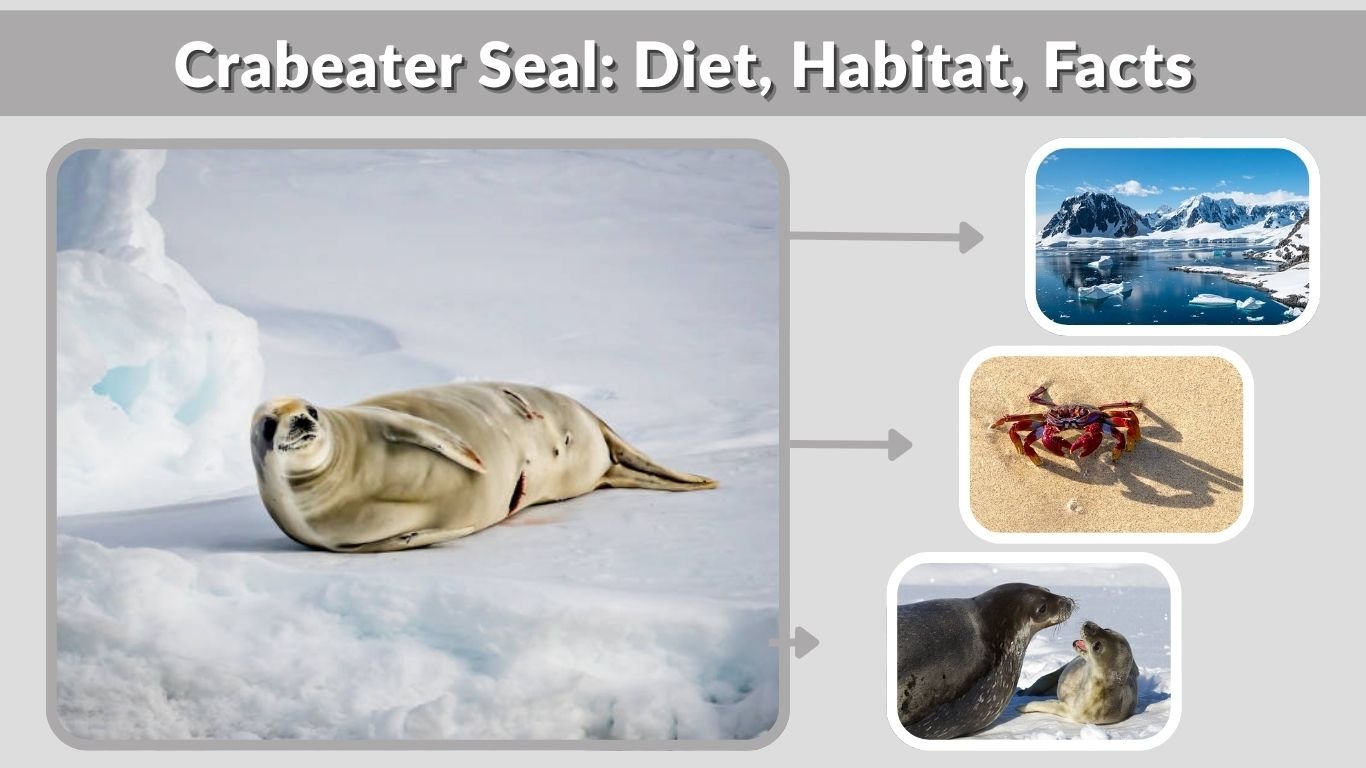
Crabeater seals are medium-sized seals with a slender body adapted for swimming in icy waters. Adults typically measure about 2.3 to 2.6 meters in length and can weigh between 200 to 300 kilograms. Their fur is usually light gray or silver, often marked with darker patterns.
One striking feature is the presence of scars on many individuals. These scars are usually caused by attacks from predators such as leopard seals, especially when the seals are young.
Perhaps the most unique physical trait of the crabeater seal is its teeth. Unlike most seals, their teeth are specially adapted to filter food from the water. These complex, multi-cusped teeth act like a sieve, allowing them to trap small prey efficiently.
Crabeater Seal Habitat
Where Do Crabeater Seals Live?
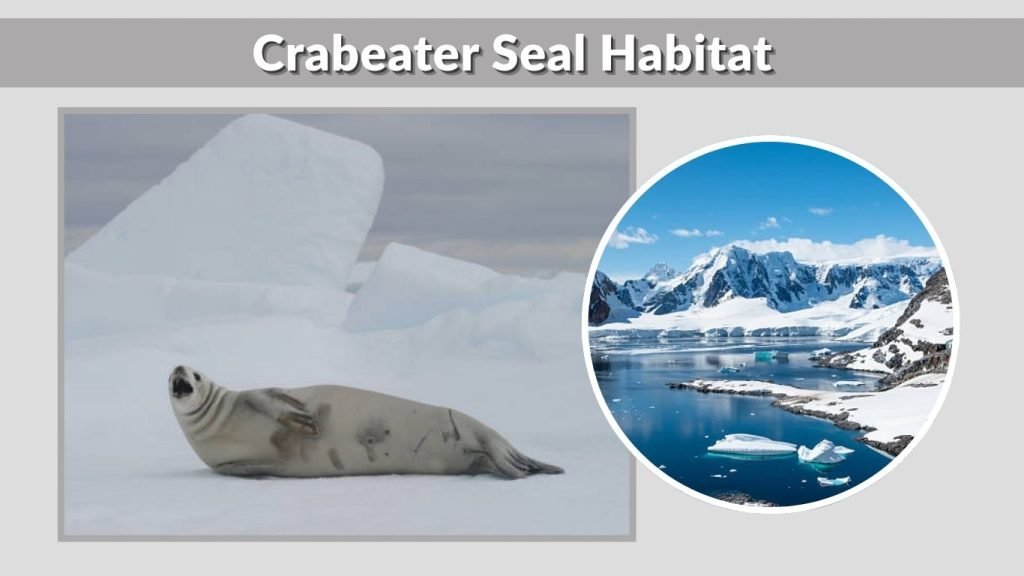
Crabeater seals are native to the Antarctic region and are commonly found along the continent’s coastline. They inhabit the Southern Ocean and are closely associated with sea ice, which plays a critical role in their survival.
Unlike some marine mammals that migrate long distances, crabeater seals tend to stay within the Antarctic zone, following the seasonal expansion and retreat of sea ice.
Ice-Based Lifestyle
These seals are highly dependent on pack ice, using it for resting, breeding, and avoiding predators. The shifting ice provides both protection and access to food sources.
During different seasons, crabeater seals adjust their location based on ice conditions. In winter, they spread out across expanding ice fields, while in summer, they may move closer to the Antarctic coast as the ice melts.
Their ability to thrive in such an extreme environment highlights their remarkable adaptation to one of the harshest climates on Earth.
Crabeater Seal Diet
What Does a Crabeater Seal Eat?
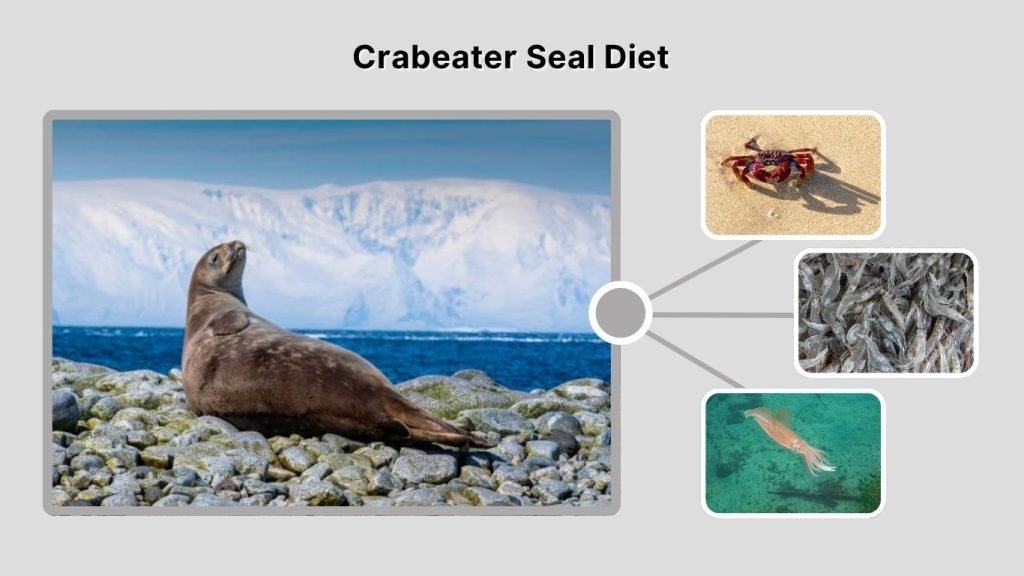
Despite their name, crabeater seals rarely, if ever, eat crabs. Instead, their diet consists mainly of Antarctic krill—tiny shrimp-like creatures that are abundant in the Southern Ocean. In fact, krill makes up more than 90% of their diet.
Occasionally, they may consume small fish or squid, but these are not a significant part of their feeding habits.
How Do They Feed?
Crabeater seals have evolved a highly efficient feeding mechanism. Their uniquely shaped teeth interlock to form a filtering system. When they take in a mouthful of water, they push it out through their teeth, trapping krill inside.
This filter-feeding method allows them to consume large quantities of tiny prey quickly and efficiently. It is one of the reasons they are so successful in the Antarctic ecosystem.
Daily Food Consumption
A single crabeater seal can consume several kilograms of krill each day. Given their massive population, they collectively consume enormous amounts of krill annually.
This makes them one of the most important predators in the Antarctic food web. By feeding on krill, they help regulate its population and maintain ecological balance.
Crabeater Seal Facts
Population and Abundance
Crabeater seals are believed to be one of the most numerous large mammals on the planet. Estimates suggest their population could range from 10 million to as high as 70 million individuals.
Their success is largely due to the abundance of krill and their specialized feeding adaptations.
Unique Adaptations
One of the most impressive adaptations of the crabeater seal is its teeth, which are unlike those of any other seal species. These teeth allow them to efficiently filter krill from seawater.
Additionally, they have a thick layer of blubber that helps them stay warm in freezing temperatures. Their streamlined bodies also make them excellent swimmers, allowing them to escape predators and travel long distances in icy waters.
Predators and Threats
Although crabeater seals are abundant, they still face threats from natural predators. The most significant predator is the leopard seal, which primarily targets young pups. These attacks often leave scars on survivors, which are commonly seen on adult seals.
Killer whales (orcas) are another predator, though they tend to hunt a wider variety of marine animals. Crabeater seals rely on sea ice and agility in water to escape these dangers.
Behavior and Social Life
Crabeater seals are generally solitary animals, but they can sometimes be found resting in small groups on the ice. They are known to be vocal, especially during the breeding season, producing a variety of sounds for communication.
In the water, they are fast and agile swimmers, capable of avoiding predators and navigating through icy environments with ease.
Crabeater Seal Baby (Pups)
Birth and Breeding Season
Crabeater seals give birth during the Antarctic spring, typically between September and October. This timing ensures that pups are born when environmental conditions are slightly less harsh and food is more available.
Breeding occurs on stable sea ice, which provides a safe platform away from many predators.
Appearance and Growth
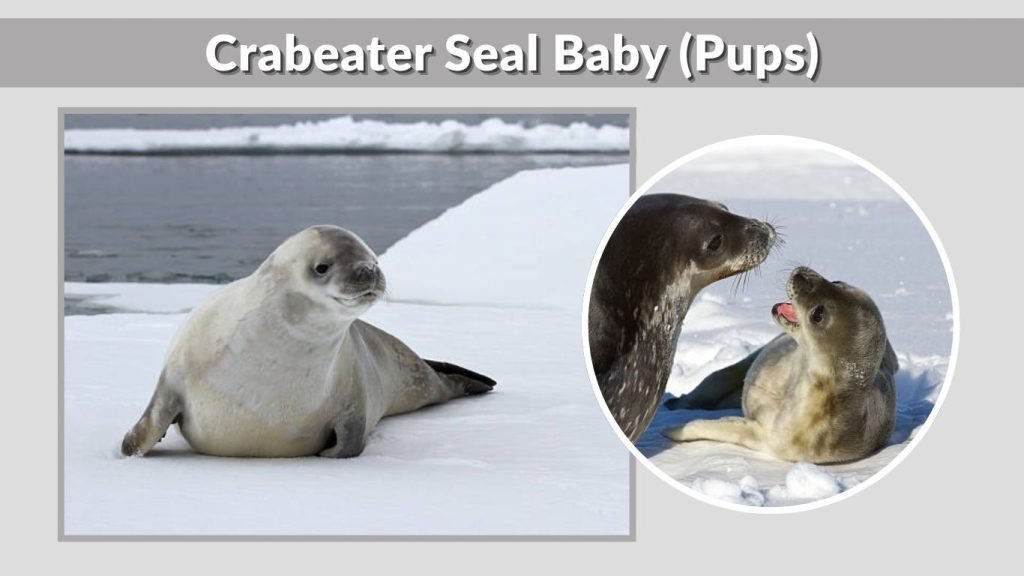
Newborn crabeater seal pups are covered in soft, white fur that helps them blend into the icy surroundings. This coat is later shed as they grow.
Pups grow rapidly due to their mother’s rich, high-fat milk. Within just a few weeks, they gain significant weight and develop the strength needed to survive independently.
Maternal Care
Mother crabeater seals are highly protective of their pups. During the nursing period, which lasts about two to three weeks, the mother stays close and provides constant care.
After weaning, the pup must quickly learn to fend for itself, including hunting and avoiding predators. This early independence is crucial for survival in the harsh Antarctic environment.
Life Cycle and Lifespan
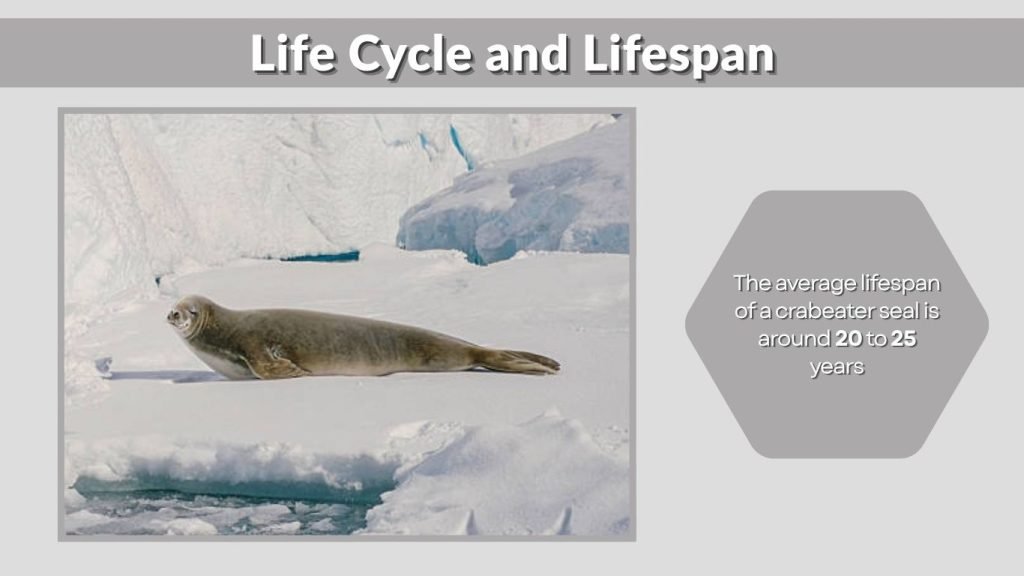
Crabeater seals go through several life stages, starting as vulnerable pups and growing into strong, independent adults. As they mature, they develop the skills necessary for hunting and navigating the icy seas.
The average lifespan of a crabeater seal is around 20 to 25 years, although this can vary depending on environmental conditions and predation risks.
Role in the Antarctic Ecosystem
Crabeater seals play a vital role in maintaining the balance of the Antarctic ecosystem. By consuming vast amounts of krill, they help regulate its population and prevent overgrowth.
They also serve as prey for larger predators, making them an important link in the food chain. Without crabeater seals, the delicate balance of the Antarctic marine ecosystem could be disrupted.
Threats and Conservation
Natural Threats
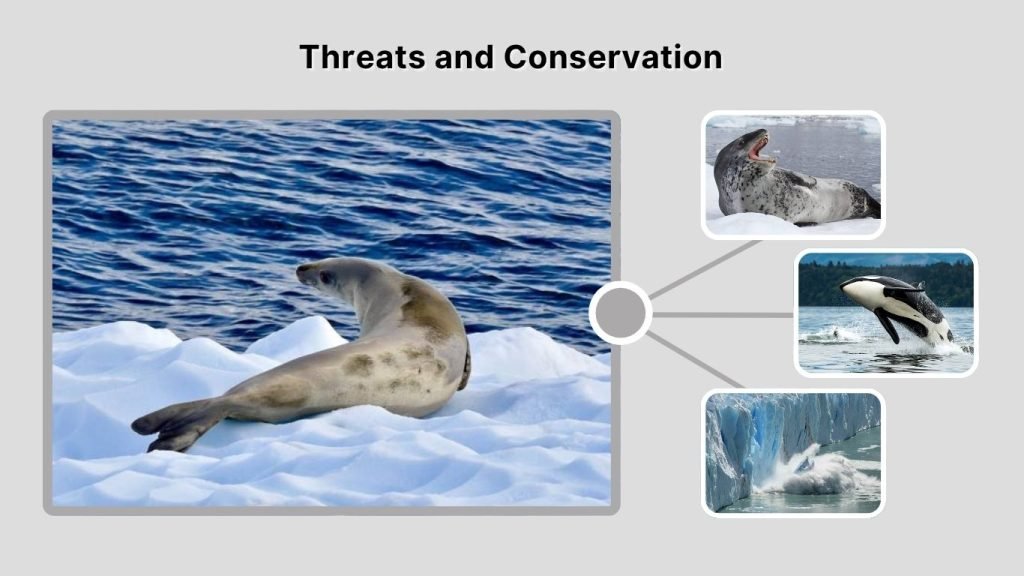
Natural threats mainly include predators such as leopard seals and killer whales. These predators play a role in controlling the population and maintaining ecological balance.
Environmental Challenges
One of the biggest threats to crabeater seals today is climate change. As global temperatures rise, Antarctic sea ice is changing, which can affect both their habitat and the availability of krill.
A decline in sea ice could reduce breeding grounds and disrupt feeding patterns, potentially impacting their population in the future.
Conservation Status
Currently, crabeater seals are classified as “Least Concern” by conservation organizations. This is mainly due to their large population and wide distribution.
However, scientists continue to monitor them closely because changes in the Antarctic environment could pose future risks.
Interesting Facts About Crabeater Seals
- Despite their name, crabeater seals do not eat crabs.
- They are possibly the most abundant seal species in the world.
- Their teeth are uniquely adapted for filter feeding, unlike any other seal.
- Many adults have scars from surviving predator attacks as pups.
- They depend heavily on sea ice for survival.
FAQs
How many crabeater seals are there in the world?
Scientists estimate there are between 10 million and 70 million crabeater seals, making them one of the most abundant large mammals on Earth.
What makes crabeater seals unique?
Their most unique feature is their specially adapted teeth, which act like a filter to trap krill from the water—something rarely seen in other seal species.
How fast can a crabeater seal swim?
Crabeater seals are strong swimmers and can reach speeds of up to 20–25 km/h (12–15 mph) in the water when escaping predators.
Do crabeater seals migrate?
Instead of long-distance migration, they move seasonally with the expansion and melting of Antarctic sea ice.
What do crabeater seal babies eat?
Crabeater seal pups rely entirely on their mother’s rich, fatty milk during the first few weeks of life before learning to hunt krill on their own.
Conclusion
The crabeater seal is a unique and essential part of the Antarctic ecosystem. From its specialized diet of krill to its dependence on sea ice, this species has adapted remarkably well to one of the harshest environments on Earth. Despite its misleading name, it plays a crucial role in maintaining ecological balance. As climate change continues to affect polar regions, understanding and protecting species like the crabeater seal becomes more important than ever.