




The great horned owl is one of the most powerful and widely recognized birds of prey in the Americas. Known for its piercing eyes, deep hooting calls, and distinctive ear tufts, this owl thrives in a wide range of environments—from dense forests to deserts and even urban areas. Its adaptability, strength, and hunting skills make it a dominant nocturnal predator. Understanding its size, sounds, and behavior reveals why this species is often called the “tiger of the sky.”
What Is a Great Horned Owl?
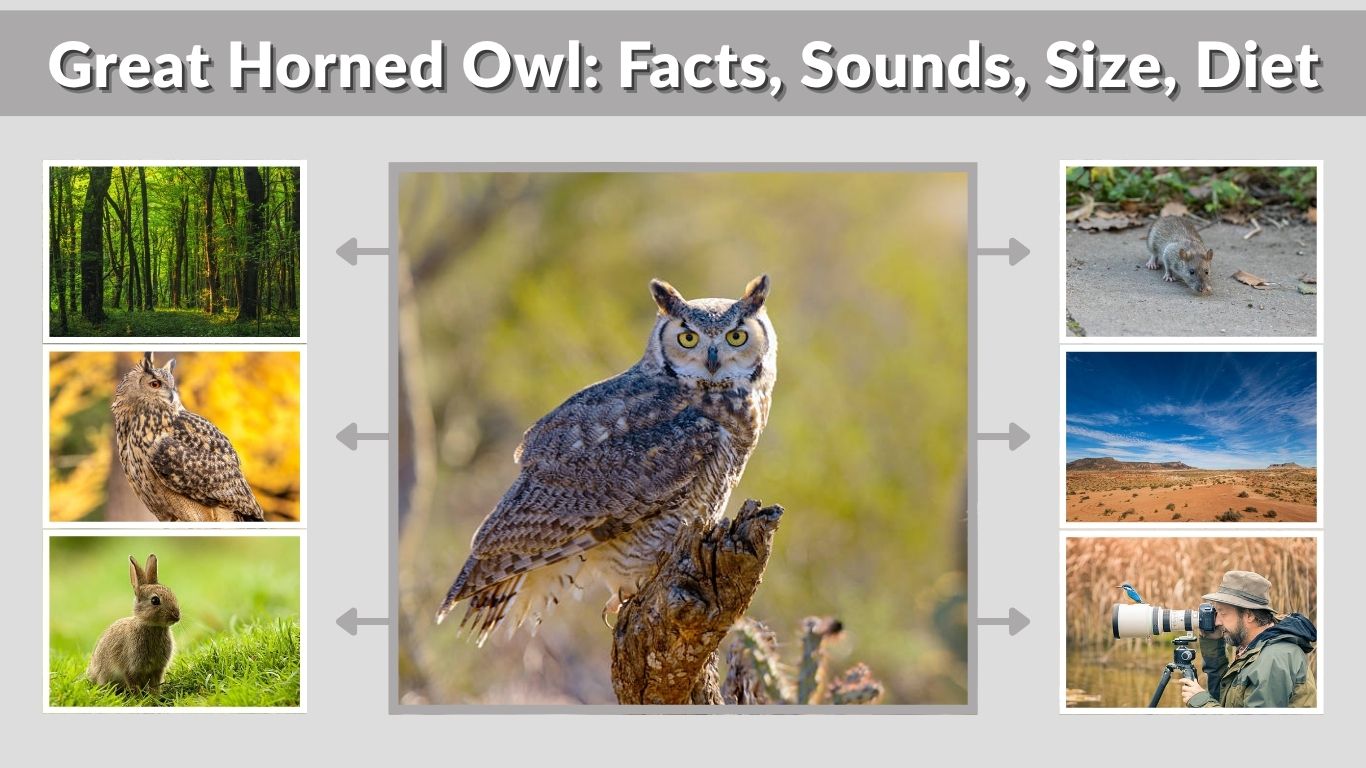
The great horned owl (Bubo virginianus) is a large, widespread owl species found across North and South America. It belongs to the genus Bubo, which includes some of the largest and most powerful owls in the world.
Despite its name, the “horns” are not actual horns. They are feather tufts known as ear tufts, which serve for camouflage and communication rather than hearing. These tufts help break up the owl’s outline, allowing it to blend into tree branches during the day.
This owl has earned a reputation as a fierce predator. It can hunt a wide variety of animals and is known for its strength, adaptability, and ability to thrive in different environments. In many cultures, the great horned owl symbolizes wisdom, mystery, and power.
Physical Characteristics and Size
Size and Measurements
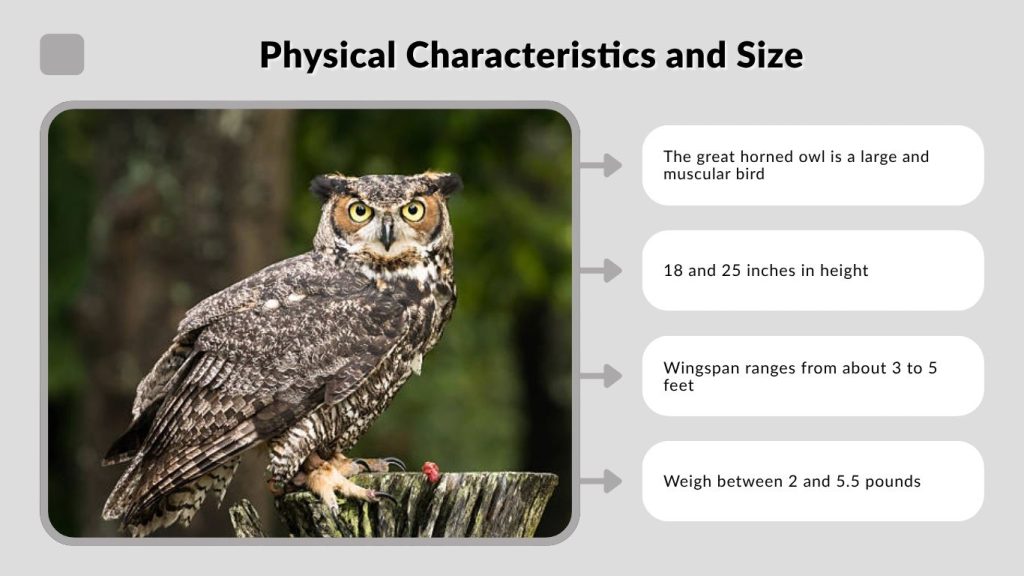
The great horned owl is a large and muscular bird with impressive physical proportions. Adults typically measure between 18 and 25 inches in height. Their wingspan ranges from about 3 to 5 feet, making them appear even larger in flight. They usually weigh between 2 and 5.5 pounds.
Females are generally bigger and heavier than males, which is common among raptors. When fully spread, their wings can be nearly as wide as an average adult human’s arm span, giving them excellent gliding ability and control in the air.
Appearance and Features
Great horned owls are easily recognized by their bold and striking features. Their most noticeable trait is the pair of feather tufts on their heads, which resemble horns.
They have large, forward-facing yellow eyes that provide excellent night vision. Their facial disk helps channel sound toward their ears, allowing them to locate prey even in complete darkness.
Their plumage is typically mottled gray, brown, and white, which acts as natural camouflage against tree bark. This helps them remain hidden during daylight hours.
One of their most powerful features is their talons. These sharp claws are incredibly strong and capable of delivering a crushing grip, allowing the owl to capture and subdue prey quickly.
Their wings are specially adapted for silent flight. The edges of their feathers reduce noise, enabling them to approach prey without being detected.
Great Horned Owl Sounds and Calls
Common Hooting Pattern
The great horned owl is famous for its deep, rhythmic hooting sound. This call is often described as a series of low, resonant “hoo” notes arranged in a pattern.
These hoots are most commonly heard at night and serve as a way to communicate territory and maintain contact between mates. Males typically produce deeper calls, while females respond with slightly higher-pitched hoots.
Types of Vocalizations
In addition to their classic hooting, great horned owls produce a wide range of vocal sounds depending on the situation.
They may emit loud screeches or screams when threatened or defending their territory. During the breeding season, they use softer, more rhythmic calls as part of courtship behavior. Young owls often produce raspy begging sounds when calling for food.
These vocalizations help the species communicate effectively in darkness, where visual signals are limited.
What Does a Great Horned Owl Sound Like?
A great horned owl’s call is deep, echoing, and unmistakable. It often carries long distances through forests and open landscapes, especially at night. Their hooting can create an eerie, haunting atmosphere, which is why they are often associated with wilderness and nighttime.
They are most vocal during the evening and early morning hours, particularly during the mating season. Listening for their calls is often the easiest way to detect their presence in an area.
Habitat and Range
Where Do Great Horned Owls Live?
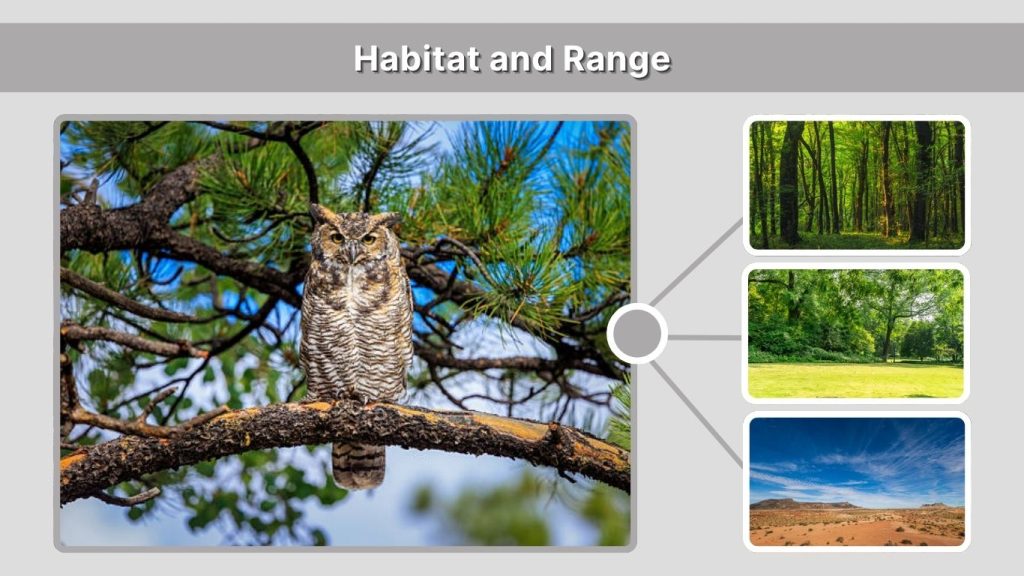
Great horned owls have one of the widest ranges of any owl species. They are found throughout North America, Central America, and much of South America.
Their ability to adapt to different climates and environments allows them to thrive in many regions, from cold northern forests to hot deserts.
Habitat Types
This species is highly adaptable and can live in a variety of habitats. These include dense forests, open woodlands, deserts, grasslands, and even urban and suburban areas.
They often prefer areas with a mix of open space for hunting and trees or cliffs for nesting and roosting. Their flexibility is a key reason for their success as a species.
Regional Distribution Examples
Great horned owls are commonly found in many parts of the United States, including Arizona, Texas, California, and Florida. In each region, they adjust their behavior and diet based on local conditions.
Their wide distribution and adaptability make them one of the most familiar and widespread owls in the Americas.
Diet and Hunting Behavior

What Do Great Horned Owls Eat?
Great horned owls are opportunistic predators with a very diverse diet. They will eat almost any animal they can catch and overpower. Their prey includes:
- Small mammals such as mice, rats, and rabbits
- Birds, including other owls and waterfowl
- Reptiles and amphibians
- Occasionally insects and fish
One of their most remarkable traits is their ability to hunt skunks, as they have a very limited sense of smell.
Hunting Techniques
These owls are highly skilled nocturnal hunters. They rely on a combination of stealth, sharp vision, and acute hearing.
Their flight is nearly silent due to specialized feather structures, allowing them to approach prey undetected. They typically hunt by perching quietly and scanning their surroundings before swooping down in a swift, powerful attack.
Their strong talons enable them to capture and kill prey instantly, often crushing it with force.
Predators and Threats
Adult great horned owls have very few natural predators due to their size and strength. However, eggs and young owls may be vulnerable to raccoons, crows, and other predators.
Human-related threats include habitat destruction, vehicle collisions, and poisoning from pesticides.
Behavior and Lifestyle
Great horned owls are primarily nocturnal, meaning they are most active at night. During the day, they rest in trees, often blending into their surroundings.
They are highly territorial and will defend their nesting area aggressively. Their behavior can become especially intense during the breeding season.
These owls are generally non-migratory. Most individuals stay in the same territory year-round, adapting to seasonal changes rather than relocating.
Their flight is powerful and controlled, allowing them to maneuver easily through forests or open landscapes.
Lifespan and Conservation Status

Great horned owls typically live around 10 to 15 years in the wild. In captivity, where threats are reduced, they can live significantly longer.
They are not considered endangered and are classified as a species of least concern. Their wide range and adaptability contribute to their stable population.
However, local populations can still be affected by environmental changes and human activity.
Reproduction and Nesting
Mating and Pairing
Great horned owls usually form long-term pair bonds. Many pairs stay together for years and may even mate for life.
The mating season typically begins in late winter. During this time, pairs engage in vocal duets and courtship displays.
Nesting Habits
Unlike many birds, great horned owls do not usually build their own nests. Instead, they take over abandoned nests built by other birds, such as hawks or crows.
They may also nest in tree cavities, cliffs, or even man-made structures. This flexibility helps them thrive in many environments.
Juvenile Development
After laying eggs, the female incubates them while the male provides food. Once hatched, the chicks grow rapidly.
Young owls, known as fledglings, begin exploring outside the nest before they can fly properly. They often climb branches and make short jumps as they develop strength.
Male vs Female Great Horned Owl
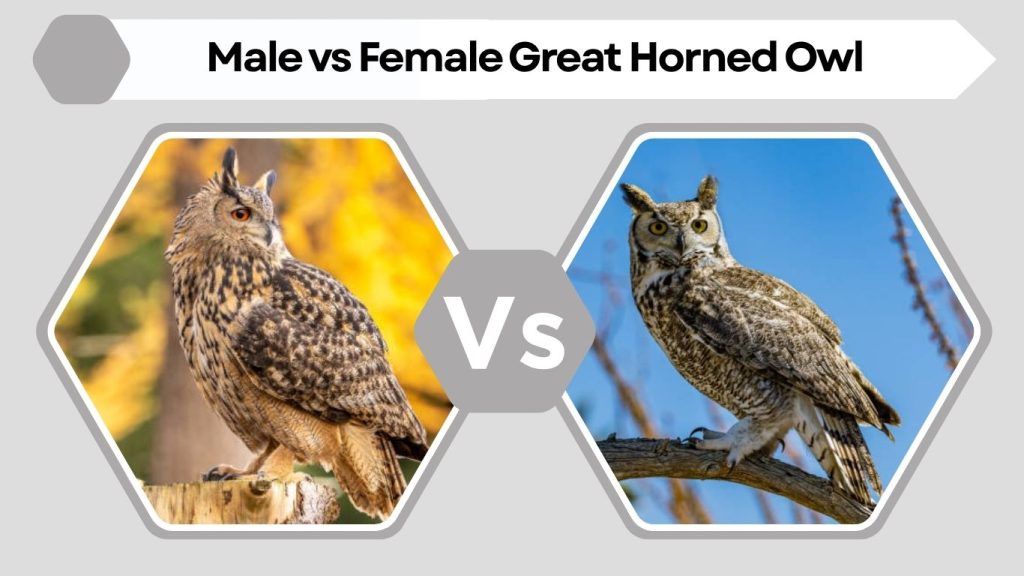
Female great horned owls are generally larger and heavier than males. This size difference helps divide roles during breeding, with females focusing more on incubation while males hunt more frequently.
Behaviorally, both sexes are aggressive defenders of their territory and young.
Nest Boxes and Human Interaction
In some areas, people attempt to attract great horned owls by installing nest boxes. However, these owls more commonly prefer natural or already existing nests.
If nest boxes are used, they should be placed high in sturdy trees and away from human disturbance.
It is important to keep a safe distance from nesting owls, as they can become defensive and may attack if they feel threatened.
Great Horned Owl in Flight and Visual Traits
In flight, the great horned owl appears broad-winged and powerful. Its wings are rounded, allowing for smooth and quiet movement through the air.
The silent nature of its flight is one of its greatest advantages as a predator. Observing one in flight is often difficult due to how quietly it moves.
Comparison with Other Owls
Barred Owl vs Great Horned Owl
The barred owl is slightly smaller and has a more rounded head without ear tufts. Its call is also very different, often described as “who cooks for you.”
In contrast, the great horned owl is more aggressive and has a deeper, more resonant hoot.
Barn Owl vs Great Horned Owl
Barn owls have a heart-shaped face and lighter coloration, while great horned owls have a more robust body and darker plumage.
Their hunting styles also differ slightly, with barn owls relying heavily on open fields, while great horned owls adapt to many environments.
Eurasian Eagle Owl vs Great Horned Owl
The Eurasian eagle owl is larger and heavier than the great horned owl and is found in Europe and Asia.
While both are powerful predators, the great horned owl is more widespread across the Americas.
Images, Drawings and Visual Representation

Great horned owls are frequently featured in wildlife photography due to their striking appearance. Images often highlight their intense yellow eyes, ear tufts, and camouflaged feathers.
They are also a popular subject for drawings and artistic representations, especially in nature and wildlife art.
Interesting Facts
The great horned owl has one of the strongest grips among birds of prey. Its talons can exert significant pressure, allowing it to capture large animals.
It is one of the few predators that regularly hunts skunks. It is also highly adaptable, able to survive in a wide range of environments.
Meaning and Symbolism
Throughout history, the great horned owl has been associated with wisdom, mystery, and power. In some cultures, it is seen as a symbol of protection, while in others it is linked to the night and the unknown.
Its haunting call and nocturnal nature contribute to its strong presence in folklore and mythology.
FAQs
What is a great horned owl’s favorite prey?
Great horned owls commonly prefer mammals such as rabbits, hares, and rodents. However, they are highly opportunistic and will eat whatever prey is available in their environment.
Can great horned owls see in complete darkness?
They cannot see in total darkness, but their night vision is extremely powerful. Combined with their excellent hearing, they can hunt effectively even in very low light conditions.
Are great horned owls dangerous to humans?
They are generally not dangerous to humans, but they can become aggressive if their nest or young are threatened. It is best to keep a safe distance during nesting season.
Why do great horned owls hoot at night?
They hoot at night to communicate territory, attract mates, and maintain contact with their partner. Nighttime is when they are most active.
How strong are great horned owl talons?
Their talons are extremely powerful and can exert significant pressure, allowing them to crush prey quickly. They are among the strongest of all birds of prey.