

The black widow spider (Latrodectus species) is infamous for its powerful venom. Although small in size, this spider delivers one of the most toxic venoms found in North America. A single bite can cause muscle cramps, severe pain, and nervous system disruption. While fatalities are rare today thanks to medical care and antivenom, the black widow’s venom remains one of the most studied spider toxins in the world.
What Is Black Widow Spider Venom?
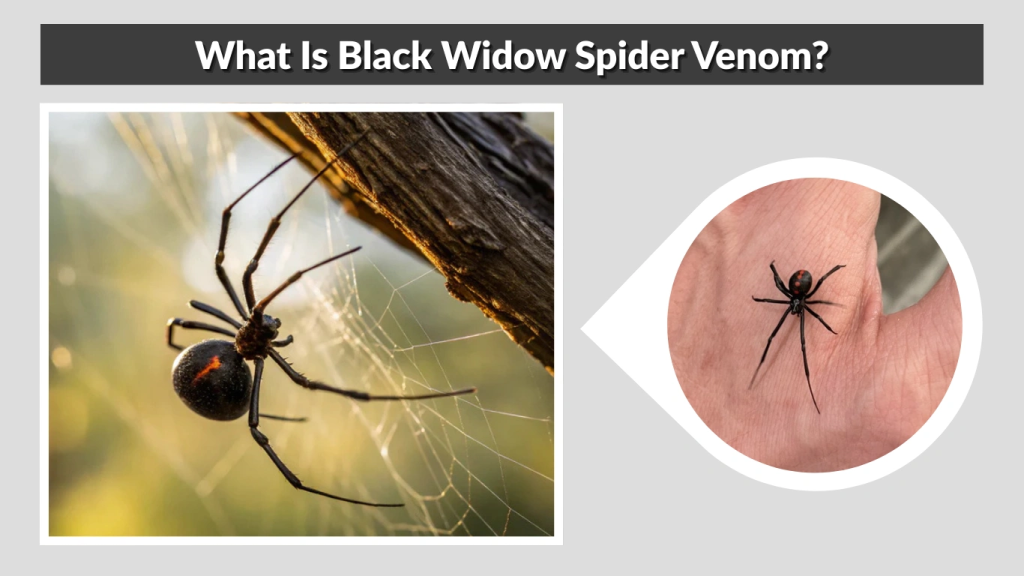
Black widow venom is a neurotoxic secretion that the spider injects through its fangs when defending itself or subduing prey. Unlike poisons, which must be ingested, venoms are delivered directly into the body through a bite or sting. This distinction makes the black widow venomous, not poisonous—a common misunderstanding.
Scientists often compare the potency of black widow venom to rattlesnake venom. Drop for drop, it is considered up to 15 times stronger than rattlesnake venom. However, because spiders inject much smaller amounts, human deaths are extremely uncommon. The venom’s primary function is not to kill humans but to paralyze insects and small animals for food.
Composition and Chemistry
The venom of a black widow is a complex mixture of proteins, peptides, and enzymes. The most important component is α-latrotoxin, a potent neurotoxin that interferes with nerve communication. This toxin forces nerve cells to release massive amounts of neurotransmitters, especially acetylcholine, norepinephrine, and dopamine.
Other compounds in the venom amplify its effects by damaging tissue and increasing pain sensitivity. Female black widows, which are larger and more capable of delivering venom, are far more dangerous than males. Baby black widows do have venom, but they rarely inject enough to cause severe symptoms in humans.
Venom Potency
The black widow is often described as the most venomous spider in North America. Its venom is particularly effective at immobilizing prey within seconds. However, it’s worth noting that venom strength and delivery vary by species. For instance, the Australian redback spider—a close relative—has venom very similar to the black widow’s. Brown widows and false widows, by contrast, have weaker venom and are less medically significant.
Mechanism of Black Widow Spider Venom

The venom of a black widow spider acts directly on the nervous system, which explains why it causes symptoms like muscle spasms and convulsions rather than tissue necrosis (as seen with brown recluse spiders).
How It Works in the Nervous System
When a person is bitten, the venom targets nerve endings, especially at the neuromuscular junction, where nerves communicate with muscles. The α-latrotoxin binds to receptors on nerve cells and creates pores in the cell membrane. This abnormal opening forces neurotransmitters to be released uncontrollably.
The result is a storm of nerve signals that the body cannot regulate. Muscles contract violently, nerves misfire, and the victim experiences extreme pain, cramps, and sometimes difficulty breathing.
Role of Acetylcholine
One of the most studied aspects of black widow venom is its effect on acetylcholine, a neurotransmitter responsible for muscle movement. Normally, acetylcholine is released in precise amounts, allowing controlled muscle contractions. The venom, however, causes the excess release of acetylcholine, leading to continuous stimulation of muscles.
This explains why victims experience intense muscle spasms, abdominal cramping, and sometimes rigid paralysis. Researchers have debated whether the venom acts as an agonist or antagonist. In reality, it functions as an agonist, overstimulating receptors rather than blocking them.
Venom Action in Synaptosomes
In laboratory studies with synaptosomes (isolated nerve terminals), scientists found that black widow venom causes a massive, uncontrolled release of several neurotransmitters. Acetylcholine is the most affected, but dopamine and norepinephrine are also released in excess.
This neurotransmitter overflow disrupts normal brain and muscle communication, producing the wide range of symptoms that follow a bite. Because of this mechanism, the venom is considered a neurotoxin rather than a cytotoxin.
Effects of Black Widow Venom on Humans

The venom’s effects are well documented, and most symptoms appear within an hour of being bitten.
Symptoms and Signs
- Severe pain around the bite area, sometimes spreading across the body
- Muscle spasms and abdominal cramping, often mistaken for appendicitis or kidney stones
- Sweating and chills, due to overstimulation of nerve pathways
- Nausea and vomiting, in more serious envenomations
- Difficulty breathing, if chest muscles become rigid
- Convulsions and tremors, caused by the excess release of neurotransmitters
Interestingly, the bite mark itself may be small and barely noticeable, which sometimes delays proper diagnosis.
Venom Toxicity in Children and Elderly
While healthy adults usually recover with treatment, the venom poses greater risks for children, elderly individuals, and those with weakened immune systems. In these cases, symptoms can escalate rapidly, and hospitalization is often required.
Historically, deaths occurred before modern medicine was widely available, particularly in young children. Today, fatalities are extremely rare, thanks to antivenom and supportive care.
Venom Duration
How long does black widow venom remain in the system? Symptoms usually peak within 12 to 24 hours after the bite, then gradually subside over two to three days. In some severe cases, muscle pain and weakness can linger for weeks.
The human body metabolizes and clears the venom over time, but medical intervention speeds recovery and prevents complications.
Medical Implications and Treatments
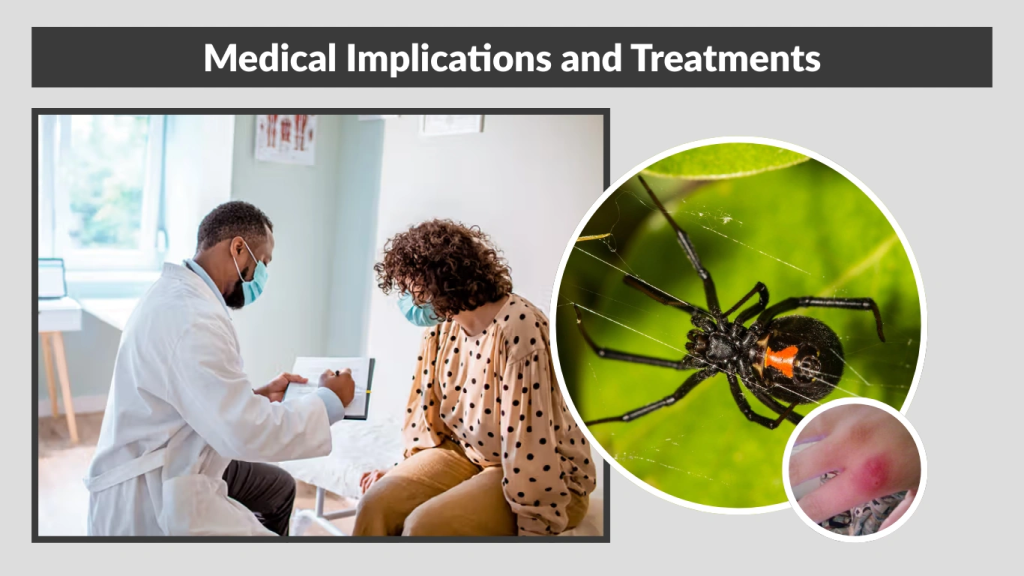
Because black widow venom directly targets the nervous system, bites can be extremely painful and alarming. Immediate treatment is essential to prevent severe complications.
First Aid and Emergency Response
If bitten, the first steps are:
- Clean the wound with soap and water to reduce infection risk.
- Apply a cold compress to minimize swelling and slow venom spread.
- Keep the bitten limb immobilized to reduce circulation of venom.
- Seek medical attention quickly, especially for children, elderly people, or those experiencing severe muscle pain.
One important caution: do not try to suck out venom or cut the bite. These methods are ineffective and can make things worse.
Anti-Venom
The most effective treatment for severe black widow bites is antivenom. The first black widow antivenom was developed in the 1930s and is still used today. Pharmaceutical companies such as Merck & Co. have manufactured antivenoms designed to neutralize α-latrotoxin before it causes widespread damage.
Antivenom is usually reserved for serious cases, as it carries a risk of allergic reaction. However, when administered under medical supervision, it can relieve symptoms within hours. Thanks to this treatment, fatalities from black widow bites in North America are now extremely rare.
Symptomatic Treatment
Not every patient requires antivenom. In moderate cases, doctors focus on symptom management, including:
- Painkillers (morphine, opioids, or nonsteroidal anti-inflammatory drugs)
- Muscle relaxants to reduce spasms
- IV fluids to maintain hydration and reduce systemic effects
- Oxygen support in cases of chest tightness or breathing difficulty
Hospitalization may be necessary if symptoms worsen or persist. Children are often admitted as a precaution, even for moderate bites.
Black Widow Venom in Science and Research

Black widow venom is not only a medical concern—it is also a scientific resource. Researchers study its components to better understand how the nervous system works and to explore possible medical applications.
Medical Uses of Venom Components
The primary toxin, α-latrotoxin, is valuable in neuroscience research because it provides insight into how neurotransmitters are released. By overstimulating synapses, scientists can observe the pathways of nerve communication in detail.
Some studies compare its effects with botulinum toxin, which blocks acetylcholine release. Together, these toxins help researchers understand opposite mechanisms—overstimulation vs. paralysis—providing knowledge that could lead to new treatments for neurological disorders.
Venom Extraction
Extracting venom from black widows is a delicate process. Researchers carefully restrain the spider and stimulate its fangs to collect venom droplets. This venom is then analyzed, purified, or used in the development of antivenom.
Because the process is labor-intensive and yields only tiny amounts, black widow venom is extremely expensive on the market. In fact, it is valued at thousands of dollars per gram, making it one of the most costly natural substances used in laboratory research.
Comparisons With Other Spiders

Black widow venom is often compared with that of other spiders in the Latrodectus family.
Redback Spider vs Black Widow Venom
The Australian redback spider is closely related to the black widow and has nearly identical venom. In fact, symptoms of redback bites are so similar that treatments and antivenoms often overlap. Both spiders rely on α-latrotoxin to disrupt nerve function, but redback bites are more common in Australia due to the spider’s wider distribution in urban areas.
Brown Widow and False Widow Venom
The brown widow spider has venom that is chemically similar but significantly less potent. Bites are painful but rarely dangerous. The false widow spider (Steatoda species), often confused with black widows, also produces mild symptoms but is not life-threatening. Correct identification is crucial, as panic over a false widow bite is common.
Key Facts About Black Widow Venom
- 15x stronger than rattlesnake venom drop for drop, but injected in smaller amounts.
- Acts as a neurotoxin, targeting the nervous system instead of destroying tissue.
- Female spiders produce much more dangerous bites than males.
- Modern antivenom has reduced deaths to nearly zero in North America.
- Symptoms usually peak within 24 hours but may last for days or weeks.
FAQs
Is a black widow spider venomous or poisonous?
Black widows are venomous, not poisonous. They inject venom through their fangs, unlike poisons which must be eaten or touched.
How does black widow venom affect the nervous system?
The venom’s main toxin, α-latrotoxin, causes massive release of neurotransmitters like acetylcholine, leading to spasms, cramps, and nervous system disruption.
Can you die from a black widow bite?
While the venom is potent, fatalities are extremely rare today thanks to antivenom and hospital care. Children and elderly patients remain at higher risk.
How is antivenom made for black widow bites?
Antivenom is created by exposing animals (usually horses) to small doses of venom. Their immune system produces antibodies, which are then purified and used to neutralize the venom in humans.
How long does it take for black widow venom to leave the body?
Symptoms typically last two to three days, though some pain and muscle weakness may linger for weeks. With treatment, recovery is much faster.
