The Huntsman spider, known for its large size and speed, often sparks fear when spotted indoors. Despite its intimidating appearance, this spider’s venom is often misunderstood. Many people wonder if Huntsman spiders are venomous and how dangerous their bites can be. In this guide, we’ll explore their venom, toxicity level, and effects on both humans and pets while separating myths from scientific facts.
Overview of Huntsman Spiders and Their Venom

Huntsman spiders belong to the family Sparassidae and are native to warm regions worldwide, including Australia, Asia, and parts of the Americas. They are fast, agile hunters that rely on ambush rather than webs. Their venom plays a vital role in subduing prey, but it’s not designed to harm humans.
Unlike truly dangerous spiders such as the Sydney funnel-web or black widow, the Huntsman’s venom is mild. It’s used primarily to paralyze insects and small animals. Understanding their venom’s true purpose helps dispel fear and highlights their role in natural pest control.
Are Huntsman Spiders Venomous or Not?

Yes, Huntsman spiders are venomous — but not in a dangerous way. The term “venomous” simply means they can inject venom through their fangs. This venom helps them capture prey, not attack humans. Their bites are rare and occur mainly when the spider feels cornered or threatened.
In most cases, a Huntsman spider bite causes mild symptoms such as redness, slight pain, and temporary swelling. These effects usually fade within hours or days. Severe reactions are uncommon and typically linked to allergic responses rather than venom potency.
How Venom Works in Huntsman Spiders
The Huntsman’s venom originates in specialized glands located behind its fangs. When hunting, the spider injects venom into its prey through quick fang strikes. This venom immobilizes insects within seconds, allowing the spider to feed safely.
The chemical makeup of the venom includes mild neurotoxins that affect smaller creatures but are too weak to harm humans. These toxins serve both as a hunting tool and as a defense mechanism against predators. The venom also contains enzymes that help pre-digest the prey’s internal tissues, making it easier for the spider to consume.
Huntsman Spider Venom Toxicity

Research shows that the toxicity level of Huntsman spider venom is quite low compared to other spider species. Its venom isn’t considered medically significant to humans. Most bites result in minor discomfort, with symptoms like localized swelling, burning, or slight itching.
There’s no evidence that Huntsman venom causes necrosis or systemic poisoning. Their large fangs can puncture the skin, but the venom itself doesn’t pose a serious threat. Medical treatment is rarely required unless there’s an allergic reaction or secondary infection.
Scientists have analyzed venom samples from several species, including the giant and Australian Huntsman spiders, and found that their toxins primarily affect insects. This supports the conclusion that Huntsman venom evolved for hunting efficiency, not defense against larger animals.
Are Huntsman Spiders Dangerous to Humans?

Despite their fearsome reputation, Huntsman spiders are not dangerous to humans. They are timid by nature and prefer to escape rather than bite. Most reported bites happen when people accidentally trap or handle them.
The immediate reaction to a bite may include mild pain or tingling, but these effects are short-lived. Applying ice and keeping the bite area clean is usually enough. There are no confirmed deaths or serious medical emergencies caused by Huntsman spiders.
In Australia and tropical regions, where these spiders are common, many homeowners coexist with them peacefully because they help control pests like cockroaches and mosquitoes. Their presence indoors is often more beneficial than harmful.
Venom Effects on Pets (Dogs and Cats)
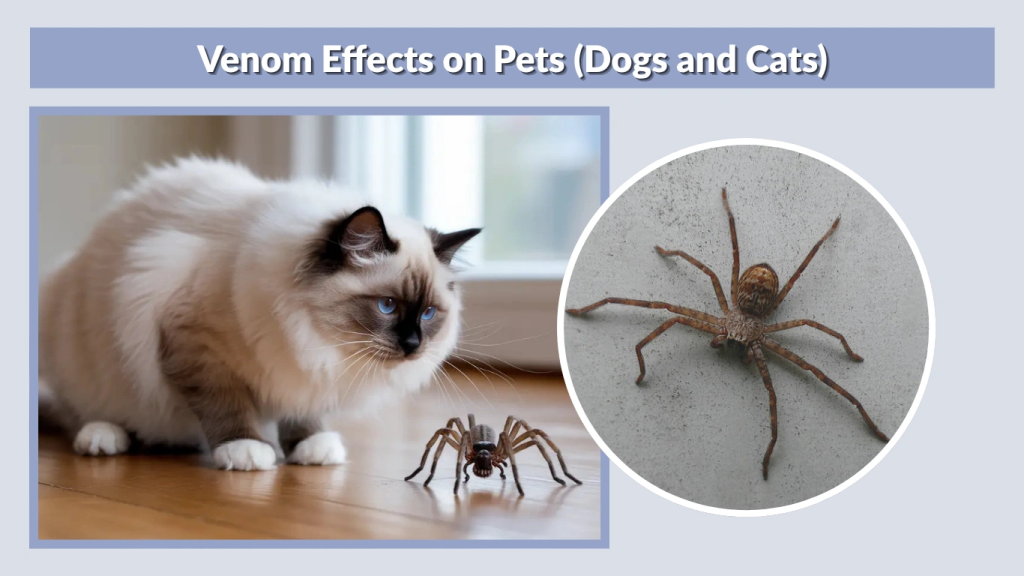
Pet owners often worry about the effects of Huntsman spider venom on animals. Fortunately, the venom poses minimal risk to dogs and cats. A bite may cause slight irritation or swelling, but it’s rarely dangerous.
If a pet is bitten, watch for signs such as licking, redness, or limping. Most symptoms subside within a day or two. Veterinary care is only necessary if the swelling spreads or the animal appears lethargic.
Huntsman spiders usually avoid pets altogether. Since they prefer hiding in dark corners or under objects, direct encounters with animals are uncommon. Their venom is optimized for insects, not mammals, which explains the mild impact on pets.
Species-Specific Venom Differences

Giant Huntsman Spider Venom
The giant Huntsman spider (Heteropoda maxima)—the world’s largest spider by leg span—looks intimidating, but its venom is not more toxic than that of smaller Huntsman species. Its bite can cause mild discomfort due to larger fangs, yet the venom composition remains relatively weak. Most reported cases involve temporary swelling or redness without long-term effects.
Australian Huntsman Spider Venom
Australia is home to several Huntsman species, and their venom is among the most studied. While Australians often encounter these large spiders indoors, their venom is not medically significant. The bite may feel similar to a bee sting but quickly subsides. Many residents appreciate Huntsman spiders for controlling insect populations naturally.
Green and Brown Huntsman Spider Venom
Green Huntsman spiders (Micrommata virescens) and brown species found in tropical regions share similar venom properties—designed mainly to paralyze insects. Their venom contains low-level neurotoxins that have no harmful effects on humans. These species are less aggressive and rarely bite unless provoked.
Regional Variations in Huntsman Spider Venom

Huntsman spiders have adapted to various environments, from deserts to rainforests. The desert Huntsman uses its venom efficiently to capture prey in dry conditions, while the pantropical Huntsman thrives in humid areas. Despite environmental differences, venom potency remains consistently mild across all species.
In regions like Florida and Phoenix, where Huntsman spiders have spread, local observations confirm they are harmless to humans. Their venom remains identical in strength, indicating that geography doesn’t significantly alter its chemical composition. This consistency reinforces the idea that these spiders are not dangerous, regardless of location.
Myths About “Massive” or “Venomous” Huntsman Spiders
The internet is full of exaggerated stories and viral images claiming giant, deadly Huntsman spiders exist. In reality, while they can reach impressive sizes, none are dangerously venomous. Their frightening appearance often leads to misidentification and fear-based myths.
Claims of “massive venomous Huntsman spiders” are scientifically inaccurate. These spiders play a crucial ecological role by controlling pests. Understanding their true nature helps reduce unnecessary fear and promotes coexistence, especially in areas like Australia where they are common house guests.
How to Stay Safe Around Huntsman Spiders
Huntsman spiders prefer to avoid confrontation. However, if you find one indoors, there are simple ways to stay safe:
- Avoid sudden movements or attempts to swat them.
- Use a jar and a piece of paper to gently trap and release them outside.
- Seal window gaps and remove clutter where they might hide.
- If bitten, clean the area with antiseptic and apply ice to reduce swelling.
Remember, these spiders are beneficial insect hunters. Keeping them around can help control mosquitoes, cockroaches, and other pests naturally.
FAQs
Are Huntsman spiders venomous to humans?
Yes, Huntsman spiders are venomous, but their venom is mild and not harmful to humans. It primarily targets insects. Bites cause minor symptoms like redness and pain, which fade within hours. Only rare allergic reactions require medical care.
How venomous is a Huntsman spider compared to others?
Their venom is far weaker than that of spiders like the funnel-web or brown recluse. Huntsman spiders’ venom is non-lethal to humans and mainly used for immobilizing prey. Pain from a bite is temporary and easily treated at home.
Can a Huntsman spider bite harm pets like dogs or cats?
Generally, no. Huntsman spider venom is not dangerous to dogs or cats. A bite might irritate the skin or cause mild swelling, but it heals quickly. If symptoms worsen or your pet acts unusually, consult a veterinarian.
Do all Huntsman species have the same venom level?
Most species share similar venom composition with slight variations. The giant and Australian Huntsman spiders produce more venom due to their size, but not stronger toxins. Across species, the venom remains mild and insect-specific.
Where does the venom of a Huntsman spider come from?
Venom is produced in glands located behind the fangs. When biting prey, muscles contract to release the venom, which immobilizes insects instantly. These glands evolved for efficient hunting, not for defense against humans or animals.