

The oleander hawk moth (Daphnis nerii) is one of the most striking and recognizable moth species in the world. Known for its vivid green camouflage and large size, this moth stands out among other members of the hawk moth family. Its unique appearance, fast flight, and fascinating life cycle make it a favorite among insect enthusiasts and gardeners alike.
Although it is commonly found in warm regions such as Africa, Asia, and the Mediterranean, the oleander hawk moth occasionally appears in cooler areas like the UK as a migrant species. In this guide, you’ll learn how to identify it, understand its life cycle, explore its habitat, and discover interesting facts about this remarkable insect.
What is the Oleander Hawk Moth?
The oleander hawk moth belongs to the Sphingidae family, a group of moths known for their strong flying ability and streamlined bodies. This species is widely distributed across tropical and subtropical regions and is especially associated with areas where oleander plants grow.
It gets its name from its primary host plant, the oleander, on which its caterpillars feed. Like other hawk moths, it is known for its rapid, hummingbird-like flight and ability to hover while feeding on nectar.
Key Characteristics
One of the most distinctive features of the oleander hawk moth is its intricate green pattern, which acts as camouflage among leaves. The combination of green, white, and pink markings helps it blend seamlessly into its surroundings, making it difficult for predators to spot.
In addition to its appearance, the moth is also known for its speed and agility. It is primarily nocturnal, meaning it is most active at night when it feeds on nectar from flowers using its long proboscis.
Oleander Hawk Moth Identification

The oleander hawk moth is relatively easy to identify thanks to its striking colors and large size. Unlike many dull-colored moths, this species features a vibrant green camouflage pattern that helps it blend into foliage. Its streamlined body and fast, hovering flight also make it stand out among other moth species.
Quick Identification Features
- Wingspan: 9–12 cm (large-sized moth)
- Color Pattern: Bright green with white and pink markings
- Wing Shape: Long, narrow, and pointed
- Body: Thick, streamlined for fast flight
- Flight Style: Hovering, hummingbird
- Activity Time: Nocturnal (active at night)
- Camouflage: Leaf-like pattern for hiding during the day
UK Identification Tips
- Rare migrant species in the UK
- Most sightings occur in late summer or autumn
- Easily distinguished by its green coloration (unlike most UK hawk moths)
This combination of size, color, and behavior makes the oleander hawk moth one of the most recognizable species in the hawk moth family.
Oleander Hawk Moth Caterpillar
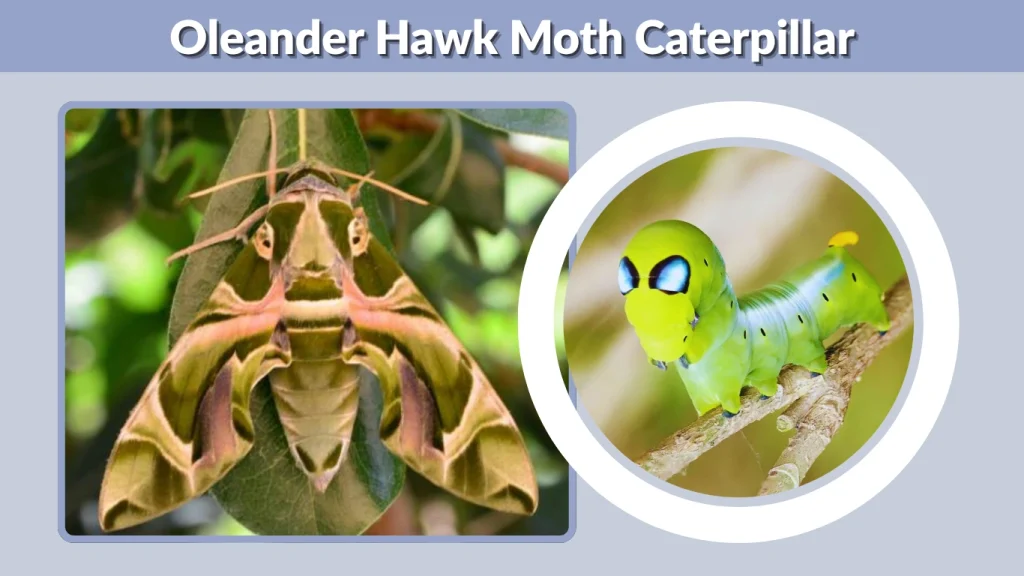
The caterpillar stage of the oleander hawk moth is just as fascinating as the adult form. It is known for its bold appearance and unique defensive adaptations.
Appearance and Features
The caterpillar is typically bright green, although it may sometimes appear brown in later stages. One of its most notable features is the presence of large eye spots near its head, which give it a snake-like appearance.
It also has a small horn at the rear end, a common trait among hawk moth larvae. As it grows, the caterpillar can reach lengths of up to 7–8 cm.
Diet and Host Plants
Oleander hawk moth caterpillars primarily feed on oleander plants, which are toxic to many animals. This diet helps protect the caterpillar from predators, as it may retain some of the plant’s toxic properties.
In addition to oleander, they may also feed on related plants such as periwinkle.
Defense Mechanisms
One of the most remarkable traits of this caterpillar is its ability to mimic a snake. When threatened, it retracts its head and inflates the front part of its body, making the eye spots more prominent. This behavior can scare off potential predators.
Oleander Hawk Moth Habitat

The oleander hawk moth thrives in warm climates and is commonly found in regions where its host plants are abundant.
Natural Distribution
This species is native to parts of Africa, Asia, and the Mediterranean. It prefers tropical and subtropical environments where temperatures remain relatively high throughout the year.
Preferred Environments
Oleander hawk moths are often found in gardens, coastal areas, and open landscapes where flowering plants are available. They are especially attracted to areas with oleander shrubs, which provide both food and breeding grounds.
Migration and UK Sightings
Although not native to the UK, the oleander hawk moth is known to migrate long distances. It occasionally reaches the UK during warmer months, making it an exciting find for wildlife enthusiasts.
Oleander Hawk Moth Life Cycle
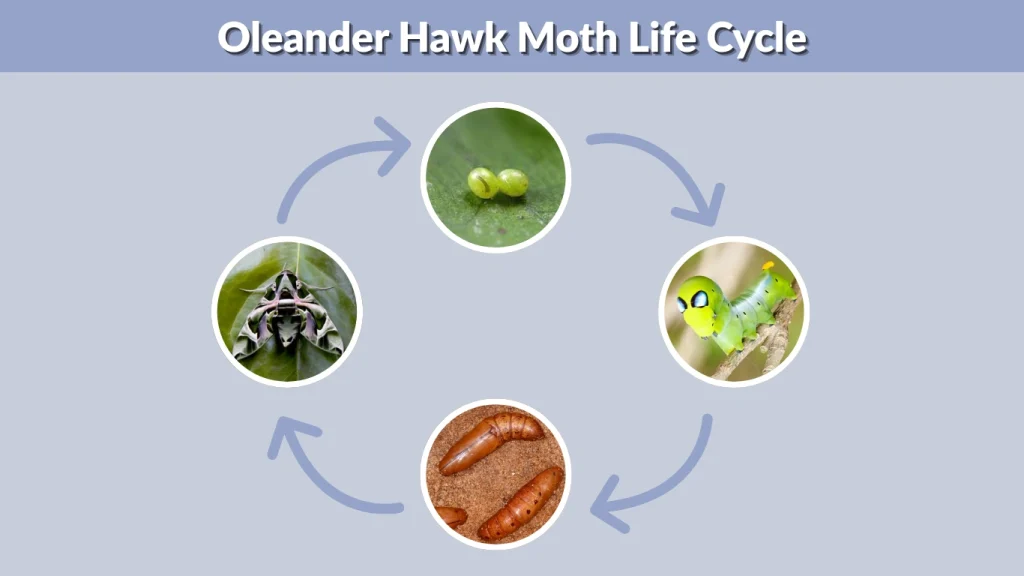
The life cycle of the oleander hawk moth follows a complete metamorphosis, consisting of four main stages: egg, larva, pupa, and adult. Each stage plays a vital role in the development of this species.
Egg Stage
The life cycle begins when the female moth lays small, round eggs on the leaves of host plants, particularly oleander. These eggs are usually laid individually or in small groups to ensure that emerging caterpillars have enough food.
The eggs typically hatch within a few days, depending on environmental conditions such as temperature and humidity.
Larval (Caterpillar) Stage
Once hatched, the caterpillar begins feeding immediately on the host plant. This stage is characterized by rapid growth and several molts, known as instars. During this time, the caterpillar consumes large amounts of leaves to store energy for the next stage.
As it grows, its color and markings may change slightly, but the distinctive eye spots and horn remain prominent. This stage lasts for a few weeks.
Pupal Stage
After reaching full size, the caterpillar leaves the plant and moves to the ground to pupate. It forms a protective casing, often in soil or leaf litter, where it undergoes transformation.
Inside the pupa, the caterpillar’s body reorganizes into the adult moth. This stage can last from a couple of weeks to longer periods, depending on climate conditions.
Adult Stage
The adult moth emerges from the pupa fully formed and ready to fly. Its primary goals are feeding and reproduction. Adults feed on nectar from flowers and are most active at night.
After mating, females lay eggs to begin the cycle again.
Oleander Hawk Moth Lifespan
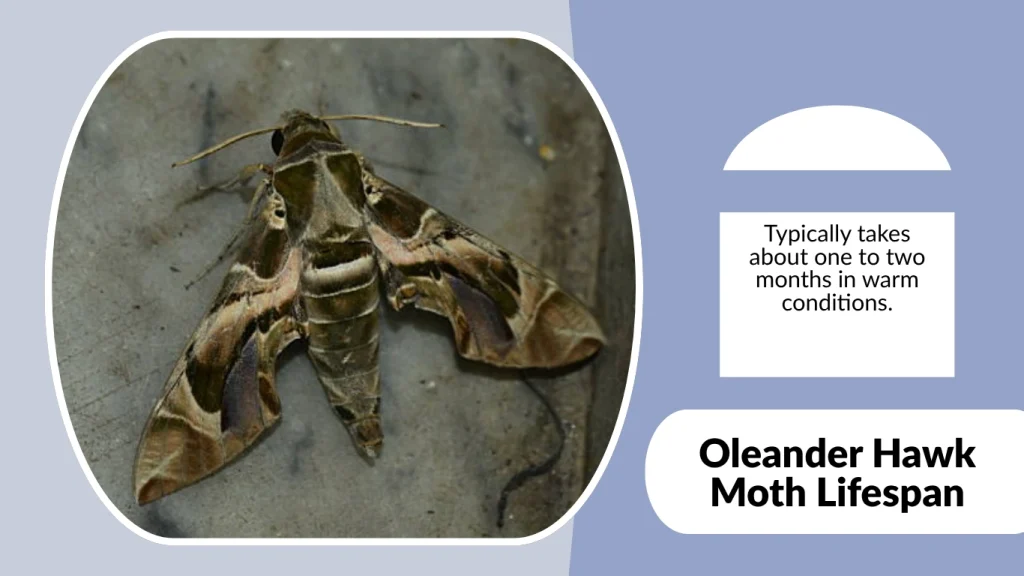
The lifespan of the oleander hawk moth varies depending on environmental factors, but it is generally relatively short.
From egg to adult, the entire life cycle typically takes about one to two months in warm conditions. The adult moth itself usually lives for around two to four weeks.
Temperature, food availability, and predation all influence how long each stage lasts. In cooler climates, development may slow down, extending the life cycle.
Oleander Hawk Moth Size
The oleander hawk moth is considered a large moth, both in its adult and caterpillar stages.
Adult Size
Adult moths have a wingspan of approximately 9 to 12 cm. Their long, narrow wings and streamlined bodies allow them to fly quickly and efficiently. This size also helps them hover while feeding, similar to hummingbirds.
Caterpillar Size
The caterpillar can grow up to 7–8 cm in length. Its size increases significantly during the larval stage, especially as it prepares for pupation. This growth is essential for storing the energy needed for metamorphosis.
Interesting Oleander Hawk Moth Facts
The oleander hawk moth is full of fascinating traits that make it stand out among other insects:
- It is considered one of the most beautifully patterned moths in the world
- Its camouflage helps it blend perfectly with leaves
- It can migrate long distances, sometimes reaching northern Europe
- The caterpillar feeds on toxic plants, which may help deter predators
- It can hover in mid-air while feeding, much like a hummingbird
These unique characteristics contribute to its popularity among researchers and nature enthusiasts.
Behavior and Adaptations
The oleander hawk moth has developed several adaptations that help it survive in its environment.
It is primarily nocturnal, meaning it is active at night. This behavior reduces the risk of predation and allows it to feed on night-blooming flowers.
Its camouflage is one of its most effective defenses. When resting during the day, its wing patterns resemble leaves, making it difficult for predators to detect.
The moth also has a long proboscis, which allows it to reach deep into flowers to extract nectar. This feeding behavior plays an important role in pollination.
Additionally, its strong flying ability enables it to migrate across long distances, expanding its range and increasing its chances of survival.
Is the Oleander Hawk Moth Dangerous?
Despite its large size and bold appearance, the oleander hawk moth is completely harmless to humans.
The caterpillar feeds on oleander, a toxic plant, but it does not pose a danger if touched. However, it is always advisable to handle insects with care.
In fact, the oleander hawk moth is beneficial to the environment, as it contributes to pollination and supports biodiversity.
FAQs
How can you identify an oleander hawk moth?
You can identify it by its large size, bright green wings with pink and white patterns, and its ability to hover like a hummingbird while feeding.
Is the oleander hawk moth found in the UK?
Yes, but it is a rare migrant species. It occasionally appears in the UK during warm late summer or autumn periods.
What makes the oleander hawk moth unique?
Its leaf-like camouflage, strong flight, and striking coloration make it one of the most distinctive and beautiful moths in the world.
When is the best time to spot an oleander hawk moth?
They are most active at night and are usually spotted during warmer months, especially in regions where they migrate.
How does it differ from other hawk moths?
Unlike most hawk moths, which have duller colors, the oleander hawk moth has a vivid green pattern and more pronounced camouflage, making it easier to distinguish.
Conclusion
The oleander hawk moth is a remarkable species known for its beauty, size, and adaptability. From its vividly patterned wings to its fascinating caterpillar stage, it offers a unique glimpse into the complexity of insect life.
Although it is most commonly found in warm climates, its occasional appearance in regions like the UK adds to its intrigue. Understanding its life cycle, habitat, and behavior not only deepens our appreciation of this species but also highlights the importance of conserving natural ecosystems.
Whether you are a nature enthusiast or simply curious about moths, the oleander hawk moth is truly a species worth observing and learning about.
