
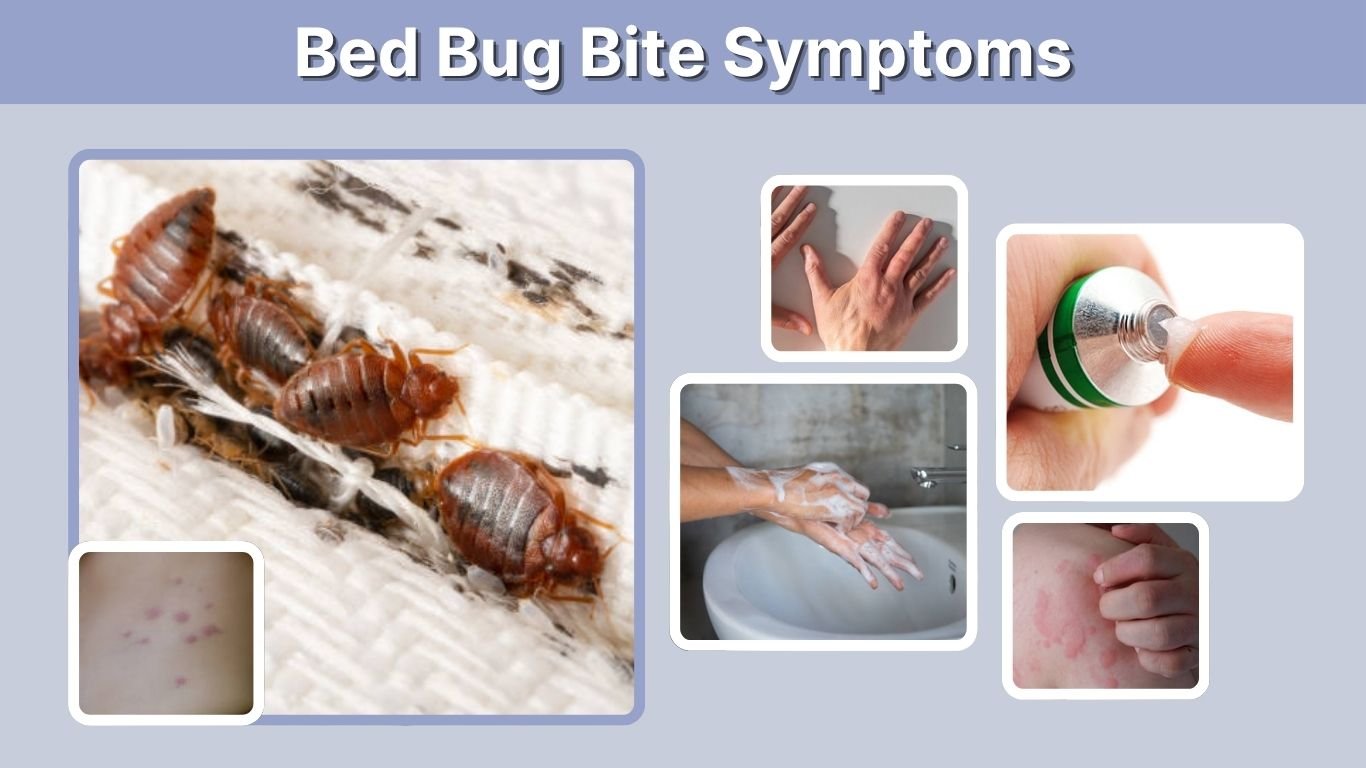
Bed bug bite symptoms can vary significantly from one person to another. Some people develop itchy, swollen marks within hours, while others may notice nothing for several days. Common signs include raised bumps, itching, redness or discoloration, and bites appearing in clusters or lines. Bed bug bites are usually not dangerous, but scratching can cause skin infections, and rare allergic reactions can occur. Understanding the appearance, timeline, and warning signs can help you determine when home care is enough and when medical attention is appropriate.
Common Bed Bug Bite Symptoms
Bed bugs usually feed while people are sleeping, and the bite itself often goes unnoticed. The body’s reaction to substances introduced during feeding produces most of the visible symptoms. Reactions range from no noticeable mark at all to intensely itchy welts. Because mosquito bites, flea bites, hives, and other skin conditions can look similar, bites alone cannot reliably confirm an infestation.
Early Signs and Symptoms
Common bed bug bite symptoms include:
- Small, raised or swollen bumps
- Itching around the bite area
- Red, pink, brown, or purple marks depending on skin tone
- Several bites grouped closely together
- Bites arranged in a line or zigzag pattern
- Mild burning or irritation
- Swelling around individual bites
- Bites mainly on skin exposed while sleeping
The face, neck, arms, hands, and other exposed areas may be affected. Bed bug bites are frequently grouped together, although they do not always follow a recognizable pattern.
What Do Bed Bug Bites Feel Like?
Many people do not feel anything when a bed bug is actually feeding. Bed bugs introduce substances that help them obtain a blood meal without immediately alerting the person.
Later, itching is usually the most noticeable symptom. Some bites remain mildly irritating, while others become extremely itchy and swollen. Individual reactions can also change with repeated exposure, so a person who barely reacted previously may experience more noticeable symptoms later.
Day 1 Bed Bug Bite Symptoms and Timeline
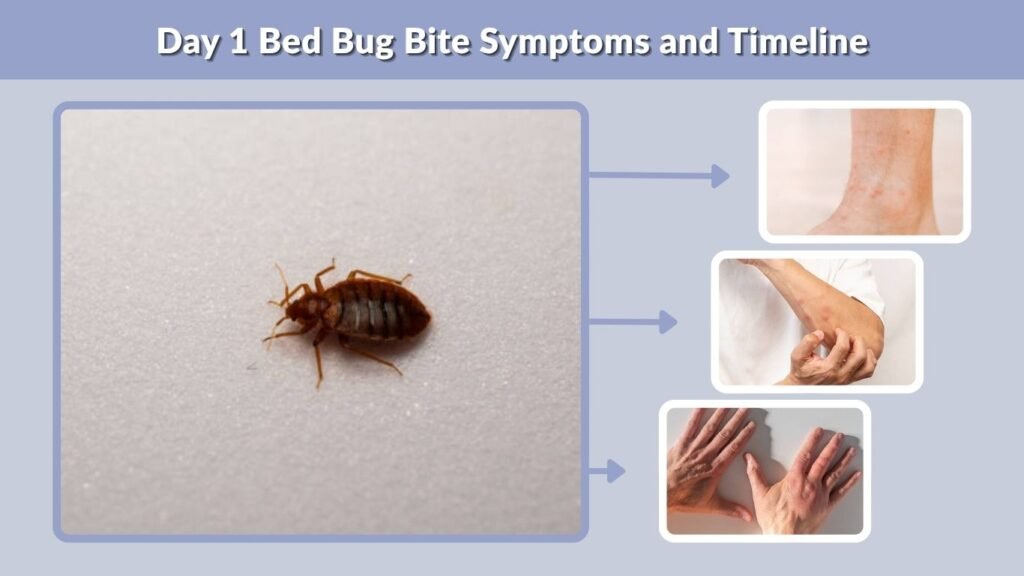
Bed bug bite symptoms do not always develop immediately. The CDC reports that bite marks may appear from one to several days after a bite. The American Academy of Dermatology notes that first-time reactions can sometimes take considerably longer to become itchy. This delayed response makes it difficult to determine exactly where or when someone encountered bed bugs based only on their skin.
Day 1 Bed Bug Bite Symptoms
During the first day, you might notice:
- No visible symptoms at all
- Small raised spots
- Mild redness or discoloration
- Slight itching
- Small clusters of bites
- Localized swelling
- Several marks appearing close together
Having no symptoms on day one does not rule out bed bug exposure. Some people never develop obvious skin reactions, while others develop visible marks relatively quickly.
How Long After a Bite Do Symptoms Appear?
Symptoms can appear within hours in some people, particularly those who have previously reacted to bed bug bites. For others, noticeable marks develop after several days.
The AAD notes that with an initial exposure, it can sometimes take up to about 14 days for itchy welts to develop. Repeated exposure may lead to faster reactions in susceptible people. This variation is one reason identifying an infestation requires inspecting the sleeping environment as well as examining bites.
Bed Bug Bite Allergy and Severe Symptoms
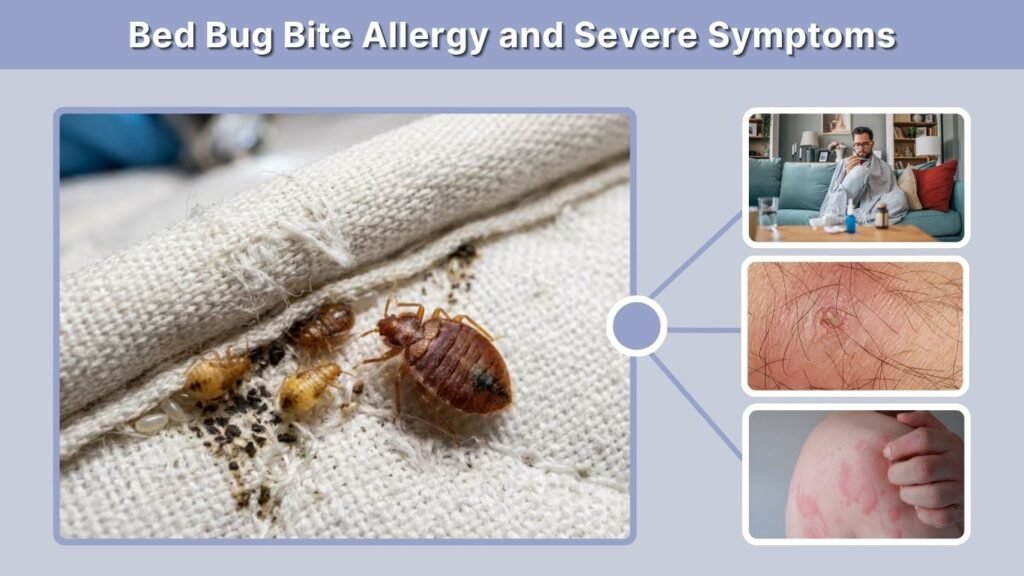
Most bed bug bites cause only temporary skin irritation and do not require medical treatment. However, some people develop stronger allergic reactions. Excessive scratching can also damage the skin and allow bacteria to enter. Severe reactions are uncommon, but knowing the warning signs is important, especially when swelling, blistering, infection, or symptoms beyond the immediate bite area develop.
Symptoms of a More Serious Reaction
Seek medical advice for concerning symptoms such as:
- Large or painful areas of swelling
- Hives
- Large blisters
- Increasing tenderness around the bites
- Pus or other drainage
- Spreading redness or discoloration
- Fever or feeling unusually unwell
- Numerous bites with a severe reaction
Difficulty breathing, swelling of the tongue or throat, or other symptoms of a severe allergic reaction require urgent medical attention. Serious allergic reactions to bed bug bites are rare but possible.
Infected Bed Bug Bite Symptoms
Bed bugs themselves are not known to transmit diseases to people. However, intense itching may lead to repeated scratching, which can damage the skin and contribute to a secondary bacterial infection.
An infected bite may become increasingly painful, tender, warm, swollen, or produce discharge such as pus. Rather than continuing to treat worsening symptoms at home, contact a healthcare professional if infection is suspected. Antibiotic treatment may sometimes be necessary for a secondary bacterial infection.
Bed Bug Bite Appearance on Different Skin Tones
The appearance of bed bug bites depends partly on natural skin color and individual inflammation. Descriptions such as “red bumps” do not accurately represent every person. On lighter skin, inflammation may appear pink or red. On brown or black skin, bite marks may appear red, darker brown, purple, or otherwise darker than the surrounding skin and can sometimes be less obvious visually.
Bed Bug Bite Symptoms on Black or Brown Skin
On darker skin tones, itching and swelling may be more noticeable than redness. Marks may look brown, dark red, purple, or slightly raised compared with the surrounding skin.
Look for the overall pattern rather than color alone. Multiple itchy bumps that appear after sleeping, particularly on exposed skin, can raise suspicion. However, skin appearance by itself cannot prove that bed bugs caused the reaction.
Bed Bug Bites vs. Mosquito Bites
Bed bug and mosquito bites can look remarkably similar. Both can produce itchy, raised, swollen marks. Bed bug bites are more likely to occur in groups, lines, or zigzag arrangements, but this pattern is not always present.
Finding evidence around the bed provides stronger support for an identification. Blood spots, shed skins, dark fecal marks, eggs, or live bed bugs around mattresses and furniture are much more useful than trying to diagnose an infestation solely from bite appearance.
Bed Bug Bite Symptoms and Treatment
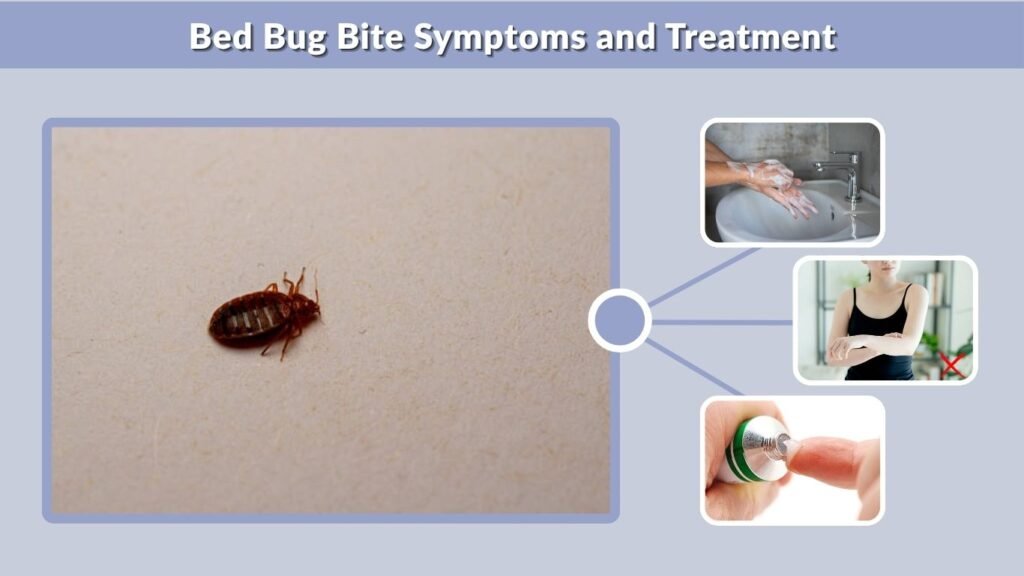
Most uncomplicated bed bug bites improve without extensive medical treatment. The main goals are relieving itching, protecting damaged skin, and avoiding scratching that can lead to infection. Treating the skin does not eliminate an infestation, however. Continued exposure can cause new bites, so the source of the bed bugs must also be identified and effectively controlled.
How to Treat Bed Bug Bite Symptoms
For mild reactions:
- Wash the affected skin gently with soap and water.
- Keep the bite area clean.
- Avoid scratching the bumps.
- Apply a clean, cool damp cloth for itching or swelling.
- Ask a pharmacist or healthcare professional about an appropriate mild corticosteroid cream if needed.
- Anthistamine may help some people with significant itching.
Children, pregnant people, and anyone with significant medical conditions should check with an appropriate healthcare professional before using medications when there is uncertainty about their suitability.
How Long Do Bed Bug Bite Symptoms Last?
Uncomplicated bed bug bites commonly improve within approximately one to two weeks, although the exact duration varies according to the person’s reaction and whether the area continues to be scratched.
New marks appearing repeatedly may indicate continued exposure rather than old bites failing to heal. If symptoms persist, become increasingly painful, show signs of infection, or are accompanied by significant swelling or other systemic symptoms, medical evaluation is appropriate.
FAQs
Bed bug bites can be difficult to recognize because reactions differ widely between individuals and overlap with other insect bites and skin conditions. Some people react within hours, while others develop marks much later or have no visible reaction. The following answers address common questions about early symptoms, bite appearance, itching, duration, and determining whether bed bugs are responsible.
What are the first symptoms of a bed bug bite?
Early symptoms may include small raised bumps, itching, localized swelling, and red, brown, or purple discoloration. However, some people have no noticeable symptoms initially.
Can bed bug bite symptoms appear on the first day?
Yes. Some people notice bites within hours or by the following day. Others may not develop obvious symptoms until several days later, making the timing highly variable.
How long do bed bug bite symptoms last?
Many uncomplicated bites disappear within one or two weeks. Scratching, allergic reactions, secondary infection, or continued exposure can make symptoms last longer.
Are bed bug bites always itchy?
No. Reactions vary substantially. Some people experience intense itching, while others develop small marks with little discomfort or have no visible reaction at all.
How can I know if my bites are from bed bugs?
Bites alone cannot provide definite identification. Look for additional evidence such as live bed bugs, shed skins, dark fecal spots, eggs, or small blood marks around mattresses, bed frames, headboards, and nearby furniture.
