
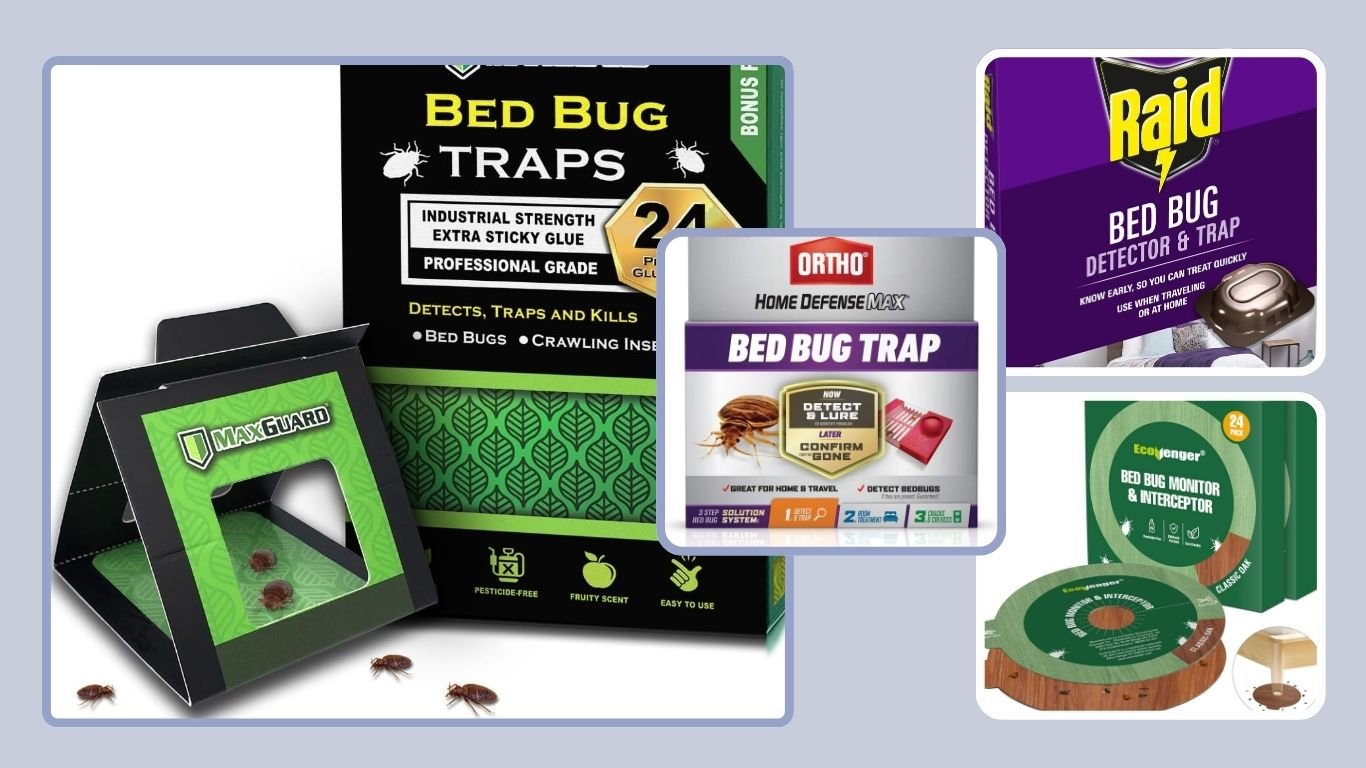
Bed bug traps can help detect activity early, monitor an existing problem, and reduce the number of bugs reaching beds and upholstered furniture. The best options include interceptor cups, sticky monitors, and discreet detector traps that can be placed under bed legs or around sleeping areas. While traps are not a complete treatment for an infestation, they can be a useful part of a broader control plan. In this guide, we review 8 of the best bed bug bed traps based on design, placement, monitoring ability, and ease of use.
1. MaxGuard Bed Bug Detection Traps
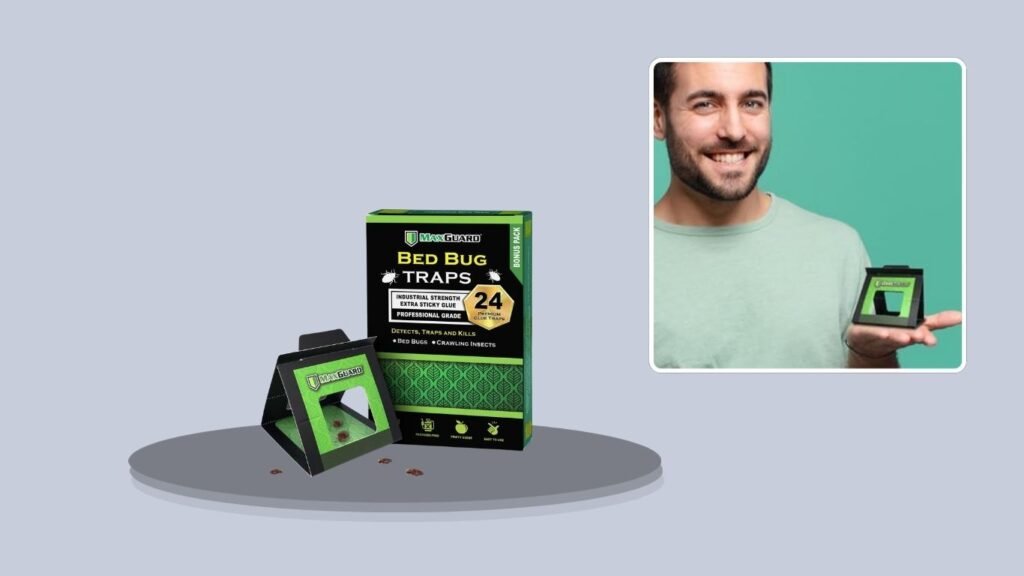
MaxGuard Bed Bug Detection Traps provide a simple way to monitor beds, bedrooms, and furniture for early signs of bed bug activity. The package includes 24 paper-based adhesive traps that can also capture other crawling insects such as cockroaches, ants, crickets, and spiders. Their disposable, non-electric design makes them easy to distribute around several potential problem areas without complicated setup or maintenance.
Key Features
- 24 traps per package
- Strong adhesive trapping surface
- No electricity required
- Paper-based disposable construction
- Designed for bed bug detection and monitoring
- Can also capture several crawling insects
- Easy placement around beds and furniture
- Useful for monitoring multiple rooms
Why It’s Best for Wide-Area Monitoring
The generous 24-trap package is MaxGuard’s biggest advantage. Bed bugs can hide in numerous locations around sleeping areas, so using several monitoring points can provide better coverage than relying on a single trap.
Traps can be distributed near bed frames, furniture, baseboards, and other suspected travel routes. This also makes MaxGuard useful for checking several bedrooms or monitoring different parts of one larger room.
Adhesive Design and Monitoring Performance
The adhesive format keeps operation extremely simple. There are no batteries, liquids, or electrical components to maintain. Once positioned, the trap passively monitors crawling insects.
These traps are primarily useful for detection rather than complete infestation control. Bed bugs are notoriously difficult to eliminate, and EPA guidance recommends combining monitoring devices with measures such as inspection, encasements, vacuuming, clutter reduction, and appropriate treatment.
Overall Verdict
MaxGuard is a practical option for homeowners who want plenty of disposable monitors at a reasonable scale.
Its 24-trap quantity, adhesive construction, and ability to monitor multiple crawling pests make it especially useful for spreading detection points throughout bedrooms and furniture areas. For early detection or continued monitoring after treatment, the large pack provides useful flexibility without requiring complicated equipment.
2. Ortho Home Defense Max Bed Bug Trap
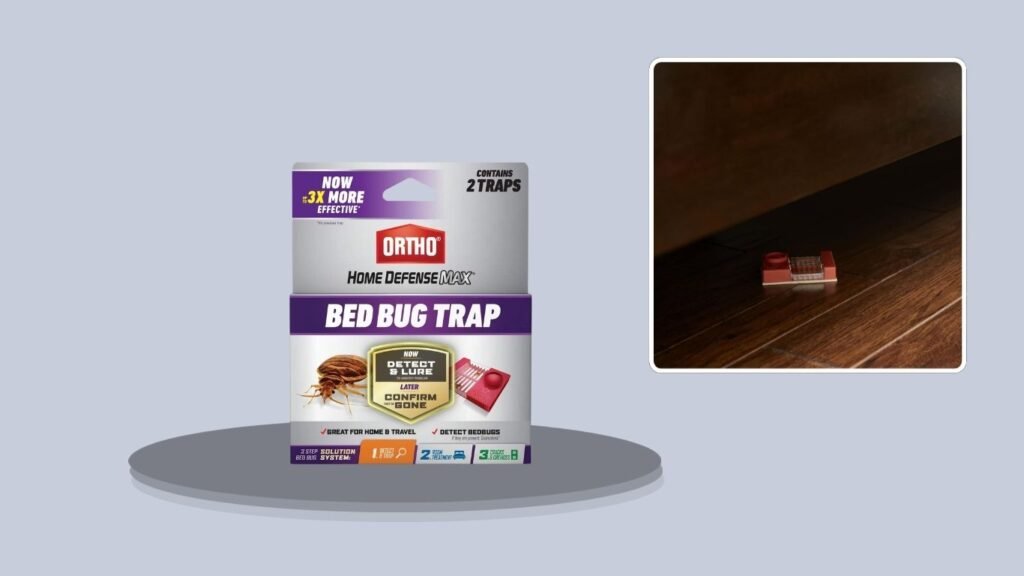
The Ortho Home Defense Max Bed Bug Trap takes a more active approach to detection by using an attractant designed to lure bed bugs from hiding. The package contains two traps, and Ortho recommends using them around beds, sofas, recliners, or hotel rooms. Once activated, the attractant works for up to two weeks, making this product particularly useful for short-term monitoring at home or while traveling.
Key Features
- Two traps per package
- Built-in bed bug attractant
- Attractant remains active for up to two weeks
- Monitoring window for checking results
- Suitable for home and travel
- Can be placed near beds and upholstered furniture
- No electrical power required
- Part of Ortho’s multi-step bed bug control system
Why It’s Best for Active Detection
Many interceptors simply wait for bed bugs to naturally travel across them. The Ortho trap adds an attractant, giving it a different monitoring strategy.
This can be helpful when you suspect bed bugs but have not yet found clear physical evidence. It is also convenient in hotel rooms, where early detection may help travelers identify a potential problem before unpacking extensively.
Setup and Practical Monitoring
Setup is straightforward: activate the attractant, position the traps near likely bed bug activity, and inspect through the monitoring window. Ortho recommends locations such as near bed legs and headboards or between mattresses and box springs.
The two-week active period also provides a clearly defined monitoring window. After that period, replacement or another monitoring method may be necessary.
Overall Verdict
The Ortho Home Defense Max Bed Bug Trap is a strong choice for users who want an attractant-based detector rather than a simple passive interceptor.
Its compact size, two-week lure, inspection window, and suitability for travel make it particularly useful for confirming suspected activity. Because it is primarily a detection product, any positive finding should trigger a broader bed bug control plan rather than reliance on the traps alone.
3. Bed Bug Interceptors for Beds & Furniture
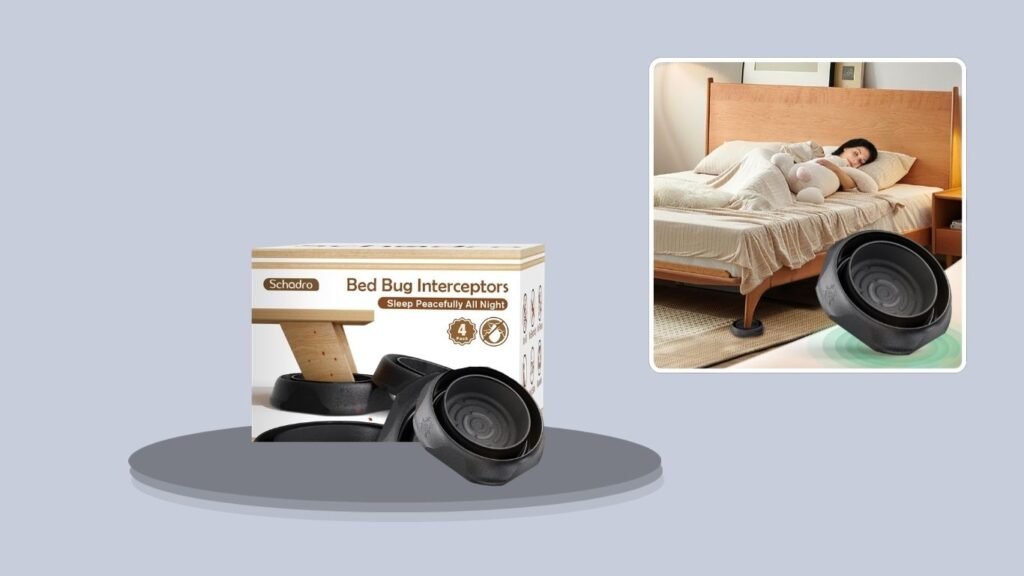
These Bed Bug Interceptors use the classic furniture-leg approach to monitoring bed bugs. Instead of relying on bait, adhesive, or chemicals, interceptor cups are positioned beneath bed or furniture legs so crawling bugs fall into a smooth-sided channel and have difficulty escaping. This type of trap is widely recommended as a monitoring tool because it takes advantage of the natural movement of bed bugs as they travel between hiding places and sleeping hosts.
Key Features
- Cup-style interceptor design
- Fits beneath bed and furniture legs
- No pesticide required
- No batteries or electricity
- Passive 24-hour monitoring
- Helps detect movement toward or away from furniture
- Reusable design
- Suitable for beds, sofas, and chairs
Why It’s Best for Isolating a Bed
Interceptor cups become especially effective when the bed is turned into an isolated sleeping area. The bed should be moved away from walls, and sheets or blankets should not touch the floor.
This forces bed bugs attempting to reach the sleeper to travel through the furniture legs and therefore through the interceptors. EPA specifically recommends interceptors under each bed leg as part of its “make your bed an island” approach.
Monitoring Performance and Maintenance
One major benefit is that an interceptor does not stop working because an adhesive surface dries out. However, regular inspection and cleaning remain important.
Rutgers recommends checking interceptors every one to two weeks and maintaining smooth internal surfaces. Some interceptor designs may also use a very light coating of talc to make escape more difficult.
Overall Verdict
These furniture-leg interceptors are an excellent choice for people who want continuous, chemical-free bed bug monitoring around a bed or sofa.
Their reusable design, simple mechanics, and ability to create a physical monitoring barrier make them particularly useful during treatment and afterward. Proper bed isolation is essential, but when installed correctly, interceptor-style traps provide one of the more established approaches to bed bug monitoring.
4. Raid Bed Bug Detector & Trap
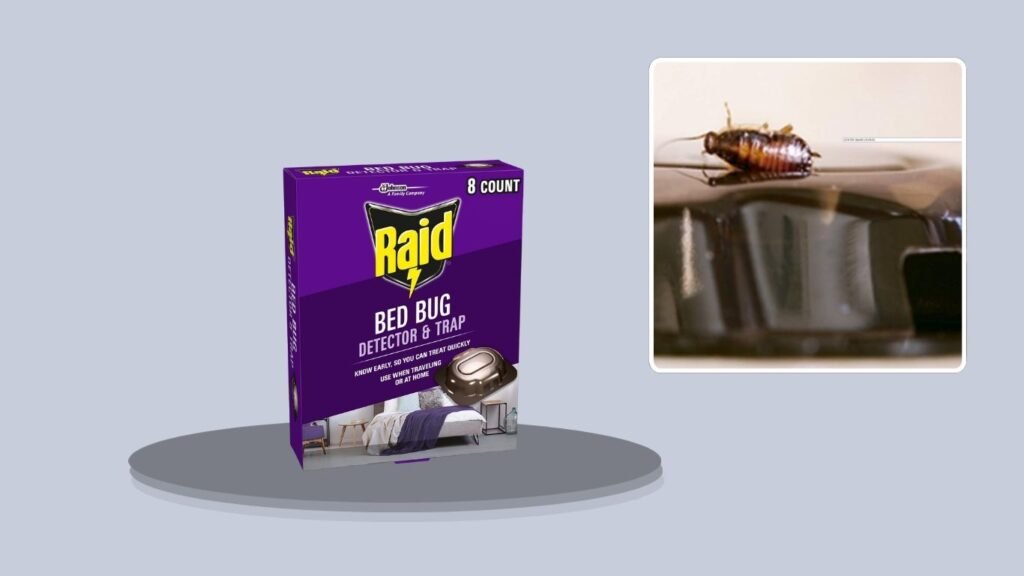
Raid Bed Bug Detector & Trap is a compact disposable monitoring product designed for sleeping areas and travel. Raid recommends placing the enclosed traps before an infestation becomes obvious so they can help identify activity early. The traps can be positioned beneath a mattress or placed inside luggage while traveling, and the product is available in multi-count packages, including an eight-count configuration.
Key Features
- Disposable enclosed trap
- Designed specifically for bed bugs
- Eight-count option available
- Suitable for sleeping areas
- Can be positioned under mattresses
- Useful inside luggage when traveling
- No electrical power needed
- Compact and discreet construction
Why It’s Best for Travel Monitoring
The compact enclosed format makes Raid particularly useful for travelers. Bed bugs can hitchhike in luggage and personal belongings, so monitoring unfamiliar sleeping environments can provide another layer of awareness.
A trap can be placed near the sleeping area while others can remain with luggage, giving the user multiple monitoring points without carrying bulky interceptor cups.
Detection Design and Practical Use
Raid emphasizes early detection. According to the manufacturer, placing detectors after a large infestation has already developed mostly confirms a problem that already exists.
Using all detectors simultaneously can improve monitoring coverage. Their enclosed construction also makes them easier to handle and discard than exposed sticky boards.
However, a trap showing no bed bugs cannot absolutely prove that a room is free of them. Visual inspection remains important, especially around mattress seams, headboards, and bed frames.
Overall Verdict
Raid Bed Bug Detector & Trap is a convenient option for people prioritizing portability and discreet monitoring.
Its enclosed disposable design, compact profile, and suitability for both bedrooms and luggage make it particularly appealing for vacations, hotels, dorms, and home monitoring. It works best as an early-warning tool rather than a complete bed bug treatment.
5. BugMD Bed Bug Traps
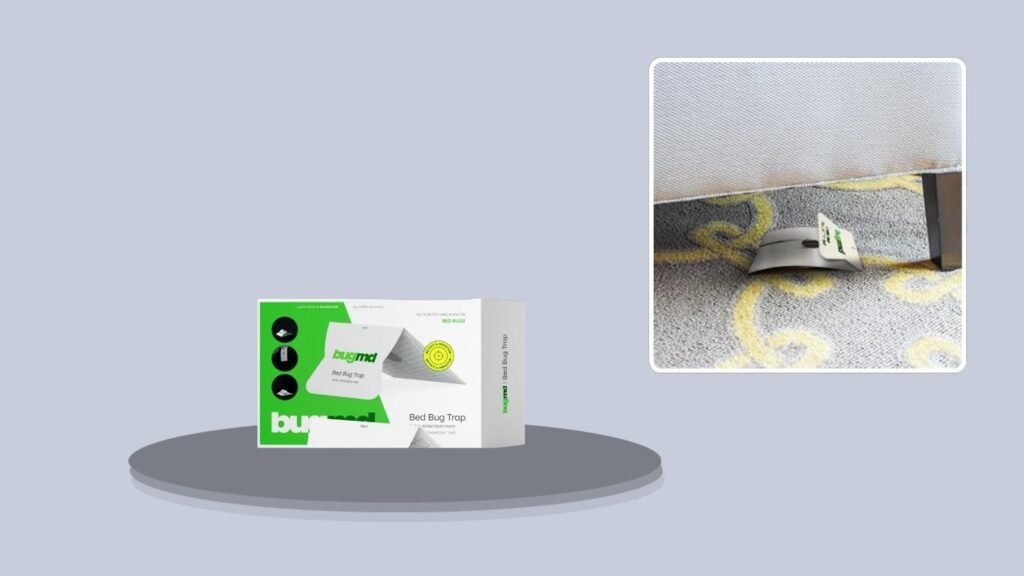
BugMD Bed Bug Traps combine an ultra-sticky adhesive surface with a foldable design that can be configured for multiple locations. Each box contains 12 traps, and BugMD recommends using them around bed or furniture legs, between the mattress and box spring, or flat along floors and walls. The traps contain no insecticide and can remain open for up to 90 days depending on bed bug activity.
Key Features
- 12 traps per box
- Ultra-sticky PermaGlue adhesive
- No pesticide or harsh chemical treatment
- Foldable multi-position design
- Fits around furniture legs
- Can be placed between mattress and box spring
- Suitable along floors and baseboards
- Up to 90 days of monitoring per opened trap
Why It’s Best for Flexible Placement
BugMD’s biggest advantage is versatility. Traditional interceptor cups work best under furniture legs, but this trap can be folded into several configurations.
That allows users to target areas where a standard cup may not fit, including mattress edges, baseboards, furniture, and floor-level travel routes. This adaptability is especially useful when the bed frame has unusual legs or no conventional legs at all.
Adhesive Performance and Ease of Use
The PermaGlue surface captures bugs that crawl across it without requiring bait or electricity. BugMD recommends checking the traps regularly and disposing of them once they become filled.
Because they are disposable, there is no need to handle live insects trapped inside an interceptor cup. Fold or close the used trap and discard it according to the manufacturer’s directions.
Overall Verdict
BugMD Bed Bug Traps are particularly appealing for households that want one trap design that can adapt to several locations.
The 12-count package, chemical-free construction, strong adhesive, and flexible folding system make these traps convenient for beds, sofas, baseboards, and travel situations. For detecting low-level activity or monitoring after treatment, they provide broad placement possibilities without requiring specialized equipment.
6. Bed Bug Trap Interceptors for Furniture Legs
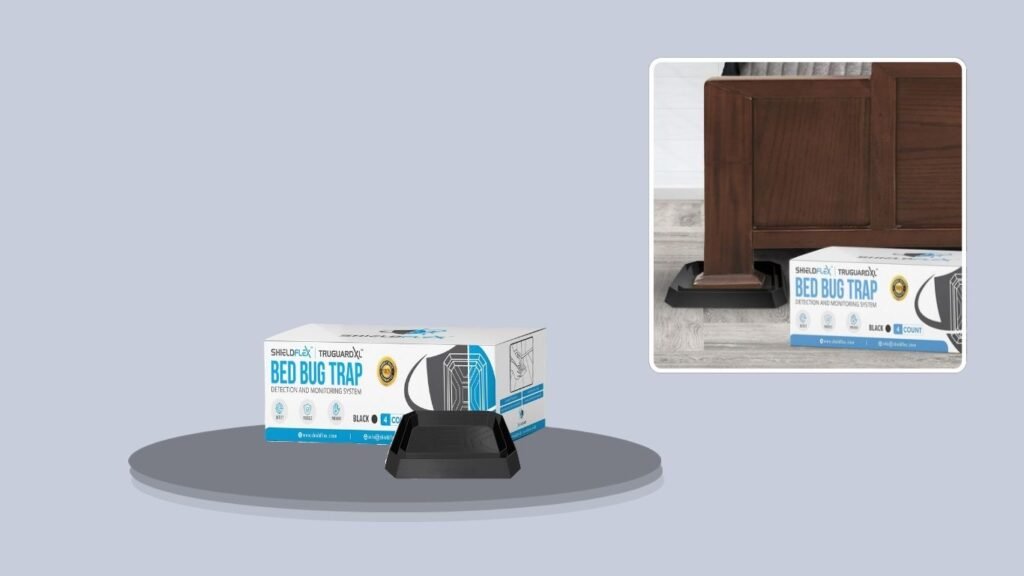
These Bed Bug Trap Interceptors provide a straightforward physical barrier for beds, sofas, chairs, and other furniture supported by legs. Each interceptor sits between the floor and furniture leg, creating a pitfall that captures bed bugs moving toward or away from the furniture. Because the method requires no chemical attractants, sprays, or electrical components, the traps can remain in position for continuous monitoring with relatively little maintenance.
Key Features
- Furniture-leg interceptor design
- Passive bed bug monitoring
- No pesticide required
- No adhesive replacement
- Reusable construction
- Works around beds and upholstered furniture
- Helps restrict crawling access to furniture
- Suitable for long-term monitoring
Why It’s Best for Continuous Bed Protection
Furniture-leg interceptors are particularly useful because bed bugs naturally move toward sleeping and resting areas in search of a blood meal.
Placing an interceptor beneath every furniture leg creates a monitoring point along this route. Research summarized by Rutgers identifies pitfall-style interceptors as particularly effective tools for detecting low-level infestations.
Placement and Long-Term Performance
Installation technique makes a major difference. The bed or sofa should be pulled away from walls, and blankets, sheets, clothing, or curtains should not provide another path from the floor to the furniture.
EPA recommends checking and cleaning interceptor traps regularly; its DIY guidance suggests weekly checks for interceptor-style devices.
Regular inspection also lets users see whether bed bug activity is increasing, decreasing, or continuing after treatment.
Overall Verdict
These Bed Bug Trap Interceptors are a sensible option for anyone who wants reusable, long-term monitoring beneath furniture.
Their chemical-free operation, continuous protection, and simple pitfall mechanism make them particularly useful during a larger treatment plan. They do require proper furniture isolation, but once positioned correctly, they can provide valuable information about ongoing bed bug movement around sleeping areas.
7. EcoVenger Bed Bug Monitor & Interceptor
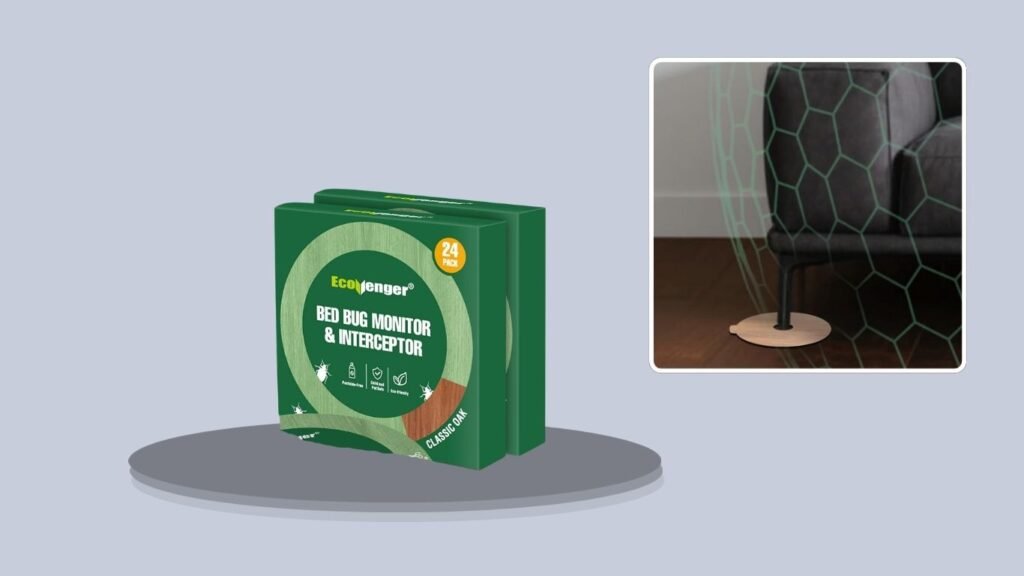
EcoVenger takes a noticeably different approach from bulky plastic interceptor cups. Its Bed Bug Monitor & Interceptor uses a thin, round adhesive plate designed to fit around furniture legs. The 24-count pack features a wood-patterned surface intended to blend with flooring while creating a sticky no-crossing area for bed bugs moving toward beds, futons, couches, or other furniture.
Key Features
- 24 interceptor traps per package
- Flat adhesive plate design
- Fits around furniture legs
- Oak-style decorative pattern
- No bulky plastic cup
- Simple slide-in installation
- Disposable after use
- Suitable for beds, futons, and sofas
- Designed for discreet monitoring
Why It’s Best for Discreet Furniture Protection
Traditional interceptor cups work well, but they can be visually obvious beneath furniture. EcoVenger addresses that concern with a thinner, floor-level design.
The wood-style finish is intended to blend more naturally with hardwood surroundings, making this option especially appealing in bedrooms or living rooms where users do not want large white plastic cups visible beneath every furniture leg.
Installation and Monitoring Performance
EcoVenger recommends positioning furniture at least three inches from the wall, opening the perforated section of the monitor, removing the protective adhesive lining, and placing the furniture leg in the center of the plate.
Because the bed or sofa is isolated from walls, crawling bugs are directed toward the monitored furniture legs.
Its disposable glue format also means captured bugs do not need to be manually removed from a plastic interceptor.
Overall Verdict
EcoVenger Bed Bug Monitor & Interceptor is an attractive alternative for homeowners who want effective furniture-leg monitoring without the appearance of traditional interceptor bowls.
The 24-pack, slim profile, adhesive surface, and decorative finish combine practicality with discretion. It is particularly well suited to multiple furniture pieces or larger bedrooms where numerous legs need continuous monitoring.
8. ClimbUp Insect Interceptor Bed Bug Trap
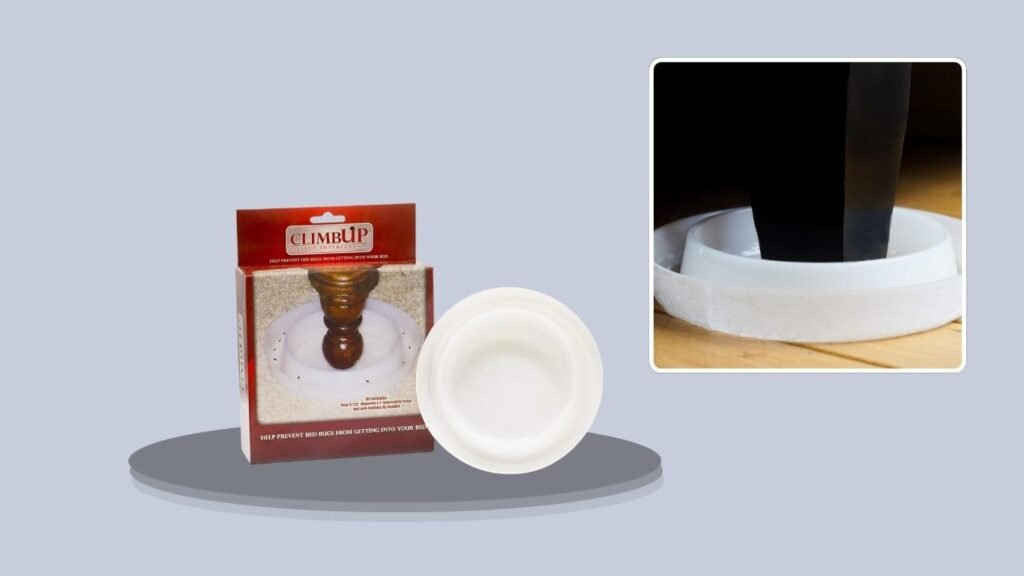
The ClimbUp Insect Interceptor is one of the better-established pitfall-style bed bug monitoring devices. The standard package contains four interceptors designed to fit furniture legs up to approximately 3.75 inches in diameter. Its dual-well construction can capture bed bugs moving both toward and away from furniture, helping users monitor activity while physically interrupting bugs attempting to reach sleeping areas.
Key Features
- Four interceptors per package
- Pesticide-free monitoring
- Dual-well pitfall design
- Fits furniture feet up to about 3.75 inches
- Reusable construction
- Helps indicate direction of bed bug movement
- Designed for beds, sofas, and other furniture
- Made in the USA
Why It’s Best for Proven Interceptor Monitoring
ClimbUp has an advantage because pitfall-style interceptors of this type have been specifically discussed in university bed bug monitoring guidance.
Rutgers Cooperative Extension notes that the ClimbUp design has shown particular effectiveness for detecting bed bugs moving between furniture and floors.
The dual-well design is also useful because bugs captured in different areas can help indicate whether they are moving toward the furniture or emerging from it.
Trap Design and Long-Term Performance
The exterior gives bed bugs a climbable route into the trap, while smooth internal surfaces make escape difficult. Texas A&M notes that ClimbUp interceptors use a light dusting of talc and that this coating should be refreshed after cleaning.
For reliable monitoring, furniture should remain away from walls and bedding should not touch the floor. Regular inspection and cleaning keep the trap operating effectively.
Overall Verdict
ClimbUp is especially suitable for homeowners who want a reusable, research-supported passive monitoring system.
Its dual-well configuration, pesticide-free construction, furniture-leg compatibility, and established pitfall design make it one of the more technically focused options in this roundup. For ongoing monitoring during and after bed bug treatment, it provides a straightforward way to observe activity without introducing another pesticide.
FAQs
1. Do Bed Bug Traps Actually Work?
Bed bug traps and interceptors can be effective for detecting and monitoring bed bugs, especially when placed correctly around sleeping and resting areas. Rutgers reports that pitfall-style interceptors can outperform visual inspection for detecting low-level infestations. However, traps generally should not be considered a complete treatment for an established infestation.
2. Where Should Bed Bug Interceptors Be Placed?
Place an interceptor beneath every leg of the bed, sofa, or upholstered furniture being monitored. Move the furniture away from the wall and make sure blankets, sheets, clothing, curtains, or other objects do not touch both the furniture and floor, because these can create alternate routes for bed bugs.
3. How Often Should I Check Bed Bug Traps?
EPA recommends regularly inspecting interceptors, while Rutgers suggests checking them approximately every one to two weeks for ongoing monitoring. During an active problem, checking more frequently can make it easier to track changes. Clean reusable interceptors according to their instructions so dirt does not reduce their effectiveness.
4. Can Bed Bug Traps Stop Bed Bugs From Biting?
Interceptors positioned under every furniture leg can capture some bed bugs before they reach the bed, potentially reducing the number able to feed. However, the bed must be properly isolated from walls and the floor. Traps cannot capture bugs already hiding inside mattresses, headboards, frames, or other parts of the furniture, so they should be combined with appropriate treatment.
5. Are Bed Bug Traps Enough to Eliminate an Infestation?
Usually not. EPA recommends an integrated pest management approach that may include monitoring, vacuuming, mattress and box-spring encasements, heat or other nonchemical methods, clutter reduction, and appropriately labeled pesticides when needed. Persistent or extensive infestations may require an experienced pest-management professional.
