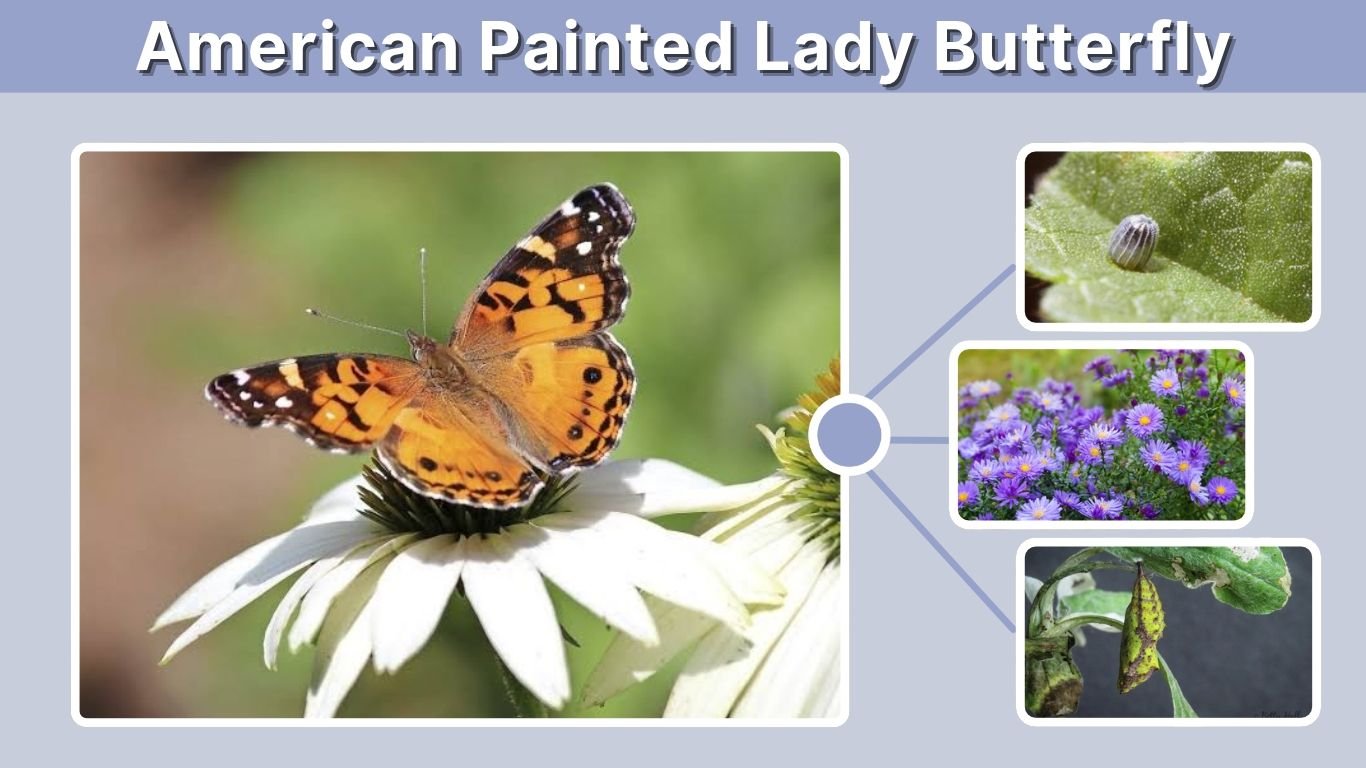
The American painted lady butterfly (Vanessa virginiensis) is a beautiful North American butterfly recognized for its orange, black, and white wings. Often confused with the common painted lady, this species has distinctive eyespots, fascinating caterpillar behavior, and an interesting life cycle. These butterflies commonly inhabit gardens, meadows, grasslands, and open woodlands, where they feed on flower nectar. Understanding the American painted lady butterfly’s appearance, habitat, host plants, diet, and seasonal movements can help butterfly enthusiasts identify this colorful species and appreciate its important role in natural ecosystems.
What Is an American Painted Lady Butterfly?
The American painted lady butterfly, commonly called the American lady, is a member of the Nymphalidae family. Its scientific name is Vanessa virginiensis, and it belongs to the same genus as the painted lady butterfly.
This medium-sized butterfly has a wingspan of approximately 1.75 to 2.6 inches. Its colorful wings and distinctive markings make it recognizable among North American butterflies.
American painted ladies are active during warmer months and frequently visit flowering plants. They are found throughout much of the Americas, particularly in habitats with abundant nectar sources and suitable caterpillar host plants.
American Painted Lady Butterfly Identification
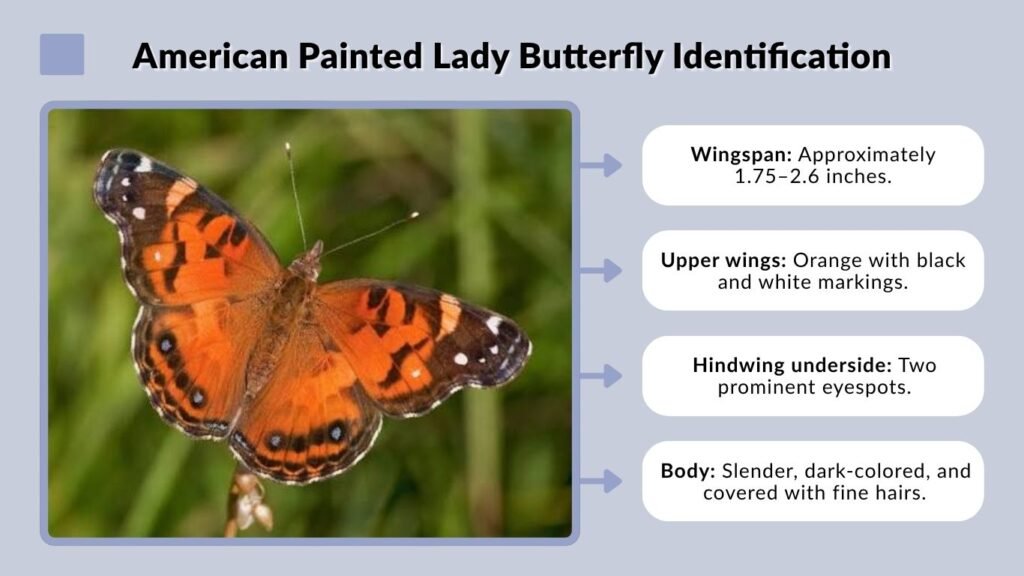
Identifying an American painted lady butterfly requires examining its wing colors, patterns, and distinctive eyespots. Although it resembles several other butterfly species, certain physical characteristics make identification easier.
Wing Color and Patterns
The upper wings feature orange, brown, black, and white markings. Dark forewing tips contain prominent white spots, while the hindwings display orange patches bordered by darker patterns.
A small white spot within the orange area of the forewing is another useful identification feature, although its visibility varies.
Distinctive Eyespots
The underside of each hindwing usually features two large eyespots surrounded by brown, cream, and gray markings.
These eyespots are particularly important for distinguishing American ladies from common painted ladies. Their intricate patterns may also help distract predators and provide camouflage when the wings are closed.
Key Identification Features
- Wingspan: Approximately 1.75–2.6 inches.
- Upper wings: Orange with black and white markings.
- Hindwing underside: Two prominent eyespots.
- Forewing markings: Dark tips with contrasting white spots.
- Body: Slender, dark-colored, and covered with fine hairs.
American Lady Butterfly vs Painted Lady Butterfly
The American lady and painted lady butterflies are closely related species with similar wing colors and body structures. Both belong to the genus Vanessa, making identification challenging for beginners.
However, their hindwing eyespots, caterpillar host plants, and geographic distributions provide useful differences.
| Feature | American Lady | Painted Lady |
| Scientific name | Vanessa virginiensis | Vanessa cardui |
| Wingspan | 1.75–2.6 inches | 2–3 inches |
| Hindwing eyespots | Two large spots | Four or five smaller spots |
| Wing colors | Orange, black, white | Orange, black, white |
| Common host plants | Everlastings, pussytoes | Thistles, mallows |
| Distribution | Primarily the Americas | Nearly worldwide |
The easiest identification method is examining the underside of the hindwings. American ladies have two large eyespots, while painted ladies generally display several smaller ones.
American Painted Lady Caterpillar Identification
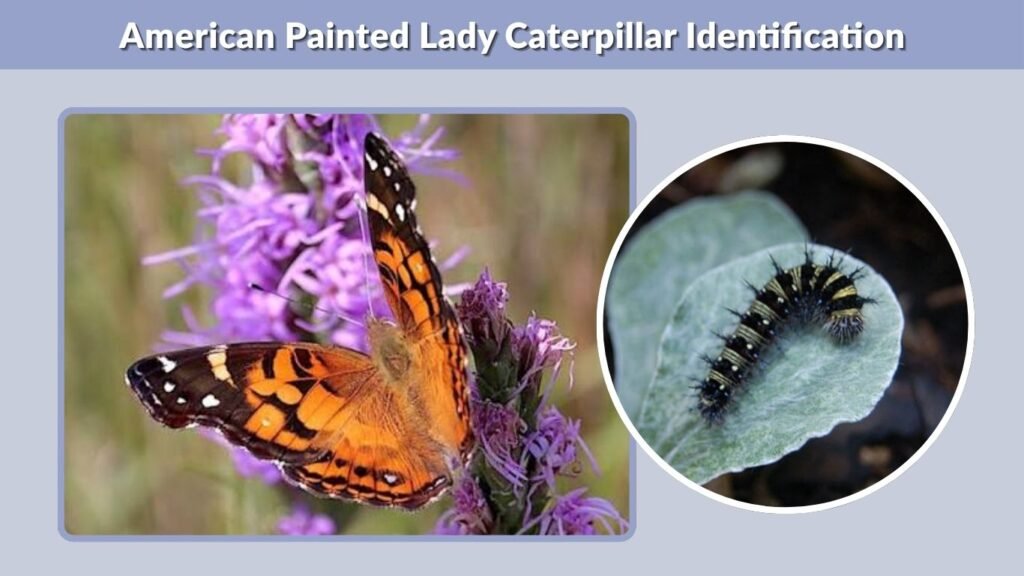
American painted lady caterpillars have distinctive body patterns and protective behaviors. Their appearance changes during development, but mature caterpillars are relatively easy to recognize.
What Does the Caterpillar Look Like?
Mature caterpillars are typically dark with yellowish stripes, lighter markings, and numerous branched spines. Some individuals appear predominantly yellow with darker patterns.
These caterpillars may reach approximately 1.4 inches in length. Their spines create a defensive appearance, although they are not venomous.
Caterpillar Feeding Behavior
American painted lady caterpillars construct protective shelters using silk and leaves from their host plants.
These shelters provide concealment from predators while allowing caterpillars to feed on surrounding vegetation. Unlike some social caterpillars, American lady larvae generally develop individually.
American Painted Lady Butterfly Host Plants
Host plants are essential for American painted lady reproduction because female butterflies lay their eggs on vegetation that developing caterpillars can eat.
The species primarily uses plants belonging to the aster family, especially everlastings, cudweeds, and pussytoes.
Common Host Plants
- Pearly everlasting: A perennial plant with silvery leaves and small white flowers.
- Plantain-leaved pussytoes: A low-growing native plant commonly used by caterpillars.
- Pennsylvania cudweed: A suitable host plant found in fields and disturbed habitats.
- Sweet everlasting: An important plant that supports larval development.
- Purple cudweed: Another potential host plant in suitable environments.
Planting locally native host plants can encourage American painted ladies to reproduce in gardens.
American Painted Lady Butterfly Life Cycle
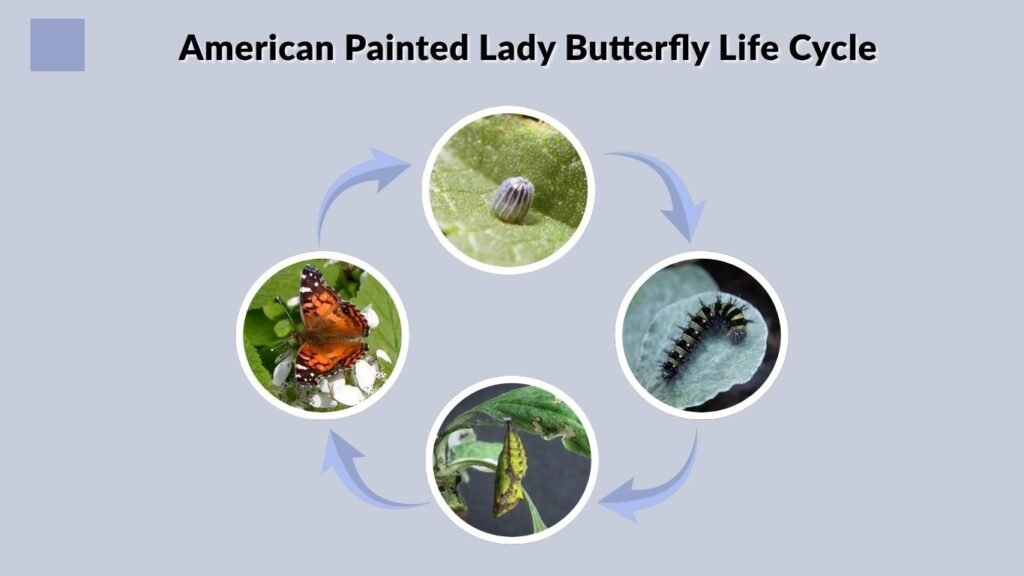
The American painted lady butterfly undergoes complete metamorphosis, developing through four distinct stages. Temperature, food availability, and environmental conditions influence the duration of each stage.
1. Egg Stage
Female butterflies deposit small, pale green eggs individually on suitable host plant leaves.
The eggs develop for several days before tiny caterpillars emerge and begin feeding.
2. Caterpillar Stage
Newly hatched caterpillars feed on their host plants and grow through several molts.
During development, they create protective shelters from silk and plant material. Mature caterpillars eventually stop feeding and prepare for pupation.
3. Chrysalis Stage
The caterpillar transforms into a chrysalis suspended from a silk attachment.
The chrysalis may appear brown, gray, or greenish, helping it blend into surrounding vegetation. Inside, the insect undergoes major physical changes.
4. Adult Butterfly Stage
The adult butterfly emerges with soft, folded wings. After expanding and drying them, it becomes capable of flight.
Adults feed on nectar, find mates, and reproduce, beginning another generation.
American Painted Lady Butterfly Habitat and Distribution
American painted lady butterflies inhabit various open environments throughout much of North America and parts of Central and South America.
They are commonly observed in meadows, grasslands, gardens, roadsides, fields, and woodland edges.
These butterflies prefer sunny locations with flowering plants and suitable vegetation for caterpillar development.
Their geographic distribution changes seasonally. Northern populations are generally more abundant during warmer months, while butterflies can remain active for longer periods in southern regions.
What Do American Painted Lady Butterflies Eat?
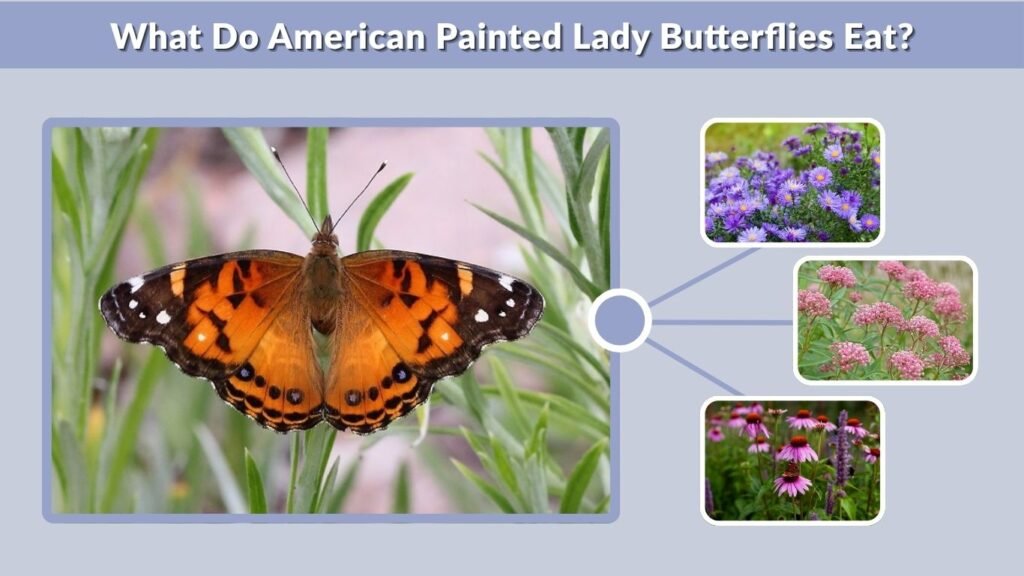
Adult American painted lady butterflies primarily consume flower nectar, which provides energy for flying, mating, and reproduction.
They use their long, flexible proboscis to collect nectar from different flowering plants.
Common Nectar Sources
- Asters: Provide nectar during late summer and autumn.
- Milkweed: Produces nectar that attracts many butterfly species.
- Coneflowers: Offer accessible nectar in sunny gardens.
- Goldenrod: Provides valuable late-season nectar.
- Other wildflowers: Support adults throughout the growing season.
Adults may occasionally feed on tree sap or juices from overripe fruit.
Caterpillars have a different diet, consuming leaves and other tissues of suitable host plants.
Do American Painted Lady Butterflies Migrate?
American painted lady butterflies exhibit seasonal movements, particularly between warmer southern areas and colder northern regions.
Adults may survive winter in suitable southern habitats, while northern populations are often replenished through spring movements.
Unlike monarch butterflies, American ladies do not have a comparably well-documented long-distance migration system.
Their movements depend on temperature, seasonal weather, flowering plants, and reproductive opportunities.
In warmer climates, multiple generations may develop throughout the year. Northern populations are generally active from spring through autumn.
How to Attract American Painted Lady Butterflies
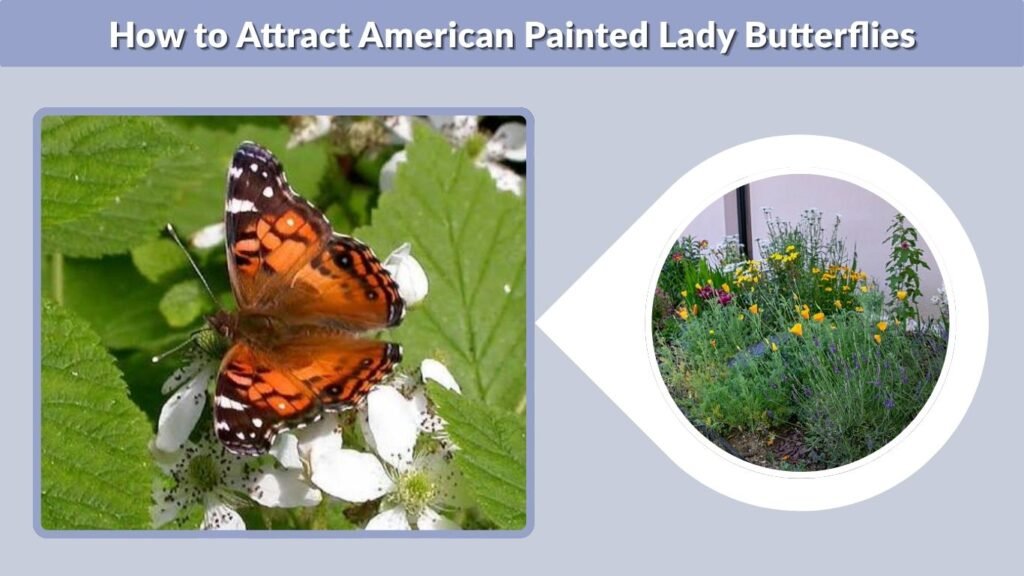
Creating a butterfly-friendly garden can help attract American painted ladies while supporting their reproduction and development.
The most effective gardens provide both caterpillar host plants and nectar-producing flowers.
Butterfly Gardening Tips
- Grow native host plants: Include pussytoes, cudweeds, and everlastings suitable for your region.
- Plant nectar flowers: Choose asters, coneflowers, milkweed, and other native flowering plants.
- Provide sunny spaces: Butterflies need warmth to maintain their activity.
- Avoid pesticides: Insecticides can harm both caterpillars and adult butterflies.
- Maintain natural vegetation: Leave some undisturbed areas where caterpillars can develop.
Combining these practices creates a welcoming habitat for American painted ladies and other beneficial insects.
FAQs
1. What is the scientific name of the American painted lady butterfly?
The scientific name of the American painted lady butterfly is Vanessa virginiensis. It belongs to the Nymphalidae family and is also commonly called the American lady. This species is closely related to the painted lady butterfly.
2. How can you identify an American painted lady butterfly?
American painted lady butterflies have orange, black, and white wings with distinctive markings. Their most recognizable feature is the presence of two large eyespots on the underside of each hindwing, distinguishing them from common painted ladies.
3. What do American painted lady caterpillars eat?
American painted lady caterpillars primarily eat plants belonging to the aster family, especially everlastings, pussytoes, and cudweeds. These plants provide essential nutrients for larval development and serve as locations where female butterflies deposit their eggs.
4. Are American painted lady butterflies poisonous?
American painted lady butterflies are not considered poisonous or dangerous to humans. Their caterpillars have branched spines that provide a defensive appearance, but they are not venomous. Adults are harmless and frequently visit gardens and flowering plants.
5. Where do American painted lady butterflies live?
American painted lady butterflies inhabit gardens, meadows, grasslands, roadsides, and woodland edges throughout much of the Americas. Their seasonal distribution depends on temperature, suitable host plants, nectar availability, and movements between warmer and colder regions.