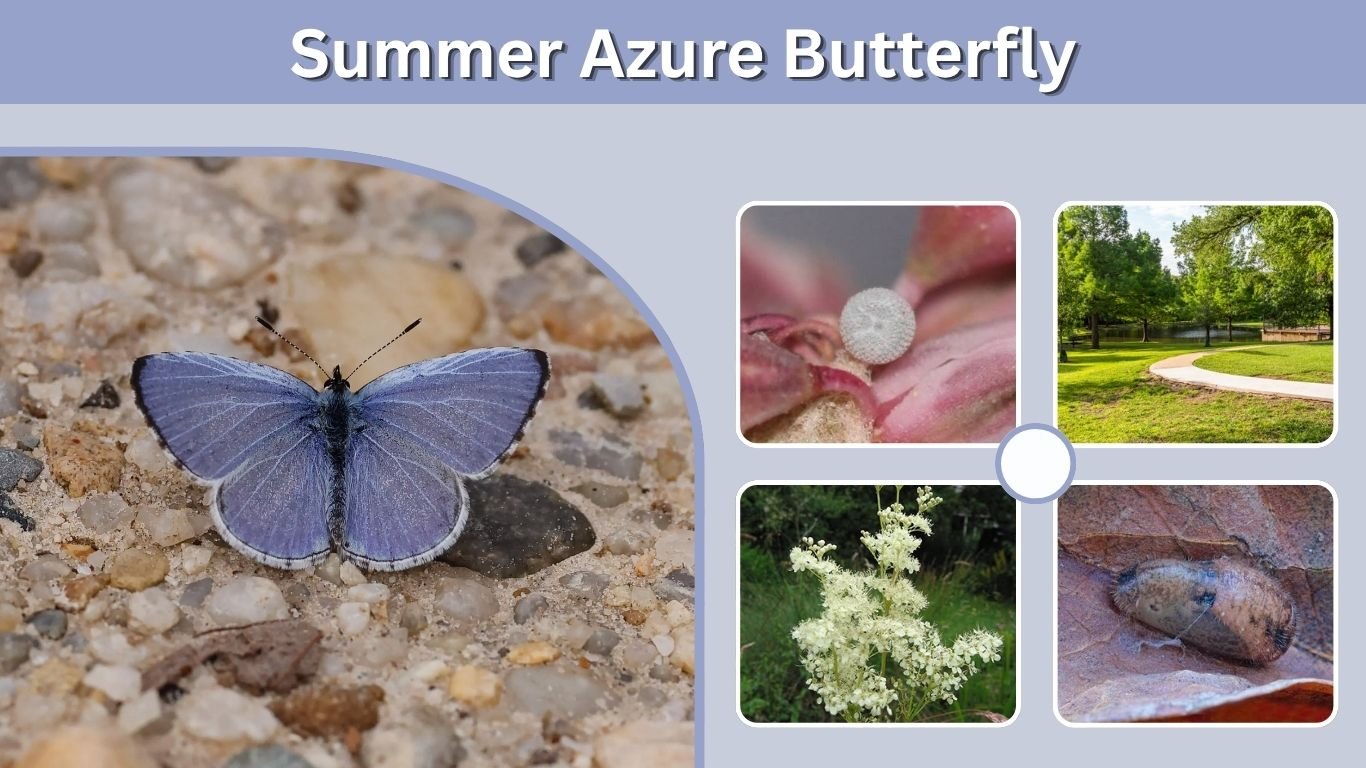
The summer azure butterfly is a small, delicate blue butterfly commonly found in woodlands, gardens, and open landscapes throughout North America. Scientifically known as Celastrina neglecta, this beautiful insect belongs to the Lycaenidae family and is admired for its powdery blue wings, pale underside, and graceful flight. Summer azures closely resemble spring azure butterflies, making identification challenging for many nature enthusiasts. Understanding summer azure butterfly identification, size, habitat, caterpillars, host plants, and life cycle provides valuable insight into its behavior, development, and important relationships with native flowering plants.
What Is a Summer Azure Butterfly?
The summer azure butterfly (Celastrina neglecta) is a small North American butterfly belonging to the gossamer-winged family, Lycaenidae. This family includes many delicate blue butterflies, hairstreaks, and coppers.
Summer azures are recognized for their pale blue upper wings and whitish undersides decorated with tiny dark markings. They frequently appear in open woodlands, gardens, meadows, and sunny natural areas.
Although their name suggests summer activity, some populations also produce early-season generations. Their appearance and flight season vary geographically, making careful observation important for accurate identification.
Summer Azure Butterfly Identification and Size
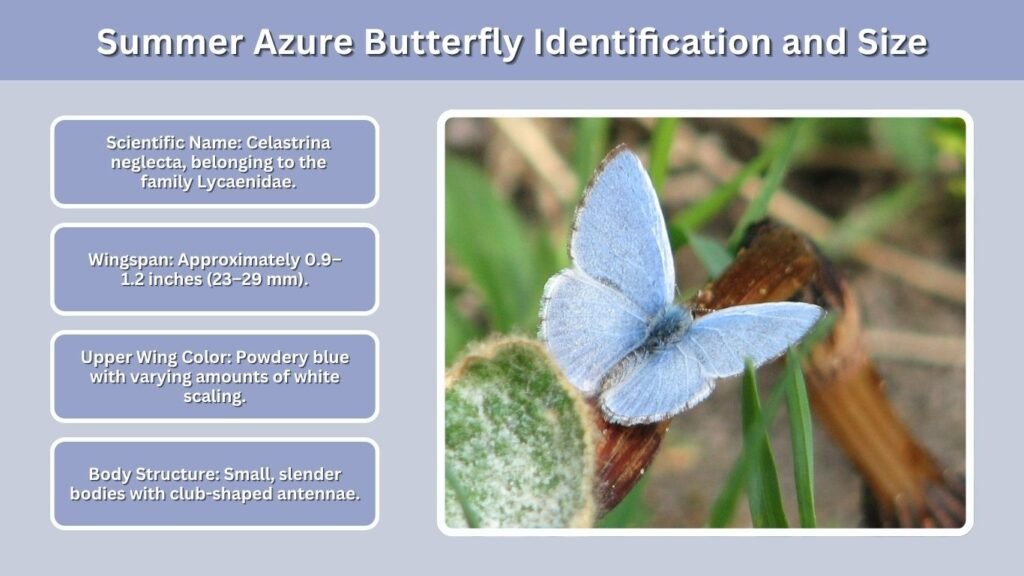
Summer azure butterflies have small, rounded wings and delicate bodies. Their powdery coloration makes them particularly attractive when resting in sunlight.
Common identification features include:
- Scientific Name: Celastrina neglecta, belonging to the family Lycaenidae.
- Wingspan: Approximately 0.9–1.2 inches (23–29 mm).
- Upper Wing Color: Powdery blue with varying amounts of white scaling.
- Wing Undersides: Pale gray or whitish with tiny black spots and faint zigzag markings.
- Body Structure: Small, slender bodies with club-shaped antennae.
- Flight Pattern: Quick, fluttering movements near flowers, shrubs, and woodland edges.
Their small size sometimes makes observation difficult. However, their pale wings and delicate markings help distinguish them from darker blue butterfly species.
Male vs. Female Summer Azure Butterfly
Male and female summer azure butterflies display differences in wing coloration, particularly the amount of white scaling and the darkness of their wing borders.
Male Summer Azure Butterfly
Male summer azures generally have powdery blue upper wings, sometimes featuring whitish patches or scaling on the hindwings.
Their flight is often quick and active as they search for females. Males may patrol sunny woodland openings and visit damp ground to obtain moisture and minerals.
Female Summer Azure Butterfly
Female summer azures usually display more extensive white scaling and darker outer forewing borders.
Some females appear almost whitish, with blue coloration concentrated near the wing bases.
Females spend time visiting flowering plants and selecting suitable locations for egg laying, ensuring their offspring have access to appropriate food.
Summer Azure Butterfly Habitat and Distribution
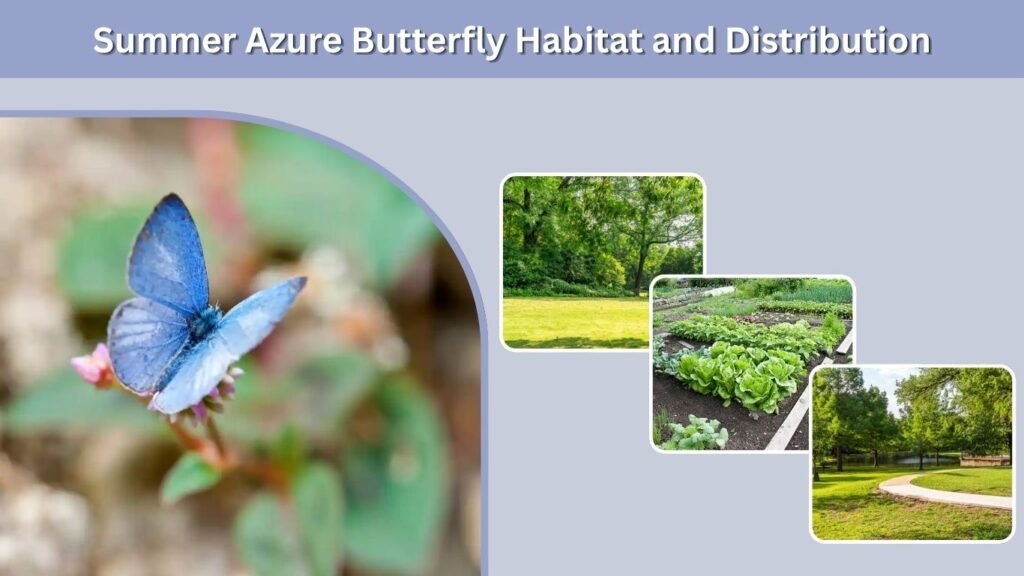
Summer azure butterflies occur throughout much of the eastern and central United States and southern Canada. Their distribution extends across numerous temperate environments where suitable flowering plants grow.
They inhabit woodland edges, stream valleys, open forests, gardens, parks, and grassy fields.
Unlike some butterflies that depend on highly specialized environments, summer azures occupy various habitats containing flowering shrubs and nectar sources.
They are frequently observed resting on leaves, flying near low vegetation, or gathering moisture from damp soil.
Their presence depends strongly on suitable host plants and seasonal flowering conditions.
Summer Azure Butterfly Life Cycle
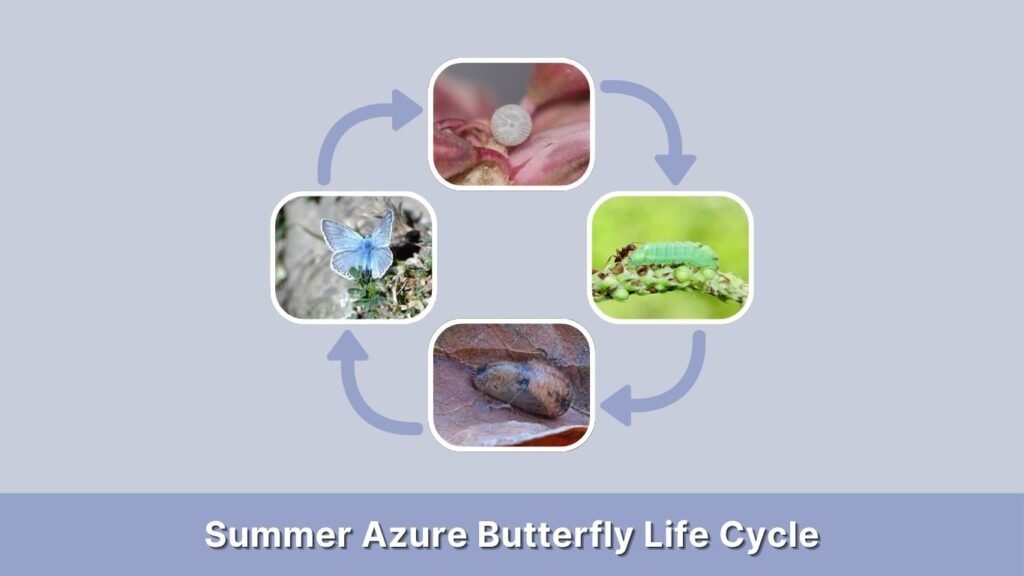
The summer azure butterfly undergoes complete metamorphosis, passing through four developmental stages: egg, caterpillar, chrysalis, and adult.
Development time varies according to temperature, available food, and geographic location. Some populations produce multiple generations during favorable growing seasons.
1. Egg Stage
Female summer azure butterflies lay small eggs on suitable flowering plants, commonly near developing flower buds.
These tiny eggs are difficult to notice without close inspection.
After the embryos develop, caterpillars emerge and begin feeding on nearby flowers or buds.
2. Caterpillar Stage
Summer azure caterpillars have flattened, somewhat slug-shaped bodies with colors ranging from greenish to pinkish or pale brown.
They primarily feed on flower buds and blossoms rather than mature leaves.
As they develop, caterpillars shed their skin several times before reaching their final larval stage.
3. Chrysalis Stage
Mature caterpillars leave their feeding locations and seek protected places for pupation.
They transform into small, brownish chrysalises that blend with dry vegetation, bark, or leaf litter.
Some pupae survive winter in a dormant condition before adult emergence during a later favorable season.
4. Adult Butterfly Stage
Adult summer azure butterflies emerge from their chrysalises with soft, folded wings.
After expanding and drying their wings, they begin flying and searching for nectar.
Mating and egg laying allow the next generation to develop, continuing the butterfly’s reproductive cycle.
Summer Azure Butterfly Caterpillar Identification
Summer azure caterpillars have unusual flattened bodies that resemble small slugs.
Their colors vary depending on age, food plants, and environmental conditions. Greenish and pinkish individuals may blend into flower clusters, making them difficult to detect.
Young caterpillars often feed inside developing buds, while larger larvae consume exposed flowers.
Like some other lycaenid butterflies, azure caterpillars can interact with ants. Certain larvae produce secretions that attract ants, potentially receiving protection from natural enemies.
These relationships demonstrate how butterfly development connects with surrounding insect communities.
Summer Azure Butterfly Host Plants
Host plants provide essential nutrition for summer azure caterpillars. Female butterflies select flowering vegetation suitable for egg laying and larval development.
Commonly recorded host plants include:
- New Jersey Tea (Ceanothus americanus): A native shrub whose flower clusters support developing caterpillars.
- Gray Dogwood (Cornus racemosa): An important flowering host plant in parts of North America.
- Meadowsweet (Spiraea species): Flowering shrubs, including white meadowsweet, used by summer azure larvae.
- Viburnum Species: Certain late-blooming shrubs provide suitable flowers and buds.
- Mountain Mint (Pycnanthemum species): Recorded as host plants in some regional populations.
Host plant preferences can vary geographically. Native flowering shrubs appropriate to local conditions provide valuable breeding resources.
What Do Summer Azure Butterflies Eat?

Adult summer azure butterflies primarily consume nectar from flowering plants.
Their long, flexible proboscis allows them to collect nectar from blossoms, supplying energy for flight and reproduction.
They may visit goldenrods, meadowsweet, mountain mints, and other seasonal flowering plants.
Some individuals also gather moisture and dissolved minerals from damp soil through a behavior called puddling.
Summer azure caterpillars have different nutritional requirements. They feed mainly on tender flower buds and blossoms of suitable host plants, supporting their growth before pupation.
Summer Azure vs. Spring Azure Butterfly
Summer azures and spring azures are closely related species within the genus Celastrina. Their similar coloration and overlapping ranges make identification challenging.
Summer Azure Butterfly
Summer azures (Celastrina neglecta) commonly display powdery blue wings with noticeable white scaling.
They are often observed during late spring and summer, although some populations produce earlier generations.
Their larvae feed on flowers of several shrubs, including dogwoods, New Jersey tea, and meadowsweet.
Spring Azure Butterfly
Spring azures (Celastrina ladon) commonly have violet-blue upper wings, with males generally showing less extensive white scaling.
They are traditionally associated with early spring emergence and spring-flowering woodland plants.
However, seasonal overlap and differences among local populations mean that flight timing alone cannot reliably identify every azure butterfly.
Interesting Summer Azure Butterfly Facts
Summer azure butterflies possess several characteristics that make them fascinating to observe.
Interesting facts include:
- Delicate Appearance: Their small size and pale blue coloration create a distinctive appearance.
- Seasonal Generations: Some populations produce multiple generations during favorable weather.
- Flower-Feeding Caterpillars: Larvae primarily consume flower buds and blossoms.
- Winter Survival: Certain populations overwinter in the chrysalis stage.
- Wide Distribution: Summer azures inhabit much of eastern and central North America.
- Variable Wing Colors: Individuals may display blue, whitish, or slightly lavender-colored wing patterns.
These features reflect their adaptation to seasonal environments and flowering plant availability.
How to Attract Summer Azure Butterflies
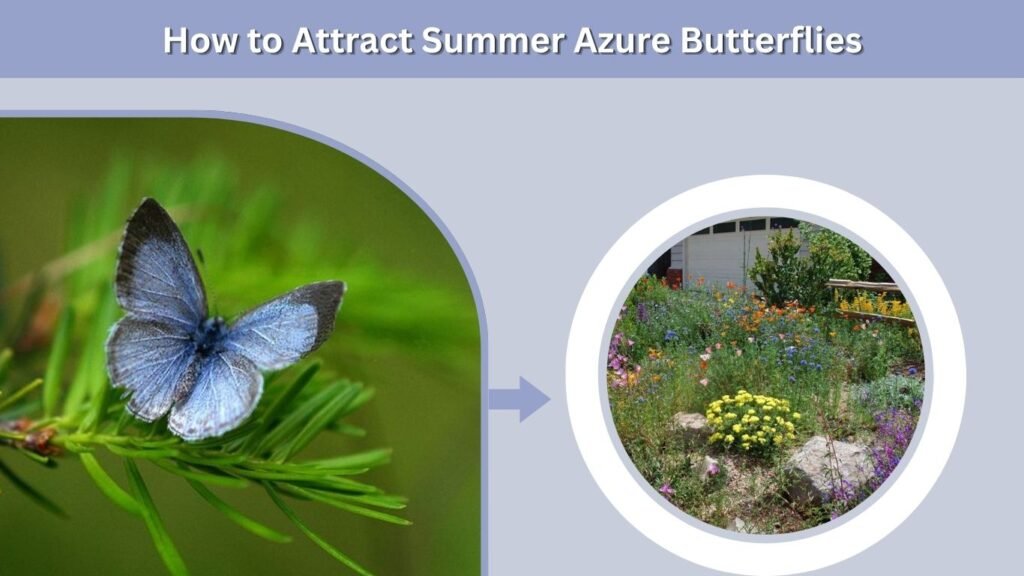
Creating suitable habitat for summer azure butterflies involves maintaining native flowering plants and providing protected natural spaces.
Plant New Jersey tea, locally appropriate dogwoods, and other documented host shrubs.
Include nectar-producing native flowers that bloom at different times throughout the growing season.
Maintain sunny woodland edges, sheltered garden areas, and natural vegetation near flowering shrubs.
Avoid unnecessary insecticide applications because these chemicals may harm eggs, caterpillars, and adult butterflies.
Allowing some natural leaf litter to remain undisturbed may also provide shelter for developing pupae.
FAQs
1. What is the scientific name of the summer azure butterfly?
The scientific name is Celastrina neglecta. It belongs to the Lycaenidae family, commonly known as the gossamer-winged butterflies.
2. How big is a summer azure butterfly?
Summer azure butterflies typically have a wingspan of approximately 0.9–1.2 inches (23–29 mm), making them relatively small butterflies.
3. Where do summer azure butterflies live?
Summer azures inhabit eastern and central North America, including woodland edges, gardens, stream valleys, parks, and open fields.
4. What do summer azure caterpillars eat?
Summer azure caterpillars primarily eat flower buds and blossoms from suitable host plants, including dogwoods, New Jersey tea, and meadowsweet.
5. Are summer azure butterflies rare?
Summer azure butterflies are generally widespread and secure across much of their range. However, their abundance varies depending on location, suitable habitats, and host plant availability.